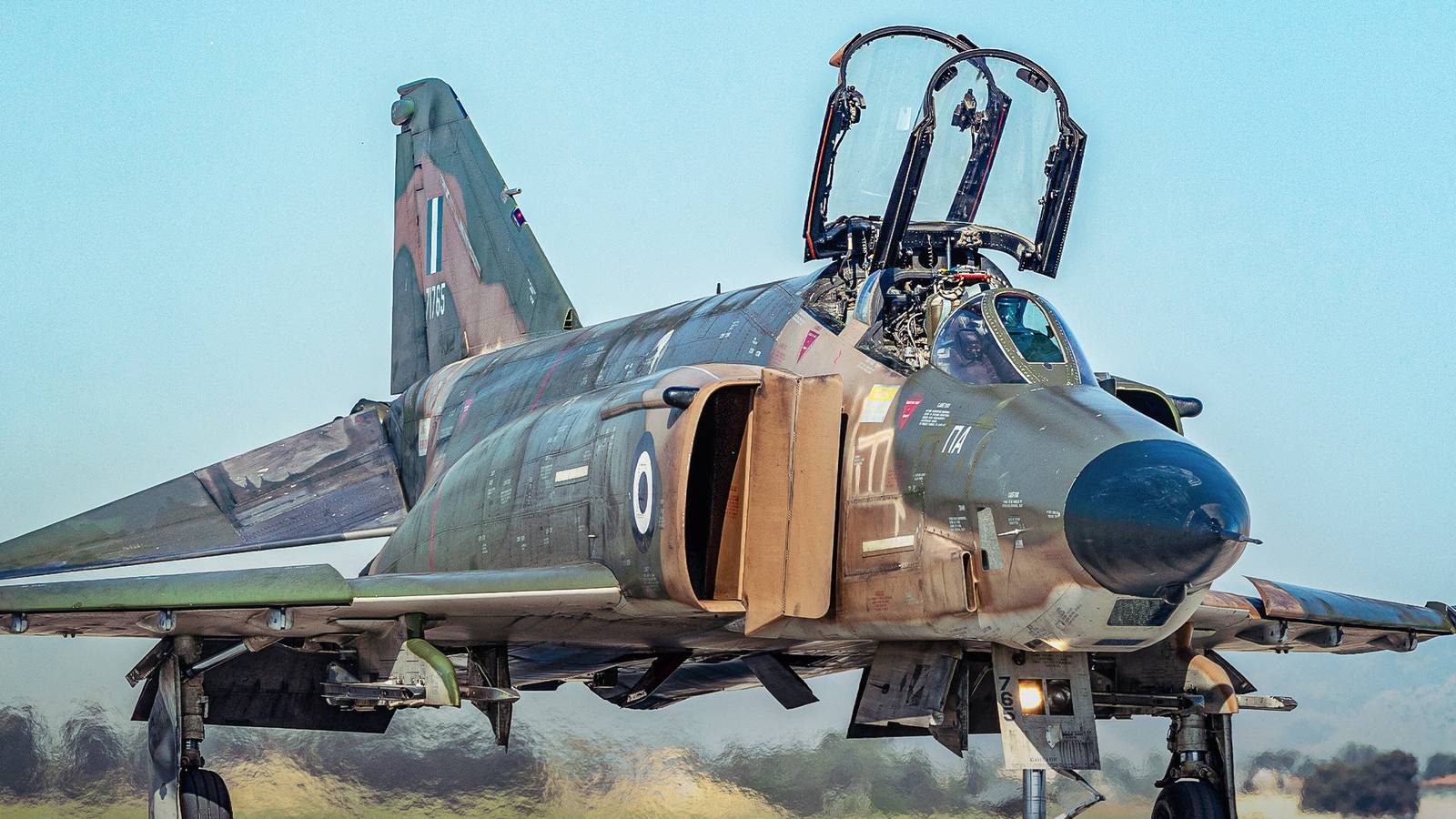
The F-4 Phantom's Raw Power Is Exactly Why 60 Years Later No Modern Jet Has Fully Replaced It
The F-4 Phantom II's raw power defined an era of jet combat and remains a benchmark for why no modern jet has fully replaced it. As the most mass-produced supersonic fighter in U.S. history, it dominated early performance benchmarks and helped shatter 16 world speed, altitude, and time-to-climb records. The design centered on two General Electric J79 turbojets, featuring variable stators that let the engines adapt across a wide envelope, delivering nearly 36,000 pounds of thrust in afterburner and enabling the 40,000-pound airframe to reach Mach 2.23. The Phantom was prized for its speed, range, and aircrew-friendly handling, even as it carried a reputation for high fuel consumption and operating cost.
Production ran until the United States retired the last Phantom in 1997, though a handful remain airworthy with foreign air forces such as Greece or exist as drones. The aircraft's two-J79 powerplant and afterburning heartbeat helped it achieve unprecedented acceleration and climb, while its multirole flexibility set a high bar for later fighters. Yet the era of the heavy, non-stealthy 'flying brick' gave way to stealth and sensors, a shift that explains why no modern jet has duplicated the Phantom's exact combination of raw thrust, payload, and range. The legacy endures in training, maintenance, and the enduring lore of propulsion-driven air power.
 xCruzo