Acoustic Emission Warning Signal Flags Rock Failure Before Collapse in 403
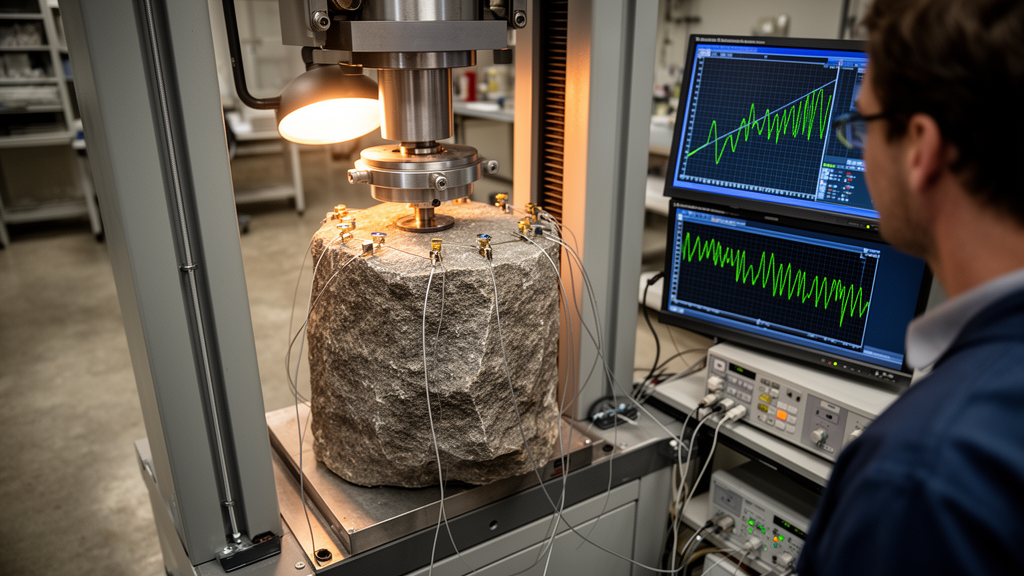
A study in GeoEnergy Communications reports a real-time way to flag rock failure using acoustic emission monitoring. The method was validated on a large laboratory dataset of 403 sandstone specimens subjected to uniaxial compression. In every test, the system issued a warning signal before failure, typically when the applied load reached an average of 76.7% of each specimen’s ultimate compressive strength. The indicator, WIb, measures the rate of change in the b-value—an earthquake-style parameter tied to how cracking frequency shifts with stress. Instead of relying on subjective b-value trends, WIb sums the absolute slopes between consecutive b-value points within a one-second window. Samples were 50×50×100 mm from several Chinese formations and loaded at 0.5 MPa per second with extra strain energy to trigger unstable collapse.
 xCruzo