Climate-Ready Seaweeds: Pangenomics and Multi-Omics Could Rescue Kelp
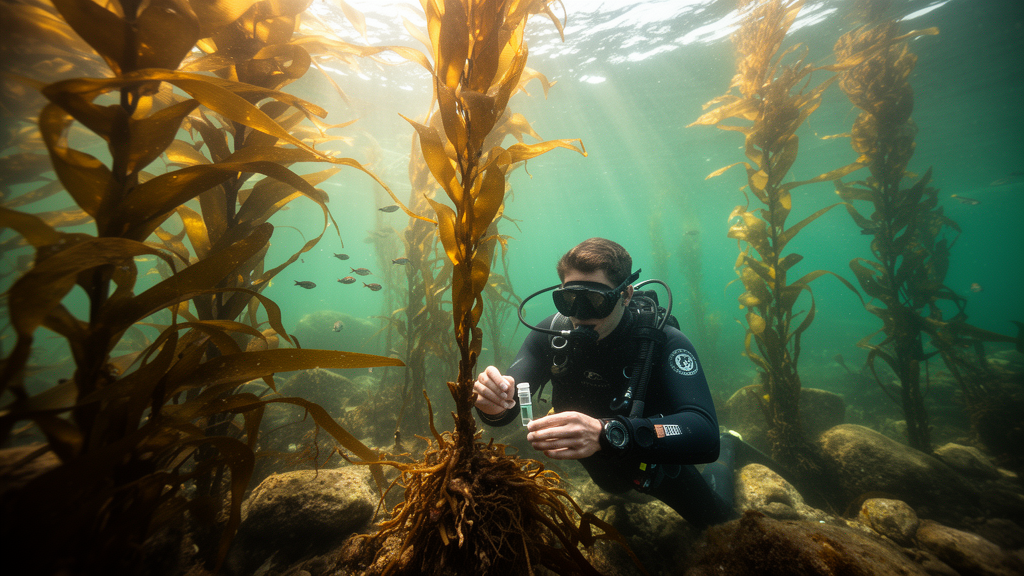
Researchers are turning from single-reference genomes toward multi-accession “pangenomics” to better capture genetic diversity in macroalgae such as kelp, where structural variation is common. Traditional reference genomes reflect the haplotype of one individual, missing presence-absence differences, copy-number changes and large inversions. Pangenomics, using graph pangenomes, consolidates multiple accessions into one structure, separating core genes found in all individuals from accessory genes present in only some. The accessory genome is highlighted as important for climate resilience, often carrying stress-response, nutrient-acquisition and symbiosis-related genes. The approach is paired with seascape genomics, linking genetic variation to environmental variables and local adaptation across regions, and temporal genomics, tracking how patterns evolve over time to gauge adaptation to climate change.
 xCruzo