Crews counted just 12 extremely rare plants in the Mojave Desert before installing millions of solar panels, and when scientists returned, they found 93
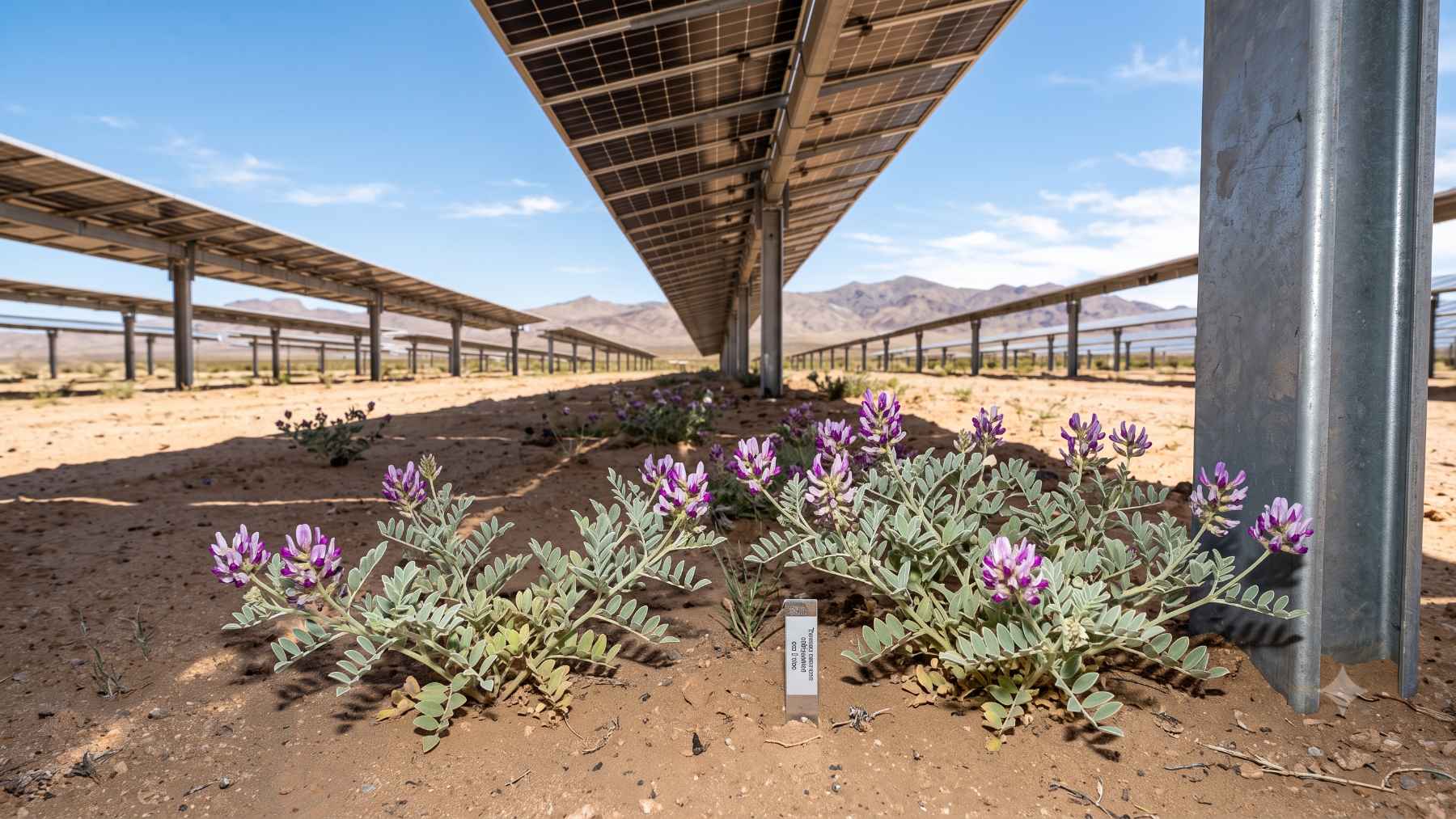
Before crews could start work on the Gemini Solar Project in Nevada’s Mojave Desert, field botanists surveyed thousands of acres and recorded only 12 individuals of the rare threecorner milkvetch (Astragalus geyeri var. triquetrus). That low baseline, across 6,500 acres in Clark County, had conservationists fearing the utility-scale installation would wipe the plants out after soil disturbance and compaction by heavy trucks and earth-moving equipment. After construction finished and follow-up surveys were required, researchers returned to the same plots and found 93 living plants within the project footprint—an eightfold increase. The study points to microclimate shifts from the solar panels: shade that cools ground temperatures, reduced evaporation, and water runoff channeling rain toward drip lines. The portproject also includes monitoring, with environmental stipulations and mitigation spending reported at $36 million for impacts on certain species and habitats, including wetlands and habitat for the copper redhorse fish.
 xCruzo