Invasive Seagrass Thrives With Microbial Help From Native Rivals in the
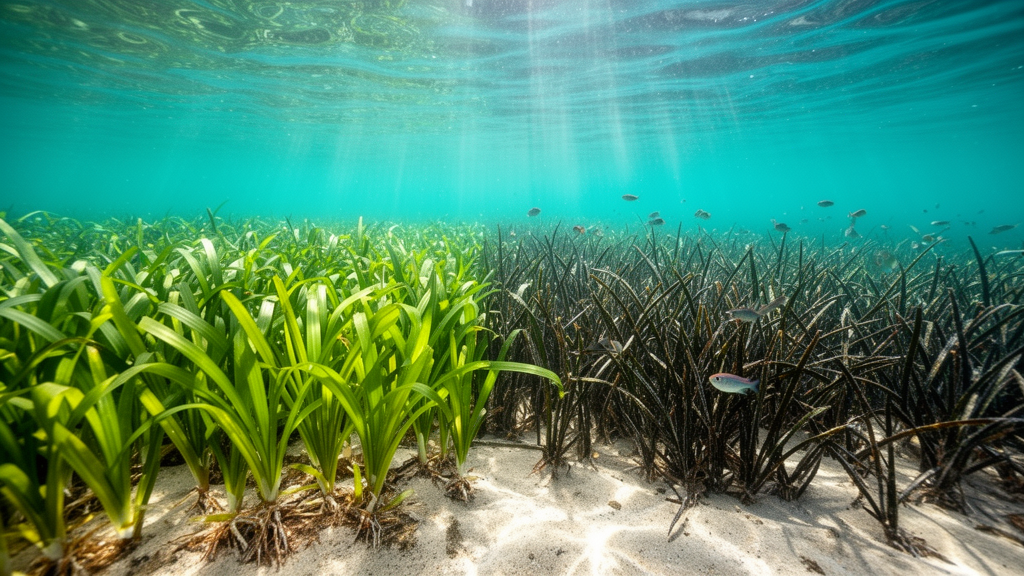
A new study in Frontiers in Marine Science suggests an invasive seagrass may be helped by the microbes it picks up from native plants it displaces. Researchers found that Halophila stipulacea, a Lessepsian migrant originally from the Red Sea and Indian Ocean, hosts different bacterial communities depending on whether it grows alone or mixed with the native Mediterranean seagrass Cymodocea nodosa. Those microbial changes matched enhanced growth by the invasive plant, implying microscopic passengers on seagrass leaves could play a bigger role in plant invasions than previously thought. The team tested both species together and separately in 24-liter flow-through mesocosms in Larnaka for six weeks, using 16S rRNA V4 gene sequencing to track microbes.
 xCruzo