Open Spatial Data Predicts Vital Old-Growth Habitats in Small Private
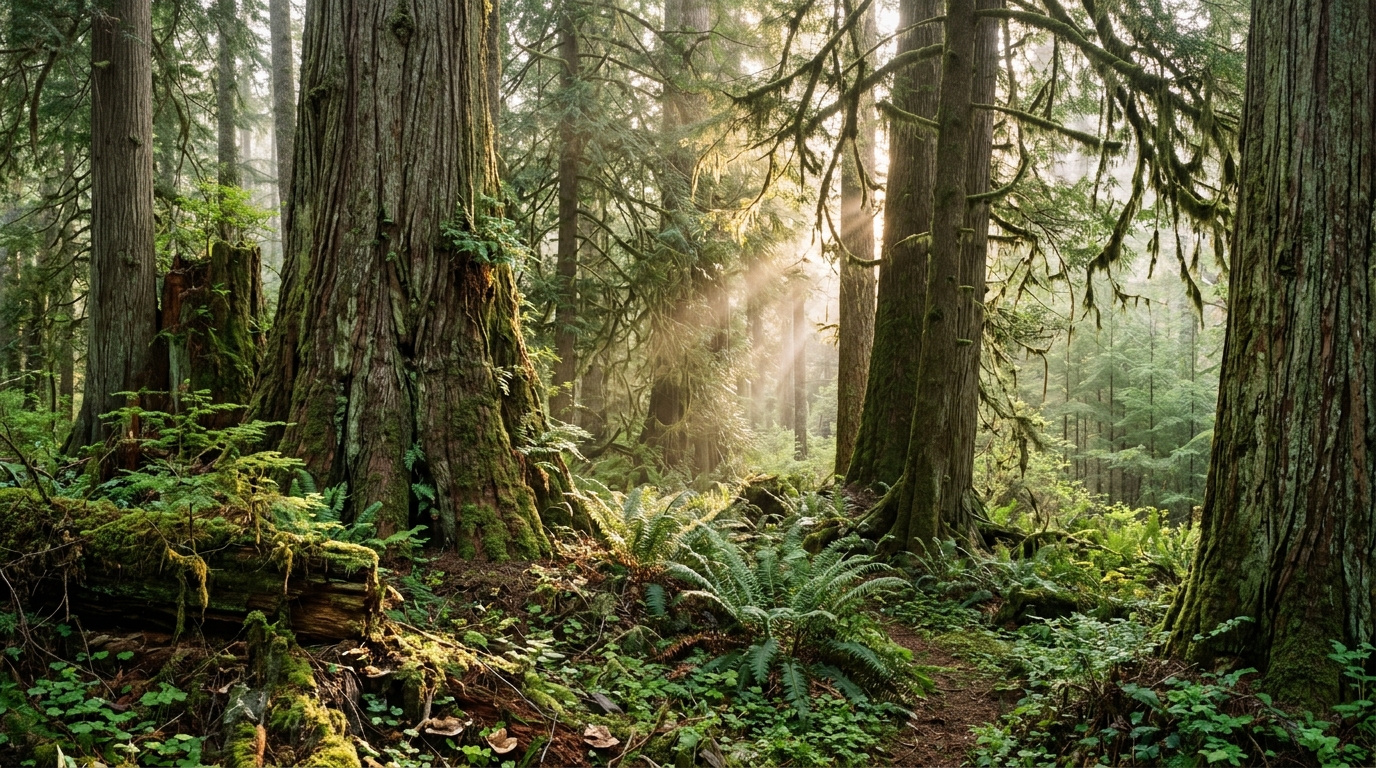
A modeling study in northwestern Germany suggests that rare old-growth habitat features are disproportionately concentrated in small, isolated private forest patches rather than in large commercial woodlands. Published in Annals of Forest Science, the research quantified conservation attributes across the 14,228-square-kilometer Lower Saxon Hills using gradient boosting tree algorithms fed by freely available geographic and satellite-derived data. The approach predicts habitat continuity at parcel level with dependable accuracy, reducing the need for exhaustive on-site botanical surveys for every cadastral unit. Forest parcels with the highest density of conservation features were surrounded by contiguous forest blocks averaging 272 hectares, versus 1,223 hectares for lower-scoring parcels. The findings point to fragmented remnants within agricultural landscapes as critical reservoirs and stepping stones for species tied to late-successional structures, such as saproxylic beetles, fungi, bryophytes, lichens, bats and forest birds. The researchers created a “Parcel Index of Conservation Attributes” to map these features. The index combines five late-successional structural parameters into a composite score between zero and one.
 xCruzo