China Is Launching A New Aircraft Carrier Every 20 Months. The U.S. Navy Cannot Deliver One On Time -- And The Gap Is The Shipyards.
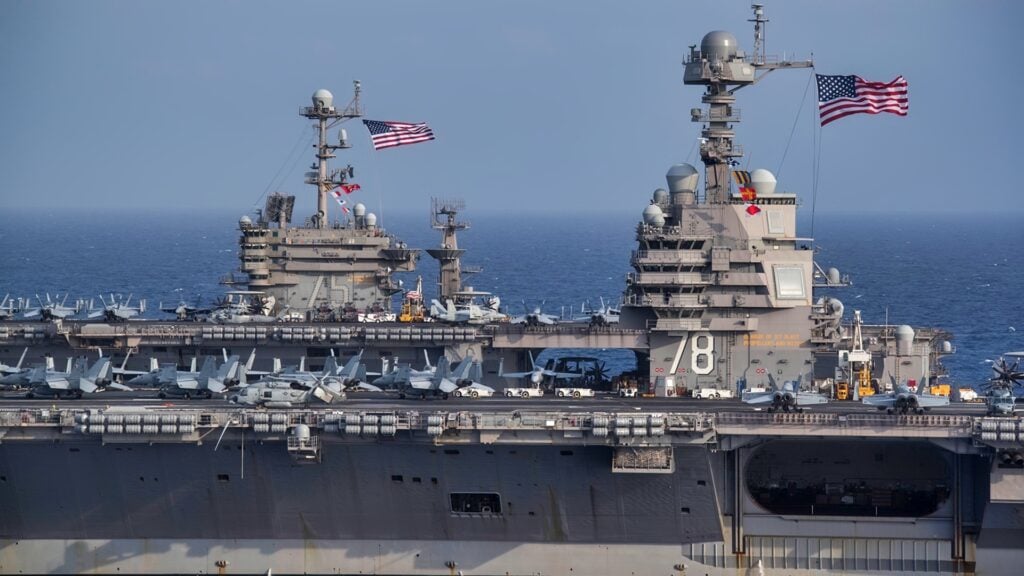
China's plan to launch a new aircraft carrier roughly every 20 months contrasts with the U.S. Navy's stalled Ford-class program, where shipyard bottlenecks are delaying deliveries. The Navy's FY2027 budget book shows the future carrier Doris Miller slipping to 2034 because there is no room in the yard to assemble her modules. Meanwhile, the fifty-year-old USS Nimitz remains in service past retirement to cover the gap. The next two Ford-class ships are also pushed: Enterprise moves to March 2031 and Kennedy to March 2027. Together, the three carriers are tied to a single production line that cannot accelerate fast enough, a situation described as three slips on one crowded line. These cascading delays reflect a broader industrial bottleneck: limited space, scarce skilled workers, and critical materials at the Navy's two nuclear shipyards. The delays ripple through the carrier program and fleet planning, with Nimitz serving as a stopgap to avoid a gap in carrier presence. The article underscores how attempts to build more carriers simultaneously outpace the yard's capacity, illustrating a strategic constraint with implications for U.S. sea power as competitors press ahead with carrier programs.
 xCruzo