Dopamine amplifies delayed subthalamic responses in Parkinson's patients
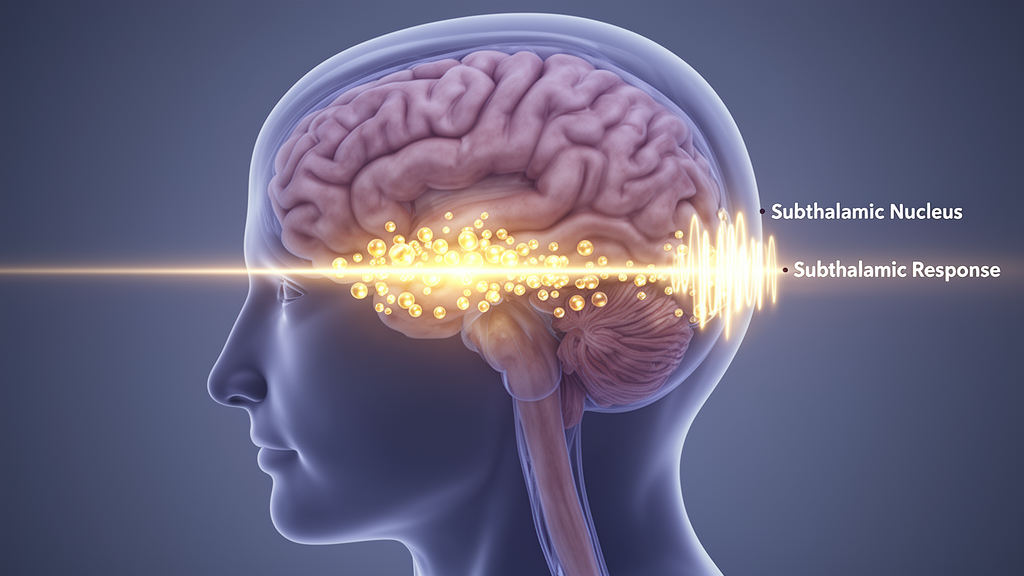
An intracranial study of 15 Parkinson’s patients undergoing deep brain stimulation found dopamine altered the timing of how signals travel between the cortex and the subthalamic nucleus. Researchers recorded subthalamic local field potentials and cortical electrocorticography while stimulating motor cortex and the subthalamic nucleus in medication-on and medication-off states. They report that dopamine amplified a delayed subthalamic response after cortical stimulation, without significantly changing the earliest response. The authors interpret this as a temporal split: a fast component consistent with monosynaptic hyperdirect-pathway activation stayed relatively stable, while later activity—thought to reflect polysynaptic network processing—shifted with dopamine availability. The study’s small postoperative cohort limits broader conclusions about treatment outcomes.
 xCruzo