Bayesian model maps climate shocks on Nepal's Terai cereal yields
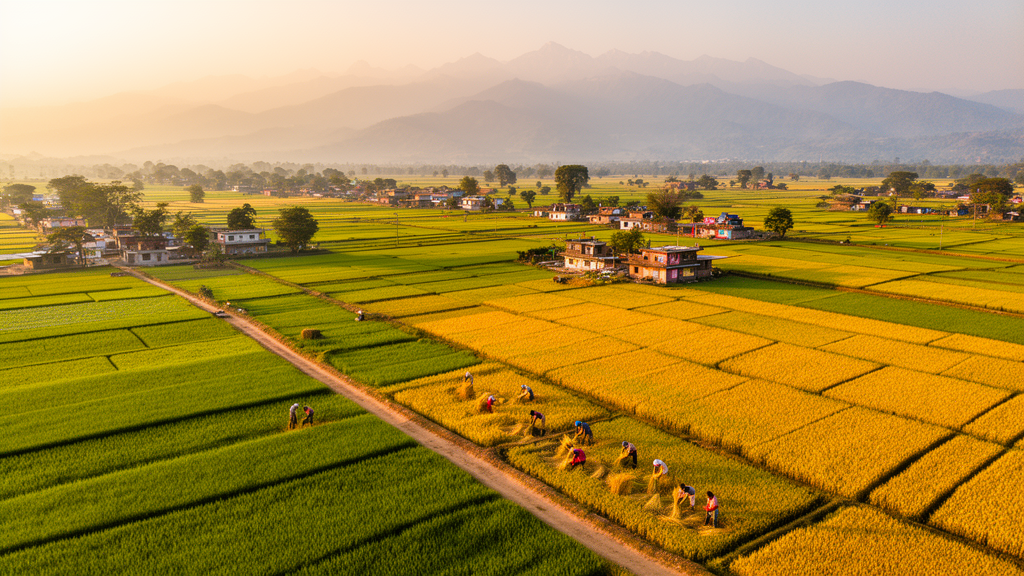
A study in Results in Engineering used Bayesian Vector Autoregression to map how climate shocks could affect cereal yields in Nepal’s Terai lowlands over 36 years. The grain basin region—where paddy, wheat and maize account for more than 70% of national cereal production—has growing sensitivity to climate variability. Researchers led by Nanda Kumar Tharu analyzed annual data from 1989 to 2024 across 22 Terai districts, using 18 climate variables including precipitation, humidity, pressure, temperatures and wind speeds. They weighted weather by each crop’s growing season (June-November for paddy, November-April for wheat, and March-September for maize) and addressed multicollinearity through iterative VIF filtering. Separate BVAR models were estimated for each crop with seven endogenous variables and two lags, quantified uncertainty via Bayesian priors, and filled missing station data using linear interpolation.
 xCruzo