Minimap cues ease anxiety in virtual hazard navigation study
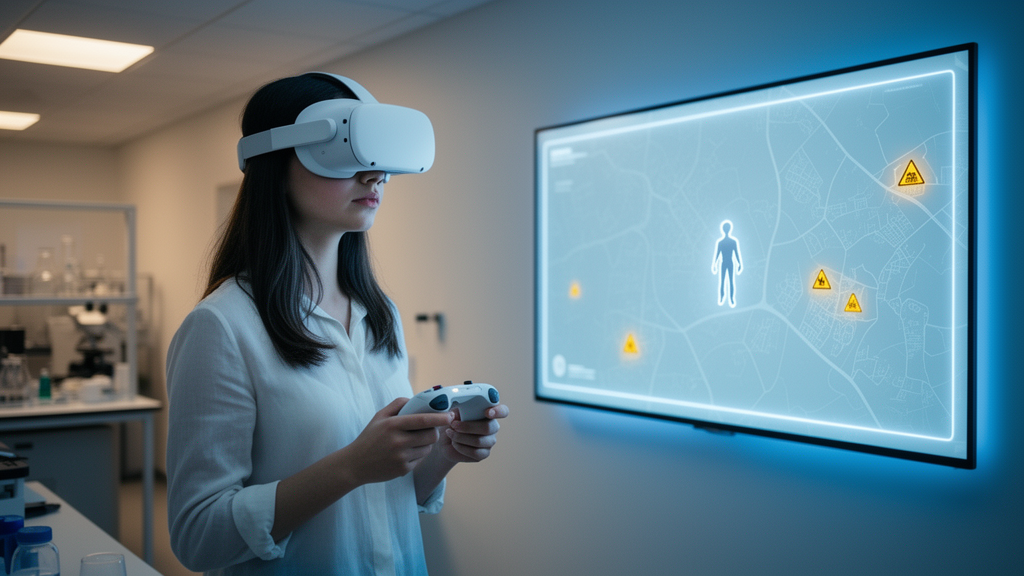
A virtual reality study suggests navigation apps can do more than guide users to destinations—they may also help reduce anxiety and improve hazard avoidance when threats change quickly. Researchers reported that two types of virtual safety cues helped participants avoid danger zones during an immersive wayfinding task, but only one significantly lowered momentary anxiety and increased willingness to walk the same route in the real world. The winning design was a screen-fixed minimap (bird’s-eye view) that showed global danger areas and surrounding layout. The study, published in Cognitive Research: Principles and Implications, compared this against a world-fixed ground-area cue highlighting danger directly in the environment. Using trial-by-trial affect measures, both cue types limited time in danger zones, while the minimap improved anxiety ratings and decision-related outcomes.
 xCruzo