The nearest star is 25 trillion miles away -- so far that Voyager 1 would take 75,000 years to reach it -- yet the only realistic plan to get there in a human lifetime is to fire a probe smaller than a computer chip down a beam of Earth-based lasers at a fifth the speed of light.
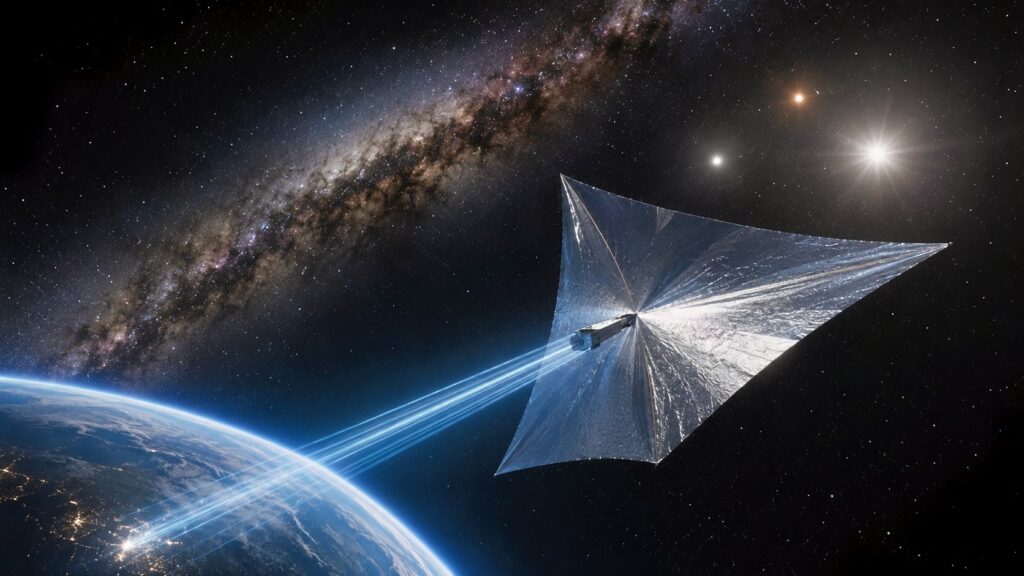
Alpha Centauri, the closest star system to Earth at about 4.37 light-years, is roughly 25 trillion miles away, making human travel in a lifetime an extreme challenge. The article notes that even Voyager 1, traveling around 38,000 miles per hour, would take about 75,000 years to reach Alpha Centauri. It argues that propulsion, power, communications, and human endurance constraints make current spacecraft unrealistic for the trip. As a more plausible near-term concept, it discusses laser sails such as Breakthrough Starshot, which would use a ground-based laser array to accelerate a tiny probe to about 20% of the speed of light, cutting travel time to roughly 20 years. The piece also highlights obstacles: interstellar dust impacts at high relative speeds would require leading-edge shielding, and communications would take more than four years each way due to distance. Even after arrival, data downlinks could take years more to fully reach Earth.
 xCruzo