UMass Amherst engineers boost edge AI efficiency by redesigning algorithms
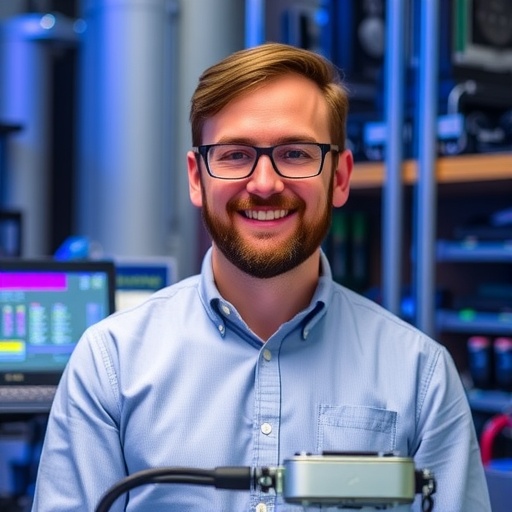
Engineers at the University of Massachusetts Amherst say they’ve improved edge-AI efficiency by redesigning both the algorithm and the hardware executing it. In a proof-of-concept language-identification task, their approach reached 95.24% accuracy while cutting computing resources by 90%. The work targets a key challenge in edge computing: devices often lack the energy, memory, and processing power needed for sophisticated AI. The team, led by Qiangfei Xia of UMass Amherst’s Nanodevices and Integrated Systems Lab, used hardware-algorithm co-design rather than adapting software to existing processors. Their platform centers on hyperdimensional computing, representing information with high-dimensional mathematical patterns instead of relying only on precise numerical values.
 xCruzo