Echoes of Light Near the Horizon Could Expose Black Hole Impostors
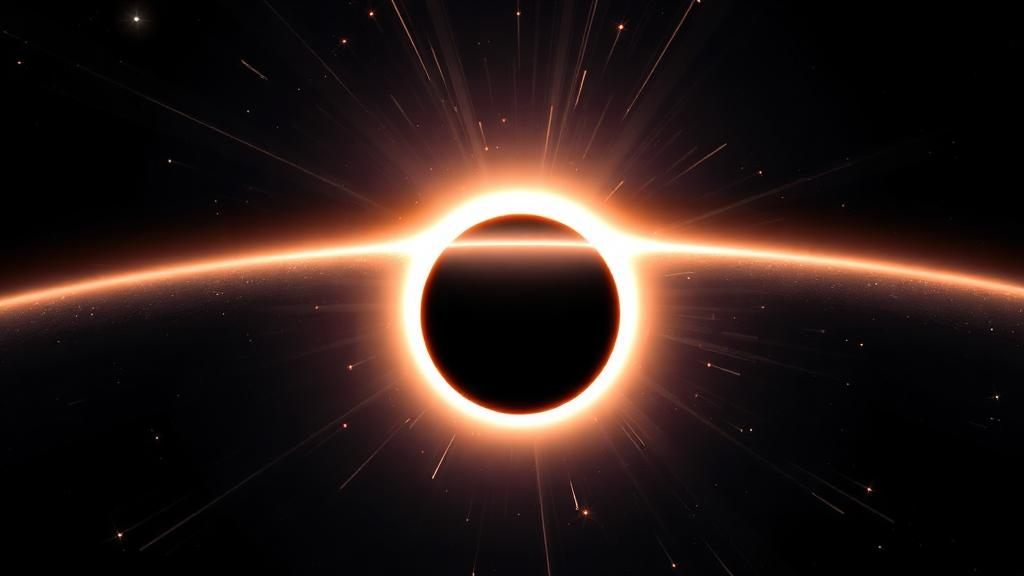
A theoretical study published in The European Physical Journal C proposes a potential way to test whether some “black hole” candidates might actually be horizonless mimickers. Researchers Sudipta Hensh, Jan Schee and Zdeněk Stuchlík suggest placing a perfectly reflective surface just above where a true event horizon would be. In that scenario, radiation emitted by a hot spot—an orbiting clump of bright, hot plasma in an accretion disk—could reflect off the surface and reach telescopes slightly late, creating faint delayed “echoes” in the light curve. The motivation links to the information-loss debate around Hawking radiation and the idea of replacing the horizon with hard structures. The authors model a thin, optically thick hot spot on a Keplerian orbit around a Kerr black hole, with a mirror at a small depth above the horizon radius.
 xCruzo