
This guide is the same in all 50 states See the US rule →
What is a VIN, and what do its 17 characters say?
It is a vehicle's fingerprint. Learn to read it in two minutes and never buy blind again.
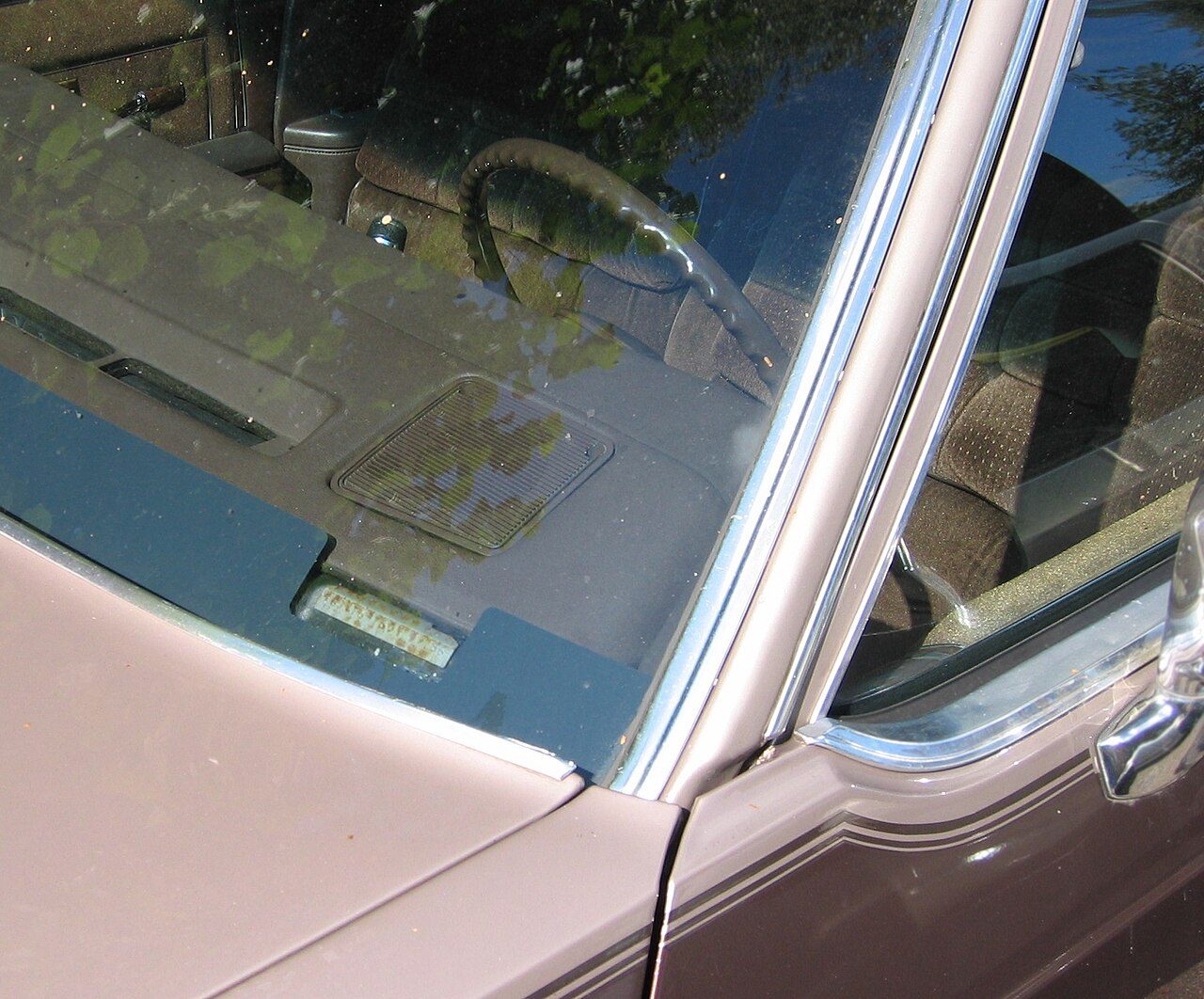
Every vehicle built for sale in the United States since model year 1981 carries a unique 17-character number: the VIN (Vehicle Identification Number). It is never repeated, never changes, and follows the car for its whole life: factory, title, insurance, recalls, reported accidents, auctions. If you want to know what car is really in front of you, start here.
What about foreign cars? Vehicles imported officially by their brand (Toyota, BMW, Hyundai, Volkswagen…) follow the same rule: they leave the factory with 17 characters, and the first one tells you where the car was assembled (J = Japan, W = Germany, K = Korea, 1/4/5 = USA, 2 = Canada, 3 = Mexico). Only two cases can carry a VIN in another format: a vehicle imported privately, which must go through a registered importer and receive a conforming VIN before it can be registered, and a classic over 25 years old, exempt from the federal safety standards. In those two, ask for the import paperwork and compare the chassis number with the title before you talk price.
Where it is
- On the dashboard, driver's side, visible from outside through the lower corner of the windshield.
- On the driver's door label (jamb or edge), along with the build date and tire pressures.
- On the paperwork: title, registration, insurance policy, and any serious listing.
What each part means
| Position | What it is | In the example |
|---|---|---|
| 1–3 | WMI: country and manufacturer. 1, 4 or 5 = USA; 2 = Canada; 3 = Mexico; J = Japan; K = Korea; W = Germany. | 1HG = Honda, built in the USA |
| 4–8 | Vehicle attributes: model, body, engine, restraint system. Each maker defines its own code. | CM826 = Accord, sedan, a specific engine and trim |
| 9 | Check digit: the result of a formula over the other 16. If it does not add up, the VIN is mistyped or fake. | 3 |
| 10 | Model year: one letter or digit per year (table below). | 3 = 2003 |
| 11 | Assembly plant. | A = a specific Honda plant |
| 12–17 | Serial number of that unit. | 004352 |
The model year (position 10)
| Code | Year | Code | Year | Code | Year |
|---|---|---|---|---|---|
| A | 2010 | G | 2016 | N | 2022 |
| B | 2011 | H | 2017 | P | 2023 |
| C | 2012 | J | 2018 | R | 2024 |
| D | 2013 | K | 2019 | S | 2025 |
| E | 2014 | L | 2020 | T | 2026 |
| F | 2015 | M | 2021 | V | 2027 |
The digits 1 to 9 were 2001 to 2009, and the letters A–Y (skipping I, O, Q, U, Z) covered 1980–2000. The cycle repeats every 30 years, which is why a 1986 VIN and a 2016 VIN share a letter; the rest of the VIN tells them apart.
What it does for you
- Recalls. NHTSA tells you for free whether that car has an open safety repair. An open recall is not the seller's fault, but it becomes your problem if you don't check.
- Identity. Confirm the listing tells the truth: year, trim, engine, where it was built.
- History. Previous titles, odometer readings, where it was listed and at what price. That no longer comes free anywhere; it is what you buy in a report.
- Paperwork. In every state, the VIN is the first thing you are asked for on a title or registration.
Three common mistakes when copying it
- Writing an O instead of a 0, or an I instead of a 1. A VIN never contains I, O or Q.
- Copying it from the listing instead of the car. Listings get it wrong, sometimes on purpose.
- Confusing the VIN with the engine number or the dealer's stock number. Only the VIN has 17 characters.
From a guide to the individual vehicle
Sources
- NHTSA — VIN Decoder (vPIC)
- 49 CFR Part 565 — Vehicle Identification Number Requirements
- NHTSA — Check for recalls by VIN
This guide informs; it is not legal or financial advice, nor an offer, quote or appraisal. Every figure carries its source and date; check it is still current before you decide.