Raindrop-Inspired Equations Reveal Coating Makes Iron Corrode Faster Yet
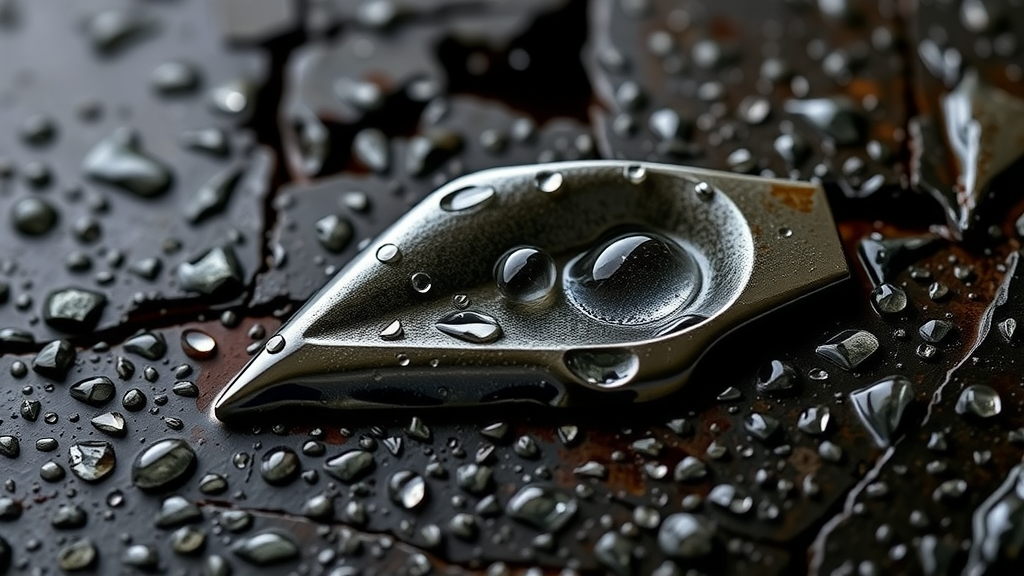
Researchers led by Professor Jiandong Ding at Fudan University developed a mathematical framework for how corrosion becomes uneven over time in biodegradable implants. Using the classic Poisson “raindrop problem,” they modeled randomly nucleating corrosion pits as raindrops and pit growth as expanding ripples, yielding equations that predict the spatiotemporal evolution of degradation. The work, published in Science China Materials, introduces a non-uniformity parameter, Γ, defined by average corrosion depth when 50% of the surface is corroded. In tests with bare iron versus iron coated with polylactide (PLA) in a blood-mimetic Hank’s solution, the PLA coating accelerated corrosion about threefold but reduced corrosion inhomogeneity by roughly 4,000 times, leading to later fracture of the coated metal despite faster degradation.
 xCruzo

:max_bytes(150000):strip_icc()/GettyImages-1871117306-e7b21bf01ee2463fbc7b099aa4822d7e.jpg)