Cadillac CT5 (CTS)
Midsize luxury sedan · 2002–present (CTS 2002–2019, CT5 2019–present). 14,861 units sold in the US in 2024
How it began
General Motors created the CTS within its Cadillac division. Its chief engineer was Bernie Lacroix; Jim Taylor led prestige vehicles and Mark LaNeve was Cadillac's general manager. The CT5 that replaced it had Mike Bride as chief engineer and Andrew Smith as Cadillac design chief. The refreshed 2025 version was led by chief engineer Alex MacDonald.
It was developed in Michigan and fine-tuned at Germany's Nürburgring circuit. For the U.S. market, production began at the Lansing Grand River plant in Lansing, Michigan: a $560 million plant that was GM's first new U.S. assembly plant since 1986. For the CT5, GM invested another $211 million in that same plant, where it is still assembled today.
The CTS was introduced at Pebble Beach, California in August 2001. The original announcement scheduled August 18; another period report cites August 17 without resolving whether they were different events. Customer-car production began November 12, 2001, and GM began dealer shipments January 7, 2002 as a 2003 model. The CT5 made its public New York debut in April 2019 as a 2020 model. The initial announcement forecast fall availability, but Cadillac Society’s original December 29 report documented the first dealer units in late December after the strike delay.
Assembly’s original 2002 report expands CTS as C-series Touring Sedan; Cars.com’s original account instead uses Cadillac Touring Sedan. With it, Cadillac left behind names like Eldorado and Fleetwood and adopted letters and numbers, as is common in Europe and Asia. In 2014 Cadillac announced that all its cars would use the letters CT followed by a number showing their size and place in the lineup; that is why the CTS's successor is called CT5.
Cadillac sales had fallen from 350,813 cars in 1978 to 172,083 in 2001, while BMW, Jaguar, Lexus and Mercedes-Benz chipped away at its lead. GM launched a $4 billion plan to renew the brand, and the CTS was the first piece: a rear-wheel-drive sedan of about $30,000 that replaced the slow-selling Catera, built to compete head-on with the BMW 5 Series, the Mercedes-Benz C-Class and the Lexus ES 300. In 2019 the CT5 took over as the entry door to Cadillac for people who prefer a sedan to an SUV.
Generation by generation
- Gen. 12003–2007 · Sigma
The one that changed Cadillac's face
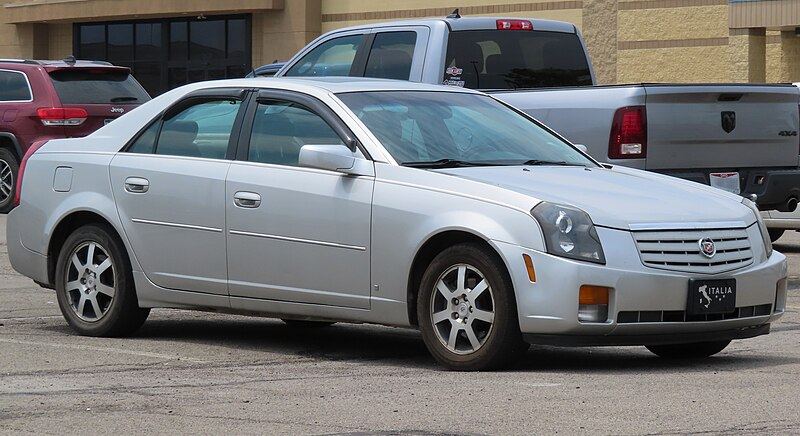
Photo: MercurySable99 · CC BY-SA 4.0 What changed. It was the first production car designed 100 percent with Cadillac's Art and Science philosophy: sharp lines, crisp angles and vertical headlamps. It replaced the Catera with an all-new rear-wheel-drive platform. At launch it used a 220 hp 3.2-liter V6, with a five-speed manual or a five-speed automatic.
The innovation. It introduced the Sigma platform, an architecture designed from scratch for rear-wheel drive, and was the first GM car built on it. It was tested extensively at Germany's Nürburgring, and its 5L40-E automatic was GM's first able to provide engine braking in all five gears.
If you buy one usedCheck selected CTS campaigns by VIN: 14V394 covers specified 2003–2014 ignition-key systems; until repaired, remove other key-ring items and the fob, leaving only the ignition key. Loss of Run can stop the engine and prevent airbag deployment; the free remedy modifies the keys/rings. Also check 10V105 for certain 2003–2007 front brake-hose fittings in listed sale/registration jurisdictions, 10V644 for 2005–2007 passenger sensing mats, and 14V542 specifically for 2004–2007 CTS-V fuel-module terminals and harnesses. Actual equipment, build dates and completed repairs matter. - Gen. 22008–2013 · Sigma
Motor Trend Car of the Year
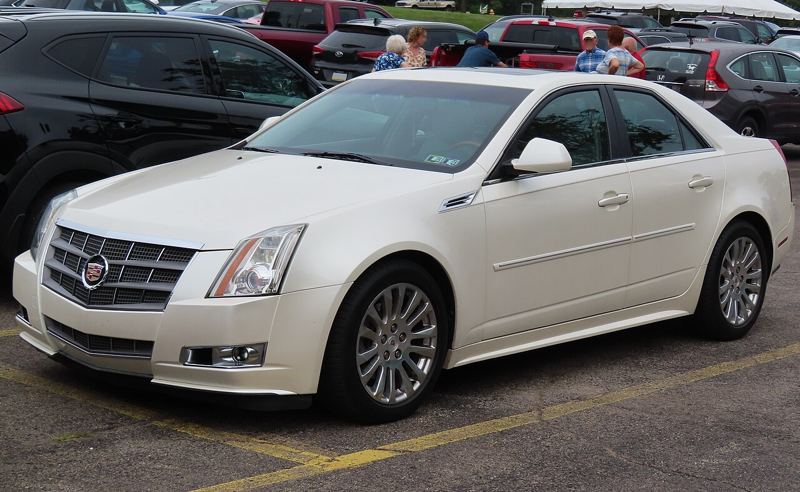
Photo: MercurySable99 · CC BY-SA 4.0 What changed. It used an upgraded Sigma platform, stiffer and with near 50/50 weight distribution. The cabin took a big leap, with hand-crafted trim and sapele wood. It was the first CTS with all-wheel drive, and it went on sale in August 2007 from $32,990 including freight, $540 less than the previous model with the same engine.
The innovation. It offered a 304 hp direct-injection 3.6-liter V6 that, according to Cadillac, cut hydrocarbon emissions by 25 percent. It added navigation with an 8-inch pop-up screen, 3D maps and a 40 GB hard drive that could rewind live radio.
If you buy one usedThe 14V394 ignition-key campaign also includes this CTS generation; observe its key-ring instruction until repaired. For heated-washer-equipped 2008–2009 cars, 10V240 removes and disables the module even after earlier fuse work. Check 11V089 on specified 2009–2010 rear toe-link nuts and 11V536 on 2012 cars built October 21–26, 2011 for the brake-booster pushrod nut. Confirm VIN-specific eligibility and completed inspections or repairs. - Gen. 32014–2019 · Alpha
Longer, lighter, more powerful
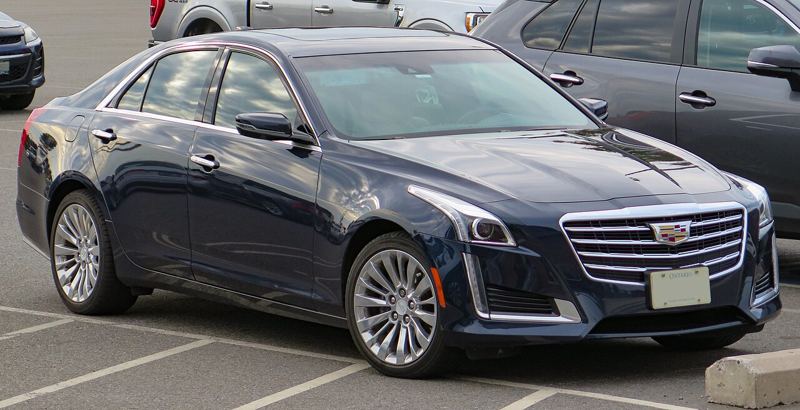
Photo: Elise240SX · CC BY-SA 4.0 What changed. It moved to the ATS's Alpha platform. It grew 5 inches longer and gained wheelbase for more rear legroom, yet weighed less thanks to aluminum doors. Design chief Mark Adams called it longer, lower and leaner. It offered three engines: a 272 hp 2.0 turbo, a 321 hp 3.6 V6 and a 420 hp twin-turbo V6.
The innovation. It debuted the 420 hp twin-turbo 3.6-liter V6, GM's most power-dense V6 ever at 118 hp per liter, together with Cadillac's first eight-speed automatic. It was also the first Cadillac with Automatic Parking Assist.
If you buy one usedSelected campaigns include 26V329, reported May 21, 2026, for certain 2015–2016 CTS driver-airbag inflators; its published notice describes interim letters and a later remedy notice, so verify current availability. Check steering-gear campaigns 19V086 and 25V175 on specified 2016–2018 cars; 18V595 on heated-front-seat 2014–2016 cars, whose software disables automatic seat heating during remote start; and 14V338 on specified 2014 cars built through March 20, 2014 for shift-cable seating. Ask Cadillac for the actual VIN’s required work and records. - Gen. 42020–present (CT5) · Alpha
CT5: the Escala-inspired fastback profile
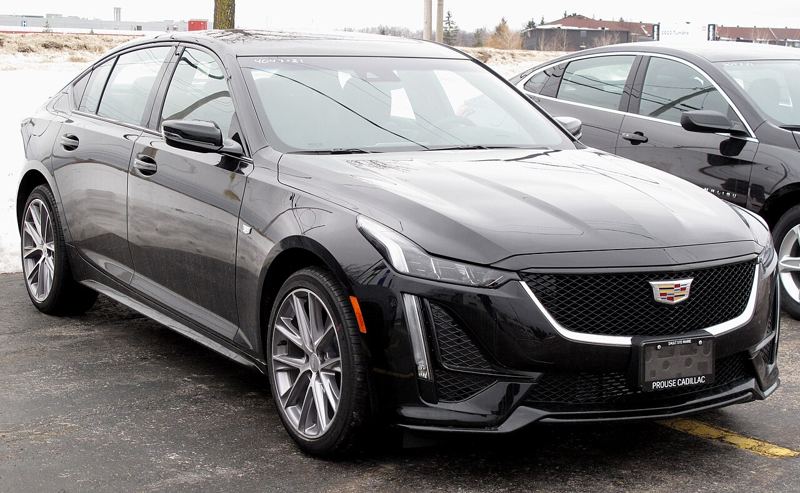
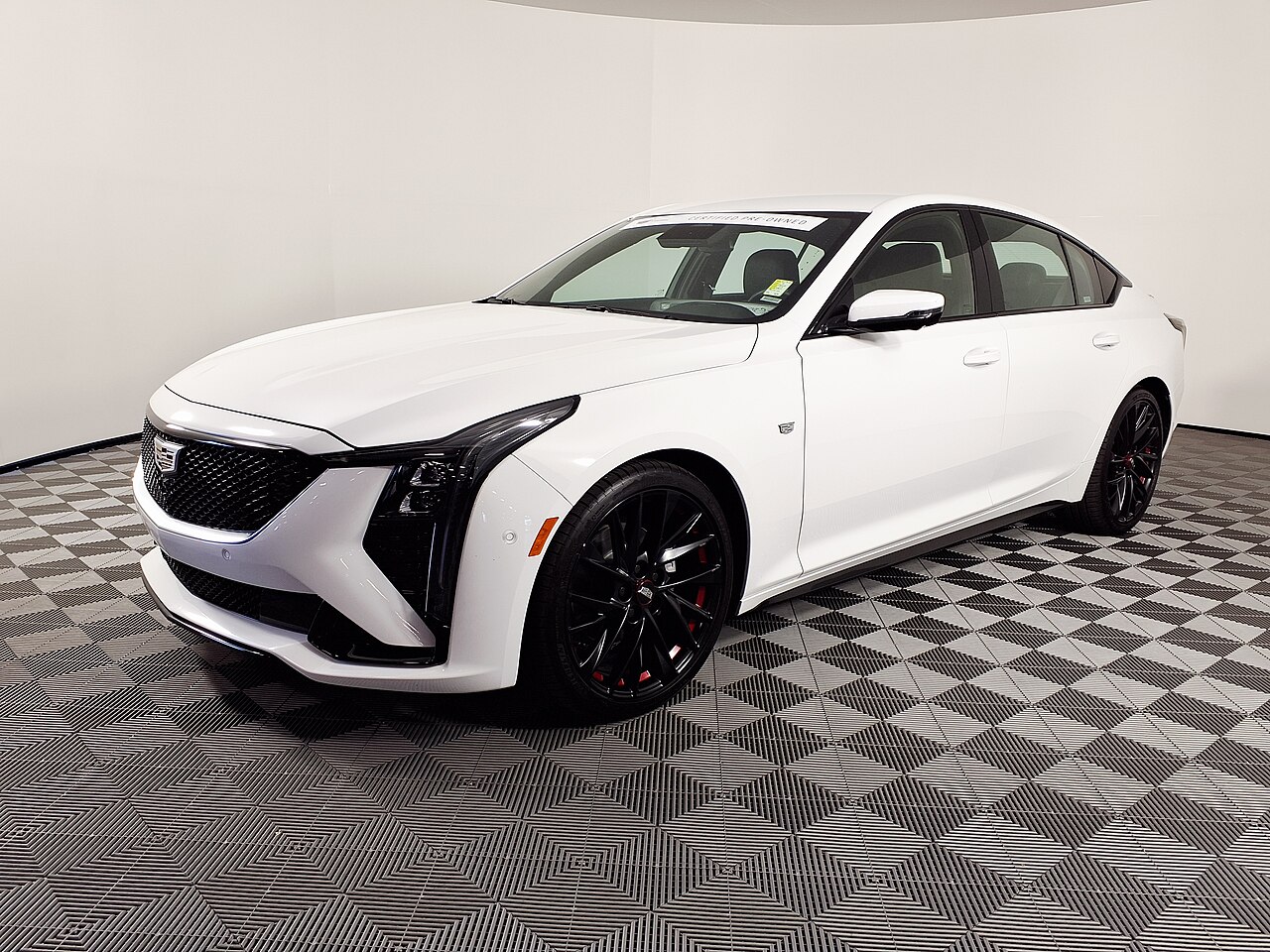
Photo: Elise240SX · CC BY-SA 4.0 What changed. Under the CT5 name it replaced the CTS on an updated Alpha platform, with rear- or all-wheel drive. It is shorter than the CTS but has a longer 116-inch wheelbase. Its design adopted a fastback profile inspired by the 2016 Escala concept; Cadillac had offered earlier fastback bodies, including the 1941 Series 61. It launched with a 237 hp 2.0 turbo and a 335 hp twin-turbo V6, both with a 10-speed automatic.
The innovation. It offered Super Cruise, GM's hands-free driver assistance on compatible roads. In 2021 came the CT5-V Blackwing, with a 668 hp supercharged 6.2-liter V8, the most powerful Cadillac built up to then, with a six-speed manual as standard. The 2025 refresh added a curved 33-inch display.
If you buy one usedFor CT5, selected campaigns are 21V611 for incorrectly installed 2020–2022 curtain airbags; 25V148 for certain 2020–2021 ten-speed transmissions whose internal damage can lock wheels, with a transmission-control monitoring update; 22V903 for 2020–2023 daytime-running-light control, updated at a dealer or OTA; and 20V588 for certain 2020 brake-boost sensor connections, requiring boost-module replacement. Software and hardware remedies differ. Confirm exact VIN eligibility and completed work with Cadillac.
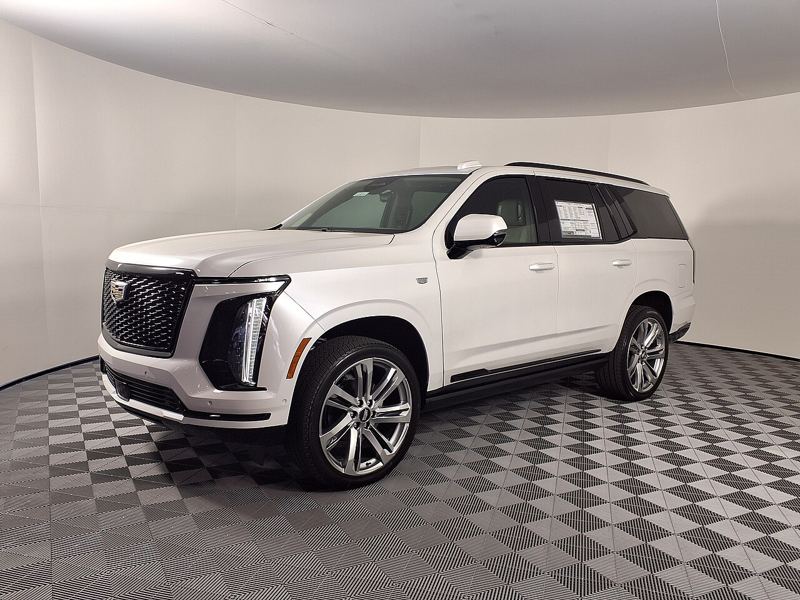 Cadillac Escalade1999–present
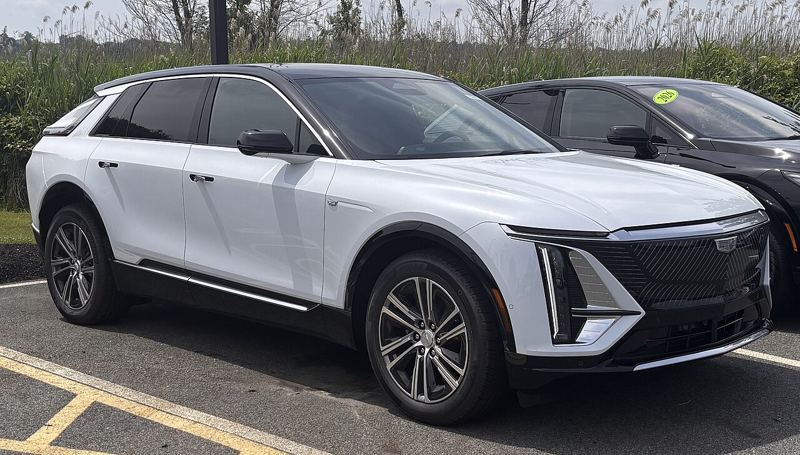 Cadillac Lyriq2023–present
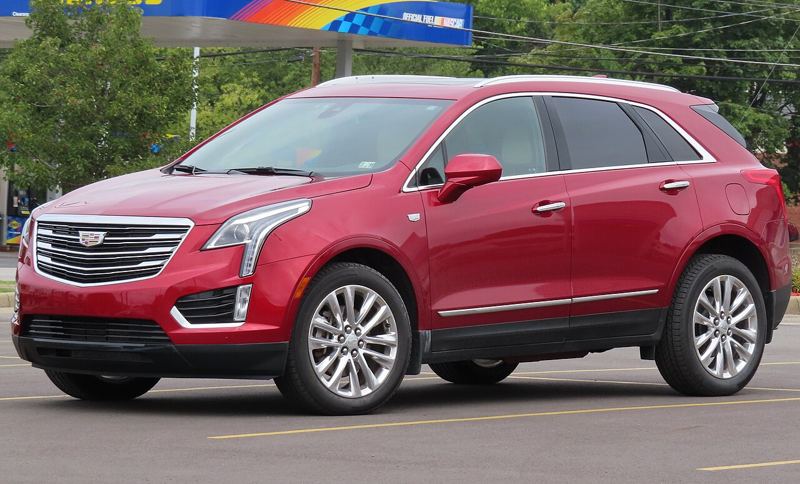 Cadillac XT5 (SRX)2004–present
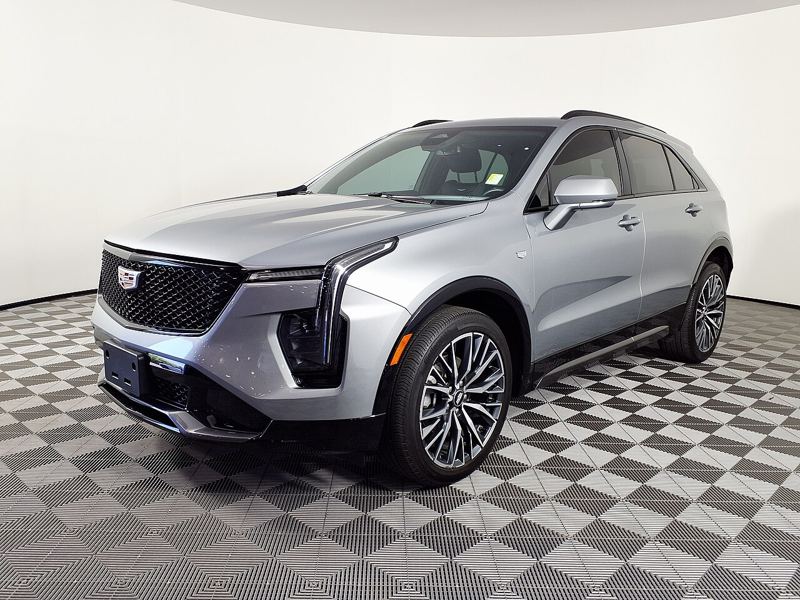 Cadillac XT42019–2025
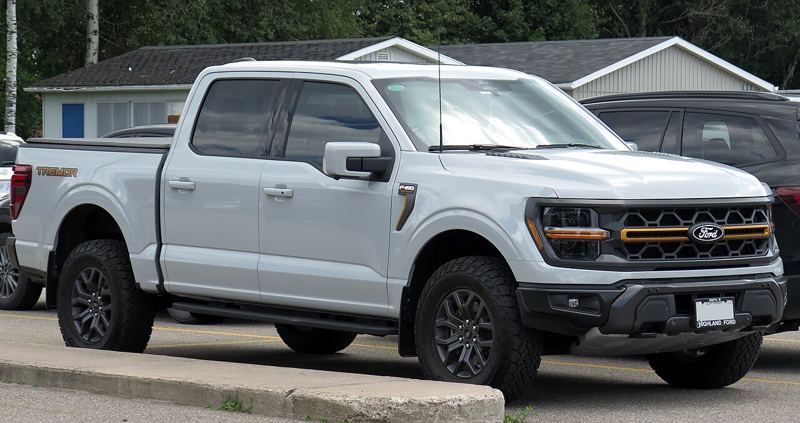 Ford F-Series (F-150)1948–present
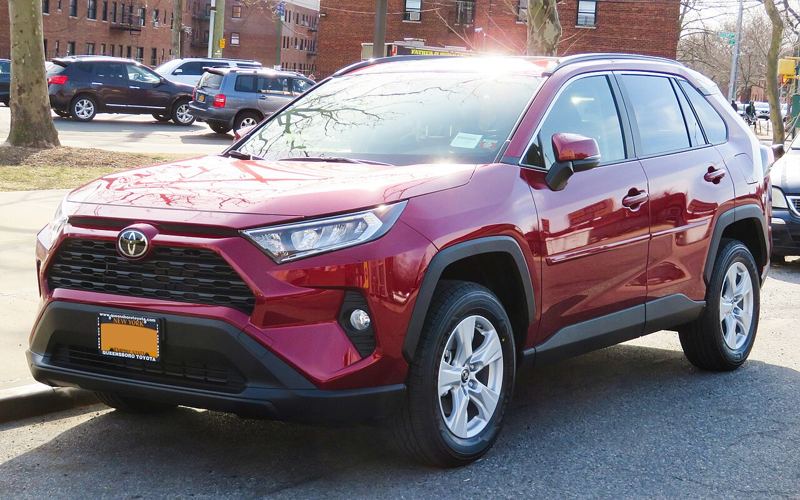 Toyota RAV41994–present (US from 1996)
 Honda CR-V1995–present
 Ram 15001981–present
 Tesla Model Y2020–present


