
Honda CR-V
Compact SUV · 1995–present. No. 4 in US sales, 2024 (402,791 units)
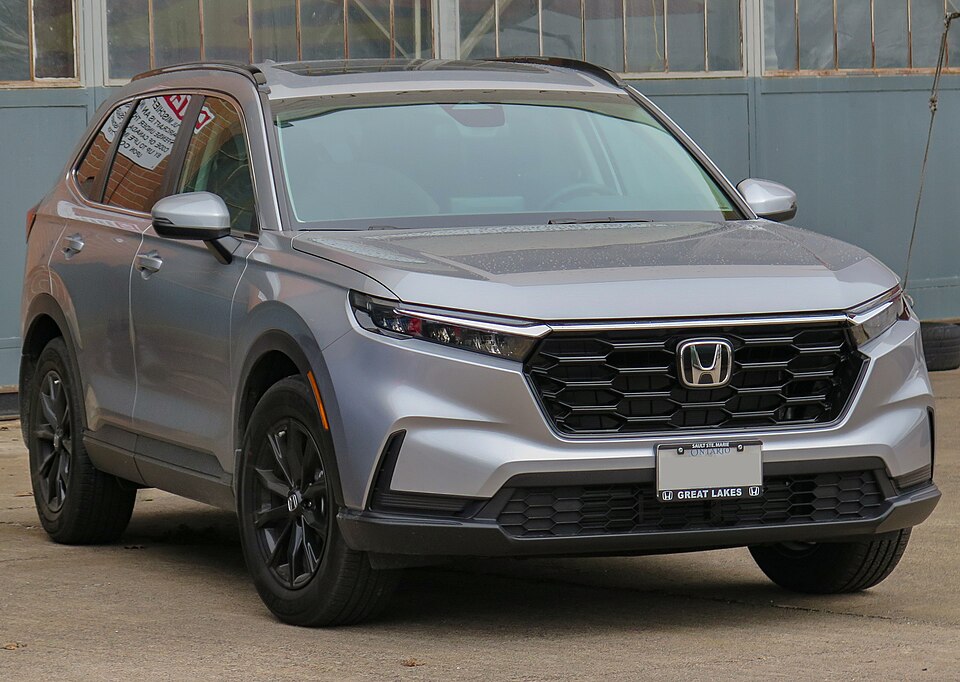
How it began
Honda developed the CR-V in Japan as the second Creative Mover, following the 1994 Odyssey. No original individual project leader was identified in the official pages reviewed. For the 2017 generation, a contemporary engineering interview identifies Takaaki Nagadome as development leader and Toshikatsu Takanohashi as powerplant project leader.
The CR-V originated in Japan and launched there through Honda Primo and Verno in 1995. Current North American assembly sites are East Liberty, Ohio; Greensburg, Indiana; and Alliston, Ontario. Hybrid production also occurs in Ohio and Canada; only the 2026 TrailSport Hybrid is exclusive to Indiana. Honda’s 2017 program records identified engines from Anna and Alliston and CVTs from Russells Point, Ohio; current hybrid records identify Anna engines and Ohio-built two-motor units.
Announced in Japan on October 9, 1995, and on sale there from October 12, 1995. It reached the United States as a 1997 model.
CR-V stands for "Comfortable Runabout Vehicle." Honda confirmed it in its 2001 press release and again at the 30th anniversary in 2025.
Honda describes the early SUV market as dominated by rugged off-road vehicles. It lacked its own RV range and sold OEM vehicles from Isuzu and Rover. The CR-V offered a different approach: a unibody, comfortable seating for five adults, cargo utility and automatic four-wheel drive when traction required it. Honda calls it a pioneer of the urban SUV.
Generation by generation
- Gen. 11997–2001 (Japón 1995–2001)
The SUV with a picnic table
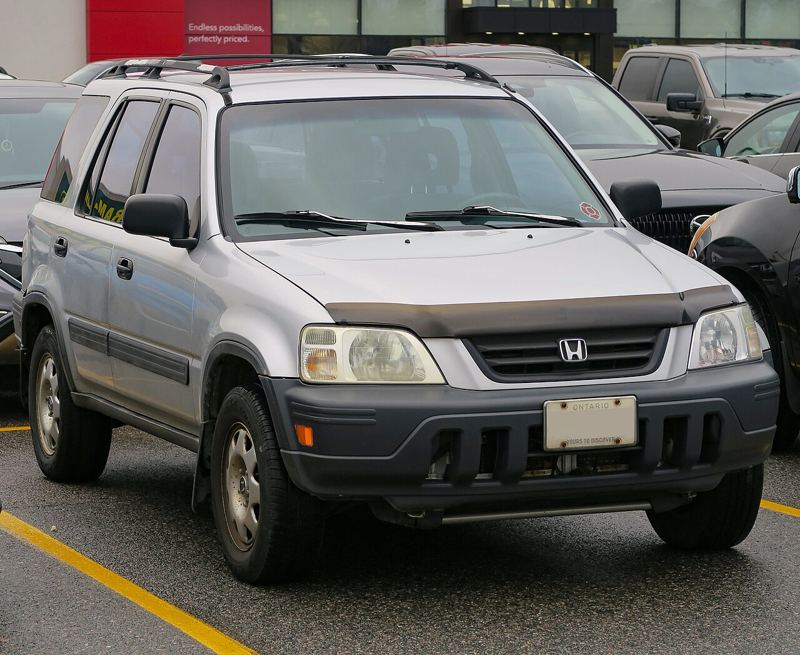
Photo: Elise240SX · CC BY-SA 4.0 What changed. It was the first SUV Honda designed and built itself. It used a unibody, a completely flat rear floor with a center walk-through and a 2.0-liter DOHC engine making 126 hp and 133 lb-ft (130 PS in Japan). In the US it came standard with Real Time 4WD, a 4-speed automatic and cruise control; a front-wheel-drive version and a 5-speed manual arrived in 1998, and power rose to 146 hp in 1999.
The innovation. The removable cargo floor unfolded into a picnic table, with a waterproof storage bucket underneath. Honda describes the original CR-V as the only contemporary SUV with double-wishbone suspension at all four wheels.
If you buy one used1997–2000 CR-Vs are covered by NHTSA recall 20V-026 for the driver airbag inflator (Takata non-azide); Honda replaces it free. There was also a 2002 recall for the ignition switch (NHTSA 02V-120). Before buying, run the VIN at nhtsa.gov/recalls. - Gen. 22002–2006
Grows up and debuts i-VTEC
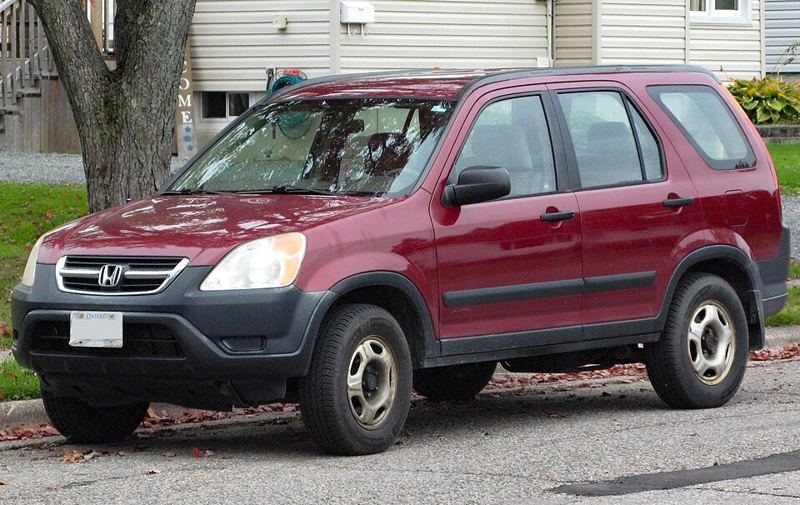
Photo: Elise240SX · CC BY-SA 4.0 What changed. It moved to Honda’s Global Compact Platform, with more cabin space, sliding rear seats and a side-opening tailgate with separately opening glass. The U.S. 2.4-liter i-VTEC produced 160 hp and 162 lb-ft; it was the first Honda-brand i-VTEC application in North America. Front side airbags were optional on LX and standard on EX. In 2005 a five-speed automatic became available across trims while the EX manual remained; side curtains and VSA became standard.
The innovation. The K24 i-VTEC combines continuously variable intake cam timing with VTEC valve control to balance performance and fuel economy. Honda later used versions of this technology in many other models.
If you buy one usedThree documented recalls: the driver's power window master switch can melt and start a fire (NHTSA 12V-486, 2002–2006 models, expanded under 20V-768); the low-beam headlight harness can fail (NHTSA 12V-136, 2002–2004 models); and Takata driver and passenger airbag inflators across several years, including 2005–2006 (for example NHTSA 14V-700 and 19V-499/501). Ask for repair records and confirm the VIN at nhtsa.gov/recalls. - Gen. 32007–2011
Goes American
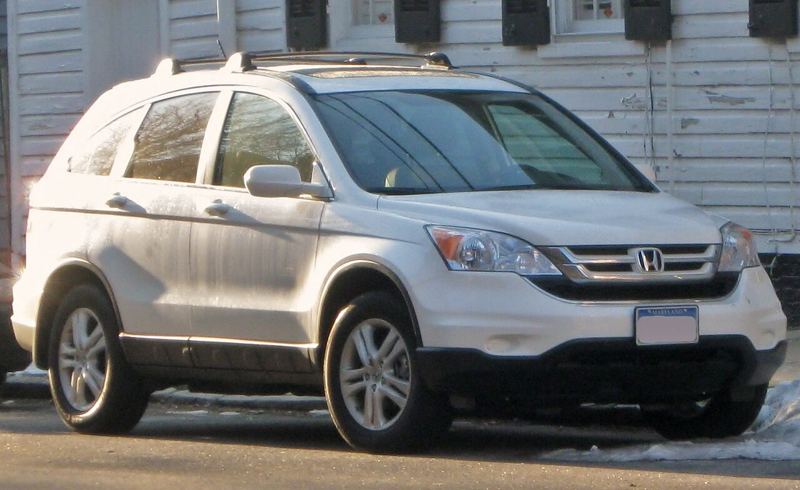
Photo: IFCAR · Public domain What changed. It gained a top-hinged liftgate and moved the spare tire under the floor. The body was shorter and hip room increased, although some other interior dimensions stayed the same or decreased. The 2.4 made 166 hp, rising to 180 hp for 2010; a five-speed automatic was the only transmission, and Real Time 4WD could transfer 20% more torque to the rear wheels. East Liberty production began in September 2006 for model year 2007; the CR-V became America’s best-selling SUV in calendar 2007.
The innovation. The multi-level cargo shelf, which splits the trunk into two floors so grocery bags do not pile onto anything fragile.
If you buy one used2007–2011 models fall under the Takata driver and passenger inflator recalls (several campaigns, including NHTSA 16V-346, 17V-030, 18V-042 and 19V-500/502). In 2011 there was a recall for the automatic transmission software: on certain 2007–2010 cars, a secondary-shaft bearing race can break; fragments can lodge in the parking pawl and let the vehicle roll after Park is selected (NHTSA 11V-395). In 2023 Honda recalled vehicles in northeastern and midwestern states for rear trailing-arm corrosion from road salt (NHTSA 23V-228). Check the VIN at nhtsa.gov/recalls. - Gen. 42012–2016
More efficient, with eyes of its own
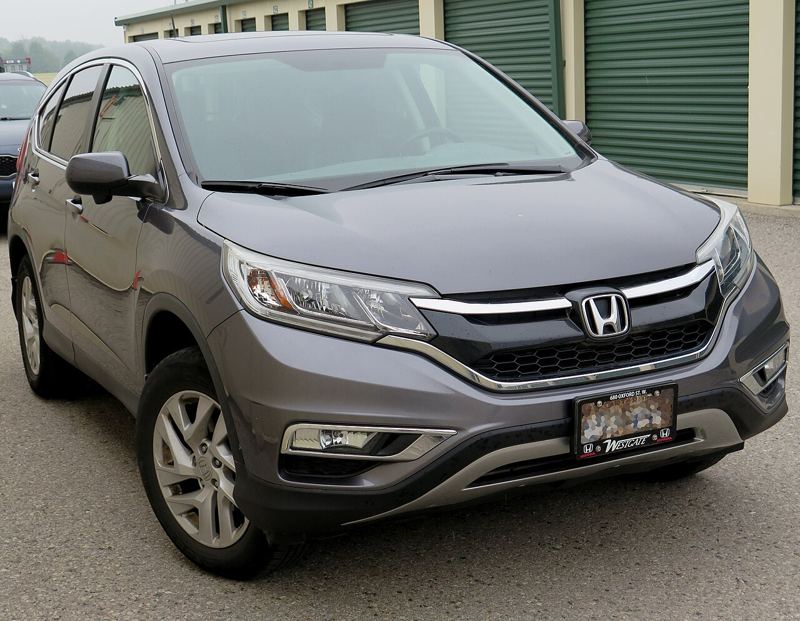
Photo: Elise240SX · CC BY-SA 4.0 What changed. Sharper lines, better fuel economy and a 2.4 with 185 hp and 163 lb-ft. It gained remote-folding rear seatbacks and Real Time AWD with Intelligent Control. For 2015 came direct injection (181 lb-ft, up 11%), the CR-V's first CVT, a 7-inch touchscreen and the Honda Sensing safety suite on the Touring. MotorTrend named it 2015 SUV of the Year.
The innovation. Honda Sensing (2015): automatic braking, collision warning, lane keeping and adaptive cruise control in a high-volume compact SUV.
If you buy one usedDocumented recalls: the shifter can leave Park without the brake pressed in freezing weather (NHTSA 13V-143, 2012–2013 models); front door latches may not latch properly (NHTSA 12V-338, 2012 model); some 2016s built October 12–19, 2015, have a defective driver airbag inflator (NHTSA 15V-714); and 2015–2016s that received a replacement engine may have the wrong pistons (NHTSA 17V-305). Many 2013–2016s are also in the fuel-pump recall for pumps that can fail and stall the engine (NHTSA 23V-858). Confirm the VIN at nhtsa.gov/recalls. - Gen. 52017–2022
The turbo and the first hybrid
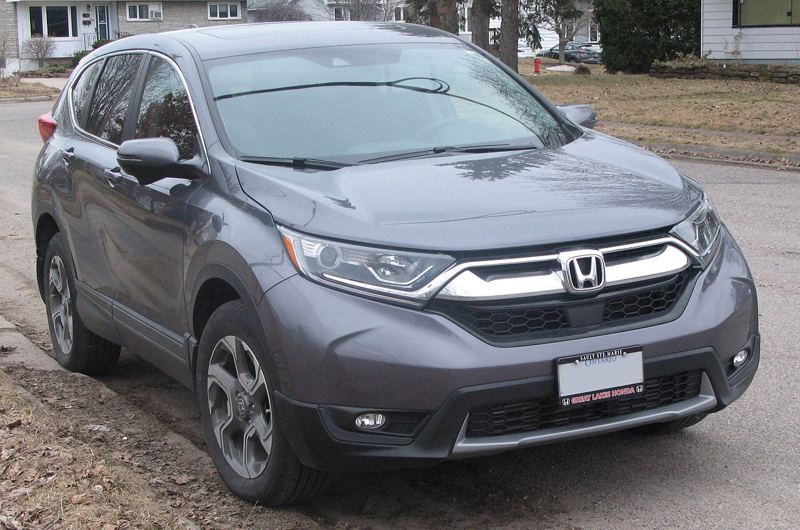
Photo: SsmIntrigue · CC BY-SA 4.0 What changed. Bigger, roomier and bolder in design. It introduced the CR-V's first turbo engine in the US: a 1.5-liter with 190 hp and 179 lb-ft, with a CVT across the range. Honda Sensing became standard from the EX trim, and Apple CarPlay and Android Auto arrived. Production expanded to Greensburg, Indiana, in 2017 and Marysville, Ohio, in 2018. In 2020 the first CR-V Hybrid appeared, with a two-motor system, a 2.0-liter engine and 212 hp.
The innovation. The two-motor hybrid system: the electric motor drives the wheels most of the time while the gasoline engine works as a generator, with no conventional transmission. It is the basis of today's Honda hybrids.
If you buy one usedThe 2017–2018 1.5 turbo had a documented problem of fuel diluting the engine oil, mainly in cold climates and on short trips; Honda updated the software, offered an oil change and extended the warranty on certain parts to 6 years with no mileage limit (reported by Consumer Reports, May 2019). Recalls: the power steering can assist in the wrong direction at full lock (NHTSA 18V-663, 2017–2018); the front seat-belt buckle may not latch (NHTSA 23V-158, 2017–2020); rear subframe bolts can loosen (NHTSA 19V-865, 2019–2020); and the fuel pump can fail (NHTSA 21V-215 and 23V-858, 2018–2020). Ask whether the software update was done and run the VIN at nhtsa.gov/recalls. Passenger-seat weight-sensor campaigns 24V-064 (certain 2020–2021 CR-Vs) and its expansion 26V-332 (certain 2017–2022 CR-Vs) also belong to this generation. - Gen. 62023–present
Half hybrid, all best seller
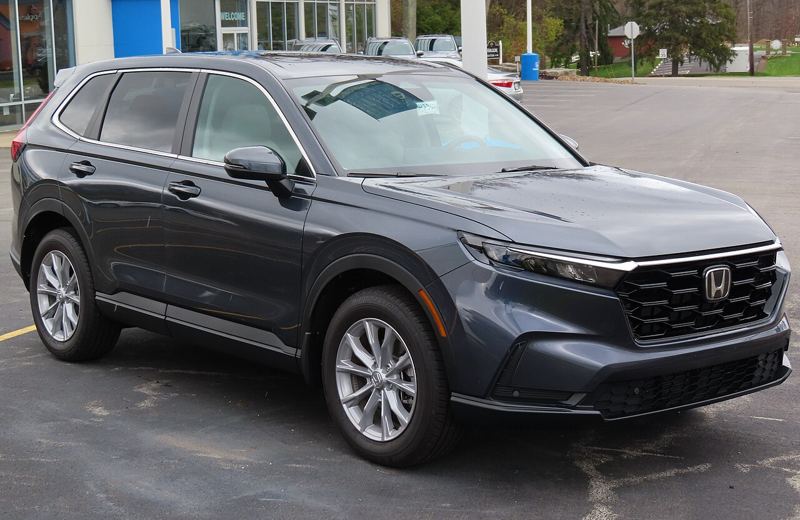
Photo: MercurySable99 · CC BY-SA 4.0 What changed. A more rugged design, more room and more power. The 190-hp 1.5 turbo continues on LX, EX and EX-L; the hybrid uses a 2.0-liter Atkinson-cycle engine with a new two-motor system: 204 hp and 247 lb-ft. Honda projected that half of sales would be hybrids, and in 2024 it got there. It is built in East Liberty, Ohio; Greensburg, Indiana; and Alliston, Ontario. For 2026 it added the TrailSport Hybrid with all-terrain tires, a 9-inch touchscreen and standard wireless charging.
The innovation. The 2025 CR-V e:FCEV: the first production vehicle in the United States to combine a hydrogen fuel cell with a plug. 174 hp, 270 miles of EPA range and up to 29 miles on battery alone; assembled in Marysville, Ohio.
If you buy one used2023–2025 CR-V and CR-V Hybrid (and the 2025 e:FCEV) are in NHTSA recall 24V-744 for the steering gearbox: a worm wheel can swell and raise friction, causing "sticky" or heavy steering; the fix is free (new spring and grease). There was also a recall for tires missing a date code on some 2024s (NHTSA 24V-508). Confirm the VIN at nhtsa.gov/recalls.
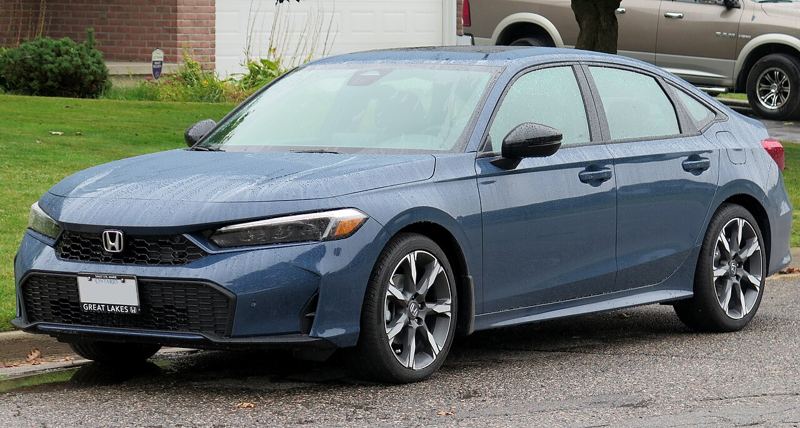 Honda Civic1972–present
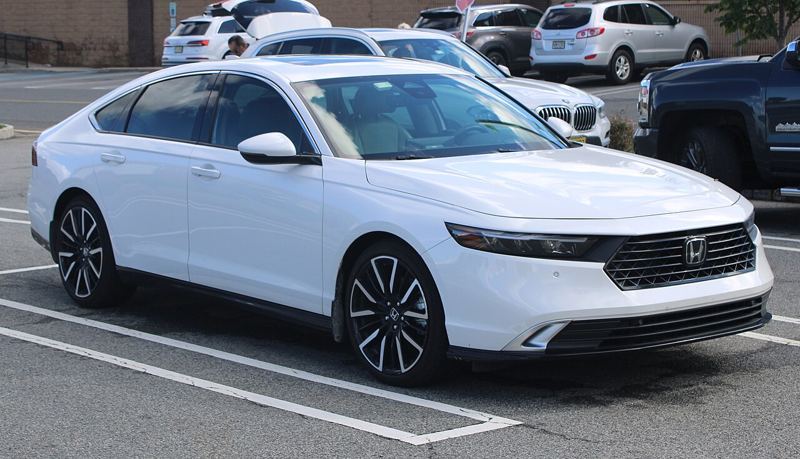 Honda Accord1976–present
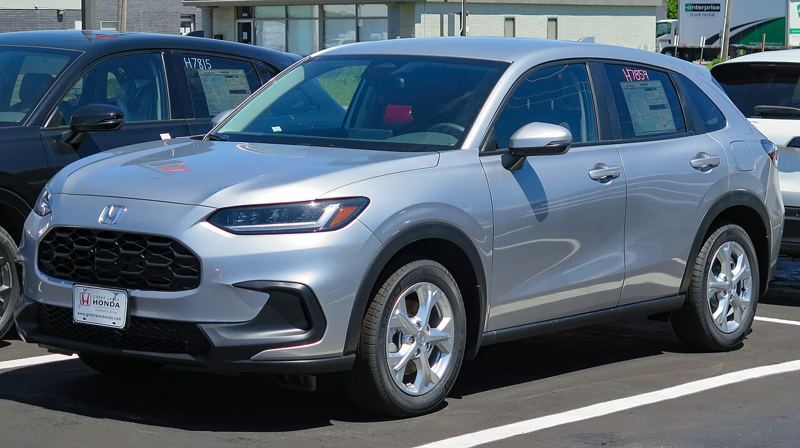 Honda HR-V2016–present
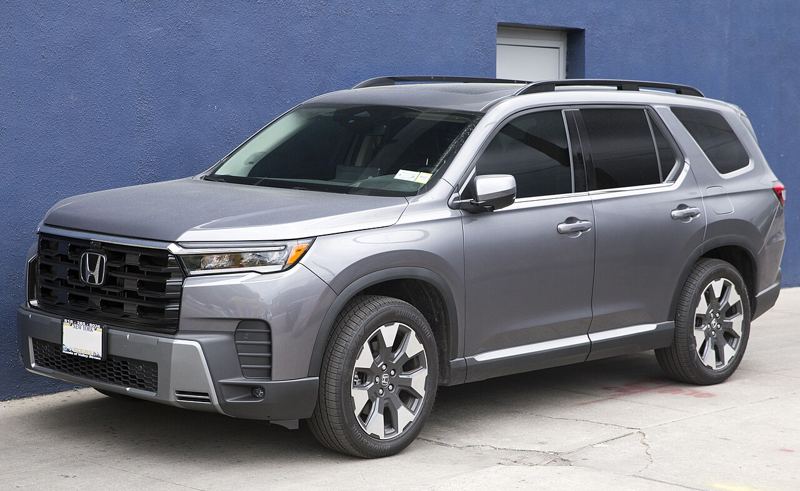 Honda Pilot2003–present
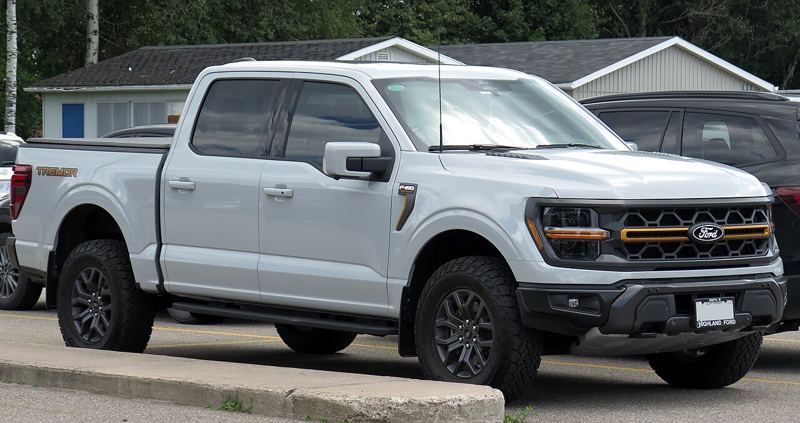 Ford F-Series (F-150)1948–present
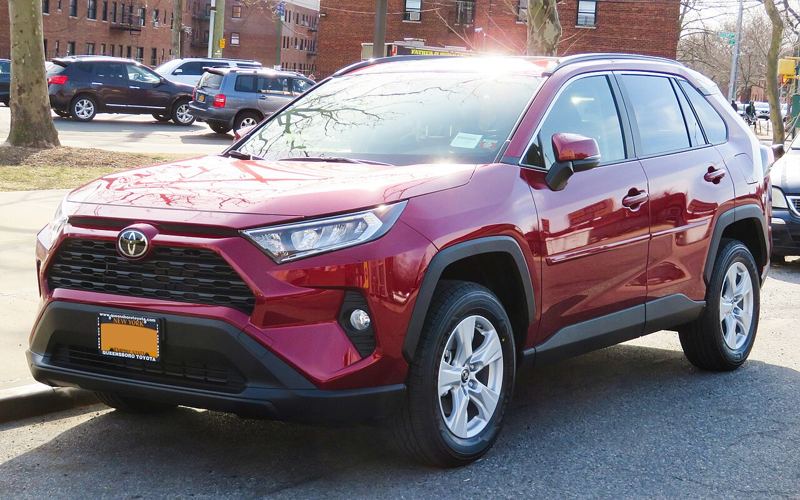 Toyota RAV41994–present (US from 1996)
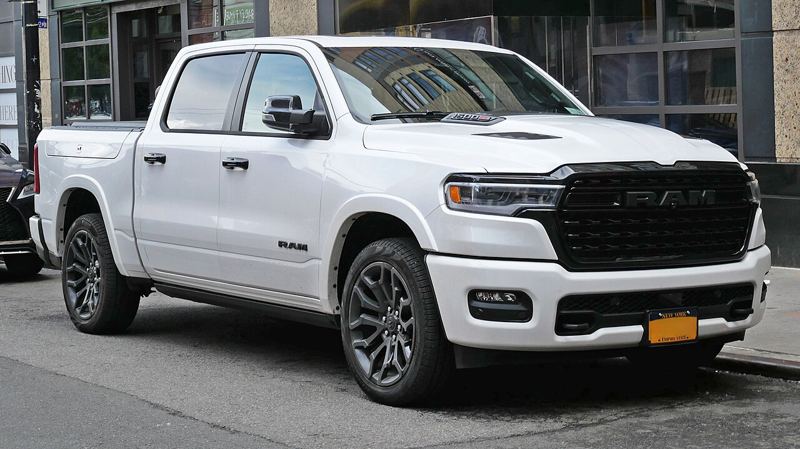 Ram 15001981–present
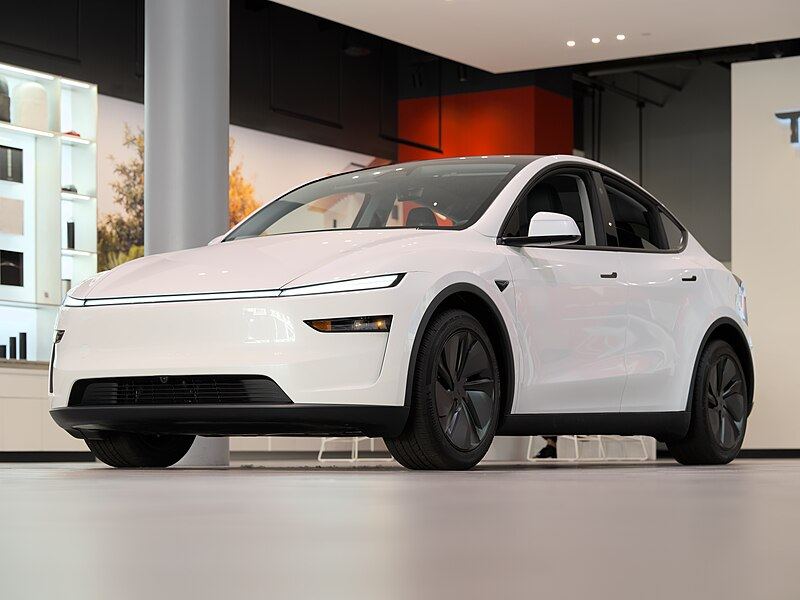 Tesla Model Y2020–present
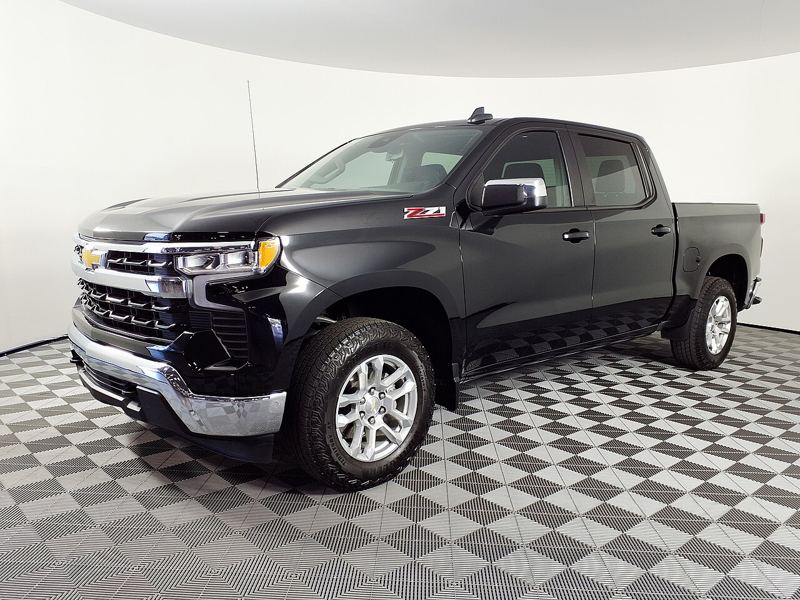 Chevrolet Silverado1999–present


