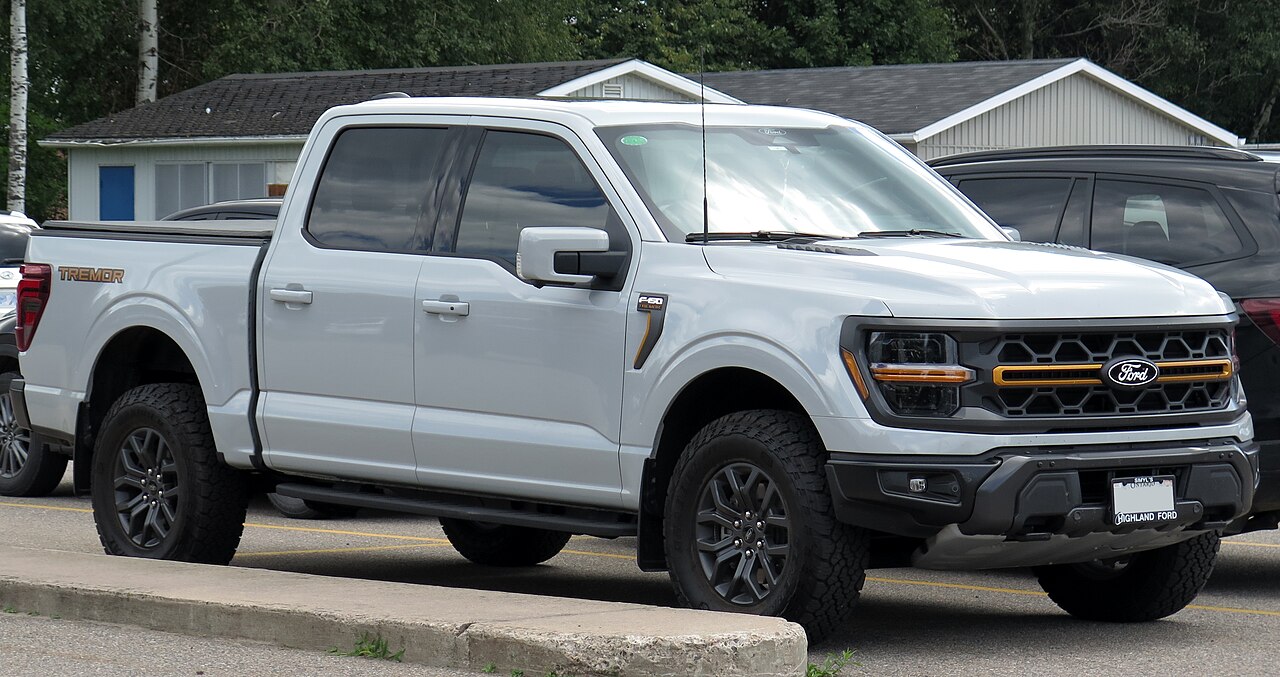
Ford F-Series (F-150)
Full-size pickup truck · 1948–present. No. 1 in US sales, 2024 (732,139 units)
How it began
Ford Motor Company presented the new 1948 F-Series as its first new postwar product. The F-150 joined that family for model year 1975.
Ford’s headquarters and its 1948 news bureau were in Dearborn, Michigan. Current Ford documentation identifies Dearborn Truck Plant and Kansas City Assembly in Claycomo, Missouri, as F-150 assembly plants.
The new F-Series range was shown to the public on January 16, 1948, as a 1948 model. The F-150 arrived for model year 1975.
The F identifies Ford’s truck series. In 1948 the range ran from the half-ton F-1 to the heavy F-7 and F-8. In 1953, Ford’s 50th anniversary year, F-1 became F-100, F-2 and F-3 combined as F-250, and F-4 became F-350. The 1975 F-150 occupied a position between F-100 and F-250.
Ford promoted its roomier 1948 cab as the Million Dollar Cab and offered a 100-hp V8. In 1975, the F-150 added a half-ton model rated up to 6,050 lb gross vehicle weight, positioned between the F-100 and F-250. Its brochure combined the F-100’s ride comfort with nearly the payload of an F-250.
Generation by generation
- Gen. 11948–1952 · F-1 "Bonus-Built"
The new postwar F-Series
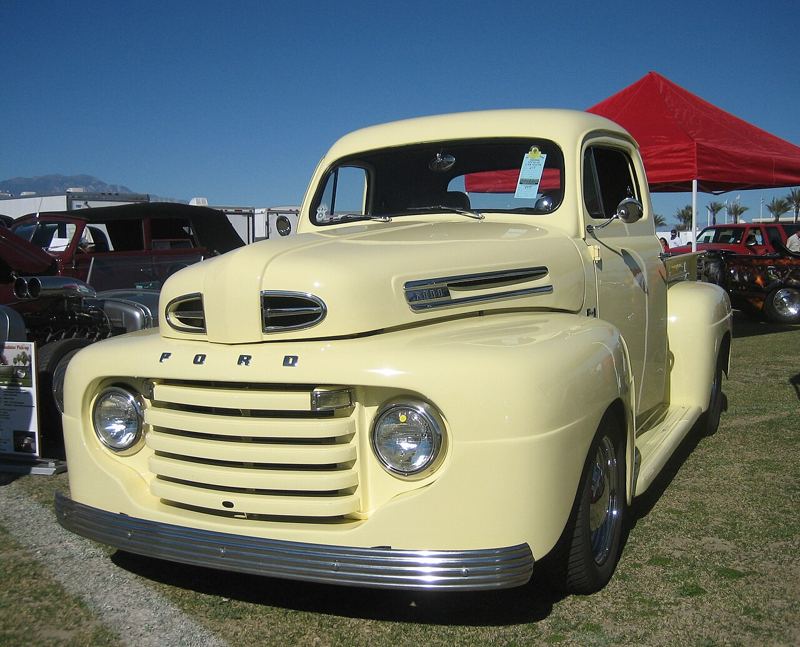
Photo: Mister Falcon · CC BY-SA 3.0 What changed. The new 1948 range introduced a new cab and steering and suspension improvements. The half-ton F-1 retained a 114-inch wheelbase; the family also included heavy models such as F-7 and F-8.
The innovation. Ford promoted the Million Dollar Cab with seven inches of added width and more headroom, alongside telescopic shock absorbers it called airplane-type.
If you buy one usedThese trucks are more than 70 model-years old in 2026. The original 1948 Ford release lists a 95-hp six and 100-hp V8; these are historical advertised ratings, not measured present output. A few dated model-name searches returning zero do not establish that every year, alias or equipment record is recall-free. Have a classic-truck specialist inspect frame, brakes, steering and engine authenticity. - Gen. 21953–1956 · F-100
The F-100 name is born
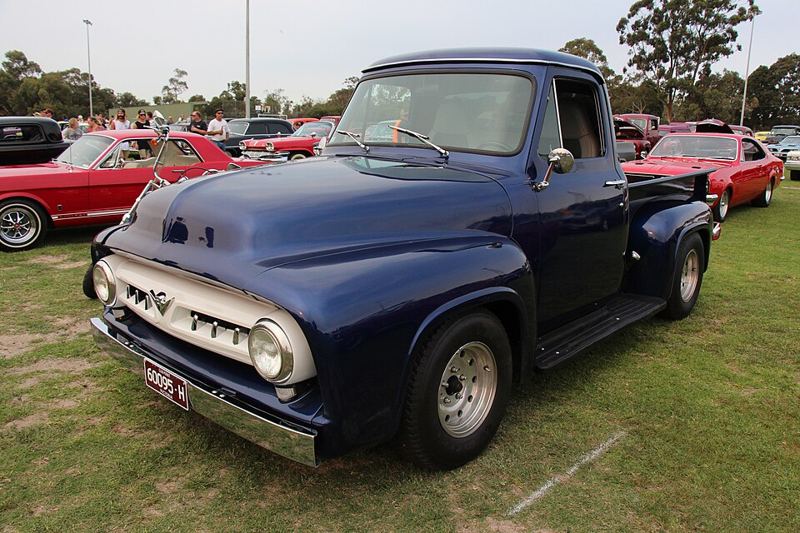
Photo: Sicnag · CC BY 2.0 What changed. The 1953 redesign introduced F-100, F-250 and F-350 names. Robert Tate’s MotorCities archive history puts the program’s cost at $30 million. Sun visors, armrests, dome lighting and an optional radio were offered. The three-digit naming pattern continues in later models such as F-150, F-250 and F-350.
The innovation. Fordomatic was a new optional automatic for 1953. For 1954, the flathead V8 gave way to the 239-cubic-inch, 130-hp OHV Y-block. Ford inline-six truck engines had already used overhead valves before that V8.
If you buy one usedThe original U.S. 1953 F100 brochure rates the six at 101 hp and the V8 at 106 hp. The 1954 brochure gives 115 hp and 130 hp respectively. Extra-cost driver/helper belts are documented by 1956; the retained evidence does not establish the claimed 1954 power-steering introduction. Check the actual truck’s equipment and condition without treating an incomplete recall search as proof of no campaigns. - Gen. 31957–1960 · F-100
Wide cab and Styleside bed
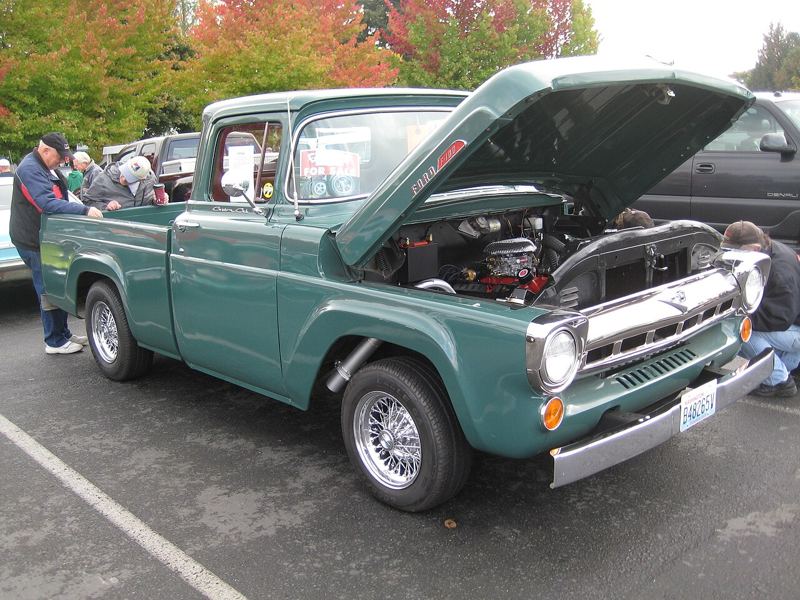
Photo: JOHN LLOYD from Concrete, Washington, United States · CC BY 2.0 What changed. Squared-off, wide styling that set the pattern for decades, with a full-width cab and a clamshell hood. It was also the first year of the Ranchero.
The innovation. The smooth-sided Styleside bed used additional width to offer more cargo volume than a Flareside of comparable length.
If you buy one usedThe 1957 factory table lists a 139-hp 223 six and optional 171-hp 272 V8; the 1959 brochure offers a larger 292 V8 rated 186 hp. These are period gross ratings and specific examples, not every configuration. Inspect the actual truck and use exact year/nameplate records; a missing database match does not establish global recall absence. - Gen. 41961–1966 · F-100
The unibody experiment and Twin I-Beam
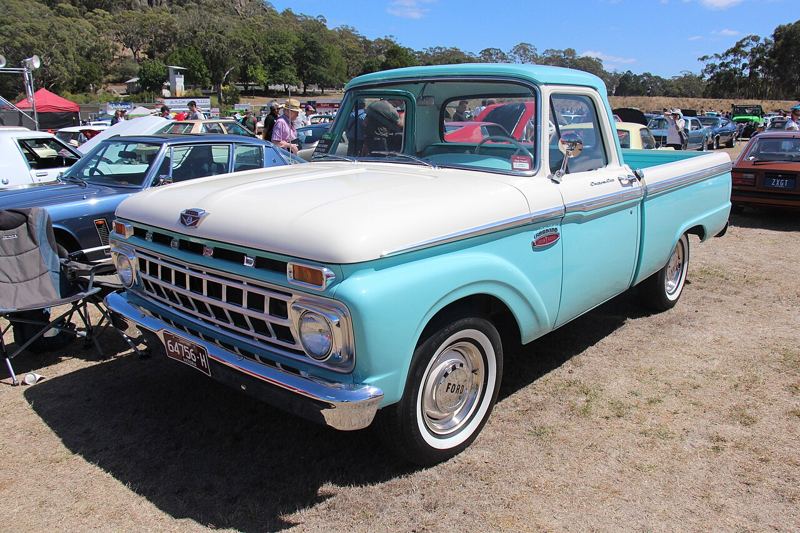
Photo: Sicnag · CC BY 2.0 What changed. Ford lengthened the wheelbases and offered an integral cab-and-bed body often called unibody. It retained a separate frame, rather than modern unitized body/chassis construction. The original 1965 recreation brochure already offered Ranger interior trim on F-100 and F-250.
The innovation. Twin I-Beam debuted on the 1965 F-100 and F-250, promoted as combining car-like comfort with truck work. Its use continued beyond the following fourteen years: the 1980 brochure still offered it on 4x2 pickups. The 240- and 300-cubic-inch inline sixes also arrived in 1965.
If you buy one usedHave a classic-truck specialist check structural alignment and door operation, including under load where safe, and inspect Twin I-Beam suspension geometry and tire wear. The reported overload/door-jamming and owner tire-wear anecdotes have not been independently established here as engineering facts. Check actual condition and campaign/service history rather than infer recall absence from a missing model-name match. - Gen. 51967–1972 · F-100
More cab, FORD letters on the hood
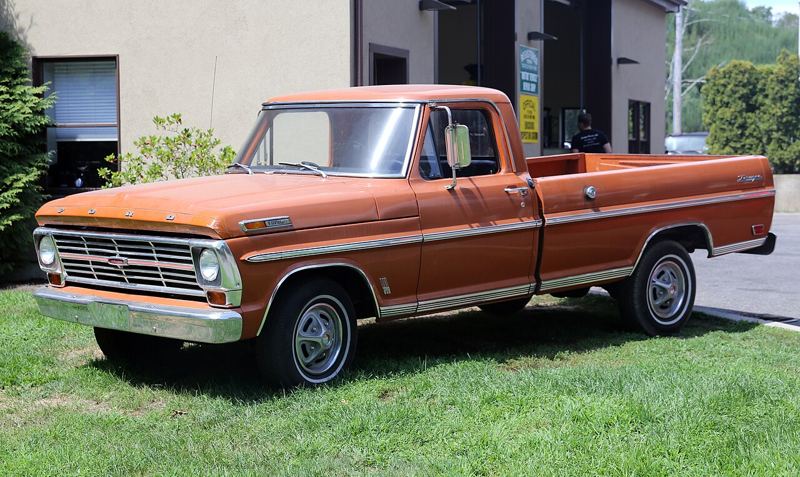
Photo: Mr.choppers · CC BY-SA 3.0 What changed. It grew in wheelbase and the cab gained almost four inches of room. The grille integrated the headlights and the hood wore block FORD letters. Optional air conditioning and big engines arrived.
The innovation. The 1970 brochure presented Ranger XLT as an upscale trim package. The main 1972 brochure listed Custom, Sport Custom, Ranger and Ranger XLT.
If you buy one usedThe original revised 1967 U.S. brochure gives 150 gross hp for the standard 240 six; the 1968 table offers a 390 V8 at 255 gross hp. Actual 66V014 includes 1967 F100 brake pushrod retaining-ring problems, with a bumper-stop remedy. Other records include 72V240 steering on certain 1972–1973 F100s. Check exact build/equipment and completed work; this cohort is not absent from NHTSA records. - Gen. 61973–1979 · F-100 / F-150
The F-150 is born
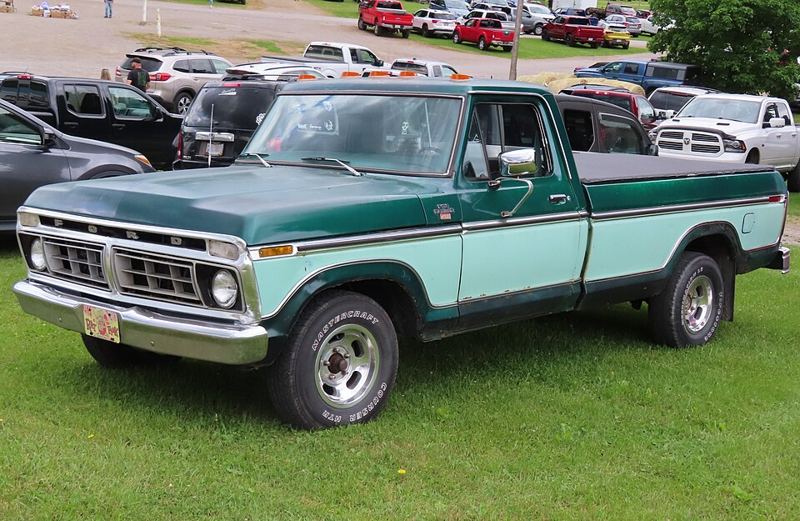
Photo: MercurySable99 · CC BY-SA 4.0 What changed. The 1973 Styleside body used galvanized panels and parking lamps above the headlamps. The new 1974 SuperCab added room behind the front seats. The F-150 arrived for 1975 with up to 6,050 lb gross vehicle weight, between F-100 and F-250. The 1978 brochure shows rectangular headlamps standard on Ranger, while Custom retained round lamps.
The innovation. The 1975 sales material stressed that F-150 could use leaded or unleaded gasoline. F-Series took the U.S. truck-sales lead in 1977; Ford confirms a run of 49 completed years through 2025.
If you buy one usedF100 and F150 nameplates coexist within this era, and Ford’s actual 1983 sales brochure still lists both. This does not mean an F150 existed in every year of the 1973–1979 heading. Current records positively include 72V240 for certain 1973 F100 power-steering lock pins; inspect/install the pin as required. No saved original request proves the earlier reported zero-result search; query the exact actual model and year. - Gen. 71980–1986 · F-150
"The first new truck of the 1980s"
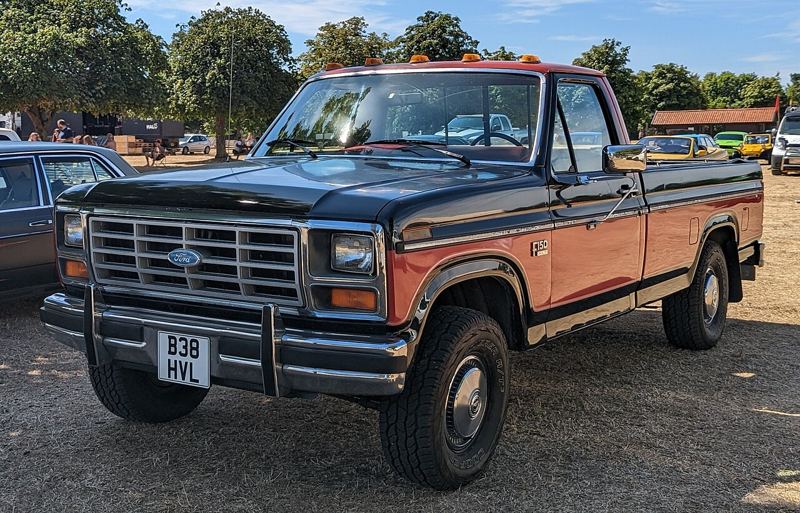
Photo: Calreyn88 · CC BY-SA 4.0 What changed. The 1980 redesign renewed body, cab and chassis. A contemporary Ford technical study documents its aerodynamic development. Power windows and door locks were available. The 1983 brochure still included both F-100 and F-150.
The innovation. For 1983, the new International Harvester-designed 6.9-liter diesel V8 was offered on F-250 HD and F-350, rather than F-150. That year’s brochure offered a 3.8-liter V6 as the F-100 base engine; F-150 used the 4.9-liter inline six.
If you buy one usedThe original 1980 Ford table identifies the 4.9 L/300 cu in six. Verify the actual engine and its correct model-year specification before buying. Campaign 79V261 includes certain 1980 F100 Park-actuating-rod weld failures and rollaway risk, with rod replacement. Fresh F100/F150 1980 queries return positive records; a previous undocumented zero-result search does not establish that these trucks have no campaigns. Check actual equipment, parking-brake operation and completed service. - Gen. 81987–1991 · F-150
Fuel injection and rear ABS
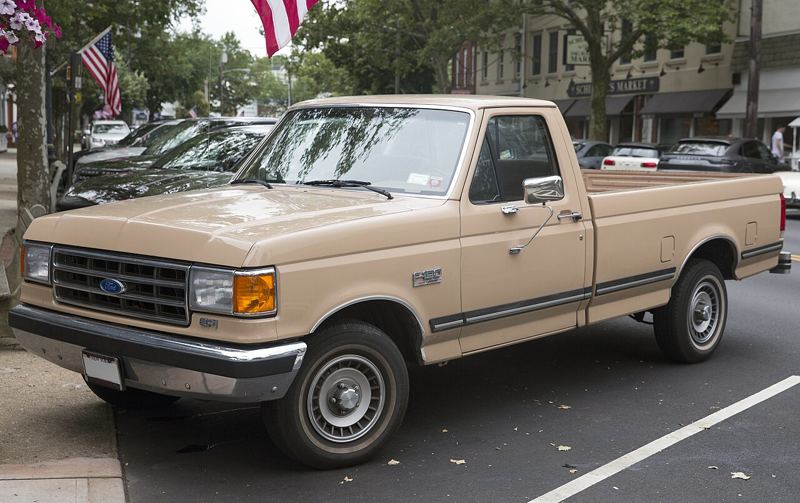
Photo: Mr.choppers · CC BY-SA 3.0 What changed. The 1987 update adopted a flat grille, flush headlamps and rounded wheel arches. The generation offered standard power steering and brakes, fuel injection on the 300- and 460-cubic-inch engines, five-speed manuals and a four-speed overdrive automatic. The F-Series’ 50th anniversary belonged to 1998.
The innovation. Rear ABS became standard for 1987, a Ford first for its full-size light trucks. The 1989 brochure rates the 4.9-liter six at 145 hp in F-150 configurations with 2.73 or 3.08 axle ratios, and the 5.8-liter V8 at 210 hp.
If you buy one used01I008000 is a safety-improvement program outside the Safety Act, not a formal safety recall: certain 1990–1993 dual-tank F-Series with 4.9/5.0/5.8/7.5 gas engines can cross-transfer fuel and overflow through damaged check valves. Its historical warranty terms are not new 2026 coverage. Confirm actual VIN applicability and service history. The separately cited 92V006 door-cable freezing campaign is for MY 1992, in the following cohort. - Gen. 91992–1996 · F-150
Airbag and the Lightning
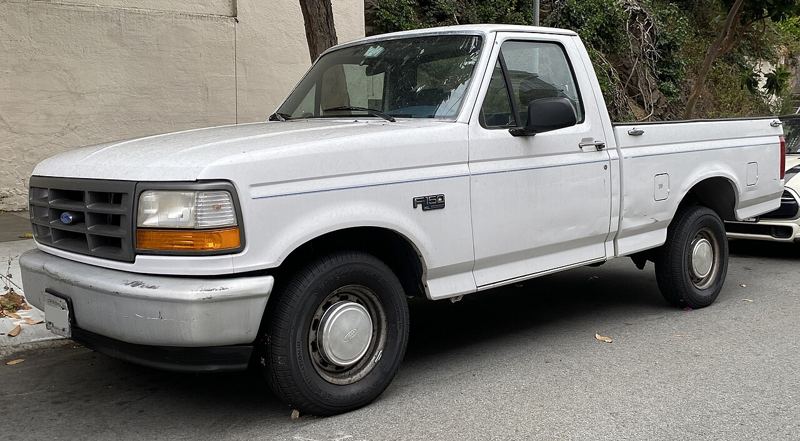
Photo: Cutlass · CC0 What changed. The front end and hood adopted softer contours. Flareside was announced as a new late-availability offering for 1992, and XLT Lariat offered a leather-wrapped steering wheel. The generation also added a driver airbag, documented in the 1995 SVT brochure.
The innovation. The 1993 SVT Lightning combined a regular cab, short bed, 5.8-liter V8 with 240 hp and 340 lb-ft, and four-speed automatic. MotorTrend credits Jackie Stewart with helping tune its chassis. A 1999 Ford historical fact sheet says F-Series passed Beetle in cumulative nameplate-family sales in 1995; this is not a comparison of annual worldwide sales.
If you buy one usedCheck 92V006 on MY 1992 for water/freezing in door cables; 93V125 on specified 1990–1993 dual-tank trucks for overflow/check-valve work; and 96V064 on certain 1994–1995 SuperCabs with optional 40/20/40 power seats for lumbar-wire shorts/fire. For 1994–2002 F150s in 05V388, Ford explicitly documents fire even with the engine off. Park away from structures until recall service. Interim cruise-switch disconnection is different from the final fused-harness/switch procedure; ask Ford to confirm completed final work. - Gen. 101997–2003 · F-150 (PN96)
Rounded body and a separate Super Duty
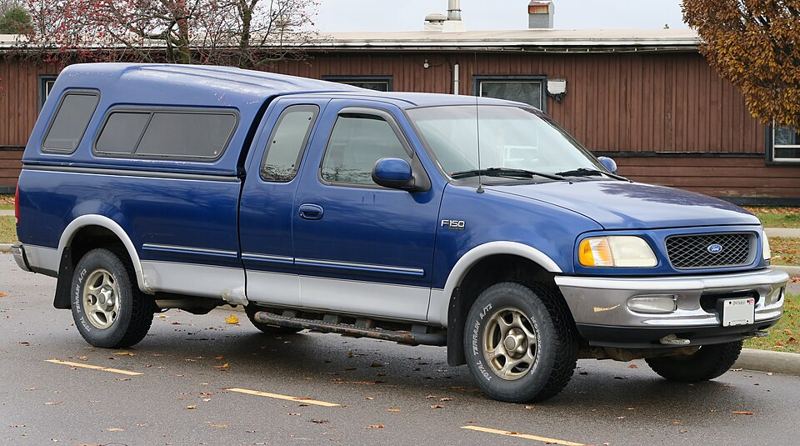
Photo: Elise240SX · CC BY-SA 4.0 What changed. The new F-150 adopted a rounded body, nicknamed the soap bar by some writers, and short/long-arm front suspension: coils on 4x2 and torsion bars on 4x4. SOHC 4.6- and 5.4-liter V8s arrived. For model year 1999, F-250 and F-350 Super Duty formed a separate platform line. SuperCab added a third and then fourth door; SuperCrew offered four full-size doors for 2001. Heritage and Lightning retained derivatives of the earlier platform during the 2004 overlap.
The innovation. SVT Lightning returned for 1999 with a supercharged 5.4-liter V8. The 2001 version made 380 hp and 450 lb-ft. Car and Driver’s original test recorded 0–60 mph in 5.2 seconds and a 142-mph top speed. Its favorable horsepower comparison was qualified by price; it was not the most powerful production passenger vehicle across the entire U.S. market.
If you buy one used11V385 covers specified 1997–2003 F150s and 2004 Heritage from listed original-sale/current-registration salt jurisdictions: corroded tank straps can fail. Confirm the required permanent strap/reinforcement repair rather than assume interim supports are final. Check 05V017 (MY 2000) and 05V388 (1994–2002) speed-control fire programs, including applicable park-away and final-work instructions. 01V258 covers selected 2000–2001 trucks with wiper switches built in plant-specific February–September 2000 ranges; verify build and motor date code. - Gen. 112004–2008 · F-150 (P221)
Boxed frame and record sales
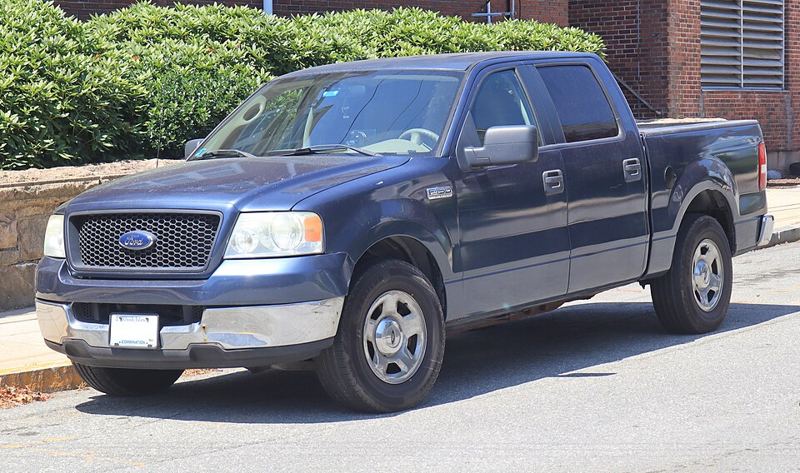
Photo: Cutlass · CC0 What changed. Regular Cab and SuperCab gained room and storage in a more sharply styled body. King Ranch continued in this generation after its 2001 debut. The 2005 and 2008 brochures rate the base 4.2-liter V6 at 202 hp and the 5.4-liter V8 at 300 hp.
The innovation. The fully boxed frame, which raised capacity and rigidity. In 2004 the F-Series, Super Duty included, sold 939,511 units in a single year.
If you buy one used11V107 covers 2004–2006 F150 clockspring jumper-wire chafing/possible unintended driver-airbag deployment. 04V200 / 04V443 cover specified 2004 fuel tanks with seam depressions; the latter lists 4.2/4.6/5.4 gas engines. 08V208 covers 2005–2006 three-valve 5.4 booster hoses that can detach and reduce brake assist. 07V336 includes MY 2004 F150speed-control fire risk and fused-harness work. These are specific year/equipment populations, not every truck under the 2004–2008 heading; verify each VIN repair. - Gen. 122009–2014 · F-150 (P415)
EcoBoost and Raptor
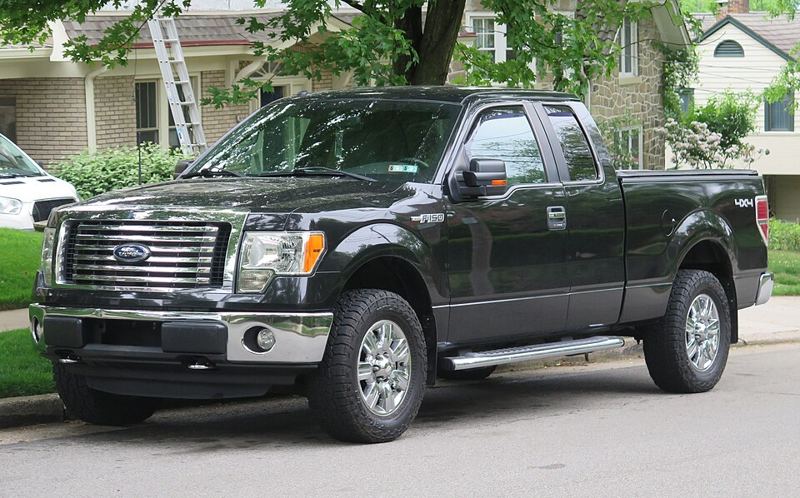
Photo: Cutlass · CC0 What changed. Square, aggressive styling borrowed from the Super Duty, a new boxed frame and updated engines. The manual gearbox disappeared: automatics only. The Platinum trim was born.
The innovation. The twin-turbo, direct-injection 3.5-liter EcoBoost V6 arrived for 2011 with 365 hp and 420 lb-ft. SVT Raptor used long-travel suspension with FOX dampers. Its initial 5.4-liter V8 was listed at up to 320 hp on E85 in the 2010 brochure; the later 6.2-liter V8 made 411 hp.
If you buy one used16V248 covers 2011–2012 and 19V075 covers 2011–2013 six-speed F150s that can downshift to first regardless of speed; confirm PCM software. 12V190 covers 2011–2012 reverse-range sensors affecting reverse/R indicator/backup lights. 10V659 and follow-up 11V128 cover certain 2011 BCM shorts/fire, with repeat inspection for modules missed earlier. 16V345 covers 2013–2014 3.5 L master-cylinder leakage into the booster and front-brake loss; replacement can include a contaminated booster. Confirm exact VIN work. - Gen. 132015–2020 · F-150 (P552)
The aluminum revolution
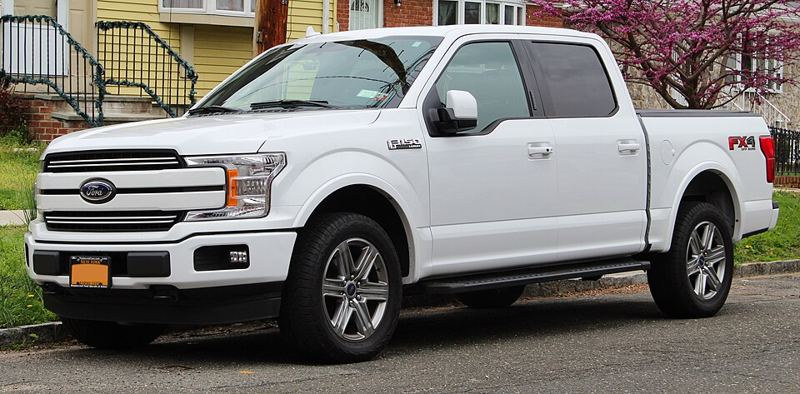
Photo: Kevauto · CC BY-SA 4.0 What changed. An aluminum-alloy body and bed on a high-strength-steel frame saved up to 700 lb, depending on configuration. Ford emphasized the alloy’s corrosion resistance. In December 2015, supplier Novelis described F-150 as the highest-volume automotive aluminum application. The base 3.3-liter V6 and 3.0-liter Power Stroke V6 diesel arrived for 2018.
The innovation. The 2015 F-150 SuperCrew earned a five-star NHTSA overall rating; other pickups had already achieved that rating. The new Raptor replaced its V8 with a twin-turbo 3.5-liter EcoBoost V6 rated at 450 hp and 510 lb-ft on 93-octane fuel.
If you buy one usedFor 2015–2019 block heaters, 18V894 addresses splice corrosion/fire when plugged in; 19V278 requires repeat work for cables damaged during the first repair. 18V568 covers 2015–2018 Regular Cab/SuperCrew pretensioner sparks igniting B-pillar material. 20V332 (2014–2017) and 22V150 (2016–2018) cover specified 3.5 L EcoBoost master-cylinder leakage into the booster/front-brake loss. 18V213 covers 2017–2018 ten-speed missing roll pins/Park failure. 17V652 covers 2015–2017 door cables/freezing latches that can open in motion. Verify each actual VIN and required hardware/software work. - Gen. 142021–present · F-150 (P702)
Hybrid, rolling generator and electric
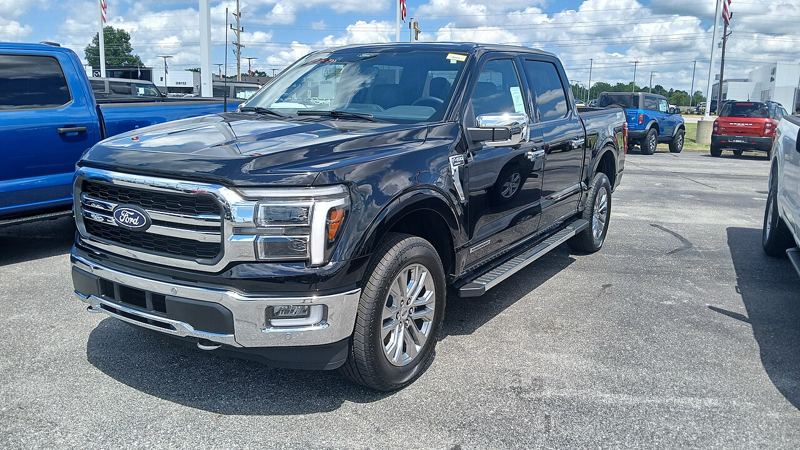
Photo: Deathpallie325 · CC BY 4.0 What changed. The 2020 reveal for model year 2021 took place at Willow Run, whose wartime production totaled 8,685 B-24s including complete aircraft and kits. The range launched with six powertrains, including the new PowerBoost hybrid. Available features included a 12-inch center screen, nearly flat Max Recline seats and a tailgate work surface with rulers and a cupholder. The 2024 model added Pro Access Tailgate and continued to offer BlueCruise hands-free driving on eligible vehicles and roads with driver supervision.
The innovation. PowerBoost combines the 3.5-liter EcoBoost V6 with electric assist and a ten-speed automatic. Ford published EPA-estimated ranges of 700 miles for 4x4 and 750 for 4x2; available maximum conventional towing reached 12,700 lb on a properly equipped 4x2 with Max Trailer Tow Package. Pro Power Onboard offers up to 7.2 kW for electrical loads within its connection and operating limits. Ford revealed the electric Lightning in May 2021 for model year 2022, with a frunk and home backup power requiring additional compatible equipment and installation.
If you buy one used24V635 covers 2021–2022 F150s specifically with 2.7 L Nano EcoBoost intake valves; the campaign-wide 3.0 L listing belongs to other nameplates. 25V455 covers 2021–2022 low-pressure-pump failures, with PCM software on F150. 22V188 / 25V169 cover certain 2021 false-pressure/Neutral faults, including incorrect prior repairs. 23V896 covers 2021–2023 Trailer Tow Max Duty/9.75-inch 3/4-float axles and requires both rear axle-shaft assemblies. 21V533 covers 2021 electronic boosters. 26V402 covers 2021 park-pawl engagement in motion: current record gives interim letters and anticipates final availability in April 2027. Confirm actual VIN eligibility, present remedy and completion.
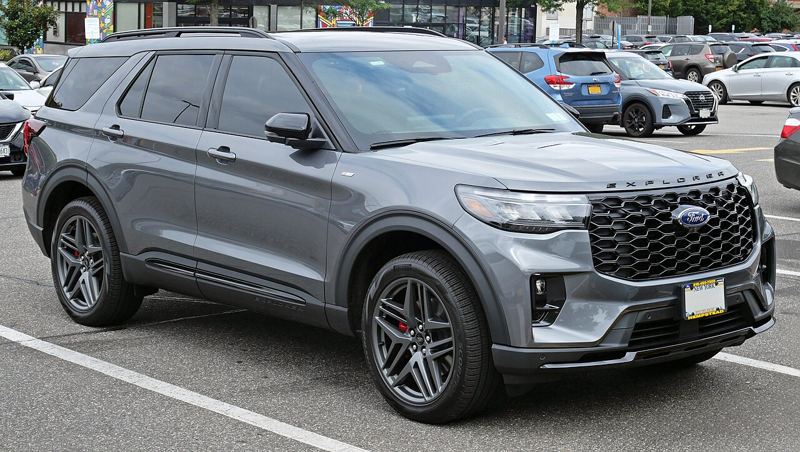 Ford Explorer1991–present
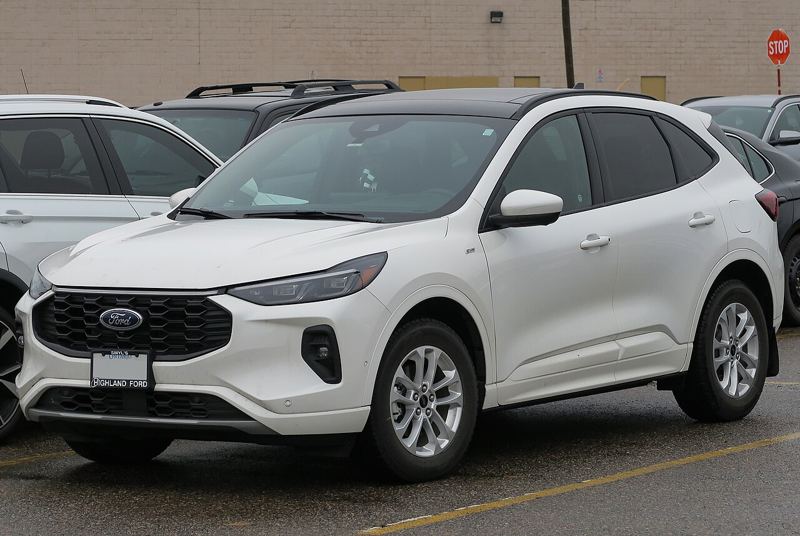 Ford Escape2001–2026
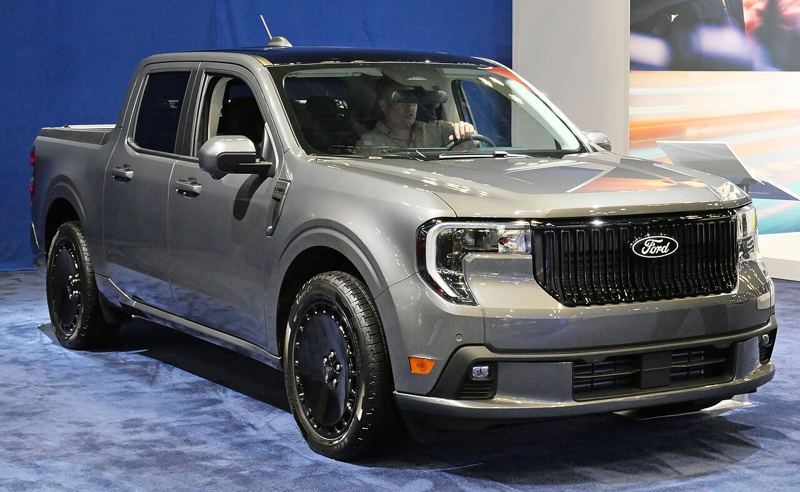 Ford Maverick1970–1977 and 2022–present
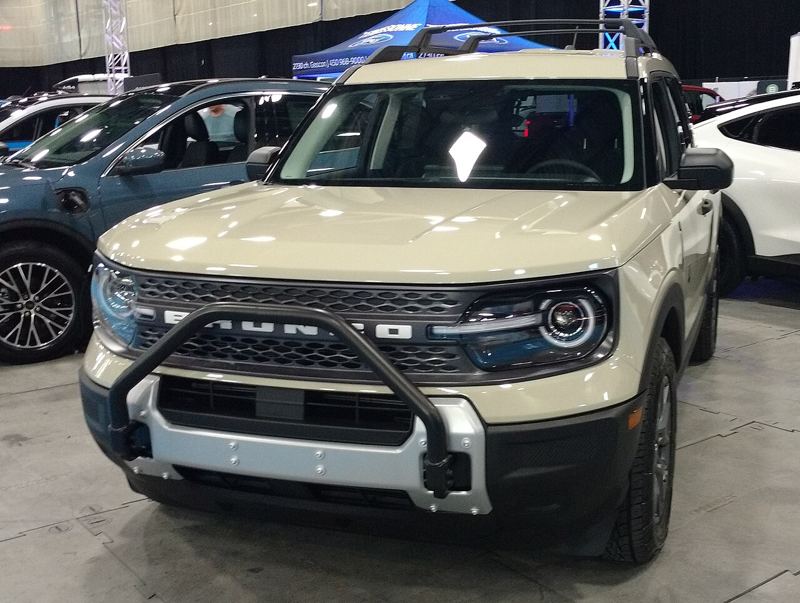 Ford Bronco Sport2021–present
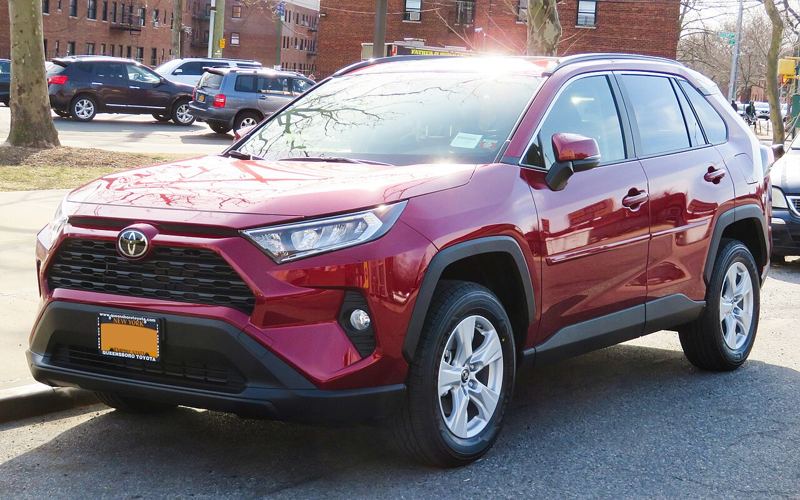 Toyota RAV41994–present (US from 1996)
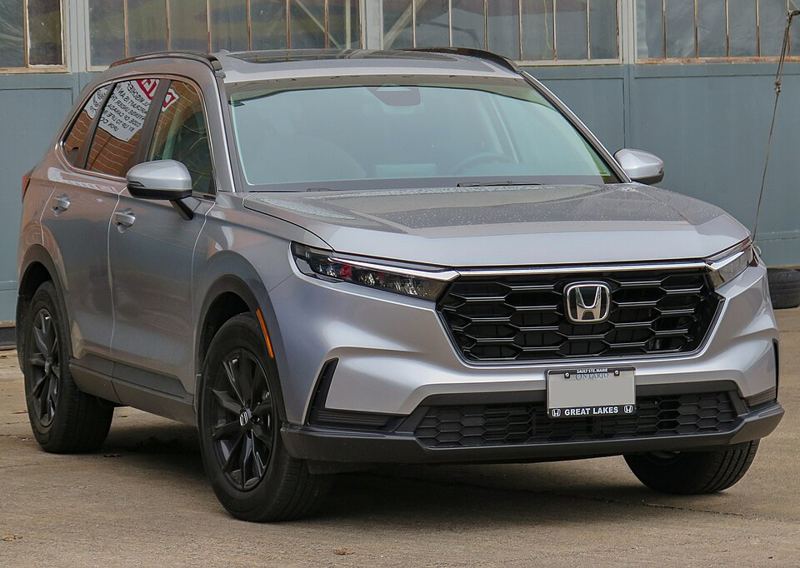 Honda CR-V1995–present
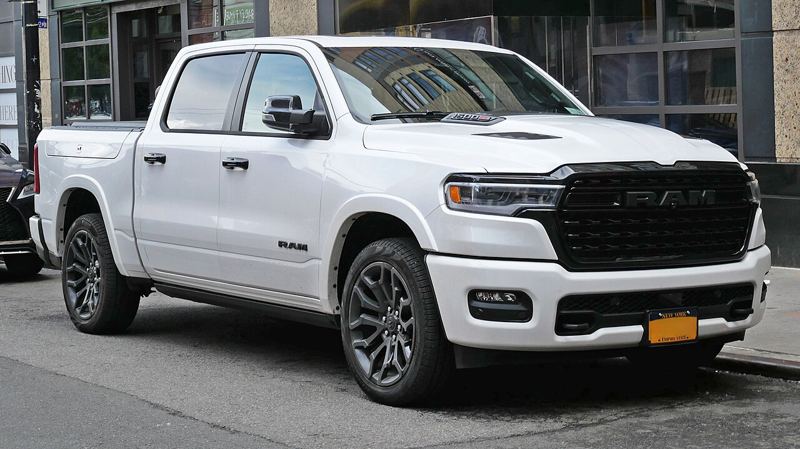 Ram 15001981–present
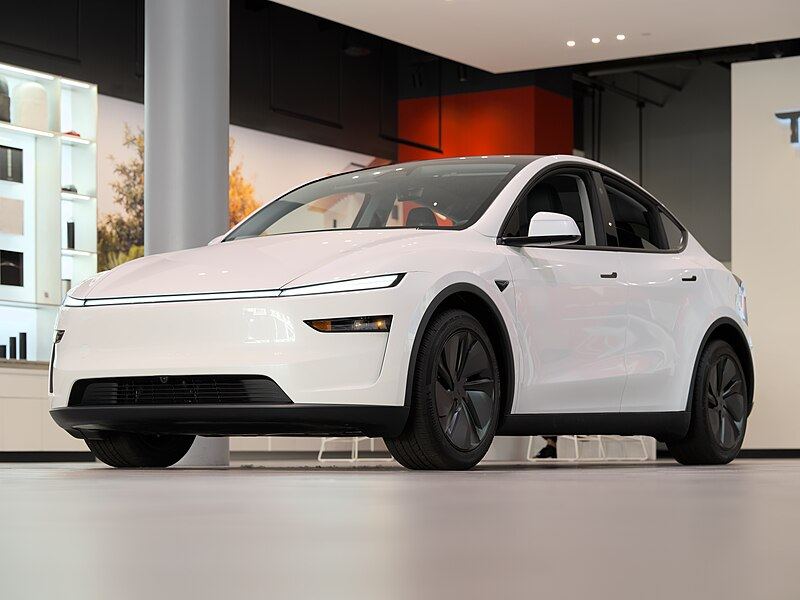 Tesla Model Y2020–present
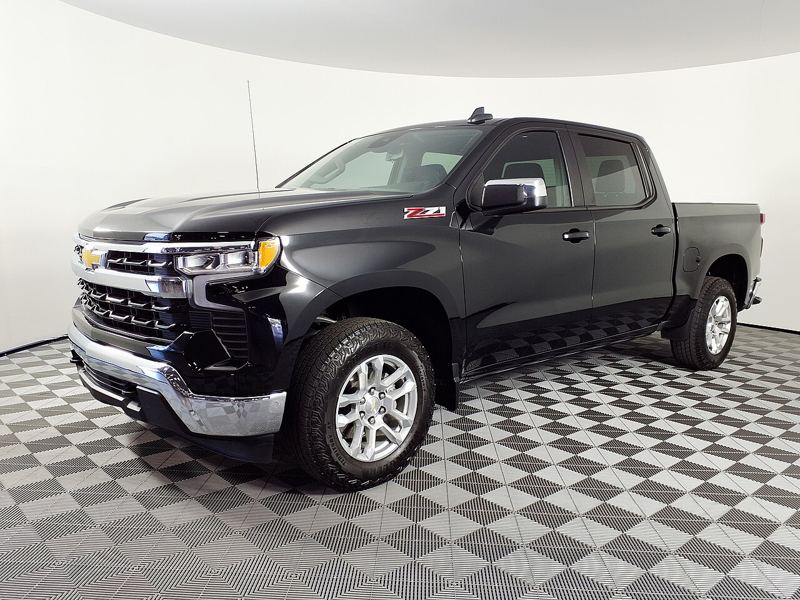 Chevrolet Silverado1999–present


