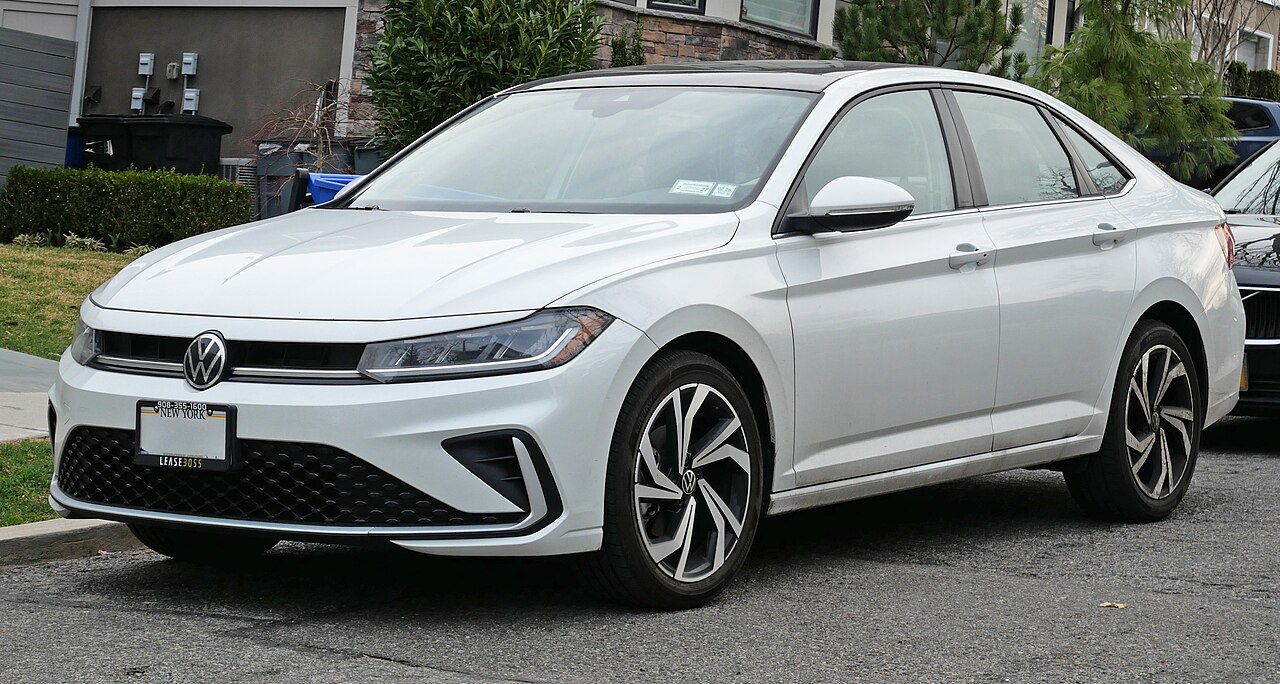
Volkswagen Jetta
Compact sedan · 1980–present. 71,829 units sold in the US in 2024
How it began
Volkswagen developed it in Germany on the technology and key components of the Golf I, keeping that car's body up to the B-pillar. Car and Driver’s original July 1980 road test credits its styling to Volkswagen's own Herbert Schaefer; Giorgetto Giugiaro, who designed the Golf (sold in the U.S. as the Rabbit), did not design it. When it reached the United States, Volkswagen of America's president was James McLernon.
It was designed in Germany, and the first Jettas sold in the United States were German-built. In May 1993, Volkswagen's plant in Puebla, Mexico, began shipping Jettas and Golfs to the U.S. by train. The seventh generation, unveiled in 2018, is built in Puebla.
Volkswagen unveiled it in July 1979 and put it on sale that October. It reached the United States as a 1980 model, starting at $7,650.
Jetta comes from the German name for the jet stream, the high-altitude winds. It follows Volkswagen's habit of naming cars after winds, like the Scirocco.
By the late 1970s Volkswagen held about 2.8 percent of the U.S. market, down from at least 5 percent early in the decade, and wanted to win back ground. Many American buyers preferred a sedan with a trunk, something classier than the basic Rabbit. The answer was a Rabbit with a trunk: about 18 inches longer, on the same wheelbase, and less than 100 pounds heavier. It was priced between the Audi 4000 and the four-door Honda Accord.
Generation by generation
- Gen. 11980–1984 · Mk1 / Typ 16
The Rabbit with a trunk
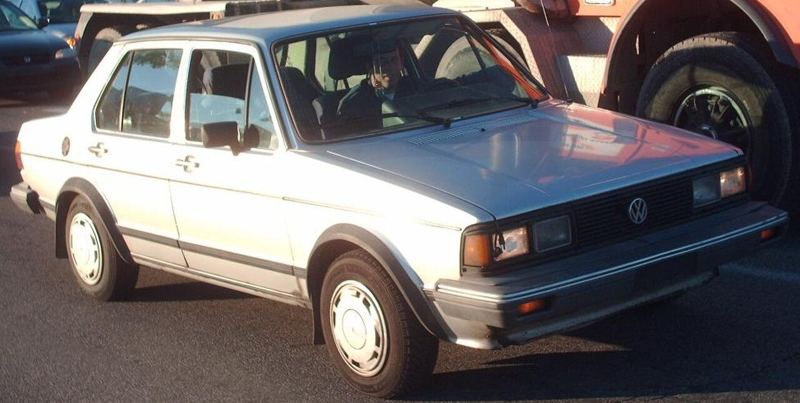
Photo: Bull-Doser · Public domain What changed. It was the first Jetta: a two- or four-door sedan sharing the Golf I’s basic body up to the B-pillar, with different headlights and a 520-liter trunk; it was about 40 cm longer than the Golf. For the 1981 U.S. Jetta, Autoweek cites 74 hp in its review of the original brochure.
The innovation. According to Volkswagen, it was the first Volkswagen to get wax flooding in its body cavities to fight rust. In 1982 the GLI version received the Golf GTI's 1.8-liter, 112 PS engine.
If you buy one usedInspect the actual condition, maintenance and intended use of a vehicle this old. At NHTSA, the 1984 model has campaign 85V099: in harsh weather the outer layer of the brake hoses could crack and leak fluid. Campaign 06E018 also recalled certain replacement brake hoses (part 171.611.107B) sold for 1980–1992 Jettas. Check the brakes and look for rust. The equipment recall depends on the installed hose, not merely model year; confirm applicability and completed work. - Gen. 21985–1992 · Mk2 / Typ 16E-19E
So wanted there weren't enough
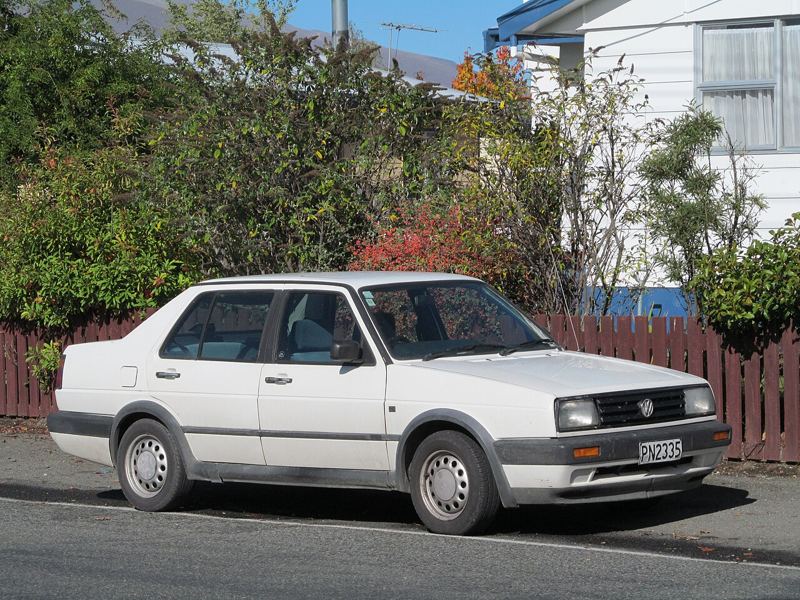
Photo: Riley from Christchurch, New Zealand · CC BY 2.0 What changed. It was developed alongside the Golf II from the start and introduced in 1984: 4,315 mm long and 910 kg. Volkswagen planned its U.S. launch for that fall. A May 1984 Christian Science Monitor report said demand for the outgoing Jetta exceeded supply and printed 40,000 sales so far against 18,000 a year earlier, without clearly resolving the comparison’s interval. In 1987 the 16-valve engine and syncro all-wheel drive arrived in Europe.
The innovation. From 1984 it offered ABS brakes, paired with rear disc brakes, on versions with 90 PS or more. In 1990 it added headlight range control.
If you buy one usedAt NHTSA, the 1987 model has campaign 87V053: the in-tank fuel pump could seize in high heat because of an overly fine mesh filter. Campaign 92V050, also listed for 1987, warns that the heater core end cap could rupture and release hot coolant into the cabin. Ask for proof the work was done. These are selected examples; confirm every applicable current campaign by VIN. - Gen. 31993–1999 · Mk3
Made in Mexico, with a V6 and a diesel
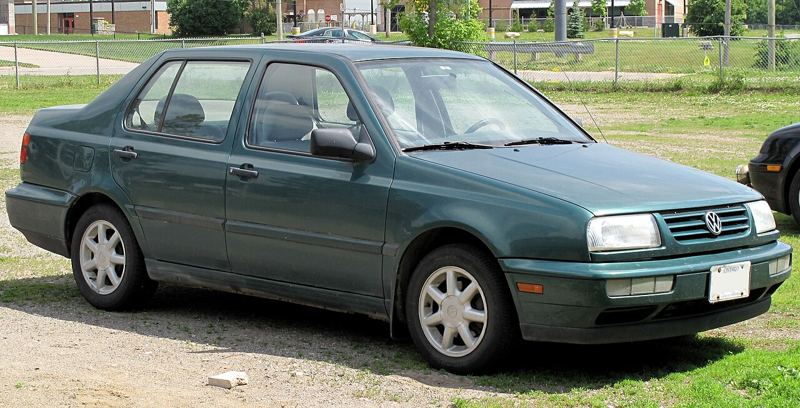
Photo: Elise240SX · CC BY-SA 4.0 What changed. In Europe it was called the Vento; in the U.S. it stayed the Jetta. Built in Mexico, it arrived first in California and nationwide by 1994, and nearly all had dual front airbags instead of automatic belts. The base engine was a 115 hp 2.0, and the GLX used a 172 hp 2.8-liter V6. In 1997 the 90 hp Jetta TDI diesel debuted in the U.S.
The innovation. Volkswagen’s compact 2.8-liter VR6 brought 172 hp to the Jetta GLX. The direct-injection TDI with a five-speed manual had period EPA estimates of 40 mpg city and 49 highway.
If you buy one usedFor the 1994 model, NHTSA lists campaigns for a rear brake line that chafed against the fuel tank (98V195), hood-latch bolts that could loosen (98V160) and rear-window wiring damaged by sharp edges (96V128). For 1997, campaign 02V026 warns the fuel filler neck could be damaged if driven on a flat rear tire. Consumer Guide’s historical review named both reliability and high prices as its reservation; inspect the actual car rather than treat that editorial assessment as a current failure rate. - Gen. 41999–2005 · Mk4
Turbo power, curtain airbags and a galvanized body
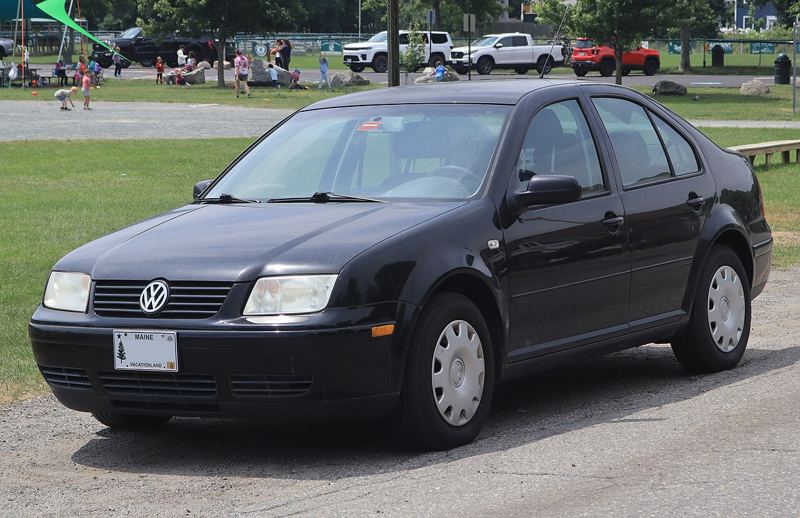
Photo: Cutlass · CC0 What changed. It arrived a few months into the 1999 model year in GL, GLS and GLX trims; in Europe it was called the Bora. The base engine was a 115 hp 2.0; the 150 hp 1.8T turbo was already available in the 2000 GLS and rose to 180 hp in 2002, while the 2.8-liter V6 went from 174 to 200 hp. A wagon joined the lineup in 2001.
The innovation. Volkswagen highlights its fully galvanized body. Front side airbags were standard from 1999, and curtain airbags became available in 2001.
If you buy one usedSelected 2002 campaigns include ABS control-unit short circuits (02V031), brake-light-switch malfunctions (04V096, 06V183 and 07V063) and hazard-flasher contact degradation (04V584). Consumer Guide reports rough idle on the VR6 from faulty plugs and hard cold starts on 2000–2002 TDIs. Confirm the current brake-switch remedy even after an earlier repair: later campaigns have VIN-specific eligibility, and not every VIN requires every listed switch campaign. - Gen. 52005–2010 · Mk5
Bigger, with independent rear suspension
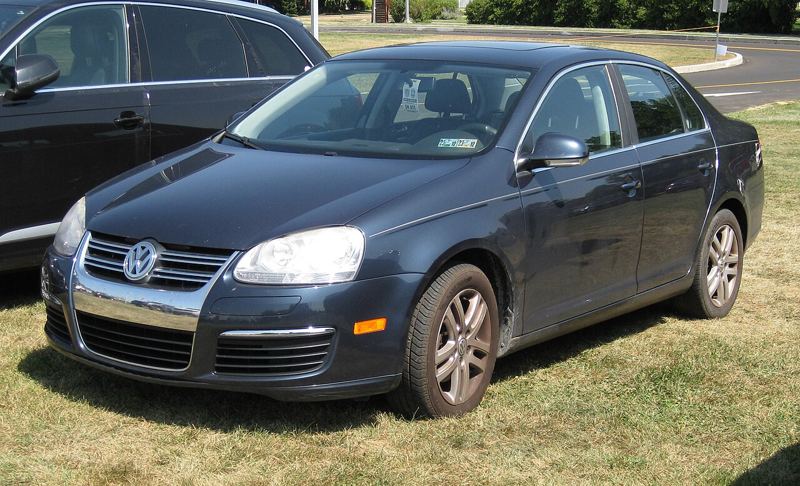
Photo: Cutlass · CC0 What changed. It arrived midway through the 2005 model year. It grew 2.6 inches in wheelbase and 7 inches in length, with almost 2 more inches of rear legroom. The main engine was a 150 hp 2.5-liter five-cylinder, joined by a 100 hp TDI and a 200 hp 2.0 turbo. Front side and curtain airbags were standard.
The innovation. It swapped the previous generation's rear twist-beam axle for a multi-link independent rear suspension.
If you buy one usedSelected campaign 09V164 covers 25,594 specified 2006–2009 fifth-generation Jettas with 2.0-liter TFSI engines and DSG transmissions for driveshaft screws that could loosen; confirm the actual engine and VIN eligibility with Volkswagen. Campaign 10V621 includes specified 2006–2010 2.5-liter cars for washer-reservoir-tab/fuel-line chafing, with conditional line work. Certain 2009–2010 2.0 TDIs have injector-line campaign 11V490 and fall within EPA’s September 2015 emissions notice. Verify emissions-modification records and current compliance separately from safety recall completion. - Gen. 62011–2018 · Mk6
Bigger and more affordable
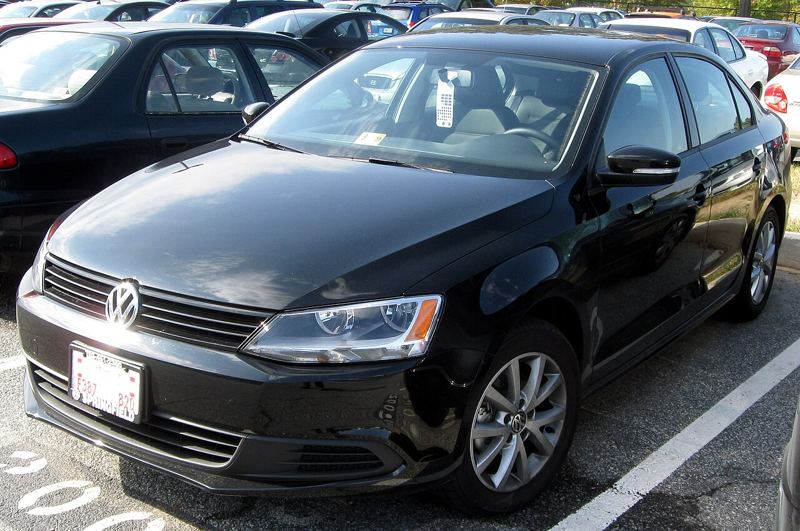
Photo: IFCAR · Public domain What changed. It was the largest Jetta yet, at 182.2 inches long, and was built in Puebla. The S trim dropped to $15,995 with a 115 hp 2.0; the SE and SEL used the 170 hp 2.5-liter five-cylinder, and the GLI a 200 hp 2.0 turbo. To cut costs it used a torsion-beam rear axle, rear drum brakes on lower trims, and went from 148 ordering combinations to 18.
The innovation. The 2013 Jetta Hybrid paired a 1.4-liter direct-injection turbo engine with an electric motor for 170 hp and an estimated 45 mpg combined. It was the first hybrid on sale with a seven-speed dual-clutch automatic transmission.
If you buy one used2011–2015 TDIs are among the diesels the EPA cited in September 2015; confirm the settlement repair. NHTSA lists campaign 14V656 for rear trailing arms on 2011–2013 Jettas affected by a prior crash, 15V483 for the driver airbag clock spring (2011–2014) and 11V490 for the injector line on 2011–2012 TDIs. Check actual emissions-modification and safety-repair records separately. Historical settlement terms do not establish current eligibility or completed work. The clock-spring remedy is a cover or replacement according to inspection. - Gen. 72019–present · Mk7
MQB platform and back on top
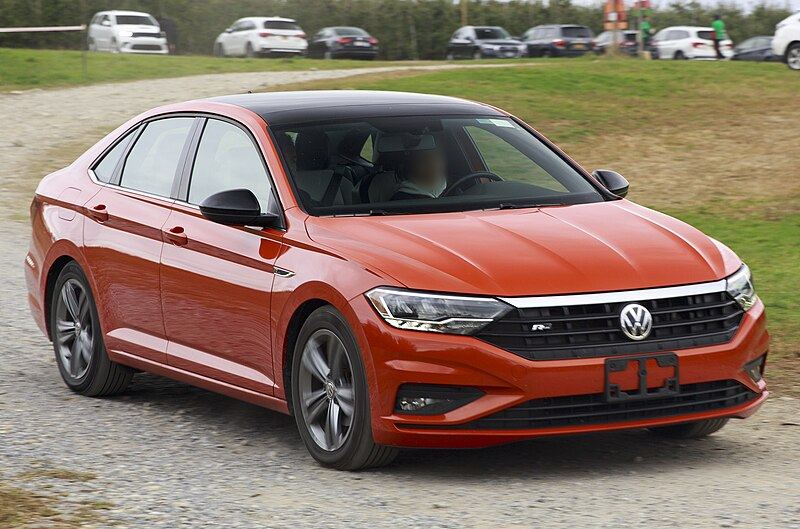
Photo: Mr.choppers · CC BY-SA 3.0 What changed. It debuted at the Detroit auto show in January 2018, built in Puebla. It launched with a 147 hp, 184 lb-ft 1.4 turbo and a six-speed manual or eight-speed automatic, from $18,545. Volkswagen called it its best-selling model in the U.S. at the time. For 2025 it got its second refresh, with a 158 hp 1.5 turbo and a standard eight-speed automatic.
The innovation. It was the first Jetta built on Volkswagen's modular MQB platform, which stretched the wheelbase from 104.4 to 105.7 inches and made it longer, wider and taller than the 2018 model.
If you buy one usedFor the 2019 model, NHTSA lists campaigns for misaimed LED headlights (18V671), rear coil springs that could fracture (19V188) and improperly machined front wheel bearings on the GLI (19V879). For 2025, 26V138 checks the transmission ground wire (2025–2026) and 26V185 an instrument panel that might not show warning lights. Look up your VIN at nhtsa.gov. For an affected unrepaired 19V879 GLI, do not drive until repaired; arrange the remedy with Volkswagen. Other listed campaigns have inspection, software or conditional replacement as specified. Confirm each applicable VIN-specific repair.
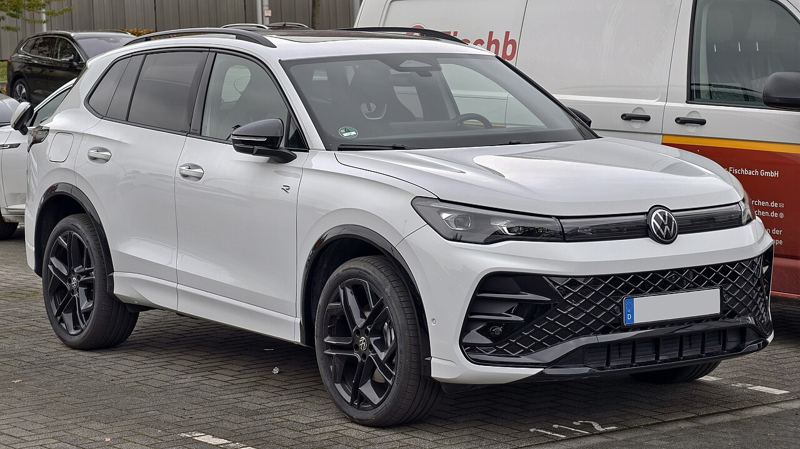 Volkswagen Tiguan2008–present
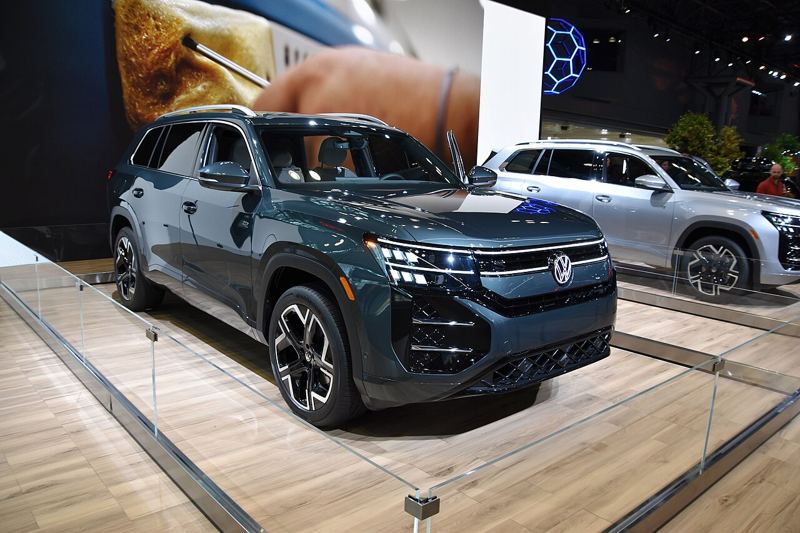 Volkswagen Atlas2018–present
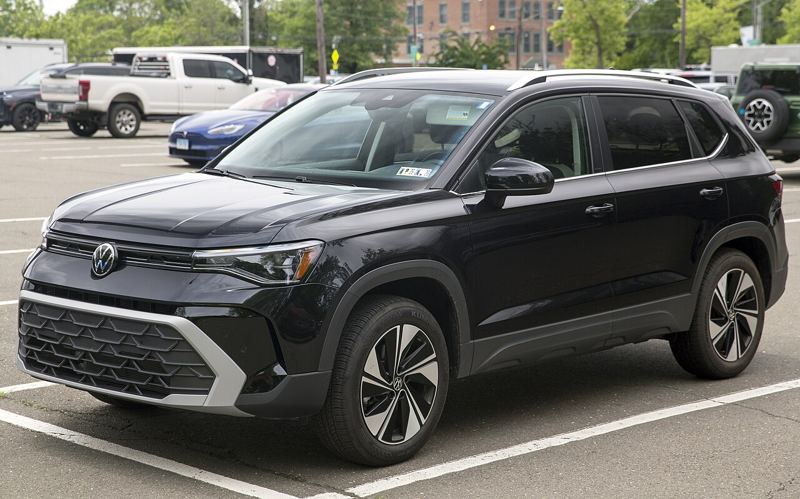 Volkswagen Taos2022–present
 Volkswagen ID.42021–present
 Ford F-Series (F-150)1948–present
 Toyota RAV41994–present (US from 1996)
 Honda CR-V1995–present
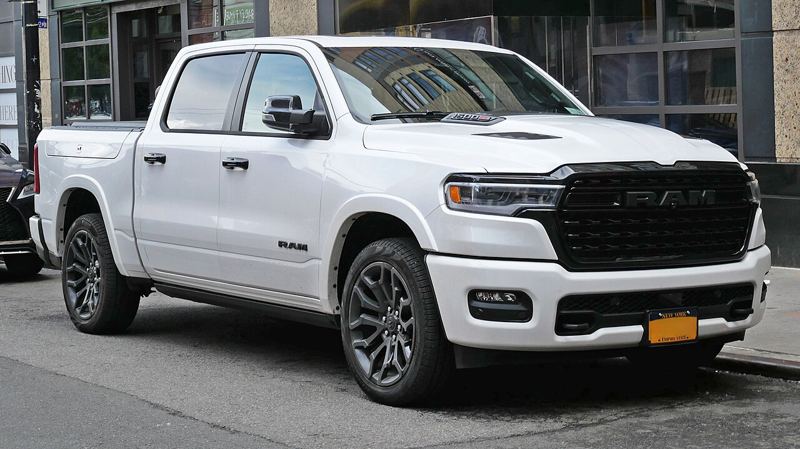 Ram 15001981–present
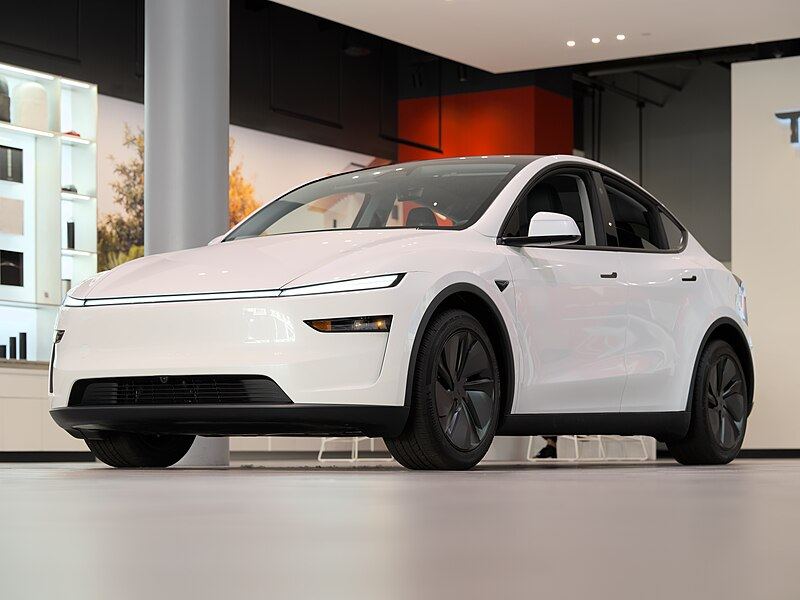 Tesla Model Y2020–present


