
California title and registration, step by step
Which forms, which fees and which deadlines. For a car bought in the state and for one you bring from another.
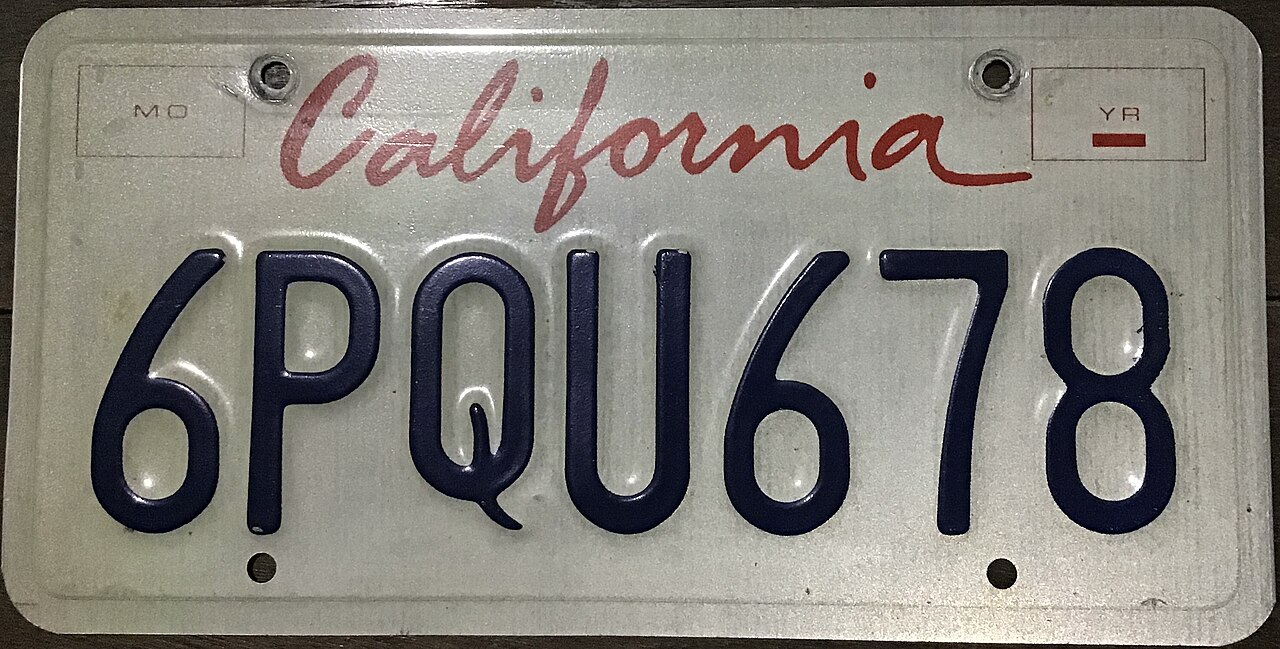
In California the title is issued by California Department of Motor Vehicles (DMV). The California title is paper (Certificate of Title, the "pink slip"). The seller signs line 1 and the buyer hands it to DMV with payment; if a lender held the title, a lien release (REG 166) is needed.
Where it happens. At a DMV field office (by appointment) or by mail to DMV. There are no county offices: in California the state handles the title directly. If the car comes from another state, you must go in person because DMV has to inspect it. Confirm the deadline and the event that starts it for your transaction: a purchase, receipt of the signed title or a move into the state can have different rules. Late-fee information in the state sources: $15 (transfer penalty, VC §9553.7).
Case 1: you bought a car in California (private seller)
What the seller hands you
- The title with the transfer section completed: your name and address, sale price, date, odometer reading and the seller's signature (both owners if two names are joined by "and").
- If there was a loan: a lien release from the bank, or the lien already removed from the title.
- A bill of sale with VIN, price and signatures. You need it for the sales tax.
What you bring to the office
- The state forms (below), completed.
- The signed title and the bill of sale.
- Applicable insurance or financial-responsibility documents: Liability 30/60/15: $30,000 for injury or death to one person, $60,000 for more than one person and $15,000 for property damage (Insurance Code §11580.1b). Instead of a policy, DMV also accepts a $75,000 cash deposit, a $75,000 surety bond from a company licensed in California, or a DMV-issued self-insurance certificate. California is not a no-fault state; there is no mandatory PIP.
- Valid photo ID.
- Payment: title, registration, plate and sales tax if not paid yet.
Case 2: you bring a car from another state
- Everything above, plus: Yes. The car is physically inspected at the DMV office (no appointment needed for the verification alone), or a peace officer in another state signs form REG 31. If the title carries a salvage brand, CHP does the inspection by appointment (1-800-835-5247) on form REG 31 or CHP 97C. Out-of-state smog tests are not accepted.
- The original out-of-state title (or the bank's letter if it holds it for the loan).
- Tax: The statewide base rate is 7.25%. Each district adds 0.10% to 2.00%, and some areas have more than one district tax, which is why DMV figures the use tax at 7.25% to 10.25% depending on the city and county where you register the car. A trade-in does not lower the tax: CDTFA's Tax Guide for Motor Vehicle Dealers says the dealer must report the full selling price and cannot deduct the trade-in allowance; on a $20,000 car with a $4,000 trade-in credit you pay tax on $20,000. In a private-party purchase you pay nothing to the seller: DMV collects the use tax when you transfer the title, on the total purchase price and at the rate for the address where you register. A car bought outside California and brought into the state within 12 months of the purchase is presumed bought for use here and owes use tax. There is no use tax on a true gift, or on a purchase from your parent, grandparent, grandchild, child, spouse or domestic partner (CDTFA Publication 52, November 2025).
Forms
- REG 343 — Application for Title or Registration (out-of-state car or first registration)
- REG 227 — Application for Replacement or Transfer of Title (if the title is lost)
- REG 262 — Vehicle/Vessel Transfer and Reassignment with odometer statement (security paper, not downloadable; request it from DMV)
- REG 138 — Notice of Transfer and Release of Liability (seller)
- REG 135 — Bill of Sale
- REG 256 — Statement of Facts
- REG 31 — Verification of Vehicle (physical VIN inspection for out-of-state cars)
Fees — confirm current amounts (DMV)
| Item | Fee |
|---|---|
| Transfer fee (VC §9255) | $15 |
| Title only, no registration (VC §9254) | $28 |
| Replacement title (VC §9265) | $28 |
| Annual registration (includes $3 alternative fuel fee) | $76 |
| CHP fee | $34 |
| Vehicle License Fee (VLF), on the car's price or value | 0.65% of purchase price/value of vehicle |
| Non-resident service (out-of-state car, VC §9252) | $28 |
| Replacement license plates | $28 |
| Smog transfer fee (recent car exempt from the test, VC §4000.1) | $8 |
| Smog abatement fee (at renewal, HSC §44060(d)(1)) | $20 |
| Late registration penalty: 1–10 days / 11–30 days / 31 days–1 year (registration fee + CHP fee, plus % of VLF) | $10.00 + $10.00 / $15.00 + $15.00 / $30.00 + $30.00 |
| Transportation Improvement Fee (TIF), mandatory, by vehicle value; charged on original registration, transfers and renewals | $33 ($0–$4,999) / $66 ($5,000–$24,999) / $132 ($25,000–$34,999) / $198 ($35,000–$59,999) / $231 ($60,000 and higher) |
| Road Improvement Fee (RIF), model-year 2020 and later zero-emission vehicles only, at renewal (VC §9250.6) | $121 |
| Salvage certificate (original/replacement) (VC §§9265, 11515) | $28 |
| Total loss salvage/dismantled vehicle inspection (VC §9255.2) | $50 |
| Nonrepairable vehicle certificate (original/replacement) (VC §11515.2) | $28 |
| Change notice: a CPI increase takes effect January 1, 2027 (DMV VIN 2026–07). Registration (VC §9250) $73 → $76, which with the $3 alternative fuel fee makes the printed total $76 → $79; CHP $34 → $35; the $28 fees → $29; TIF $35 / $69 / $138 / $208 / $242; RIF $121 → $127. The $15 transfer fee does not change. | effective 2027-01-01 |
Amounts come from the linked state sources and can change. This guide distinguishes source checkpoints from narrow claim reviews; confirm the total for your transaction before you go. A dash means an amount has not been confirmed here.
Sales tax
The statewide base rate is 7.25%. Each district adds 0.10% to 2.00%, and some areas have more than one district tax, which is why DMV figures the use tax at 7.25% to 10.25% depending on the city and county where you register the car. A trade-in does not lower the tax: CDTFA's Tax Guide for Motor Vehicle Dealers says the dealer must report the full selling price and cannot deduct the trade-in allowance; on a $20,000 car with a $4,000 trade-in credit you pay tax on $20,000. In a private-party purchase you pay nothing to the seller: DMV collects the use tax when you transfer the title, on the total purchase price and at the rate for the address where you register. A car bought outside California and brought into the state within 12 months of the purchase is presumed bought for use here and owes use tax. There is no use tax on a true gift, or on a purchase from your parent, grandparent, grandchild, child, spouse or domestic partner (CDTFA Publication 52, November 2025).
If you sell: protect yourself
Listed seller-notice or transfer document: REG 138 (Notice of Transfer and Release of Liability) or online NRL. Check its conditions and the state process below. In California the plates stay with the car: the buyer drives off with the seller's plates and current registration. The seller files the NRL within 5 days (online or REG 138) to stop being liable for tickets and accidents; the buyer transfers the title within 10 days; if the buyer is late, DMV adds a $15 transfer penalty (VC §9553.7), which DMV says is charged after 30 days from the sale even though the deadline is 10 days. The seller must hand over a smog check passed within the last 90 days (except a car 4 model years or newer, electric, gasoline 1975 or older, diesel 1997 or older). Keep copies of the title, filed notices and handover date to answer later registration, toll or ownership questions.
Mistakes that cost
- Missing the deadline. Check the deadline and consequence for your transaction; filing periods and penalties do not all start from the same event.
- Title with cross-outs or correction fluid. Ask the issuing agency which correction or replacement document it accepts before using it.
- Buying with an "open" title (signed by a previous owner, not the person selling to you). Confirm the ownership chain and the documents the agency requires before paying.
- Showing up without in-state insurance. Confirm the insurance or financial-responsibility documents required for your situation.
Keep the records; check the official process
Sources
- California DMV — Registration Fees
- California DMV — Private-Party Purchase (buyers have 10 days)
- California DMV — Title Transfers and Changes
- California DMV — Out-of-State Title Transfer Checklist
- California DMV — Insurance Requirements
- California DMV — New resident: register within 20 days
- California Vehicle Code § 5902 — Transferee to apply within 10 days (text via public.law mirror)
- California DMV — Registration for a Vehicle Purchased from a Dealer (transfer fees due within 10 days; late penalty after 30 days; use tax 7.25%–10.25%)
- California DMV — Notice of Transfer and Release of Liability (5 calendar days, CVC §5900; liability release CVC §5602)
- California DMV — Vehicle Industry News VIN 2026–07, Miscellaneous Fee Increase effective January 1, 2027 (PDF)
- CDTFA — Publication 52, Vehicles and Vessels: Use Tax (November 2025): DMV collection, family and gift exemptions, 12-month out-of-state rule (PDF)
- CDTFA — Tax Guide for Motor Vehicle Dealers, Industry Topics: a trade-in allowance cannot be deducted
- CDTFA — Sales and Use Tax Rates (statewide 7.25%, districts 0.10%–2.00%), Publication 52 Vehicles and Vessels: Use Tax (November 2025) and Tax Guide for Motor Vehicle Dealers (trade-in allowance not deductible)
- REG 343 — Application for Title or Registration (out-of-state car or first registration)
- REG 227 — Application for Replacement or Transfer of Title (if the title is lost)
- REG 262 — Vehicle/Vessel Transfer and Reassignment with odometer statement (security paper, not downloadable; request it from DMV)
- REG 138 — Notice of Transfer and Release of Liability (seller)
- REG 135 — Bill of Sale
- REG 256 — Statement of Facts
- REG 31 — Verification of Vehicle (physical VIN inspection for out-of-state cars)
This guide informs; it is not legal or financial advice, nor an offer, quote or appraisal. Every figure carries its source and date; check it is still current before you decide.