
BMW X5
Midsize luxury SUV · 1999–present. 72,348 units sold in the US in 2024
How it began
BMW AG developed it in the late 1990s, when the group owned Rover and Land Rover. The exterior design is credited to Frank Stephenson, whom BMW Group Classic calls one of the world's most influential car designers; he worked under Chris Bangle, BMW's design chief at the time. Stephenson has said his goal was BMW's answer to the Range Rover and that he drew the first sketches during a flight. An August 2001 report identifies Eduard Walek as BMW’s vehicle project leader; the inspected sources did not establish a credit bearing the exact chief engineer title.
The U.S. X5 program is built in Spartanburg, South Carolina. The plant began producing the 318i on September 8, 1994, and its first X5 left the line on September 1, 1999. BMW’s February 2025 report describes it as the Group’s largest individual plant: it assembled 396,117 vehicles in 2024, exported nearly 225,000 worth $10.1 billion, and employed more than 11,000 people. The X5 family also has production outside the United States: BMW documented local assembly in Chennai, India, in 2014 and production of the long-wheelbase variant in Dadong, China, from 2022. The reference to more than 120 markets belongs to Spartanburg’s 2006 export report.
BMW unveiled the first X5 at the 1999 North American International Auto Show, and the first production car left Spartanburg on September 1, 1999 as a 2000 model. By August 23, 2001 the 100,000th X5 had already been built.
The X5 inaugurated the BMW X family and the category the brand called Sports Activity Vehicle (SAV) in 1999. The parallel between the 5 and the 5 Series describes its position in the range, but the inspected original sources do not explain that digit as a historical naming decision. SAV expresses BMW’s emphasis on carlike driving behavior.
In the late 1990s, many luxury SUVs still used body-on-frame construction and trucklike handling; car-derived alternatives such as the Lexus RX also existed. BMW wanted a tall, all-wheel-drive vehicle that felt like one of its sedans: a very rigid unibody, independent suspension at all four corners and stability systems such as DSC, ADB-X and Hill Descent Control. That is why it refused to call it an SUV and coined Sports Activity Vehicle (SAV), a name BMW said set it apart from the ordinary run of SUVs. The bet paid off: by 2003 the X5 was BMW's third-best seller in the U.S., and it passed 845,000 units in its first decade.
Generation by generation
- Gen. 12000–2006 · E53
The first SAV: an SUV that drives like a BMW
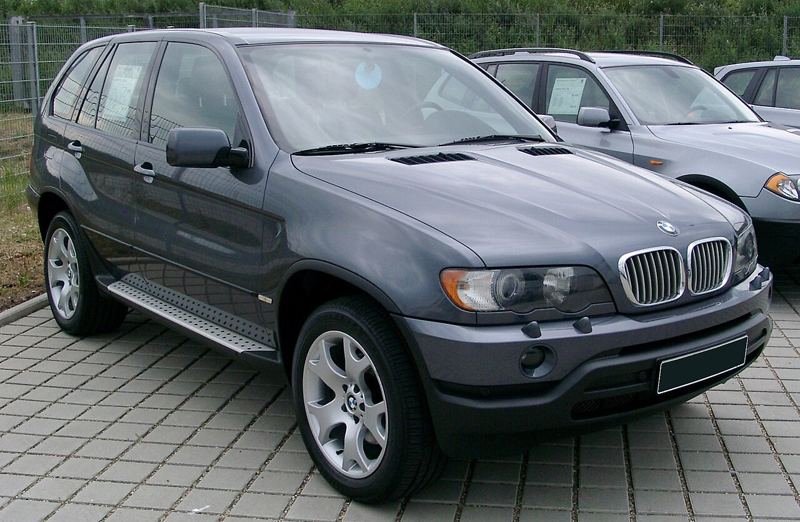
Photo: Rudolf Stricker · CC BY-SA 3.0-migrated What changed. It was BMW's first tall-body vehicle and the first member of the X family. A very rigid unibody, independent suspension, full-time all-wheel drive and electronic stability systems instead of a low-range transfer case and a truck frame. It launched with the 4.4-liter V8 making 282 hp and 324 lb-ft, later joined by the 3.0i six-cylinder and the sporty 4.6is and 4.8is V8s. For the 2004 model year it got a new face and lights, a Valvetronic 4.4 V8 and the new xDrive all-wheel-drive system.
The innovation. The SAV concept itself: in November 2000 BMW reported that the X5 had achieved the best performance among vehicles tested by IIHS in its 40 mph offset frontal crash, with particularly low cabin intrusion. It earned a five-star Euro NCAP crashworthiness rating in 2003. The 2004 model introduced xDrive, which varies power between the axles; other BMW models adopted it gradually.
If you buy one usedBMW filed 25V748 on October 31, 2025 for certain 2000–2001 X5s that may have a sport steering wheel with a Takata PSDI-4 driver inflator. It expands 19V015 and instructs owners not to drive affected unrepaired vehicles until the remedy is complete; contact BMW to arrange safe inspection and repair. Other selected programs include 2001 steering tie-rod nuts 00V341, front belt anchors 00V261, pedal/booster nuts 01V197 and cooling-fan controls 01V206/02V138. Certain 2004 cars have drivetrain fastener campaign 03V475 and in-tank fuel-line campaign 04V402. Check every actual VIN campaign and maintenance record. - Gen. 22007–2013 · E70
Bigger, seven seats and the first X5 M
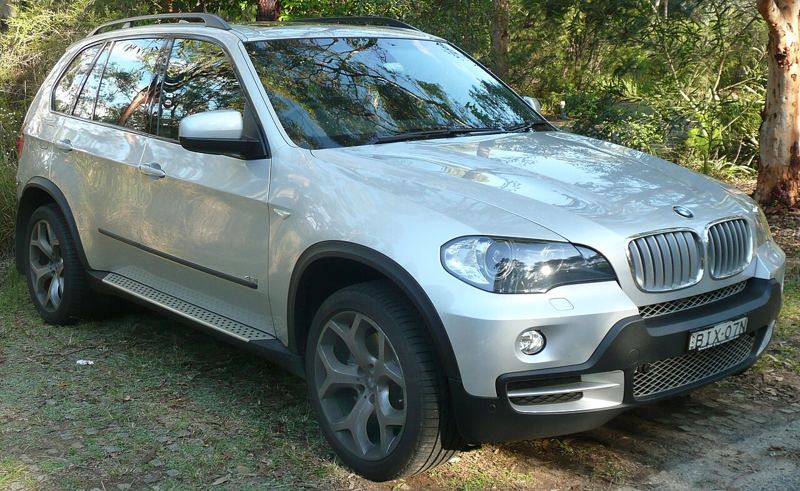
Photo: OSX · Public domain What changed. Launched in autumn 2006, it grew in size and, for the first time, a BMW could carry up to seven people thanks to an optional third row. It brought standard xDrive and run-flat tires, with Active Steering and AdaptiveDrive available. Launch engines were the 260 hp 3.0 inline-six and the 350 hp 4.8 V8; in 2009 the 265 hp, 425 lb-ft xDrive35d diesel arrived, new to the U.S., and the first X5 M arrived for the 2010 model year, with production beginning in 2009. When it debuted, the X5 had already sold about 580,000 units worldwide and more than 240,000 in the United States.
The innovation. It was the first SAV fitted with run-flat tires as standard, and in 2009 Spartanburg began building the X5 M, the M division's first entry into the X family. That same year the plant also started assembling the X6 ActiveHybrid, its first hybrid.
If you buy one usedCheck the exact Takata campaign, inflator and previous repair history. Passenger programs 16V364, 18V030 and 19V017 have different year/geography scopes; 20V016 and driver program 20V017 address specified interim replacement inflators. Applicable passenger notices and BMW’s current driver-inflator warning require affected unrepaired vehicles not be driven; arrange safe repair with BMW. Other selected recalls are fuel pumps 16V746 (2007–2011), front driveshafts 17V138 (2011–2013) and diesel idler-pulley bolts 18V336 (2009–2013). BMW’s original table limits 17V683 PCV-heater X5 applications to 2007–2010. Later 22V119 requires a new fused-harness remedy on eligible cars even after previous PCV work. Verify all current repairs by VIN. - Gen. 32014–2018 · F15
Optional rear-wheel drive and the first plug-in hybrid
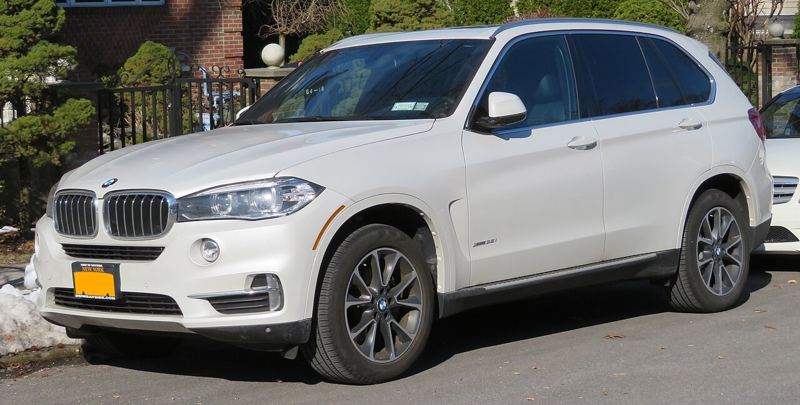
Photo: Kevauto · CC BY-SA 4.0 What changed. Unveiled on May 29, 2013 as the third generation, it shed roughly 170 to 230 pounds depending on the model and, for the first time, offered rear-wheel drive: the sDrive35i. Engines: a 300 hp TwinPower Turbo inline-six (sDrive35i and xDrive35i), a 445 hp 4.4 V8 (xDrive50i) and a 255 hp, 413 lb-ft diesel (xDrive35d). It added a full-color head-up display, an optional third row and the Active Driving Assistant package with lane departure warning and pedestrian braking.
The innovation. The 2016 X5 xDrive40e, announced on March 17, 2015, was the first plug-in hybrid production model from the core BMW brand: a 240 hp 2.0 turbo four plus a 111 hp electric motor, 308 hp and 332 lb-ft combined, a 9.2 kWh gross-capacity battery, about 14 EPA electric miles and 56 MPGe. BMW announced U.S. showroom arrival for October 3, 2015 from $63,095 including destination and was the first series plug-in hybrid built in Spartanburg.
If you buy one usedSelected airbag campaigns include head-protection-system connections 15V147 and Takata driver-inflator welds 16V683 on specified 2014–2015 vehicles, plus passenger modules 17V189 on certain 2017 cars. The 16V683 defect is manufacturing/welding, distinct from humidity-driven propellant degradation. For xDrive35d diesels, 21V586 covers specified 2014–2018 fuel pumps; EGR-cooler programs 18V755 and 21V907 cover specified 2014–2017 vehicles, and 21V907 requires a new remedy after the earlier EGR campaign. Certain 2016–2018 xDrive40e vehicles have water-pump connector campaign 24V608, with conditional replacement and a protective shield. Check actual eligibility, repairs and hybrid battery condition. - Gen. 42019–2026 · G05
The X5 of curved screens and the 483 hp plug-in
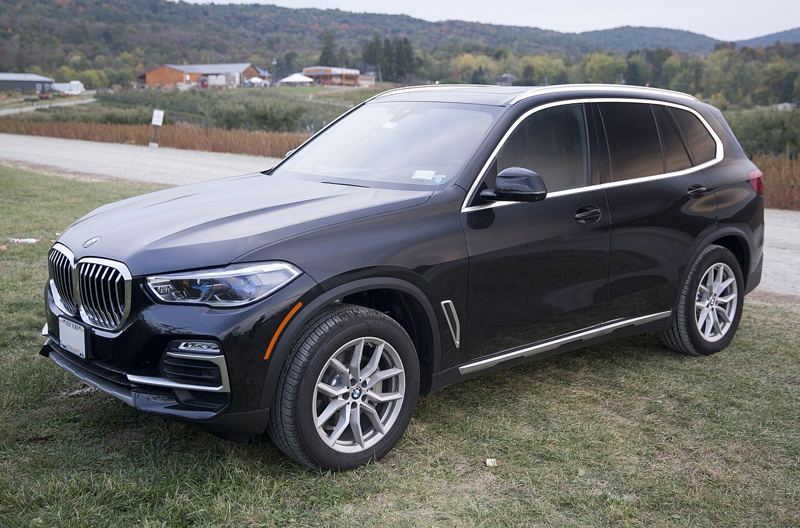
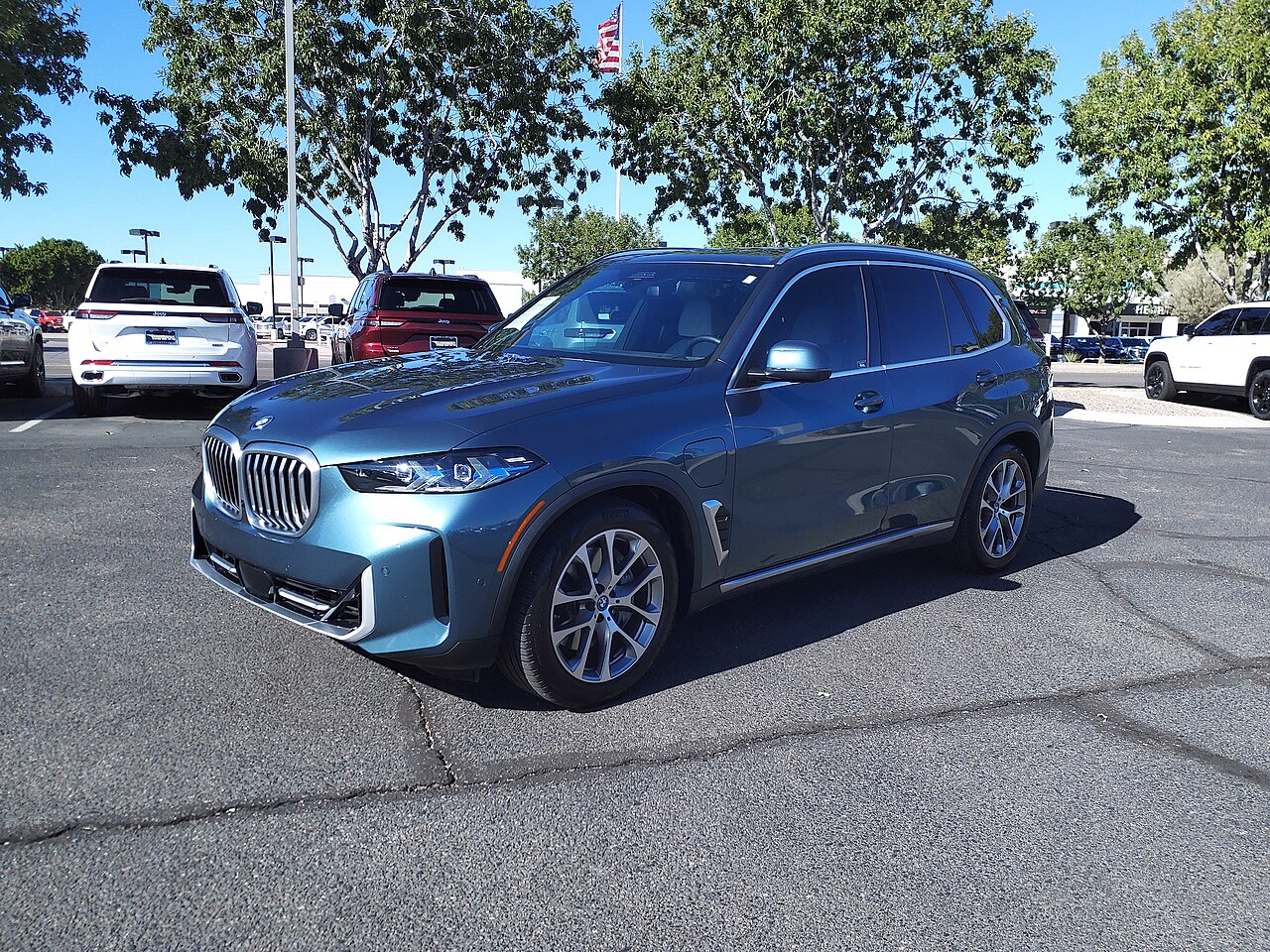
Photo: Mr.choppers · CC BY-SA 3.0 What changed. Unveiled on June 6, 2018 and on sale that November, it grew 1.6 inches in wheelbase, 1.1 in length and 2.6 in width. It arrived with the 335 hp inline-six (xDrive40i) and the 456 hp V8 (xDrive50i), two 12.3-inch screens, optional two-axle air suspension and Off-Road package, available laser headlights and an optional third row. For 2024 it was refreshed: a 48-volt xDrive40i with 375 hp, a 523 hp M60i, the BMW Curved Display with 12.3- and 14.9-inch screens running iDrive 8, and the new xDrive50e plug-in.
The innovation. The xDrive50e: a six-cylinder plus a 194 hp electric motor for 483 hp and 516 lb-ft combined, a 19.2 kWh usable battery, 0 to 60 mph in 4.6 seconds and up to 38 electric-only miles according to BMW USA. It is an X5 that can do the daily commute without gasoline and accelerate faster than the 40i versions according to BMW’s published figures.
If you buy one usedCheck rearview-camera campaign 21V096 on specified 2019–2021 vehicles. Sunroof campaign 22V267 addresses closure without the key present on specified 2019–2022 vehicles, with software reprogramming. Other examples include axle-support welds 20V678 and steering joints 21V031 with different 2020–2021 subranges. Certain 2021 xDrive45e batteries have separate 20V490 and 20V601 programs; until 20V601 is remedied, do not charge or use manual/sport modes or shift paddles. Later knee-airbag 23V471 and instrument-panel 24V138 applications are specified 2024 vehicles. Integrated-brake programs 24V104, 24V697, 24V739 and 26V422 have distinct scopes; later programs can require new work after earlier repairs. Also check 25V644 for specified 2019–2020 starters even after 24V576. Confirm current VIN status and actual warranty terms separately.
 BMW X32004–present
 BMW 3 Series1975–present
 BMW X72019–present
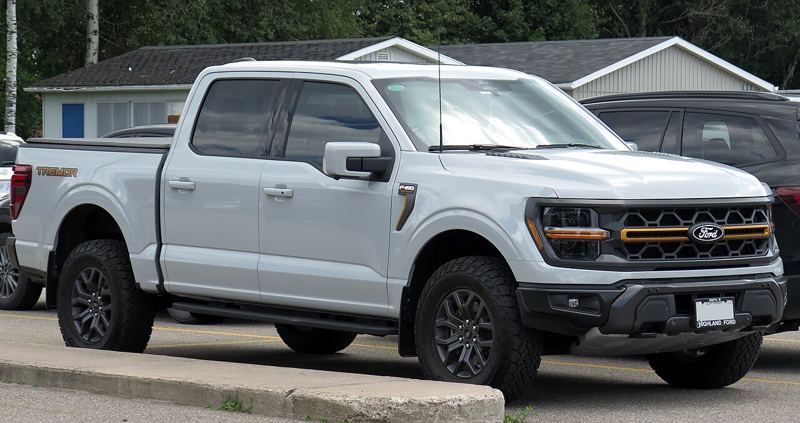 Ford F-Series (F-150)1948–present
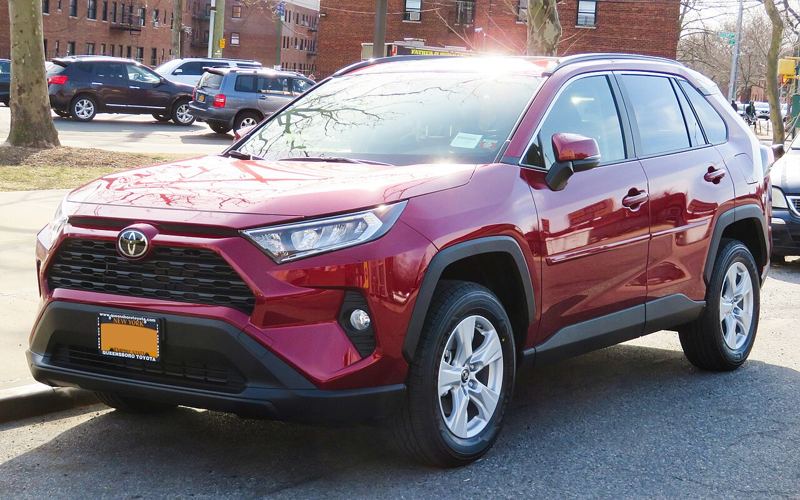 Toyota RAV41994–present (US from 1996)
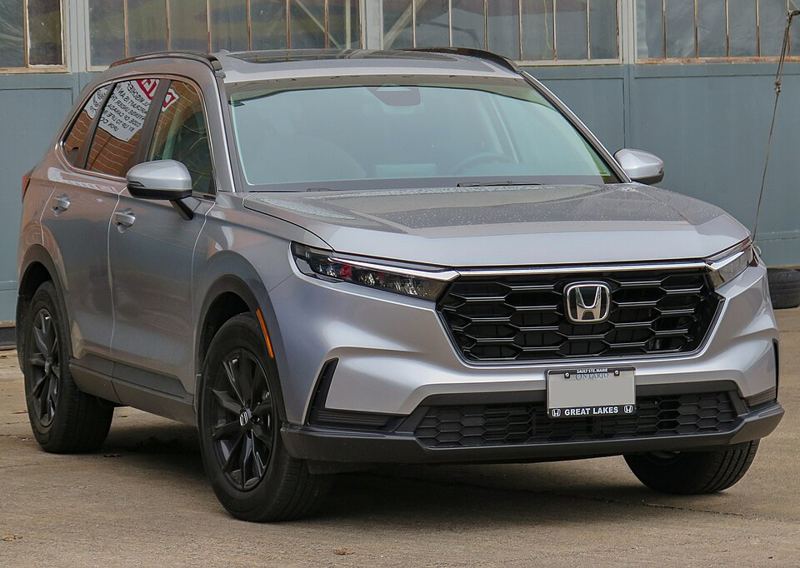 Honda CR-V1995–present
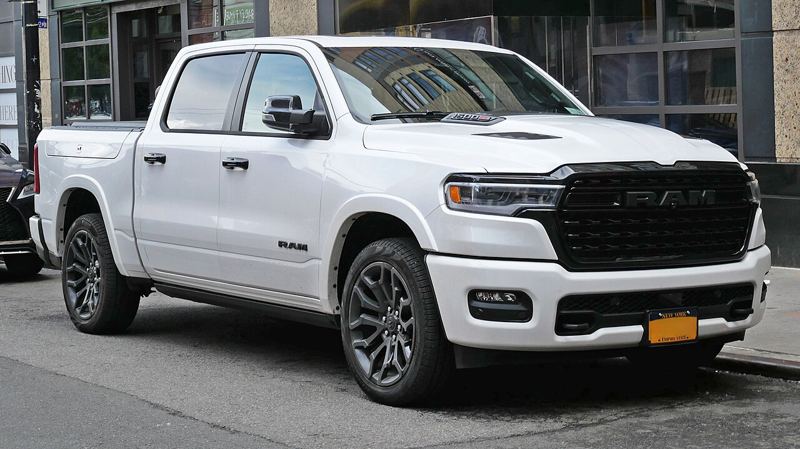 Ram 15001981–present
 Tesla Model Y2020–present
 Chevrolet Silverado1999–present


