
BMW 3 Series
Compact luxury sedan · 1975–present. 31,330 units sold in the US in 2024
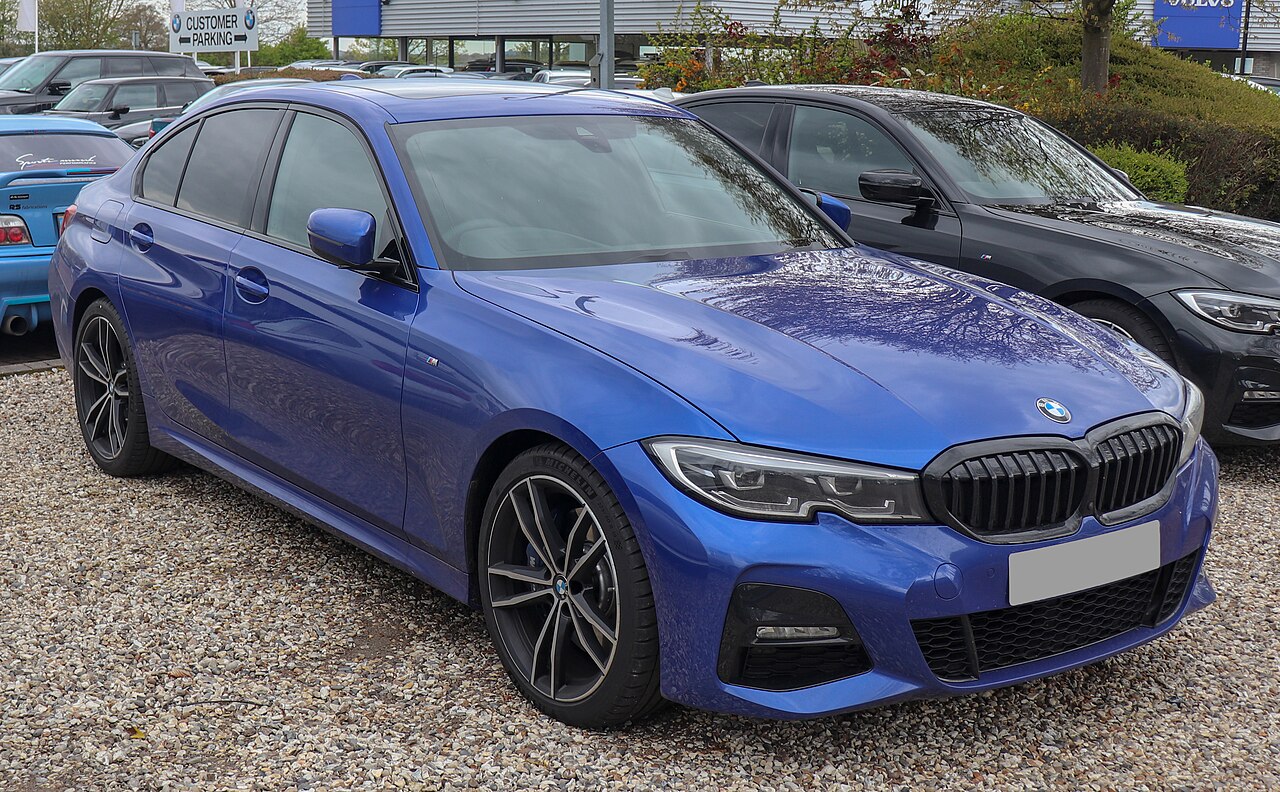
How it began
BMW developed the 3 Series, and design chief Paul Bracq styled its first generation. BMW of North America launched it in the U.S.; the subsidiary took over sales and distribution from importer Max Hoffman on March 15, 1975. BMW credits designer Claus Luthe with the third-generation E36.
Production began in 1975 at BMW’s main Munich plant, the family’s historic production centre. Over the years the 3 Series has been built at 18 plants in 13 countries, including Spartanburg, South Carolina, where a 318i was the first car assembled in 1994. U.S. 3 Series cars are supplied from both San Luis Potosí, Mexico, and Germany, according to BMW’s June 2025 response.
BMW introduced the 3 Series to the world’s press at Munich’s Olympic Stadium in July 1975; the Frankfurt motor show followed in September. According to BMW, the first U.S. 3 Series arrived in 1976, initially only as the 320i. In November 1976, members of the BMW Automobile Club of America drove the new cars out of Los Angeles for the launch.
The 3 is the series number: it succeeded the 02 family and introduced a new model designation. On the first models, the next two digits gave the engine size: the 316 had 1.6 liters and the 320 had 2.0 liters, and the i meant fuel injection. Today the number is no longer literal: the 330i uses a 2.0-liter engine.
BMW created it to prove that sporty driving was not reserved for big, expensive cars, and to bring it to the midsize segment. It had to keep the agility of the successful BMW 02 and add better design, comfort, space and safety. In the United States it replaced the 2002, whose design dated from 1965, and had to adapt to tougher emissions rules.
Generation by generation
- Gen. 11975–1983 · E21
The car that invented the driver-focused cockpit
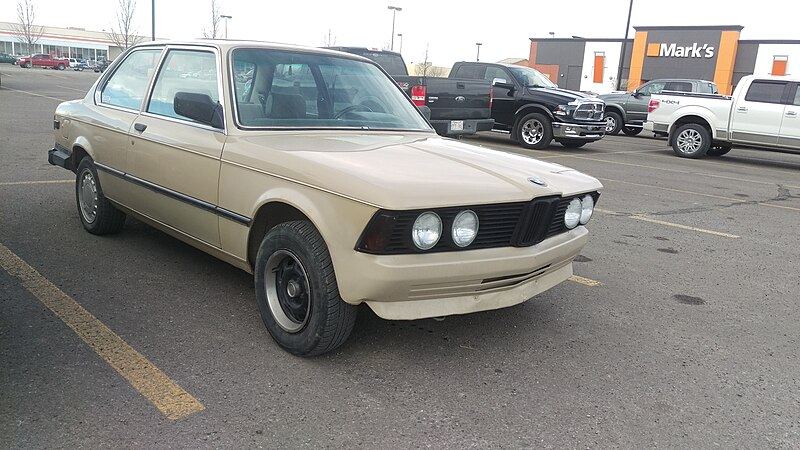
Photo: dave_7 from Canada · CC BY 2.0 What changed. It replaced the BMW 02 with a two-door sedan only a few centimeters larger (4,355 mm long), with more space, comfort and safety. Europe got the 316, 318, 320 and 320i, and from 1977 the six-cylinder 323i with 143 hp. The U.S. got only the 320i, with a fuel-injected 2.0-liter four-cylinder making 110 hp and 112 lb-ft because of emissions rules. BMW sold 1,364,039 units through 1983.
The innovation. The driver-focused cockpit: the center controls were stacked vertically and angled toward the driver. BMW says it remains a brand signature. It was also the first car in its class offered with a six-cylinder engine (1977) and brought BMW's first elastically mounted rack-and-pinion steering.
If you buy one usedSelected historical campaigns include 77V092 for certain 1977 320i accelerator springs, 80V076 for 1977–1979 throttle-return dampers, 78V074 for 1977–1978 main-wiring connections and 78V061 for 1977–1978 fuel-vapor problems. Confirm actual eligibility and repairs. BMW’s historical account acknowledges inside-rear-wheel lift during hard cornering and says the later 320iS greatly reduced it. Assess the actual car’s structure, maintenance and handling rather than infer roadworthiness from its classic status. - Gen. 21982–1994 · E30
Four doors, Touring, convertible and the first M3
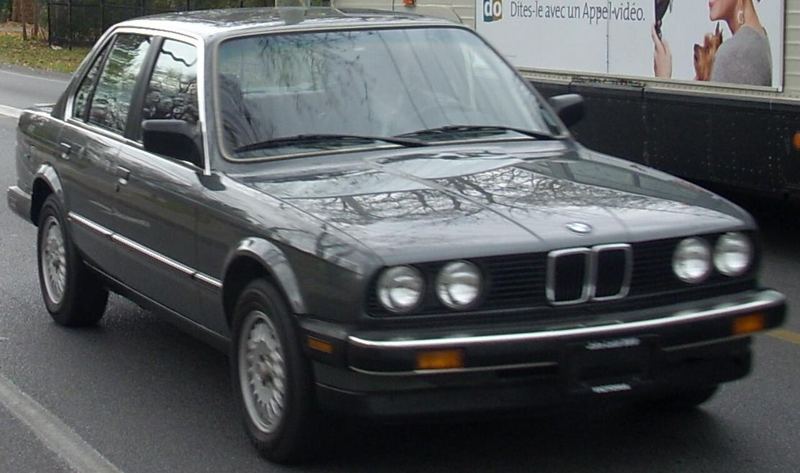
Photo: Bull-Doser · Public domain What changed. It improved aerodynamics by almost 15%, gained 4 cm of interior room and lost about 30 kg. It added a four-door in 1983, a convertible in 1986 and the Touring wagon in 1987, plus the efficient 325e in 1984. The first M3, built to homologate a race car, won the world, German and European touring car championships in 1987. It sold 2,339,251 units, almost a million more than the first generation.
The innovation. All-wheel drive: in 1985 it became BMW's first series-production car with all-wheel drive. BMW also opened a body shop in Munich in 1982 that was more than 90% automated to build it.
If you buy one usedCheck cooling-system campaign 93V015 on the stated 1984–1988 325 cohort; other years also appear in that program. Excess temperature or pressure can damage heater components or hoses; the published remedy adds a bypass valve and revised radiator cap. Selected additional campaigns are 86V138 for certain 1985–1986 steering-column disengagement elements and 86V151 for certain 1986–1987 brake-light switches. Verify actual model/VIN eligibility and completed work. - Gen. 31990–2000 · E36
The first BMW built in America
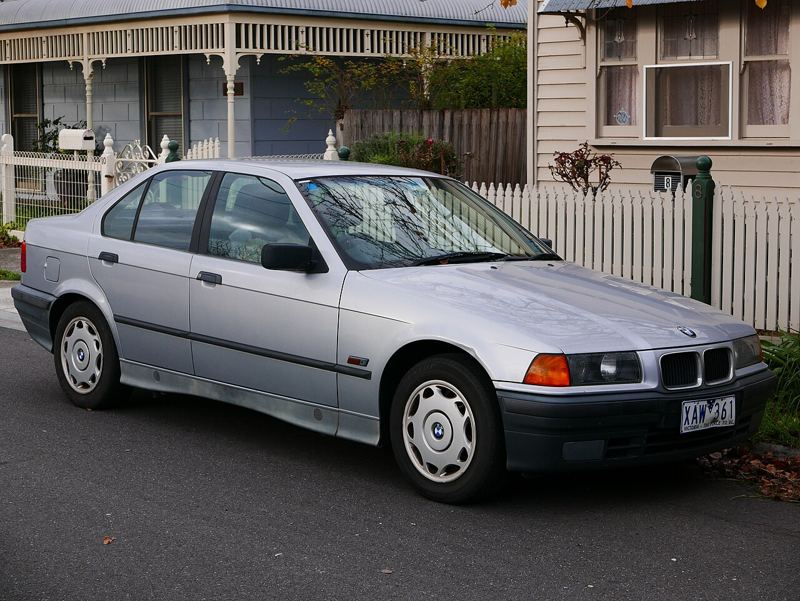
Photo: OSX · Public domain What changed. Styled by Claus Luthe, it grew in wheelbase and track and gained 30 mm of rear legroom. The twin round headlights moved behind a single glass cover. The coupe (1992), convertible (1993) and Compact (1994) arrived, along with standard ABS from 1992 and an aluminum six-cylinder in the 328i from 1995. In 1994 a 318i was the first car built at the Spartanburg plant. It sold a record 2.75 million through 2000.
The innovation. VANOS variable camshaft timing arrived in the 3 Series family in 1992. It adjusts valve timing to operating conditions, supporting midrange torque and high-speed power.
If you buy one usedCheck 97V131 for specified 318i/325i throttle and cruise-control cable bushings: their model-year ranges differ, with the selected 325i cohort ending in 1995. Campaign 98V178 concerns specified 1992–1995 heater-core failures under overheating pressure. Other examples include 96V111 for brake-light switches and 96V110 for certain 1992 airbag contact-ring tabs. Confirm the actual named model and completed remedies rather than transfer a family-wide year span to every variant. - Gen. 41998–2006 · E46
The best-selling 3 Series ever
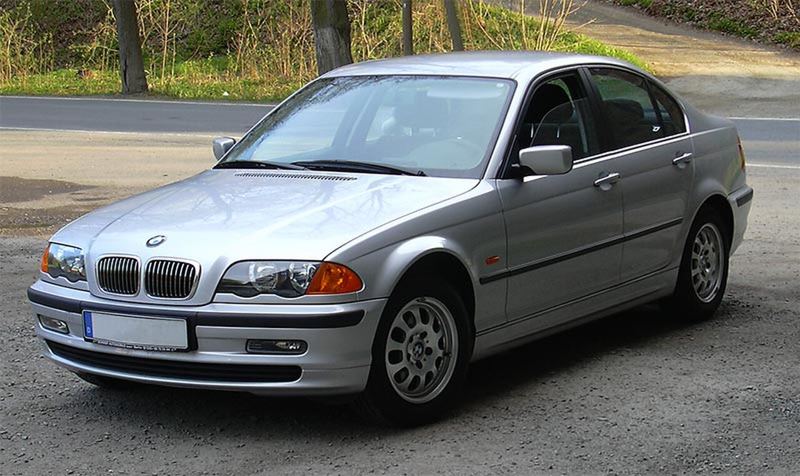
Photo: Wikimedia Commons · CC BY-SA 2.5 What changed. It brought sportier styling with the kidney grille integrated into the hood, 20 mm more rear legroom, and interior and safety ideas borrowed from the 7 Series. About 20% of the chassis was aluminum. The M3 rose to 343 hp in Europe. It sold 3,266,885 units through 2006, a record BMW says still stands.
The innovation. Dynamic Stability Control (DSC) became standard on every model, and in 2001 the family debuted VALVETRONIC, which controls intake air with the valves instead of a throttle plate and, according to BMW, cuts fuel use by up to 10%.
If you buy one usedVerify the exact airbag campaign and previous replacement history. Programs 14V428 and 15V318 concern specified passenger and driver inflators, respectively; 19V853 and 21V401 have distinct NADI replacement/previous-inspection conditions, while 20V018 addresses interim passenger inflators. BMW currently says affected unrepaired 2000–2006 E46 vehicles with the specified driver inflators must not be driven; contact BMW about safe repair arrangements. Also check 2001 cooling-fan campaigns 01V206/02V138 and sedan-specific rear-lamp campaign 11V438 for certain 2002–2005 cars. - Gen. 52005–2013 · E90
World Car of the Year and the turbo era
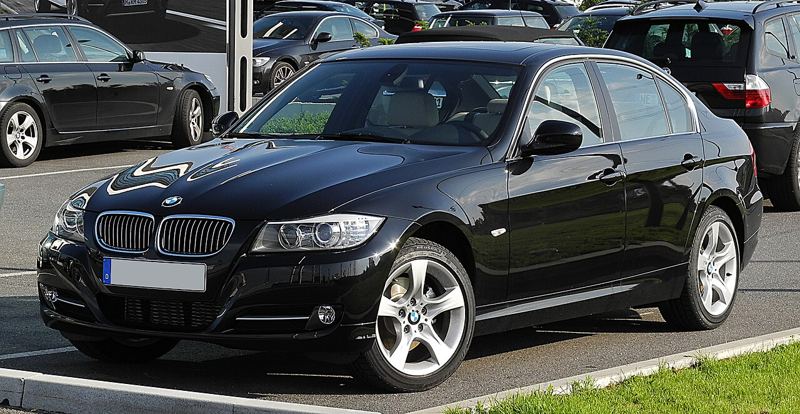
Photo: M 93 · CC BY-SA 3.0-DE What changed. It grew 49 mm longer and 78 mm wider and arrived with the EfficientDynamics philosophy of using less fuel without losing driving feel. It was named 2006 World Car of the Year. It added a coupe (2006), a retractable-hardtop convertible (2007), the V8-powered M3 (2007), the twin-turbo six-cylinder 335i and, in the U.S., the 335d diesel (2009–2011). It sold more than 3.1 million.
The innovation. The six-cylinder engines in the 325i and 330i were the first volume-production engines with a magnesium-aluminum composite crankcase, lighter than an all-aluminum block.
If you buy one usedCheck replacement-wheel campaign 24V513 and interim-driver-inflator campaign 20V017 using the exact body, equipment and VIN. BMW’s current Do Not Drive warning covers affected unrepaired E90/E91/E92/E93 vehicles from the specified 2005–2013 cohort. Other selected campaigns include blower wiring 17V676, PCV heater 17V683, battery-cable connection 13V044 and VANOS bolts 14V176. PCV campaign 22V119 requires a new fused-harness remedy on eligible cars even after earlier PCV recalls. VANOS campaign 23V707 separately covers specified vehicles previously included in the extended-warranty program. Verify every applicable current repair. - Gen. 62012–2019 · F30
Lighter, with an 8-speed and the first hybrid
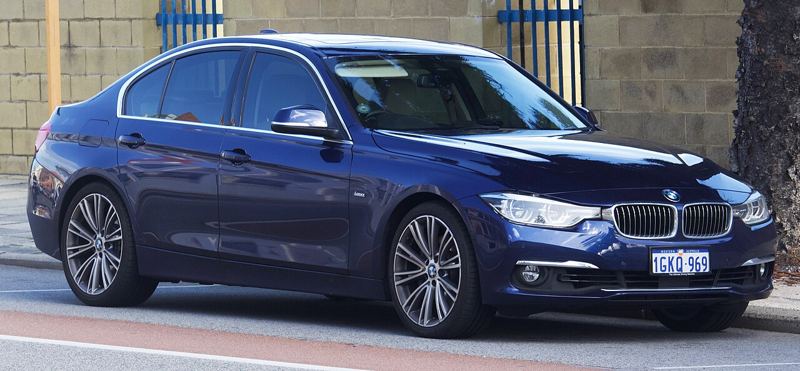
Photo: EurovisionNim · CC BY-SA 4.0 What changed. It was about 40 kg lighter despite growing, with 50 mm more wheelbase and 50:50 weight distribution. The coupe and convertible split off as the 4 Series, and a Gran Turismo joined the 3 Series. In 2012 the first hybrid 3 Series debuted, rated at 250 kW/340 hp in BMW’s global history. BMW says more than 2 million customers chose the generation.
The innovation. It was the first in its segment with an eight-speed Steptronic automatic and with a full-color Head-Up Display on the windshield.
If you buy one usedCampaigns 13V454 and its expansion 14V627 concern brake-vacuum-pump lubrication on specified 2012–2014 320i/328i applications. For 14V627, the actual mechanism is a camshaft seal disk moving and restricting the oil supply; the repair retains the disk with a locking ring after the prescribed inspection. Also check 15V520 for front side-marker software on specified 2012–2015 cars and 24V608 for water-pump connector shorts on certain 2012–2016 328i vehicles. The latter remedy includes inspection, conditional pump/connector replacement and a protective shield. Confirm current VIN eligibility and repair records. - Gen. 72019–present · G20
Digital, stiffer and electrified
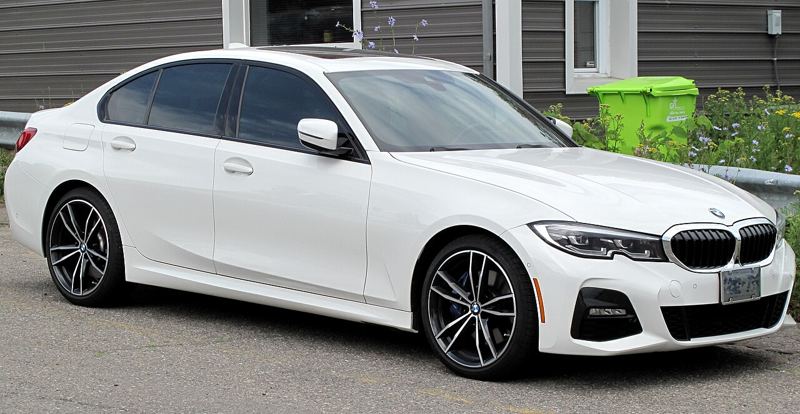
Photo: Elise240SX · CC BY-SA 4.0 What changed. It debuted at the Paris Motor Show in October 2018 and reached the U.S. in March 2019. It is 2.9 inches longer and 25% stiffer, and its 330i made 255 hp and 295 lb-ft, from $40,250 plus destination. Later came the M3 sedan (2020), the Curved Display (2022) and, from 2024, 48-volt mild-hybrid systems on the 330i and M340i.
The innovation. It introduced BMW's first lift-related dampers, which adjust to suspension travel, as standard. It also brought BMW Digital Key, which unlocks and starts the car with a compatible phone over NFC, and the voice assistant that answers to "Hey BMW".
If you buy one usedSelected campaigns include 19V732 for 2019–2020 330i balance-shaft bearings, 19V912 for rear belt pretensioners, 20V355 for specified 330i xDrive/M340i steering tie rods, and 23V211 for seat-frame welds. Certain 2019–2021 330i vehicles have starter-relay campaign 25V636: park outside and away from structures until the starter replacement is complete. Also check 23V770 for certain 2024 steering gears and 25V202 for specified 2025 starter-generator/battery connections. These programs have different equipment and year limits; confirm actual VIN eligibility, remedy availability and completed work with BMW.
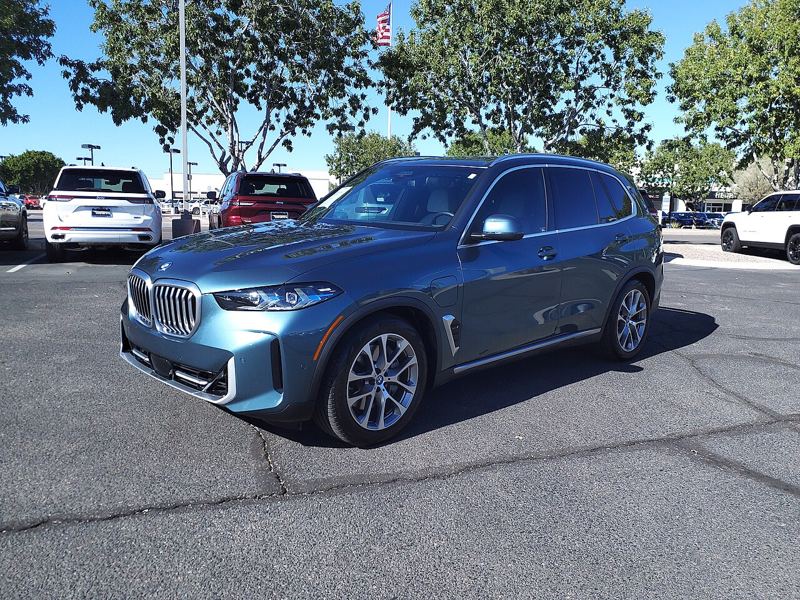 BMW X51999–present
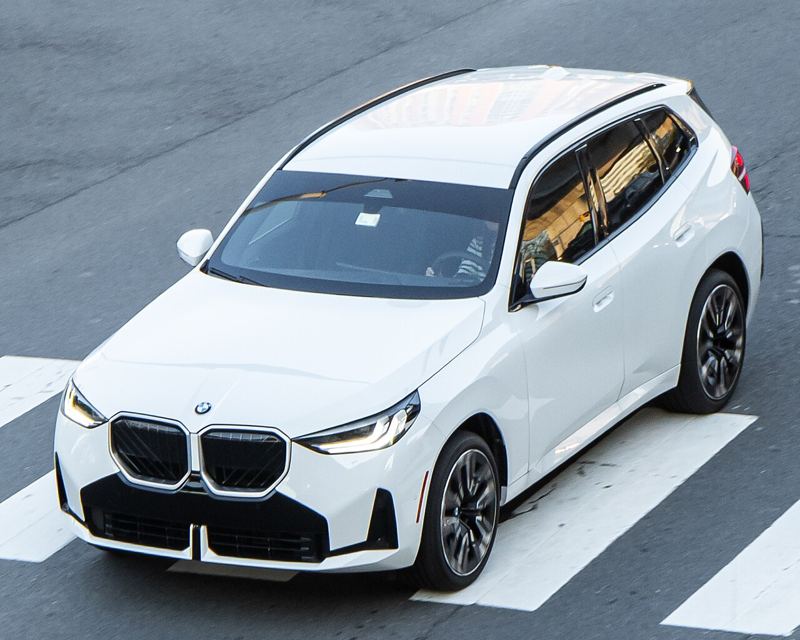 BMW X32004–present
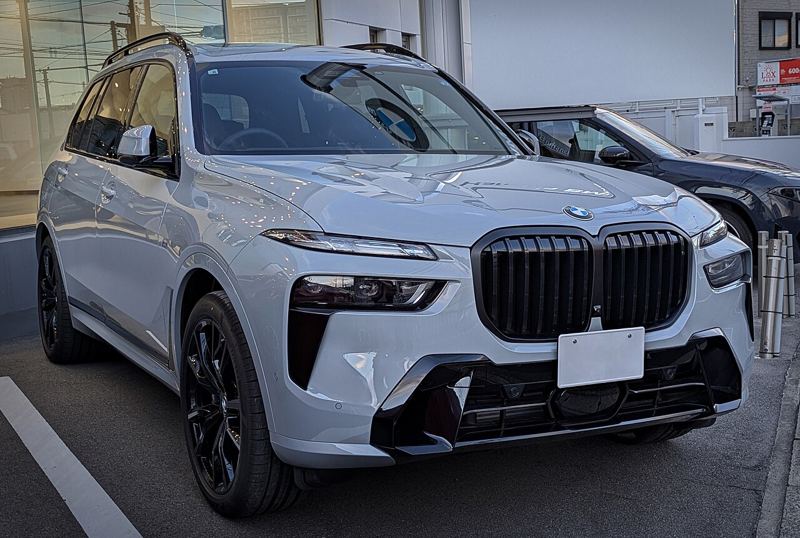 BMW X72019–present
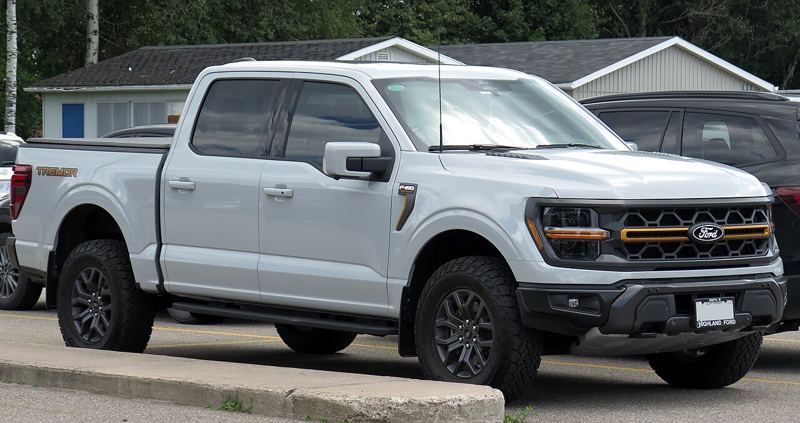 Ford F-Series (F-150)1948–present
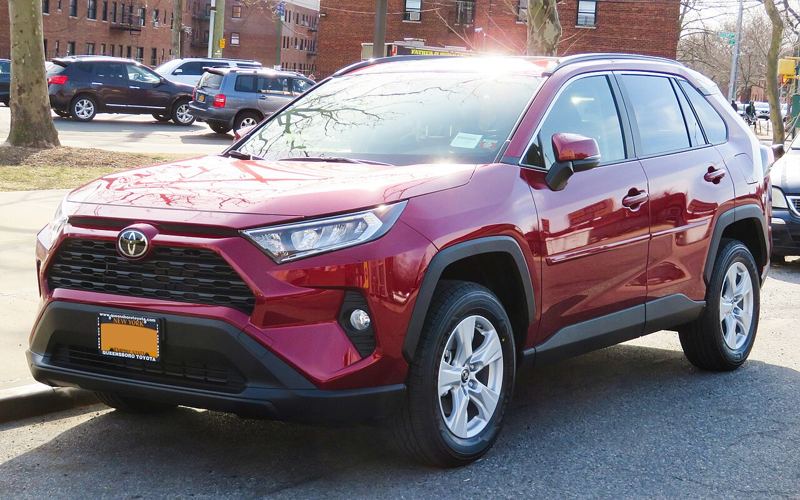 Toyota RAV41994–present (US from 1996)
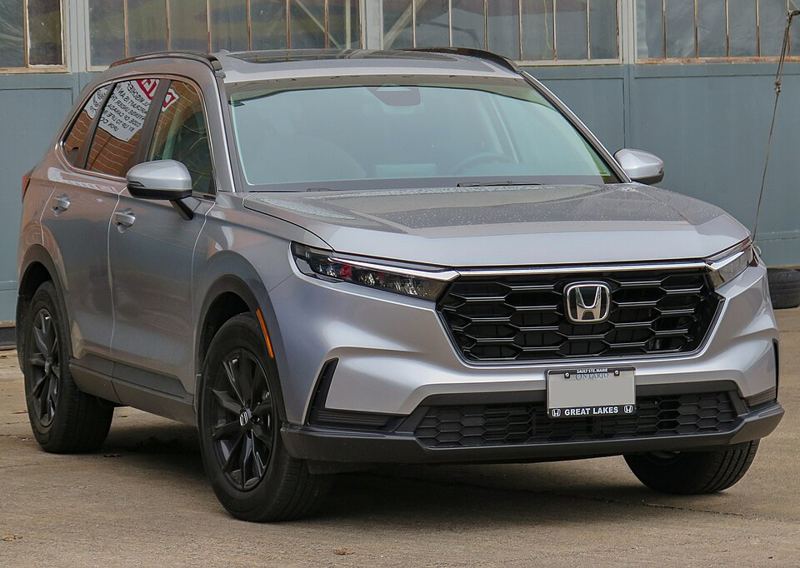 Honda CR-V1995–present
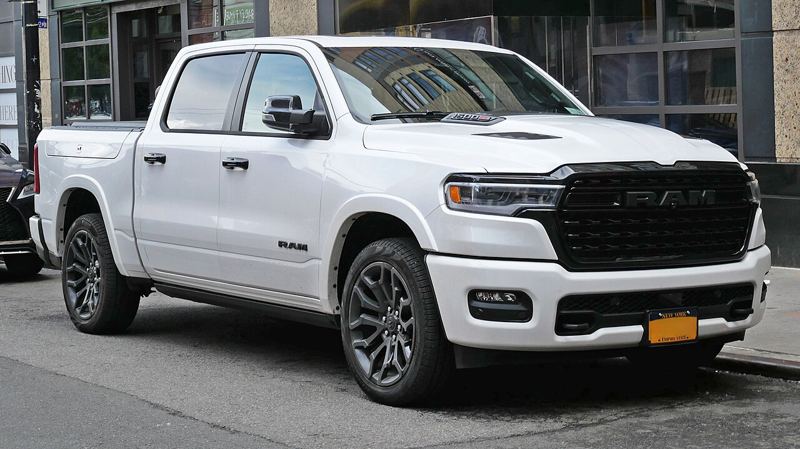 Ram 15001981–present
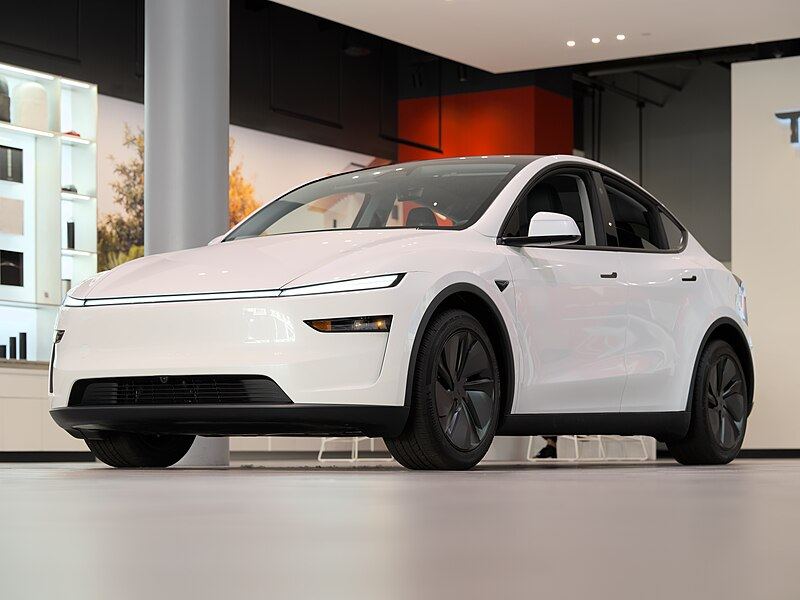 Tesla Model Y2020–present
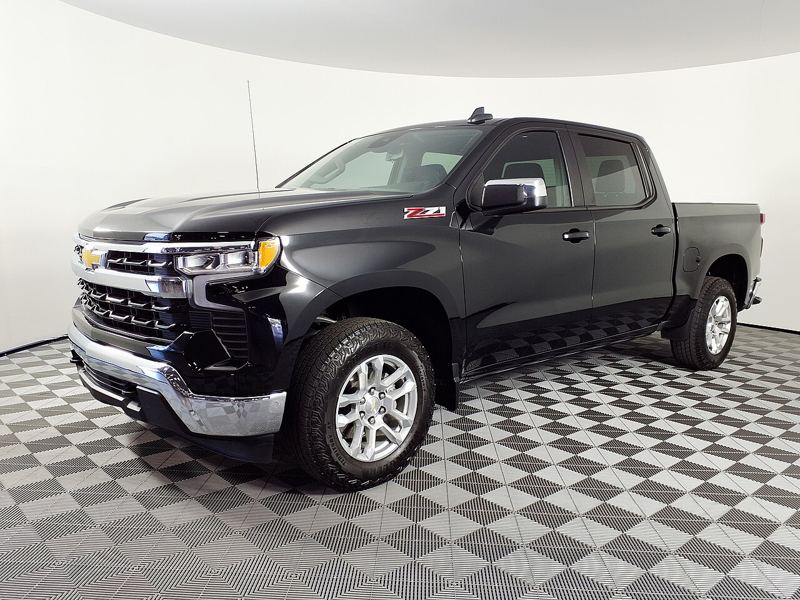 Chevrolet Silverado1999–present


