
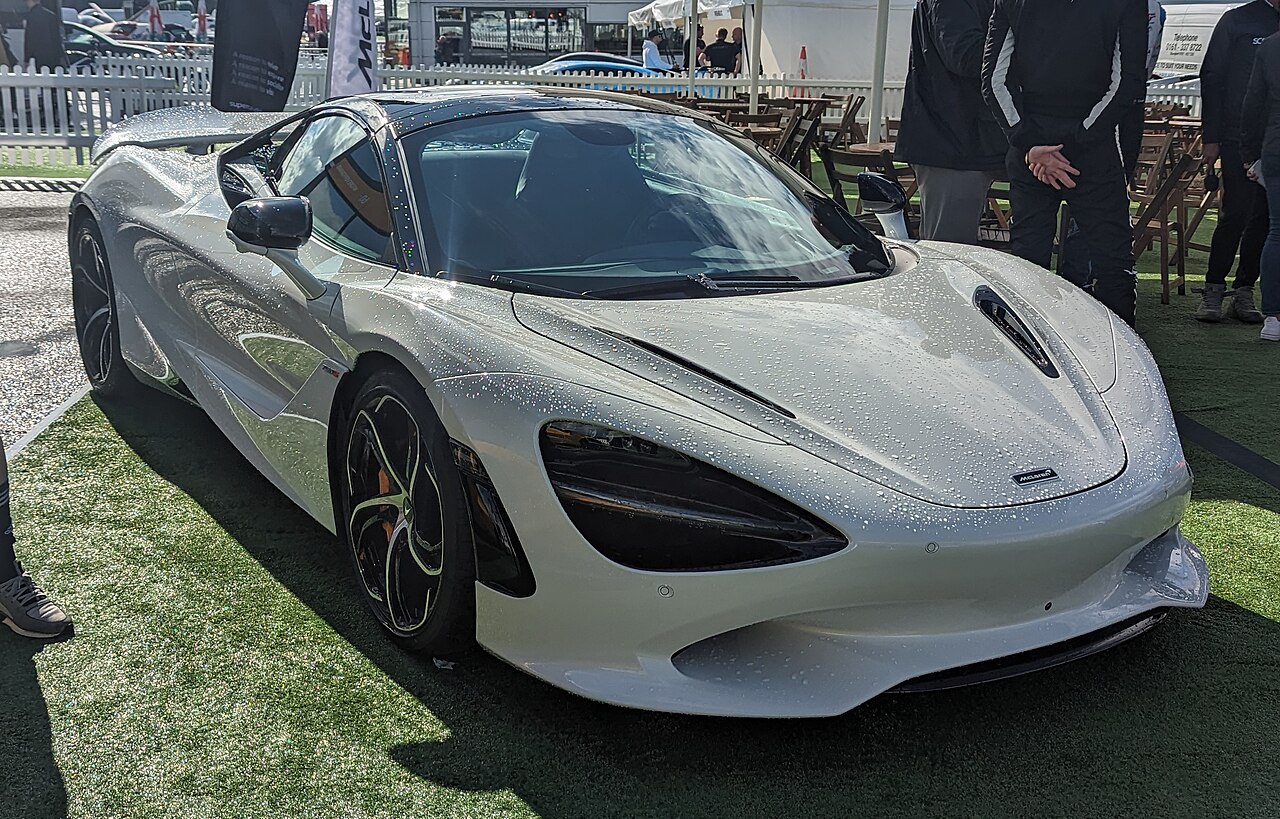
McLaren 750S
Mid-engine two-seat supercar · Introduced in 2023. This review has not established this model’s 2024 U.S. sales.
This history follows the 12C, 650S and 720S before the 750S; each name identifies a distinct model. Introduction year refers to the global reveal; US model years and delivery dates may differ.
How it began
It was created by McLaren Automotive, the road-car arm of the Formula 1 team founded by New Zealander Bruce McLaren. When the MP4-12C launched, Ron Dennis was executive chairman, Antony Sheriff was managing director and Frank Stephenson was design director. The V8 engine was developed with the engineering firm Ricardo. Rob Melville, who joined McLaren in 2009, contributed to the 12C’s evolution into the 650S and then led the 720S design, becoming design director in 2017. The 750S was developed with input from CEO Michael Leiters.
It is designed and built in Woking, Surrey, England. The first 12Cs were assembled at the McLaren Technology Centre, and production then moved to the McLaren Production Centre, a 32,000 m², 40-million-pound plant where McLaren said all its future series-production sports cars would be built. Cars sold in the U.S. are imported from England.
MP4-12C production began in early 2011 in Woking, with a U.S. base price of $229,000. The original May 2012 Wards report described a global network of 37 dealers and the U.S. as the car’s leading market.
In MP4-12C, "MP4" is the designation McLaren has used on its Grand Prix cars since 1981; "12" is McLaren’s internal performance index, combining power, weight, emissions and aerodynamic efficiency, and "C" refers to carbon fiber. In late 2012 McLaren dropped the "MP4" and the car became simply the 12C. Since then the number has stated power in metric horsepower (PS): 650S (650 PS, S for Sport), 720S (720 PS) and 750S (750 PS, about 740 hp).
McLaren had been winning in Formula 1 for decades and wanted its own range of sports cars, not just an occasional special car. The announced plan was a continuing model range with about 4,000 cars a year, and the 12C was the first, aimed at the Ferrari 458 and Lamborghini Gallardo. It was also an engineering showcase: a carbon-fiber chassis that could be made in series at a fraction of the old cost.
Related models and history
- Chapter 12011–2014 · P11
MP4-12C / 12C: the start of the modern series-production range
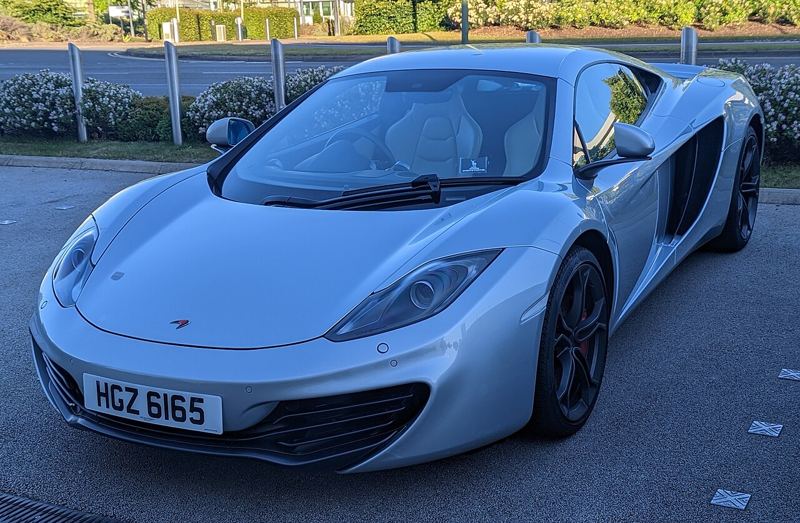
Photo: Calreyn88 · CC BY-SA 4.0 What changed. It was the first car in a new McLaren range. It used a 3.8-liter twin-turbo V8 with 592 hp and 443 lb-ft, a seven-speed dual-clutch gearbox, and ran 0–62 mph in 3.1 seconds. The suspension linked all four dampers hydraulically instead of using anti-roll bars. In 2012 the Spider was unveiled with a retractable hard top and, for the 2013 model year, power rose to 616 hp, an upgrade McLaren also gave existing owners free of charge.
The innovation. The MonoCell: a hollow, one-piece carbon-fiber tub weighing 80 kg. It took five years to develop, could be made in four hours and cost under a tenth of the 1993 McLaren F1's chassis. It also used "brake steer," braking the inside rear wheel in corners to help the car turn, an idea taken from Formula 1.
If you buy one usedCheck these NHTSA recalls: 13V541 (2012–2014 12C and Spider built Oct. 10, 2011 to Oct. 23, 2013 and sold or registered in Florida, Georgia, Alabama, Mississippi, Louisiana or Texas: the wiper motor could jam in heat and humidity); 17V005 (2012 12C), 18V007 (2013 12C) and 19V141 (2012–2013 12C): the passenger air bag inflator could rupture or explode after years of heat and humidity. If the car lived in South Florida, ask for proof the work was done. Also ask whether it received the free 2013-model-year upgrade announced in June 2012 (616 hp, revised gearbox) and the 2014 Technology Upgrade (active-aero software and the IRIS screen), Early IRIS infotainment had been reported dormant because of supply-chain delays; this concerns the original system, rather than the entire later Technology Upgrade package. - Chapter 22014–2017 · P11
650S: the 12C with a P1 soul
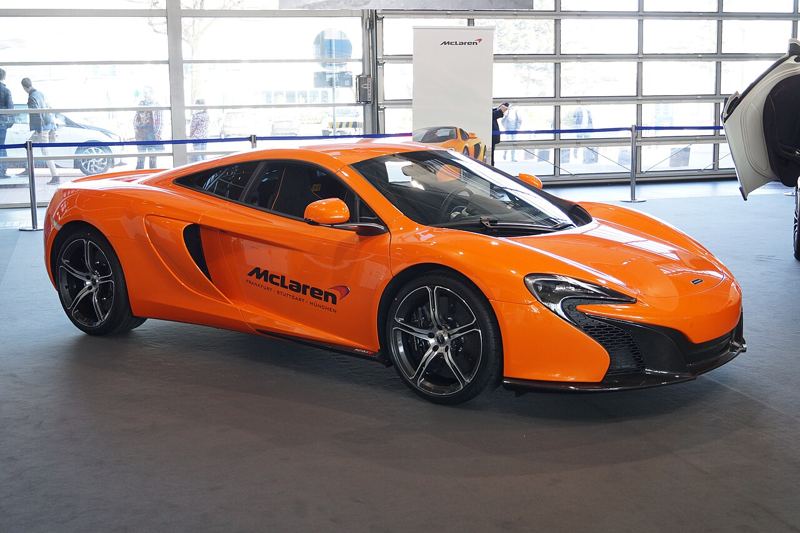
Photo: Jakub "Flyz1" Maciejewski · CC BY-SA 3.0,2.5,2.0,1.0 What changed. About 25 percent of the car was new compared with the 12C. The 3.8-liter V8 rose to 650 PS (641 hp) and 500 lb-ft, and the nose mimicked the P1 hybrid hypercar, with crescent-shaped LED headlights. It cut 0–62 mph to 3.0 seconds and came standard with carbon-ceramic brakes. It debuted at the 2014 Geneva show and drew so much demand that McLaren stopped building the 12C to give the whole plant to the 650S.
The innovation. A rear airbrake that adjusts itself: it lies flat for acceleration and rises under braking. Together with the new aerodynamics, downforce rose 40 percent at 150 mph. In Track mode, "inertia push" uses the engine’s kinetic energy to maintain acceleration during upshifts. In Sport mode, a brief ignition cut adds an exhaust flare and sound on upshifts.
If you buy one usedNHTSA includes the 2014–2016 650S in recall 19V141: the passenger air bag inflator could explode after long exposure to heat and humidity, throwing metal fragments. Ask for the repair record matched to the VIN. Because it shares the 12C's MonoCell structure and 3.8 engine, ask for the full service history. Confirm the exact model year and VIN with McLaren; the agency listing alone does not establish the first U.S. retail model year. - Chapter 32017–2023 · P14
720S: the second generation, 91 percent new
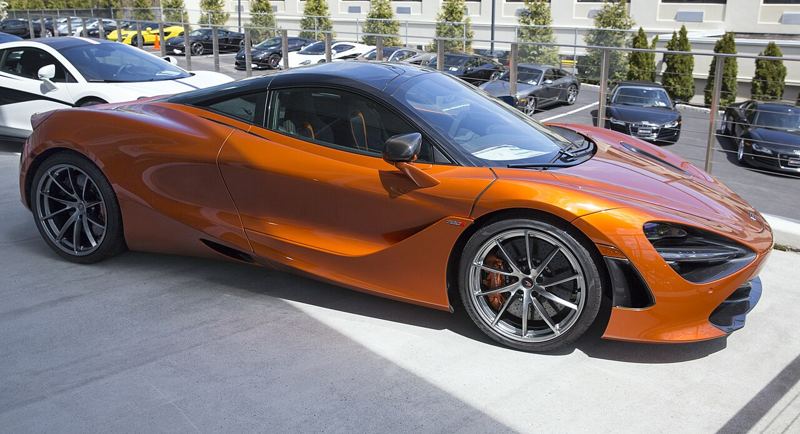
Photo: Mr.choppers · CC BY-SA 3.0 What changed. It was the first model of the second-generation Super Series and replaced the 650S. Ninety-one percent of the car was new. The V8 grew to 4.0 liters with 710 hp and 568 lb-ft, and 41 percent of its parts were new, including the crankshaft, pistons and twin-scroll turbos. It weighed 1,283 kg dry and had a manufacturer-quoted 0–62 mph time of 2.9 seconds. It debuted at Geneva in March 2017 and reached the U.S. as a 2018 model.
The innovation. The Monocage II: a 225-pound carbon-fiber structure that forms both the chassis and the passenger cell. It carries the doors on thin carbon pillars, and the doors are shaped to feed air to the engine, so there are no visible side intakes. The headlight housings, called "eye sockets," also channel air.
If you buy one usedCheck two NHTSA recalls: 20V231 (certain 2018–2020 720S vehicles with the affected NVH foam pad; confirm the exact VIN and build conditions: the foam pad under the fuel tank could hold moisture and corrode the tank, risking a fuel leak) and 21V561 (2019–2020 720S: the brake banjo bolt could be missing the holes that feed fluid to the caliper, so that brake would not work). Ask for proof of both, matched to the VIN. The exact McLaren/720S queries for model years 2021 and 2022 each returned zero campaigns on November 3, 2026. This dated query output does not replace exact VIN and repair-history checks. - Chapter 42023–2027 (planned) · P28
750S: the lightest and most powerful of the line
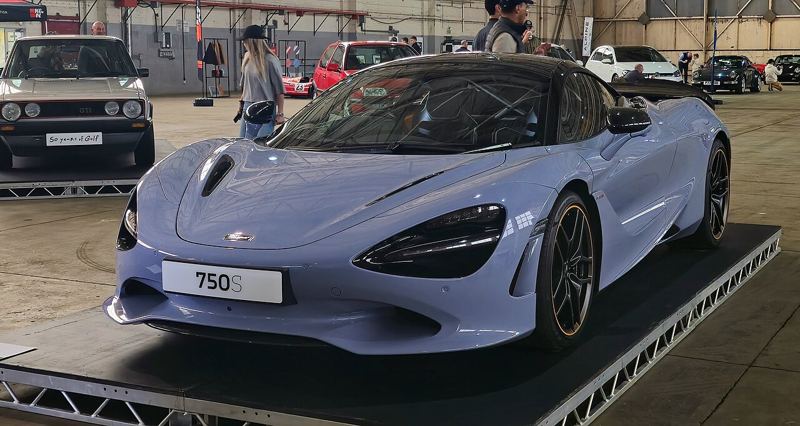
Photo: Calreyn88 · CC BY-SA 4.0 What changed. It was revealed on April 25, 2023 in U.S. Eastern Time (April 26 in the UK), six years after the 720S, with about 30 percent new or changed parts. The 4.0 V8 makes 740 hp and 590 lb-ft, more torque than the McLaren P1’s petrol V8 alone, although less than its combined hybrid system, using 765LT pistons and shorter gearing. The coupe weighs 1,389 kg (DIN), 30 kg less than the 720S, and runs 0–60 mph in 2.7 seconds. It comes as a coupe and a Spider.
The innovation. The McLaren Control Launcher: a button that saves your favorite mix of aero, handling, powertrain and transmission settings so you can call it up in one press. It also debuts the third-generation Proactive Chassis Control, a 6 mm wider front track and the lightest standard forged wheels announced up to then for a series-production McLaren. The nose-lift system raises the front in 4 seconds, versus 10 on the 720S.
If you buy one usedThe exact NHTSA McLaren/750S queries for model years 2024 and 2025 each returned zero campaigns on November 3, 2026. This is a dated query observation, not a guarantee about every alias or vehicle. Still, run the VIN on nhtsa.gov before buying. Ask which options it has (for example, the Senna-derived brake upgrade or the carbon racing seats), since they change the car's weight and use.
 Ford F-Series (F-150)1948–present
 Toyota RAV41994–present (US from 1996)
 Honda CR-V1995–present
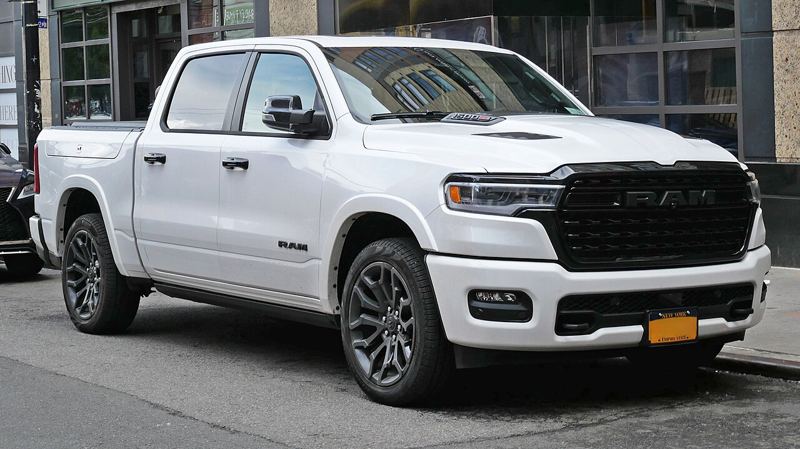 Ram 15001981–present
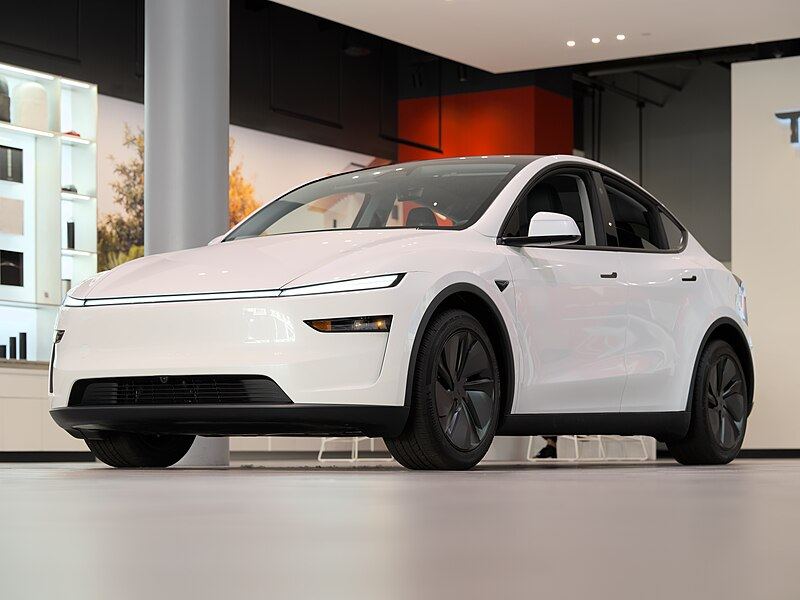 Tesla Model Y2020–present
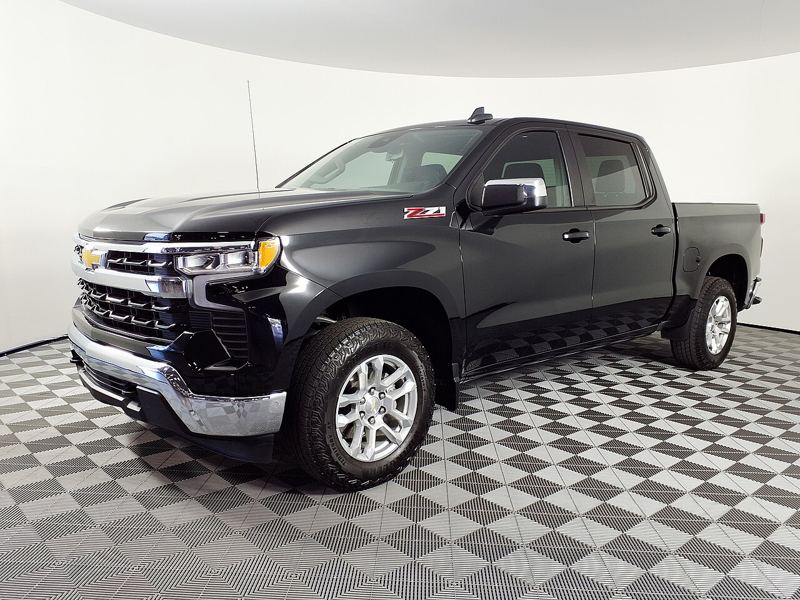 Chevrolet Silverado1999–present
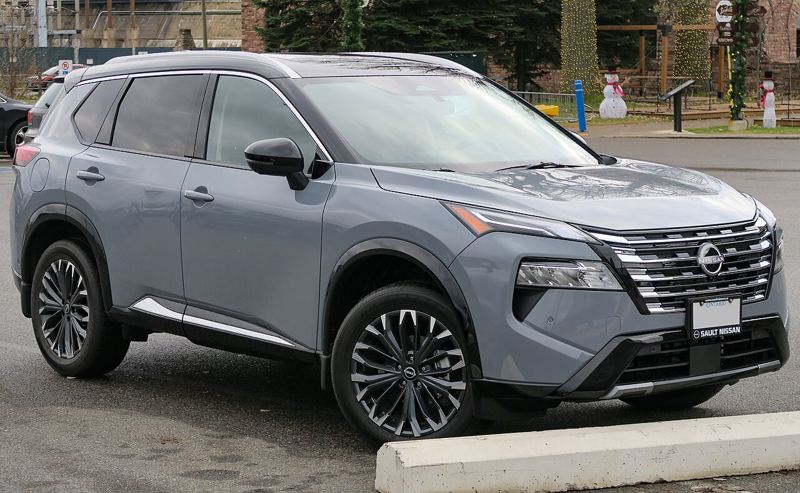 Nissan Rogue2007–present
 Jeep Grand Cherokee1992–present
 GMC Sierra 15001988–present


