
MINI Cooper Hardtop
Subcompact hatchback · 2002–present. 8,445 units sold in the US in 2024

How it began
The story starts in 1957: after the Suez Crisis sent fuel prices soaring, Sir Leonard Lord of British Motor Corporation (BMC) asked chief engineer Alec Issigonis for a small, fuel-efficient car that could carry four adults. Issigonis pushed the wheels to the corners and turned the engine sideways. In 1961 John Cooper stepped in with the Classic MINI Cooper 997, with more power and bigger brakes. The modern MINI is the work of BMW Group, which bought Rover Group in 1994 and in 2000 kept only the MINI brand. The chief designer of the new MINI (R50) was Frank Stephenson.
The classic Mini and modern MINI share Oxford manufacturing history. The Oxford plant began building Morris cars in 1913, produced classic Minis from 1959 and started modern MINI production in 2001. From the second generation, the British production triangle combined pressings from Swindon, engines from Hams Hall, and body production, paint and final assembly in Oxford. Oxford continues to assemble the current gasoline Cooper 2 Door for the United States.
The new MINI Cooper debuted at the Paris Motor Show on September 28, 2000 and was shown in the U.S. at the Detroit auto show on January 8, 2001; the Cooper S appeared at the Los Angeles Auto Show in January 2002. It went on sale in the United States on March 22, 2002 as a Hardtop, in Cooper and Cooper S versions. The first buyer took delivery from MINI of Peabody, near Boston: red with a white roof, a nod to the classic Mini's 1964 Monte Carlo Rally win.
Cooper comes from John Cooper, the race car builder who created the more powerful Mini Cooper 997 in 1961. Hardtop is the name MINI USA uses for the regular fixed-roof hatchback body.
The original Mini was born to answer a fuel crisis: lots of room in a little car. The classic stopped being imported to the United States in 1967. BMW Group wanted to revive that character in a modern, safe, premium car: a body with two to three times the stiffness of cars its size, disc brakes at all four wheels, ABS and airbags as standard. The 2002 target was 100,000 sales worldwide, about 20,000 of them in the United States.
Generation by generation
- Gen. 12002–2006 · R50 / R53
MINI returns, now with BMW
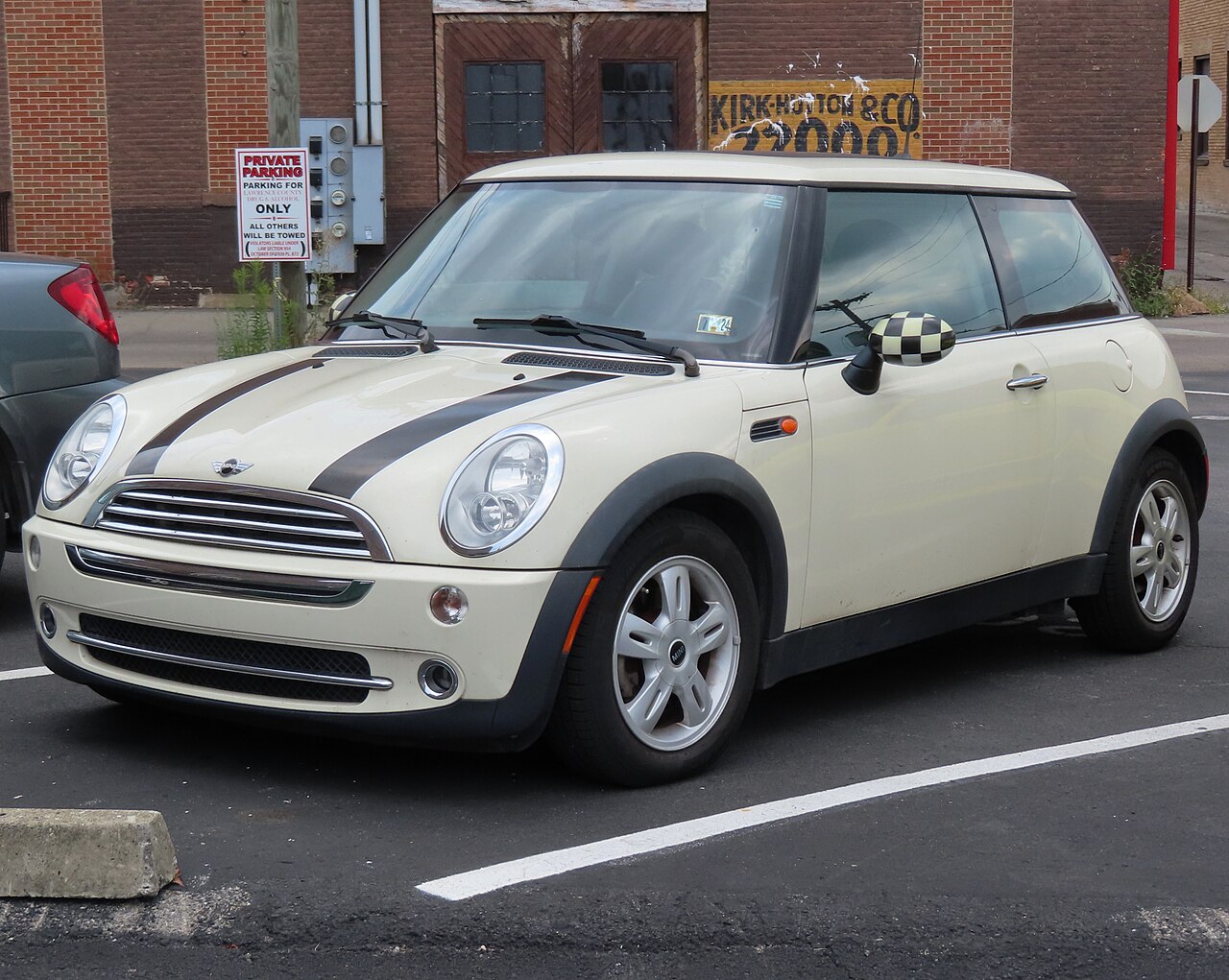
Photo: MercurySable99 · CC BY-SA 4.0 What changed. It arrived 35 years after the classic stopped being imported to the United States. It kept the wheels-at-the-corners stance and the round face, but on an all-new body designed by Frank Stephenson. It used a 16-valve 1.6-liter engine: the Cooper made about 115 hp and the Cooper S 163 hp. Prices were $16,850 for the Cooper and $19,850 for the Cooper S, destination included, at about 70 dealers.
The innovation. The Cooper S used a supercharged, intercooled 1.6-liter four: 163 hp and 155 lb-ft, 0 to 60 mph in 7.0 seconds according to MotorWeek, with a six-speed manual as the only choice at launch. Outside, the hood scoop and rear spoiler gave it away.
If you buy one usedNHTSA lists recall 15V660 for 2002–2005 Cooper and Cooper S (and 2005 Convertible): the electro-hydraulic power steering can lose assist temporarily or permanently; dealers inspect and replace parts and wiring as necessary at no cost. Recall 15V205 covers 2005–2006 Cooper and Cooper S built January 5, 2005 to November 28, 2006: the front passenger occupant detection mat can fail and leave the passenger front airbag inactive. In 2002, recall 02V201 added a clip to a manual shift cable that could detach. Check by VIN that all of them were done. - Gen. 22007–2013 · R56
Same silhouette, all new underneath
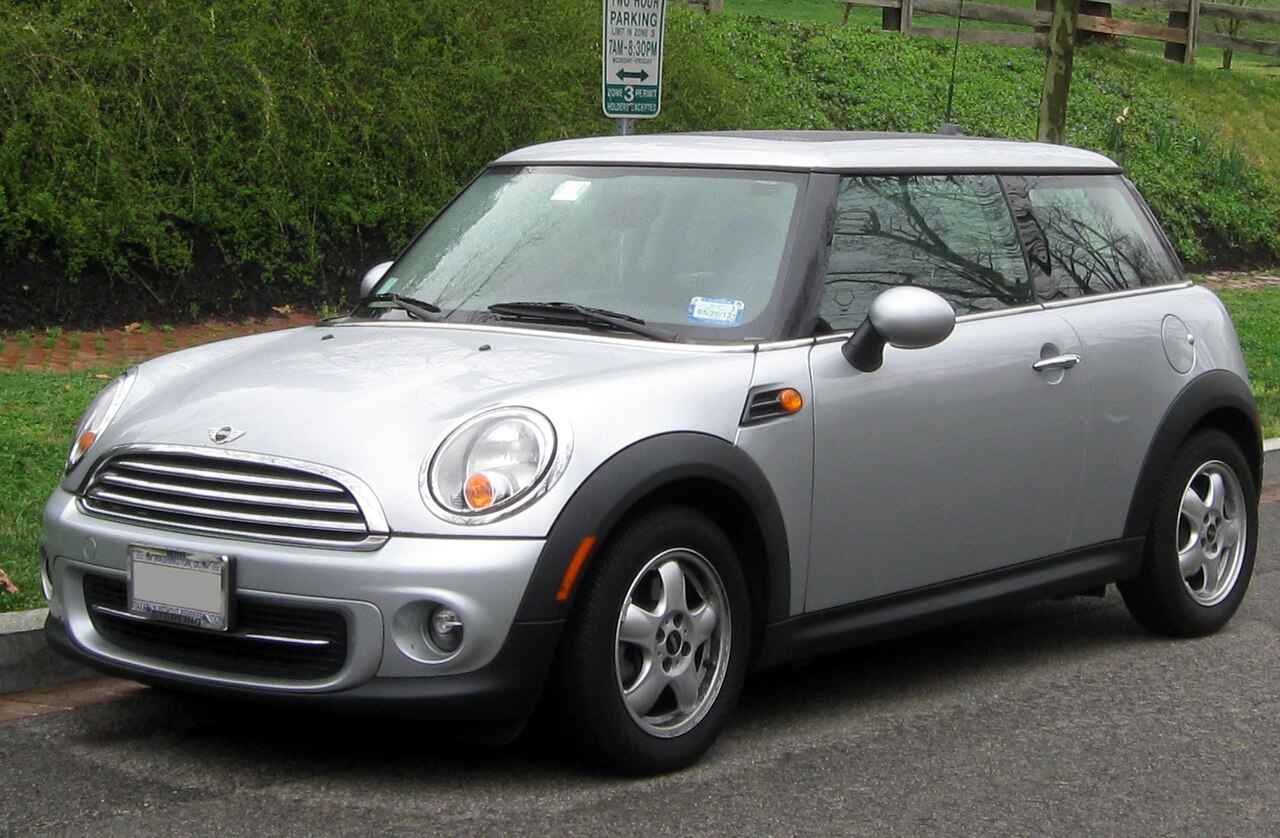
Photo: IFCAR · Public domain What changed. It went on sale in the U.S. on February 17, 2007. Every body panel was new even though it looked nearly the same; it grew by less than 3 inches, 1.5 of them up front to meet European pedestrian-safety rules. The round headlights now held the turn signals and the central speedometer got bigger. It introduced 1.6-liter engines developed with PSA Peugeot Citroën: 118 hp in the Cooper and 172 hp turbocharged in the Cooper S. Prices: $18,700 and $21,850 with destination.
The innovation. Cooper S replaced the supercharger with a twin-scroll turbo and gasoline direct injection. Its U.S. rating was 172 hp and 177 lb-ft from 1,600 rpm, with brief overboost to 192 lb-ft. The six-speed manual was originally rated at 29 city/36 highway mpg under the EPA method used at the time.
If you buy one usedNHTSA lists recall 12V008 for 2007–2011 Cooper S built between November 14, 2006 and January 18, 2011: the electric auxiliary water pump that cools the turbo can overheat and cause a fire; it is replaced at no cost. Recall 18V248 extended the issue to 2011–2012 Cooper S. Recall 08V657 covered 28,450 2007–2008 Cooper S for a tailpipe tip that stuck out and could burn a leg. Recall 23V337 covers 2007–2013 Hardtop 2 Door cars sold or ever registered in the jurisdictions specifically listed in the campaign: the electronic module in the driver's footwell can short-circuit from corrosion; dealers also inspect the sunroof drains. Check by VIN. The 18V248 notice recommends parking affected unrepaired vehicles outdoors until the remedy is performed; confirm current instructions and parts availability for the exact VIN. - Gen. 32014–2024 · F56
Three cylinders, more technology and the electric Cooper SE
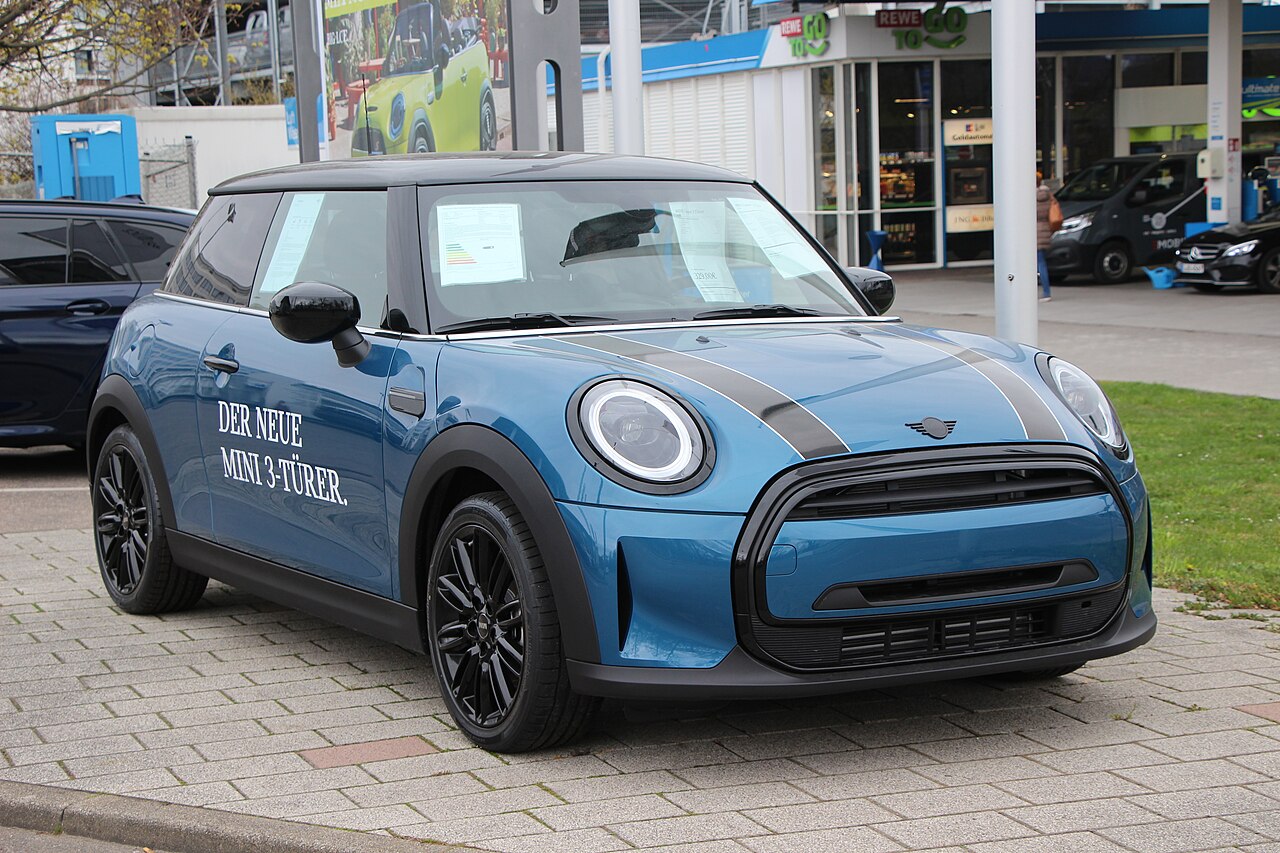
Photo: Wikisympathisant · CC BY-SA 4.0 What changed. Revealed on November 18, 2013, what would have been Alec Issigonis's 107th birthday, it grew 4.5 inches in length (to 151.1), 1.7 in width and 1.1 in wheelbase. The Cooper introduced a 134 hp 1.5-liter turbo three-cylinder and the Cooper S a 189 hp 2.0-liter turbo. It arrived in spring 2014 from $20,745 with destination. In March 2020 the all-electric Cooper SE joined: 181 hp, a 32.6 kWh battery and 110 miles of EPA range, from $29,900 plus destination.
The innovation. The first three-cylinder engine in MINI history, the 1.5-liter TwinPower Turbo that BMW also used in the 2 Series and the i8. Along with it came a head-up display, LED headlights, MINI Driving Modes that change throttle and steering response, and city braking up to 35 mph.
If you buy one usedNHTSA lists recall 15V450 for 2014–2015 Hardtop 2 Door cars: they did not meet the rear-passenger side-impact standard, and dealers add energy-absorbing material to the panels; and 14V789, for transmission software that let the driver exit without the car in Park. Recall 15V628 covers 2014–2016 Cooper and Cooper S 2 Door cars for a passenger airbag that might not deploy properly in a low-speed crash. On 2020–2024 Cooper SE electrics, recalls 24V302 (battery housing seal, water can enter) and 24V612 (possible high-voltage short circuit). Check by VIN. For 24V612, the retained notice advises parking outside away from structures if a warning message is displayed, until the remedy is completed. Confirm current instructions for the exact VIN. - Gen. 42025–present · F66
Round OLED screen and goodbye to the manual
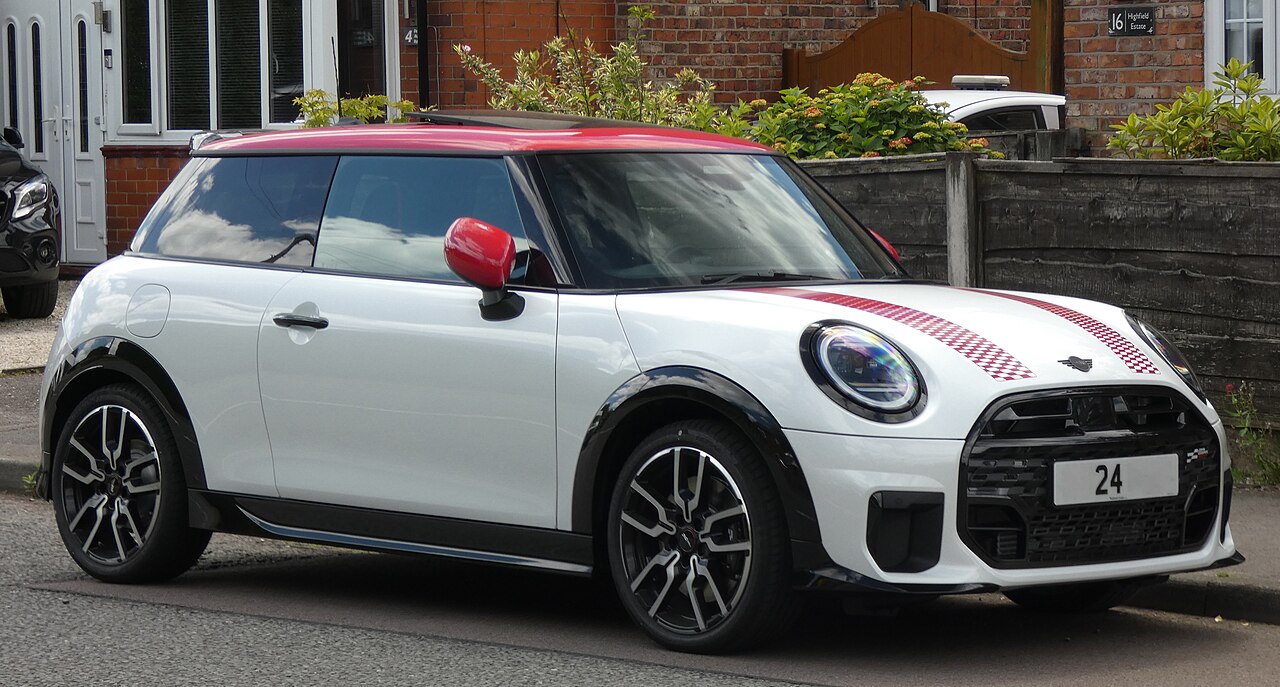
Photo: Harvey Bold · CC BY 4.0 What changed. The 2025 Cooper S reached dealers in May 2024 with a 2.0-liter turbo four (BMW's B48) making 201 hp and 221 lb-ft, and only a seven-speed dual-clutch automatic: the manual was gone. It was priced at $32,200 plus $995 destination. The gas Cooper is still built in Oxford; the electric version of this family (J01) is made in China and is not sold in the United States for now.
The innovation. A 9.4-inch circular OLED center display that takes the place of the big central circle the modern MINI has carried on its dashboard since 2002, now turned into a digital screen.
If you buy one usedIt is too new for a long track record. NHTSA lists recall 24V697 for 2025 Hardtop 2 Door (Cooper and Cooper S): welds in the integrated brake module's servomotor can break, causing loss of power brake assist, rear braking, ABS and stability control; the system is replaced at no cost. Recall 24V104 covers the same integrated brake system on several 2023–2025 BMW and MINI vehicles, and 26V422 (owner letters expected August 21, 2026) includes the 2025 Cooper S and requires the new remedy even on cars already repaired under 24V104. Check by VIN at nhtsa.gov. The campaigns concern different failures of the integrated brake assembly; 26V422 also requires the new remedy after 24V739. Verify actual completed repairs and current status.
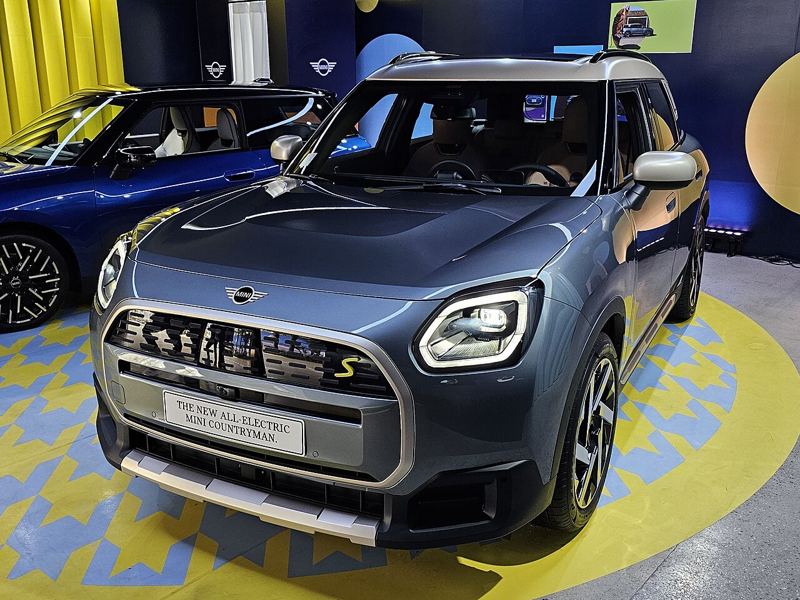 MINI Countryman2011–present
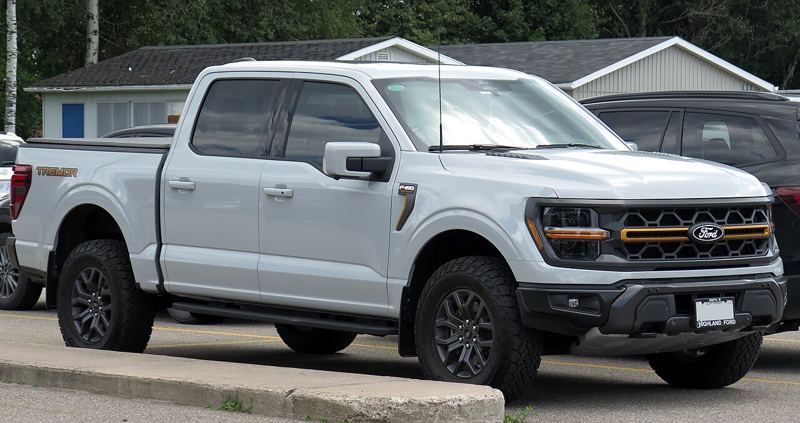 Ford F-Series (F-150)1948–present
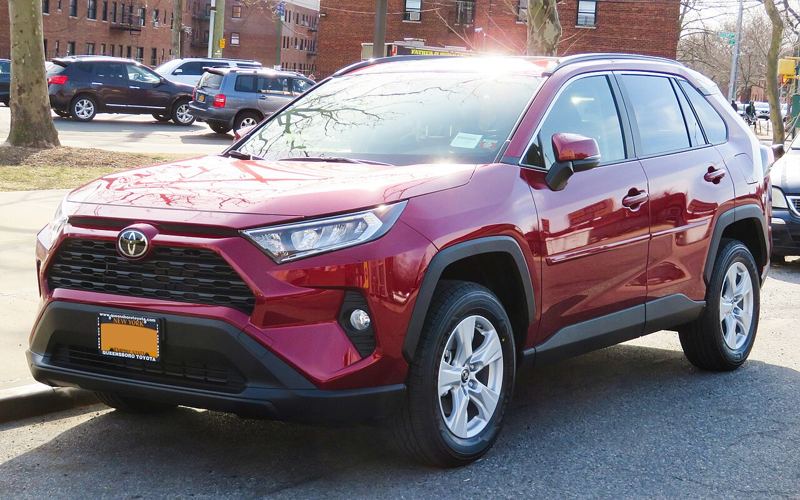 Toyota RAV41994–present (US from 1996)
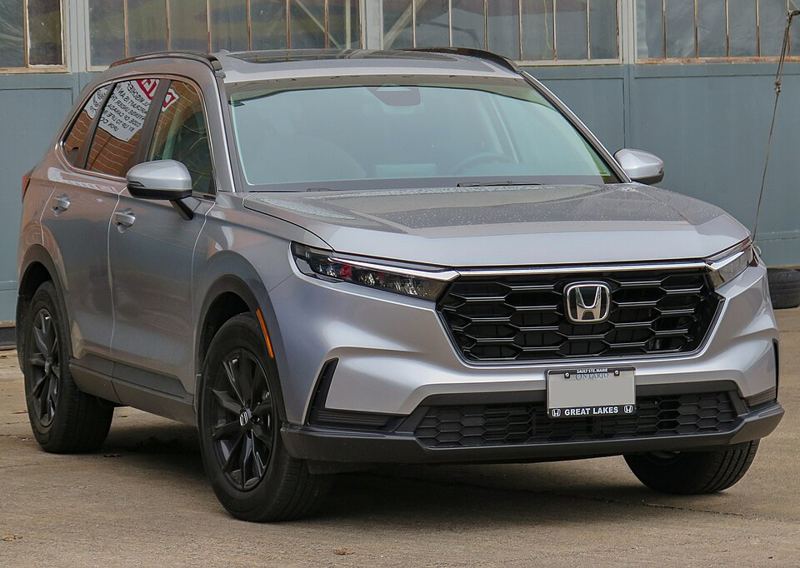 Honda CR-V1995–present
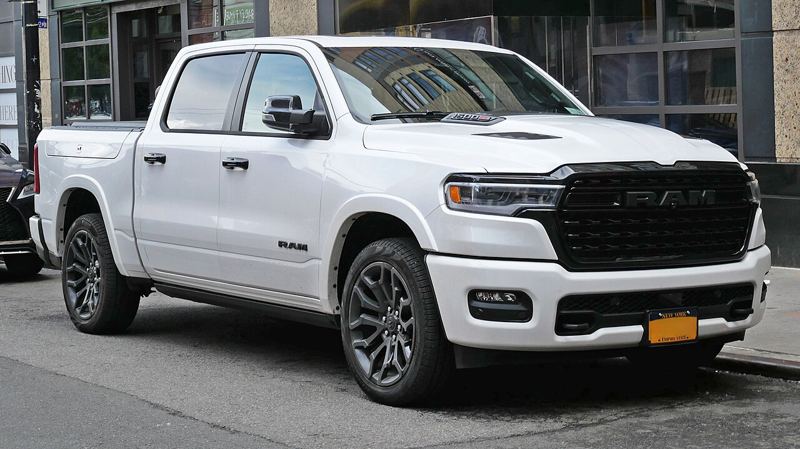 Ram 15001981–present
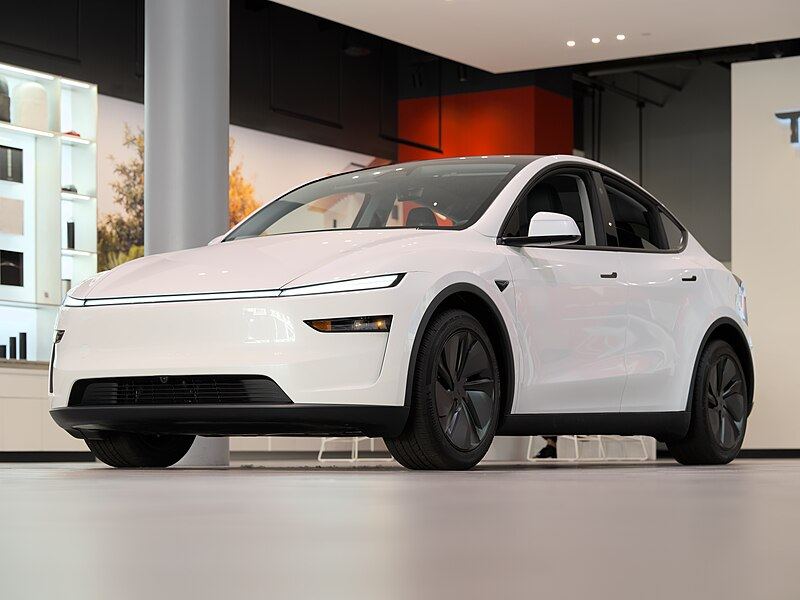 Tesla Model Y2020–present
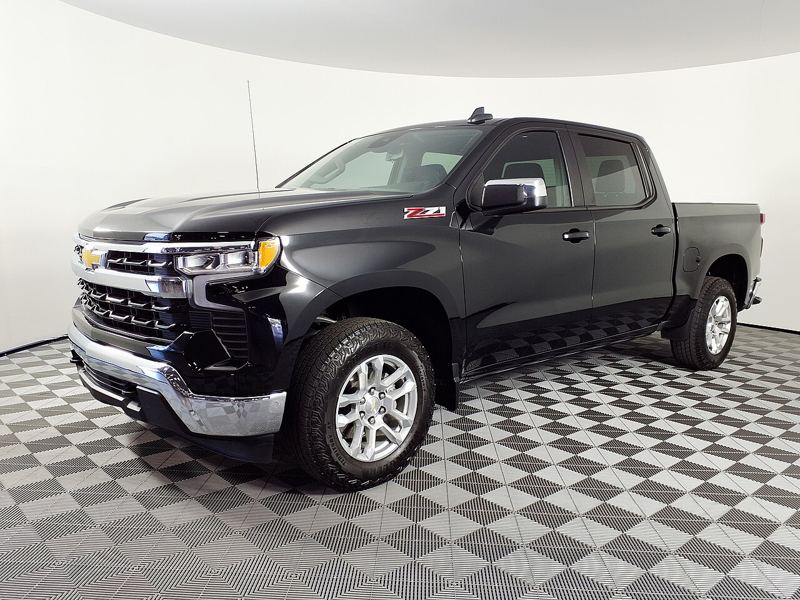 Chevrolet Silverado1999–present
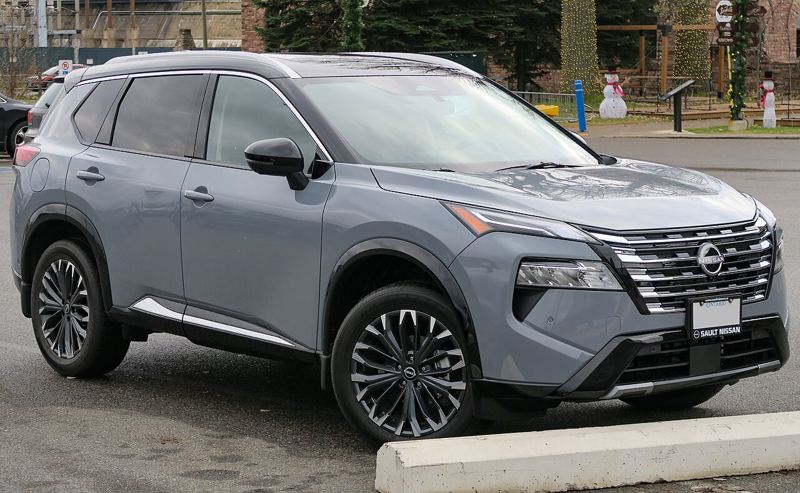 Nissan Rogue2007–present
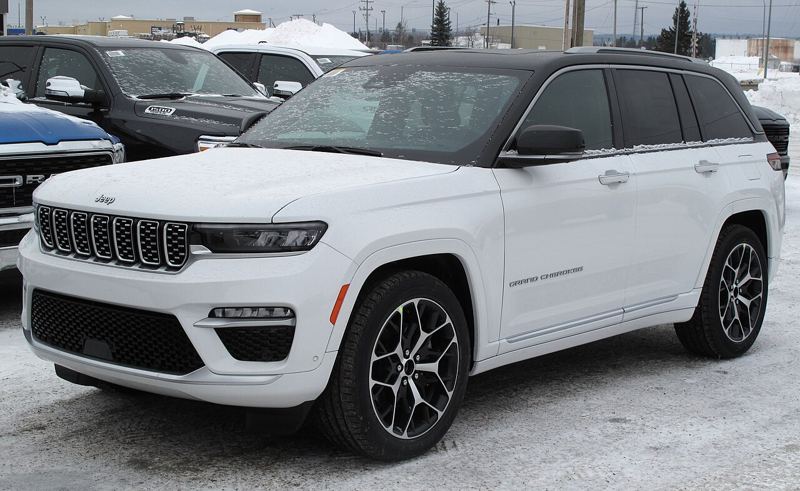 Jeep Grand Cherokee1992–present


