
Chrysler Voyager
Minivan · 1984–2003 and 2020–2026. 12,033 units sold in the US in 2024
How it began
The Voyager was born at Chrysler Corporation as the Plymouth Voyager, twin of the Dodge Caravan. A small team of designers and engineers started the project they called the "magic wagon" (program T-115) in 1977. Chairman Lee Iacocca and Harold "Hal" Sperlich, soon to be company president, led its development. In 1999 James Holden, president of DaimlerChrysler Corporation, decided to retire the Plymouth brand and move the Voyager to Chrysler. In 2019 FCA US revived the name, and in 2024 Chris Feuell, Chrysler brand CEO at Stellantis, brought it back to retail customers.
The Henry Ford’s artifact record identifies the maker as Chrysler Corporation of Highland Park, Michigan. The first minivan came from Windsor, Ontario, Canada, where Chrysler retooled the plant to build it. Modern Voyager documentation also places assembly at Windsor; this identifies the model’s manufacturing provenance rather than certifying ongoing production on the checking date.
On November 2, 1983, Lee Iacocca marked production of the first minivan at Windsor: the 1984 Plymouth Voyager and Dodge Caravan. The Plymouth Voyager was sold through the 2000 model year; from December 1999 it became the Chrysler Voyager and was sold that way in the U.S. through 2003. The name returned on June 27, 2019 with the 2020 Chrysler Voyager, which reached dealers in the fall of 2019.
Voyager means traveler in English. It wore the Plymouth badge from 1984 to 2000 and the Chrysler badge from December 1999, as it already did in Europe, Australia and other markets. Chrysler revived the name in 2019 for its entry-level minivan, and for the 2027 model year it is replaced by the Pacifica LX, which keeps the Voyager's exterior design.
In the late 1970s, young baby-boom families were looking for economical transportation. Sedans and station wagons kept shrinking because of emissions and fuel-economy rules, and full-size vans were uncomfortable, huge and rear-wheel drive. Chrysler wanted a vehicle that was fuel-efficient, that you stepped into like a car instead of climbing up, that fit in an average garage and was smaller than the Dodge Ram Van. The answer was a front engine with front-wheel drive and a flat floor.
Generation by generation
- Gen. 11984–1990 · T-115
The first minivan: the family wagon that fit in the garage
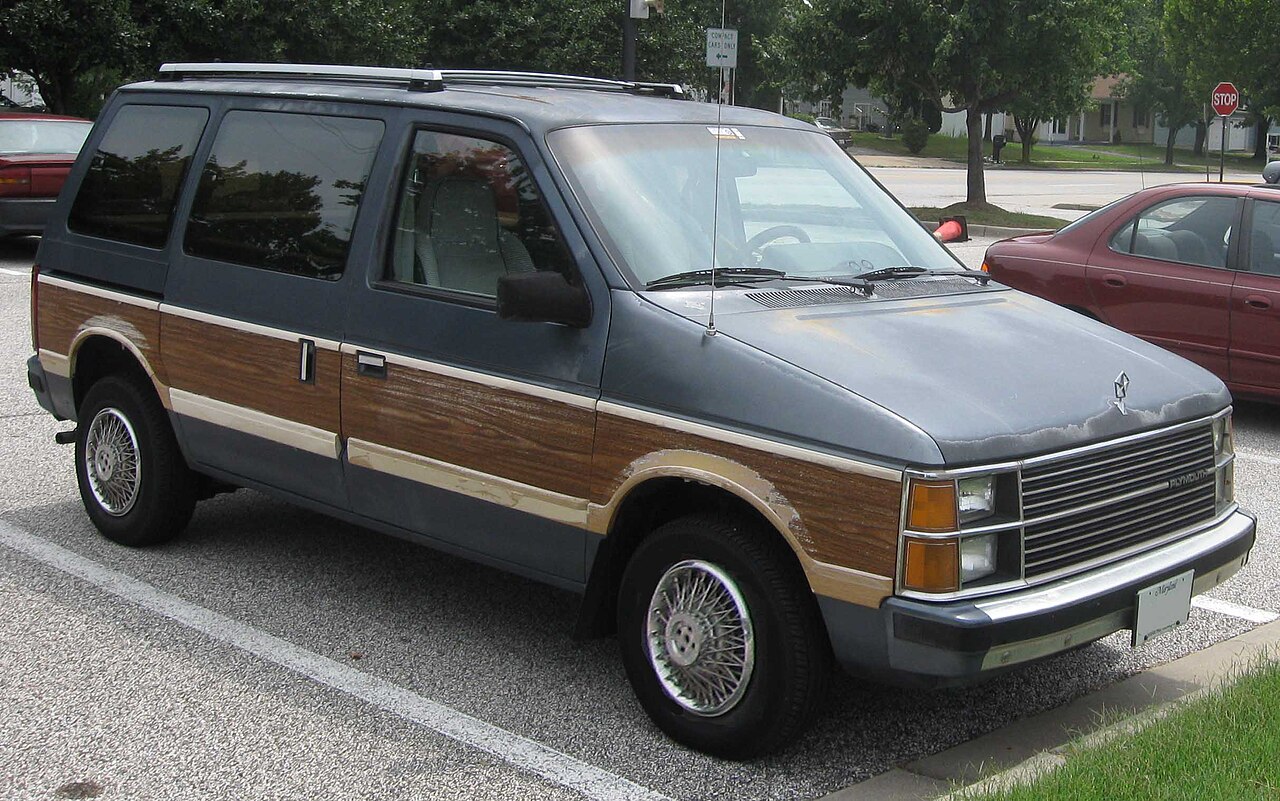
Photo: IFCAR · Public domain What changed. It created a new category: shorter than a full-size sedan, station wagon or van, yet with room for seven people and their luggage. The Voyager at The Henry Ford museum, a 1984 model, has a 135-cubic-inch four-cylinder with 101 hp, a three-speed automatic, a 112-inch wheelbase, a weight of 2,911 pounds and cost $12,309. In 1987 came a 3.0-liter V6 in Chrysler’s minivan lineup, a 2.5-liter four-cylinder replaced the original 2.2, and the long-wheelbase Plymouth Grand Voyager appeared.
The innovation. A front engine with front-wheel drive, which allowed a flat floor with no center tunnel and chair-high seating: you step in like a car. It added a sliding side door, a one-piece liftgate and fold-down or removable seats.
If you buy one usedSelected Plymouth Voyager campaigns cover 1984–1985 2.2-liter fuel-tube retaining clips and brake-valve stone protection; 1988 damaged/improper-material fuel tanks; and 1989–1990 valve-cover oil leaks and front buckle-strap fatigue. The voluntary 95I001 service family covers specified 1984–1995 liftgate latches, with eight real suffixes based on year and remote-release equipment; NHTSA explicitly says it is not a formal safety recall. Notification phases extended into 1996. These vehicles are over 35 model-years old; inspect the actual van and verify applicable work. - Gen. 21991–1995 · AS
The second generation: standard airbag and built-in child seats
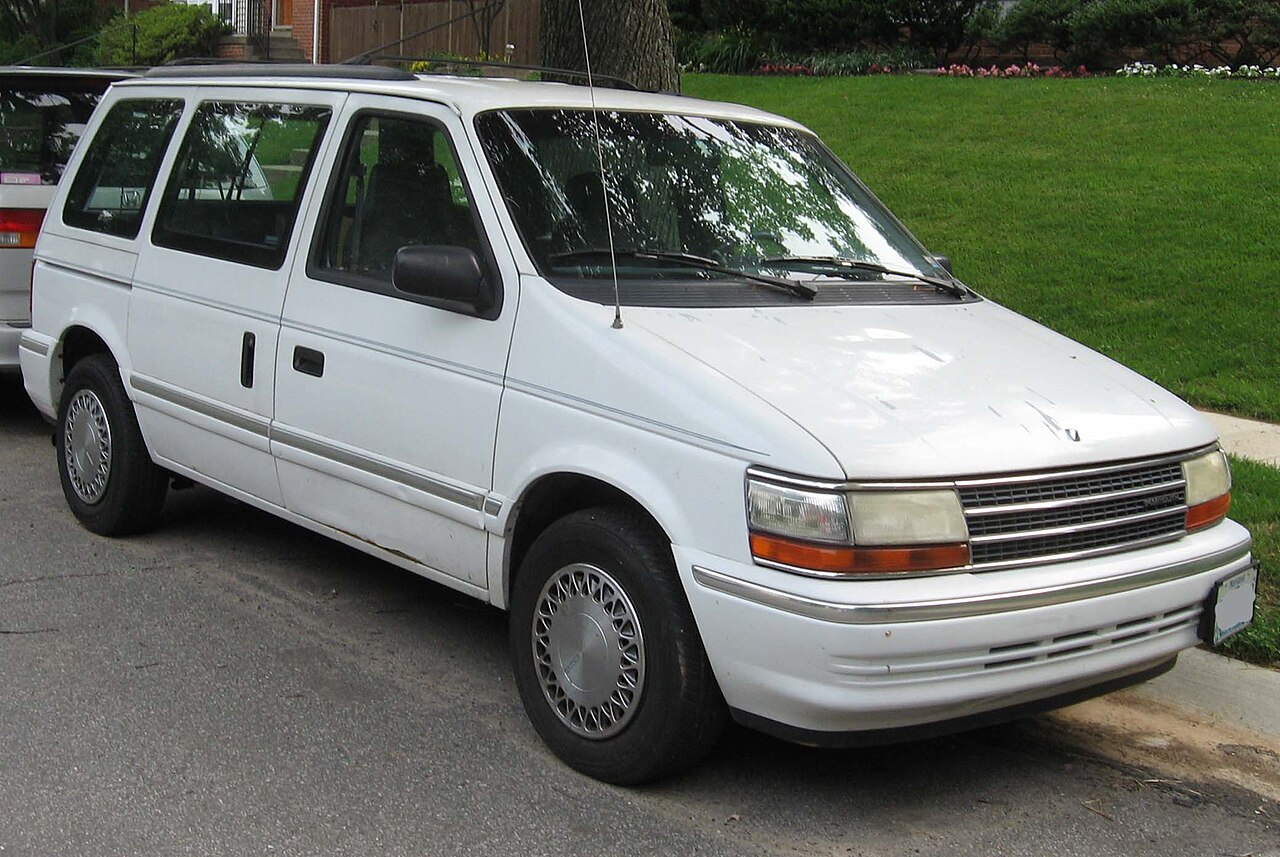
Photo: IFCAR · Public domain What changed. It brought a new body and interior on the AS platform and offered a 3.3-liter engine already listed in EPA’s 1990 Voyager record. It added child safety locks on the sliding door, with four-wheel anti-lock brakes and all-wheel drive available. In 1994 came passenger-side airbags, stronger side-impact protection, a 3.8-liter engine and a sport suspension package for the Voyager. In 1991 it won, among others, MotorWeek's Best Minivan award.
The innovation. It was the first minivan with a standard driver-side airbag, and in 1992 the first to offer child safety seats built into the rear seat.
If you buy one usedCheck steering-wheel campaigns 96V229 on 1991–1992 and 00V305 on 1993–1994. The latter has separate two-spoke July 1992–June 1993 and four-spoke July 1992–September 1993 wheel-build windows. Other selected programs are 99V113 airbag wiring on 1993–1995, 97V148 buckle covers and 96V099 ABS hydraulic units on 1991–1993, and 99V213 liftgate strut fasteners on specified 1991 and 1993–1994 vans. The voluntary 95I001 latch service also applies by the exact suffix/equipment. Confirm inspections, conditional replacement and actual VIN records. - Gen. 31996–2000 · NS
Cab-forward and North American Car of the Year
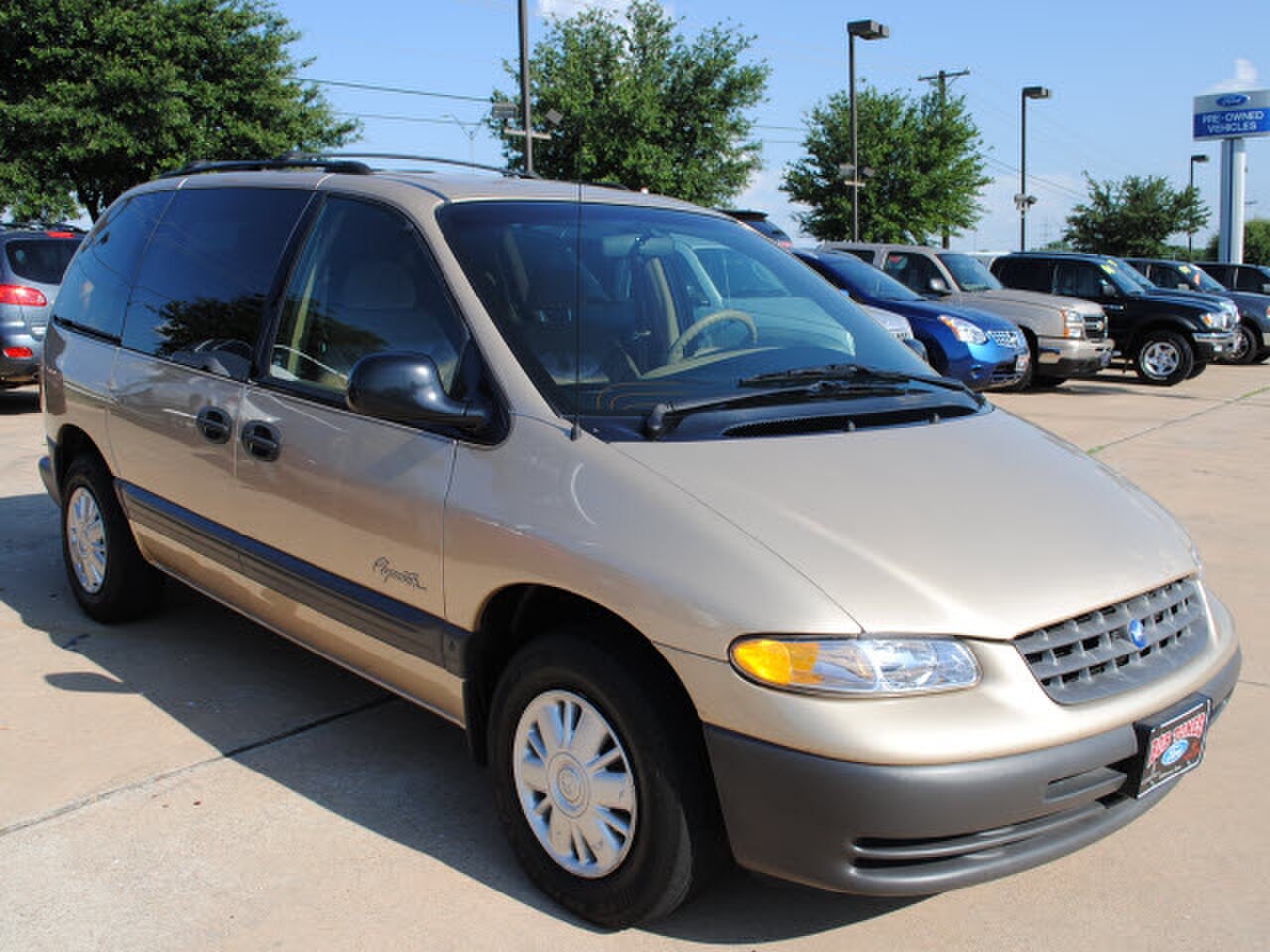
Photo: Distancerunner15 · CC BY-SA 3.0 What changed. It was the first cab-forward minivan, with the cabin pushed forward, 16-inch wheels and tires, Easy-Out Roller Seats that roll out easily and more than a dozen minivan firsts. A 2.4-liter dual-overhead-cam four-cylinder replaced the 2.5. The Plymouth Voyager and Grand Voyager won North American Car of the Year at the 1996 Detroit auto show.
The innovation. A second sliding door on the driver's side, a U.S. minivan first. The Plymouth Grand Voyager and its siblings were the first minivans able to carry a 4-by-8-foot sheet of material without removing the second- and third-row seats.
If you buy one usedCampaign 00V268 addresses degrading fuel-rail O-rings and fuel-leak/fire risk on specified 1996–2000 3.3/3.8-liter vans; dealers add the prescribed seal. Check clockspring campaigns 02V293 on 1996–1998 and 04V480 on 1998–2000, whose original replacement/extended-component terms depend on mileage and condition. Campaign 99V216 covers the 1996 fuel-pump attachment nut/seal; 02V076 covers 1997–1999 trim entering rear outboard belts. Diagnose warning lamps or leaks promptly and confirm current VIN eligibility and work records. - Gen. 42001–2003 · RS
Now wearing the Chrysler badge
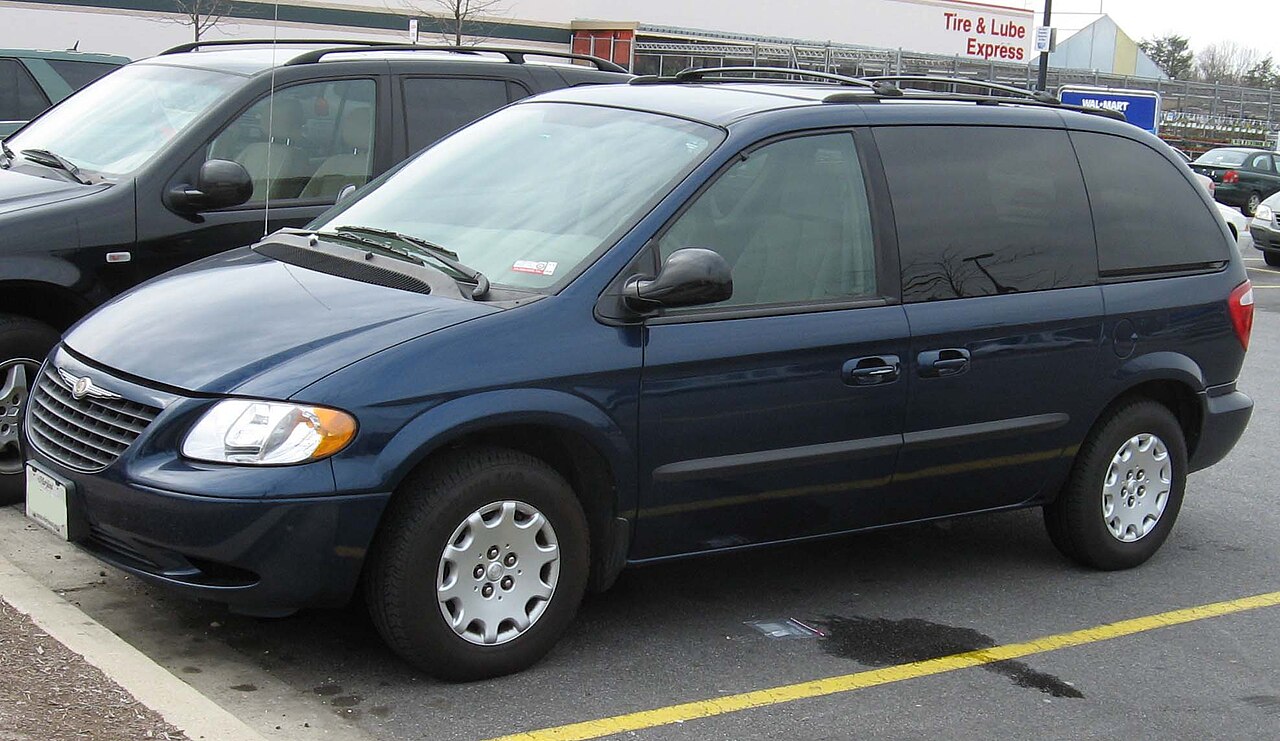
Photo: IFCAR · Public domain What changed. With the end of Plymouth, the Voyager moved to the Chrysler brand as the lower-priced cousin of the Town & Country, on a short 113.3-inch wheelbase. The 2001 redesign brought headlights 50 percent larger and a body about 2 inches wider. It offered a 2.4-liter four-cylinder with 150 hp and a 3.3-liter V6 that rose from 158 to 180 hp, in base and LX trims; for 2002 the eC model was added and every transmission became a four-speed automatic.
The innovation. Chrysler’s fourth-generation RS minivan family introduced the segment’s first power liftgate according to the company’s history, alongside dual power sliding doors with obstacle detection and three-zone automatic climate control. These features are documented for the family rather than every entry-level Voyager trim. Dual power sliding doors were not a worldwide 2001 first: the 1999 Honda Odyssey EX manual already describes them with obstacle reversal. Chrysler’s timeline reproduces a Road & Track quotation calling this generation the most innovative vehicle to come out of Detroit in decades.
If you buy one usedSelected Chrysler Voyager campaigns are 01V152 lower-control-arm bolts on 2001; 04V531 radio condensation and rear-speaker fire risk on 2001–2002; and 04V386 upper steering-cooler hoses on specified 2002–2003 V6 vans. Repairs differ: bolts/nuts, protective radio tape or the hose. Consumer Guide also reports 2001–2002 below-freezing power loss/stalls linked to throttle-position-sensor work and loose-weatherstrip interference with power sliding doors. Those attributed reports do not diagnose every similar symptom; inspect the actual vehicle. - Gen. 52020–2026 · RU
The comeback: the value minivan of the Pacifica family
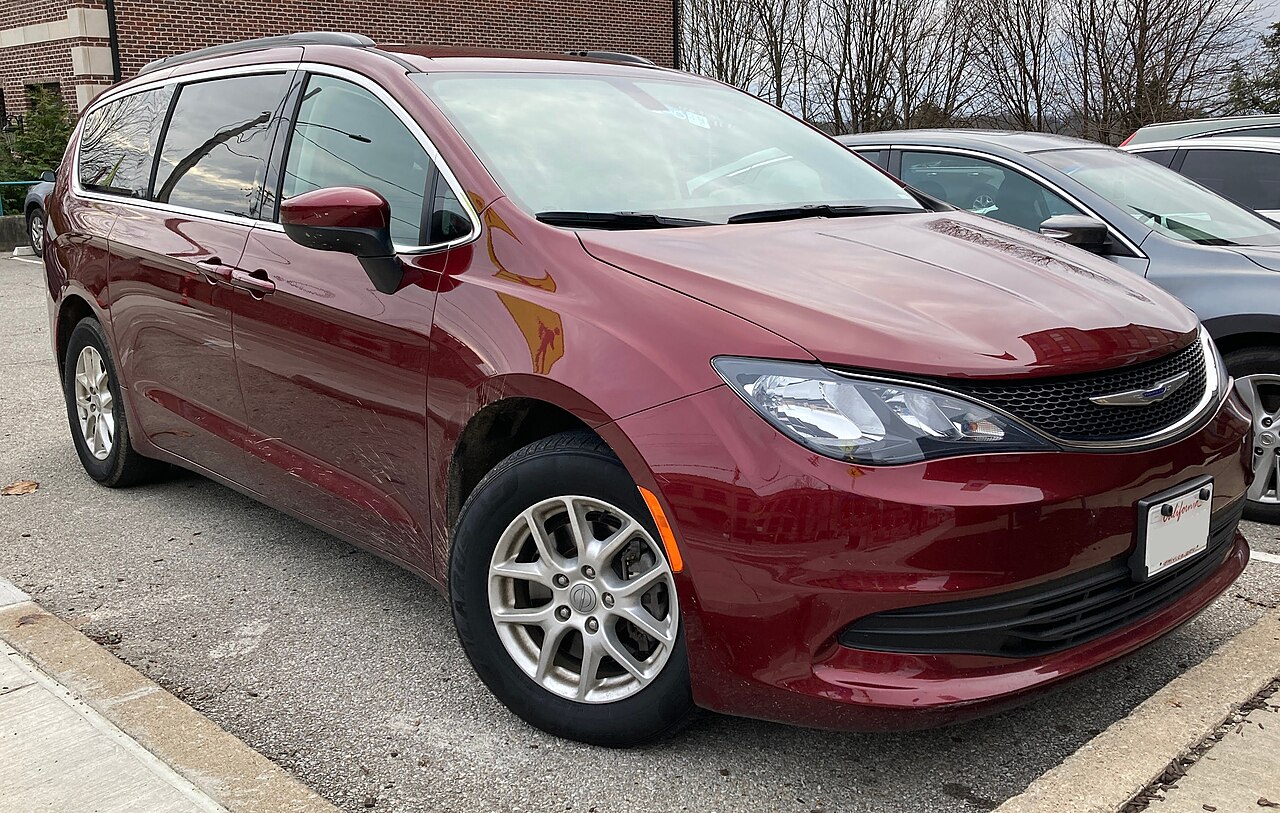
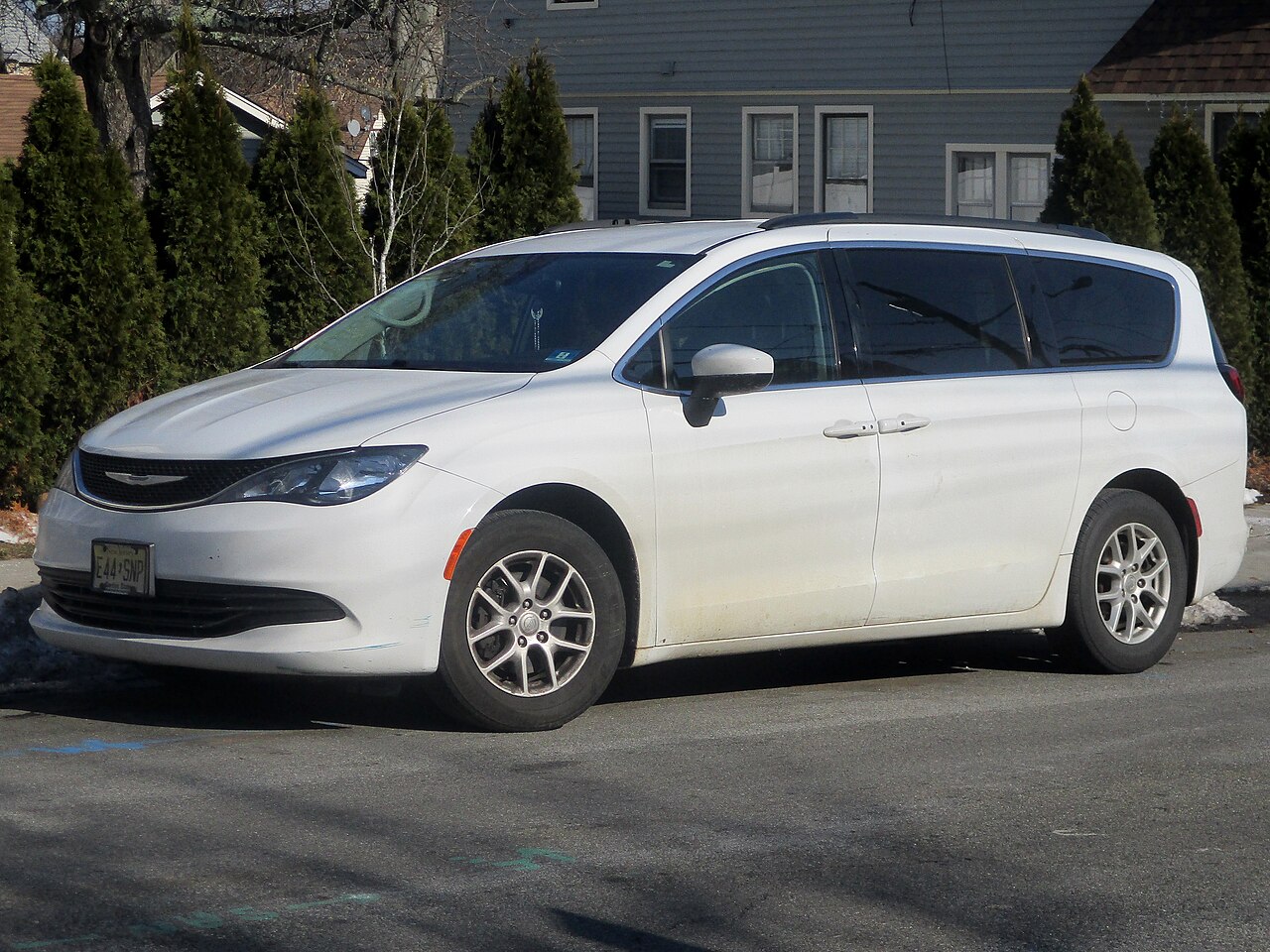
Photo: Cutlass · CC0 What changed. It returned as the entry version of the Pacifica, replacing the Pacifica L and LX, with the 3.6-liter Pentastar V6 making 287 hp and 262 lb-ft, a TorqueFlite nine-speed automatic, seven seats and a starting price of $26,985. For 2021 it took the Dodge Grand Caravan's place; for 2022 it became fleet-only, with Uconnect 5 and second-row Stow 'n Go as standard. For 2025 it returned to retail customers as the Voyager LX from $39,995, with a 10.1-inch screen, power sliding doors and liftgate, and heated seats and steering wheel.
The innovation. Today's Voyager comes standard with Stow 'n Go in the second and third rows: seats that vanish into the floor, a system Chrysler introduced in 2004 that remains exclusive to the brand in the second row. It is also offered with BraunAbility rear- or side-entry conversions with a wheelchair ramp.
If you buy one usedThe U.S. Voyager uses the gasoline V6 rather than the Pacifica PHEV battery system; campaign eligibility still depends on actual VIN and equipment. Selected programs include 24V793 curtain connectors on 2020–2021/2023; 22V181 second-row latches on 2021; 22V619 wiper nuts on 2022; 25V388 camera hardware on 2023; 24V238 windshield bonding and 24V240 traction-control software on 2024; and 26V561 brake-pedal sensors on 2025–2026. Curtain-pressure campaign 26V189 covers 2022–2026 and requires new work after 25V302/25V573 repairs. Braun conversion programs 24V888 and 26V358 cover specific seat hardware. Check conversion and fleet history, plus documented completion of applicable work.
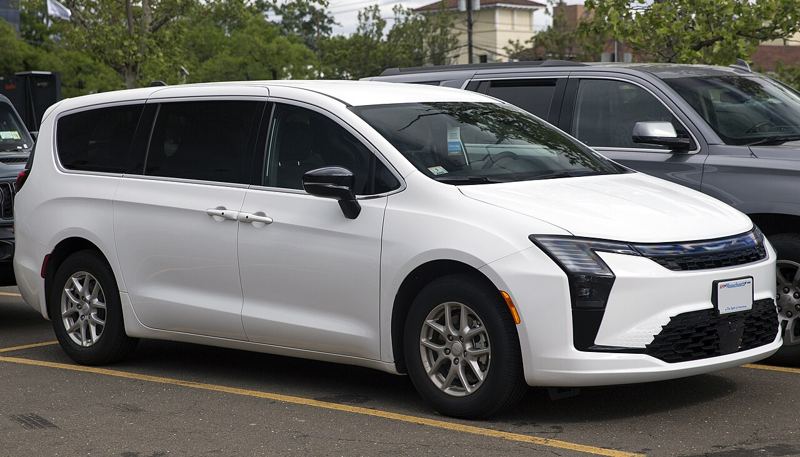 Chrysler Pacifica2004–present
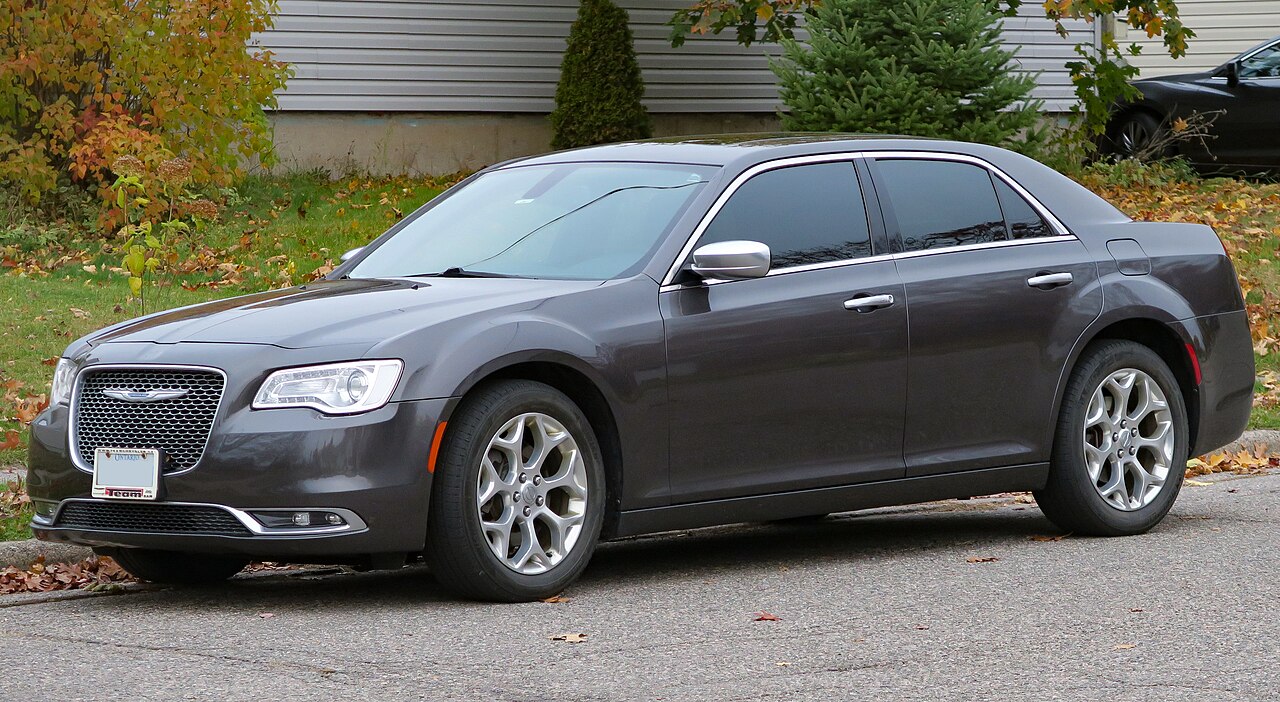 Chrysler 3002005–2023
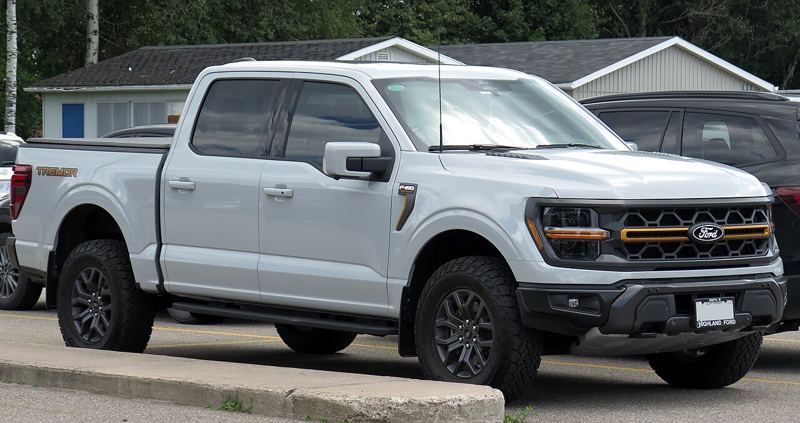 Ford F-Series (F-150)1948–present
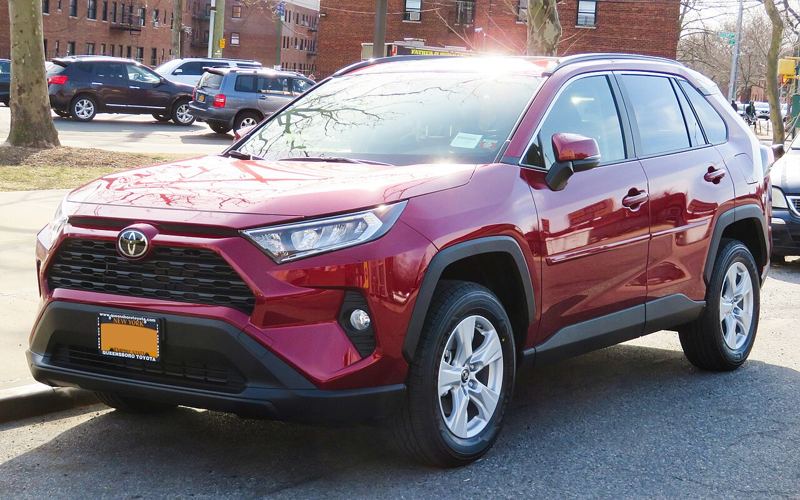 Toyota RAV41994–present (US from 1996)
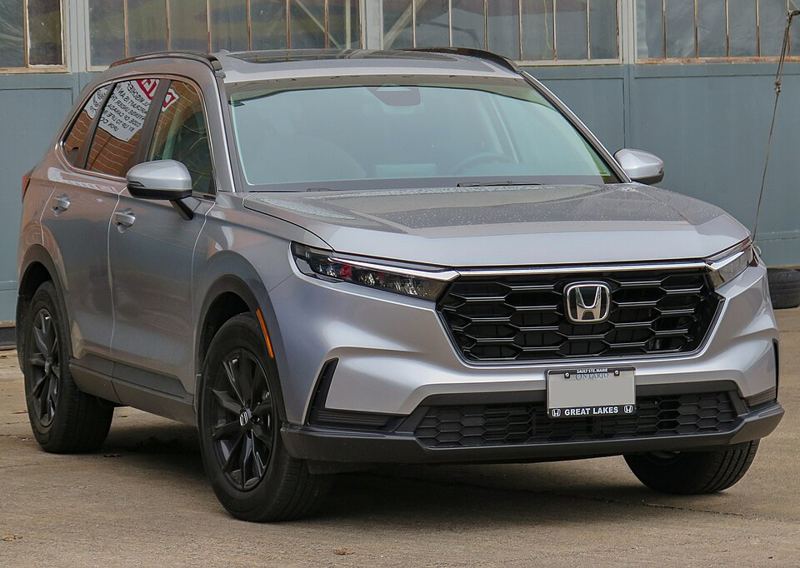 Honda CR-V1995–present
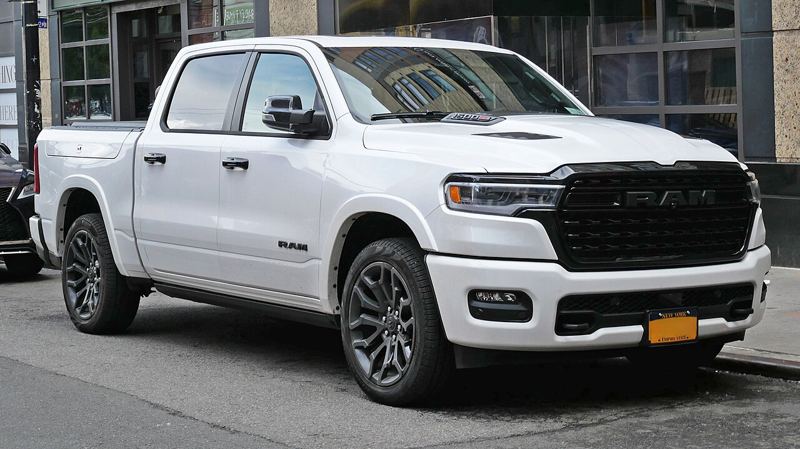 Ram 15001981–present
 Tesla Model Y2020–present
 Chevrolet Silverado1999–present
 Nissan Rogue2007–present


