
Dodge Charger
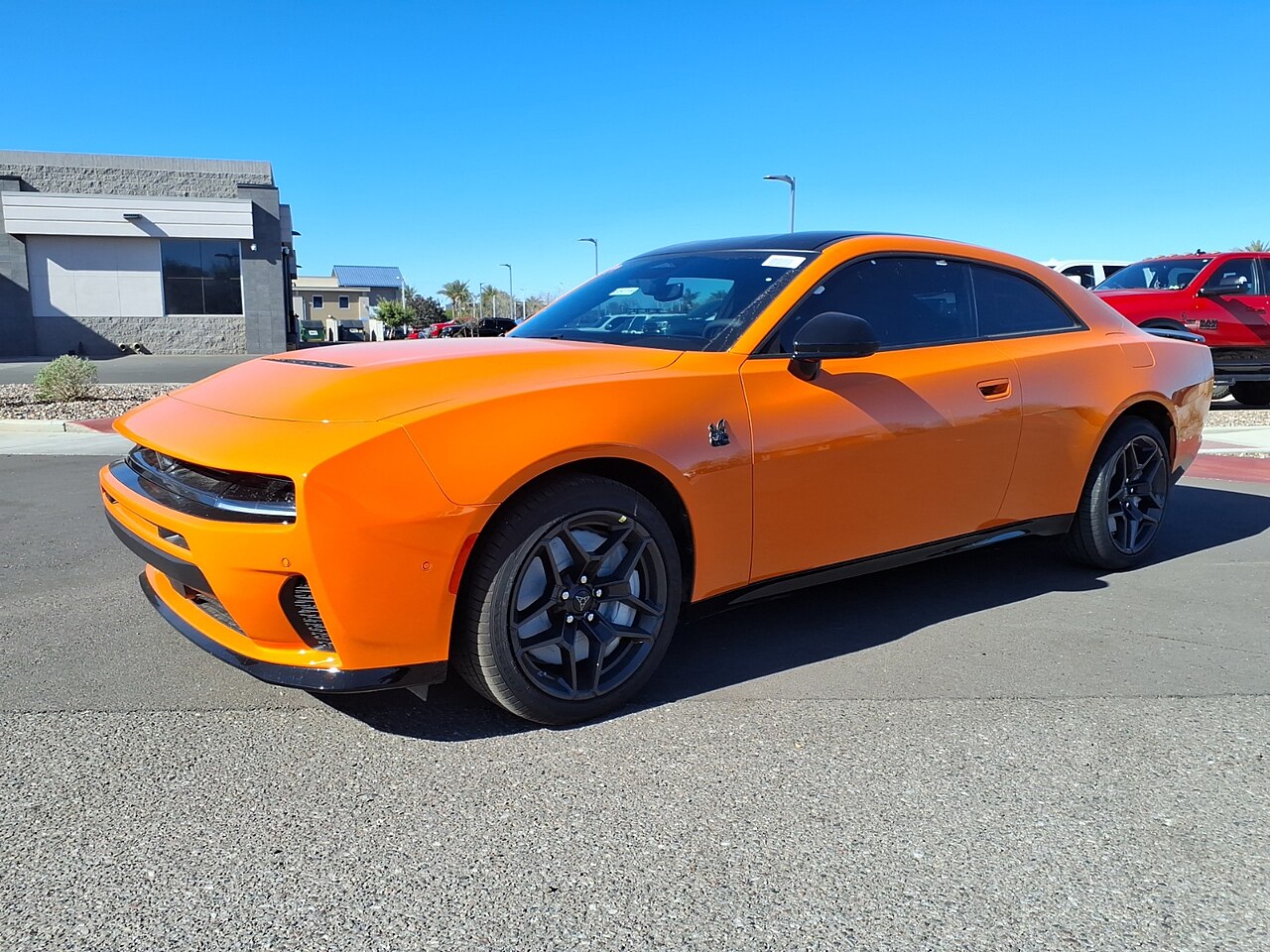
Muscle car (coupe and sedan) · 1966–present. 34,754 units sold in the US in 2024
How it began
Dodge created it, then a division of Chrysler Corporation. Designer Carl Cameron shaped the first Charger from a 1963 styling study. The 1968 Charger came out of Chrysler's B-body studio, with a design credited to Richard Sias; Ate Up With Motor records competing accounts of Bill Brownlie’s role. In 1975 executive Burt Bouwkamp made it a twin of the Chrysler Cordoba. The 2006 comeback was presented by Trevor Creed, senior vice president of design, and Craig Love of the rear-drive product team; the 2011 car by Ralph Gilles, Dodge brand president; and the 2024 car by Tim Kuniskis, Dodge brand chief executive at Stellantis.
Chrysler's styling studios designed it. From 2005 to 2023 it was built at the Brampton, Ontario, Canada plant alongside the Chrysler 300; that plant built 3 million Dodge vehicles after the Charger launched there in 2005. Today's Charger, electric and gasoline, is built at the Windsor Assembly Plant in Windsor, Ontario, Canada.
Dodge introduced it on January 1, 1966, during the Rose Bowl broadcast, as a 1966 model. It took two breaks: after 1978 and after 1987. It returned in January 2005 at the Detroit auto show as a 2006 sedan, and the current generation was revealed on March 5, 2024.
Charger is an English word meaning one who charges, and also a warhorse. The reviewed releases do not explain why Dodge chose the name, but its 1966 advertising called the car the Leader of the Dodge Rebellion. The Daytona surname, worn today by the electric version, comes from the 1969 Charger Daytona, built to win on NASCAR's ovals.
In the mid-1960s the performance car market was booming, and the Ford Mustang sold more than 600,000 units in 1966. Dodge wanted its share with a big fastback based on the midsize Coronet, with V8 engines and four bucket seats. In 2005 the idea was to bring back rear-wheel drive and the Hemi V8 in a four-door sedan for five adults. In 2024 Dodge set out to carry muscle into the electric era without giving up gasoline.
Generation by generation
- Gen. 11966–1967 · B-body
The fastback that led the Dodge Rebellion
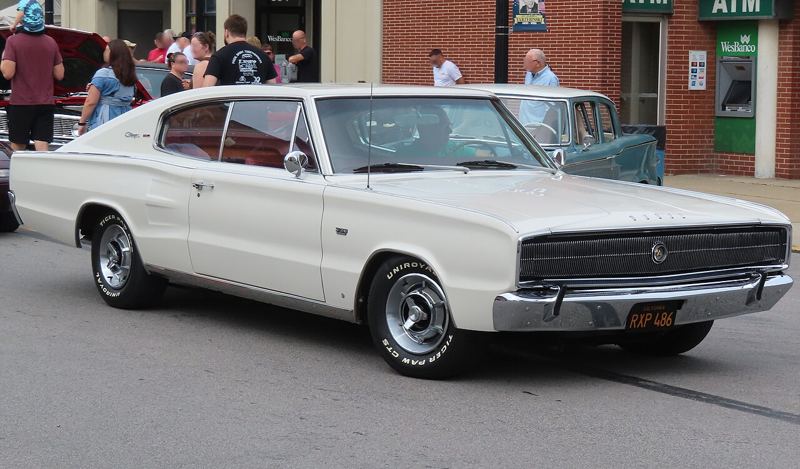
Photo: MercurySable99 · CC BY-SA 4.0 What changed. It was Dodge's first production fastback, built on the Coronet's B platform. It brought hidden rotating headlights, full-width taillamps and four bucket seats, with the two rear ones folding. Engines ranged from a 230 hp 318 V8 to the 425 hp 426 Street Hemi. It sold about 37,000 units in 1966 and fewer than 16,000 in 1967.
The innovation. The 426 Street Hemi was the street version of the hemispherical-chamber racing engine, rated at 425 hp and 490 lb-ft. In competition, David Pearson won 15 NASCAR Grand National races in 1966 with Cotton Owens’s team.
If you buy one usedHagerty’s actual 1966 valuation report says 468 Chargers were sold with the Hemi, supporting limited factory-production rarity; authenticate the actual car with its records and components. Selected NHTSA records contain defect and repair details: 66V009001 covers 1966 manual-transmission brake-tube interference; 67V062 covers 1966–1967 disc-brake proportioning valves; 67V009003 covers 1967 starter-cable/steering-collar interference; and 67V064 covers omitted front hub dust caps on 1967 cars. The nonzero suffixes identify the actual Charger records. Inspect the specific vehicle and documented work. - Gen. 21968–1970 · B-body
Coke bottle, Bullitt and the Daytona wing
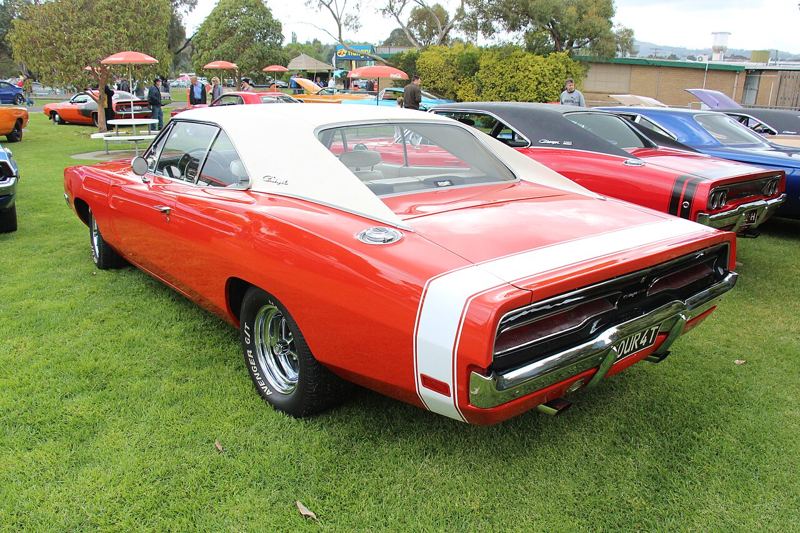
Photo: Sicnag · CC BY 2.0 What changed. The new Coke-bottle body weighed about 175 pounds less, and the base V8 cost $3,040. The R/T added the 375 gross hp 440 Magnum. In 1968 it sold 96,108 units, close to double what the first generation sold in two years, and nearly 90,000 in 1969, helped by the movie Bullitt. 1970 brought the 390 gross hp 440 Six Pack, but sales fell below 50,000.
The innovation. The 1969 Charger Daytona: a pointed nose and a tall rear wing raised above the turbulent air off the roof to cut lift at high speed. Between 501 and 509 were built, at $3,993. On March 24, 1970, Buddy Baker drove a Charger Daytona to the first stock-car record above 200 mph on a closed course, at 200.447 mph at Talladega.
If you buy one usedInspect the actual body, trunk/floors, glass seals and headlamp-door operation. Campaign 67V075 on specified 1968 Chargers concerns a vacuum-hose harness that can collapse and prevent the headlamp doors operating; its prescribed correction replaces that harness. The original factory VIN tables identify the fifth character as the engine: J means 426 Hemi for 1968–1969, while the 1970 table uses R. Verify the model year, tags, body/engine numbers and provenance together; a single character does not authenticate a modified or retagged car. - Gen. 31971–1974 · B-body
One name for every coupe
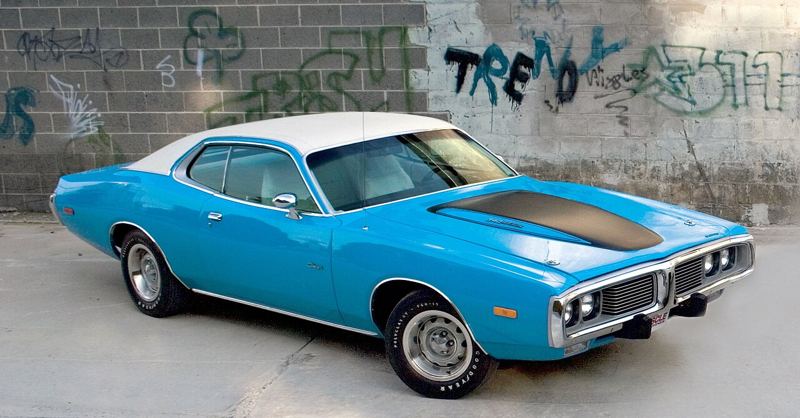
Photo: George · CC BY-SA 2.0 What changed. The 1971 redesign made it 3.5 inches wider and shorter, on a 115-inch wheelbase. Dodge put the Charger name on all its midsize coupes, replacing the two-door Coronets, to broaden the range. Charger nameplate volume was more than 82,000 units in 1971 and nearly 120,000 in 1973.
The innovation. A full range under one name: from the base coupe up to the 1971 Charger Super Bee, which Dodge says was the most powerful Charger of its day.
If you buy one usedThe original NHTSA records provide concrete details: 70V138 concerns the 1971 disc-brake proportioning tee; 71V004 the front drum-brake anchor pin; 73V011 fuel-pump/filter leaks on specified 1972–1973 six-cylinder builds; 72V314 the 1973 lower-control-arm pivot shafts; 72V219 idler-arm/centerlink stud-nut torque; and 72V274 misassembled lower ball joints. Corrective actions and engine/build conditions differ. These cars are roughly fifty model-years old; inspect actual brakes, steering, corrosion and service records. - Gen. 41975–1978 · B-body
Personal luxury, the Cordoba's twin
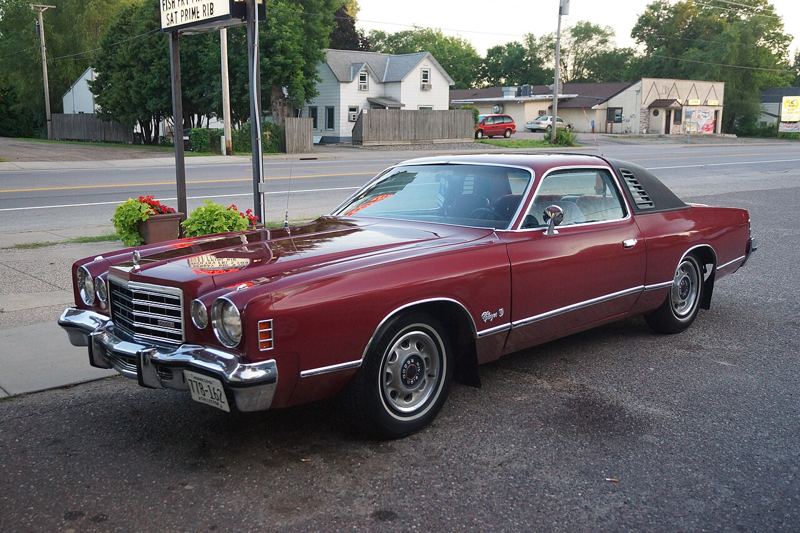
Photo: Greg Gjerdingen from Willmar, USA · CC BY 2.0 What changed. The market shifted to personal luxury coupes, and the Charger SE became almost identical to the Chrysler Cordoba except for its grille, taillights and badges. Ate Up With Motor places its first-year volume around 31,000. After a short 1978 model year, the Magnum XE continued that luxury-coupe formula.
The innovation. The Daytona name returned in 1976 as an appearance package with two-tone paint.
If you buy one usedSelected campaigns are 78V020 on specified 1975–1977 225/318-cubic-inch carburetors, whose accelerator-pump seals can distort and cause hesitation/stalls; 77V059 on 1977 driver seatback latches with improper heat treatment; and 77V211 on specified 1978 tilt columns whose coupling roll-pin retaining notch was machined too deep. Remedies improve the pump seal/check float level, replace the seat latch or add prescribed cotter-pin retention. Verify actual equipment and completed work. - Gen. 51981–1987
Front-wheel drive and Shelby's touch
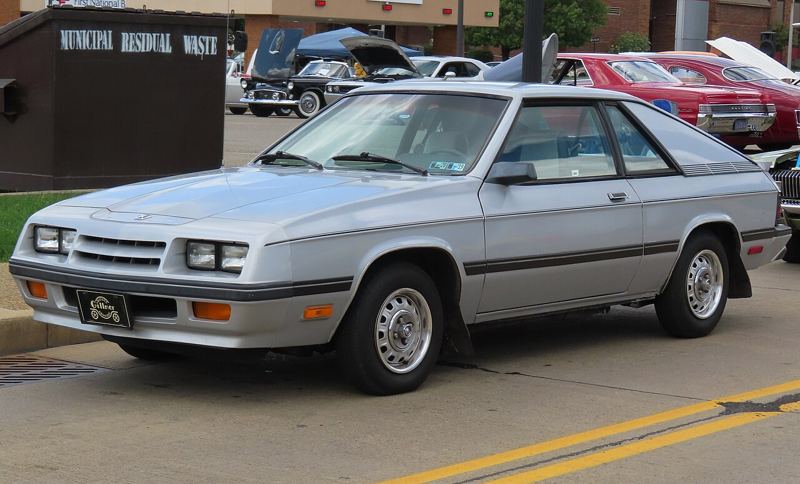
Photo: MercurySable99 · CC BY-SA 4.0 What changed. The name returned on a compact front-wheel-drive hatchback coupe derived from the Dodge Omni. The contemporary review reproduced by Curbside Classic identifies the Shelby Charger as a 1983 model. Retrospective sources disagree between 1982 and 1983 about its introduction. The Shelby Turbo Charger followed for MY1985.
The innovation. The review of the MY1983 Shelby Charger reproduced by Curbside Classic describes a 2.2-liter four-cylinder increased from 94 to 107 hp and a 0–60 mph time of about 10 seconds.
If you buy one usedCheck 83V035 on specified 1983 accelerator rods that can snag the carpet; 84V147 on 1984–1985 2.2-liter carbureted fuel reservoirs/hoses that may leak; 84V116 on 1985 2.2-liter carbureted purge-delay valves causing rich-mixture stalls; 91V056 on 1986 rear trailing-arm pivot bolts with stress-corrosion cracking; and 91V132 on 1987 fuel-pressure regulators that leak. Actual remedies include rod finishing, fuel-system parts or sealing, valve removal/connector installation and bolt/regulator replacement. Inspect actual condition and ask for documented completion. - Gen. 62006–2010 · LX
Back with four doors and a Hemi
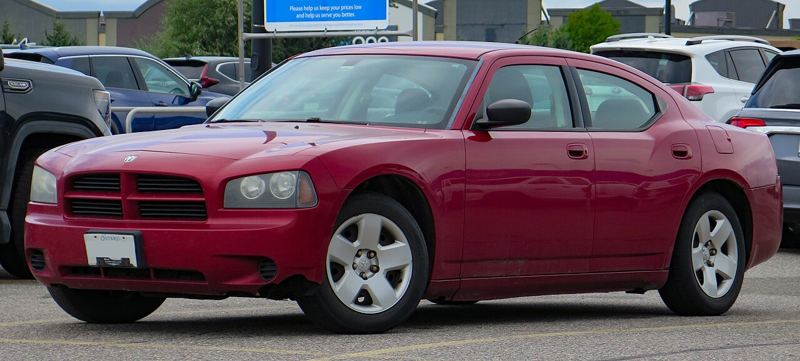
Photo: Elise240SX · CC BY-SA 4.0 What changed. After 18 years it returned as a rear-drive sedan for five adults, with near 50/50 weight distribution and standard stability control. Putting the name on a four-door generated controversy. It offered 2.7- and 3.5-liter V6s; the 3.5 made 250 hp. The R/T used the 340 hp 5.7 Hemi V8. The 425 hp 6.1 Hemi SRT8 already appears in the MY2006 brochure. The range also included the MY2006 Daytona R/T and 2007–2009 Super Bee.
The innovation. The 5.7 Hemi's Multiple Displacement System (MDS): it shuts off four cylinders in 40 milliseconds when full power is not needed and improves fuel economy by up to 20 percent.
If you buy one usedFor affected unrepaired Takata vehicles, do not drive until the recall repair is completed. Driver program 15V313 includes specified 2006–2010 Chargers; passenger programs 16V352 and 18V021 have distinct 2006–2012 and 2009–2013 year/geographic cohorts. Original-sale/registration history and inflator age matter, including Florida’s hot/humid exposure; earlier replacements may require further work. Other selected programs are 06V149 on 2006 2.7-liter/MK25E brake tubes near the EGR tube, 08V295 rear hub nuts on specified 2008 cars, and 10V200 ignition-node Park interlocks on 2010. The 5,509 population of 08V295 spans 300, Magnum and Charger. Verify actual VIN eligibility and records. - Gen. 72011–2023 · LD
Racetrack lights and the Hellcat era
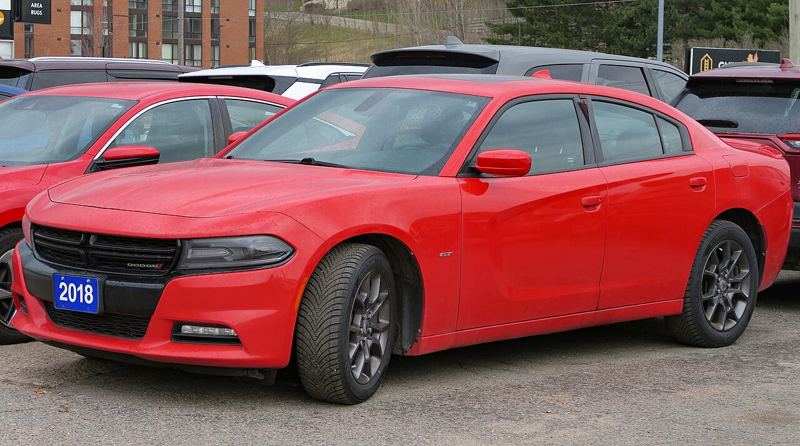
Photo: Elise240SX · CC BY-SA 4.0 What changed. Dodge called it the seventh generation: bodyside scallops inspired by the 1968–1970 Charger, racetrack taillamps with 164 LEDs, a 292 hp 3.6 Pentastar V6 and a 370 hp 5.7 Hemi. It started at $25,170 plus $825 destination. 2012 brought the 470 hp SRT8 and the eight-speed automatic; 2015 the 707 hp SRT Hellcat; 2021 the 797 hp Redeye and 2022 the 807 hp Jailbreak.
The innovation. The 2015 Charger SRT Hellcat: a supercharged V8 with 707 hp and 650 lb-ft and a 204 mph top speed, in a four-door family sedan.
If you buy one usedSelected programs include 14V634 on specified 2011–2014 3.6-liter/160-amp alternators and broader EHPS/engine/alternator-specific 17V435; 15V467 overly-sensitive side-impact calibration; and 12V197 ABS/ESC fuse relocation on 2011–2012. Passenger Takata programs include 18V021 and 19V018, with the latter explicitly covering specified 2010–2015 Chargers; affected unrepaired vehicles have a do-not-drive instruction until repaired. Check 16V240 on 2012–2014 monostable shifters, including repeat work for identified incomplete updates; 17V097 AWD driveshaft bolts on 2014–2017; 24V198 curtain inflators on 2018–2021; and 24V112 parking-brake adjustment on 2023. Confirm exact equipment, VIN and completed work. - Gen. 82024–present · STLA Large
Electric muscle and a twin-turbo six
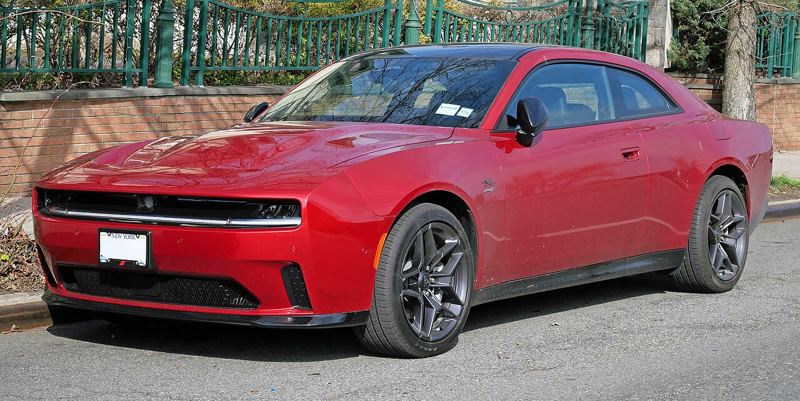
Photo: Kevauto · CC BY-SA 4.0 What changed. A new STLA Large platform with standard all-wheel drive, two- and four-door versions and production at the Windsor plant. Dodge presented it as the first electric muscle car: the Charger Daytona Scat Pack offers up to 670 hp with PowerShot from a battery with 100.5 kWh installed capacity. For gasoline came the Sixpack, a 3.0 twin-turbo Hurricane inline-six with 420 or 550 hp, more than the 5.7 and 6.4 Hemis it replaces.
The innovation. The R-Wing, a pass-through in the nose that creates downforce as a nod to the 1969 Daytona, and the Fratzonic Chambered Exhaust, which uses two passive radiators to give an electric car a muscle car sound.
If you buy one usedOn specified 2024–2025 Charger EVs, 25V389 updates missing amplifier software for exterior/pedestrian sound; 25V574 replaces the electric drive module for an incorrectly installed spring that can defeat Park; and 26V262 updates instrument-display software. These include both software and physical remedies. Campaign 26V531 includes specified 2026–2027 Chargers with rearview images failing in Reverse, updated free at a dealer or OTA. Actual powertrain, radio/equipment and VIN eligibility control; verify completed work before buying.
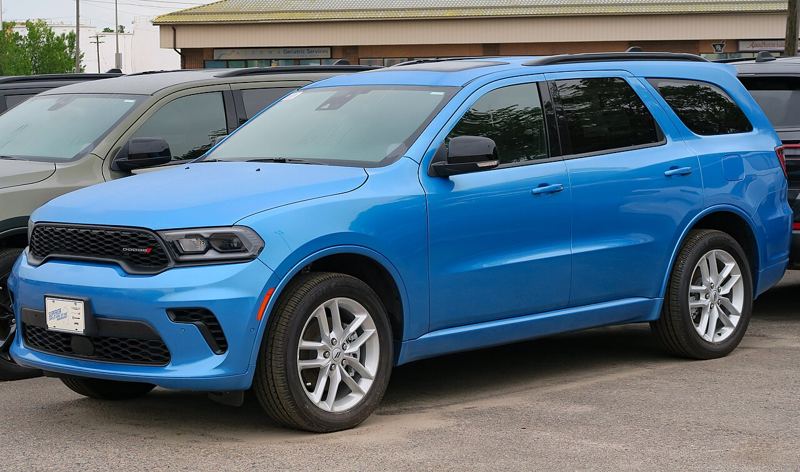 Dodge Durango1998–present
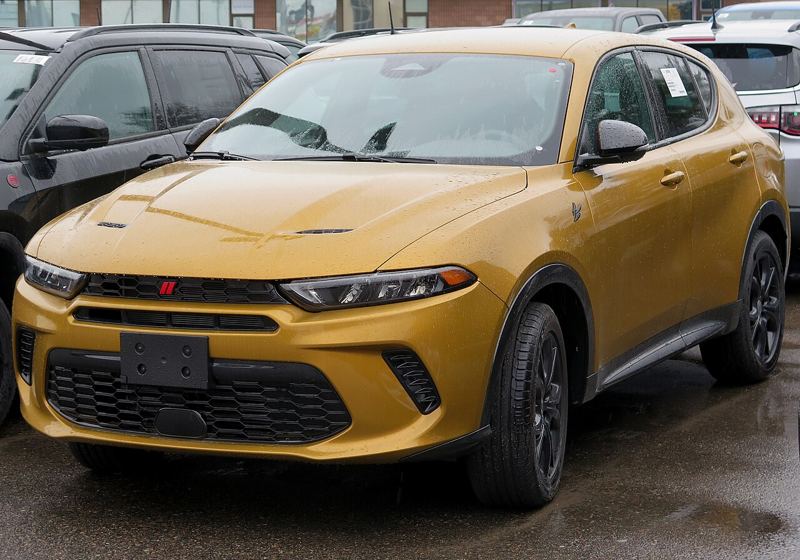 Dodge Hornet2023–2025
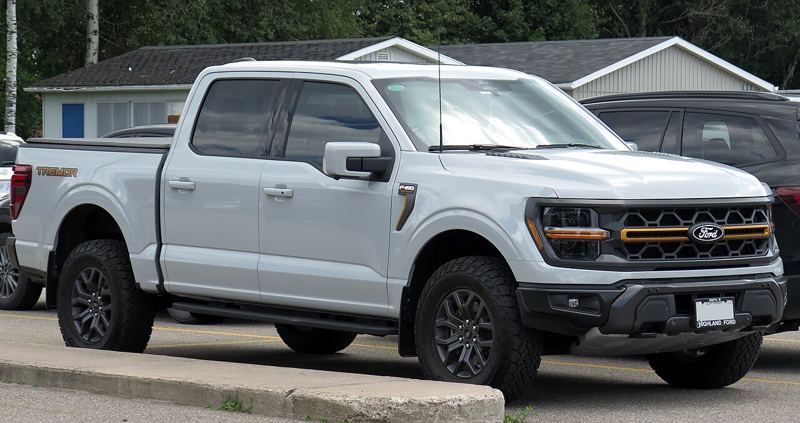 Ford F-Series (F-150)1948–present
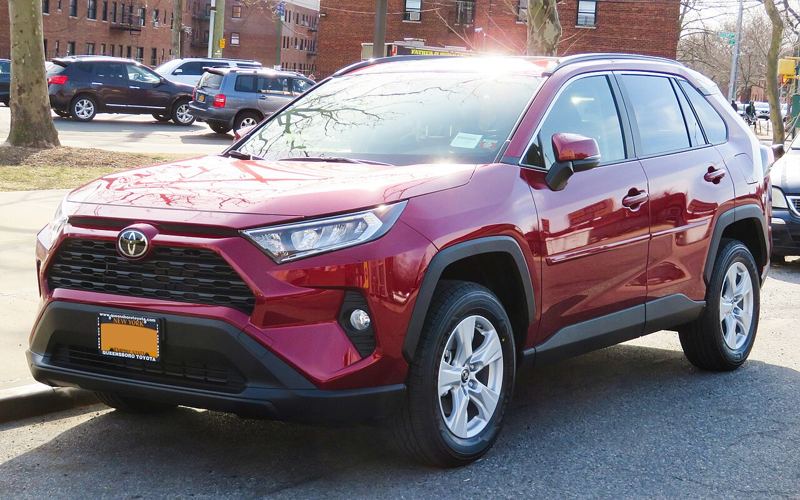 Toyota RAV41994–present (US from 1996)
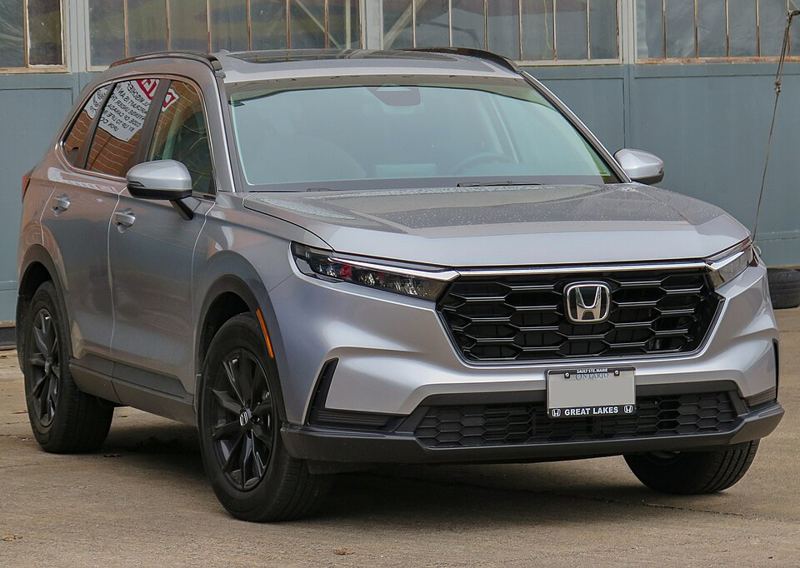 Honda CR-V1995–present
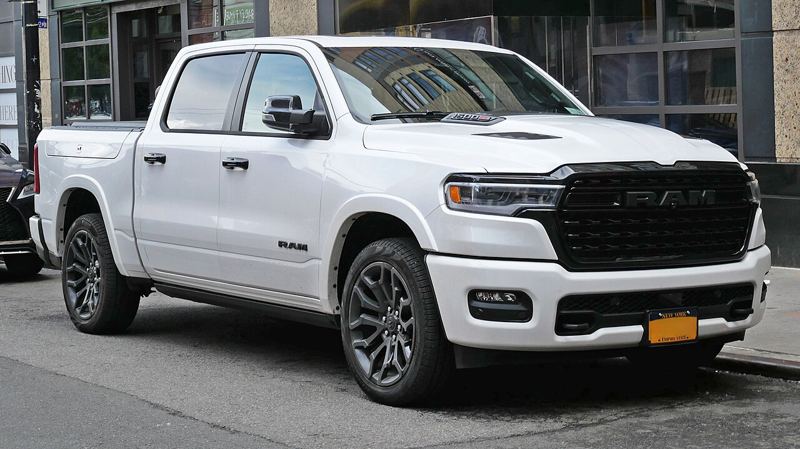 Ram 15001981–present
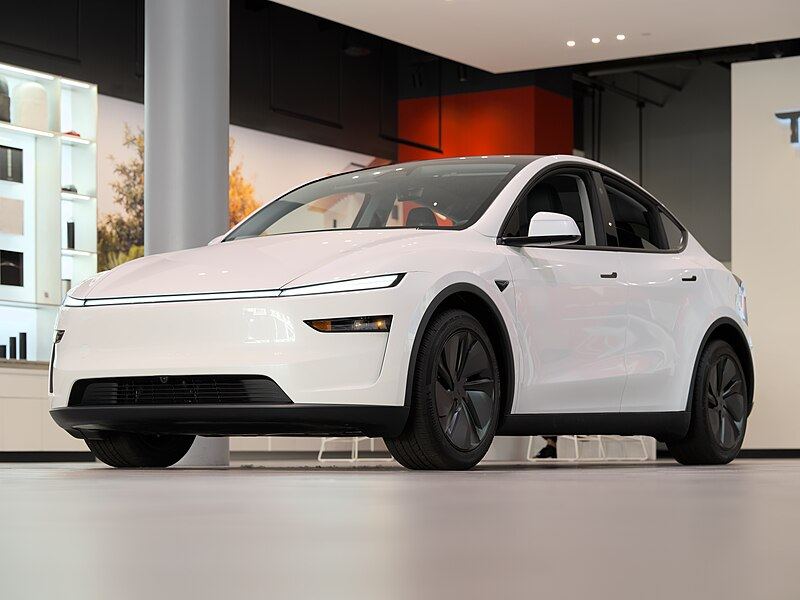 Tesla Model Y2020–present
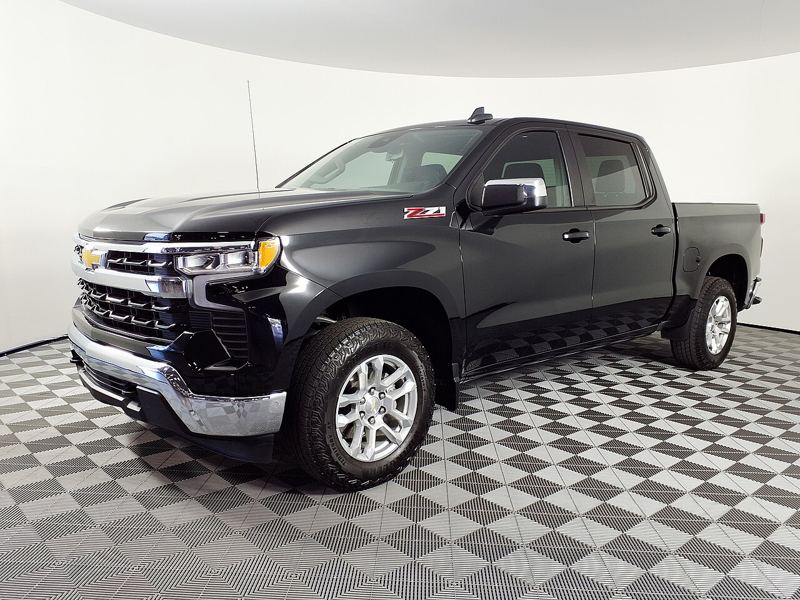 Chevrolet Silverado1999–present
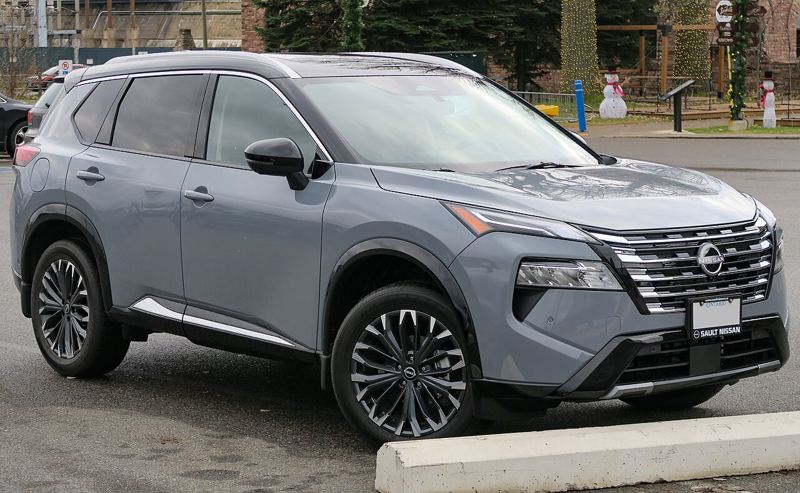 Nissan Rogue2007–present


