
Genesis G80
Midsize luxury sedan · 2009–present (as Hyundai Genesis 2009–2016; Genesis G80 since 2017). 4,155 units sold in the US in 2024
How it began
Hyundai Motor Company created it. At its 2008 U.S. introduction, John Krafcik was Hyundai Motor America’s vice president of product development and strategic planning. Dave Zuchowski, that company’s president and CEO, led the second-generation launch. Hyundai created the Genesis brand in November 2015; Hyundai vice chairman Chung Euisun called it a new start. Luc Donckerwolke, formerly with Lamborghini, Audi and Bentley, was hired for design work. Erwin Raphael was Genesis’s U.S. general manager when the 2017 G80 arrived; Mark Del Rosso headed Genesis Motor North America at the 2021 model’s launch.
The program’s development and test setting was South Korea: U.S. journalists drove the second-generation prototype at Hyundai’s Namyang R&D center. Genesis identified Ulsan, Korea, as the 2017 G80 plant. An original U.S. MY2026 window sticker and the queried 2027 NHTSA vPIC VIN pattern also identify Ulsan; this establishes the documented location without replacing verification of an individual vehicle.
Hyundai introduced the Genesis in Detroit on January 13, 2008. The V6 was at dealers that summer as a 2009 model. The second generation, a 2015 model, was announced for April 2014 showrooms. Pricing for the 2017 Genesis G80 was published on August 1, 2016. The family’s third generation made its Korean digital debut in March 2020; the original U.S. pricing announcement for the 2021 model is dated May 19.
Genesis means 'origin' or 'beginning,' and the luxury brand's name came from this very sedan, first sold in the U.S. in 2008. Since 2017 Genesis has used the letter G for its sedans and GV for its SUVs; the number places each model in the range, so the G80 sits between the G70 and the flagship G90.
Hyundai aimed to compete with premium sedans. Genesis was its first U.S. rear-wheel-drive model; John Krafcik named the Mercedes E-Class, BMW 5 Series, Infiniti M and Lexus GS as engineering benchmarks. Hyundai initially kept the sedan under its existing brand and dealer network, a strategy its executives described as offering value without a separate luxury channel. In November 2015 it made Genesis a standalone luxury brand, taking the sedan’s name.
Generation by generation
- Gen. 12009–2014 · BH
Hyundai Genesis: the Car of the Year that surprised Detroit
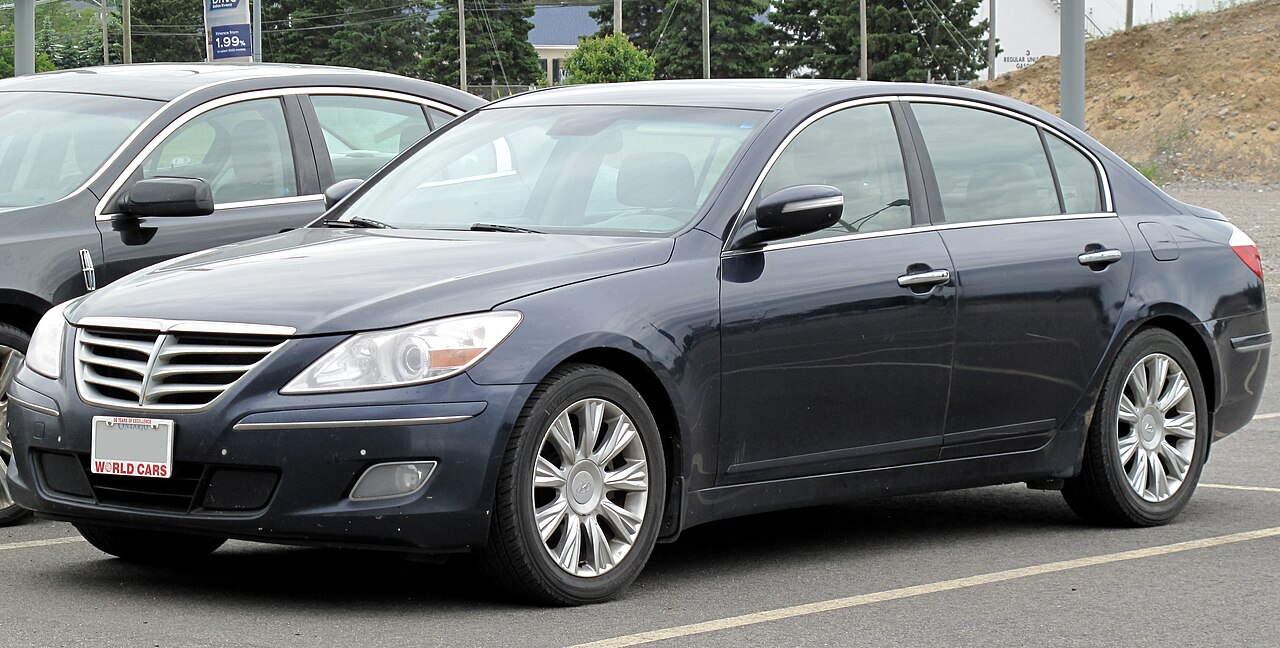
Photo: Elise240SX · CC BY-SA 4.0 What changed. It was Hyundai’s first U.S. rear-wheel-drive model. It arrived with a 290 hp 3.8-liter V6 or a 4.6-liter Tau V8 rated up to 375 hp on premium, both with six-speed automatics. A contemporary launch-drive report gave the V8 a 5.7-second 0–60 mph time. The 2008 pricing announcement put the V6 at $33,000 and V8 at $38,000; in August 2009 Hyundai cited $42,000 for a fully equipped Genesis. In January 2009 it won North American Car of the Year over the Ford Flex and Volkswagen Jetta TDI, chosen by 50 U.S. and Canadian journalists.
The innovation. Hyundai presented factory HD Radio and electronic active front head restraints as firsts among popular brands; the electronic system differed from earlier mechanically active restraints. The original launch report gave a drag coefficient of 0.27.
If you buy one usedFor the Hyundai Genesis sedan, check 13V113 on specified 2009–2011 cars for stop-lamp switch/brake-light and cruise-disengagement problems, and 14V713 for the separate stop-lamp circuit fault on 2009–2011 cars built April 30, 2008–November 21, 2010. Campaign 13V489 covers specified 2009–2012 factory fluid/HECU corrosion and reduced braking: inspection can require HECU replacement and original-fluid replacement. Campaign 16V117 covers specified 2012 wiper-cover seals/corrosion, repaired with a new cover and seal. Remedies are free for affected cars; verify actual VIN completion. - Gen. 22015–2016 · DH
Second generation: HTRAC all-wheel drive and eight speeds
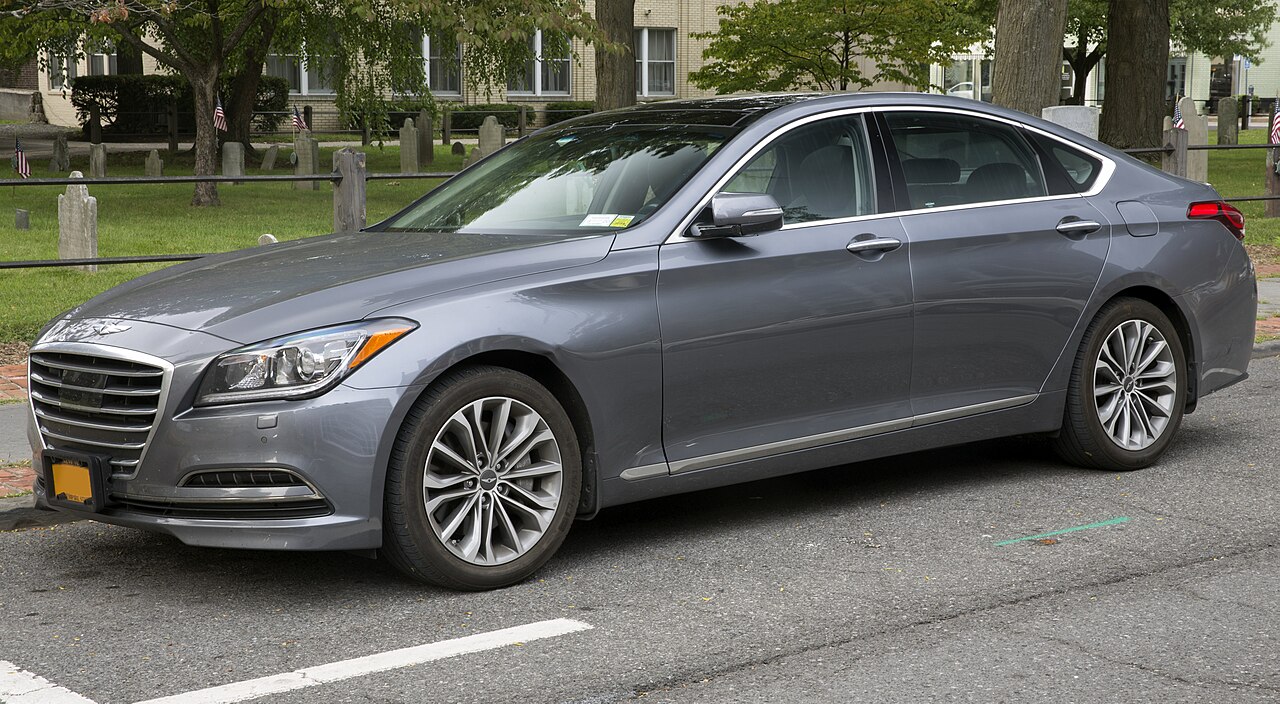
Photo: Mr.choppers · CC BY-SA 3.0 What changed. The 2015 Genesis was all-new and retained the Hyundai brand. The 3.8-liter V6 made 311 hp and 293 lb-ft; the 5.0-liter V8 made up to 420 hp and 383 lb-ft, with fuel-dependent ratings. Both used eight-speed automatics; HTRAC was available on the V6. Prices were $38,000 for the rear-drive V6, $40,500 with HTRAC and $51,500 for the V8, plus $950 freight. In May 2014 it received Top Safety Pick+ under that year’s criteria with optional front crash prevention; IIHS rated its small-overlap frontal test Good.
The innovation. U.S. Ultimate packages offered a cabin CO2 sensor to activate fresh-air ventilation and help maintain alertness. It responds to gas concentration rather than directly detecting a sleeping driver. HTRAC, developed with Magna Powertrain, normally sent 60 percent of torque rearward and could vary distribution with mode and grip, including up to 90 percent toward one axle in the described conditions.
If you buy one usedFor 2015–2016 Hyundai Genesis, check 15V097 rear-lamp water/incorrect gear display, 15V864 original Hankook Ventus S1 noble2 tire sidewalls (replacement with another brand), 16V575 seven-inch cluster software, and 17V359 parking-brake warning switches. Three fire programs require affected cars to park outdoors and away until repaired: 21V160 ABS fuse, 24V107 starter-solenoid relay kit and 26V664 power-seat switches/motors. The seat program involves non-memory-seat controls; the October 14, 2026 acknowledgment says its remedy is under development and owner letters are expected December 7. Confirm current arrangements with the retailer; the future letter date is not proof a remedy is available or completed. - Gen. 32017–2020 · DH (Genesis G80)
Genesis G80: the new brand reaches the U.S.
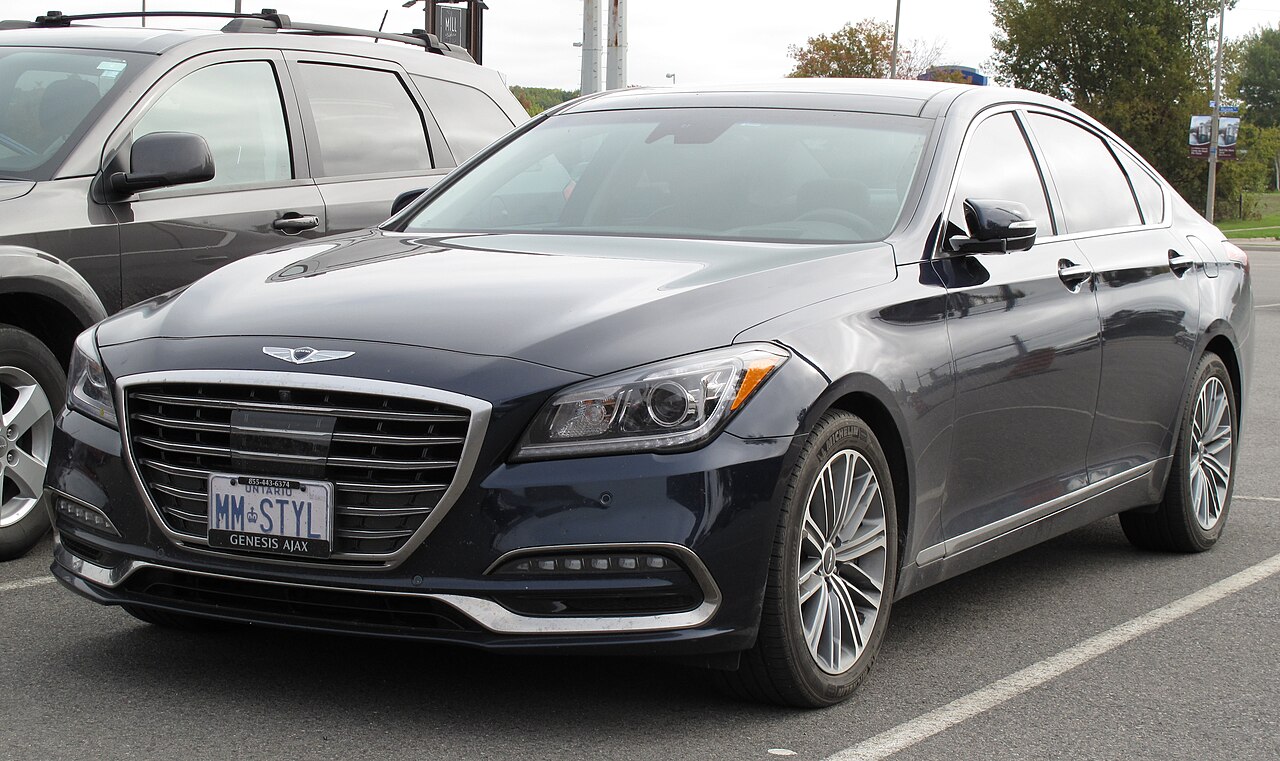
Photo: Elise240SX · CC BY-SA 4.0 What changed. The same DH underpinnings, now with its own name and brand: Genesis presented it as the brand's first model. Prices started at $41,400 (3.8 rear-drive), $43,900 with HTRAC and $54,550 with the 5.0-liter V8, plus $950 freight. Standard were automatic emergency braking, blind-spot detection, lane keep assist, nine airbags, smart cruise control with stop and go and an 8-inch screen, plus 3 years of complimentary maintenance and valet service. For 2018 came the G80 Sport with a 365 hp, 376 lb-ft 3.3-liter twin-turbo V6.
The innovation. Valet service booked through the Genesis app: someone picks up your car for maintenance and brings it back, a program the brand promised for all its future models.
If you buy one usedOn specified 2018 G80s, 18V305 replaces incorrectly primed front/rear glass and 18V496 reprograms occupant classification to prevent unintended passenger-airbag deployment with a child/infant. On 3.3T cars, 19V538 oil-pipe work is superseded by 24V191 (2018–2020), requiring the new left turbo-pipe remedy even after the earlier repair. Fire programs 21V160 (2017–2020 ABS), 24V107 (2017–2019 starter solenoids) and 26V664 (2017–2020 power-seat motors) require affected cars to park outdoors and away until repaired. Ask about the seat program’s current remedy availability and exact VIN applicability; do not treat old work as completion of a later campaign. - Gen. 42021–present · RG3
Third-generation G80: lighter, turbocharged and with 'two lines'
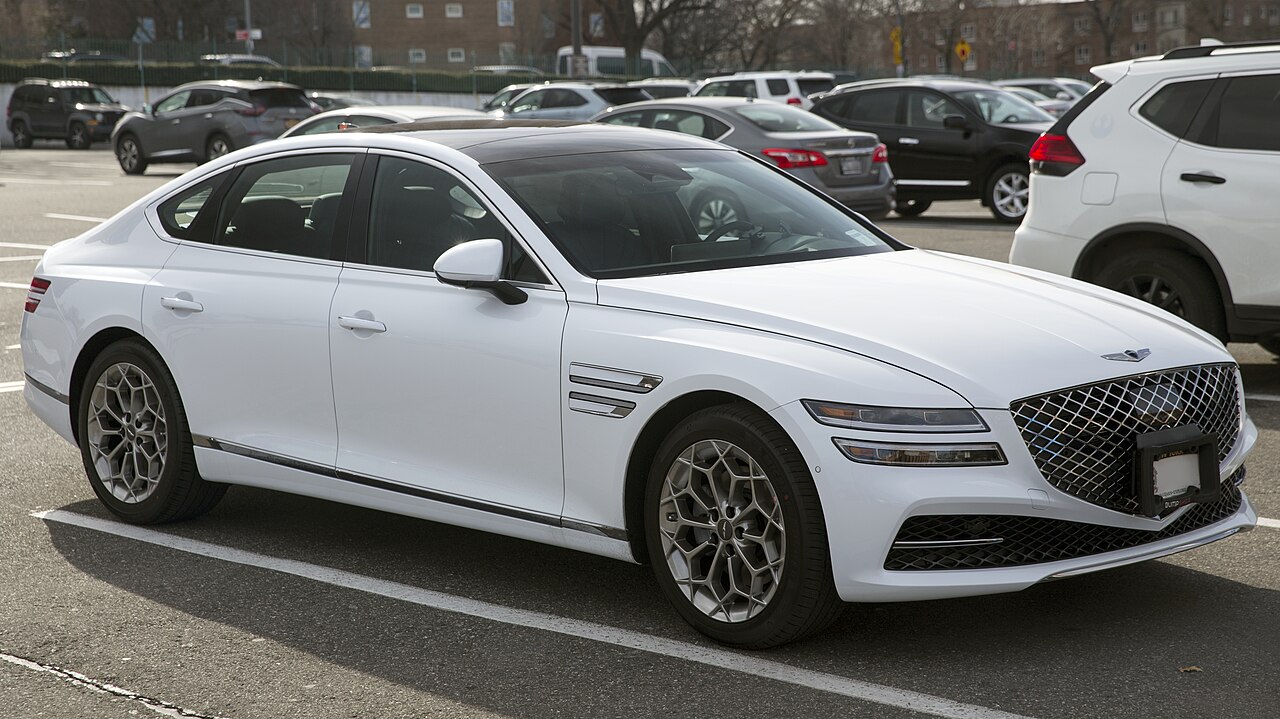
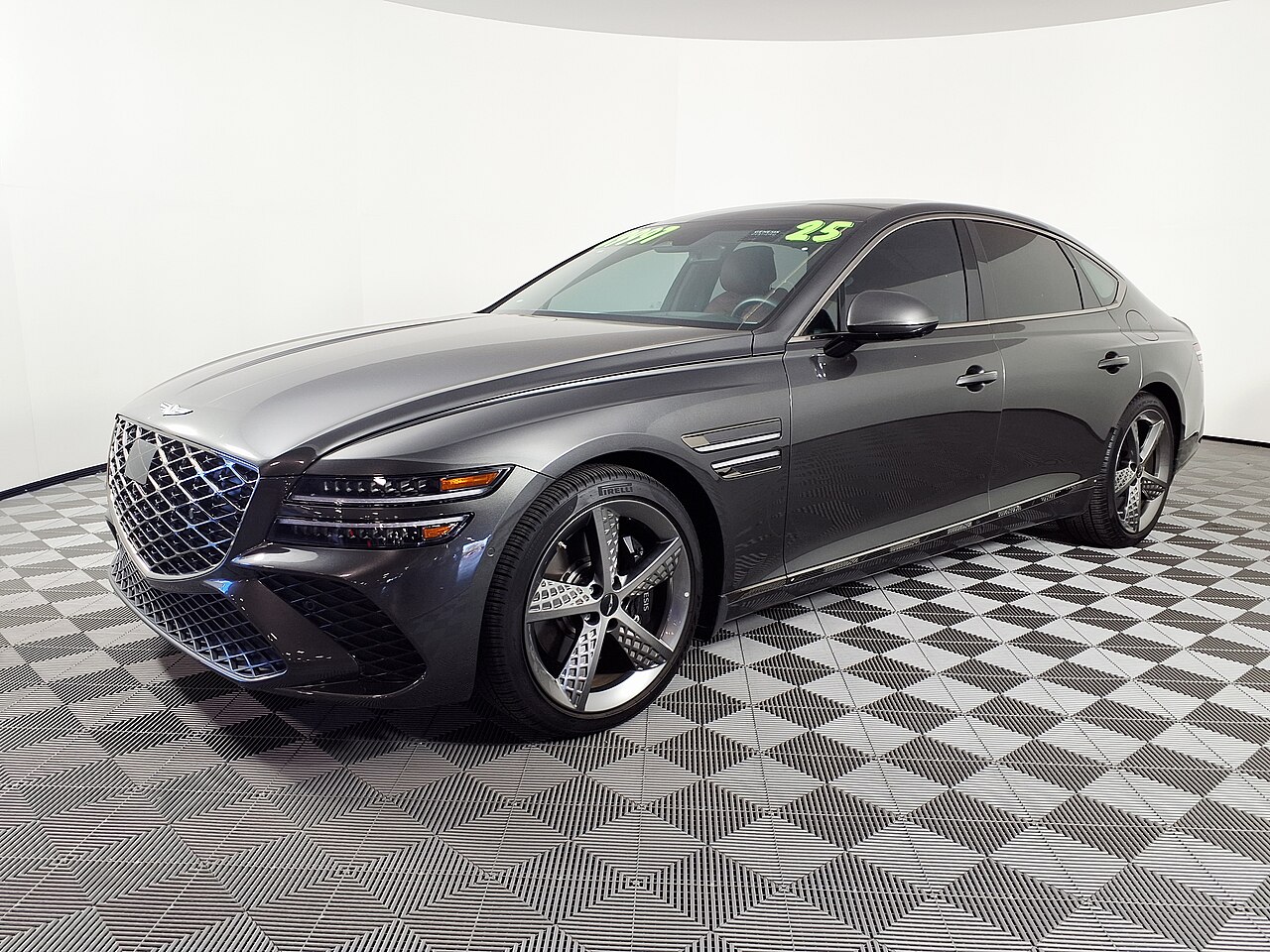
Photo: Mr.choppers · CC BY-SA 3.0 What changed. A new M3 rear-drive platform shared with the GV80 SUV, and a design with the two-line lighting signature and the large shield-shaped grille. The V8 was dropped: now there is a 300 hp, 311 lb-ft 2.5-liter turbo four and a 375 hp, 391 lb-ft 3.5-liter twin-turbo V6, with an eight-speed automatic. A 14.5-inch touchscreen and a price from $47,700. It was a 2021 North American Car of the Year finalist (the Hyundai Elantra won) and in Korea it was the KAJA journalists' association 2021 Car of the Year. For the 2025 model (pricing announced in August 2024) it got a 27-inch OLED display, a new dash and a three-spoke steering wheel, with prices from $58,350.
The innovation. A body that is 19 percent aluminum: according to Genesis, it cut 243 pounds versus the previous model and lowered its center of gravity.
If you buy one usedCheck 21V208 on specified 2021 2.5T fuel tubes and 23V094 on 2021–2023 front pretensioners. Fuel-pump campaigns 23V630 (2021–2022) and expansion 24V282 (2022–2023) require their prescribed inspection/replacement. For cluster failures, 25V105 covers 2023–2024 and 26V019 covers 2025–2026; under the latter, disable HD radio until the dealer/OTA remedy is complete. Campaign 26V229 covers specified 2021–2025 pipe-to-fuel-rail leakage/fire with inspection/tightening or replacement. Remedies are free; verify each actual VIN and completed work. - Gen. 52023–2024 (EE. UU.) · RG3 EV
Electrified G80: the G80 that skips the gas station
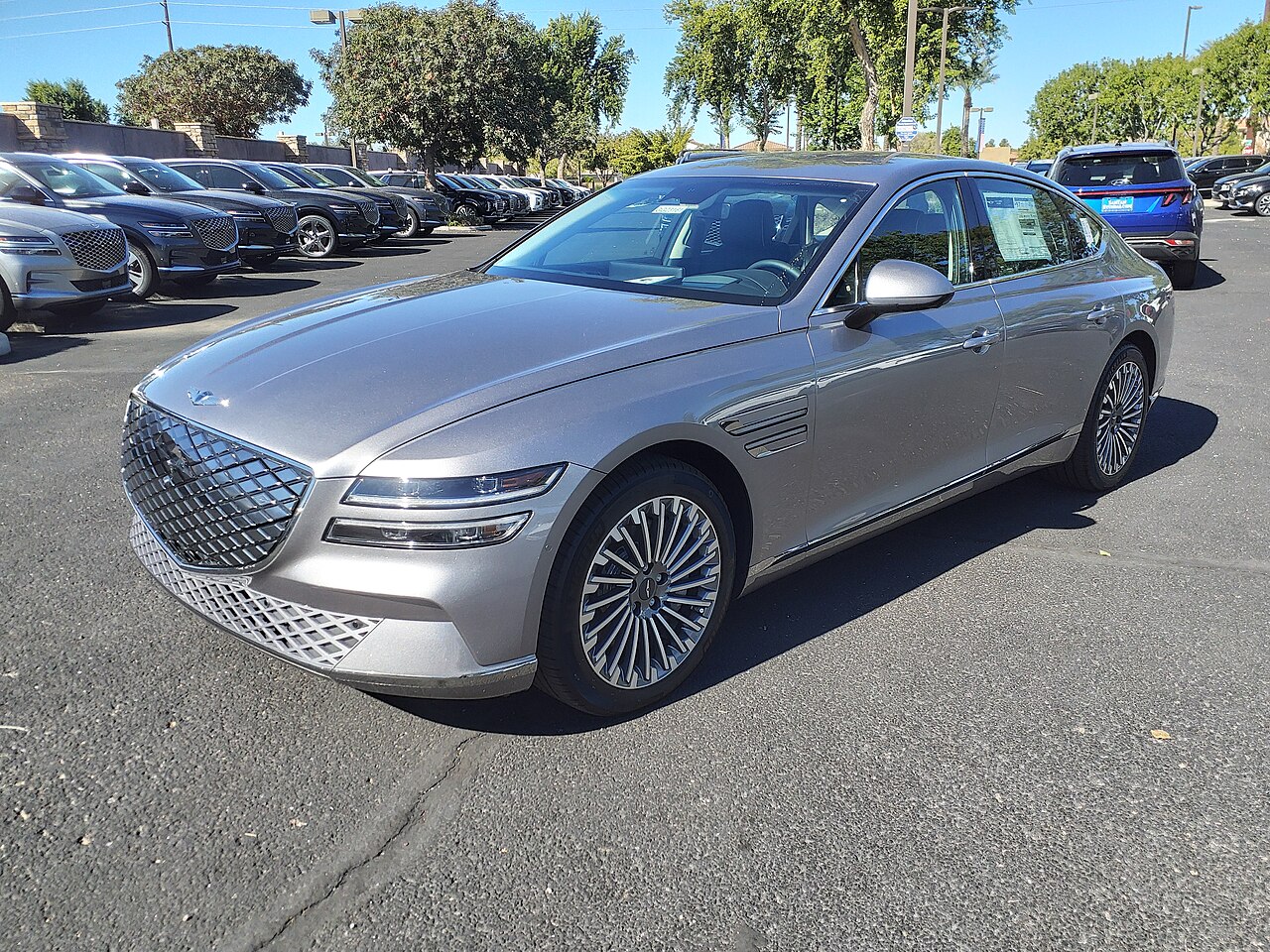
Photo: HJUdall · CC0 What changed. The electric version of the third-generation G80 used dual motors, AWD, 365 hp, 516 lb-ft and an 87.2 kWh battery. Genesis estimated 10–80 percent in 22 minutes using a 350 kW station, subject to temperature, charge level and other conditions; 350 kW is the station’s rated output. August 2022 pricing was $79,825 plus $1,095 freight, totaling $80,920, initially in California, Connecticut, New Jersey and New York. By November, KBB reported 12 states, one trim and 282 miles of EPA range. The solar roof offered elsewhere was unavailable at the U.S. launch. In August 2025 Genesis directly confirmed to Car and Driver that 2024 was the final model year sold in the U.S. This describes retail sales; the intended population of recall 24V868 also includes 2025 vehicles. KBB reported fewer than 400 U.S. sales in 2024.
The innovation. It could use 350 kW fast-charging stations; the estimated 10–80 percent time of 22 minutes depended on conditions. The initial offer included three years of complimentary 30-minute Electrify America sessions for eligible owners, subject to program terms.
If you buy one usedExact model-name queries for Electrified G80 returned zero on November 3, 2026, but that does not override positive manufacturer eligibility: original 24V204 lists U.S. 2023–2024 G80 Electrified, and amended replacement 24V868 lists 2023–2025 G80 Electric. ICCU damage can stop 12V charging and eventually remove propulsion. The new remedy requires software plus inspection/conditional ICCU and fuse replacement, free, even after the earlier campaign. Have Genesis check the actual VIN and current final-repair records; an empty model query is not an exemption.
 Genesis GV702021–present
 Genesis G702019–present
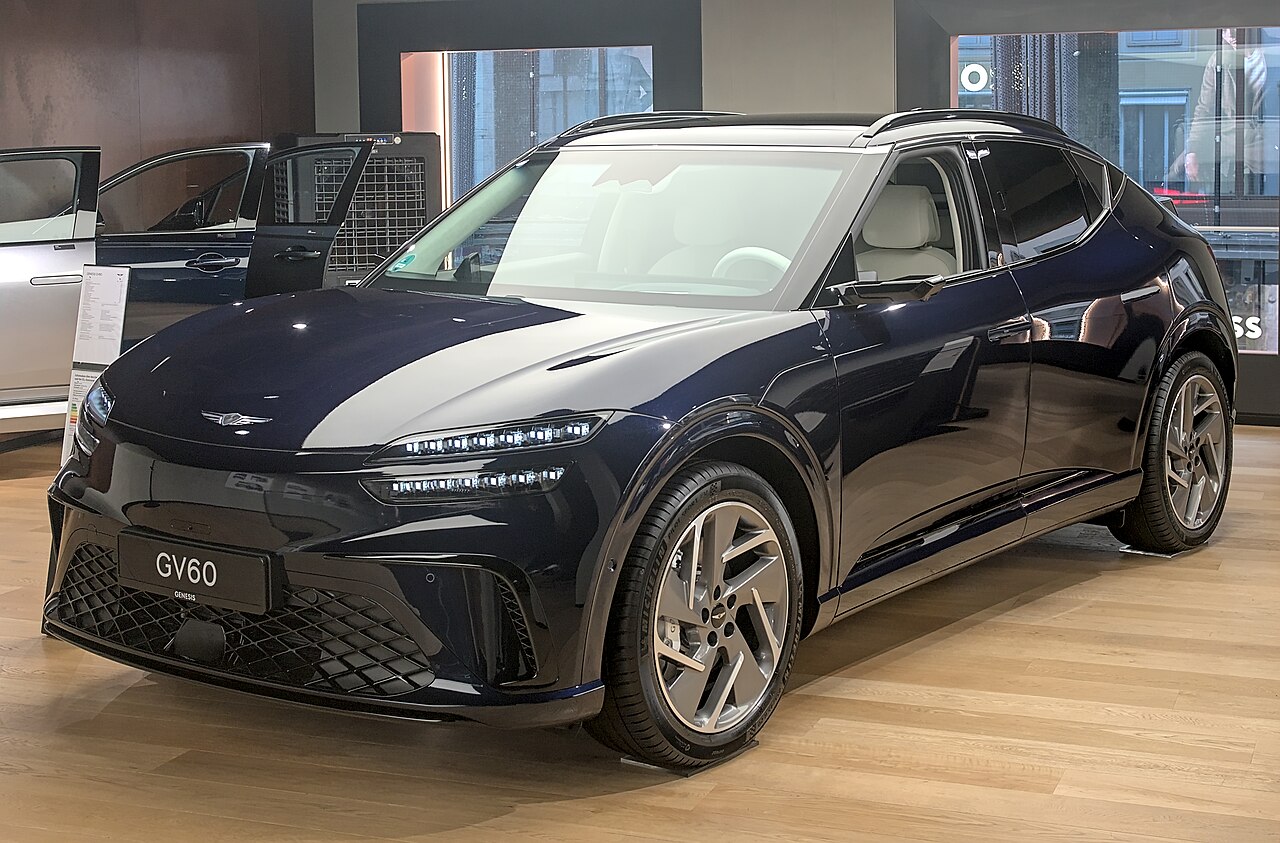 Genesis GV602023–present
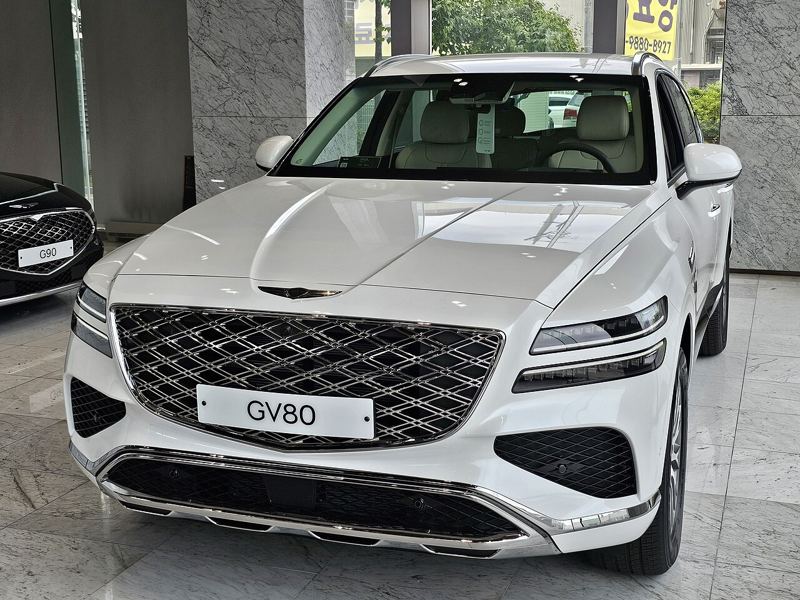 Genesis GV802021–present
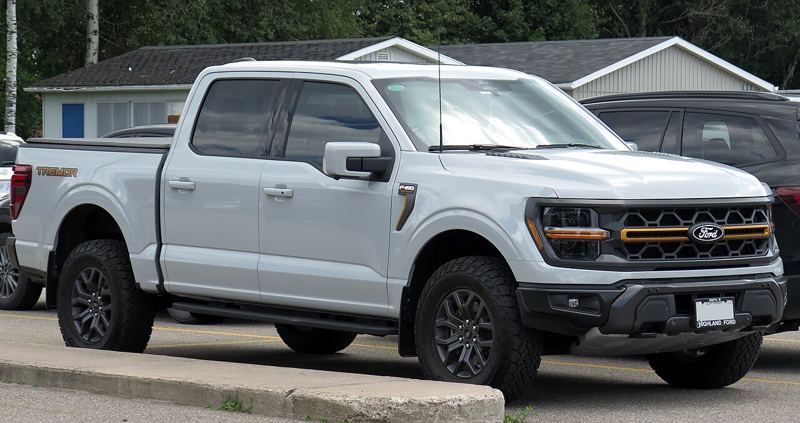 Ford F-Series (F-150)1948–present
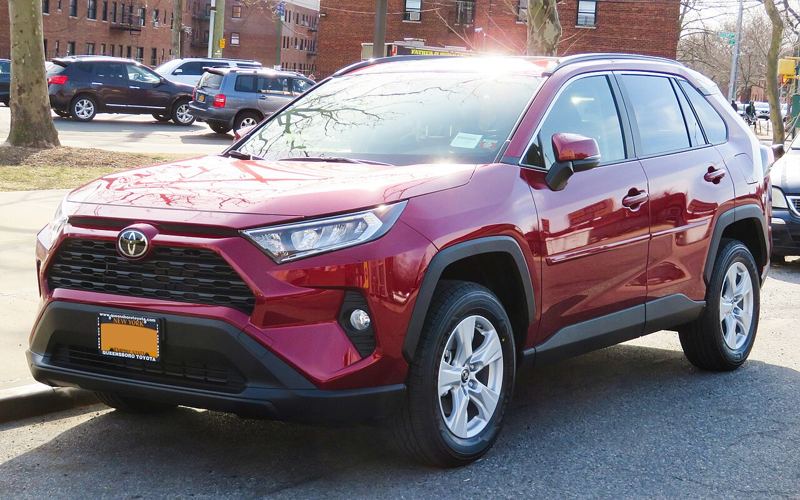 Toyota RAV41994–present (US from 1996)
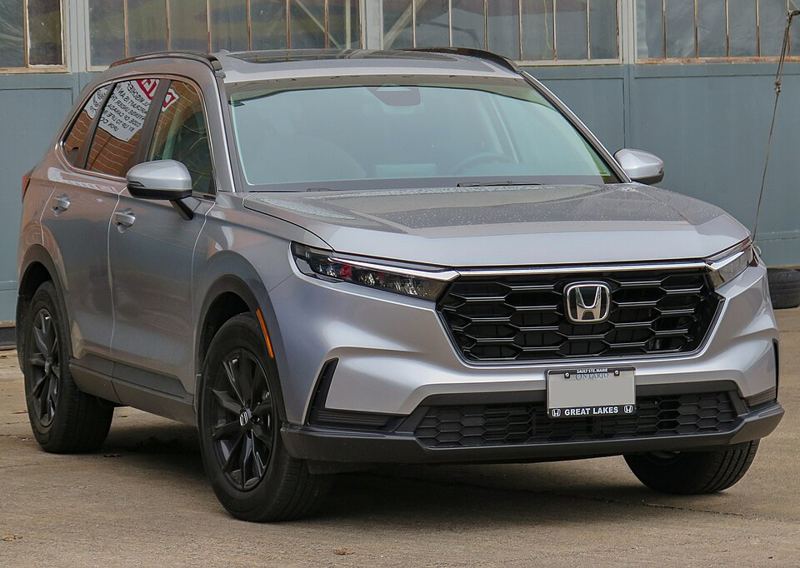 Honda CR-V1995–present
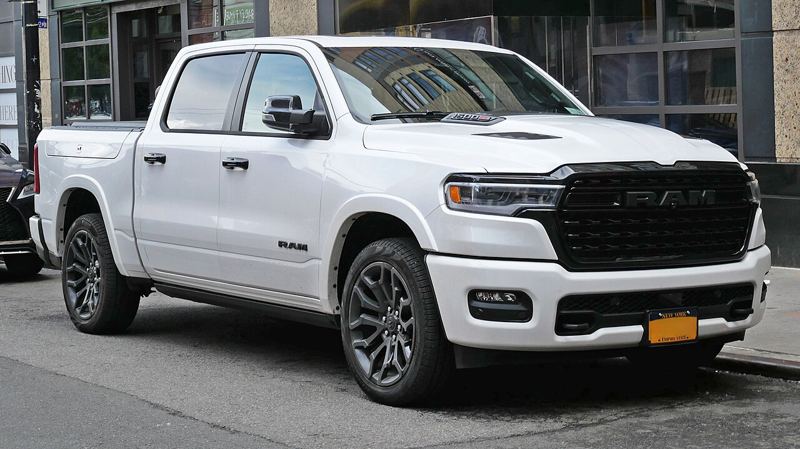 Ram 15001981–present
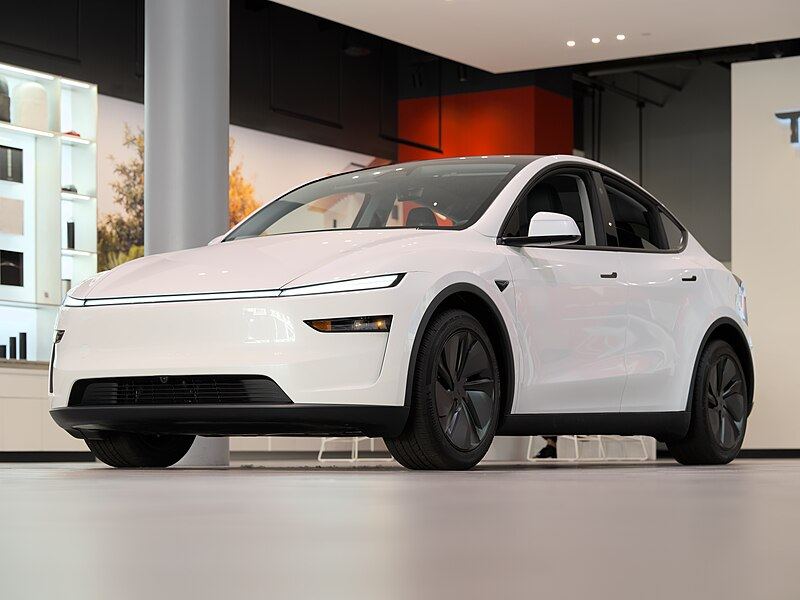 Tesla Model Y2020–present


