
GMC Canyon
Midsize pickup · 2004–present. 38,215 units sold in the US in 2024
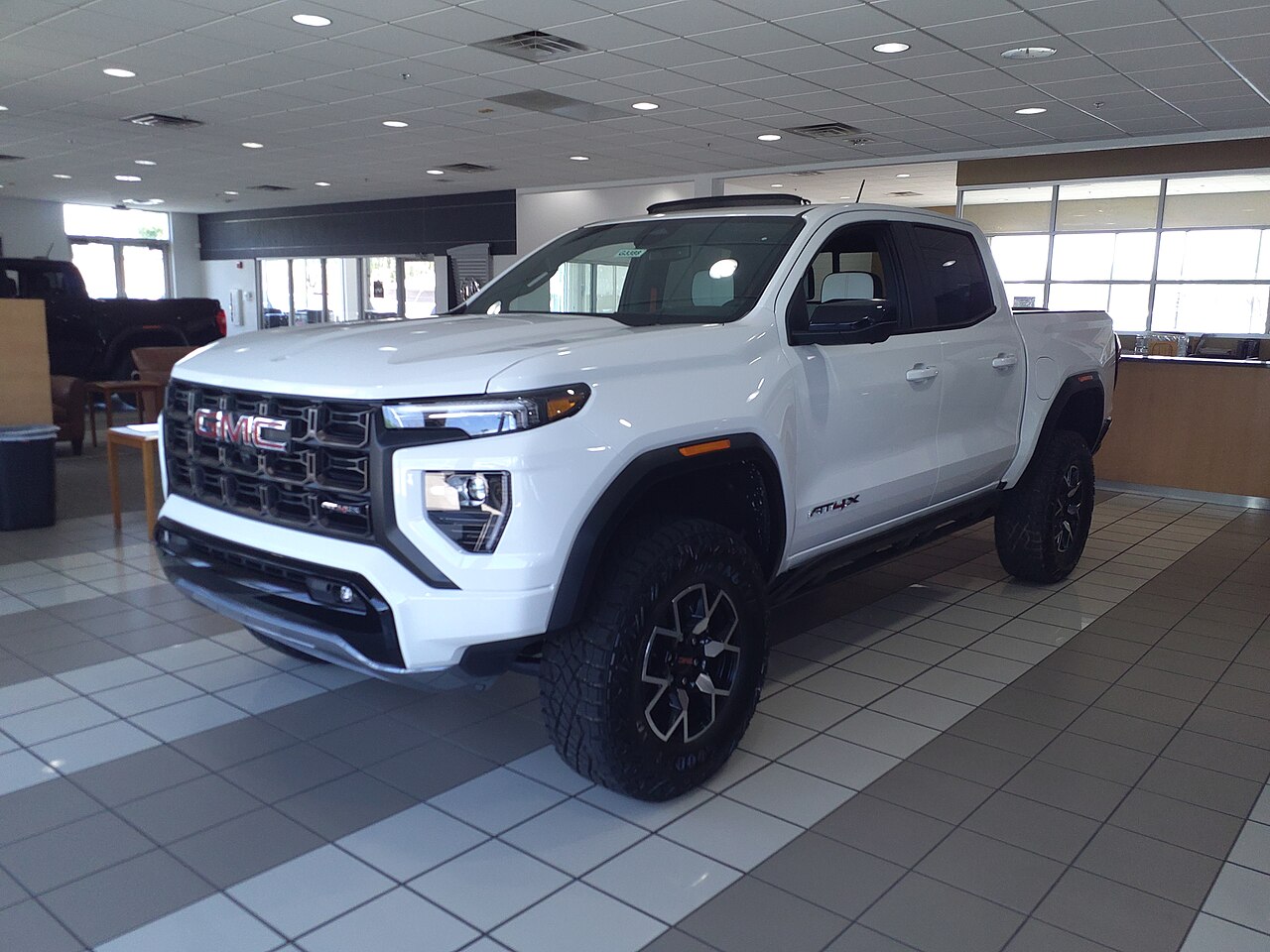
How it began
General Motors developed it as the twin of the Chevrolet Colorado. For the first generation, the documented leaders are Tom Wallace, midsize truck vehicle line executive, and Al Oppenheiser, assistant vehicle chief engineer; at launch GMC's spokespeople were Craig Bierley, Canyon marketing director, and Jerome Thiebaud, product manager. For the second generation, the spokesperson was Tony DiSalle, vice president of Buick and GMC marketing.
The first generation was built at GM's plant in Shreveport, Louisiana. Since the second generation, the Canyon has been assembled at GM's Wentzville, Missouri plant, alongside the Chevrolet Colorado. The Canyon sold in the U.S. today still comes from Wentzville.
GMC announced that production of the 2004 model would begin in the fourth quarter of 2003 at Shreveport. Its family tree is older: GMC sold the compact S-15 from 1982, renamed Sonoma in 1991. The Canyon replaced the Sonoma.
The GMC sources inspected for this review do not explain the name Canyon. What is documented is its family tree: S-15 in 1982, Sonoma from 1991 and Canyon from the 2004 model year.
To replace the Sonoma, which shared its basis with the Chevrolet S-10, GM decided to create an all-new midsize pickup, separate from its SUVs: 'We made a strategic decision that we wanted to separate the pickup from the utility,' said Tom Wallace, in order to build a lower-cost pickup architecture. According to GMC, it was designed 'from the ground up' to give more power, more space and more functionality in a midsize pickup. It kept only a seat frame from the truck it replaced.
Generation by generation
- Gen. 12004–2012 · GMT355
The five-cylinder pickup
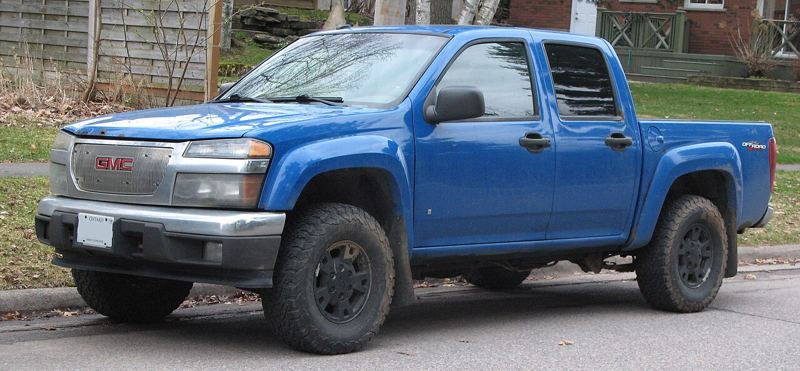
Photo: SsmIntrigue · CC BY-SA 4.0 What changed. It replaced the Sonoma with a new ladder frame more than 250% stiffer in torsion than the S-10's. It came in regular, extended and crew cab, with a 2.8 L four-cylinder (175 hp) or a 3.5 L five-cylinder (220 hp). In 2009 it added a 300 hp 5.3 L V8 for extended and crew cabs.
The innovation. The Vortec 3500 inline five, derived from the GMC Envoy's 4.2 L inline six, was according to GMC the first five-cylinder engine in a consumer pickup. It had electronic throttle control, variable valve timing and coil-on-plug ignition.
If you buy one usedBy 2008 the engines had grown to 2.9 L (185 hp) and 3.7 L (242 hp); the 5.3 L V8 arrived in 2009. NHTSA lists recall 09V310 (2004–2009, sold or registered in hot-weather states such as Florida and Texas): the brake lamp switch could become contaminated and fail. Recall 10V575 (2004–2011, regular cabs and extended cabs without a rear seat, equipped with a front 60/40 split bench) fixes the child-seat tether anchor, and 12V594 (2010–2012) the secondary hood latch. Ask for proof they were done. - Gen. 22015–2022 · GMT31XX
The comeback, now with diesel
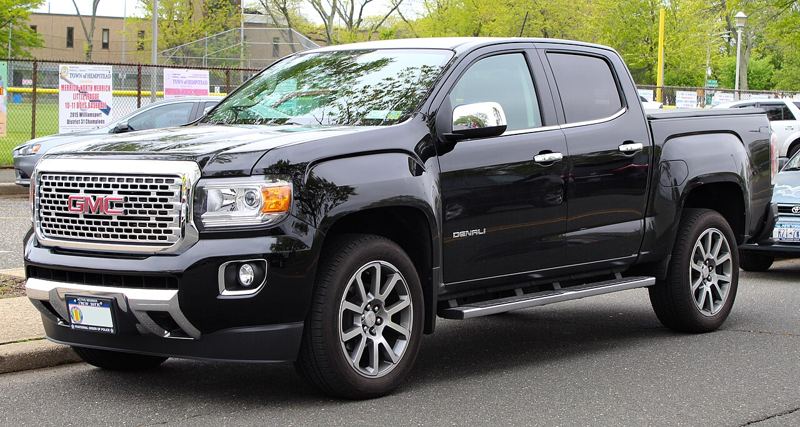
Photo: Kevauto · CC BY-SA 4.0 What changed. After a pause with no 2013 or 2014 models, it returned as a 2015 model, revealed on January 12, 2014, on the eve of the Detroit auto show. It offered a 2.5 L four-cylinder (200 hp) or a 3.6 L V6 (305 hp), extended or crew cab, and OnStar with 4G LTE Wi-Fi. GM said it was for buyers who want truck functionality without needing a full-size pickup. It was refreshed for 2021.
The innovation. From 2016 it offered a 2.8 L Duramax turbodiesel with 181 hp and 369 lb-ft, an exhaust brake and up to 7,700 lb of towing, about 700 more than the V6. The 4x4 diesel was rated 29 mpg highway by the EPA.
If you buy one usedEarly 2015 models have several NHTSA recalls: 14V645 (driver air bag wiring), 15V267 (front seat hooks) and 21V213 (loss of power steering assist from a poor electrical connection). Recall 18V358 (2015–2018) covers the high-pressure fuel pump, which could detach from its mount, and 17V621 (2015–2016) the driver air bag. Check the service history with a GMC dealer. - Gen. 32023–present · GMT31XX (actualizada)
Taller, more premium and crew cab only
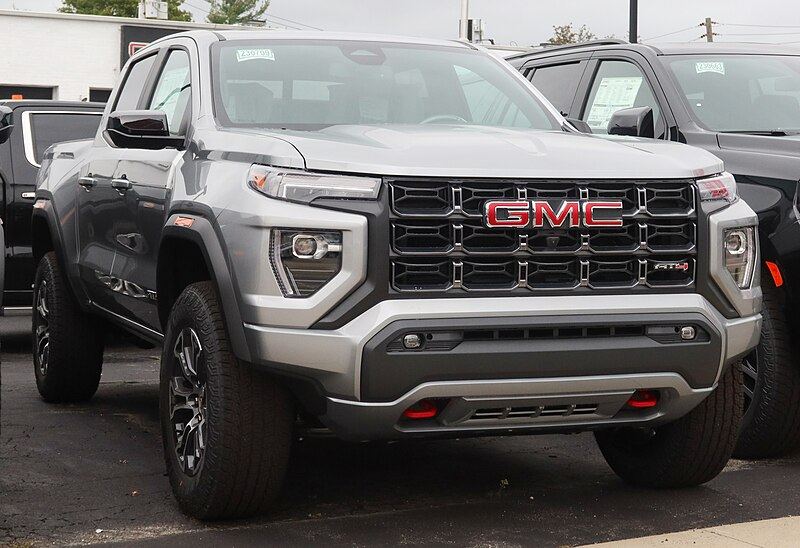
Photo: Kevauto · CC BY-SA 4.0 What changed. Revealed on August 11, 2022, it grew taller and wider and became crew cab only. It uses a single 2.7 L turbo four-cylinder, rated 310 hp and 430 lb-ft at launch, with an 8-speed automatic. It introduced the off-road AT4X and an 11.3-inch screen. Production at Wentzville began on January 24, 2023.
The innovation. Every trim leaves the factory with a 2-inch lift; the AT4X gets 3 inches, 10.7 inches of ground clearance, Multimatic DSSV dampers, front and rear electronic locking differentials and an exclusive Baja mode. The AT4X Edition 1 added underbody cameras with a washer.
If you buy one usedNHTSA lists for 2023: 24V133 (automatic emergency braking could engage for a false obstacle), 24V237 (over-tightened front hub bolts) and 24V703 (seat belt buckle bolt not tightened properly). For 2024: 24V491 (fuel pump lock ring) and 24V673 (flickering headlights). The 2024–2026 AT4X AEV has 25V856 (passenger air bag software). Ask the dealer to confirm each one by VIN.
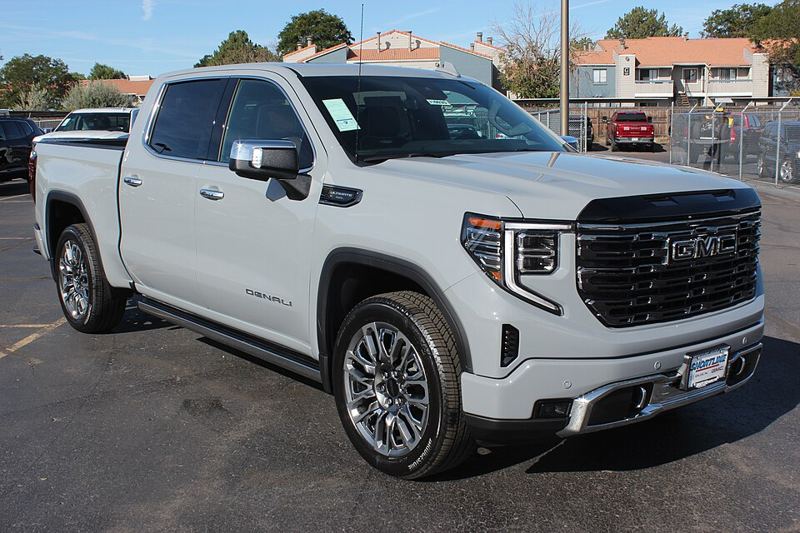 GMC Sierra 15001988–present
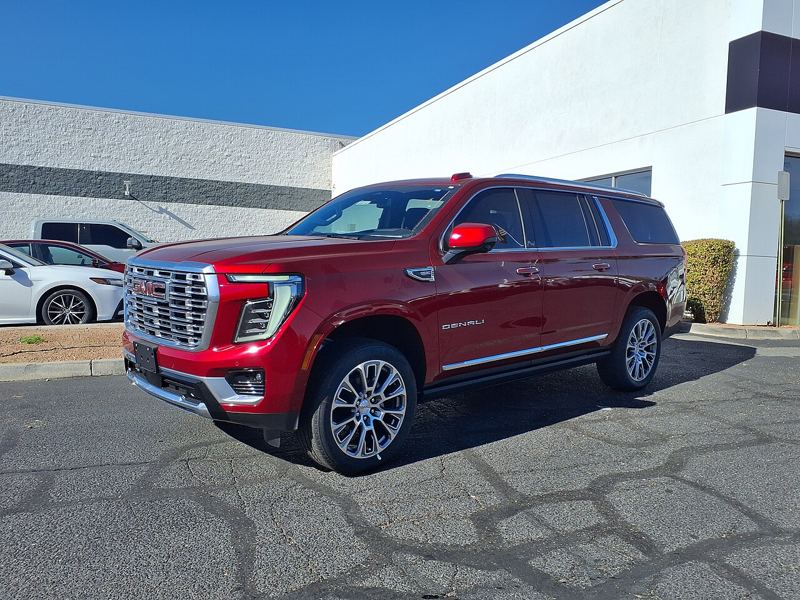 GMC Yukon1992–present
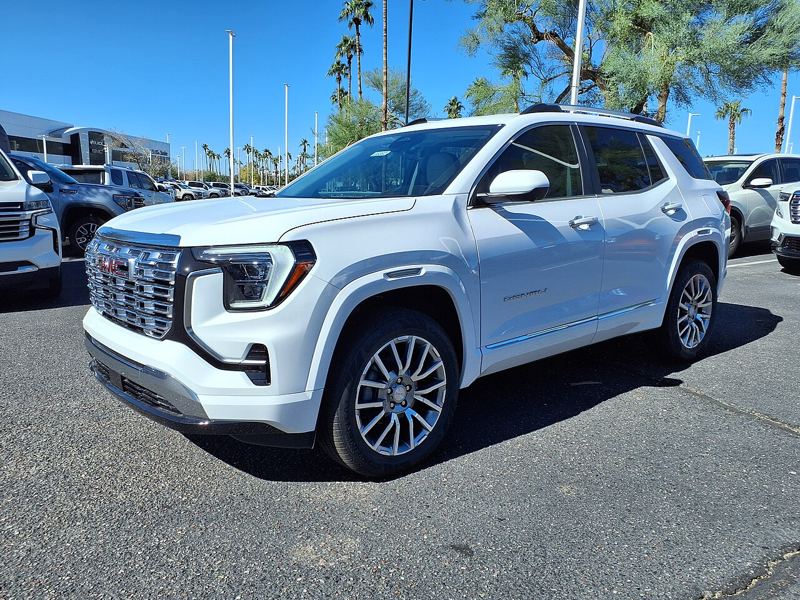 GMC Terrain2010–present
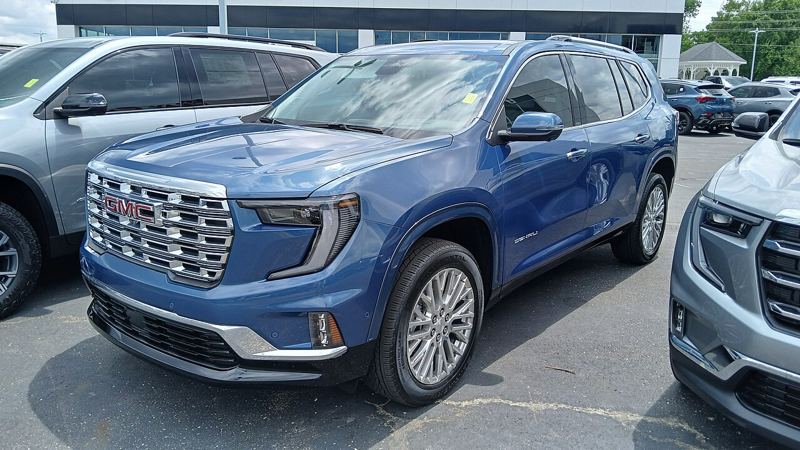 GMC Acadia2007–present
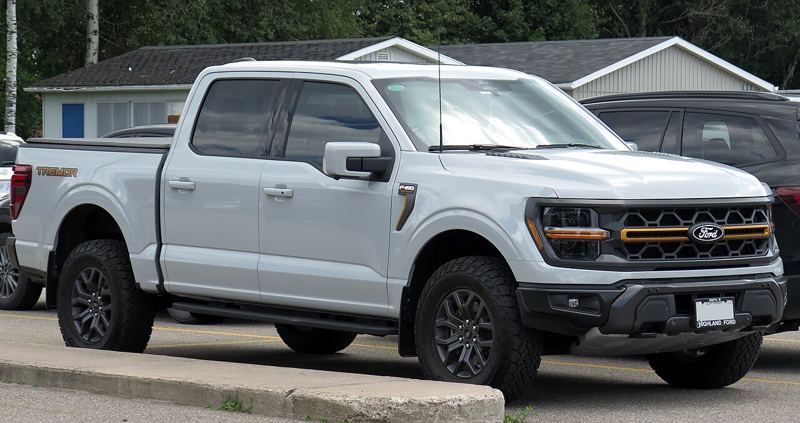 Ford F-Series (F-150)1948–present
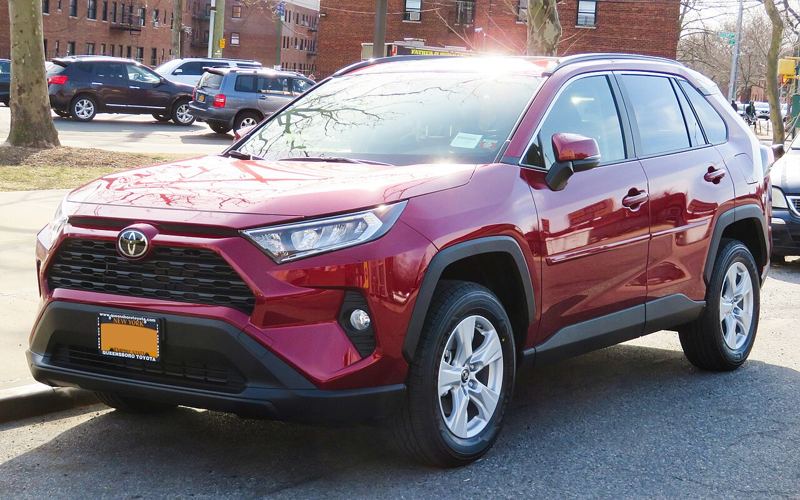 Toyota RAV41994–present (US from 1996)
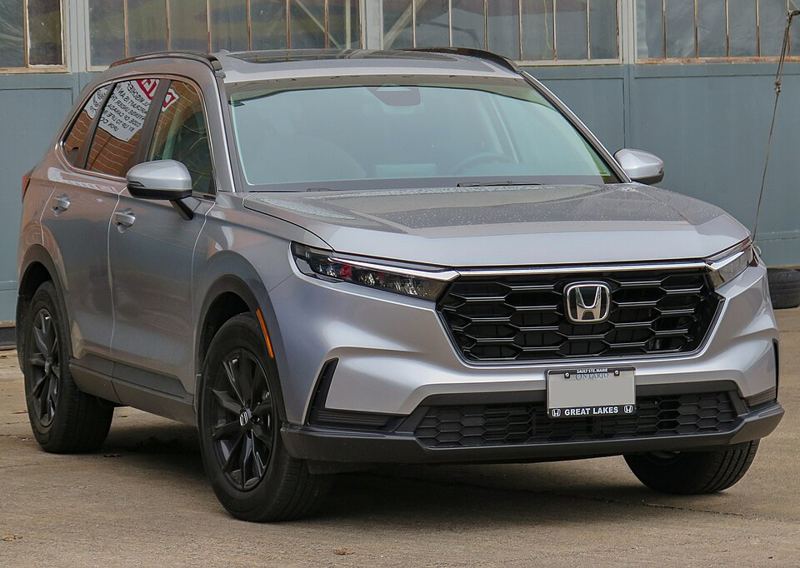 Honda CR-V1995–present
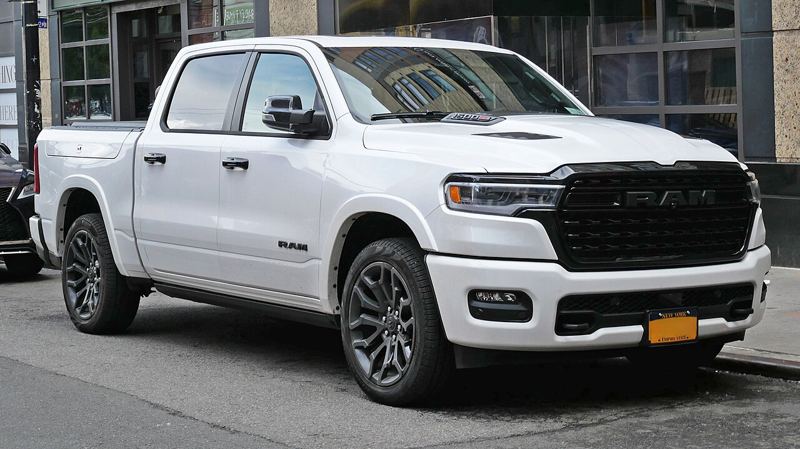 Ram 15001981–present
 Tesla Model Y2020–present


