
Lexus ES
Midsize luxury sedan · 1989–present. 43,156 units sold in the US in 2024
How it began
Toyota Motor Corporation created the Lexus brand and launched the ES 250 alongside the flagship LS 400, whose development began in 1984 under the "Circle-F" project. The documented leaders come later: the 2019 ES engineering team was led by Yasuhiro Sakakibara, with Yasuo Kajino as chief designer, and the eighth-generation ES has Lexus International chief engineer Kohei Chiashi.
The first U.S.-built Lexus was an ES 350, unveiled on October 19, 2015 at Toyota Motor Manufacturing Kentucky in Georgetown. The current U.S. ES is assembled at Toyota Motor Kyushu, Japan; those releases do not establish the exact final Kentucky build date.
Toyota announced a nationwide U.S. Lexus launch for September 1, 1989, with two sedans: the LS 400 and the ES 250. Toyota expected about 65 dealers at launch and 100 by the end of that year, and announced that every dealer would offer both models.
According to Lexus, ES stands for "Lexus Executive Sedan," the brand's midsize executive sedan. The number points to engine size: ES 250 for the 2.5-liter V6, ES 300 for the 3.0, and ES 350 for the 3.5. The final letters tell the rest: "h" is hybrid (ES 300h, ES 350h) and "e" is electric (ES 350e, ES 500e).
Toyota had a problem: when its customers wanted to move up to a luxury car, they left for Mercedes or BMW because Toyota had nothing to offer them. On top of that, building other models in North America left room in the import quota Japan had agreed to. The answer was Lexus, a luxury sales network for the U.S. only. The ES 250, built on the Camry platform with a 2.5-liter V6, gave every dealer a second sedan, more accessible than the LS 400, focused on comfort and reliability.
Generation by generation
- Gen. 11989–1991
The other Lexus founder
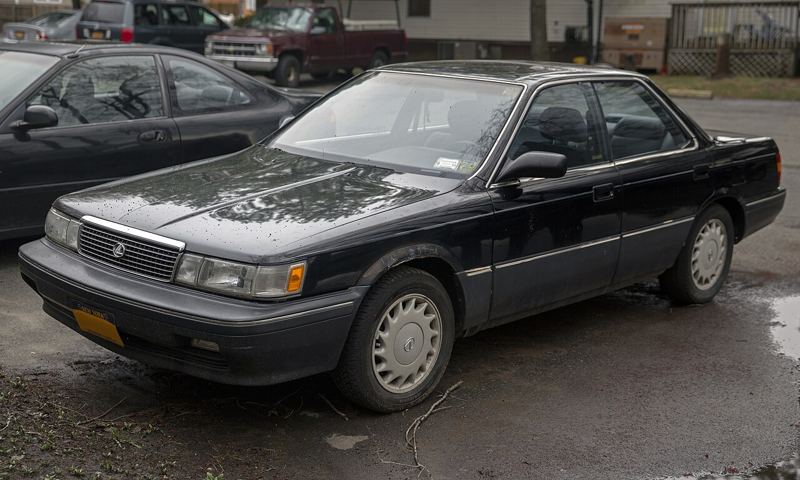
Photo: Mr.choppers · CC BY-SA 3.0 What changed. It was one of the two cars Lexus was born with, on September 1, 1989. It used the Toyota Camry platform, with a 2.5-liter V6 and a five-speed manual or four-speed automatic. It came with 15-inch alloy wheels and a six-speaker sound system. Production lasted about two years.
The innovation. A quad-cam, 24-valve 2.5-liter V6 rated at 156 hp in the original U.S. 1990 Lexus specification, with disc brakes and standard ABS: luxury-car technology in a Camry-size sedan.
If you buy one usedToday it is a collector car. NHTSA Lexus/ES250 queries for 1990 and 1991, saved on November 3, 2026, each returned one campaign: 10E002 for Gabriel or ArvinMeritor replacement front strut mounts. It concerns aftermarket equipment. If suspension parts were replaced, check the mount brand and query the VIN. - Gen. 21992–1996
The new ES 300 and its lighter V6
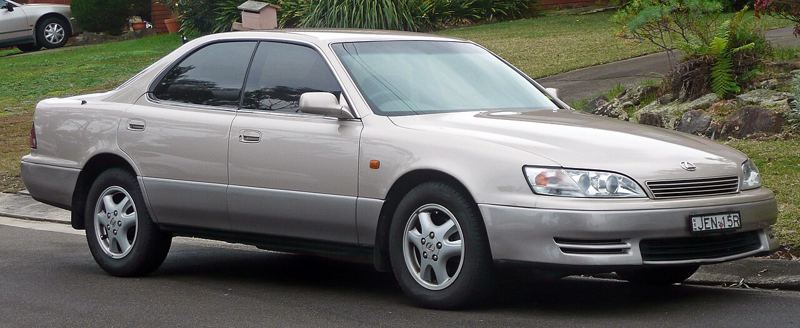
Photo: OSX · Public domain What changed. It arrived in late 1991 as the ES 300, with a 3.0-liter V6 and 0–60 mph in 8.0 seconds. The four-speed automatic had Normal and Power modes.
The innovation. The 1994 update brought a lighter all-aluminum 3.0-liter V6, an intelligent four-speed ECT-i automatic, and dual front airbags.
If you buy one usedNHTSA lists two recalls. Campaign 94V039 (1992 ES 300): the secondary hood latch could collect dust and fail to engage, so the hood could open without warning if the primary latch was also not properly engaged. Campaign 99V307 (1994–1998 ES 300): the steering wheel set nut could be loose and cause vibration. Ask for proof they were done and check for rust and service records. - Gen. 31997–2001
Longer, with suspension to order
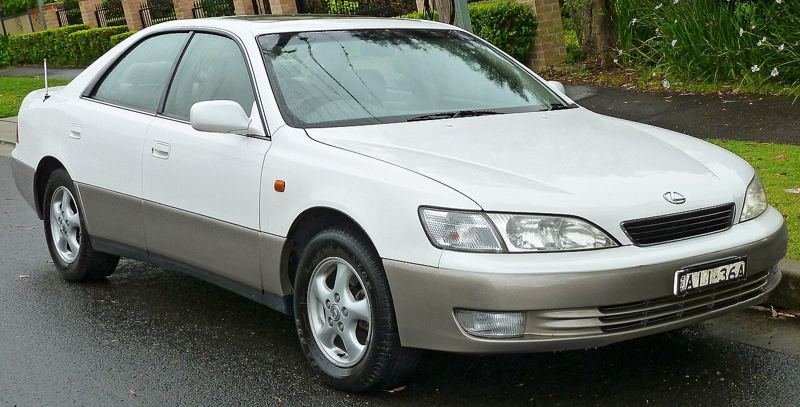
Photo: OSX · Public domain What changed. The fully redesigned ES 300 went on sale in 1996 as a 1997 model, with a longer wheelbase and greater overall length. Its U.S. engine was a 3.0-liter V6. It offered optional electronic traction control and an in-dash six-disc CD changer.
The innovation. Optional Adaptive Variable Suspension offered up to 16 damping rates; the driver used a four-position roller knob to choose softer or firmer settings.
If you buy one usedNHTSA lists campaign 97V156 (1997 ES 300, cars sold or registered in very cold states): moisture could freeze in the brake vacuum hose and remove power brake assist. Campaign 99V307 for the steering wheel set nut covers 1997–1998 models. Ask for proof of both. - Gen. 42002–2006
America's best-selling luxury car
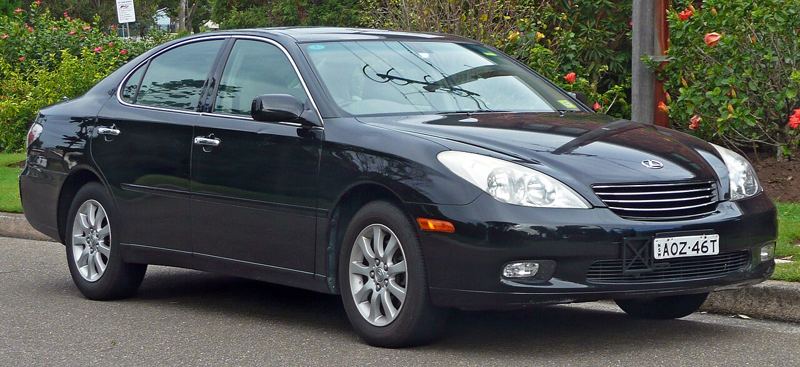
Photo: OSX · Public domain What changed. Lexus announced dealer arrival for September 24, 2001 as a 2002 model, more luxurious and closer to the LS 430. Its 3.0-liter 1MZ-FE V6 made 210 hp. In 2002 the ES 300 was America's best-selling luxury car. For 2004 it switched to a 3.3-liter, 225 hp V6 and was renamed ES 330; in 2005 it got a new grille, fog lamps and projector headlights.
The innovation. It introduced a five-speed automatic, one more gear than every earlier ES.
If you buy one usedNHTSA lists: campaign 01V372 (2002 ES 300 with a three-spoke steering wheel), the driver airbag cover could tear loose when it deployed; safety-improvement campaign 04V595, conducted outside the Safety Act (2005 ES 330 with power passenger seat), the buckle status switch could become unseated when certain rear-facing infant-seat bases were installed with excessive belt tension; and campaign 11V539 (2004–2005 ES 330 built June 1, 2004, through March 31, 2005), the crankshaft pulley could misalign and throw the power steering belt. Ask for proof they were done. - Gen. 52007–2012
The ES 350 and its panoramic roof
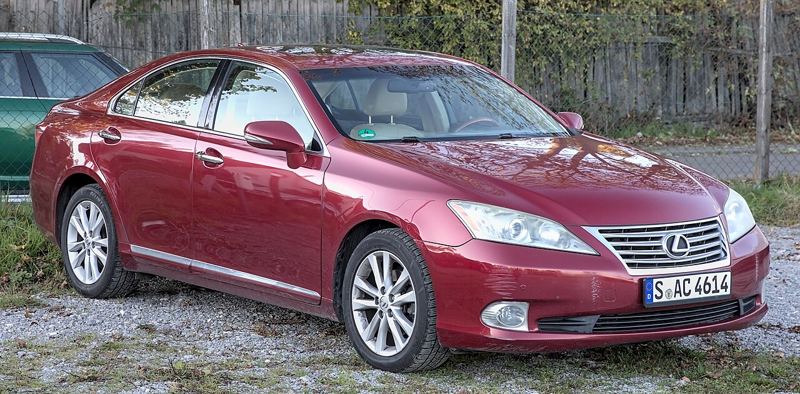
Photo: Alexander Migl · CC BY-SA 4.0 What changed. It debuted at the Chicago Auto Show in February 2006 as the ES 350, with a 272 hp, 254 lb-ft 3.5-liter V6, a six-speed automatic and 0–60 mph in 6.8 seconds. It offered radar cruise control and a 14-speaker Mark Levinson sound system. For 2010, previously optional rear seat-mounted side airbags became standard, for a total of ten.
The innovation. The optional panoramic glass roof, a first for Lexus.
If you buy one usedCheck carefully: 07E082 covers 2007–2008 accessory all-weather mats that, if unsecured, could interfere with the accelerator and leave it partly depressed. Campaign 09V388 covers certain 2007–2010 ES 350s whose unsecured or incompatible mat could trap the accelerator wide open. Takata passenger campaigns 16V340,17V006 and19V741 together cover certain 2007–2012 ES 350s: inflators could explode after prolonged humidity and temperature cycling. Campaign19V741 includes specified inflators installed during earlier repairs. Florida is in Zone A; repair priority depended on age and heat/humidity exposure. Confirm applicability and the final remedy by VIN. - Gen. 62013–2018
The first ES hybrid arrives
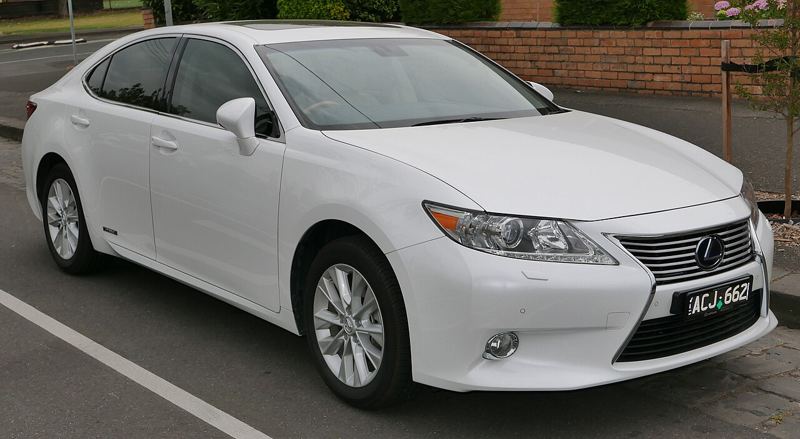
Photo: OSX · Public domain What changed. It debuted at the New York Auto Show in April 2012 with a wheelbase 1.8 inches longer and ten standard airbags. The ES 350 kept the 3.5-liter V6. From October 2015 the North American ES 350 was built on a dedicated line in Georgetown, Kentucky.
The innovation. The ES 300h, the first ES hybrid: a 2.5-liter Atkinson-cycle four-cylinder, 200 total system hp and EPA ratings of 40 mpg city, 39 highway and 40 combined.
If you buy one usedNHTSA lists: campaign 15V728 (2013–2015 ES 350 and ES 300h built June 18, 2012, through July 6, 2015, with the optional Pre-Collision System), the system could brake on its own after mistaking a steel road joint for an obstacle; campaign 17V415 (2017 ES 350), the right tie rod lock nut could loosen; and campaigns 20V012 and 20V682 (2018 ES 350), the fuel pump could fail and stall the engine. Ask for proof they were done. - Gen. 72019–2025
A new foundation and the first F SPORT
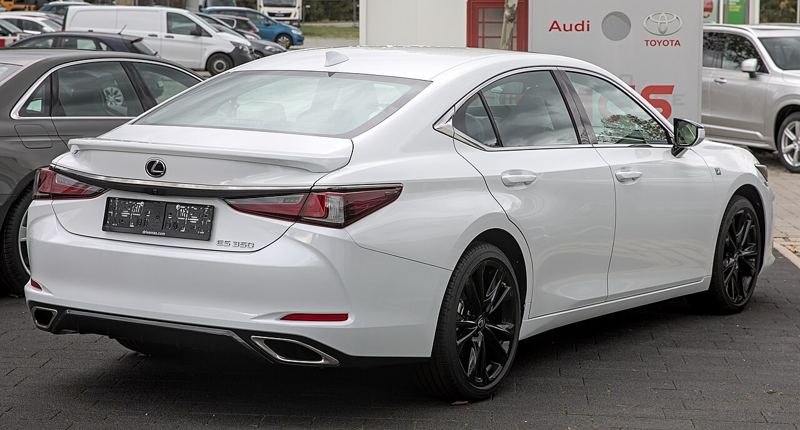
Photo: Alexander Migl · CC BY-SA 4.0 What changed. It debuted at the 2018 Beijing Motor Show on the GA-K platform, 2.6 inches longer and 1.8 inches wider. The ES 350's V6 rose to 302 hp, and the ES 300h moved to 215 hp and 44 mpg combined with its battery under the rear seat. In 2021 came the 203 hp ES 250 AWD, the first all-wheel-drive ES, and the ES 300h swapped its nickel battery for a lithium-ion one.
The innovation. The first ES F SPORT, with its own mesh grille, 19-inch wheels and optional Adaptive Variable Suspension: the same comfortable ES, now in a sport suit.
If you buy one usedNHTSA lists: campaign20V012 (2019 ES 350 within this generation) and20V682 (2019–2020 ES 350), fuel pump; campaign 19V544 (2019 ES 300h), the brake booster pump could fail and switch off stability control; campaign 20V064 (2020 ES 300h), porous engine castings that could leak coolant; campaign 23V865 (various 2020–2022 ES), a passenger seat sensor could keep the passenger airbag from deploying; and campaign 24V124 (2023–2024 ES with Panoramic View Monitor), the backup camera image could be delayed. Confirm by VIN. - Gen. 82026–present
One ES, two hearts: hybrid or electric
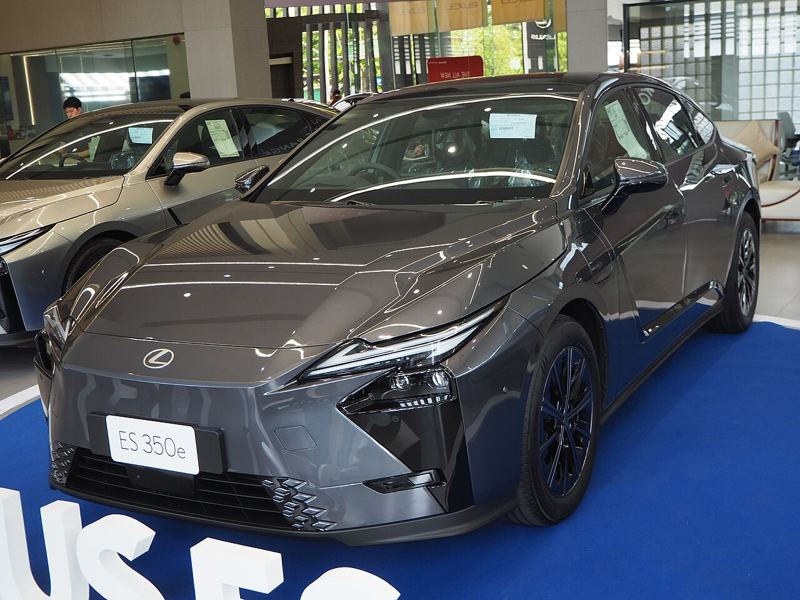
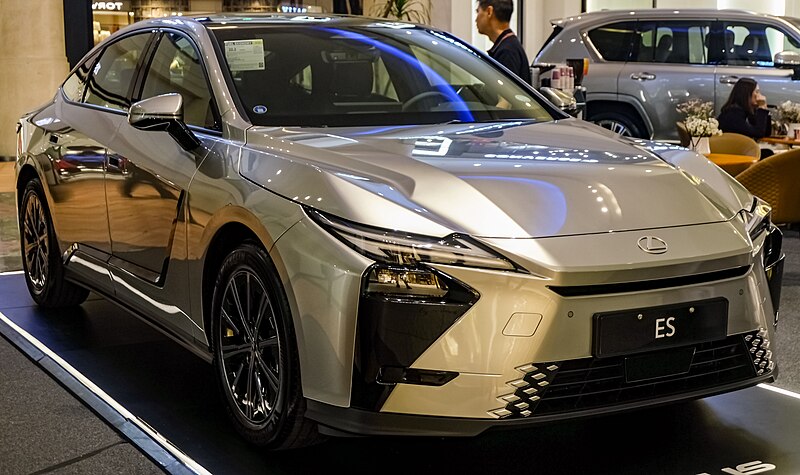
Photo: Chanokchon · CC BY-SA 4.0 What changed. It premiered at the Shanghai Motor Show on April 23, 2025, as a core Lexus model with hybrid and battery-electric versions. It is much larger: 5,140 mm long (165 mm more) with a 2,950 mm wheelbase (80 mm more). Its styling draws on the LF-ZC electric concept and starts a new Lexus design language. In the U.S. the electric versions came first (Lexus expected them in dealerships in April 2026), followed by the ES 350h hybrid.
The innovation. The first electric ES models: the 221 hp ES 350e with up to 307 miles of EPA range, and the all-wheel-drive ES 500e with 338 hp and up to 276 miles, on an evolution of the TNGA-K platform that also accepts the hybrid system.
If you buy one usedThis generation is too new to have a long-term record. The NHTSA Lexus/ES/2026 query saved on November 3, 2026 returned zero records; results depend on the queried model name and do not replace a VIN check. For an electric version, ask for the battery health report and check the remaining warranty.
 Lexus RX1998–present
 Lexus NX2014–present
 Lexus GX2003–present
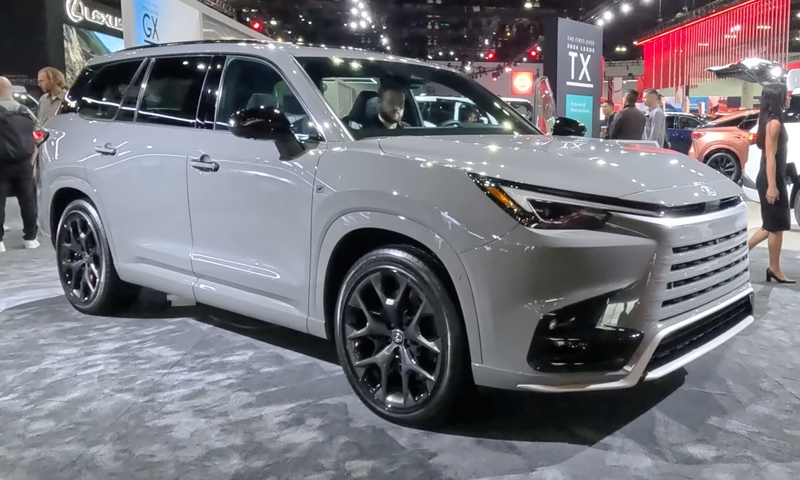 Lexus TX2024–present
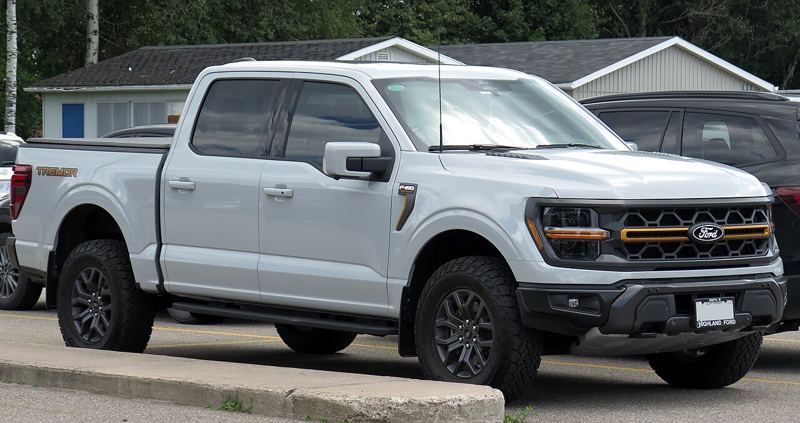 Ford F-Series (F-150)1948–present
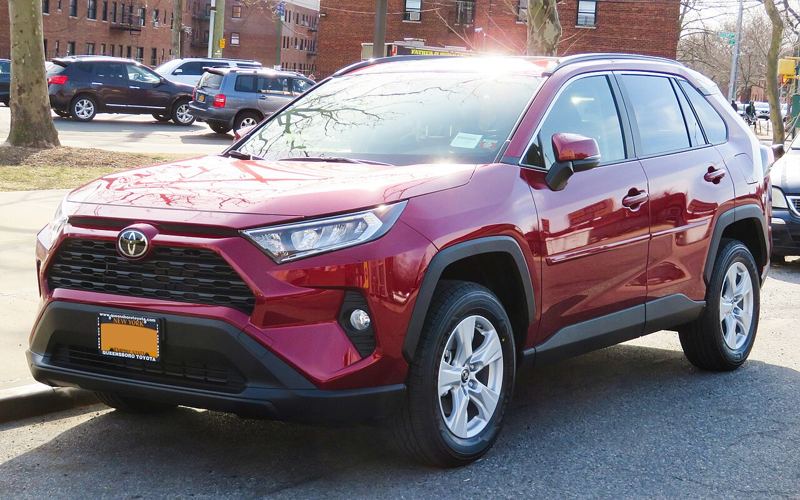 Toyota RAV41994–present (US from 1996)
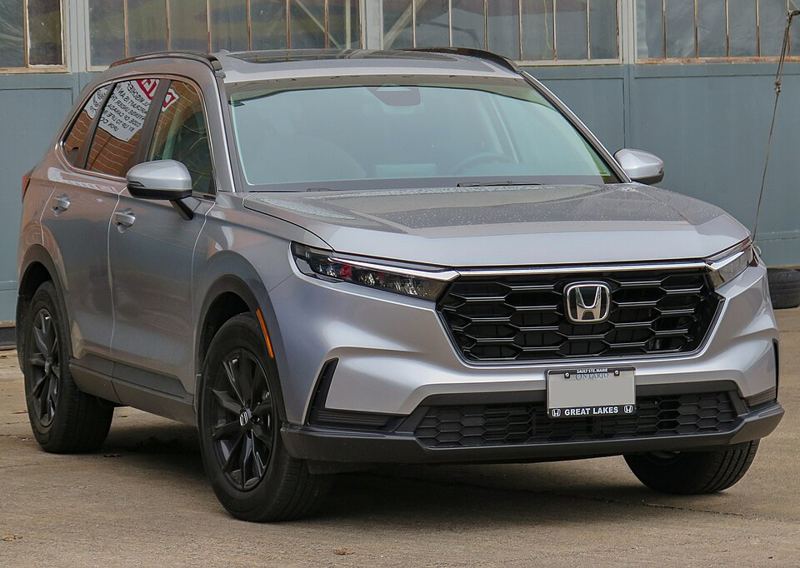 Honda CR-V1995–present
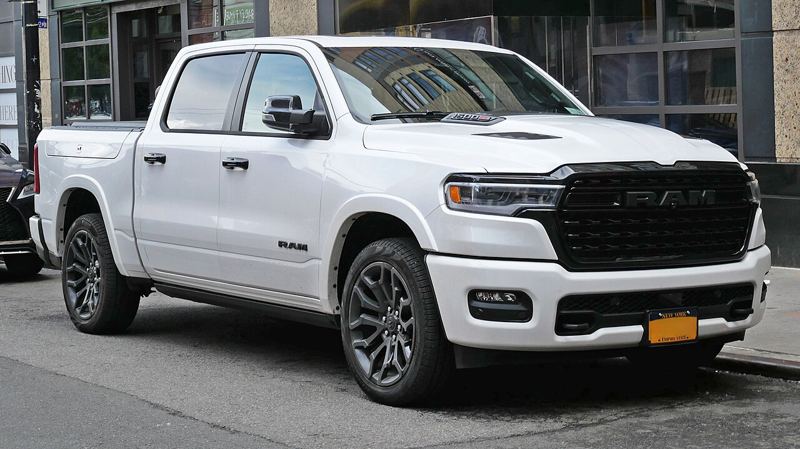 Ram 15001981–present
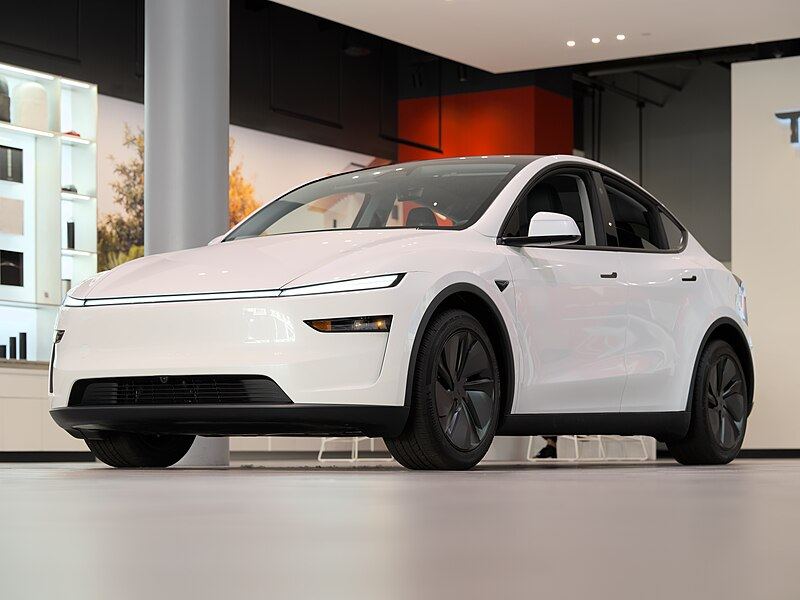 Tesla Model Y2020–present


