Ram 2500/3500 Heavy Duty
Full-size heavy-duty pickup (3/4-ton and 1-ton) · 1981–present. This review has not established this model’s 2024 U.S. sales.
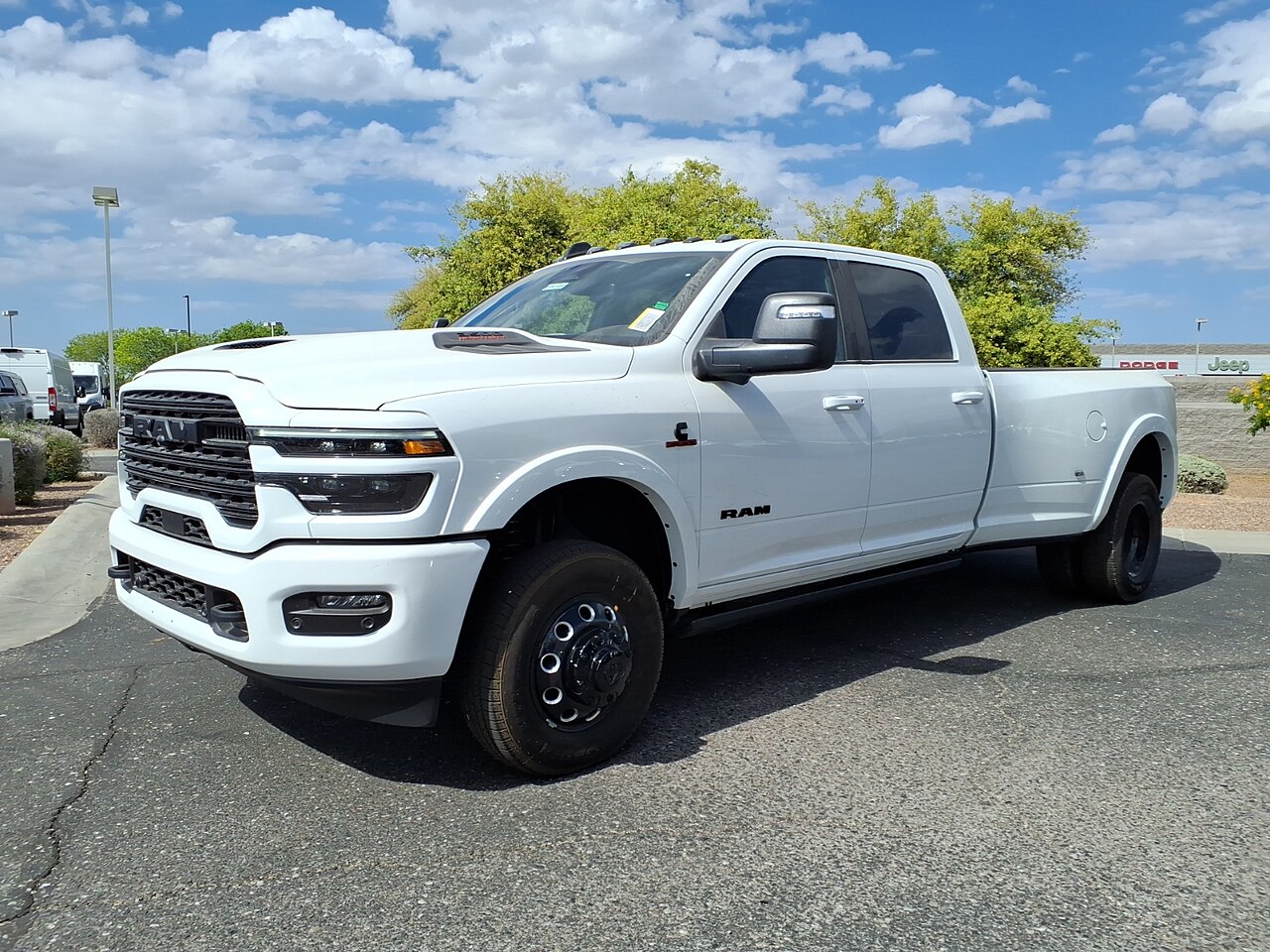
How it began
The heavy-duty Ram was born in Chrysler's Dodge truck division, but its modern story is written jointly with Cummins Inc., the engine maker from Columbus, Indiana, which in the late 1980s dominated the U.S. Class 8 truck market. According to Driving Line, a small group inside Chrysler convinced top management that a diesel would sell; that article does not identify them; the original joint 1988 engineering paper credits Chrysler’s Don C. MacDonald and Harold T. Page and four Cummins engineers, without thereby identifying the internal advocates. In 2002, Richard Schaum, DaimlerChrysler's executive vice president of product development, introduced the common-rail generation. Since 2009 the truck has belonged to the Ram brand, now part of Stellantis.
It is designed by Chrysler in Michigan. Since the 2010 generation it has been assembled at the Saltillo Truck Assembly Plant in Coahuila, Mexico; earlier, some 2005–2009 Ram 2500s came from the St. Louis North plant in Missouri, according to NHTSA. The 6.7-liter Cummins engine is built at Cummins' Columbus Mid-Range Engine Plant in Columbus, Indiana: the original September 2019 release described 600,000 square feet, 900 employees and capacity for 168,000 engines a year; those are historical profile figures rather than a new 2026 measurement.
Dodge's big pickups took the Ram name in 1981. The first Cummins-powered Ram was introduced in 1988 as a 1989 model. Four heavy-duty generations followed: 1994, 2003 (at dealers in fall 2002), 2010 (revealed in February 2009 at the Toronto and Chicago auto shows) and 2019, unveiled at the Detroit Auto Show on January 14, 2019 and deeply refreshed on January 7, 2025.
Ram is the same ornament that named the whole pickup family in 1981 and the brand in 2009. The numbers tell the capacity: before 1994 they were the D250 (3/4-ton) and D350 (1-ton), with W for the 4x4 versions; since 1994 they have been called 2500 and 3500. "Heavy Duty" means just that, and in North America only Ram pickups and chassis cabs wear the Cummins "C" logo.
In the late 1980s Chrysler's heavy-duty line was in decline: it had lost its big-block V8s, no longer offered a crew cab and its body had barely changed since 1972. The fix was the 5.9-liter Cummins turbodiesel, the only turbocharged and the only direct-injection diesel in its class. For anyone towing a trailer, a fifth-wheel or an RV, torque rules, and the bet paid off: in 2002 DaimlerChrysler expected 75 percent of buyers to pick the Cummins, and by 2014 85 percent of Ram Heavy Duty buyers did.
Generation by generation
- Gen. 11981–1993 · D/W
The work Ram that found a diesel heart
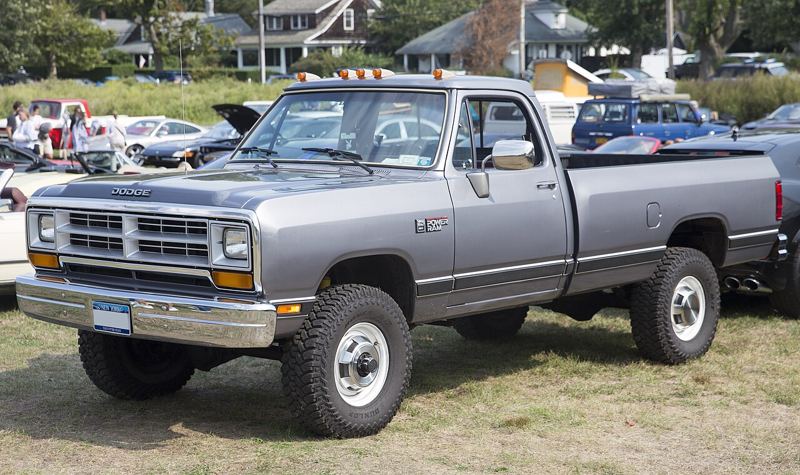
Photo: Mr.choppers · CC BY-SA 3.0 What changed. The D250 and D350 took the Ram name in 1981 along with the rest of the family, but their body was still essentially the 1972 D-series design. By the late 1980s they had lost their big V8s and their crew cab, and sales were falling. Everything changed in 1989, when Dodge put a real truck engine under the hood.
The innovation. The 5.9-liter Cummins inline-six turbodiesel: 160 hp at 2,500 rpm and 400 lb-ft at 1,700 rpm, the only turbocharged, direct-injection diesel in its class, with a 7-year/100,000-mile warranty. In 1993 a Cummins D250 with a manual gearbox and 4.10 axle ratio had a 17,000-pound gross combined weight rating, versus 13,500 for the gas version, and it won Trailer Boats magazine's Tow Vehicle of the Year.
If you buy one usedThe exact NHTSA Dodge queries for D250, D350, W250 and W350 for each model year 1989–1993 returned zero campaigns on November 3, 2026. Those dated outputs do not establish every alias or VIN eligibility. DrivingLine’s technical history describes the A727 three-speed, mid-1991 transition to A518 overdrive, G360 manual availability, rear ABS and four-door conversions. Confirm the actual transmission, brake equipment and original cab/engine build records. - Gen. 21994–2002 · BR/BE
Big-rig face, Cummins soul
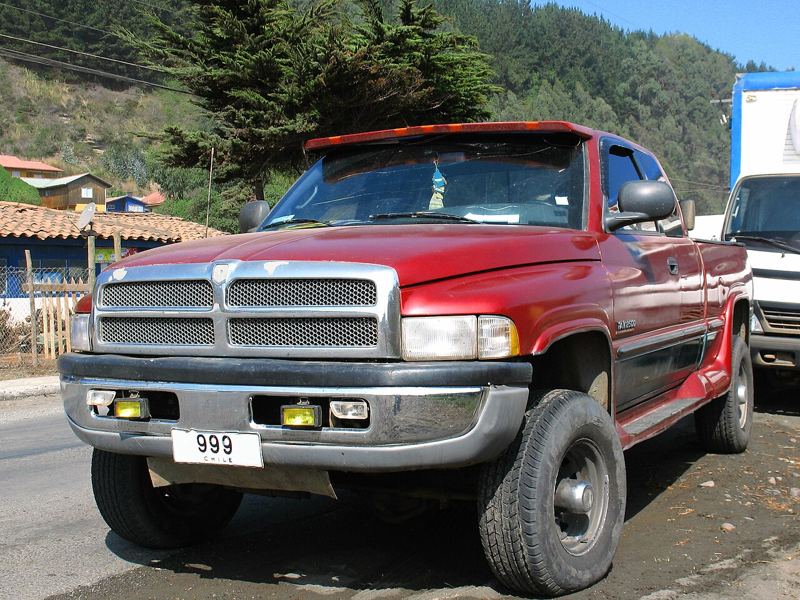
Photo: order_242 from Chile · CC BY-SA 2.0 What changed. The new 1994 Ram brought the Class 8-style grille and better aerodynamics, and the heavy-duty versions were renamed 2500 and 3500. The 12-valve Cummins got the six-plunger Bosch P7100 injection pump: 160 hp with the automatic and 175 hp with the manual in 1994–1995, and 180 and 215 hp in 1996–1998. On the gas side there was an 8.0-liter V10 with 310 hp and 450 lb-ft from 1999. In 1998 the Quad Cab added rear-hinged back doors.
The innovation. In mid-1998 came the 24-valve Cummins with the electronic Bosch VP44 pump: 235 hp and 460 lb-ft with the manual. In 2001 the high-output version reached 245 hp and 505 lb-ft with an NV5600 six-speed manual; according to Cummins, it was the first time its Ram engine passed 500 lb-ft. Dodge’s original chronology places standard four-wheel disc antilock brakes on the 2500/3500 within model year 2001, specifically July 2001 production.
If you buy one usedNHTSA lists recall 01V153000 for 2000–2001 Ram pickups: sound-deadening material inside the steering wheel could come loose. On the 12-valve engines (1994–1998), Driving Line documents the "killer dowel pin" problem, a block pin that can work loose; the known fix is to lock it in place with a tab. Do not assume automatic/manual output matched in model year 2000: the original Mopar application catalogue lists EPA 215 hp automatic and 235 hp manual engines. Verify exact model year, engine CPL, emissions and transmission. Always check the recall history by VIN at nhtsa.gov. - Gen. 32003–2009 · DR / DH / D1
Common rail, Hemi and Mega Cab
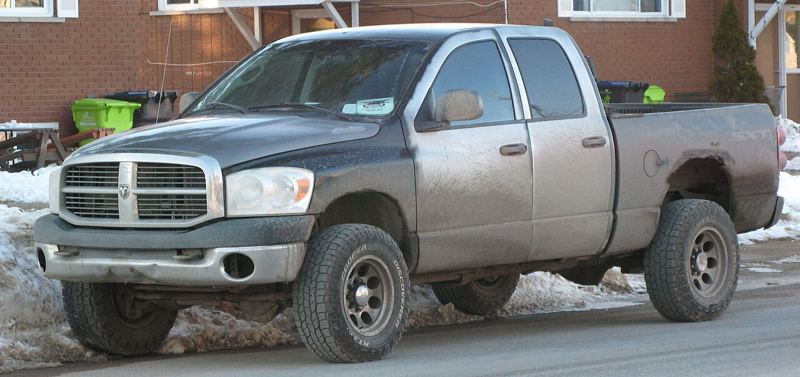
Photo: SsmIntrigue · CC BY-SA 4.0 What changed. It arrived in fall 2002 with hydroformed frame rails, stiffer and lighter. The 5.7-liter, 345-hp Hemi V8 became the standard gasoline engine during the transition from earlier Magnums; the V10 still appeared among the 2003 options. The new offering was a single-rear-wheel diesel 3500; earlier 2500s already offered Cummins power without duals. The diesel 3500 could handle a 23,000-pound gross combined weight. In 2005 the Power Wagon returned, with locking differentials and a 12,000-pound Warn winch, and in 2006 the Mega Cab arrived with 22 more inches of cab.
The innovation. The 5.9-liter Cummins adopted high-pressure common rail with pilot and main injection: 305 hp and 555 lb-ft in high-output form. Turbo Diesel Register’s original maintenance article places three injections per firing event in the later 2004.5–2007 engines. The Cummins made Ward’s 10 Best Engines for 2004; the 2004.5 version reached 325 hp and 600 lb-ft, and Cummins reported beginning shipments in January 2004. For model year 2007.5 it grew to 6.7 liters and 350 hp, achieving 2010 federal emissions certification in 2007.
If you buy one usedConfirm these NHTSA recalls: Takata inflators 15V313000 (driver airbag; 2005–2009 Ram 2500 and 2006–2009 3500) and 16V352000 (passenger airbag; includes 73,712 2005–2009 Ram 2500s from St. Louis North); 14V770000 (passenger airbag, 2004–2005, in high-humidity states such as Florida, Texas and Puerto Rico). Steering: 13V528000 (tie rod, 2003–2008 2500/3500 4x4), 11V350000 and 13V529000 (left tie rod, 2008–2012 4x4). 2007–2008 6.7 diesel: 08V641000, a silencer pad could touch the EGR cooler, with a fire risk. 2006–2007 manuals: 14V795000 (clutch ignition-interlock switch). Follow the current FCA Do Not Drive instruction for the specified vehicles with open, unrepaired Takata campaigns until the free repair is completed. Eligibility includes historical sale/registration zones; earlier repairs may not close later campaigns. - Gen. 42010–2018 · DJ/D2
Crew cab, Ram brand and 30,000 pounds
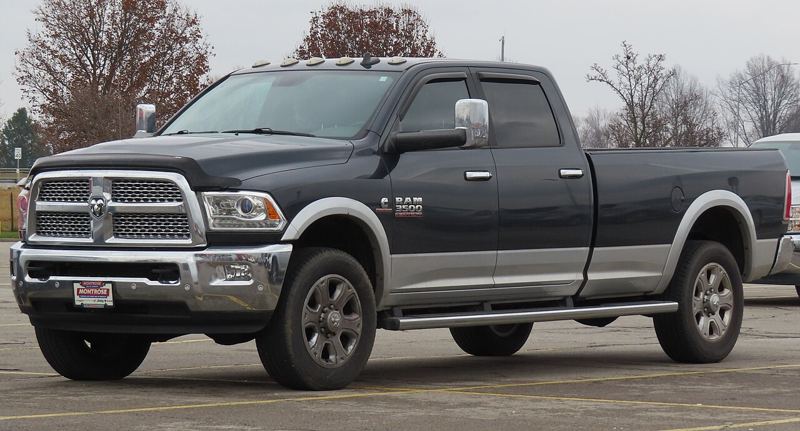
Photo: MercurySable99 · CC BY-SA 4.0 What changed. Revealed in February 2009 as the 2010 Dodge Ram, it added the modern 2500/3500 Crew Cab body in place of Quad Cab. The earlier 1981 D250 Ram had already offered a four-door Crew Cab. It was built in Saltillo, Mexico, with the 350-hp, 650-lb-ft Cummins 6.7 and a standard exhaust brake. In 2013 the high-output Cummins reached 385 hp and 850 lb-ft, and for 2014 the 3500 towed up to 30,000 pounds and added a 6.4-liter Hemi V8 with 410 hp.
The innovation. In 2014 the Ram 2500 swapped its rear leaf springs for a five-link coil-spring suspension, a segment exclusive according to Ram, with an optional rear air suspension that levels itself under load. For a 3/4-ton truck it was a leap in comfort without giving up towing nearly 18,000 pounds.
If you buy one usedIn its January 7, 2013 statement, the manufacturer said diesel accounted for nearly 80 percent of Heavy Duty sales. Confirm the engine in the actual used truck. NHTSA recalls: 17V821000 (column shifter, 2010–2017 2500/3500: could be shifted out of Park without pressing the brake); 14V635000 (diesel fuel heater connectors, 2010–2014, fire risk); 17V562000 (Concentric water pump on the Cummins, 2013–2017); 19V021000 (steering linkage jam nut, 2014–2018 2500 and 2013–2018 3500); 17V302000 (airbags, 2013–2016); curtain inflators 21V632000 (2015–2016) and 25V010000 (2016–2020 2500, 2016–2019 3500); 24V896000 (ABS unit, 2017–2018). The 17V302 year span is 2013–2016 for 2500 and 2014–2016 for 3500. The water-pump campaign requires the specified Concentric pump without a vent hole. - Gen. 52019–present · DJ/D2
The first 1,000 lb-ft pickup
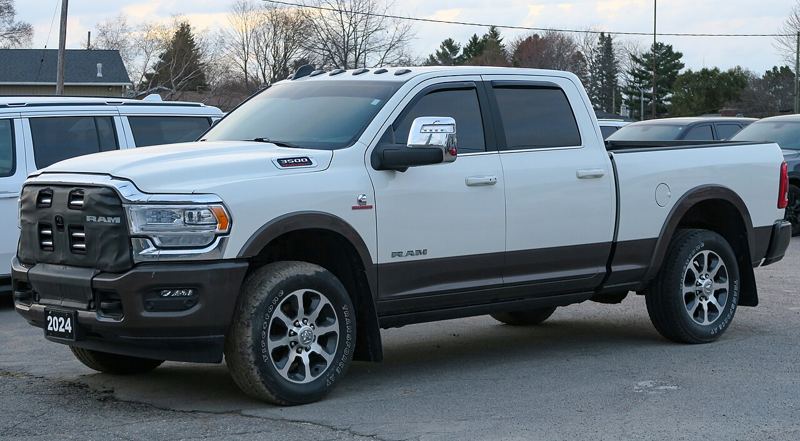
Photo: Elise240SX · CC BY-SA 4.0 What changed. Unveiled in Detroit on January 14, 2019: up to 143 pounds lighter thanks to a lighter frame and powertrain and an aluminum hood, a frame of 98.5 percent high-strength steel, towing up to 35,100 pounds and payload up to 7,680. The 6.4-liter Hemi (410 hp) brought the first eight-speed automatic to a heavy-duty Ram. The January 7, 2025 refresh brought the high-output Cummins with 430 hp and 1,075 lb-ft, available across the heavy-duty lineup, made the TorqueFlite HD eight-speed standard and cut the 2500's 0-to-60 mph time from 8.0 to 6.9 seconds.
The innovation. The new high-output Cummins 6.7, with a new block, pistons, cylinder head and valvetrain and 60 pounds less weight, was the first Cummins for Ram pickups to reach 1,000 lb-ft: 400 hp at 2,800 rpm and 1,000 lb-ft at 1,800 rpm. Ram was the first maker to offer that figure in a pickup.
If you buy one usedNHTSA recalls: 21V880000 (Cummins high-pressure fuel pump that could fail and stall the engine, 2019–2020); 19V498000 (diesel fuel line leaks, 2019); 20V043000 and 22V835000 (68RFE transmission fluid leak from the dipstick tube, 2019–2023, fire risk); 22V140000 (ABS software that may prevent the ESC malfunction warning lamp from illuminating, 2019–2022 2500); 22V904000 (tailgate latch, 2019–2022); 23V060000 (Cummins intake heater relay, 2021–2023); 25V824000 (curtain inflators, 2019). The 2025–2026 trucks add software recalls: instrument cluster (25V826000, 26V225000) and top speed versus tire rating (26V288000, 2023–2026 2500). For affected unrepaired 23V060 vehicles, park outside away from structures until repaired. The 25V826 display remedy may require cluster hardware replacement. Transmission campaign ranges differ by 2500/3500 and 68RFE configuration.
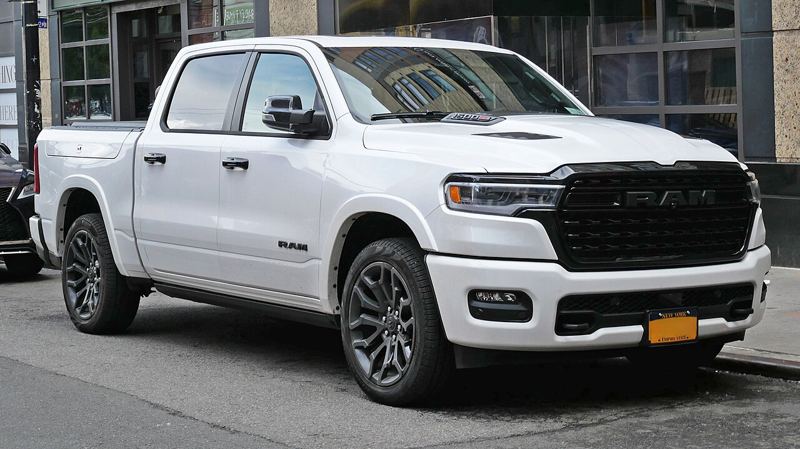 Ram 15001981–present
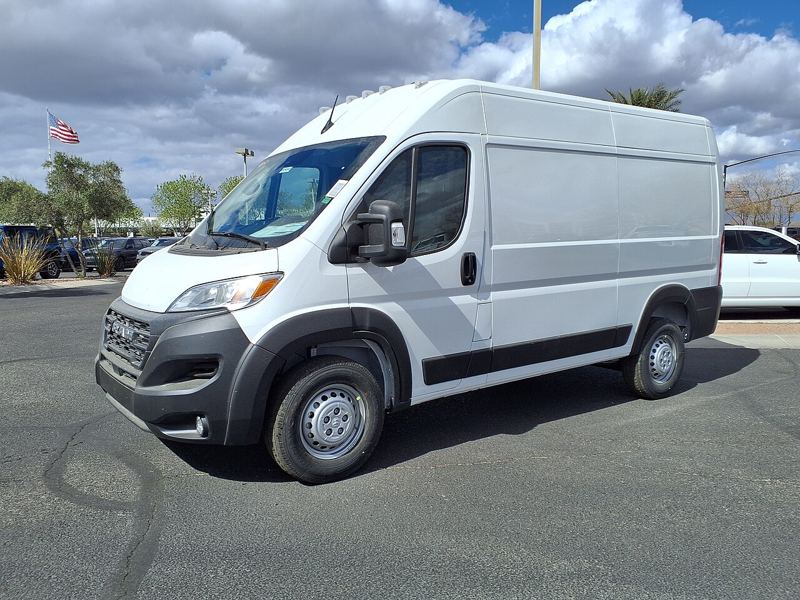 Ram ProMaster2014–present
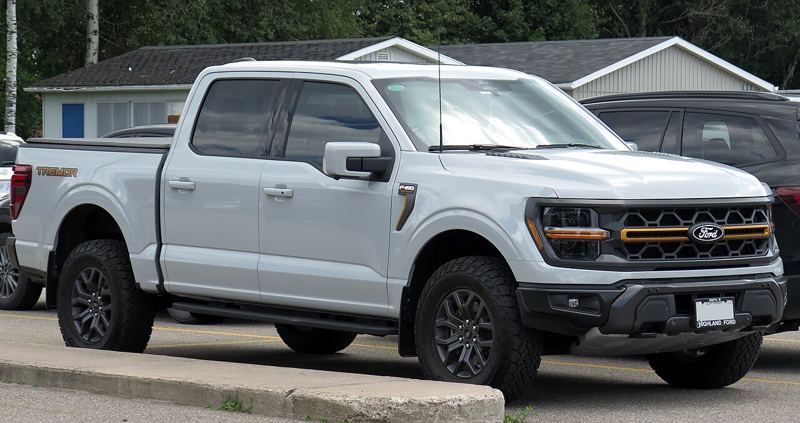 Ford F-Series (F-150)1948–present
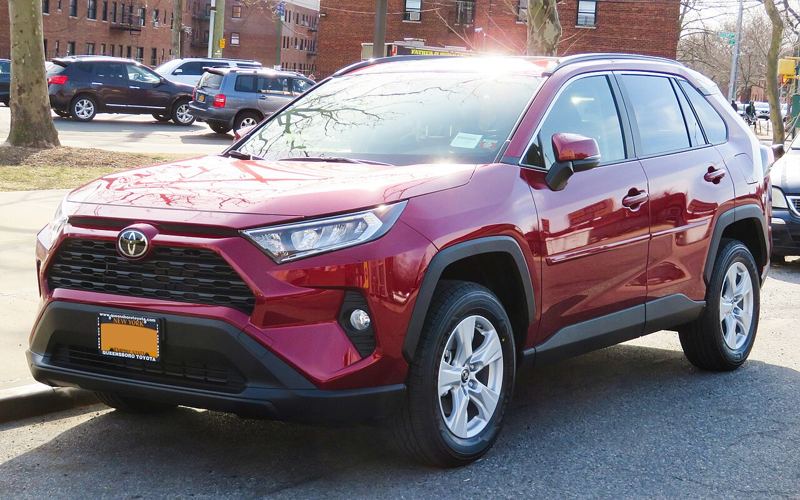 Toyota RAV41994–present (US from 1996)
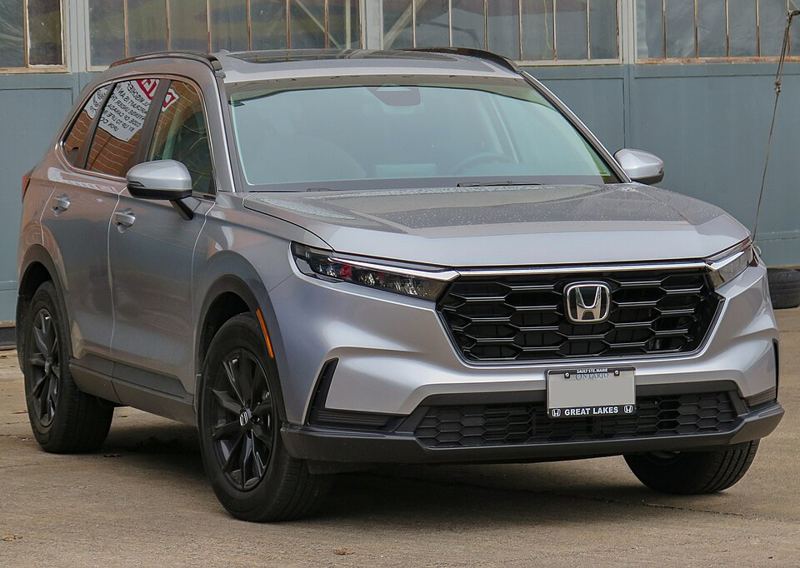 Honda CR-V1995–present
 Tesla Model Y2020–present
 Chevrolet Silverado1999–present
 Nissan Rogue2007–present
 Jeep Grand Cherokee1992–present


