
Ram ProMaster
Full-size van · 2014–present. 65,869 units sold in the US in 2024
How it began
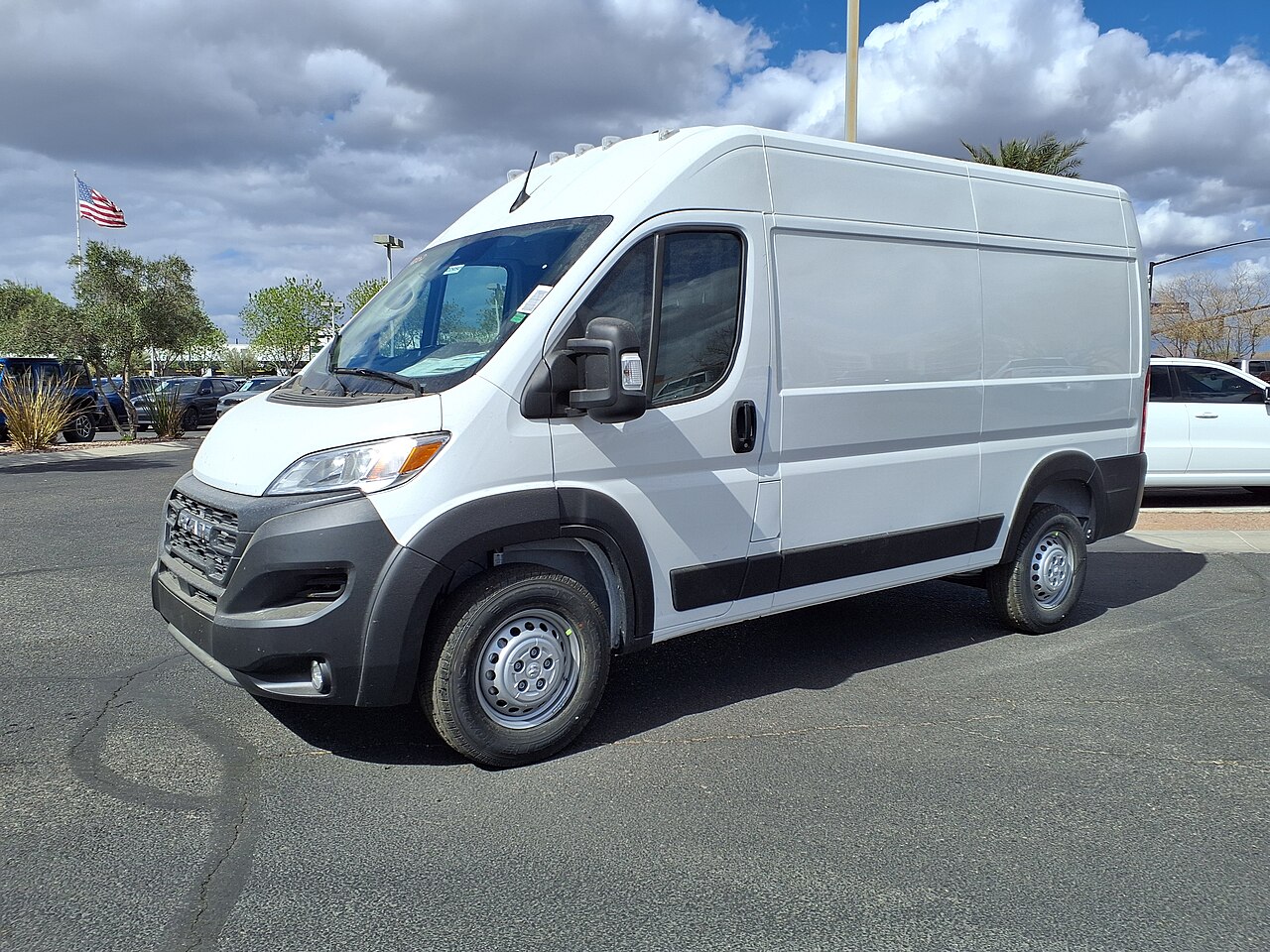
Chrysler Group created it under the Ram brand and its new Ram Commercial division, in Ram's first shared truck project with Fiat Professional, Fiat's commercial-vehicle division. Fred Diaz, president and CEO of the Ram brand, introduced it in 2013. Brad Pugh was Chrysler's model lead for the van and Bob Hegbloom was Ram brand director. Its base is the European Fiat Ducato. The reviewed releases do not identify an individual designer; Fiat does credit its Style Centre for the European body introduced in 2006.
The original design is Italian: the Fiat Ducato has been built since 1981 at the Sevel plant in Val di Sangro, Italy. For North America, Chrysler built a new plant, Saltillo Van Assembly, in Saltillo, Coahuila, Mexico, with a $1.085 billion investment. Production started in July 2013, and at the time it was the only vehicle of its kind built in Mexico. The electric version was also assigned to Saltillo, according to 2023 reports of an additional $200 million investment.
Ram announced it on February 6, 2013 and showed it at the Chicago Auto Show the next day. Production began in July 2013 as a 2014 model. The cargo van started at $28,630 plus $995 destination.
The official sources reviewed do not explain the etymology of the ProMaster name. What is documented is its family: it is the Fiat Ducato, which Fiat Professional has sold in Europe since 1981 and which has carried the ProMaster name in North America since 2013.
According to Ram’s 2013 release, about 3.1 million Class 2 vans were working in the U.S., nearly 61% of them more than 10 years old, and the largest share came from a model no longer in production. Ram saw that those buyers were looking for alternatives and expected the segment to approach 400,000 units over five years. So it returned to the full-size van segment with a purpose-built work vehicle, adapting a design already proven in Europe instead of starting from scratch.
Generation by generation
- Gen. 12014–2021
The Ducato learns to work in America
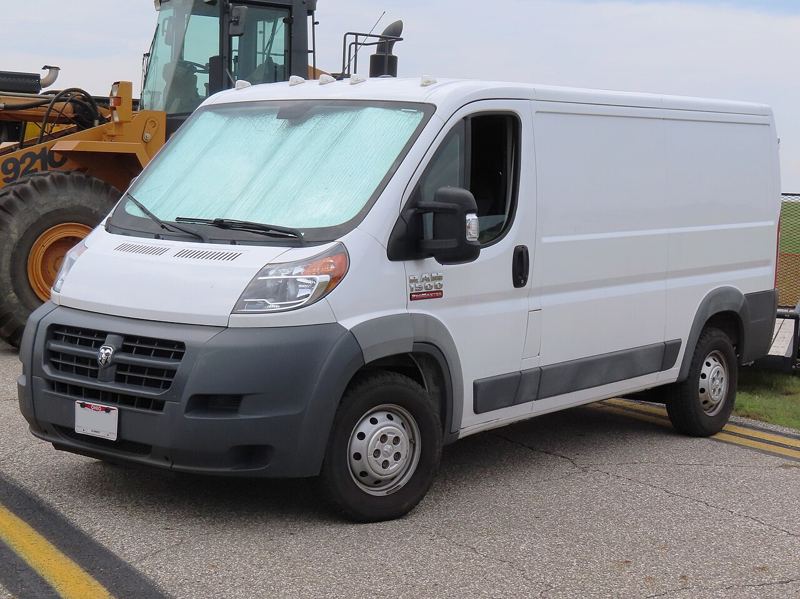
Photo: MercurySable99 · CC BY-SA 4.0 What changed. It was Ram's first full-size van based on the Fiat Ducato, with unibody construction and front-wheel drive, lighter than rivals built on ladder frames with rear-wheel drive. It offered a 3.6-liter Pentastar V6 with 280 hp and a six-speed automatic, or a 3.0-liter four-cylinder EcoDiesel with 174 hp and an automated manual. It came in 13 configurations with three wheelbases (118, 136 and 159 inches), two roof heights and up to 5,145 lb of payload. For the U.S., Chrysler strengthened the body and suspension for roads with more potholes than Europe's, made stability control standard and mounted the headlights higher to keep them out of harm's way.
The innovation. Front-wheel drive in a full-size van, presented by Ram in 2013 as exclusive within its competitive set. Because the whole drivetrain sits under the cab, the cargo floor and step-in height stay very low, and Fiat says it has the lowest load floor in its class. It was also the first in its competitive set to offer both a chassis cab and a cutaway straight from the factory.
If you buy one usedRun the VIN through NHTSA. Key recalls: the accelerator pedal could stick wide open on 2014 vans built from July to December 2013 (14V032000). The shifter cable could separate on 2014–2019 models with the 3.6 engine (20V036000). The radiator fan could seize and overheat on 2015–2018 vans (19V818000), and its electrical circuit could overheat on certain 2018–2026 vans (25V720000). On 2019–2021 vans, the park pawl in the 62TE transmission might not fully engage (23V301000). The diesel appears in Ram fact sheets through 2018; the cited 2019 FCA Canada fact sheet lists only the V6. The 19V818 fan campaign requires the specified engine/A/C configuration. The 23V301 remedy includes software plus inspection and conditional transmission/component replacement; confirm actual completed work. - Gen. 22022–present
Nine speeds, a new face and an electric version
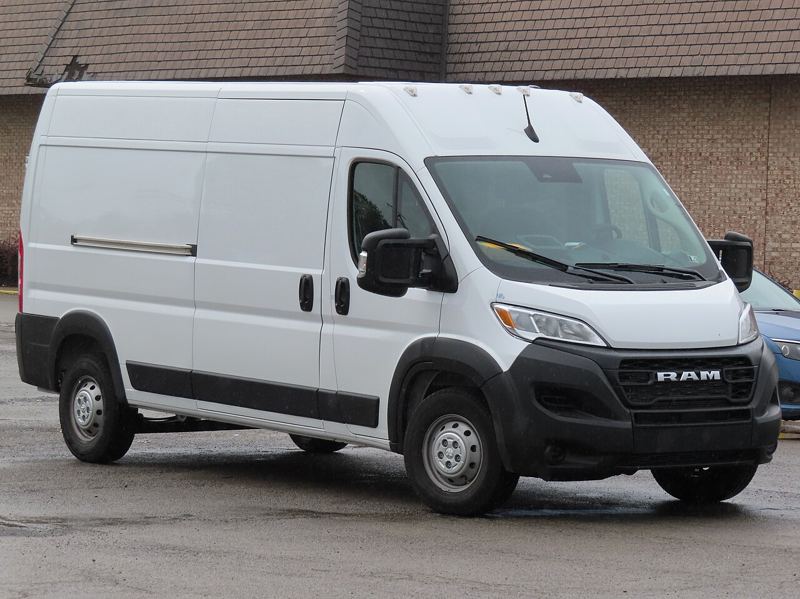
Photo: MercurySable99 · CC BY-SA 4.0 What changed. For 2022 a next-generation 276 hp Pentastar V6 arrived, paired with a segment-exclusive TorqueFlite nine-speed automatic that Ram says improves fuel economy by up to 9%. It also gained electric power steering, the Uconnect 5 screen and telematics with over-the-air updates. For 2023 it got a new face: a three-piece fascia, available LED headlights, a super high roof with 10 more inches of headroom, an aluminum roll-up rear door and 19 configurations. In 2024 the ProMaster EV joined, Ram's first electric vehicle in the U.S.
The innovation. Active Driving Assist, a Level 2 automated driving system that Ram introduced as exclusive in its class. It requires the driver’s hands and attention; it combines adaptive cruise control with Stop & Go and lane keeping to help on long delivery routes.
If you buy one usedRun the VIN through NHTSA. Some 2021–2024 vans were missing a side door beam (24V416000). The rearview camera could fail to display due to a software error on 2022–2025 vans (25V330000). The radiator fan circuit could overheat (25V720000). In September 2026 a recall was announced because water could enter the electric power steering harness and shut off assist on 2022–2026 vans (26V621000); interim risk letters were scheduled for November 17, 2026, with a further notice when the final remedy is available. On the 2024–2025 ProMaster EV, electric drive software could cause a loss of drive power (25V665000). The 25V665 BEV remedy also calls for drive-module inspection/replacement as necessary, beyond software.
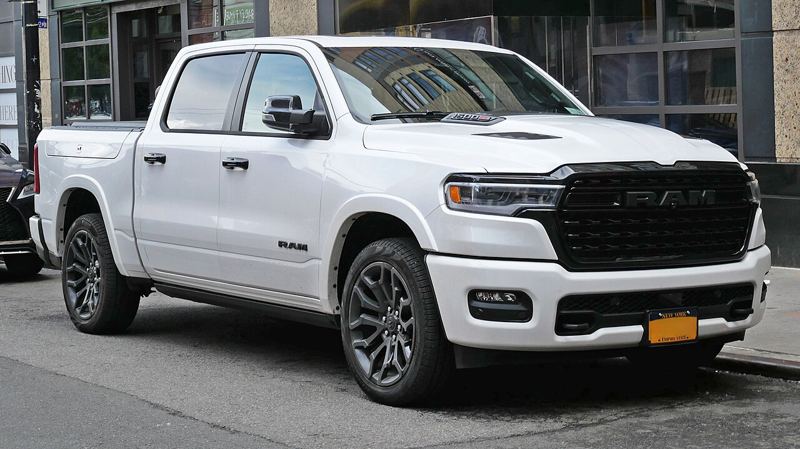 Ram 15001981–present
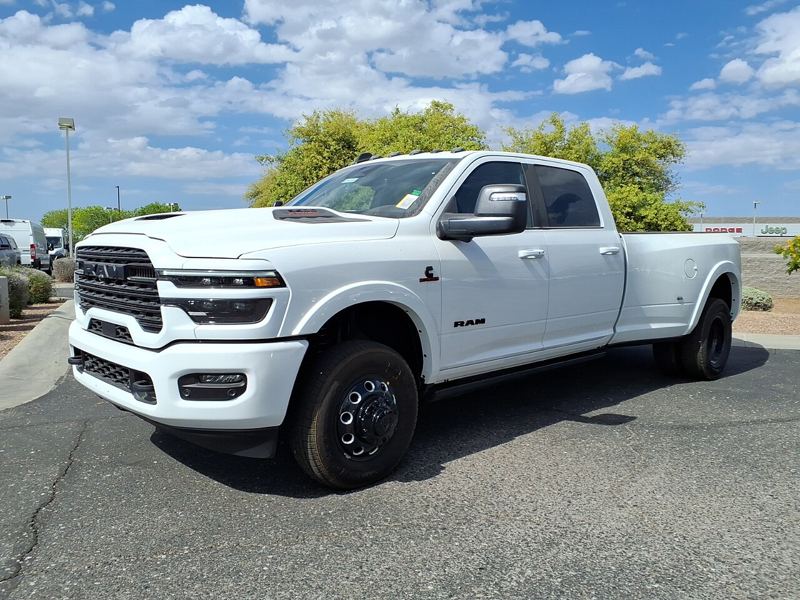 Ram 2500/3500 Heavy Duty1981–present
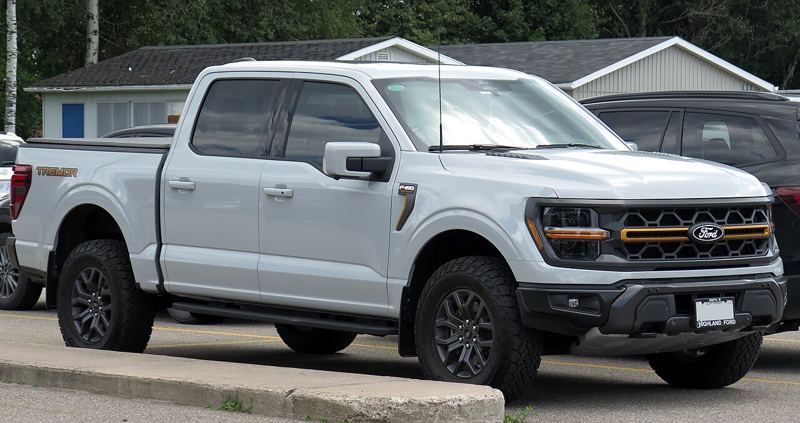 Ford F-Series (F-150)1948–present
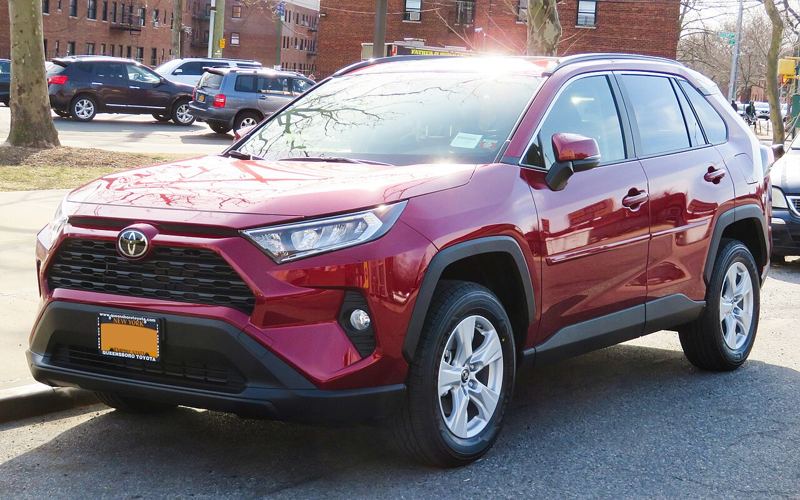 Toyota RAV41994–present (US from 1996)
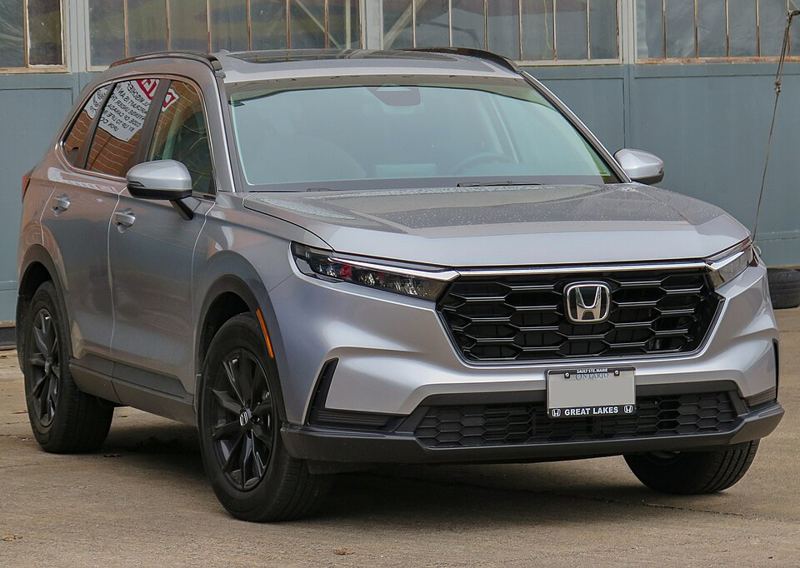 Honda CR-V1995–present
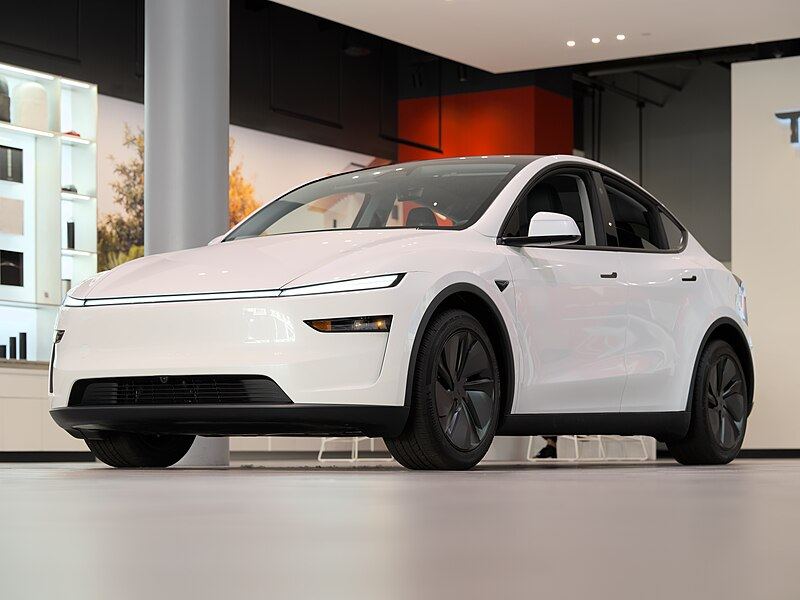 Tesla Model Y2020–present
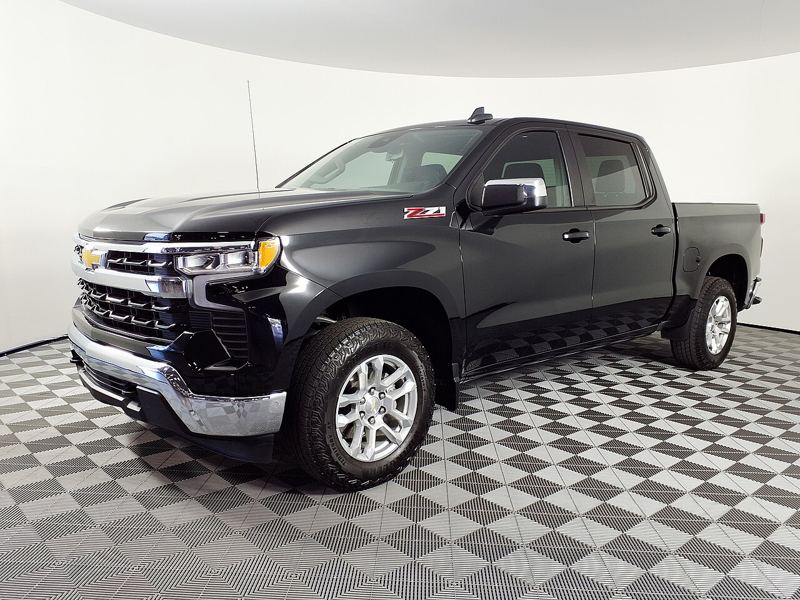 Chevrolet Silverado1999–present
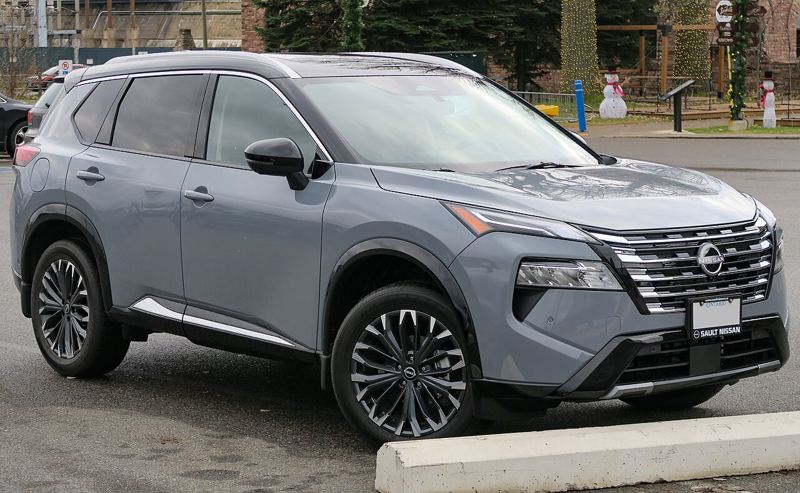 Nissan Rogue2007–present
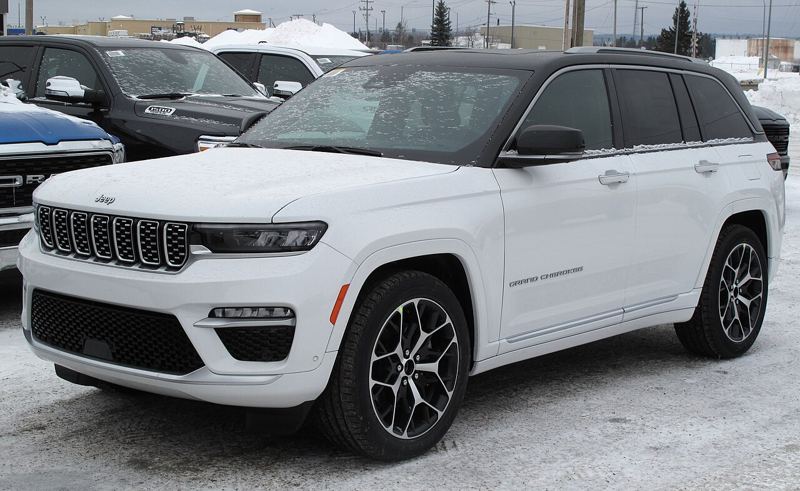 Jeep Grand Cherokee1992–present


