Subaru Forester
Compact SUV · 1998–present. 175,521 units sold in the US in 2024
How it began
It was created by Fuji Heavy Industries, the Japanese company that builds Subaru cars (today Subaru Corporation), and it is sold in the U.S. by Subaru of America. The sources consulted do not name the designer or chief engineer of the first Forester. Other names do appear: Thomas J. Doll, president of Subaru of America, called it a key driver of 11 straight years of growth in 2019, and Scott Brand, president of the Indiana plant, celebrated the first U.S.-built Forester hybrid in 2026.
Subaru’s original production history places the Forester’s December 1996 start at Gunma Yajima in Japan; the MY2025 release still identifies Gunma assembly. SIA in Lafayette, Indiana added U.S. production with MY2026 vehicles. Subaru’s February 3, 2026 completed-event release gives October 7 for the earlier gasoline start and February 3 for the first hybrid, and says all U.S.-sold Foresters were then assembled there. Its later September 2026 MY2027 pricing release names both Lafayette and Gunma. These dated statements are retained without claiming a permanent factory assignment for every vehicle.
Production began in December 1996. It launched in Japan in February 1997 and reached the U.S. in July 1997 as a 1998 model.
In English, a forester is a person who works in and looks after a forest. The naming agency Lexicon Branding lists the Forester among its case studies and explains that the name was meant to convey freedom, utility and know-how, plus a sense of larger size that suits Subaru's outdoorsy buyers.
In the mid-1990s the SUV market was growing fast, and Subaru wanted in by building on the success of the Outback. The Forester was planned as a smaller alternative to the Outback with the same performance and versatility. The recipe: all-wheel drive, a 2.5-liter boxer engine and 7.5 inches of ground clearance, with the comfort of a car. Its slogan said it all: Sport Utility Tough, Car Easy.
Generation by generation
- Gen. 11998–2002 · SF
The tall Subaru that drives like a car
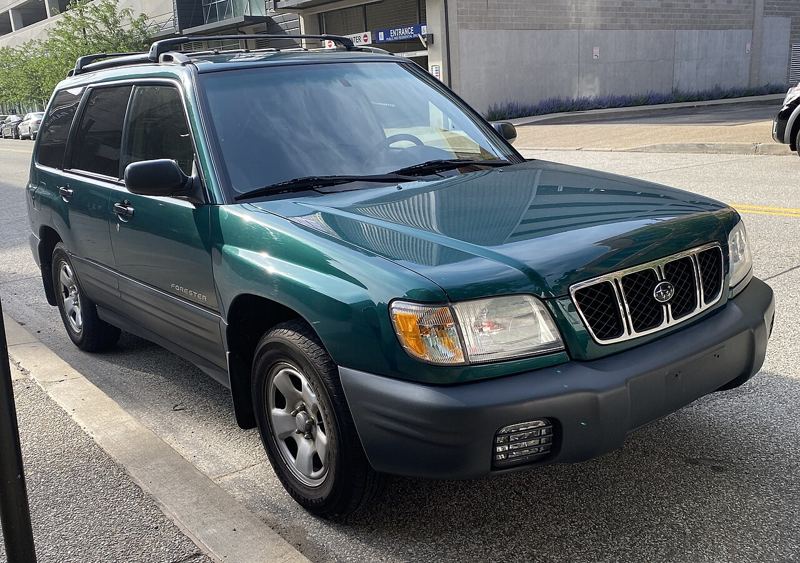
Photo: Cutlass · CC0 What changed. It was a brand-new model, not a replacement for another. It borrowed heavily from the Legacy and Impreza Outback body, but with the extra height built into the chassis instead of added with spacers. The 1998 Forester S had a 165 hp 2.5-liter boxer engine, cost $22,195 and was rated by the EPA at 21 mpg city and 26 highway.
The innovation. The four-speed automatic Forester S tested in 1998 used an electronically controlled hydraulic clutch pack. The original road test described a normal dry-road 90% front/10% rear distribution, with a 50/50 split possible when traction fell. Its driving feel was closer to a tall station wagon than a truck-based SUV. This describes the tested automatic, rather than assigning its mechanism to the separately offered manual transmission.
If you buy one usedNHTSA lists recall 99V040 for 1998–1999 models with ABS: in extreme cold the brake pedal could go to the floor and lengthen stopping distance. Recall 02V282 covers 2002 automatic models whose parking rod might not lock the transmission in Park. Jalopnik reports head gasket failures on the 1998 Forester's 2.5 engine and on naturally aspirated 2.5-liter 1999–2010 Foresters, including this generation’s 1999–2002 models: ask for the cooling system's service history. - Gen. 22003–2008 · SG
Safer, lighter and turbocharged
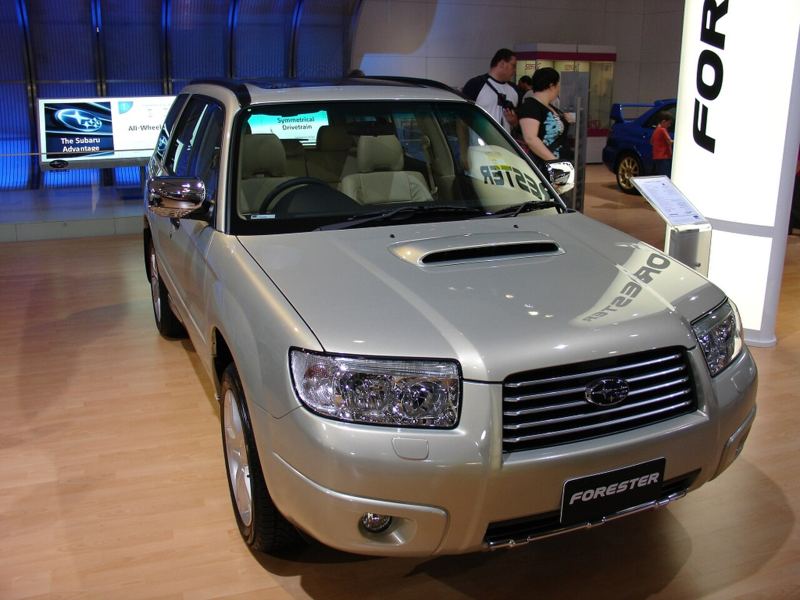
Photo: The original uploader was Ric man at English Wikipedia. · CC BY-SA 2.5 What changed. It reached dealers in May 2002 as a 2003 model, with a stronger yet lighter body, a wider track, 11.4-inch front brake rotors and standard 16-inch wheels. It added standard front side airbags, a dual-stage passenger airbag and active head restraints.
The innovation. The 2004 Forester XT brought a 2.5-liter turbo boxer with 210 hp and 235 lb-ft, derived from the WRX STi engine. At 3,210 pounds and a $24,970 base price, it made the family SUV surprisingly quick.
If you buy one usedRecall 11V464 (2003–2008 models sold or registered in road-salt states) warns that the front lower control arms could break from corrosion. Other recalls: 02V282 (parking rod, 2003 automatics), 03V047 (front seat belt buckles, 2003), 04V473 (oil control valve bolts, oil leak with fire risk, 2004) and 07V043 (passenger seat sensor harness, 2006). Jalopnik lists the non-turbo 2.5 engines of these years among those with head gasket failures. - Gen. 32009–2013 · SH
Bigger, and SUV of the Year
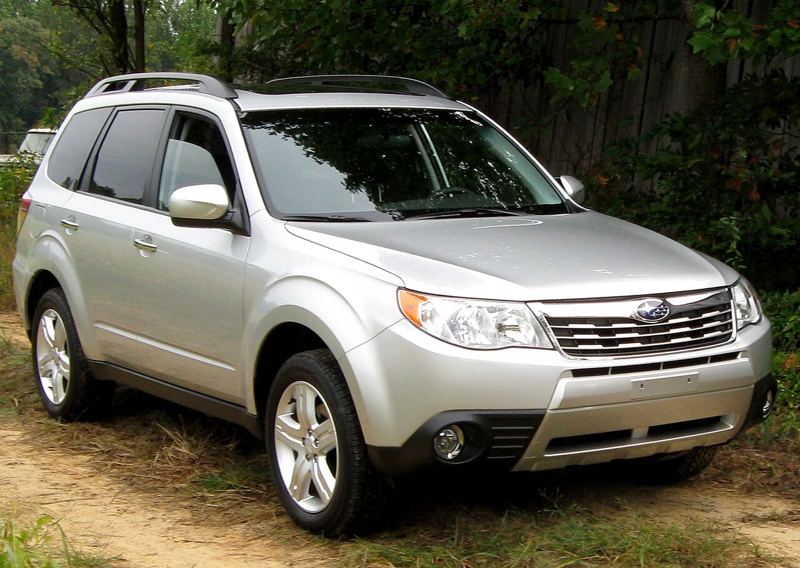
Photo: IFCAR · Public domain What changed. It debuted at the Detroit Auto Show on January 13, 2008. The wheelbase grew 3.6 inches to 103.0, with a double-wishbone rear suspension and up to 8.9 inches of ground clearance. It offered a 170 hp 2.5 and a 224 hp 2.5 turbo, and navigation for the first time. Motor Trend named it 2009 SUV of the Year.
The innovation. It was the first Forester with standard stability and traction control (Vehicle Dynamics Control), along with side-curtain airbags with a rollover sensor and ABS with Brake Assist.
If you buy one usedCheck the VIN for several Takata passenger airbag inflator recalls (for example 17V014, 18V012 and 20V001), especially if the car lived in Florida or other hot, humid states. Recalls 14V311 and 14V830 cover brake line corrosion in road-salt states. There are seat belt recalls too (12V099, 2009–2012; 22V838, 2009–2013). Under a class-action settlement over oil consumption, Subaru extended coverage to 8 years or 100,000 miles on certain 2011–2014 Foresters with the non-turbo 2.5. These are historical warranty terms, subject to the actual engine/VIN/transmission cutoffs, diagnosis, original warranty start and mileage; ask Subaru about the specific vehicle’s coverage. Earlier same-design Takata replacements and early brake-line work may still require the later campaigns where applicable. - Gen. 42014–2018 · SJ
The small SUV that aced the toughest crash test
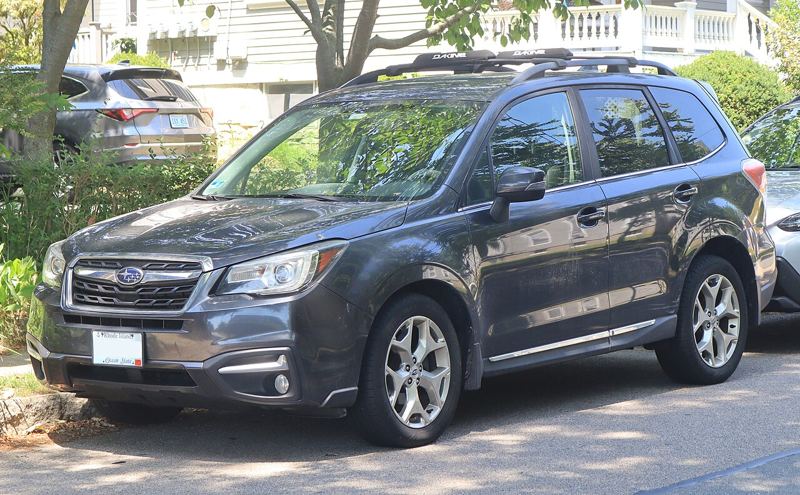
Photo: Cutlass · CC0 What changed. The fourth generation was introduced at Los Angeles on November 27, 2012 for MY2014. Subaru’s final U.S. brochure lists 38.0 inches of rear legroom and up to 74.7 cubic feet of cargo without the moonroof. This differs from the early launch paragraph’s 41.7-inch rear-legroom figure. The generation offered a CVT, a 250 hp direct-injection 2.0 turbo in 2.0XT, and optional EyeSight. In May 2013 it was the only one of 13 small SUVs rated Good in the IIHS small-overlap test.
The innovation. X-Mode coordinates the engine, transmission, all-wheel-drive clutch, brakes and stability control to get out of slippery surfaces and steep grades, and it switches on Hill Descent Control, which holds a steady speed going downhill.
If you buy one usedThe oil consumption settlement (coverage extended to 8 years or 100,000 miles) includes certain 2014 automatic and 2014–2015 manual Foresters with the non-turbo 2.5, according to the Subaru bulletin published by NHTSA. Recalls to check: 19V149 (brake light switch, 2014–2016), 16V162 (turbo intake duct that could crack and stall the engine, 2015–2016 2.0XT) and 19V701 (front passenger occupant sensor, 2015–2018 with heated seats). The November 21, 2016 bulletin contains the production cutoffs and diagnostic conditions; this is historical warranty coverage, separate from a safety recall. Confirm the specific vehicle’s eligibility with Subaru. - Gen. 52019–2024 · SK
EyeSight for everyone
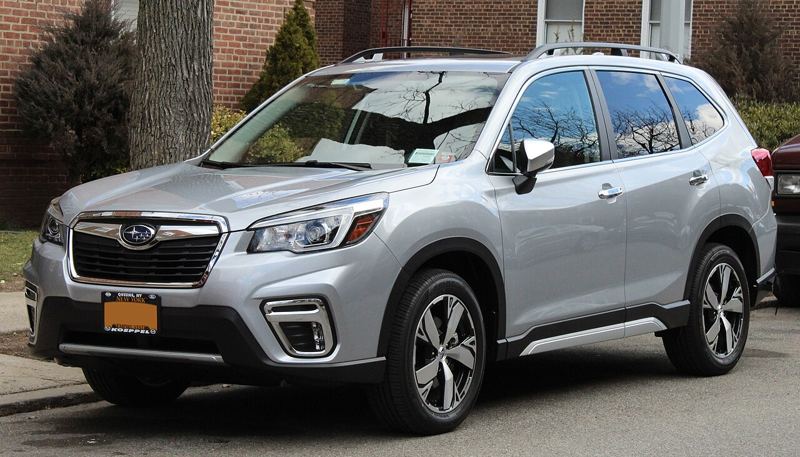
Photo: Kevauto · CC BY-SA 4.0 What changed. It debuted at the New York Auto Show on March 28, 2018, on the Subaru Global Platform. It used a 182 hp direct-injection 2.5 with automatic stop/start and a CVT standard on every trim. The wheelbase grew to 105.1 inches and the rear gate opening widened by 5.3 inches. From the 2022 model year it added the Wilderness trim, better suited to dirt roads.
The innovation. EyeSight became standard on every Forester. The Touring trim introduced DriverFocus, which Subaru called a segment first: it uses facial recognition to detect driver fatigue or distraction and warn the driver.
If you buy one usedIn the retained November 2, 2026 snapshot for this generation, MY2019 has the largest individual year count, with three distinct campaigns: 19V065 (power steering connector that could lose assist), 19V856 (PCV valve that could separate and cause power loss) and 21V263 (rear stabilizer bracket bolts). For 2023–2024 there is 23V754 (front driveshaft that could crack), and for 2024 there is 23V723 (engine water pipe with loose bolts and fire risk). Exact NHTSA Forester queries on November 3, 2026 returned no campaigns for model years 2020 and 2021. Certain 2022 vehicles have inhibitor-switch campaign 23V755. The original reports say 19V065 and 23V723 were contained before affected retail sales; confirm the actual VIN and completed work. - Gen. 62025–present · SL
Hybrid, and made in America
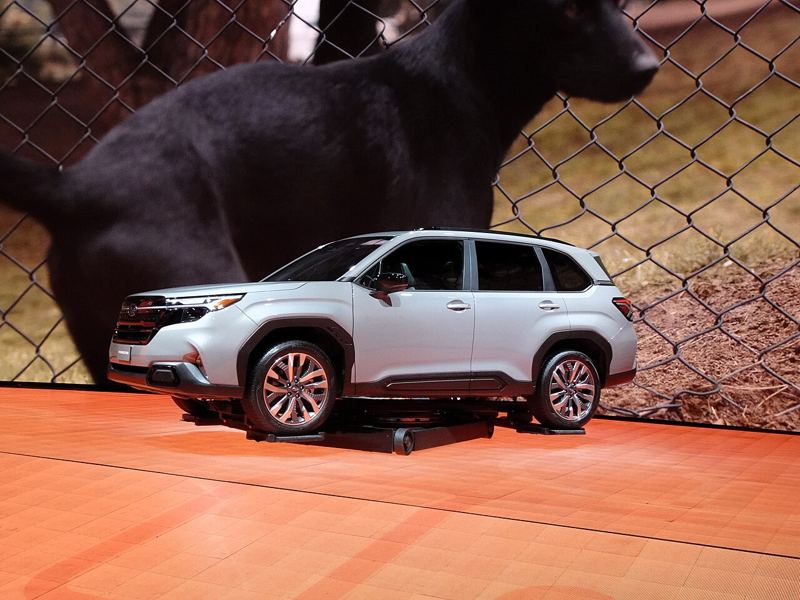
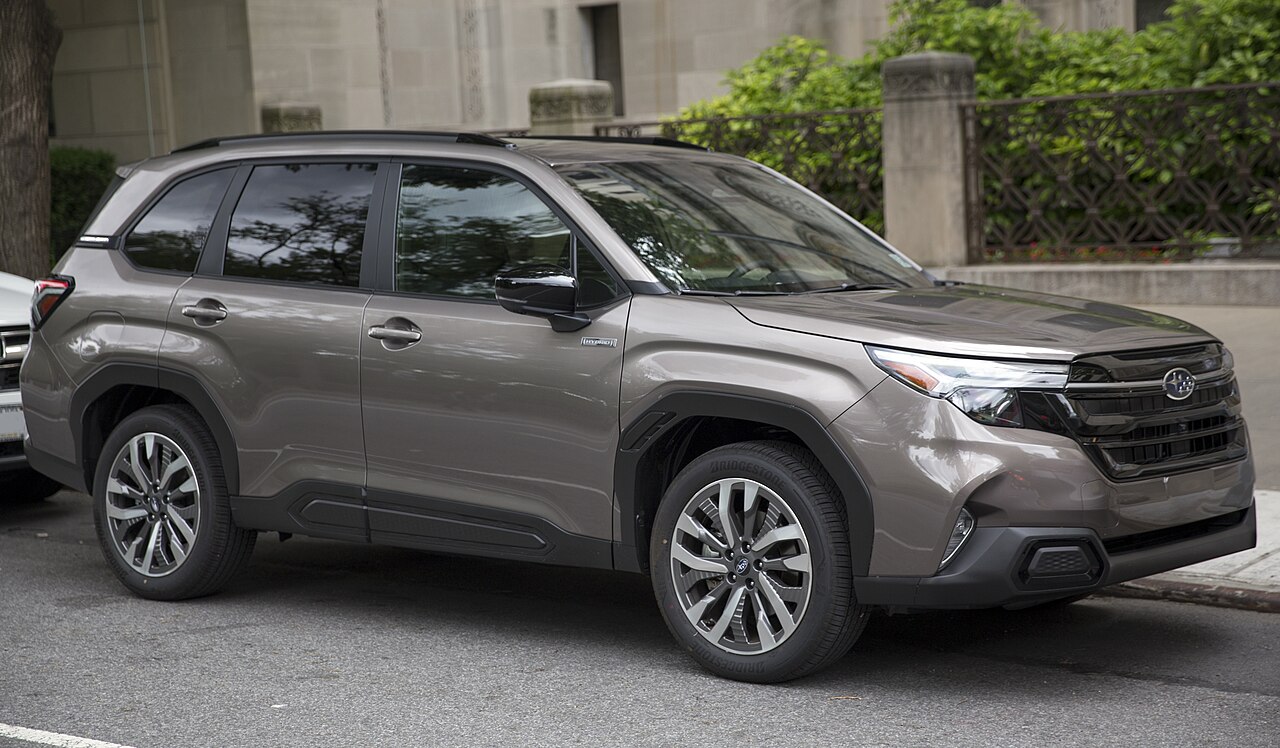
Photo: Charles · CC BY 2.0 What changed. The sixth generation was introduced for MY2025 with announced late-spring 2024 availability, new grille and compact LED headlights, and 10% greater torsional rigidity. The gas 2.5-liter produces 180 hp. The U.S. MY2025 Hybrid added 194 combined hp; the official EPA MY2025 record lists 35 mpg combined. U.S. assembly began with MY2026 vehicles: Subaru’s February 2026 production report dates the preceding gas start to October 7 and the first hybrid to February 3, 2026.
The innovation. The 2026 Forester Hybrid was the first hybrid vehicle Subaru produced in the U.S. It pairs a 2.5-liter Atkinson/Miller-cycle boxer with electric motors and a lithium-ion battery, and Subaru rates it at up to 597 miles on one tank.
If you buy one usedThis is a young generation, so check recalls by VIN. NHTSA lists for 2025 recall 25V033 (18-inch wheels with an incorrectly specified lug seat) and 25V419 (child seat anchor bolts not tightened properly). For 2026: 25V889 (rear hatch support bracket), 26V346 (moonroof glass not bonded properly, also on the Hybrid) and 26V685 (left-front ball joint castle nut). For affected vehicles under 26V685, do not drive until the remedy is completed. Certain 2025 Forester Hybrids also have fuel-cap campaign 26V106: park outside away from structures and limit fuel to 50% until repaired. Certain 2025–2026 Forester and Hybrid vehicles have incorrect GAWR label campaign 26V436. Check actual VIN eligibility and current remedy instructions.
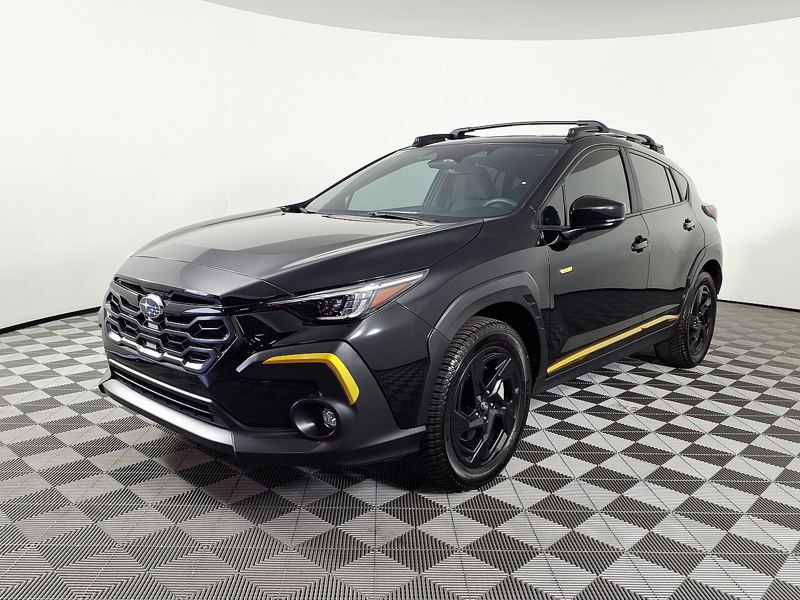 Subaru Crosstrek2012–present
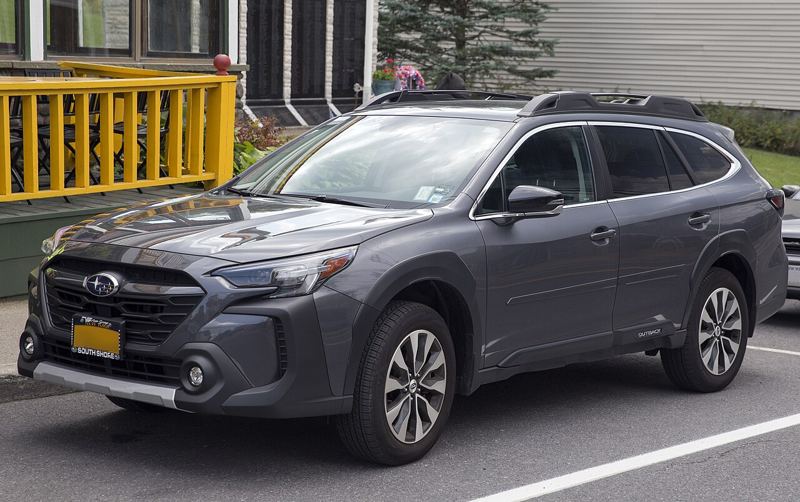 Subaru Outback1995–present
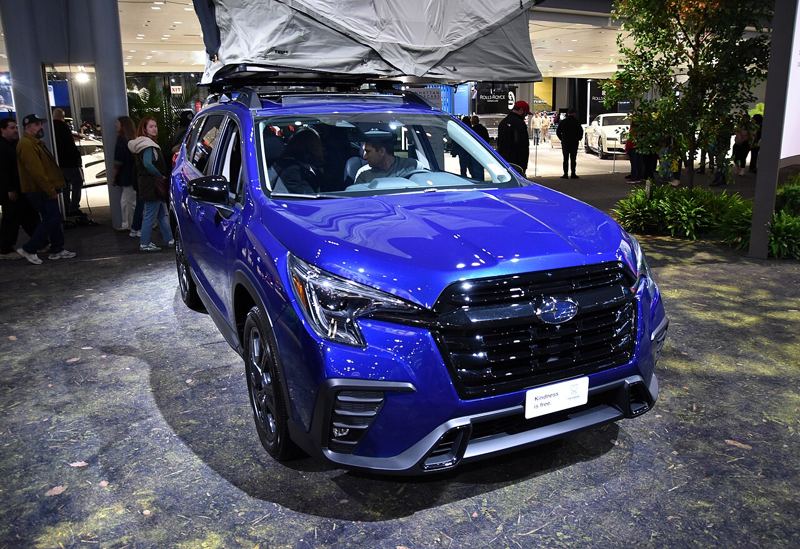 Subaru Ascent2019–present
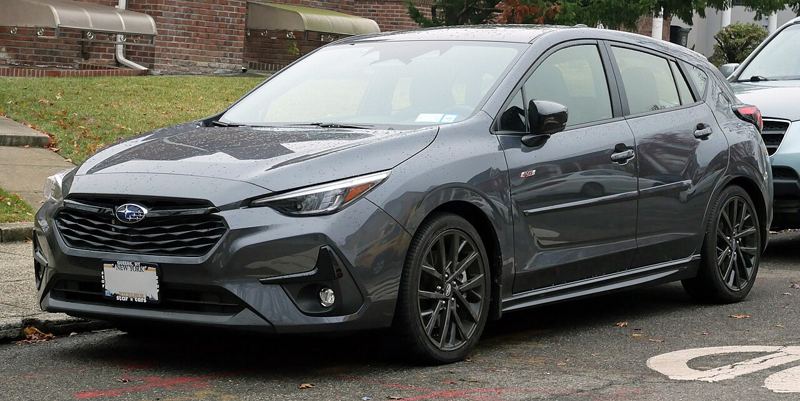 Subaru Impreza1993–present
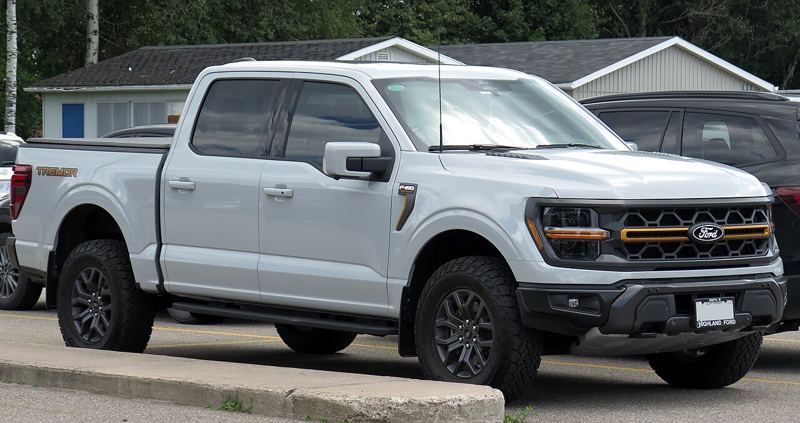 Ford F-Series (F-150)1948–present
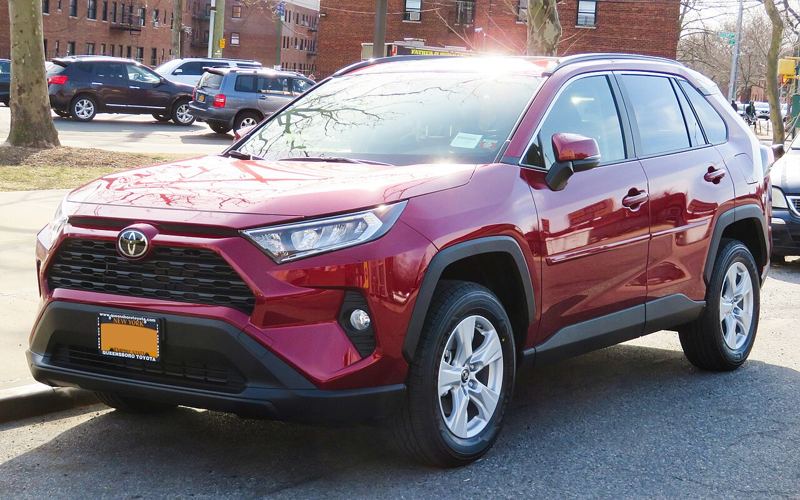 Toyota RAV41994–present (US from 1996)
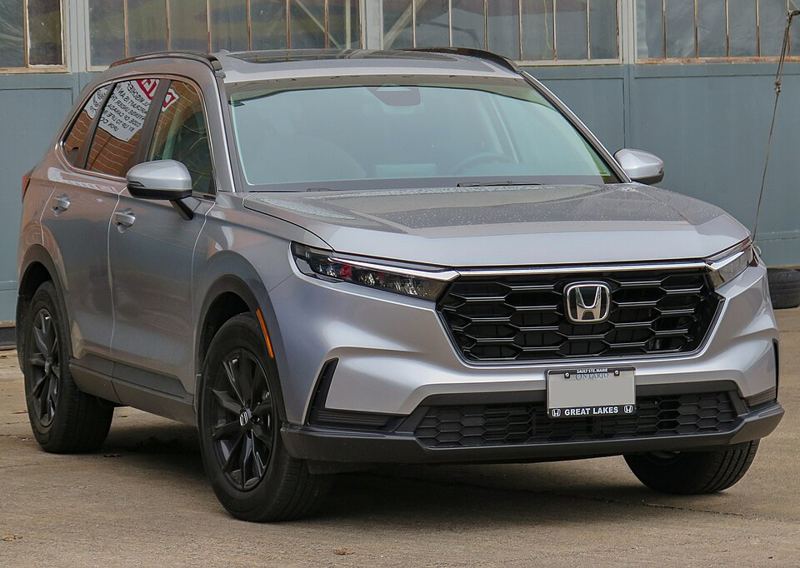 Honda CR-V1995–present
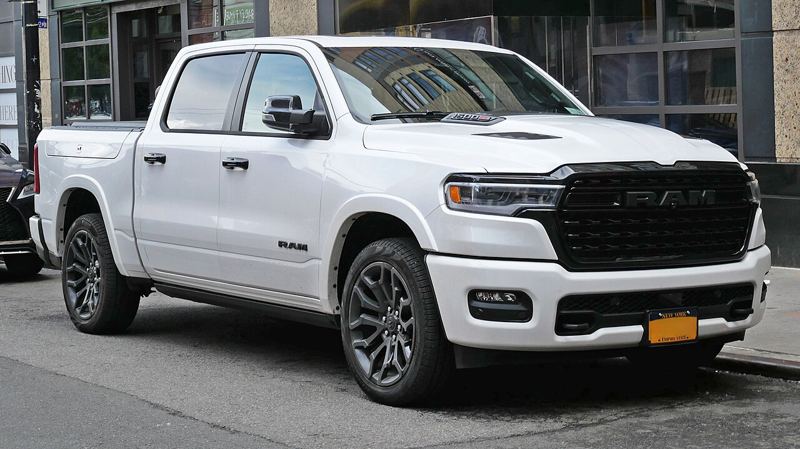 Ram 15001981–present
 Tesla Model Y2020–present


