
Tesla Model S
Full-size electric sedan · 2012–2026. This review has not established this model’s 2024 U.S. sales.
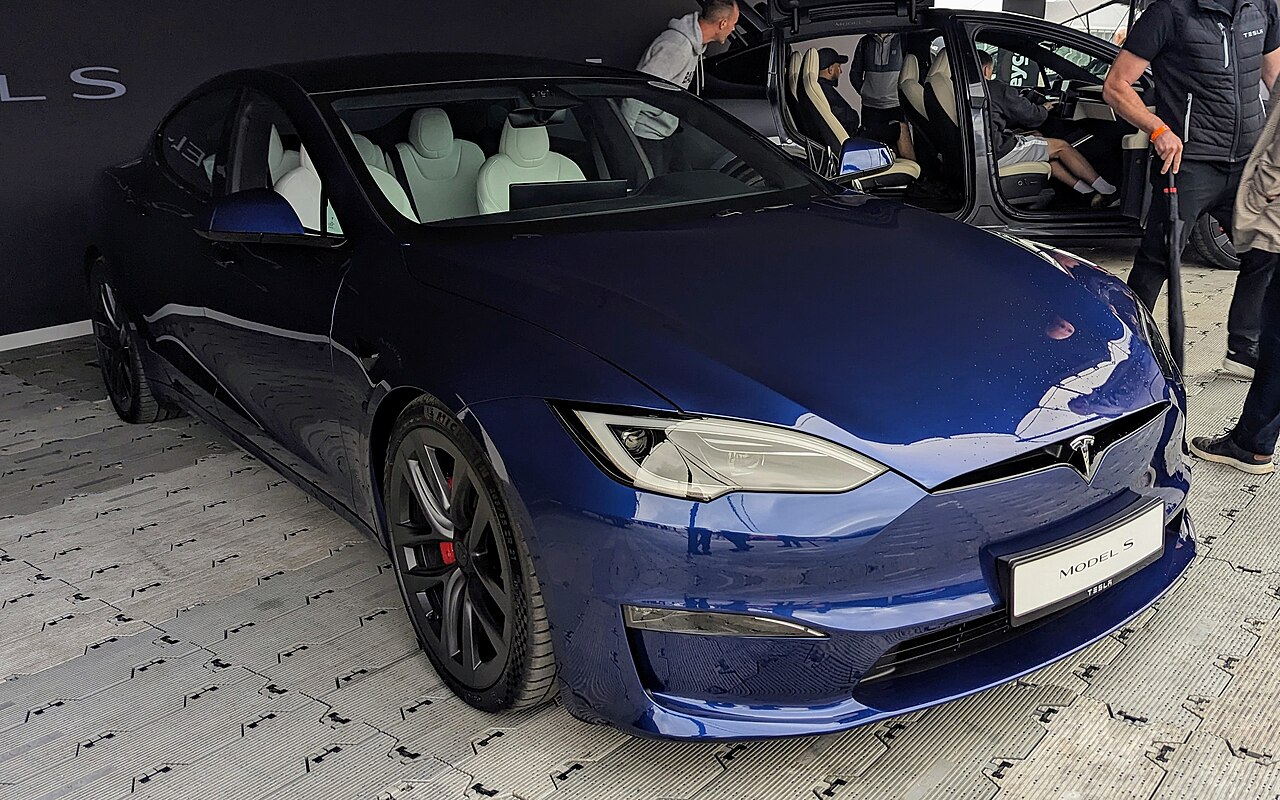
How it began
Tesla Motors, now Tesla, Inc. In its 2009 and 2010 documents, Elon Musk was listed as chief executive, chairman and product architect, and JB Straubel as chief technology officer. The design came from the studio of Franz von Holzhausen, Tesla's chief designer since 2008, whom CNBC credits as lead designer of the Model S. In 2011 Green Car Reports introduced Peter Rawlinson as Tesla Motors' vice president and chief engineer, in charge of the car's engineering.
The prototype was unveiled in Hawthorne, California, where Tesla had its design studio. In 2010 Tesla agreed to buy NUMMI’s Fremont plant, the Toyota/General Motors joint venture, for about $42 million. Fremont manufactured the Model S throughout its roughly 14-year production run. During the early European sales program, cars also received final assembly at Tilburg in the Netherlands.
The prototype was unveiled on March 26, 2009, with production planned for late 2011. First deliveries came on June 22, 2012 at the Fremont factory, about a month earlier than announced. Tesla announced the end of the program on January 28, 2026, and the last Model S, a black car signed by the plant's staff, rolled off the line in May 2026.
The S began Tesla’s letter game. Musk said in 2014 that, with S and X chosen, the company wanted E so the lineup would spell SEX. Ford objected and threatened to sue; Ford told CNBC it had enforced a 2010 agreement under which Tesla would not use or register Model E. The next sedan became Model 3, and Model Y later completed S3XY.
In 2010 Tesla wrote that no automaker had managed a successful electric car with good range, design and performance at a reasonable price. The Roadster proved the technology, but it was a niche sports car. The Model S was meant to bring it to a five-door premium sedan, with room for a family and a much wider audience, and to pave the way for a cheaper model. Musk put it this way: they wanted to show that an electric car can be better than any gasoline car.
Generation by generation
- Gen. 12012–2016 · Original
The sedan that made electric cars desirable
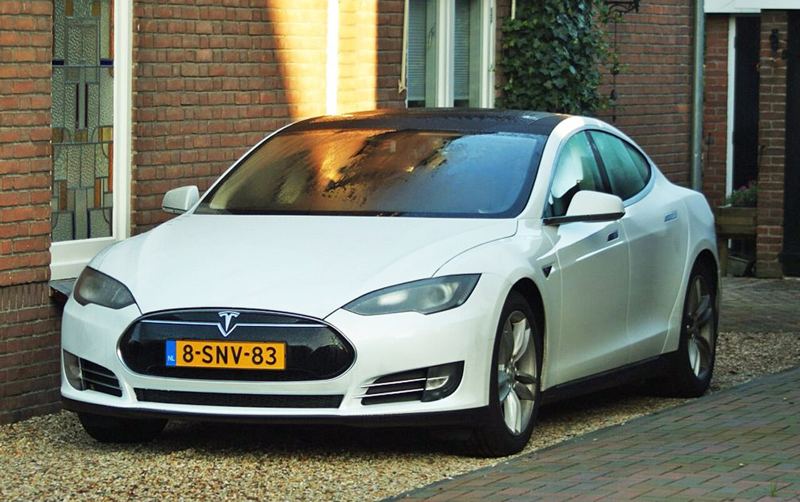
Photo: Niels de Wit from Lunteren, The Netherlands · CC BY 2.0 What changed. The first Tesla with its own complete vehicle platform; the Roadster used Lotus gliders. The launch offer advertised 40, 60 and 85 kWh options, up to 265 EPA miles, a 4.4-second 0–60 mph Performance version, and a $49,900 entry price after a $7,500 federal credit. Those pack options did not all enter production at launch: 60 kWh deliveries began in early 2013, and Tesla cancelled the physical 40 kWh pack, offering those customers a software-limited 60 kWh pack instead. Features included a 17-inch touchscreen, retractable handles and optional rear-facing seats for two children. The October 2014 D announcement added dual-motor AWD; Tesla quoted 691 horsepower and 3.2 seconds for the P85D.
The innovation. The battery as part of the skeleton. The structure is about 97 percent aluminum and the battery pack sits in the floor as an integral part of the safety structure, with a very low center of gravity. The result showed in 2013: NHTSA gave it five stars in every category. The car also improved through free over-the-air software updates, something rare in 2012.
If you buy one usedThe big one: the center screen with the NVIDIA Tegra 3 processor and 8 GB eMMC memory can fail from wear and take out the backup camera, defroster and turn signals; recall 21V035 covers 2012–2018 Model S (134,951 cars together with Model X) and Tesla replaces the part. Others with physical repairs: Bosch power-steering bolts that can corrode (18V204, 2012–2016, 70,421 cars), passenger airbag inflators that can rupture from propellant degradation (17V023 for 2012, 18V031 for 2013 and 19V002 for 2014–2016), front seat belts not properly connected to the pretensioner (15V780, 2012–2015) and the front trunk's secondary hood latch (21V00B, 2014–2021, 130,441 cars). In 2014 NHTSA closed its probe into two fires after road-debris strikes stating that no defect trend had been identified; closure was not a finding that a safety-related defect could not exist; Tesla raised the highway ride height and added a titanium-and-aluminum shield under the battery. A contemporaneous October 10, 2014 launch report said Autopilot hardware had entered production roughly two weeks earlier and could not be retrofitted to older cars. Confirm the actual vehicle’s hardware and features with Tesla. - Gen. 22016–2021 · Actualización 2016
No black nose cone, and 400 miles
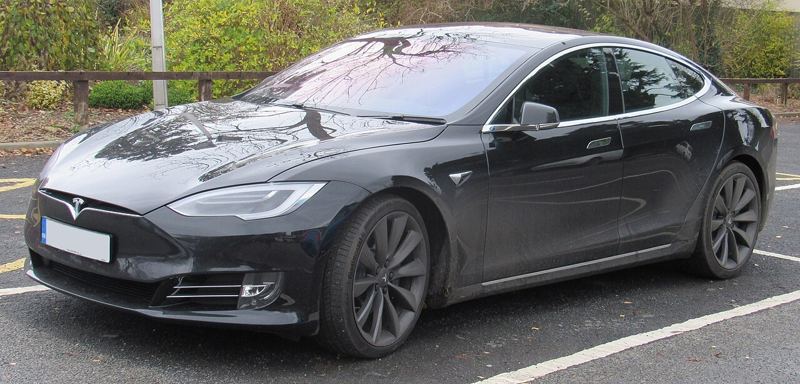
Photo: Vauxford · CC BY-SA 4.0 What changed. On April 12, 2016 Tesla introduced a smooth Model X-like front and new headlights, replacing the black oval nose cone. The onboard charger went from 40 to 48 amps, and HEPA filtration joined the equipment offer. Tesla followed a rolling-update cadence rather than waiting for an annual facelift. Its 2016 filing says that October brought a new factory hardware suite across the lineup: 360-degree cameras, radar, ultrasonic sensors and a more powerful computer. This describes that rollout; drivers still remained responsible for controlling the car.
The innovation. The 400-mile mark. In June 2020 Tesla announced 402 EPA miles for the Model S Long Range Plus, describing it as the first electric car over 400 EPA miles. Tesla said it retained the same battery-pack design as the 2019 Model S 100D. The improvements included lighter in-house seats, aerodynamic wheels, lower-resistance tires, an electric oil pump, drivetrain changes and regenerative braking that recovered more energy.
If you buy one used2016–2018 cars still carry the Tegra 3 screen from recall 21V035; ask whether it has been replaced. On 2016 cars, the electric parking brake calipers may have a badly made gear (17V260, 31,709 Model S and X, both calipers replaced). 2017–2021 cars can lose power steering on rough roads (22V818, 40,168 Model S and X, fixed by software). On certain 2018–2019 cars with the Autopilot 2.5 computer, the backup image might not appear right away (22V169, software). Early 2016 cars still fall under the Bosch steering (18V204) and passenger airbag (19V002) recalls, and through 2021 under the front trunk latch recall (21V00B). It is also included in broad multi-model over-the-air campaigns, such as Autosteer (23V838, 2,031,220 vehicles, 2012–2023 Model S) and the warning-light font size (24V051). Check the VIN at nhtsa.gov. - Gen. 32021–2026 · Actualización 2021 (Plaid)
Plaid: a family sedan quicker than a Bugatti
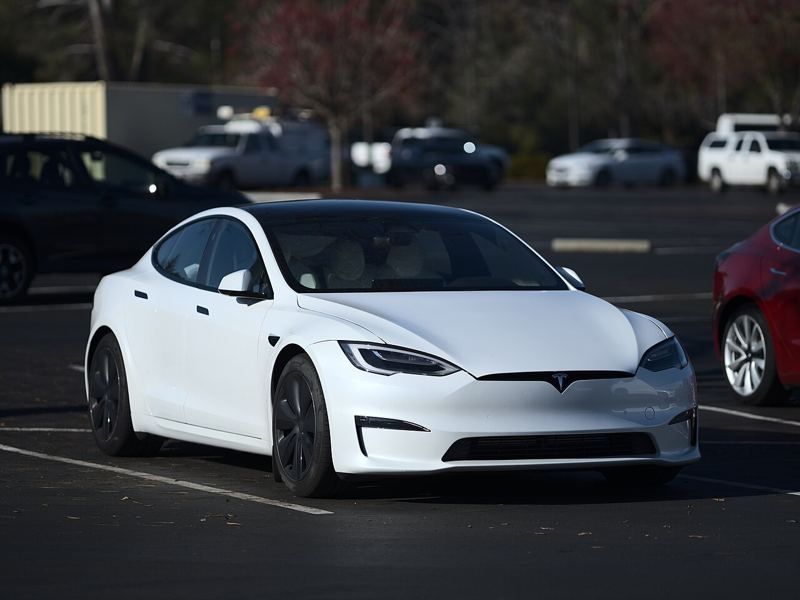
Photo: Dllu · CC BY-SA 4.0 What changed. Tesla introduced the refreshed Model S in January 2021 and retooled Fremont; it produced no Model S or X in the first quarter. Packs and modules were redesigned, with Model 3/Model Y motor technology, a heat pump, a yoke, a horizontal center display and an 8-inch rear display. At the June 10 Plaid delivery event in Fremont, Tesla quoted 1,020 horsepower, 0–60 mph in 1.99 seconds and a 9.23-second quarter mile; the announced price was $129,990. A June 2025 update added a front camera, new wheels, adaptive headlights and ambient lighting, alongside other refinements.
The innovation. Carbon-sleeved rotors. The Plaid's motors spin up to 20,000 rpm and Musk presented them as the first with a carbon-fiber-wrapped rotor in a production electric motor. Its drag coefficient is 0.208, and in its shareholder update Tesla put it in a table next to the Bugatti Chiron, which runs 0 to 60 mph in 2.4 seconds.
If you buy one usedOn 2021–2023 cars the doors could unlock during a crash (23V862, 120,423 Model S and X, fixed by software). With shop repairs: a driver airbag that could tear while inflating (21V868 on 2021, 7,600 cars; 24V967 on 2021–2025), front seat belts not attached to the pretensioner anchor (23V488, 2021–2023, 15,869 cars) and a wrong airbag or no horn after swapping the yoke for a round wheel or vice versa (23V743 and 25V172). By software: the screen computer could overheat during fast charging (22V296), the hood sensor could miss an open hood (24V554) and, on 2024–2025 cars, the backup camera could lose its image (25V002). The NHTSA MY2021 Model S lookup on November 3, 2026 returns a single AWD record with Not Rated overall/front/side results and five rollover stars. Check the VIN at nhtsa.gov. The 25V002 remedy can also require computer replacement, not just software. Reported multi-model recall populations include Model X where stated; confirm actual VIN eligibility and completed work.
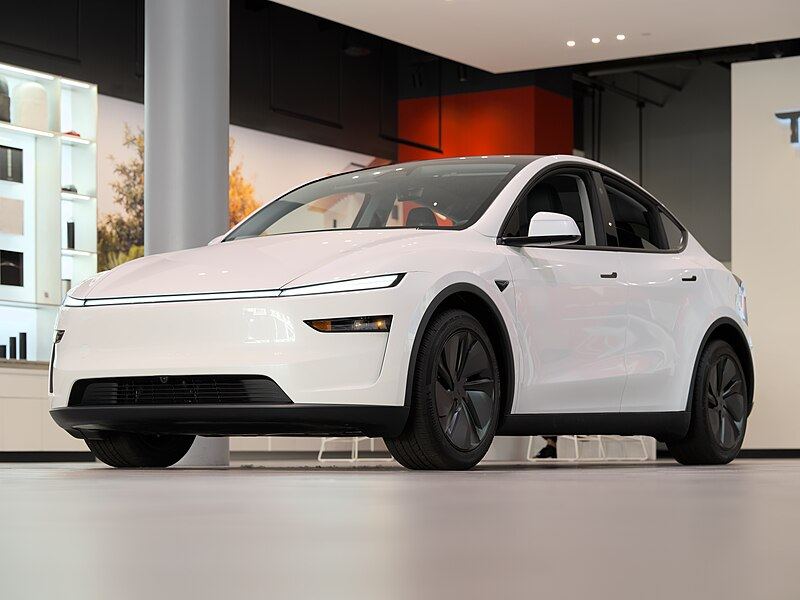 Tesla Model Y2020–present
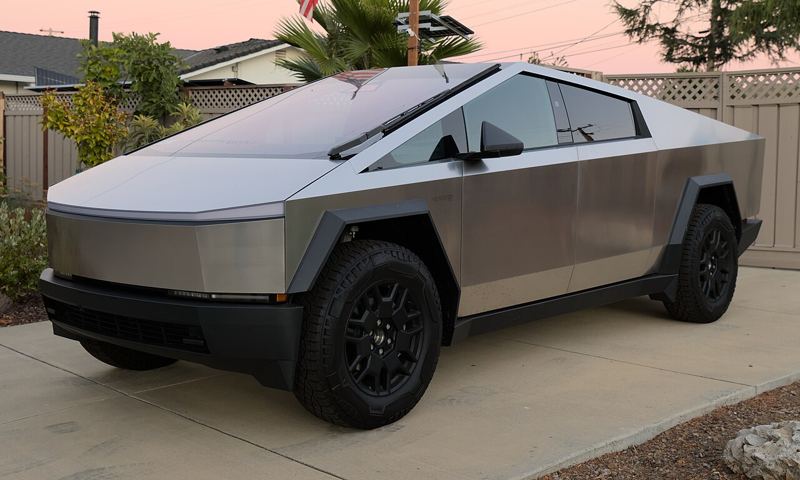 Tesla Cybertruck2023–present
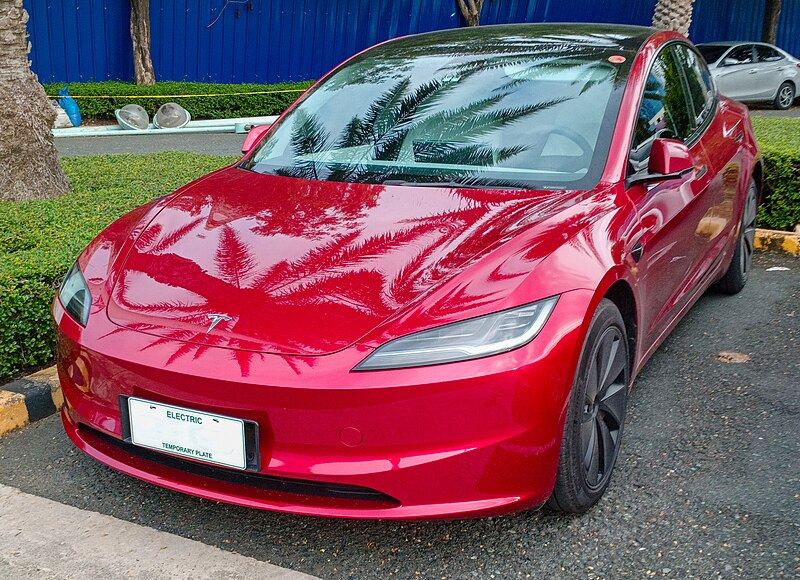 Tesla Model 32017–present
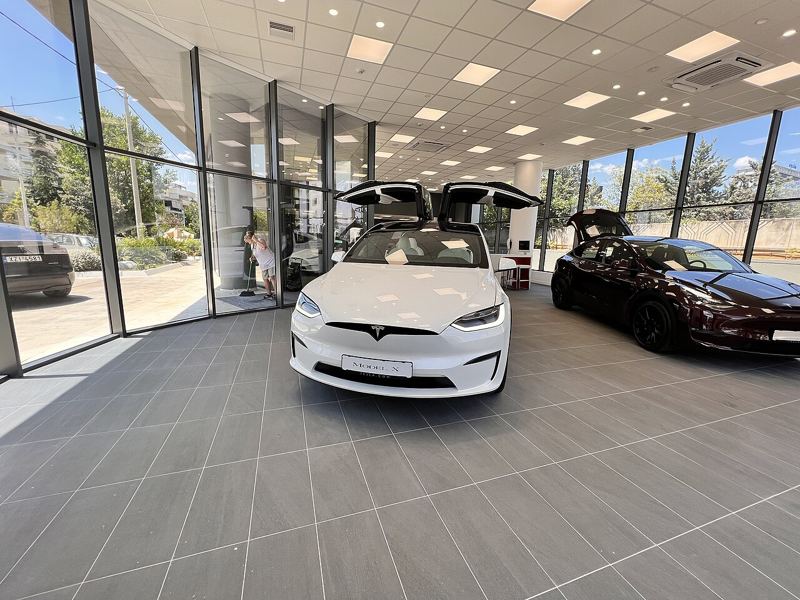 Tesla Model X2015–2026
 Ford F-Series (F-150)1948–present
 Toyota RAV41994–present (US from 1996)
 Honda CR-V1995–present
 Ram 15001981–present
 Chevrolet Silverado1999–present


