
Tesla Model X
Midsize luxury electric SUV · 2015–2026. This review has not established this model’s 2024 U.S. sales.
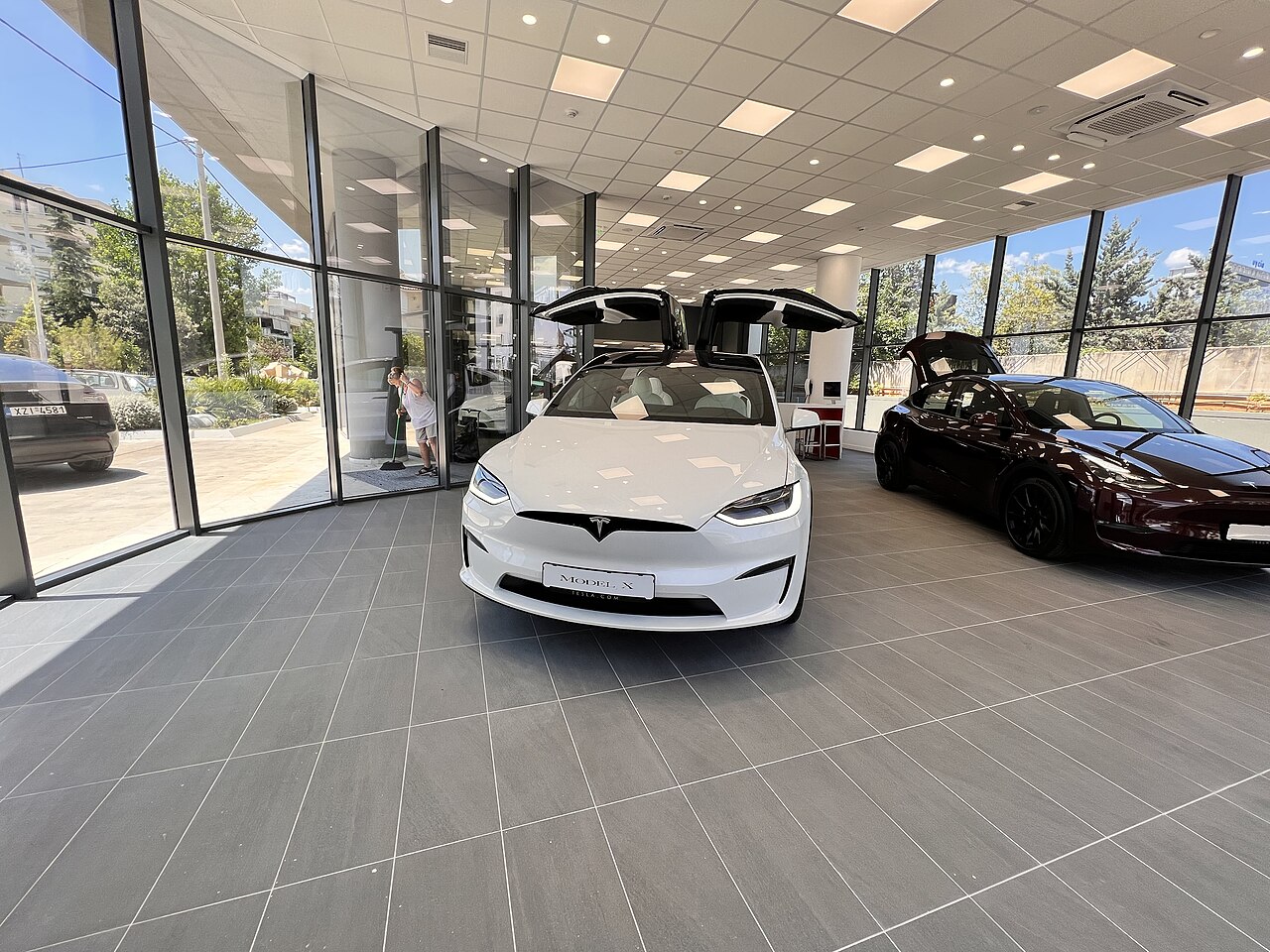
How it began
Tesla, then called Tesla Motors, developed Model X under chief executive and co-founder Elon Musk, who presented the prototype in 2012 and the production car in 2015. Franz von Holzhausen led Tesla’s design studio; the original CNBC interview identifies him as chief designer since 2008 and a lead designer of Model S, Model 3, Model X, Model Y, Cybertruck and Semi.
The prototype was unveiled at Tesla’s design studio in Hawthorne, California. Fremont was the Model X manufacturing base, with a general assembly line shared with Model S and its own new robotic body line. Manufacturing also included a European finishing stage: Tesla’s 2018 annual report explicitly identifies final assembly, testing and quality control for EU-bound Model S and Model X vehicles at Tilburg in the Netherlands.
The prototype was unveiled on February 9, 2012, with showroom arrival planned for 2014. After nearly two years of delays, the official launch came on the night of September 29, 2015 next to the Fremont factory, where a handful of customers got their keys. U.S. deliveries began that third quarter of 2015, and Tesla planned to take it to Europe and Asia in 2016. Production ended in mid-2026.
X forms part of Tesla’s letter game. Musk said in 2014 that, with S and X chosen, the company wanted the next sedan to be E. Ford objected; it told CNBC that a 2010 agreement barred Tesla from using or registering Model E. Model 3 took E’s place, and Model Y completed S3XY in 2019. Musk joked that Ford had killed the original word.
Tesla wanted to demonstrate that even a large family SUV could be electric. Its 2015 shareholder letter described Model X as proof that an electric SUV could seat seven adults, carry their gear and tow up to 5,000 pounds. It was Tesla’s third vehicle after Roadster and Model S, sharing some powertrain components and the general assembly line with Model S. Musk said in 2012 it would redefine the upscale SUV market.
Generation by generation
- Gen. 12015–2021 · Original
The falcon wing doors: the SUV that arrived with too much technology
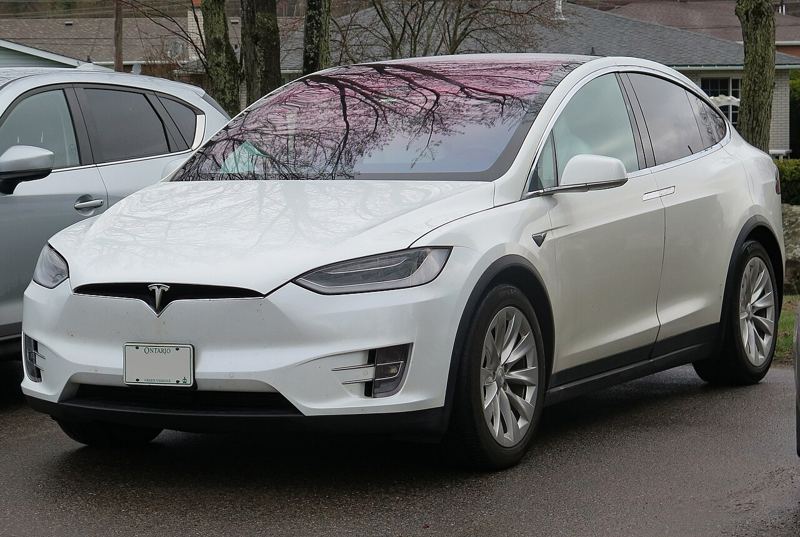
Photo: Elise240SX · CC BY-SA 4.0 What changed. Tesla’s first SUV brought dual-motor AWD, seven-seat capacity, a panoramic windshield extending overhead and a 90 kWh battery. The 90D was EPA-rated at up to 257 miles; the P90D’s optional Ludicrous upgrade claimed 0–60 mph in 3.2 seconds. Launch Signature prices exceeded $130,000. The ramp was slow: Q4 2015 production was 507 cars and deliveries were 208. In April 2016 Tesla blamed shortages partly on its own hubris in adding too much technology; by Q4 2016 it delivered about 9,500 Model X vehicles.
The innovation. The falcon wing rear doors. They have two hinges, so they fold as they rise and need less side room than gull wing doors, and they adjust themselves to avoid hitting the car next to you in a parking lot. They give direct access to the second and third rows, something Musk said no minivan offered. It also introduced a HEPA air filter about 10 times larger than a normal car's, with a button called Bioweapon Defense Mode.
If you buy one usedCheck by VIN at nhtsa.gov that these recalls were done. With physical repairs: a third-row seat back that could move in a crash (16V192, 2,676 2016 Model X built September 2015 to March 2016, seat replaced); an electric parking brake gear that could fracture (17V260, 31,709 2016 Model S and Model X); a left second-row seat back that might not latch (17V639, 4,582 2016–2017 Model X); aluminum power steering motor bolts that could corrode and break (20V062, 14,113 2015–2016 Model X, swapped for steel bolts); roof trim bonded without primer that could come off (20V710 and 24V615, 9,136 2016 Model X); and the 8 GB eMMC memory in the center display, whose wear could knock out the rearview camera and defroster (21V035, 134,951 vehicles combined: MY2012–2018 Model S and MY2016–2018 Model X). By software: loss of power steering assist on rough roads (22V818, 40,168 2017–2021 Model S and Model X) and the Autosteer controls (23V838, 2,031,220 Tesla vehicles, including 2016–2023 Model X). NBC News reported in 2019 that the falcon wing doors had been a source of quality and reliability problems; cycle them several times before you buy. Roof-trim campaign 24V615 requires the newer inspection/remedy even if 20V710 was previously completed. The eMMC software wear warning is separate from the physical VCM daughterboard replacement; ask for the actual service record. - Gen. 22021–2026 · Renovación 2021 (Plaid)
The 2021 refresh: Plaid, the yoke and 1,020 horsepower
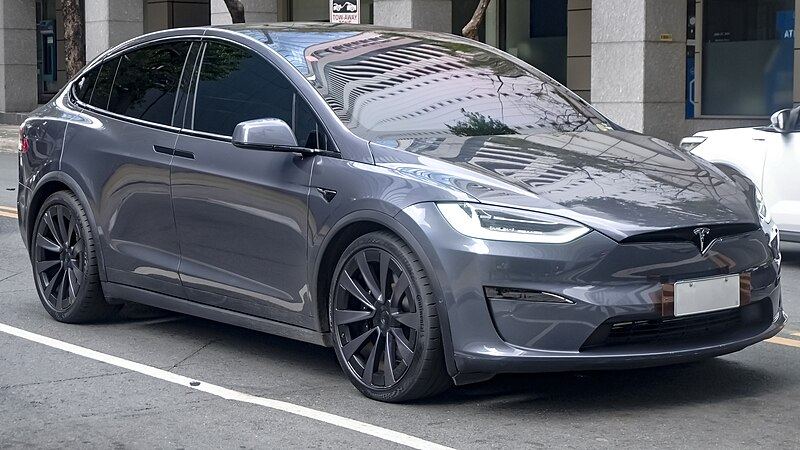
Photo: Ethan Llamas · CC BY-SA 4.0 What changed. Tesla announced the updated Model X on January 27, 2021; this history treats the major powertrain and cabin refresh as a separate phase. It brought a smoother front, a 17-inch landscape center screen, an 8-inch rear screen, tri-zone climate and a yoke. Tesla quoted about 360 miles for Long Range and 340 miles for the 1,020-horsepower Plaid, with a 2.5-second 0–60 mph claim. January prices were $89,990 and $119,990. By October, Long Range was $99,990 before the $1,200 destination charge, with 670 horsepower. S/X production was zero in Q1 during changeover; first refreshed X deliveries began in fall 2021.
The innovation. Plaid uses three motors, one in front and one for each rear wheel, with a special high-speed, high-power rotor. Tesla fully redesigned the battery pack and modules, describing an S/X battery architecture that had evolved over eight years. It incorporated Model 3/Model Y motor technology and a heat pump for winter efficiency. Tesla said those changes enabled five times more high-speed quarter-mile runs than the previous architecture.
If you buy one usedSeveral recalls involve air bags and seat belts; confirm by VIN that they were done. With physical repairs: a driver air bag that could tear when it inflated (21V868, 7,600 2021 Model X and Model S, and 24V967, 487 vehicles 2021–2025); front curtain air bags that might not deploy properly with the windows down (22V233, 7,289 2021–2022 Model X, replaced); front seat belts not properly attached to the pretensioner anchors (23V488, 15,869 2021–2023 Model S and Model X); and the wrong air bag fitted when the yoke was swapped for a round wheel or vice versa (23V743, 194 vehicles). By software: passenger air bag calibration in low-speed crashes (22V843, 29,348 2021–2023 Model X); a low brake fluid warning that did not light (23V679, 54,676 2021–2023 Model X); doors that could unlock in a crash (23V862, 120,423 2021–2023 Model S and Model X); and loss of the rearview camera image from a short on the computer board (25V002, 239,382 vehicles, including 2023–2025 Model X, with computer replacement if it failed). Tesla’s Q3 2026 filing confirms the Model S/X product sunset in mid-2026. In January 2026 Musk promised support for as long as owners have the vehicles; ask Tesla about current parts, service and coverage for the actual car.
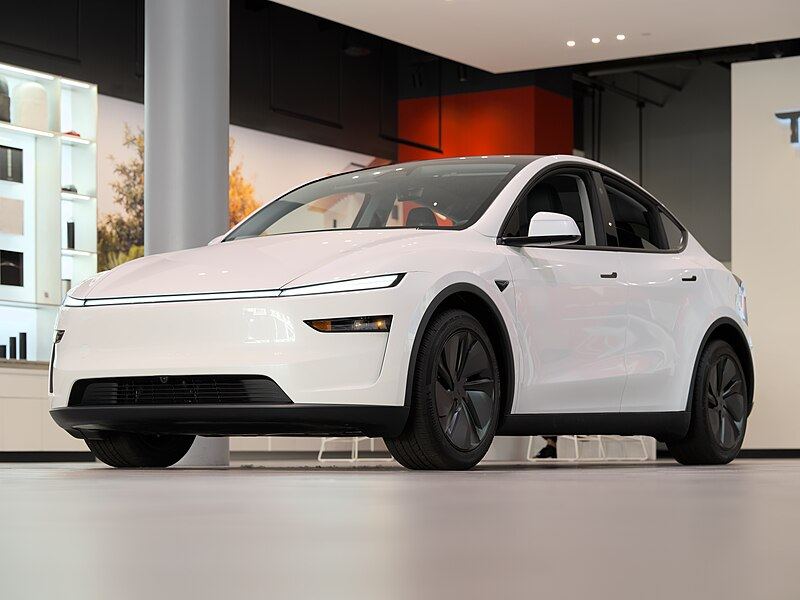 Tesla Model Y2020–present
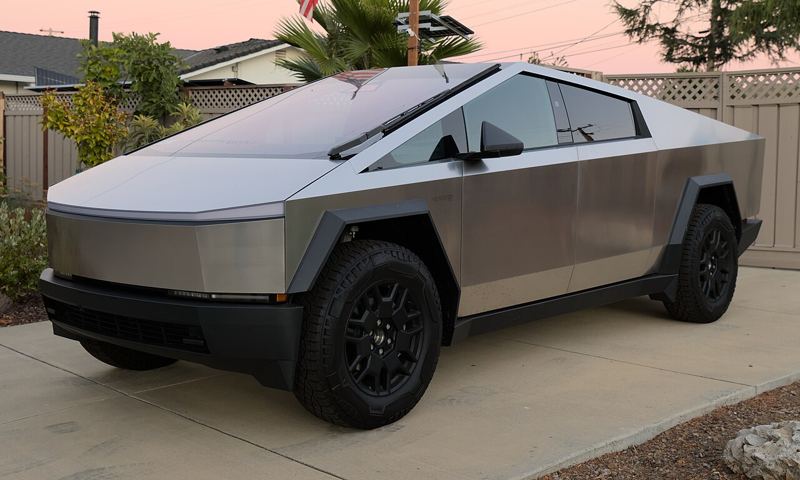 Tesla Cybertruck2023–present
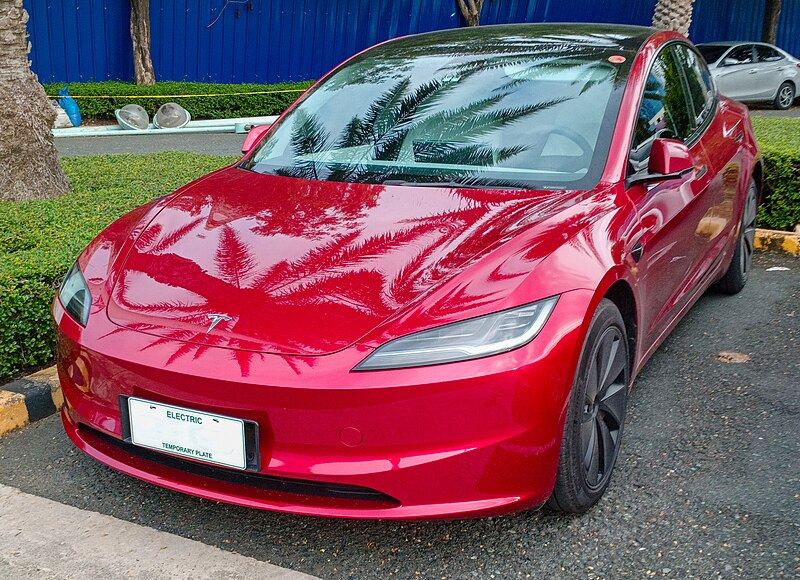 Tesla Model 32017–present
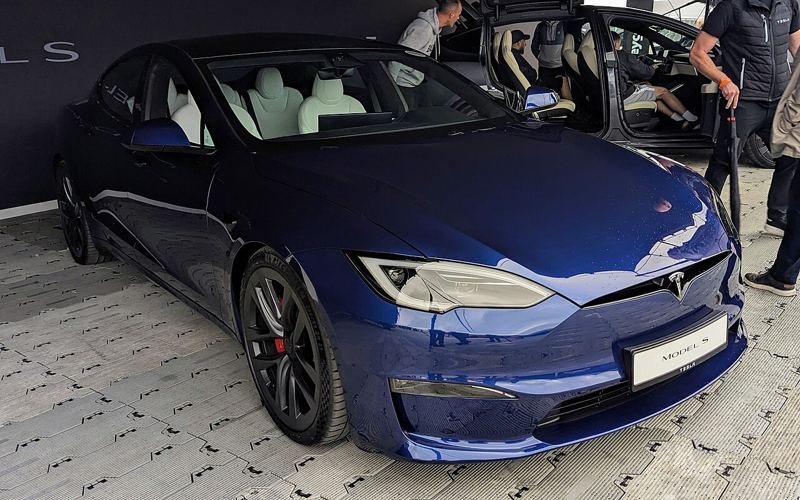 Tesla Model S2012–2026
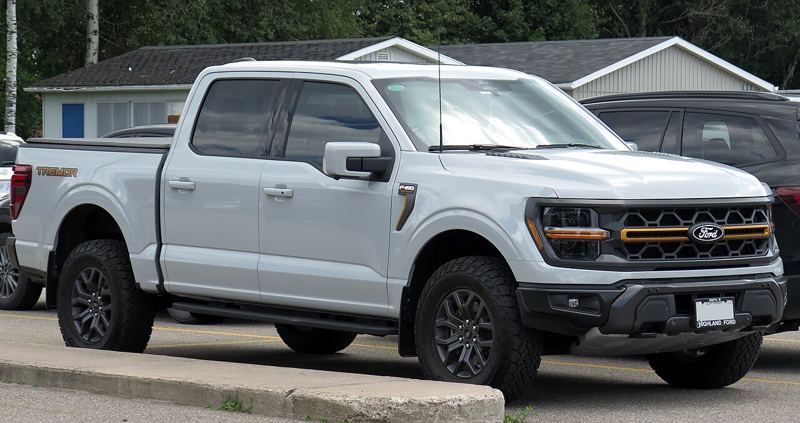 Ford F-Series (F-150)1948–present
 Toyota RAV41994–present (US from 1996)
 Honda CR-V1995–present
 Ram 15001981–present
 Chevrolet Silverado1999–present


