
Audi A4 (A5)
Compact luxury sedan · 1996–present. 7,036 units sold in the US in 2024
How it began
It descends from Audi's B series, which began with the 1972 Audi 80. That first Audi 80 was driven by Ludwig Kraus, Audi's head of Technical Development, with designer Hartmut Warkuss, suspension engineer Detlef Banholzer and engine engineer Franz Hauk. AUDI AG created the A4 in Ingolstadt, Germany, as the Audi 80's successor. The retained sources do not identify an individual designer or chief engineer for the first A4. For the new A5, Audi identifies Jakob Hirzel as exterior designer and Katharina Pyrek in assembly planning. In 2024, under CEO Gernot Döllner, the new generation was renamed A5.
The first A4 rolled off the line at Audi's main plant in Ingolstadt in October 1994. Since the fourth generation (2007), Ingolstadt and Neckarsulm have shared its production. The new A5 that replaces it is built in Neckarsulm, Germany.
The A4 went on sale in November 1994 in Europe. It reached the United States as a 1996 model, starting at $26,400. The last A4 in the U.S. was the 2025 model; its successor, the 2025 A5 sedan, was scheduled to reach dealers in the second quarter of 2025.
The A4 adopted in 1994 the alphanumeric nomenclature Audi had begun with the A8 in March and continued with the A6 that summer. A distinguishes its low-floor cars from Q SUVs, and the number indicates size and position in the lineup. The A4 belongs to the B series continuing the Audi 80 line. In 2024, the combustion-engine successor was introduced as A5 under a policy of even numbers for electric cars and odd numbers for combustion models. Audi abandoned that separation on February 3, 2025 and announced no retroactive name changes for models already on sale, so the successor retains A5.
The original Audi 80 was meant to be a "modern, but not trendy" family car, light and thrifty, and it arrived just before the 1973 oil crisis. Twenty years later, Audi needed a successor that would please driving enthusiasts and also reach the mainstream. The A4 was wider, taller and longer than the Audi 90 it replaced in the U.S., yet about 200 pounds lighter. It had the fastest production ramp-up in Audi's history up to that time.
Generation by generation
- Gen. 11996–2001 · B5
The Audi 90's successor
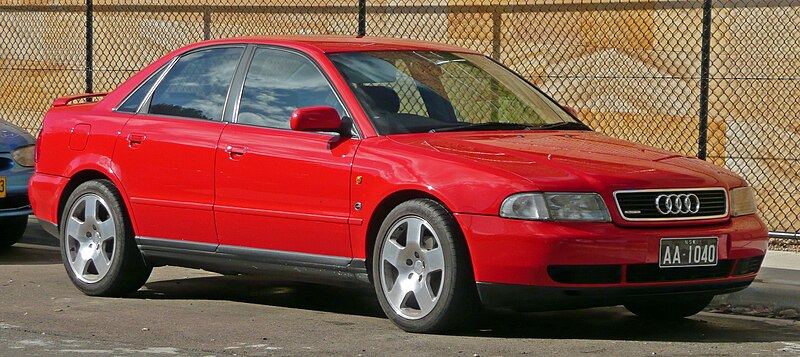
Photo: OSX · Public domain What changed. It replaced the Audi 90 in the U.S. with a body that was wider, taller and longer, yet about 200 pounds lighter. In the U.S. it used a 2.8-liter V6 with 172 hp and 184 lb-ft, with a manual or a 5-speed automatic. It started at $26,400, and quattro all-wheel drive added $1,550.
The innovation. It introduced a forged-aluminum four-link front suspension. It cut weight and shortened the offset between the tire's contact patch and the steering pivot, which virtually eliminated torque steer under full throttle.
If you buy one usedCheck NHTSA for this generation's recalls: a driver air bag that could be set off by static electricity (97V175, 1995–1997 models); a brake-booster vacuum valve in extreme cold, automatic cars (99V131, 1997–1999); an ignition switch that could fracture (00V317 and 06V403); and driver air bag inflators that could absorb moisture (22V471 for 1997–1998, 20V056 for 1999–2000 and 21V470 for 2000–2002). Ask for proof the work was done. These three driver-inflator programs concern NADI designs; keep them distinct from later passenger-inflator programs. The 2000–2002 range of 21V470 overlaps the change of generation, so verify the actual body/VIN. The 06V403 remedy supersedes 00V317; ask Audi whether the later work is complete. - Gen. 22002–2005
Bigger, stiffer and with a CVT
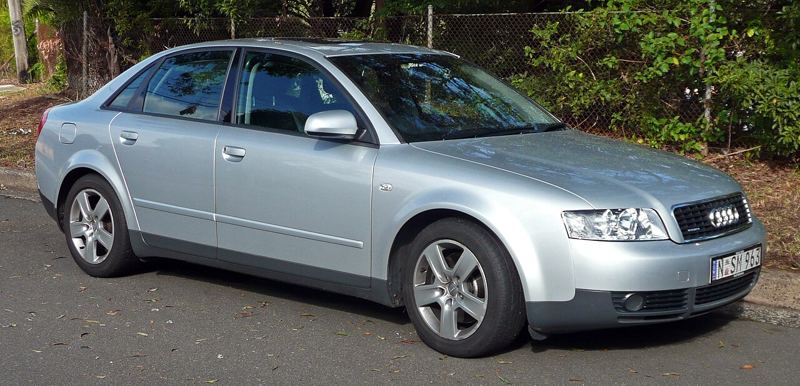
Photo: OSX · Public domain What changed. It was all-new: 1.3 inches wider, 2.3 inches longer and on a 104.3-inch wheelbase. The body was 45 percent stiffer and the independent suspension was aluminum. The 1.8 turbo made 170 hp and a new 3.0 V6 made 220 hp; ESP stability control was standard, and MotorWeek described Sideguard curtain airbags in its test car.
The innovation. The multitronic continuously variable transmission (CVT) used a link-plate chain instead of the usual metal belt, and a multi-plate clutch instead of a torque converter. It came only with front-wheel drive.
If you buy one usedFor 2002 cars, verify body/VIN before assigning NADI campaign 21V470 to this generation: its published range is 2000–2002 A4 with a 2000–2001 production window. Other selected campaigns are xenon headlamp coating degradation (05V096, 2003–2004) and passenger inflator rupture after humidity/heat exposure (16V382, 2004–2008, subject to geographic phasing). Later 18V427 supersedes that passenger-inflator program and can require another repair after an earlier replacement. Confirm actual VIN eligibility and completed work with Audi. - Gen. 32005–2008
Turbo with direct injection
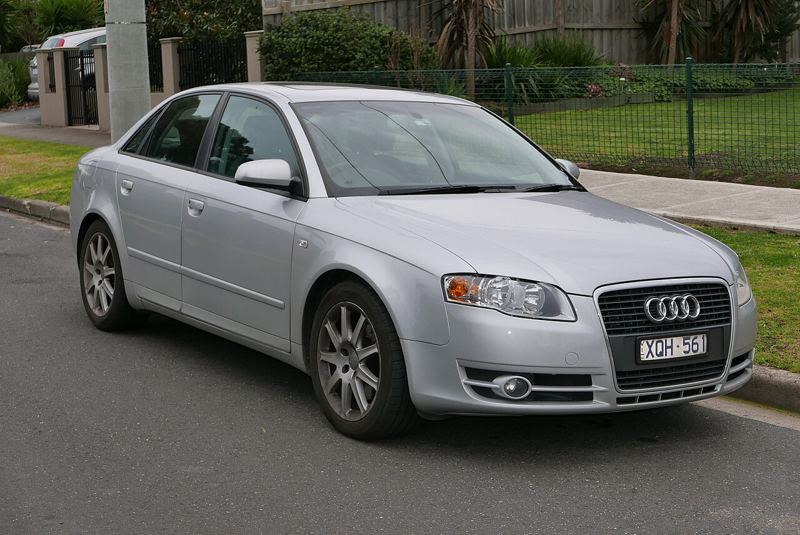
Photo: OSX · Public domain What changed. The 2005 redesign brought more power and more aluminum and magnesium in the structure. The new 2.0 turbo made 200 hp (30 more than before) and the 3.2 V6 made 255 hp, 35 more than the 3.0. With quattro and the V6, MotorWeek measured 0 to 60 mph in 7.2 seconds, eight-tenths quicker than the previous model.
The innovation. The 2.0-liter turbo combined gasoline direct injection with turbocharging to deliver 200 hp. MotorWeek highlighted that combination in its 2005 A4 road test.
If you buy one usedMost important: passenger air bag inflators can explode from propellant degradation after years of humidity and heat (16V382 for 2004–2008 and 18V427 for 2005–2008, covering 237,947 vehicles in the latter). Check the replacement with an Audi dealer. 18V427 supersedes the earlier passenger-inflator campaigns; an earlier replacement may still need the later remedy. Its 237,947 reported population combines several Audi models. - Gen. 42009–2016
Longer, with LED lights and drive modes
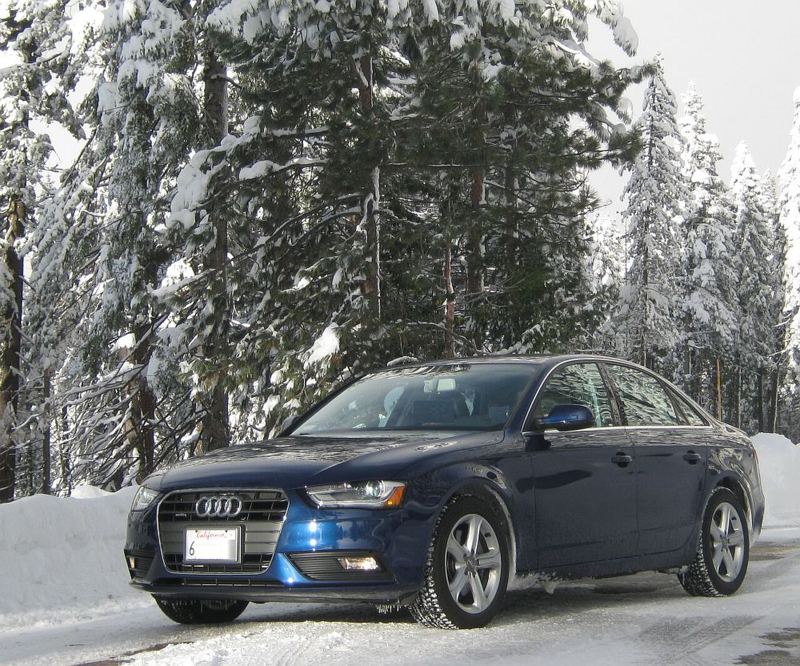
Photo: Buhin · CC BY-SA 3.0 What changed. It grew in length and width, with a wheelbase 6.6 inches longer. The direct-injected 2.0 turbo made 211 hp and 258 lb-ft, with a 6-speed Tiptronic automatic. MotorWeek described the LED lighting signature as borrowing from the R8 supercar. From its 2007 launch it was built in both Ingolstadt and Neckarsulm.
The innovation. Audi drive select coordinated engine mapping, shift points, steering and suspension damping according to the mode the driver picked.
If you buy one usedNHTSA lists 16V376 (2009 A4 sedan/Avant: the air bag control unit could corrode and fail) and 14V667 (2013–2015: an algorithm error in the control module could keep the front air bags from deploying in a second impact after a side impact; 101,938 vehicles, fixed with software). Ask for proof of both. - Gen. 52017–2025 · B9
The gauges become a screen
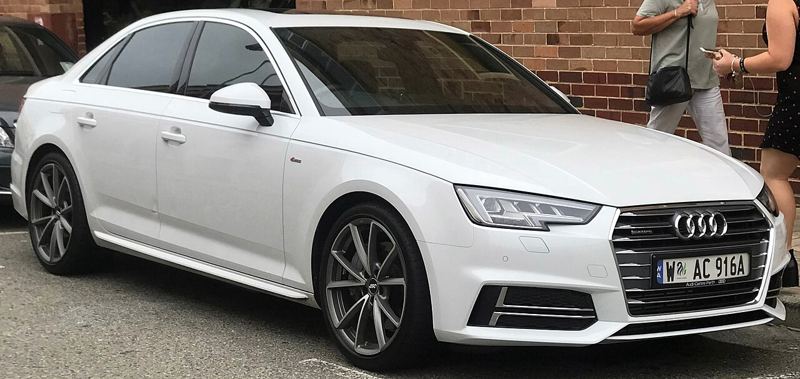
Photo: EurovisionNim · CC BY-SA 4.0 What changed. It was an evolution of the previous design with cues from the A6, A7 and A8. The 2.0 turbo rose to 252 hp and 273 lb-ft, with a dual-clutch transmission and five-link suspension front and rear. It had automatic braking and cameras that read lane markings and road signs. It started at $35,850, and the EPA rated it 25 mpg city, 33 highway and 28 combined.
The innovation. The optional virtual cockpit replaced the gauges with a digital screen, described by MotorWeek as 12 inches. A full-color head-up display was also available to keep key information in front of the driver.
If you buy one usedCheck NHTSA: 21V874 (2017–2020, 208,332 vehicles: the seat-heater cable could make the system switch off the passenger air bag); 21V295 and 22V034 (2020–2021: a broken lock nut or rear-axle misalignment); and on MY2022 cars two selected campaigns for the rearview camera image (21V825, 22V806). All fixes are free at the dealer. 21V874 requires the new physical remedy even after 19V547. 22V034 checks alignment after 21V295; 21V825 uses software, while 22V806 requires replacing the infotainment unit. Confirm the actual VIN and completed work. - Gen. 62025–present · B10
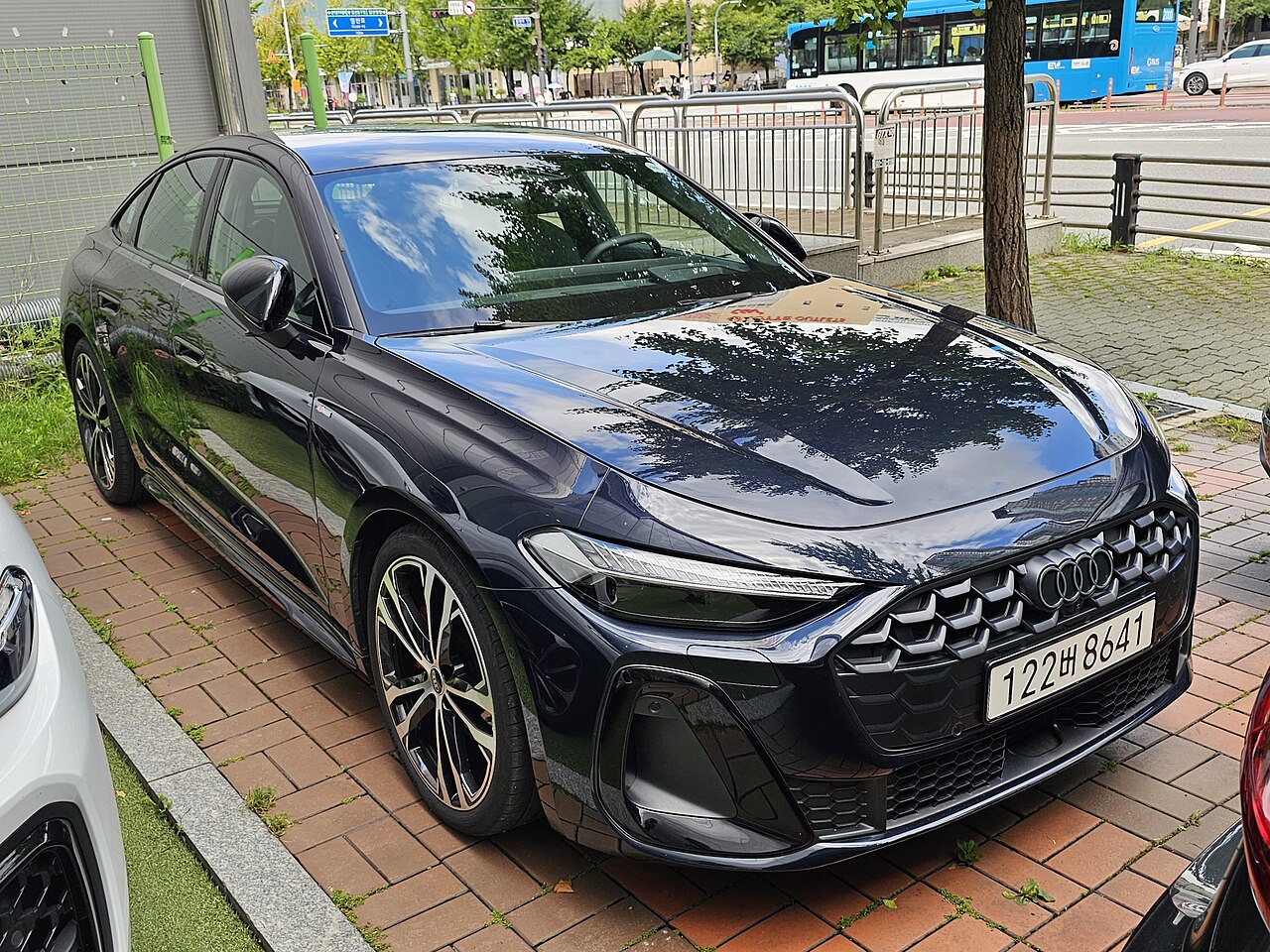
The A4 changes its name: now it is the A5
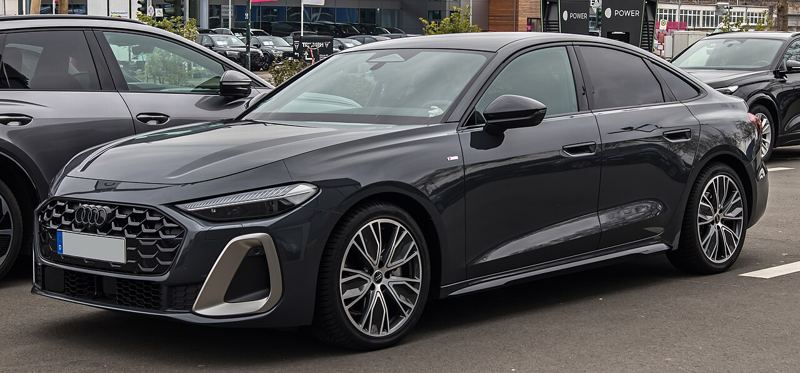
Photo: © M 93 · CC BY-SA 3.0-DE What changed. Thirty years after the first A4, the new generation is called the A5 and is built in Neckarsulm. It is larger in every dimension, and its sedan has a fastback silhouette. It debuts the PPC platform for longitudinal combustion engines. In the U.S. it has a 268 hp 2.0 turbo or, in the S5, a 362 hp V6, always with quattro and a 7-speed dual-clutch transmission.
The innovation. In the global launch, Audi highlighted available second-generation digital OLED taillights. Each panel has about 60 segments; a communication light shows warning symbols to drivers behind, for example after an accident or a breakdown. Functions and availability depend on market and equipment.
If you buy one usedTwo selected NHTSA records name MY2025 A5: 25V638 for front-belt retractor torsion bars damaged in production, requiring one/both front belts to be replaced; and 25V899 for rear automatic-locking retractors that may not secure a child restraint, requiring inspection/conditional rear-belt replacement. Confirm the exact body, build/VIN eligibility and completed work with Audi for the actual car.
 Audi Q52008–present
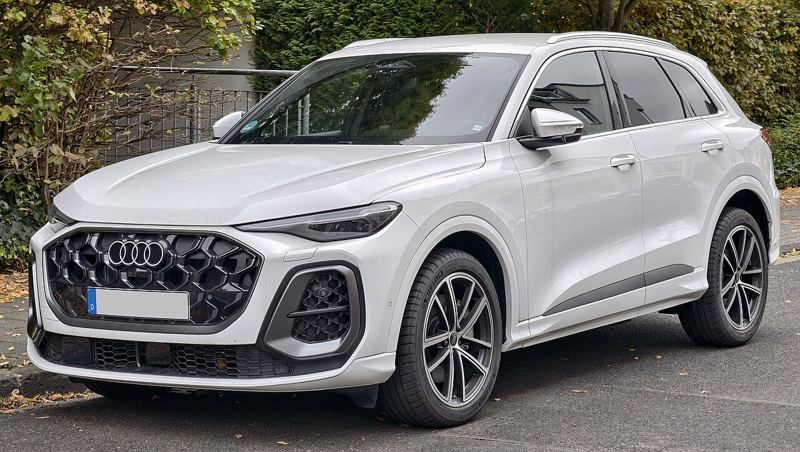
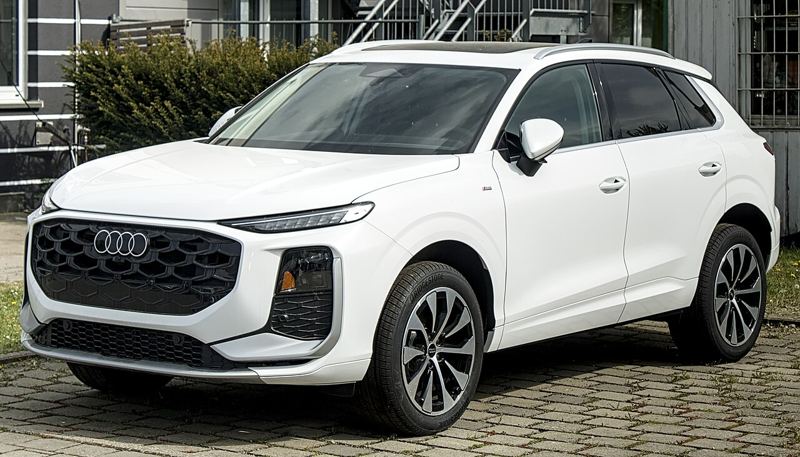 Audi Q32015–present
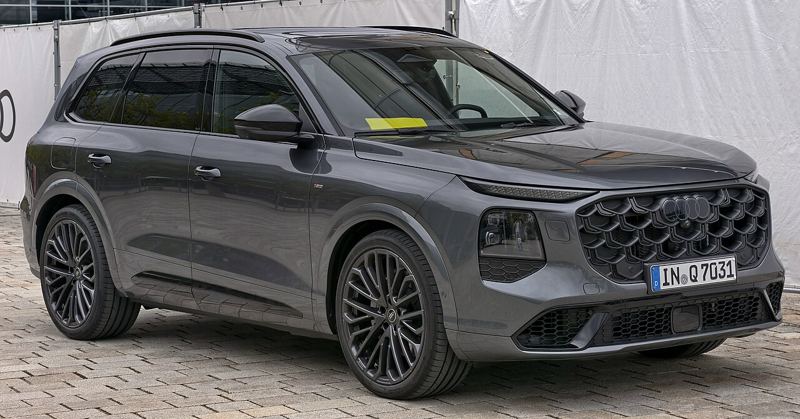 Audi Q72007–present
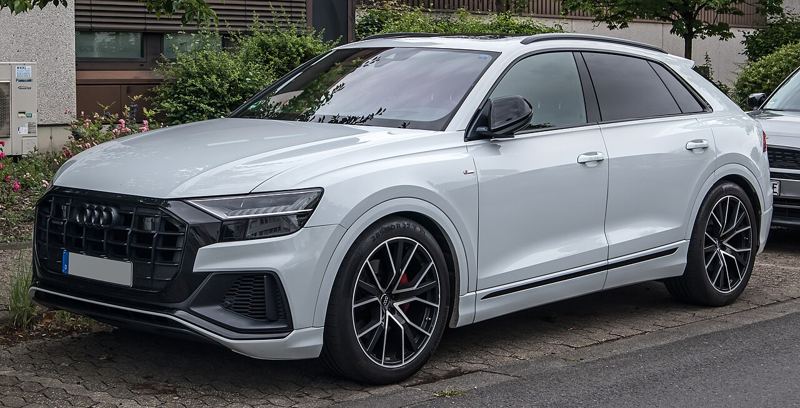 Audi Q82019–present
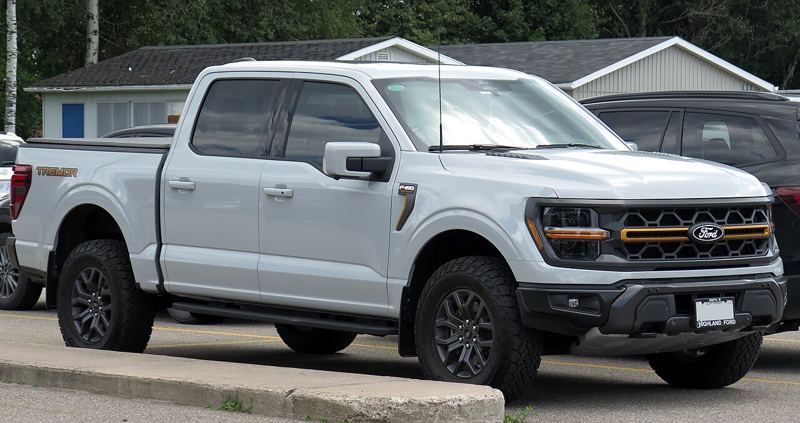 Ford F-Series (F-150)1948–present
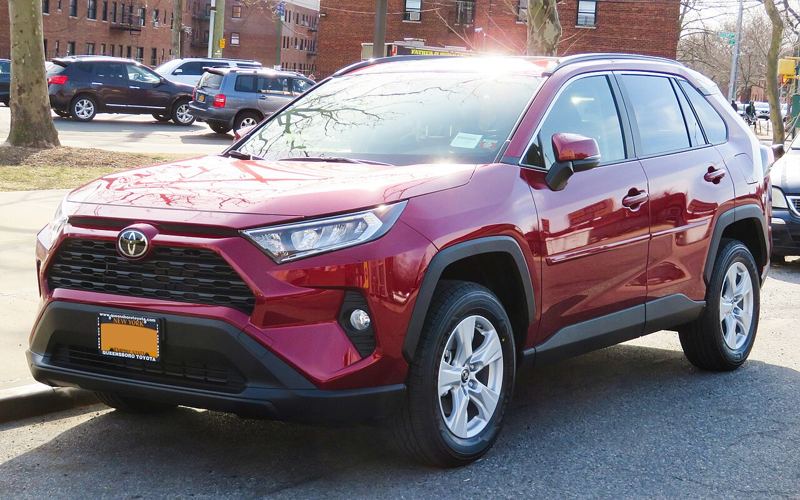 Toyota RAV41994–present (US from 1996)
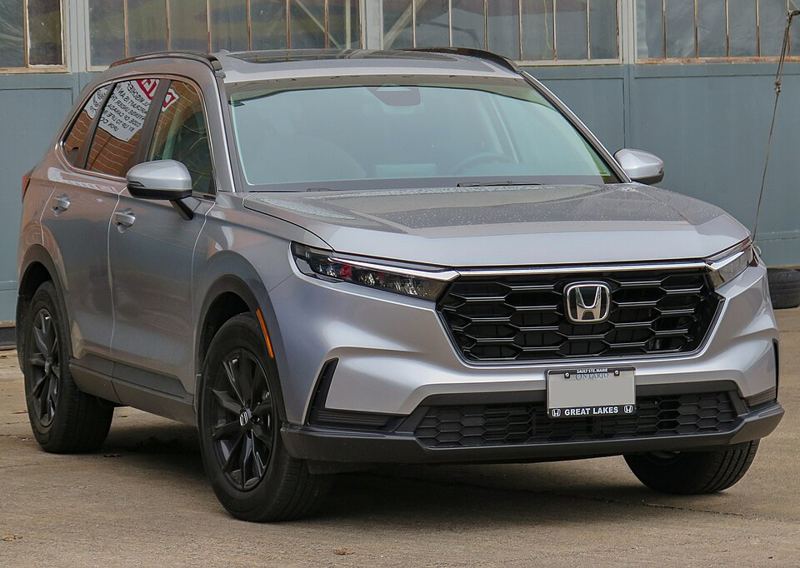 Honda CR-V1995–present
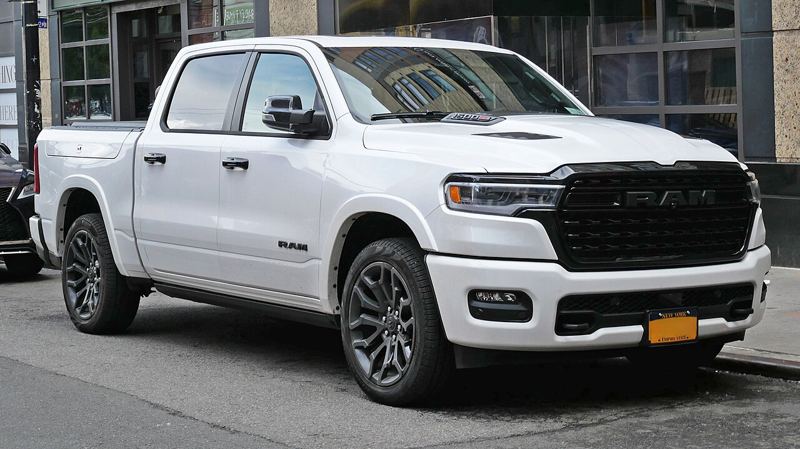 Ram 15001981–present
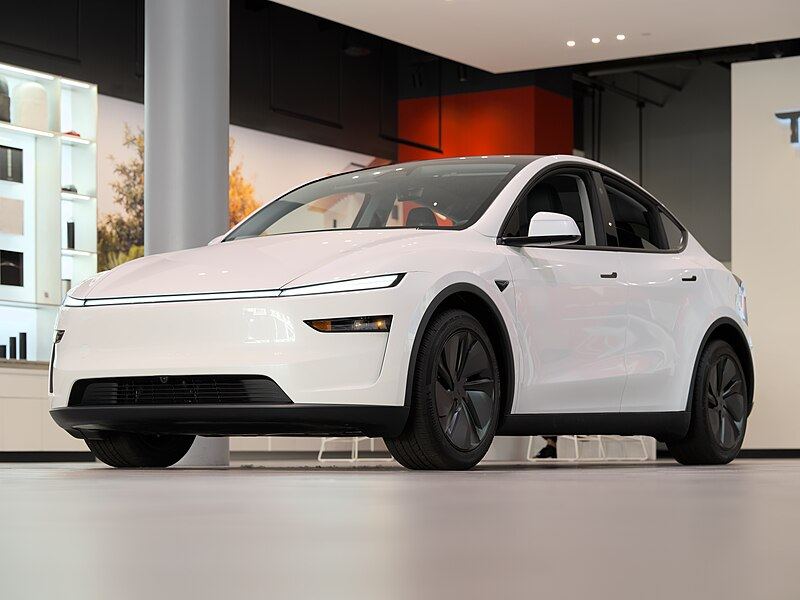 Tesla Model Y2020–present


