
Audi Q3
Compact luxury SUV · 2015–present. 32,090 units sold in the US in 2024
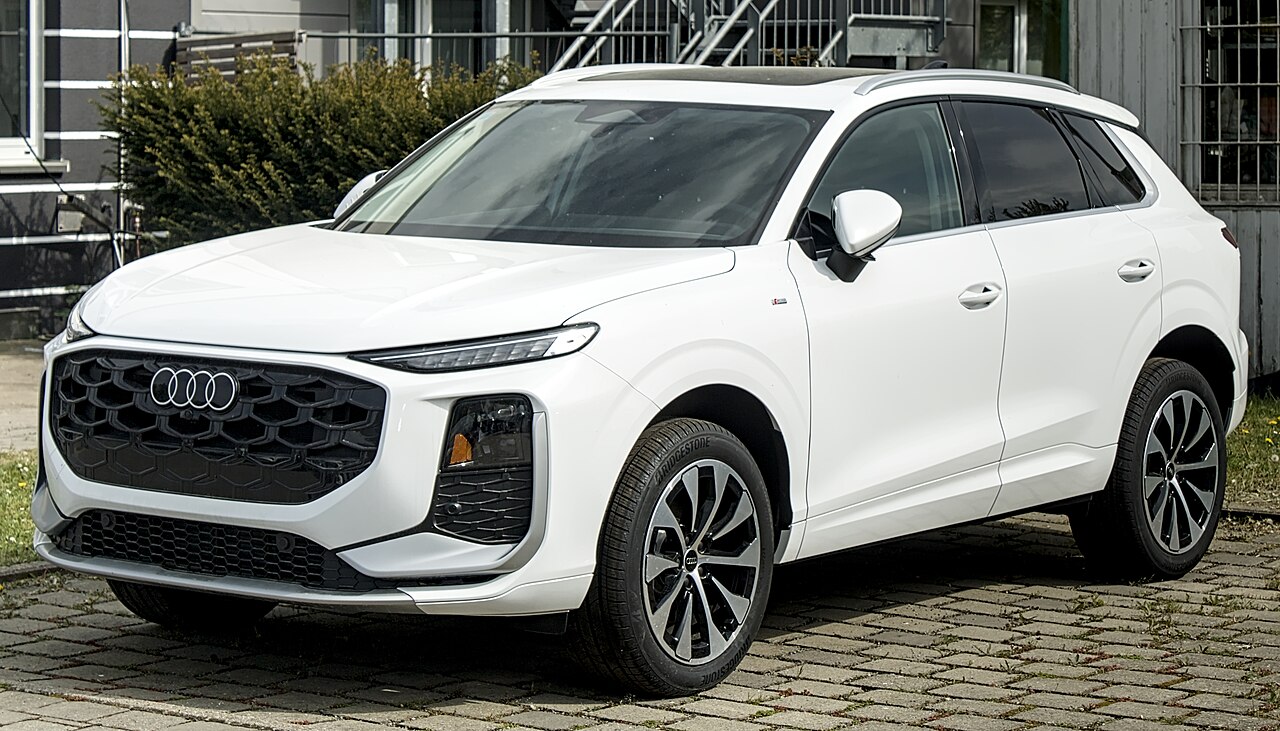
How it began
It was created by AUDI AG, the German brand based in Ingolstadt. In April 2009, Audi board chairman Rupert Stadler and production chief Frank Dreves announced where it would be built. The third generation arrived in 2025 under CEO Gernot Döllner and Geoffrey Bouquot, head of Technical Development. The retained sources do not identify an individual designer of the first Q3.
The first generation was built at SEAT's Martorell plant near Barcelona, Spain: it was the first Audi built there. Since 2018 the Q3 has been built at Audi Hungaria in Győr, Hungary, which has now passed one million units. For the third generation, Audi added a network with Ingolstadt: bodies for that additional volume are made in Győr, then painted and assembled in Germany.
It made its world debut at Auto Shanghai in April 2011, and series production began that same year. In the U.S. it debuted at the Detroit Auto Show in January 2014 and was scheduled to reach dealers in fall 2014 as a 2015 model.
Q is the letter of Audi's SUV family, and the 3 places it below the Q5 and Q7. The Audi name has its own story: founder August Horch could not reuse his surname for a new company, so he translated it into Latin. 'Horch!' in German and 'Audi!' in Latin mean the same thing: 'listen!'
Audi already had the Q5 and Q7, but it lacked a small, sporty SUV to keep growing. The idea was to blend a compact car's design and handling with an SUV's space and versatility. When it reached the U.S., compact crossovers were booming, and Audi presented the Q3 as a new entry in that market. AutoGuide compared it with the Mercedes-Benz GLA and described it as a possible alternative to the discontinued A3 hatchback.
Generation by generation
- Gen. 12015–2018 · 8U
Audi's smallest SUV comes to America
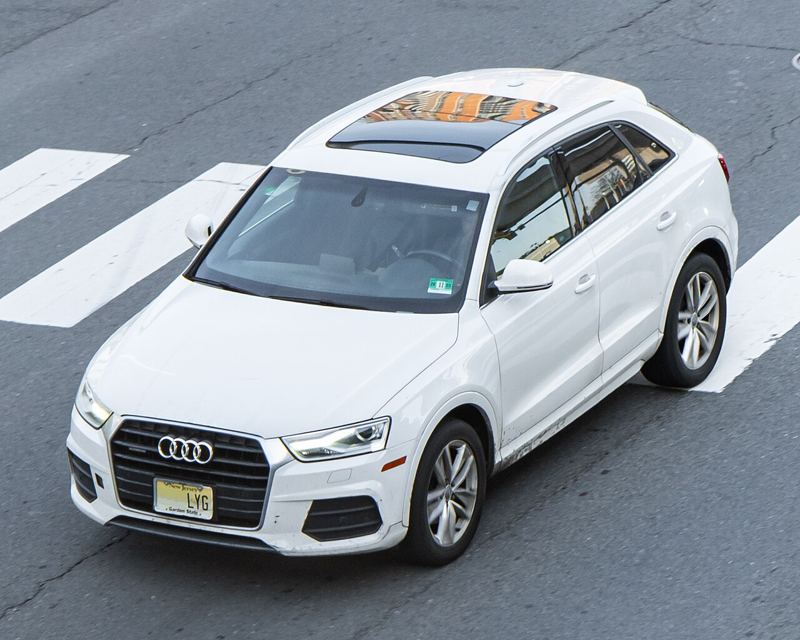
Photo: OWS Photography · CC BY 4.0 What changed. It was the first Q3, so it replaced no earlier model. It reached the U.S. midway through its generation. Audi offered features such as blind-spot monitoring and a rearview camera, depending on equipment. It had a single engine, a 200 hp, 207 lb-ft 2.0 TFSI turbo with a six-speed Tiptronic automatic, in front-wheel drive or quattro. It started at $33,425 including the $925 transportation charge.
The innovation. Audi presented it as a coupé-like five-door SUV: a low roof and wraparound hatch combined with an SUV-style seating position, wheel size and ground clearance. The June 2011 production release repeated that blend of compact-car design and versatility.
If you buy one usedFour selected NHTSA campaigns are: on some 2015 models built April 4 to November 5, 2014, the sunroof could keep closing after the car was shut off (15V200); software left the side marker lights dark on 2015–2017 models (16V642); on 2016–2017 models the brake lights did not come on if the parking brake was used for emergency braking (17V400); and on 2016–2018 models with LED headlights, a failed turn signal might not warn the driver (19V385). The EPA rates the 2015 FWD 2.0L at 20/28/23 mpg (city/highway/combined) on premium fuel. Check by VIN that every campaign was completed. - Gen. 22019–2025 · F3
Bigger, more digital, quattro standard
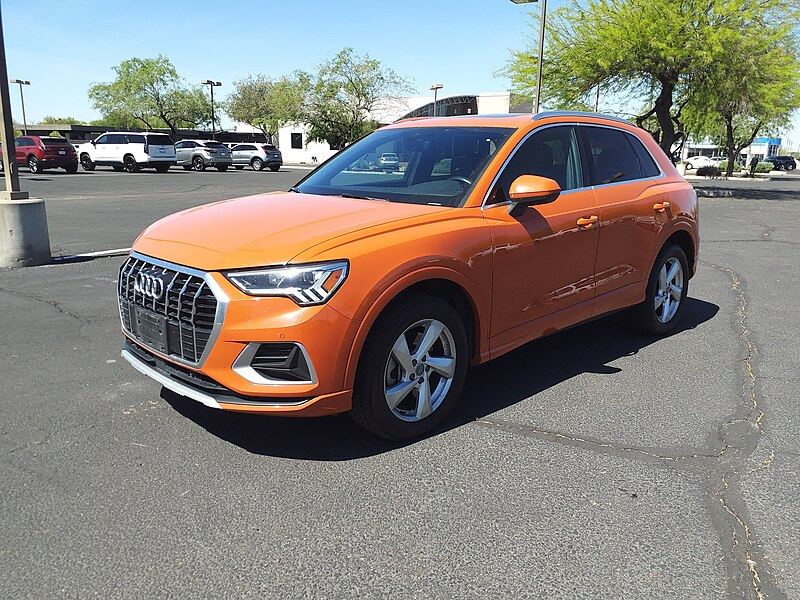
Photo: HJUdall · CC0 What changed. It grew in almost every dimension: the wheelbase rose 3 inches to 105.5, and cargo space reached 23.7 cubic feet (48.0 with the seats folded). The new 2.0 TFSI made 228 hp and 258 lb-ft, 28 hp and 51 lb-ft more than before, with an eight-speed automatic and standard quattro all-wheel drive. It was revealed in Germany on July 25, 2018, built in Győr, and started at $34,700 plus $995 destination in the U.S.
The innovation. It made a fully digital 10.25-inch instrument cluster and an 8.8-inch MMI touchscreen standard, tech previously found in bigger Audis. Camera-based Audi pre sense emergency braking was standard too.
If you buy one usedNHTSA lists, among others: a passenger airbag that might not deploy properly on some 2019s (20V273); a brake pedal plate that could bend or detach on 2020s (20V786); a damaged fuel-tank vent pipe that could let fuel spill when the cap is opened on 2021–2022s (22V673); a rear window that could crack on 2022s (22V701); and a rearview camera that might not show an image on 2022 (22V064) and 2024–2025 models (25V082). In September 2026 recall 26V590 was opened for 2019–2021 models: a steering-rack bolt can corrode and break. The EPA rates the 2019 at 19/27/22 mpg. 22V064 specifically addresses vehicles that missed the 21V825 update. Under 26V590, the right steering-rack mounting bolt is replaced; the published November 10, 2026 letter date is planned, so ask Audi about current VIN-specific arrangements. - Gen. 32026–present · FJ
Curved screens and a column shifter
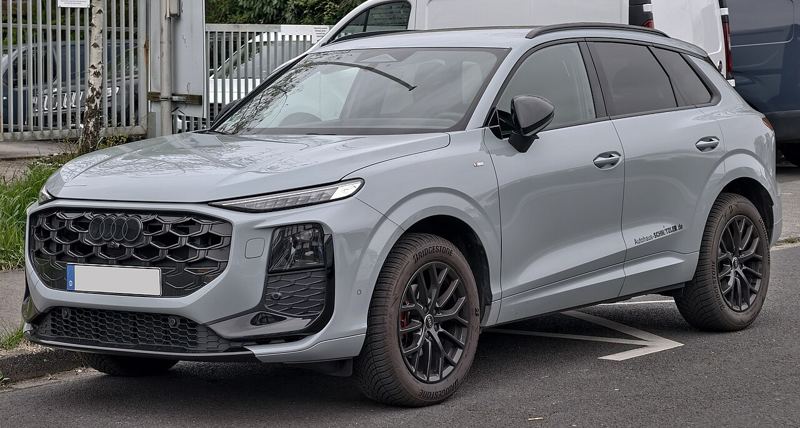
Photo: © M 93 · CC BY-SA 3.0-DE What changed. It debuted in June 2025 and was scheduled to reach the U.S. in the first quarter of 2026; Audi confirmed it was on sale by April 24. The 2.0 TFSI rose to 255 hp and 273 lb-ft, with a new seven-speed S tronic dual-clutch transmission and standard quattro; Audi lists 0 to 60 mph in 5.5 seconds. Inside it brings the 'Digital Stage', with an 11.9-inch cluster and a 12.8-inch touchscreen running Android Automotive. The gear selector moved to the steering column, which freed up space in the console.
The innovation. Audi offers optional digital OLED taillights with customizable light signatures, technology the brand introduced for the first time in its compact segment. Audi USA confirms standard LED lighting and optional OLED taillights; the signature count and functions depend on market and equipment.
If you buy one usedThe newly redesigned model has limited long-term ownership history. NHTSA lists recall 26V209 for some 2026 models: software allowed the sunroof to be closed remotely without a view of the roof. In IIHS tests for 2026 it earned Good in small overlap front, side, headlights and crash prevention, and Poor in the updated moderate overlap test. The EPA rates it at 22/29/25 mpg. The Poor updated-moderate-overlap rating applies to vehicles built after May 2026, following rear-seat/belt changes. 26V209 requires updated sunroof software and owner-manual information; verify actual VIN eligibility and completed work.
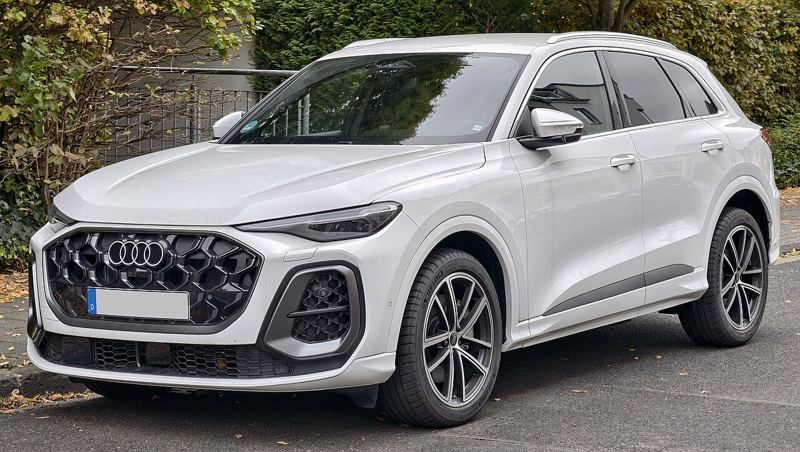 Audi Q52008–present
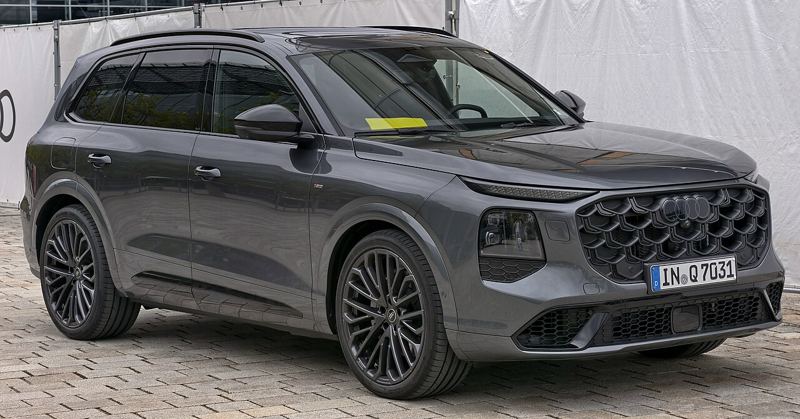 Audi Q72007–present
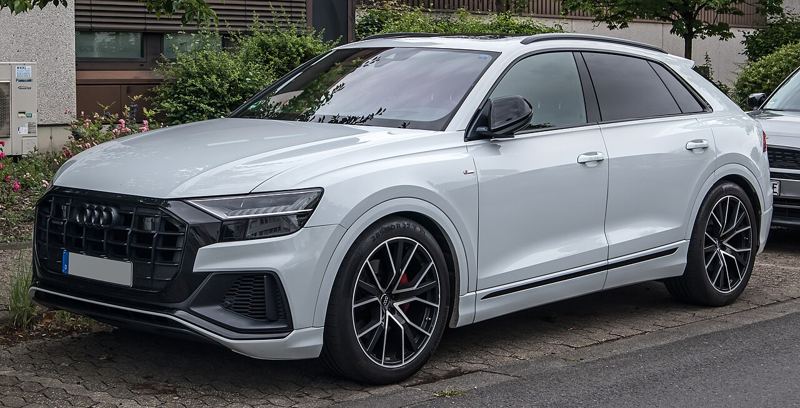 Audi Q82019–present
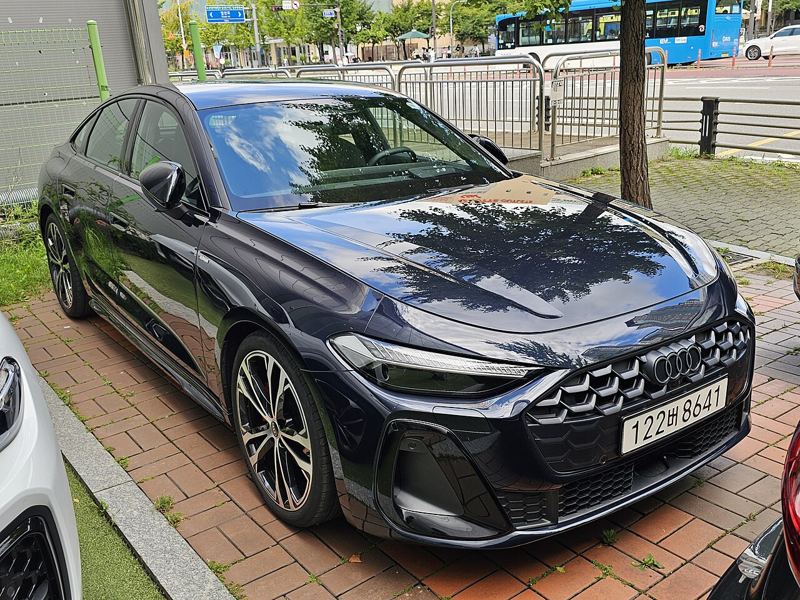 Audi A4 (A5)1996–present
 Ford F-Series (F-150)1948–present
 Toyota RAV41994–present (US from 1996)
 Honda CR-V1995–present
 Ram 15001981–present
 Tesla Model Y2020–present


