
Audi Q7
Three-row large luxury SUV · 2007–present. 20,894 units sold in the US in 2024
How it began
It was created by AUDI AG, based in Ingolstadt, Germany. Japanese designer Satoshi Wada worked on the Pikes Peak quattro concept and then oversaw development of the production Q7, under design chief Walter de'Silva. Of the second generation, Ulrich Hackenberg, then Audi's development chief, said it set the benchmark in its class. The third was introduced by Audi CEO Gernot Döllner.
The Q7 is built at the Volkswagen Group plant in Bratislava, Slovakia’s capital. The current factory profile dates production from 2005 and describes a Q7 and Q8 body shop covering more than 110,000 square meters with over a thousand robots. All three generations come from Bratislava, which also builds the Porsche Cayenne and Volkswagen Touareg.
Its story began at the 2003 Detroit auto show with the Audi Pikes Peak quattro concept. The production Q7 was unveiled at the 2005 Frankfurt Motor Show (IAA), right as the quattro system turned 25. It reached the United States as a 2007 model, first with a 4.2-liter V8.
Audi comes from Latin: it is the command form of 'to listen'. When August Horch had to leave his own company and could not use his surname (Horch means 'listen' in German), he translated it into Latin. The Q marks Audi's SUV family and the 7 its place in the range, between the Q5 and the Q8.
Audi had no SUV at all while the SUV market was booming. According to Audi, the Q7 was conceived for all kinds of roads and moderate off-road use, with room for seven people. In the United States, buyers were still choosing big luxury SUVs, and Audi wanted one that drove with the agility of its quattro sedans. It was the first SUV from the brand with the four rings.
Generation by generation
- Gen. 12007–… · 4L
Audi's first SUV arrives in a large size
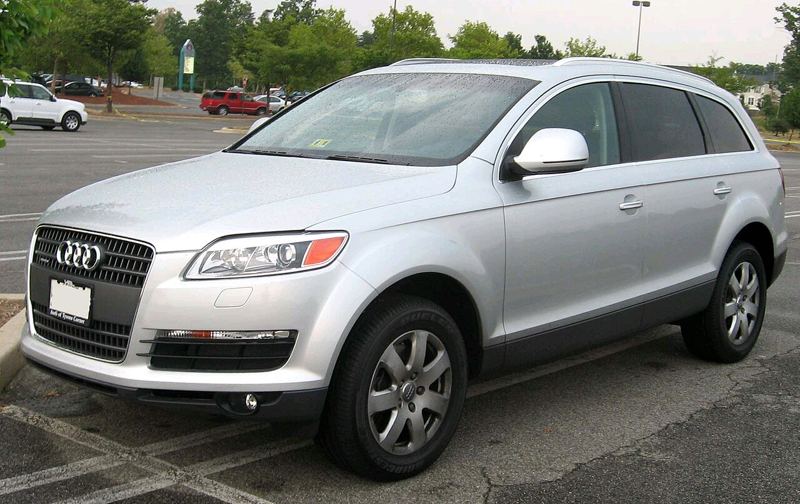
Photo: IFCAR · Public domain What changed. There was no earlier Q7: it was Audi's first SUV. It was more than five meters long, with a wheelbase of about three meters, seven seats and up to 2,035 liters of cargo space. In the United States it debuted as a 2007 model with a 350-hp 4.2-liter V8, a six-speed Tiptronic gearbox and permanent quattro; the EPA now rates it at 12 mpg city and 17 highway. A 3.6-liter V6 (280 hp) followed, then the 3.0 TDI diesel for 2009 (17/24 mpg) and, for 2011, a supercharged 3.0 V6 with an eight-speed gearbox. The retained evidence confirms the first U.S. model year, 2007, and the replacement for MY2017, but does not establish the exact final U.S. model year of this phase.
The innovation. The Q7 V12 TDI (2008–2012), built in Bratislava, had a 12-cylinder diesel with 500 PS and 1,000 Nm of torque, more than any other SUV of its time according to Audi. It was also the first Audi to leave the line with ceramic brakes as standard.
If you buy one usedNHTSA lists for gasoline 2007–2012 Q7s a recall because the fuel pump flange could crack and leak fuel (16V660, with a final fix in 18V818); on 2013–2015 cars it is 17V298. The 2011–2012 cars have another recall for a fuel injection leak (15V019), 2007–2008 cars one for a power tailgate that could slam shut (07V334), and 2009–2015 cars one because the axle weight label showed a wrong figure (23V086). On the 2013 3.0 TDI, a valve could let oil into the brake booster (14V516). The EPA lists the 2009–2016 Q7 3.0 diesel among the vehicles with software that cheated emissions tests. Check by VIN at nhtsa.gov that everything was done. On the plus side, the 2009 Q7 was an IIHS Top Safety Pick. 18V818 requires the later flange replacement for eligible cars previously given interim tape; confirm that work rather than accepting a record of tape alone. EPA’s diesel list and safety-recall completion are separate checks. - Gen. 22017–2026 · 4M
Lighter, smarter and more fun
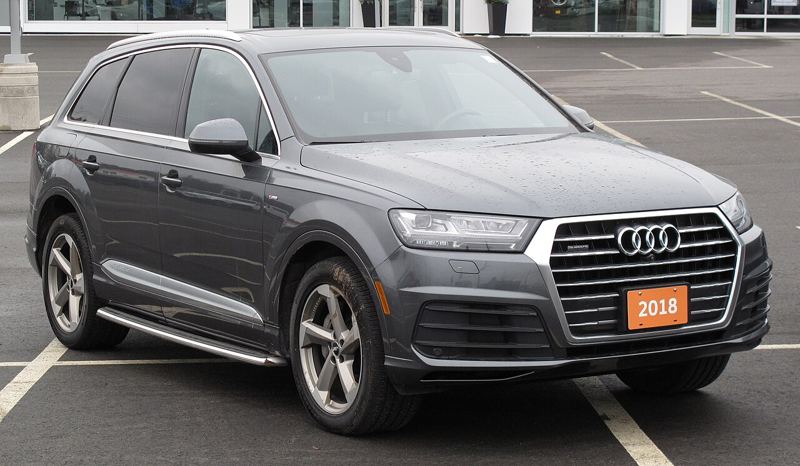
Photo: Elise240SX · CC BY-SA 4.0 What changed. It was unveiled in Detroit in January 2015 and weighed up to 325 kg less than before, thanks to a body that was 41 percent aluminum; it was also slightly shorter and narrower. It debuted the second generation of Audi's modular longitudinal platform. In the United States it arrived as a 2017 model with a 252-hp 2.0 turbo or a 333-hp supercharged 3.0 V6, an eight-speed gearbox and standard quattro. It was updated in 2019 and again in an upgrade announced in January 2024; by 2026 the 3.0 turbo V6 made 335 hp.
The innovation. All-wheel steering: at low speed the rear wheels turn up to five degrees opposite the front wheels, shrinking the turning circle by up to one meter. At high speed they turn the same way for more stability. For a seven-seat SUV, parking feels like it does in a smaller car.
If you buy one usedThe first year, 2017, has several NHTSA recalls: front airbag software (16V519), a third-row seatback that could move in a crash (16V641) and the electric power steering unit (16V648). The 2017–2018 cars have a recall for leaking fuel rails (19V035) and the 2017–2019 cars one for the bolt between the steering shaft and steering gear, which could loosen (20V149). The 2018–2020 cars have the C-pillar padding recall (20V658); 2020–2021 cars, a fuel pump that could fail (22V516) and the passenger airbag (21V078); 2023–2024 cars, the driver's seat side airbag (23V868); and 2025 cars, missing rivets in the front seat belt buckles (25V777). The 2020–2026 cars fall under a rearview camera image recall (25V900). All have a free fix: confirm by VIN at nhtsa.gov. The IIHS named it a Top Safety Pick in 2017 and 2024, and a Top Safety Pick+ in 2025. The IIHS awards are tied to their criteria years: 2017 for MY2017 (TSP), 2024 for MY2024–2025 (TSP), and 2025 for MY2025–2026 (TSP+). Repairs include software for 16V519/21V078/25V900, a support bracket for 16V641, and physical or inspection-dependent work for the other selected campaigns. - Gen. 32027–present · G8
More than 20 years on, an all-new Q7
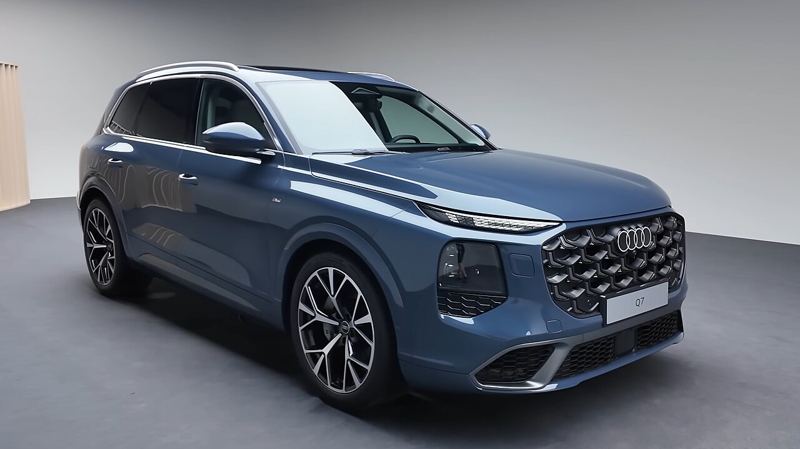
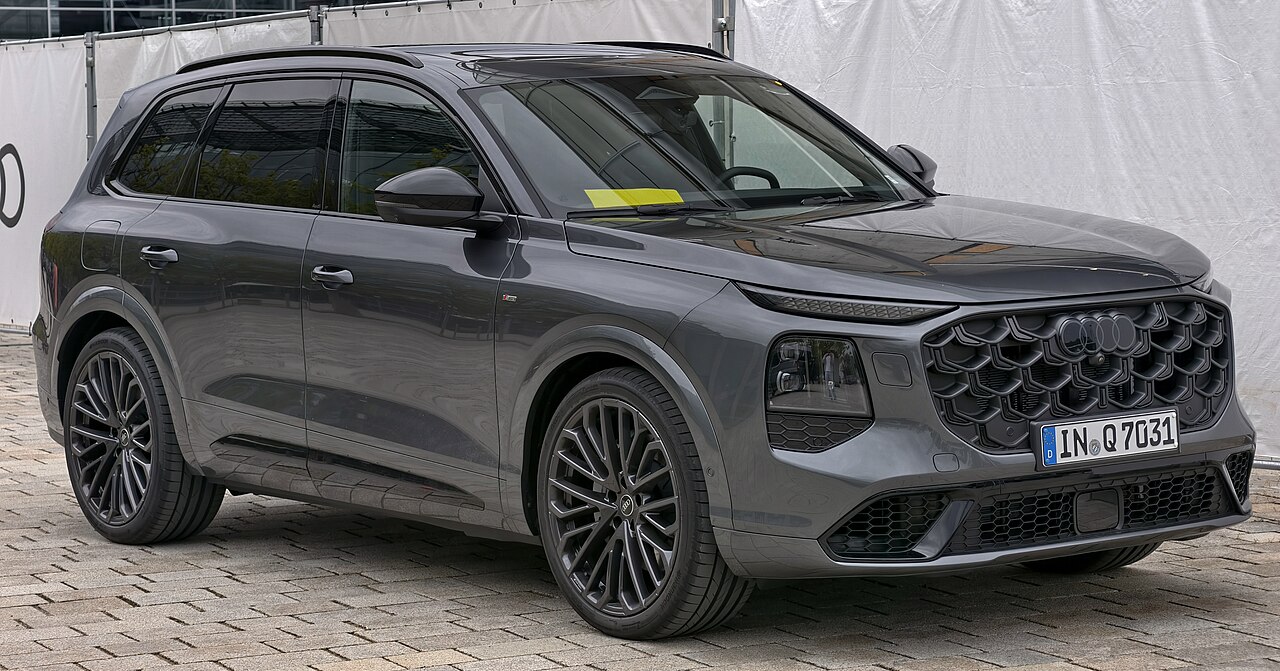
Photo: https://www.youtube.com/@barturban · CC BY 4.0 What changed. Audi unveiled the third generation on June 9, 2026. The global range offers five seats as standard and optional six- or seven-seat configurations; in the United States, the 2027 model offers seven as standard or six with individual second-row seats. Five-, six- and seven-seat Q7 configurations had already been described in 2005. The new Q9 sits above it in the range. The U.S. 2027 filing identifies a 429-hp 2.9-liter turbo V6 for Q7, 94 hp above the 2026 model’s 335-hp 3.0-liter V6; U.S. launch coverage advertises 0 to 60 mph in 4.8 seconds.
The innovation. With the available projected turn signals, the Q7 draws an arrow on the ground at night, synchronized with its front and rear lights, to alert other road users. Audi describes them as the first of their kind. In Euro NCAP’s 2026 European assessment, the left-hand-drive Q7 TDI quattro 220 kW scored 100 percent in the Post Crash Safety category; Audi announced it as the first production car to achieve that result. The percentage applies to one category, rather than the overall rating.
If you buy one usedFor MY2027, the exact Audi/Q7 and Audi/SQ7 NHTSA queries on November 3, 2026 returned zero records. That dated name-specific result does not clear an individual VIN; confirm the actual vehicle and any later campaigns with Audi/NHTSA. The European third-generation Q7 earned five stars in Euro NCAP’s 2026 assessment. Confirm the U.S. vehicle’s body, model-year equipment and delivery status separately.
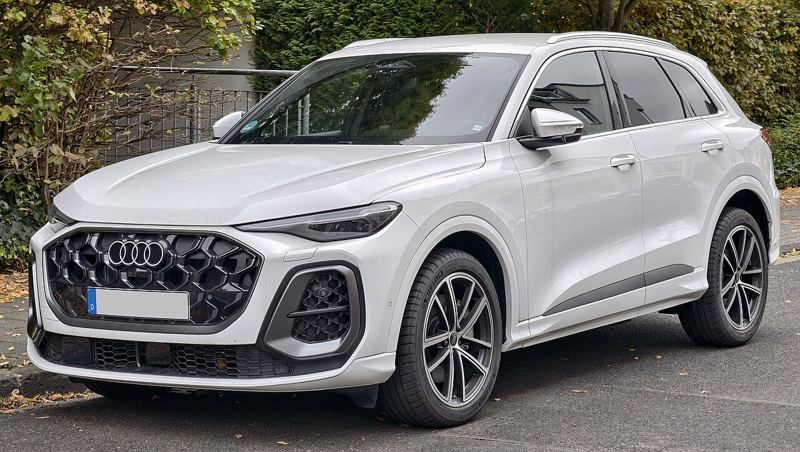 Audi Q52008–present
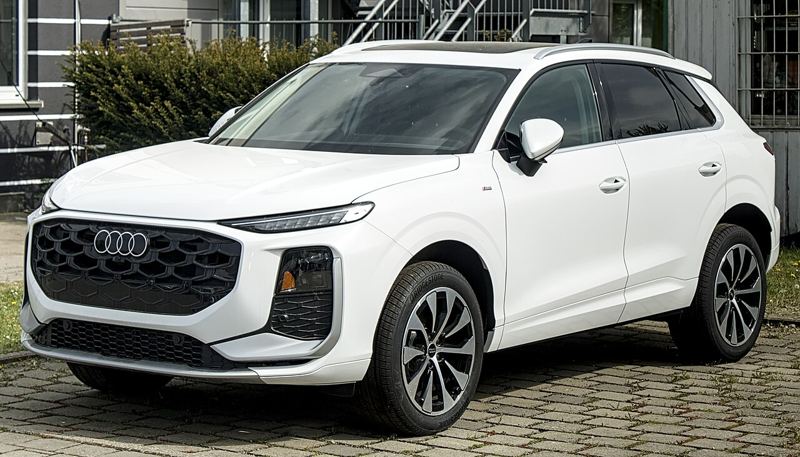 Audi Q32015–present
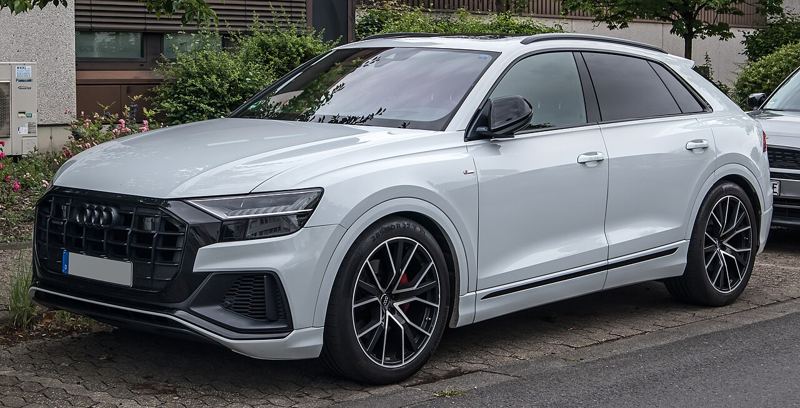 Audi Q82019–present
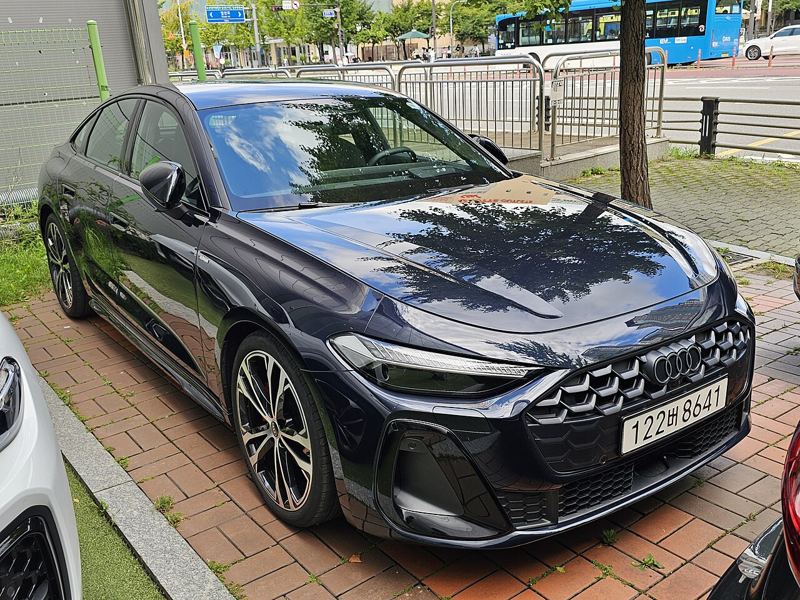 Audi A4 (A5)1996–present
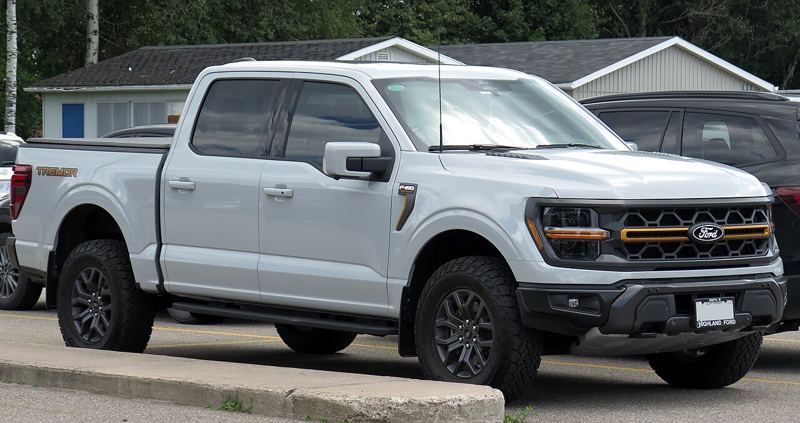 Ford F-Series (F-150)1948–present
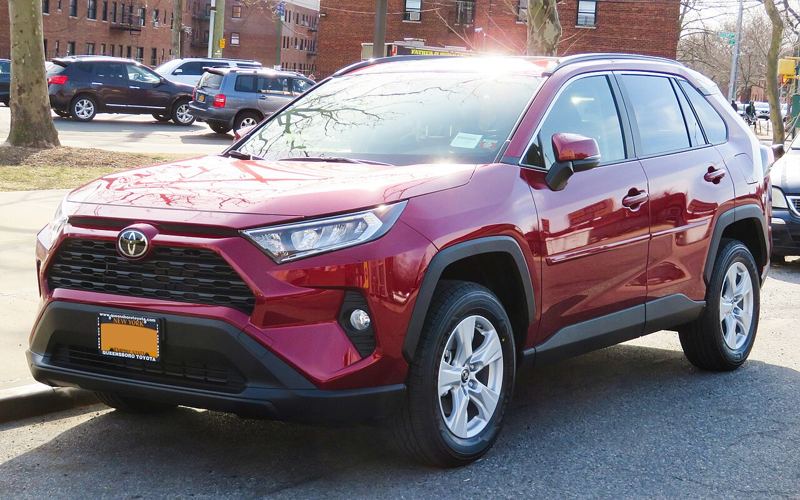 Toyota RAV41994–present (US from 1996)
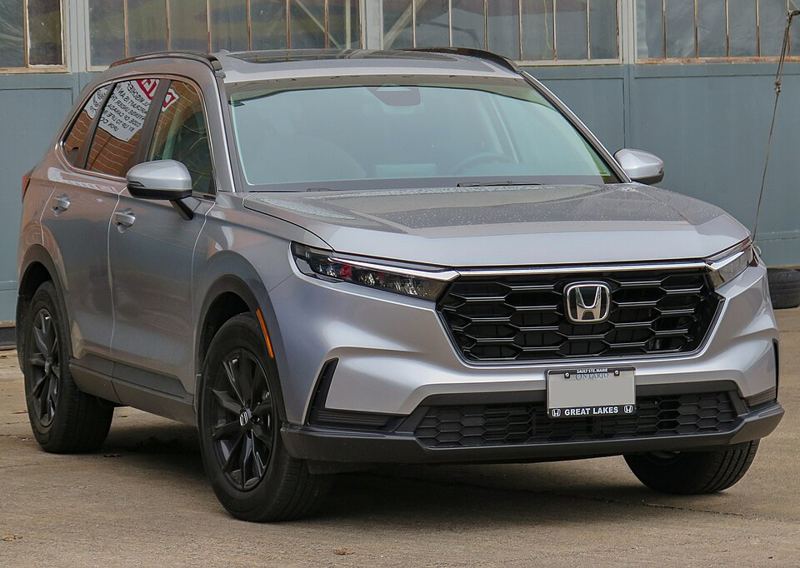 Honda CR-V1995–present
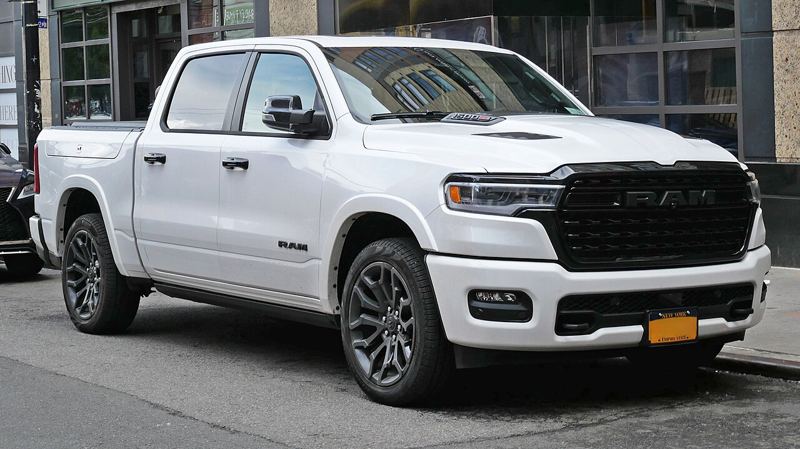 Ram 15001981–present
 Tesla Model Y2020–present


