
Land Rover Defender
Midsize/large off-road SUV · Defender name introduced in 1990. This review has not established this model’s 2024 U.S. sales.
This history begins with the Land Rover Series vehicles of 1948. The Defender name was introduced in 1990; the modern model is a later chapter.
How it began
The Rover Company’s Wilks brothers created the original Land Rover: Spencer was managing director and Maurice was engineering director. Land Rover attributes its first outline in the sand at Red Wharf Bay, Anglesey, Wales to Maurice. They had helped return Rover to profit in the 1930s and conceived a farm vehicle. At the modern Defender’s 2019 launch, Gerry McGovern was Land Rover’s chief design officer and Nick Rogers led JLR product engineering. JLR announced in July 2026 that Paddy McGillycuddy would succeed Mark Cameron as global Defender managing director as Cameron moved to lead North America from September 1.
Development of the original Land Rover was under way in 1947, and full Series I production began at Solihull, England in 1948. Series Land Rovers and classic Defenders were built at the Lode Lane site until January 29, 2016. The modern Defender is designed and engineered in the United Kingdom and built at JLR’s Nitra plant in Slovakia, which opened on October 25, 2018. JLR describes Nitra as its exclusive Defender production site; the original U.S. launch also identifies Nitra assembly.
The first Land Rover was shown at Amsterdam on April 30, 1948. The coil-sprung One Ten arrived in March 1983 and the Ninety followed in 1984. The Defender name was adopted in 1990. The modern Defender debuted at Frankfurt on September 10, 2019; initial U.S. deliveries of the 2020 Defender 110 began on June 1, 2020 after a 23-year absence.
Before the Defender name, the original Land Rover was identified by Series and wheelbase labels. One Ten referred to 110 inches; Ninety was a rounded designation for a wheelbase closer to 93 inches. Discovery’s arrival in 1989 expanded a range that already included Range Rover, prompting the distinct Defender name in 1990. Land Rover links the name to worldwide military versions and the trusted, rugged character owners associated with the vehicle.
In postwar Britain, steel was scarce while aluminum and manufacturing capacity were plentiful. The Wilks brothers conceived a simple agricultural vehicle with light aluminum panels and short overhangs. Early Series I models used a freewheel four-wheel-drive system; selectable two- or four-wheel drive followed in the early 1950s. Land Rover calls the vehicle the world’s first successful civilian 4x4 and says 70 percent of its first-decade production was exported to 150 countries.
Related models and history
- Chapter 11948–1958 · Series I
The sketch in the sand that became a 4x4
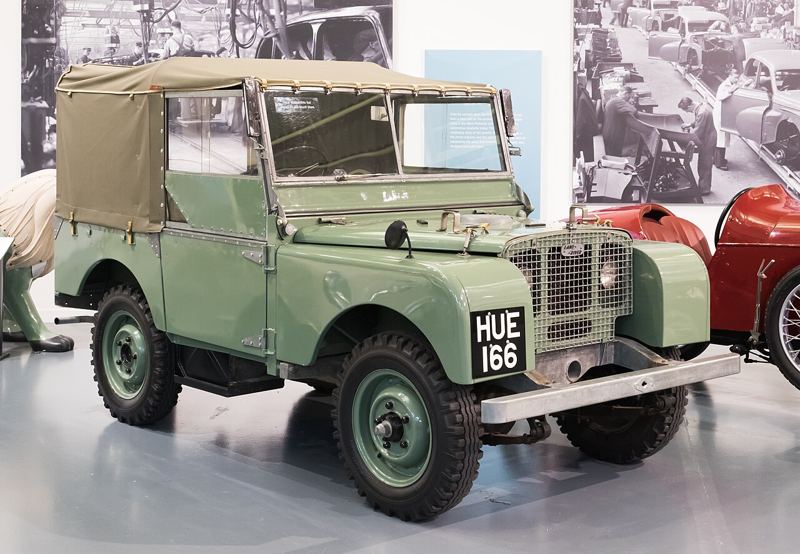
Photo: DeFacto · CC BY-SA 4.0 What changed. The Series I began as an aluminum-paneled working vehicle, shown at Amsterdam on April 30, 1948 for £450. Its earliest freewheel 4x4 system was replaced by selectable two- or four-wheel drive in the early 1950s. Pick-up and Station Wagon bodies already existed in 1948; longer wheelbases expanded the range in the early 1950s. The first State Review Land Rover served Queen Elizabeth II’s 1953 Commonwealth tour. In 1955–56, six Oxford and Cambridge students drove 18,000 miles from London to Singapore in Series I vehicles.
The innovation. The transmission levers with red and yellow knobs, which reduced switching between two- and four-wheel drive to a simple move. Land Rover considers them the direct ancestor of today's Terrain Response. The Station Wagon also introduced the Alpine lights in the roof, still present on the current Defender.
If you buy one usedThe first pre-production Land Rover, HUE 166, nicknamed Huey, is displayed in the British Motor Museum collection. Land Rover launched its Series I Reborn restoration offering in 2016, using a team that included former Solihull production-line employees. Original archival build-book research records commercial U.S. distribution during the Series I period. For a specific vehicle, ask for chassis identity, provenance, restoration and import records. Do not infer a complete historical recall record from an empty modern model-name or VIN lookup; obtain manufacturer/dealer records appropriate to the older vehicle. - Chapter 21958–1985 · Series II / IIA / III
The Land Rover of half the world
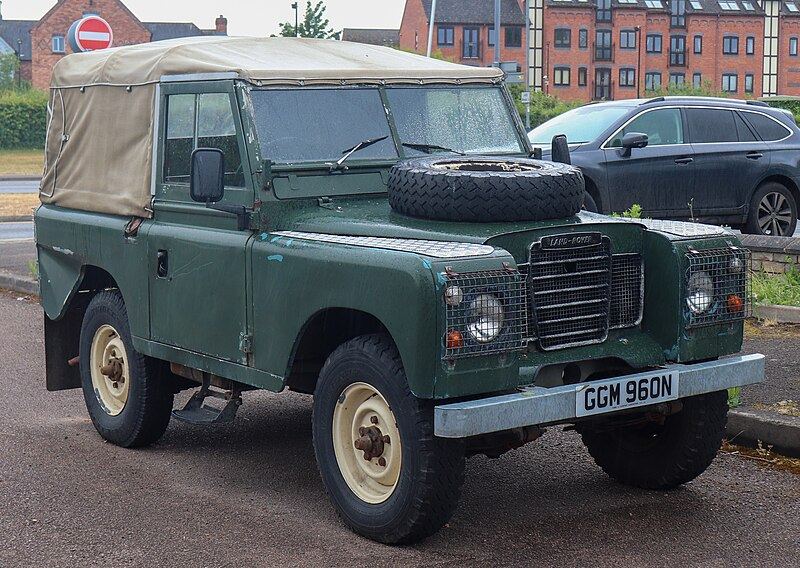
Photo: Vauxford · CC BY-SA 4.0 What changed. Series II arrived in 1958 with the curved waistline retained in later Defenders. Diesel development continued through Series IIA, whose larger 2.25-liter diesel arrived in 1961. Land Rover’s history records a half-million milestone in 1966 and annual production of about 56,000 in 1971. Series III launched in 1971 with a padded dash and instruments behind the steering wheel; its 109-inch V8 option followed in 1979. The millionth Land Rover was built in 1976.
The innovation. The basic platform became an endless family of variants: fire engines, ambulances, truck-like Forward Control models, cherry pickers and even an amphibious version that could float. In 1954 the humanitarian partnership with the British Red Cross also began, and it is still running.
If you buy one usedThese are decades-old vehicles. The original U.S. Rover sales brochure describes a welded steel box-section chassis and light aluminum-alloy body panels; inspect the steel frame and its corrosion carefully. Period Series IIA brochures document an official North American sales organization. Check each vehicle’s actual sales/import history, identity and mechanical records, and request historical recall/repair information from the manufacturer or dealer. - Chapter 31983–2016 · Ninety / One Ten / Defender
The Defender is born: coil springs, turbodiesel and 33 years of service
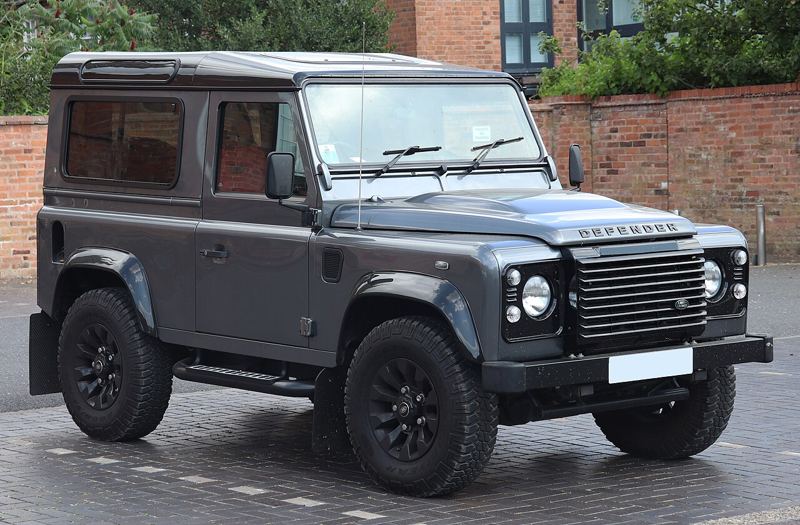
Photo: Vauxford · CC BY-SA 4.0 What changed. The One Ten arrived in 1983 with coil springs replacing leaf springs and the full-width front-end design that characterized the later classic Defender. The Ninety followed in 1984 and the turbo-diesel in 1986. The Defender name arrived in 1990. Official U.S. examples were sold during the 1990s, with an original U.S. D90 specification documenting the 1997 model; the later return release describes a 23-year absence. On January 29, 2016 the last classic Defender, a 90 Heritage Soft Top, left Solihull after more than two million combined Series Land Rover and Defender vehicles had been built there.
The innovation. The 1983 coil-spring suspension, which gave real comfort to a working vehicle without taking away capability. And a detail of continuity: the last Defender of 2016 carried a part used on soft-top versions since 1948, the hood cleat.
If you buy one usedSelected NHTSA campaigns for North American Defenders include 96V108 (missing hazardous-substance battery warning labels, including 1993–1995 vehicles) and 95V099 (wrong-size driveshaft nuts after port-of-entry checks on certain 1995 vehicles). Check the exact chassis/VIN and completed repairs. For independently imported classics, inspect the import paperwork, chassis/crossmember corrosion and engine history. Land Rover announced the restoration program in 2016; the later Defender Works V8 was introduced in January 2018. - Chapter 42020–present · L663
The icon reimagined: aluminum monocoque and Nitra
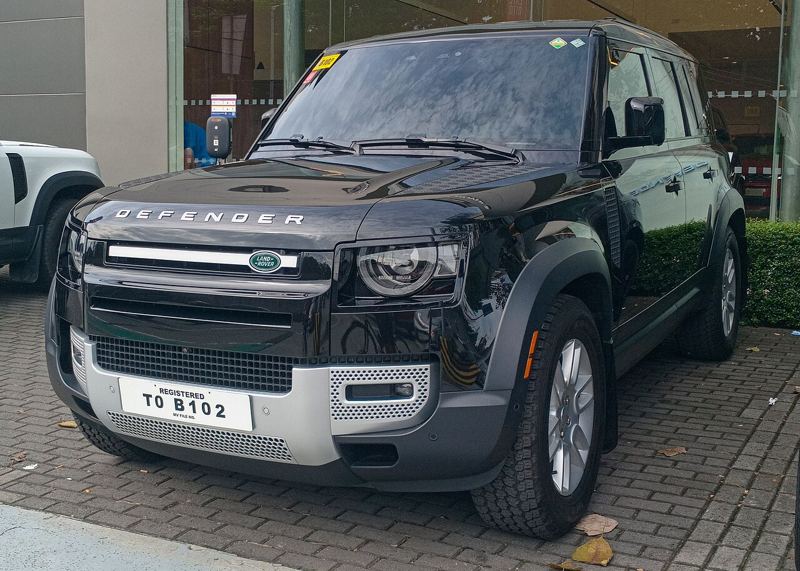
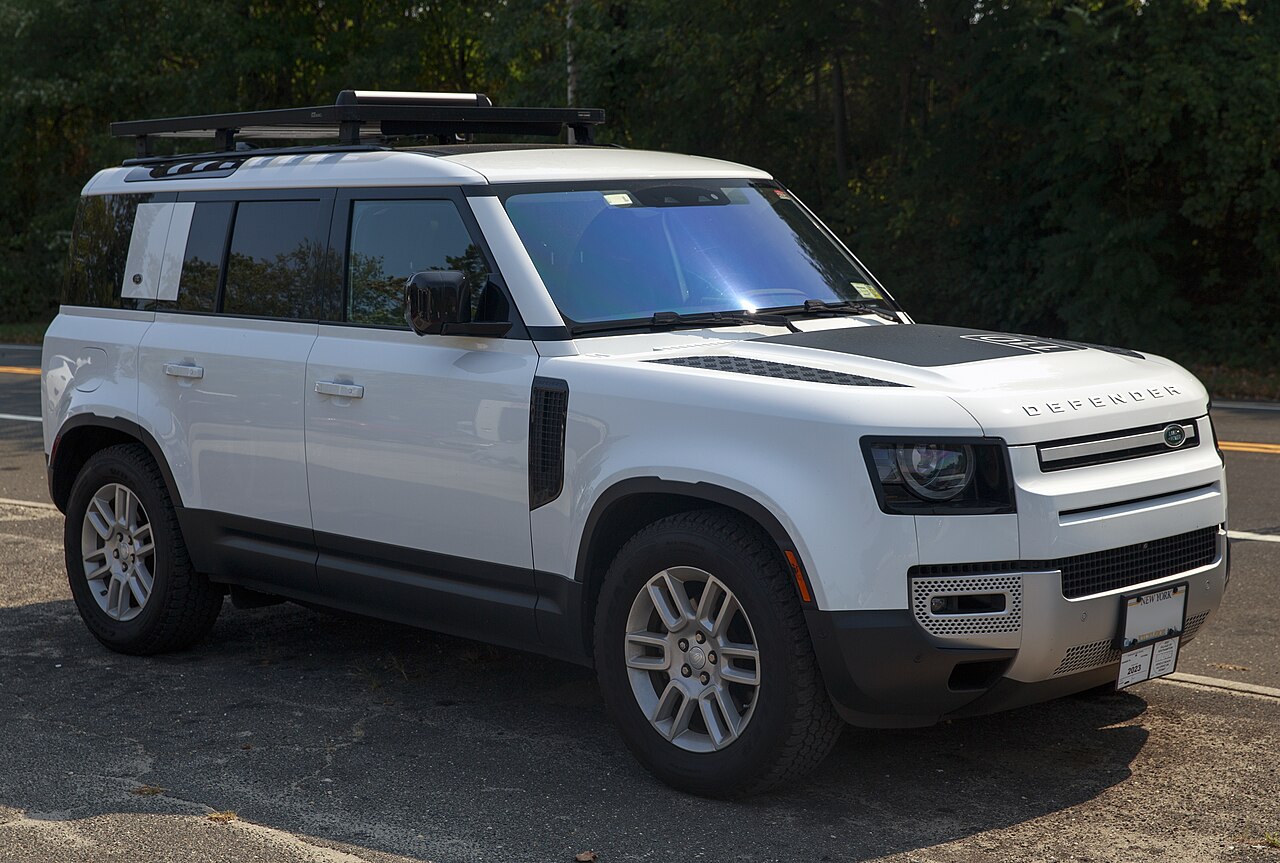
Photo: Ethan Llamas · CC BY-SA 4.0 What changed. Unveiled in Frankfurt on September 10, 2019, it swapped the ladder frame for the D7x architecture: an aluminum monocoque three times stiffer than a body-on-frame design, with independent suspension, a twin-speed transfer case and permanent four-wheel drive. It came first as the 110 and 90 (up to six seats with the front center jump seat), the eight-seat 130 joined in 2022 and the OCTA in 2024. In the U.S. it debuted on June 1, 2020 from $49,900; today it offers a 3.0-liter six with up to 395 hp, a 5.0-liter supercharged V8 with 493 hp, and the OCTA's 4.4-liter twin-turbo V8 with 626 hp.
The innovation. Configurable Terrain Response debuted on this Defender as a Land Rover first, letting the driver fine-tune settings. A Wade program supported wading up to 900 mm under the specified conditions. The September 2019 announcement described software updates for up to 14 modules; by January 2020 Land Rover confirmed 16 for the first production vehicles. Pivi Pro used a backup battery for rapid startup. In 2024 the OCTA added hydraulically interlinked 6D Dynamics suspension.
If you buy one usedNHTSA lists several recalls, with free remedies for eligible affected vehicles. Engine and oil: the powertrain control module could switch off while driving on 2020–2021 six-cylinders (21V424); the cam carrier oil channel could be blocked and cause leaks on 2020–2023 cars (23V044); the oil filter housing could crack on 2023–2024 cars (24V450). Electrical: the DC-DC converter on 2020–2024 mild hybrids could fail and leave the vehicle without drive power or lights (26V248 and 26V599, software remedy); the driver's airbag clockspring connector could corrode on 2020–2026 cars (26V389). Seat belts: retractors that deactivated early (21V668) and damaged pretensioners on 2022–2023 cars (22V523); second-row belt stitching on some 2024s (26V615). Screen and cameras: the touchscreen could go blank at startup on 2023–2024 cars (25V016) and the sensing module could overheat on 2024s (24V678). Check everything by VIN at nhtsa.gov before buying. Campaign 26V599 expands 26V248. For 26V599 and 26V615, confirm current final-remedy availability with the dealer: the campaign notices describe interim notifications followed by additional notices when the final remedies become available.
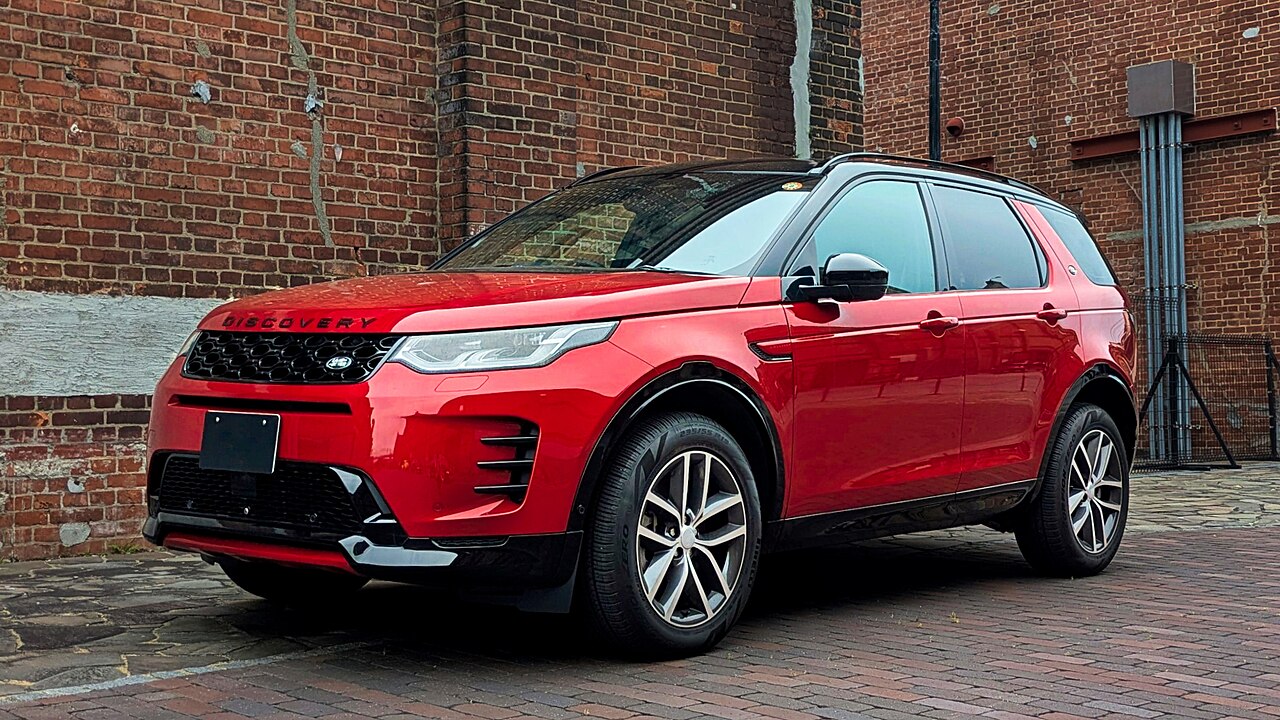 Land Rover Discovery Sport2015–present
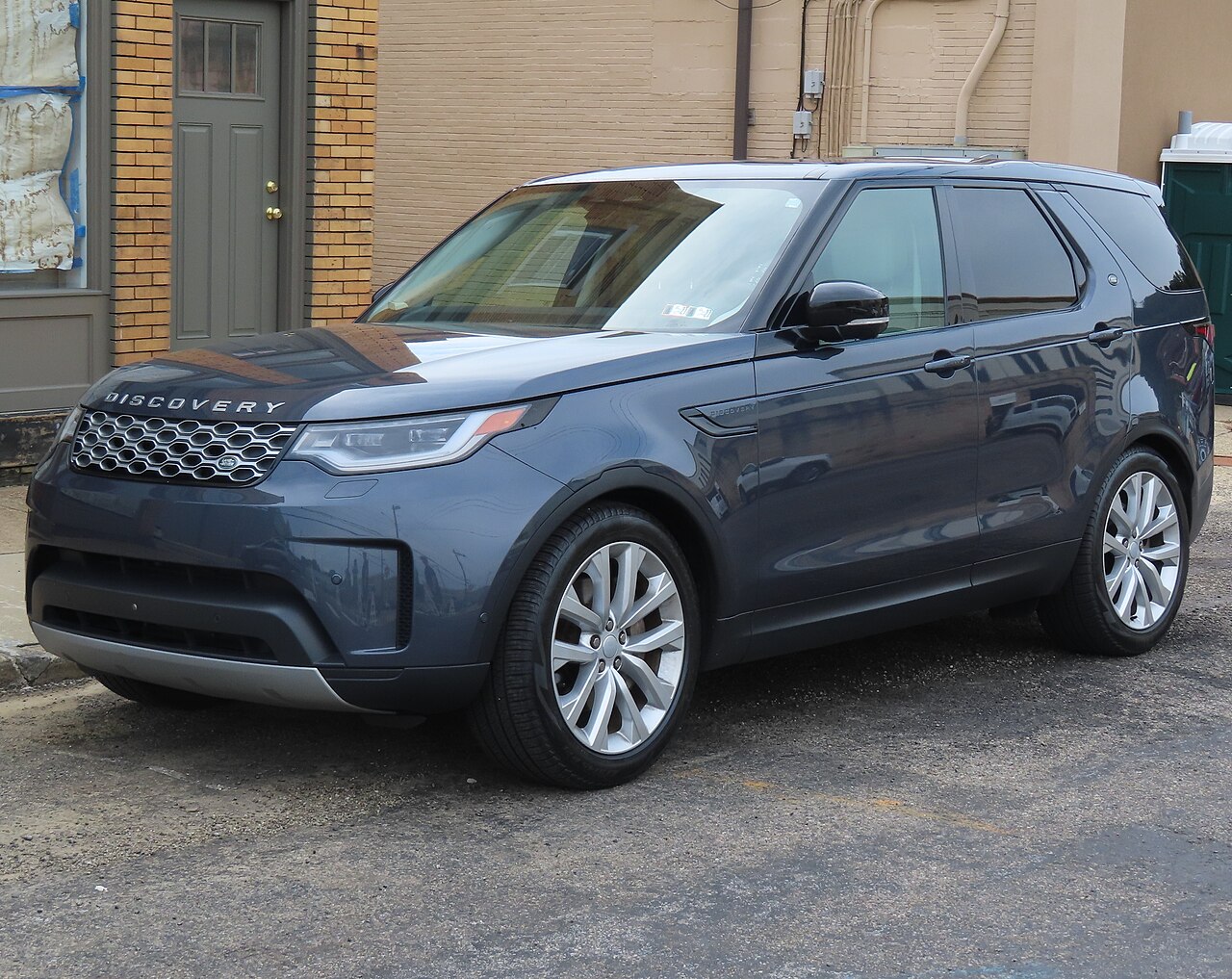 Land Rover Discovery1989–present
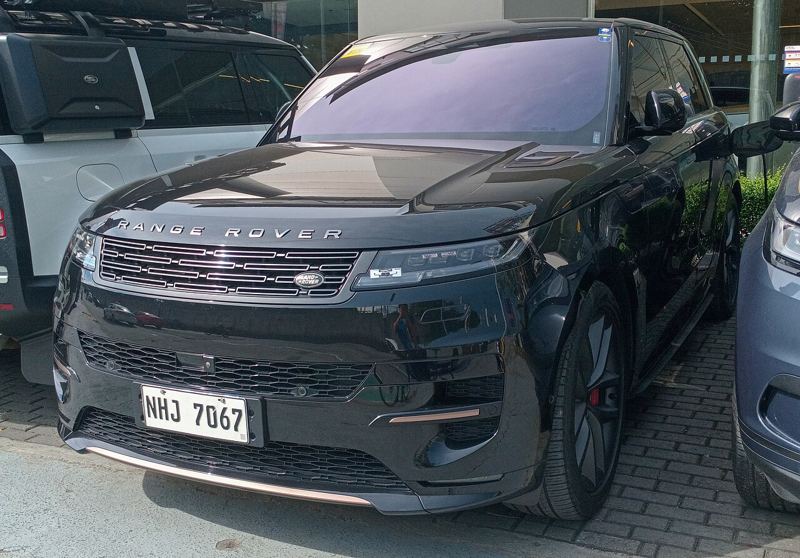 Land Rover Range Rover Sport2005–present
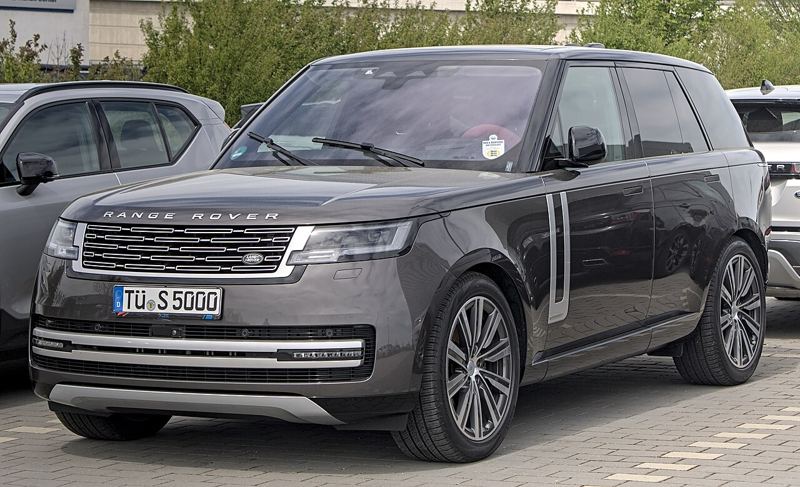 Land Rover Range Rover1970–present
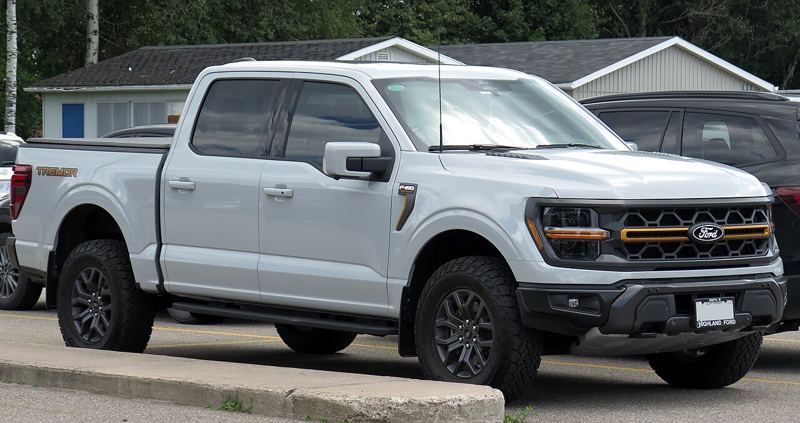 Ford F-Series (F-150)1948–present
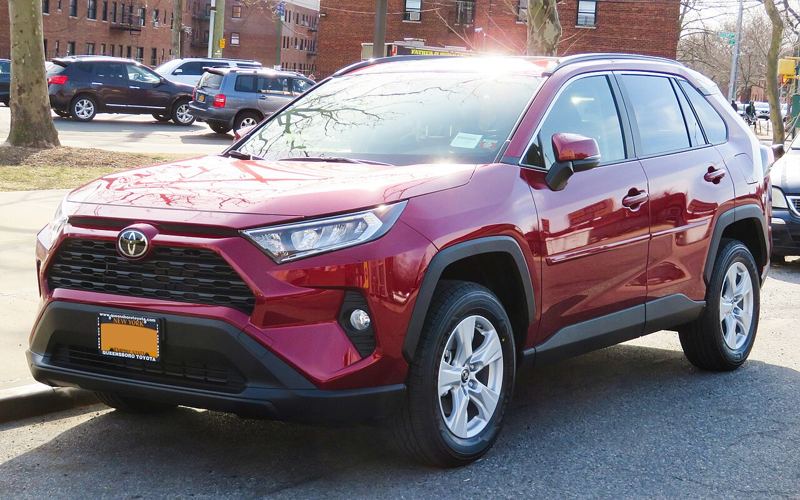 Toyota RAV41994–present (US from 1996)
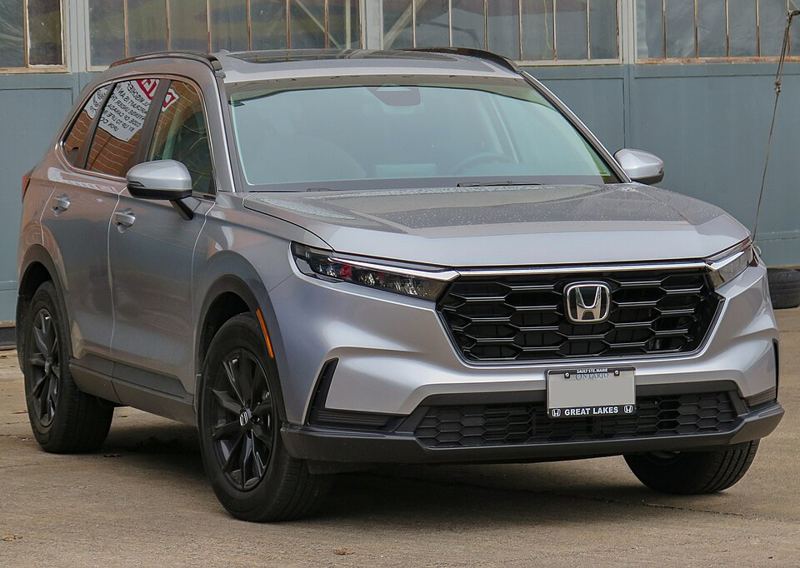 Honda CR-V1995–present
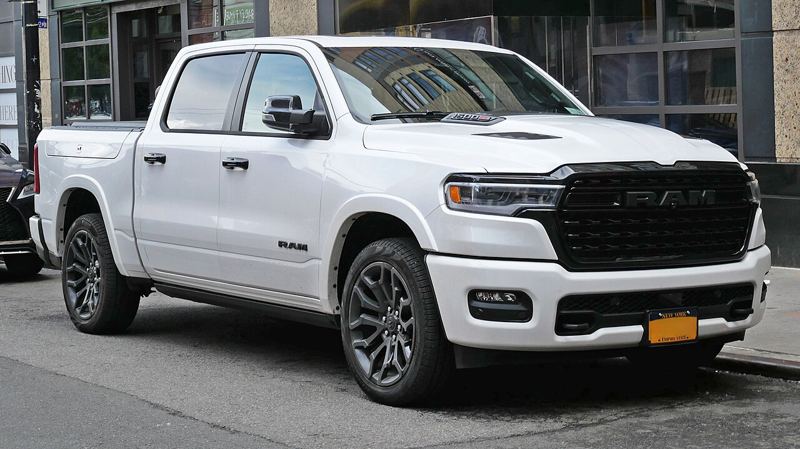 Ram 15001981–present
 Tesla Model Y2020–present


