
Nissan Pathfinder
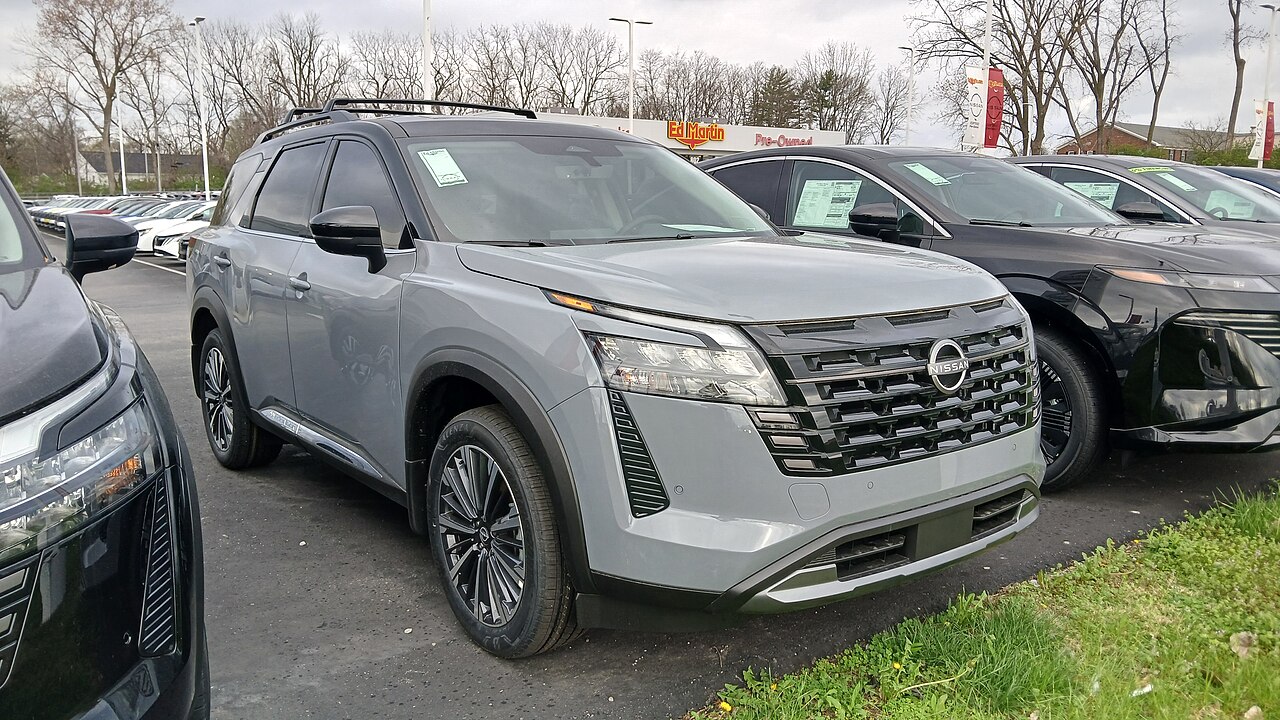
Three-row midsize SUV · 1986–present. 80,915 units sold in the US in 2024
How it began
Nissan created the original Pathfinder at Nissan Design International in La Jolla, California, now known as Nissan Design America. Nissan’s own records date the studio’s legal founding to 1979 and Jerry Hirshberg’s arrival as founding design director to 1980. The checked original manufacturer histories credit the studio without establishing an individual original chief engineer. Hagerty is cited for Doug Wilson’s contribution to the production shape and Hirshberg’s triangular-window idea, but that article’s body was unavailable for this review.
It was designed in California, at NDI's La Jolla studio, growing out of the work on the Hardbody pickup, with which it shared the D21 platform. Since 2004 it has been assembled in the U.S., at Nissan's plant in Smyrna, Tennessee, and its V6 engine is built at the Decherd plant, also in Tennessee.
Nissan revealed it in August 1986 as a 1987 model, at first with two doors only. In Japan it was sold as the Terrano.
In ordinary English, a pathfinder is someone who discovers a way or explores a route, an apt description for a 4x4. That word meaning is distinct from a documented Nissan explanation of its naming decision, which was not established in the checked manufacturer histories. In Japan, the original model was called Terrano.
In the mid-1980s, compact pickups were gaining ground in the U.S., and Nissan set out to surprise buyers with a full SUV built on its new pickup. The original press release said "vigorous efforts" were made to give an off-road 4WD the qualities of a passenger car. It worked: in November 1986, Car and Driver wrote that on pavement it rode almost as smoothly and quietly as a normal car.
Generation by generation
- Gen. 11987–1995 · WD21
The 4x4 that rode like a car
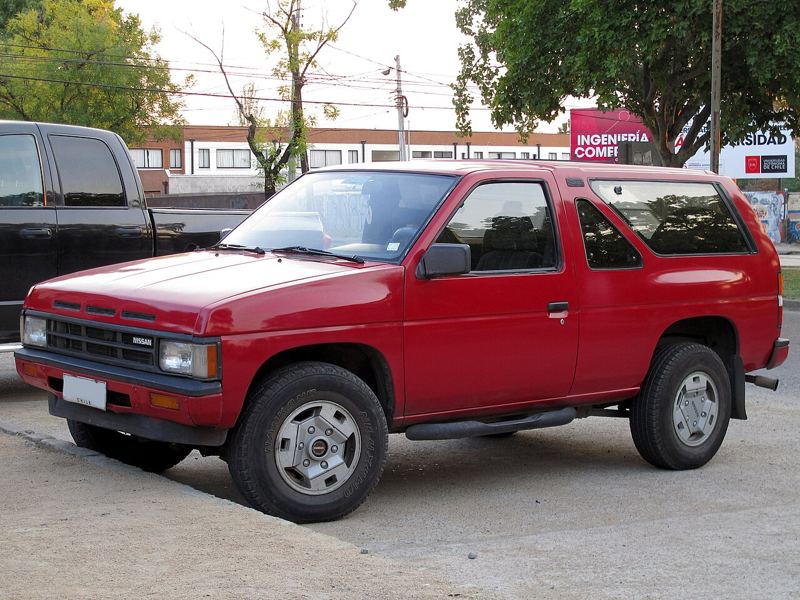
Photo: RL GNZLZ from Chile · CC BY-SA 2.0 What changed. It arrived as a two-door, body-on-frame SUV with the Hardbody pickup's muscular front end and three horizontal slots above the grille. It offered a 2.4-liter four-cylinder or a 3.0-liter V6 with 140 hp, which rose to 145 hp in 1988 and 153 hp from 1990. For the 1990 model year it added two rear doors with handles "hidden" in the rear pillar.
The innovation. Double-wishbone front and multi-link rear suspension, meant to make a body-on-frame 4x4 drive like a passenger car. In 1987 it won 4 Wheel & Off-Road's "4x4 of the Year" and Four Wheeler's "Four Wheeler of the Year".
If you buy one usedToday it is a classic. NHTSA lists these recalls: 87V137 (1987, mismatched rear seat belts), 90V072 (1987–1990, wrong tire pressures printed on the label) and 95V103 (1988–1991, the red front seat belt buckle button could break). Ask for proof they were done; at over 30 years old, also check the condition of the frame. - Gen. 21996–2004 · R50
Unibody and more comfort
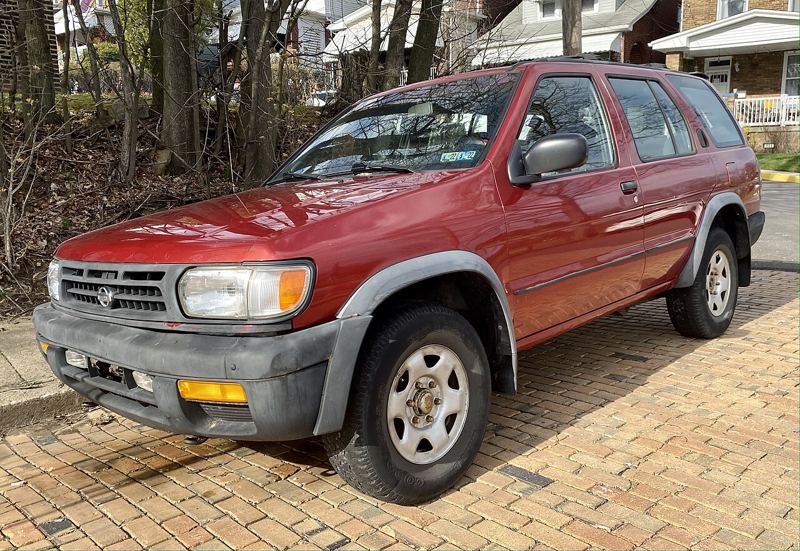
Photo: Cutlass · CC0 What changed. For 1996 it left the pickup frame behind and moved to unibody construction, with a more aerodynamic look of its own. The V6 grew to 3.3 liters and 168 hp, with a focus on handling and ride. In 2001 it got the 3.5-liter VQ V6: 250 hp with the manual and 240 hp with the automatic.
The innovation. Unibody construction, which separated the Pathfinder from the pickup for the first time. It also offered a navigation system with a three-dimensional "Birdview" display.
If you buy one usedCheck two key NHTSA recalls. 11V244 (1996–2004, vehicles from states that use heavy road salt): the strut tower could corrode and crack, with a risk of the steering column breaking. The 2002–2004 models have recalls for the Takata passenger air bags (15V287, 17V068 for 2002, and 20V008 for interim replacement parts): confirm by VIN at nhtsa.gov that the inflator has been replaced. Nissan’s May 29, 2024 warning says not to drive the specified vehicles with open, unrepaired Takata campaigns until the free final repair is completed; ask the dealer about towing or mobile repair. The corrosion recall uses a named list of original-sale/current-registration jurisdictions; confirm that history. - Gen. 32005–2012 · R51
Back to a frame, and the first third row
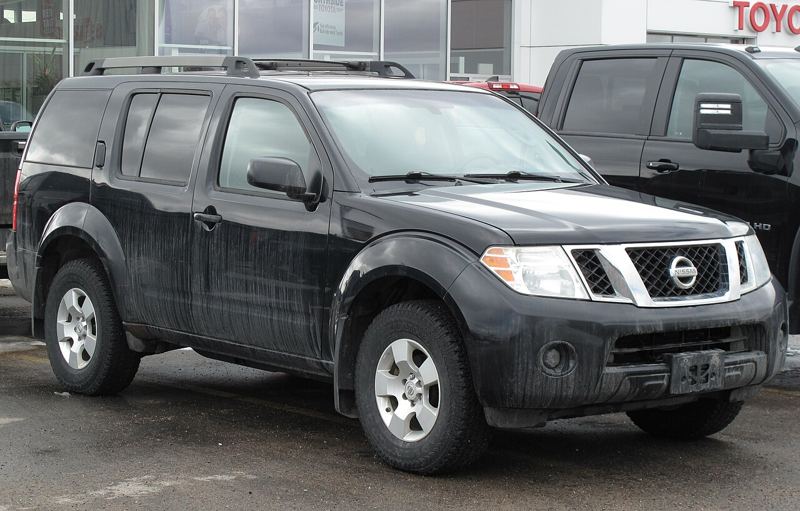
Photo: Elise240SX · CC BY-SA 4.0 What changed. It debuted at the 2004 Detroit auto show and went back to body-on-frame construction, on a version of the F-Alpha platform from the Titan pickup and Armada SUV. It was the first seven-passenger Pathfinder, with a 266 hp, 4.0-liter V6. Since 2004 it has been assembled in the U.S.
The innovation. A split fold-down third-row seat, the Pathfinder's first. From the 2008 model year it added its first V8: 5.6 liters, 310 hp and up to 7,000 pounds of towing.
If you buy one usedOn 2005–2010 models with the five-speed automatic, the transmission cooler inside the radiator could crack and mix coolant into the transmission fluid, according to NHTSA (petition DP12-004). Nissan extended radiator coverage to 8 years/80,000 miles in 2010 and, after a 2012 settlement, covered transmission damage up to 10 years/100,000 miles with a co-pay; these historical terms would ordinarily have expired by 2026. Confirm the exact in-service date and agreement, and ask whether the radiator was replaced. There are also recalls 08V690 (2005–2009, air bag crash sensor in road-salt states) and 23V067 (2008–2011, driver air bag emblem). DP12-004 was a defect petition denied in 2016, not a recall order. - Gen. 42013–2020 · R52
From off-roader to family crossover
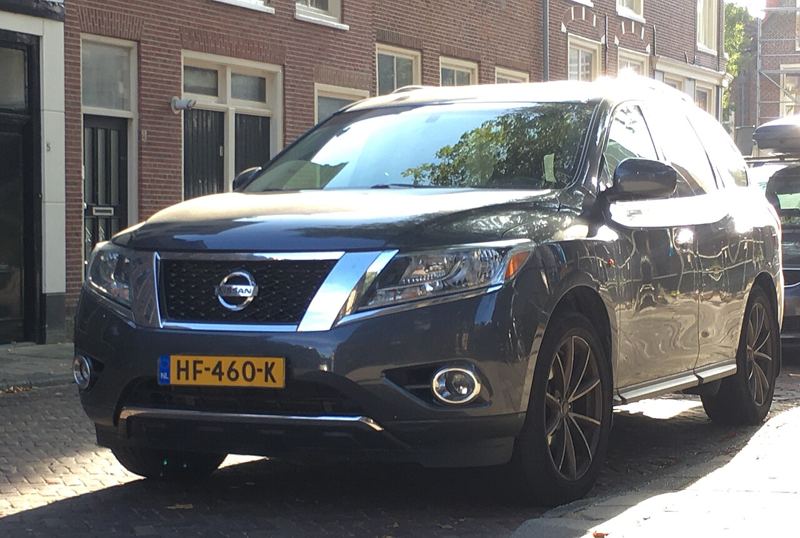
Photo: Rutger van der Maar · CC BY 2.0 What changed. It returned to crossover-style unibody construction and shed up to 500 pounds. Nissan’s original tables list city fuel economy rising from 15 to 20 mpg for the 2WD V6 and from 14 to 19 mpg for 4WD, increases greater than 30%; that percentage does not describe every highway or combined rating. The original launch kit specifies a 260 hp 3.5-liter V6 with CVT and Smyrna vehicle assembly. For MY2017, a refresh added a 284 hp direct-injection V6 and up to 6,000 pounds of towing when properly equipped.
The innovation. The EZ Flex seating system with Latch and Glide: the second row slides forward to reach the third row even with a child seat installed on the passenger side.
If you buy one usedNHTSA recalls: 14V142 (2013, the CVT cooler hose could detach), 15V033 and 22V420 (2013–2016, the secondary hood latch could stay open), 21V020 (2013–2015, brake light relay could stick on) and 18V601/19V807 (2017–2019, brake fluid leak in the ABS pump with a fire risk). For the CVT, Nissan extended coverage on 2015–2018 Pathfinders to 84 months/84,000 miles; ask for the transmission service history. Campaign 18V601 covers 2017–2018 and 19V807 covers 2017–2019. If the ABS lamp remains lit more than 10 seconds after startup on an affected unrepaired vehicle, park outdoors away from other vehicles or structures and do not drive; contact Nissan for the required repair. A prior inspection without replacement may require the later remedy. The CVT extension is a conditional warranty program, excludes hybrids and is not a safety recall. - Gen. 52022–present · R53
Back to its rugged roots
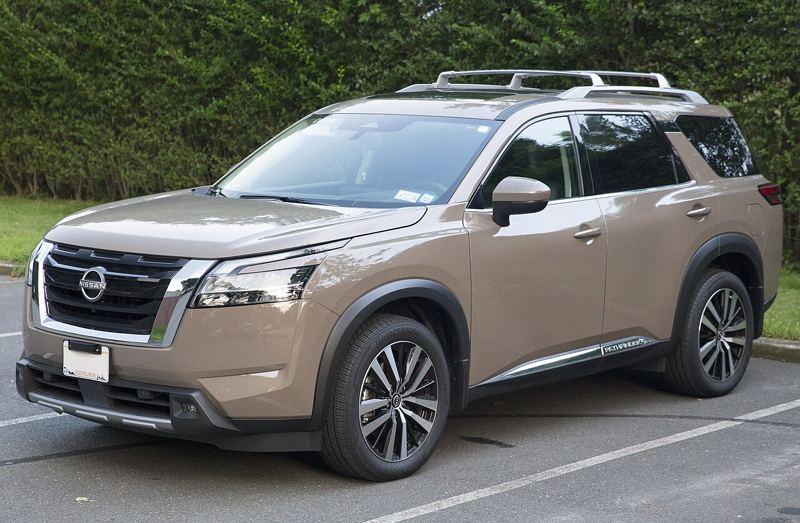
Photo: Mr.choppers · CC BY-SA 3.0 What changed. There was no 2021 Pathfinder: the fifth generation arrived as a 2022 model, with styling that brings back details of the first Pathfinder. It swapped the CVT for a 9-speed automatic, kept a 284 hp, 3.5-liter V6 and tows up to 6,000 pounds. Production began in Smyrna on May 13, 2021, and the off-road Rock Creek trim joined in 2023.
The innovation. Direct-coupling Intelligent 4WD, which sends power without waiting for the wheels to slip, with seven drive modes (including Sand and Mud/Rut). It also introduced the first head-up display in a Pathfinder.
If you buy one usedThe 2022 models had several early recalls: 21V706 (hood latch bracket welds), 21V742 (third-row headrests), 21V743 (second-row seatback) and 22V111 (missing seat track bolt). Later came 23V268 (2023, driver power seat), 24V154 (2024, driver air bag inflator), 24V176 (2024, seat belt pretensioner) and 25V173 (2025, front brake calipers). Check the VIN at nhtsa.gov.
 Nissan Rogue2007–present
 Nissan Sentra1982–present
 Nissan Altima1993–present
 Nissan Kicks2018–present
 Ford F-Series (F-150)1948–present
 Toyota RAV41994–present (US from 1996)
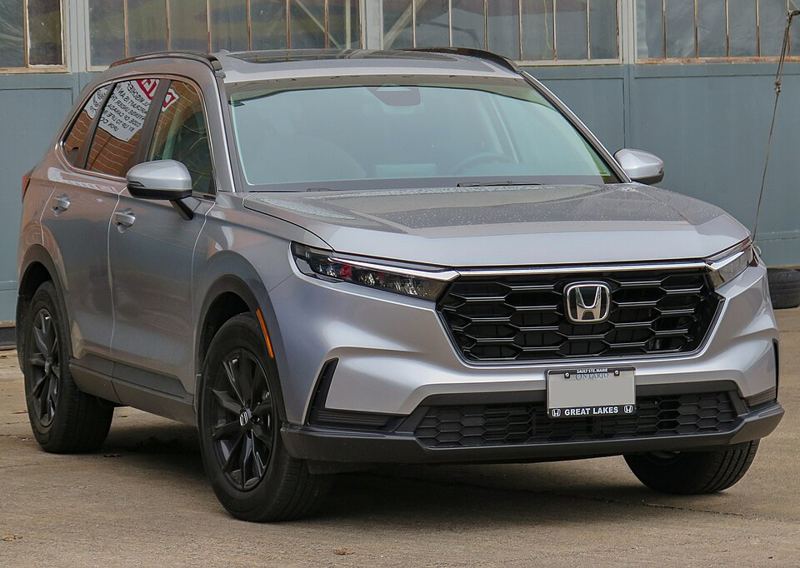 Honda CR-V1995–present
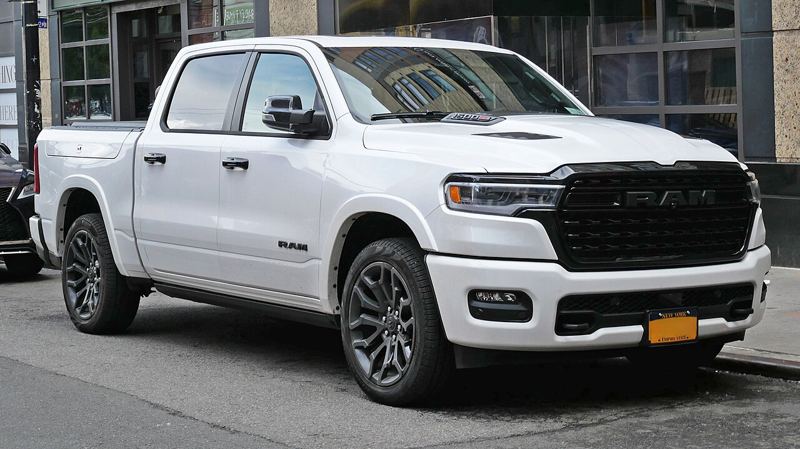 Ram 15001981–present
 Tesla Model Y2020–present


