
Nissan Sentra
Compact sedan · 1982–present. 152,659 units sold in the US in 2024
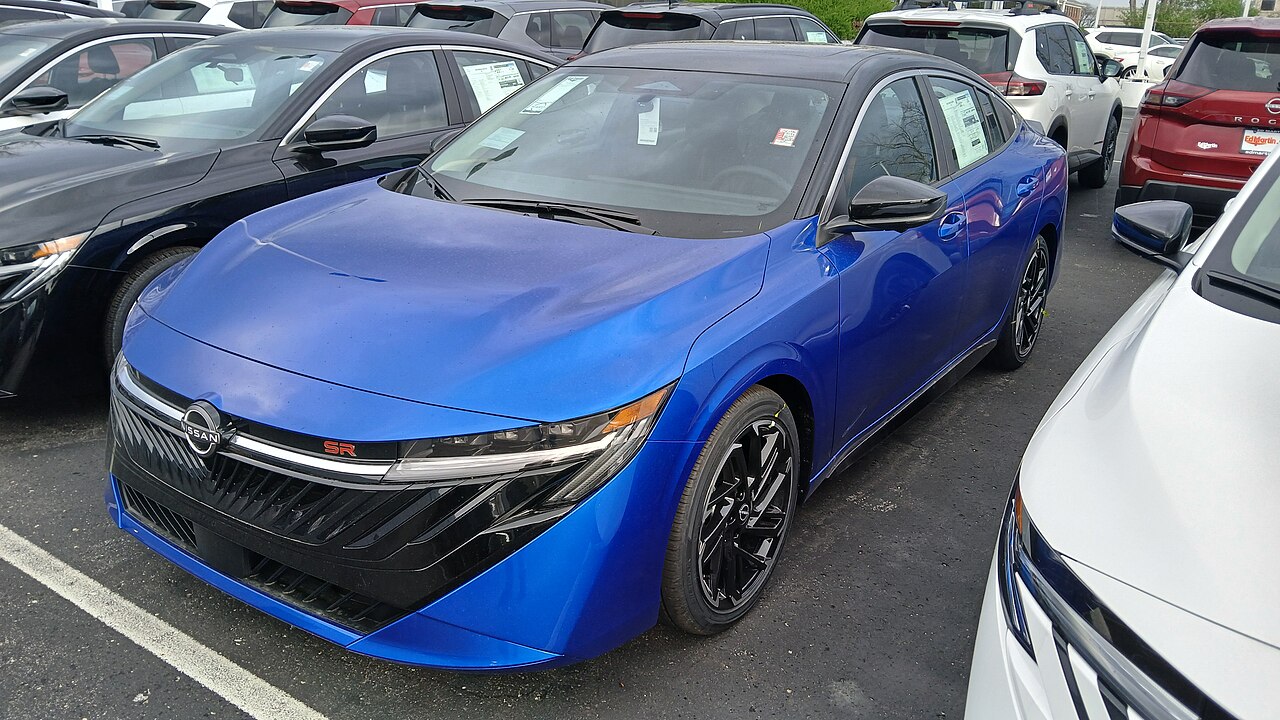
How it began
Nissan Motor Co. of Japan created the Sentra. Its original 1982 brochure said it was built by Nissan and sold through Datsun dealers, reflecting the brand transition. Namelab, founded by Ira Bachrach, created the name. The checked original histories do not establish an individual designer or chief engineer for the first Sentra. The MY2000 exterior was styled at Nissan Design International in La Jolla, California, under president Jerry Hirshberg; its interior and engineering also involved other Nissan locations.
The first Sentra was imported from Japan. Nissan’s history dates the first Smyrna, Tennessee Sentra to March 1985. The MY2000 generation was manufactured in Aguascalientes, Mexico. In June 2012 Nissan announced plans to add Canton, Mississippi production in the fourth quarter; a March 2013 release still described that start as forthcoming, while a July 2013 release confirmed Sentras were being built there. Current MY2027 manufacturer-reported model patterns identify Aguascalientes, Mexico.
It debuted in the U.S. for the 1982 model year. By June 1982 the press was already testing it, at a base price of under $5,000.
Sentra is an invented word. According to Namelab, it sounds like both 'central' and 'sentry'. Nissan wanted people to understand that its mainstream car was safe even though it was small.
Nissan replaced the rear-wheel-drive Datsun 210 with the front-wheel-drive Sentra, emphasizing low fuel consumption and more interior room. The original June 1982 test called it the second Nissan car in the U.S. to carry the maker’s own name, following Stanza. That report said the importer expected to sell at least 200,000 Sentras once sales reached pace; it did not expressly give an annual denominator.
Generation by generation
- Gen. 11982–1986 · B11
The Datsun that became a Nissan
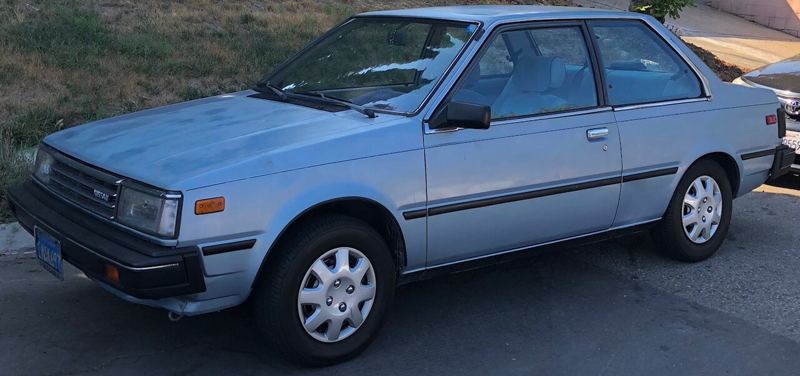
Photo: Accord14 · CC BY-SA 4.0 What changed. It replaced the rear-wheel-drive Datsun 210 with a front-wheel-drive car and an overhead-cam engine. It came as a coupe, hatchback, sedan and wagon, with two to five doors, all with four-cylinder engines. In 1985 production started in Smyrna, Tennessee.
The innovation. The MPG version, with Nissan's E15 engine, was rated at 58 mpg highway and 43 mpg city. In 1982 it had the highest-mileage gasoline engine in the U.S.
If you buy one usedToday it is a collector car. NHTSA lists one recall for the 1983 model: the wiper blade could catch on the antenna bracket (campaign 83V112). Ask for proof it was done, check for rust and make sure parts are available. The exact Nissan/Sentra/model-year 1983 query returned one campaign on November 3, 2026; check the VIN and repair history. - Gen. 21987–1990 · B12
Bye-bye basics
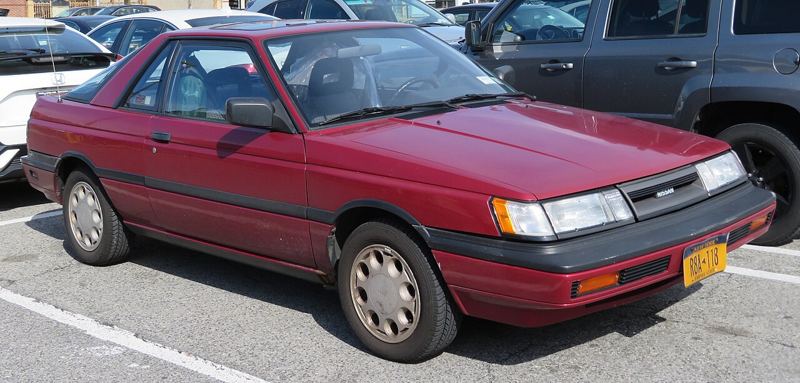
Photo: Kevauto · CC BY-SA 4.0 What changed. The second generation arrived for MY1987 with sportier, more aerodynamic styling. Nissan’s original Sport Coupe advertisement said “Bye Bye Basics. Hello ’87 Sentra!” and promoted that version’s fuel-injected 1.6-liter four-cylinder engine. These Sport Coupe specifications do not describe every B12 engine and trim.
The innovation. The advertised Sport Coupe used a fuel-injected 1.6-liter overhead-cam engine with a hemi-style head and a standard five-speed manual. Nissan advertised period estimates of 23 mpg city and 35 mpg highway for that configuration.
If you buy one usedNHTSA lists a recall for 1987–1991: the red 'PRESS' button on the front seat belts could break and keep the buckle from working properly (95V103). For 1990 there is another for shoulder-belt fraying near the retractor (91V022). Check the belts before using it as a daily driver. - Gen. 31991–1994 · B13
The SE-R is born
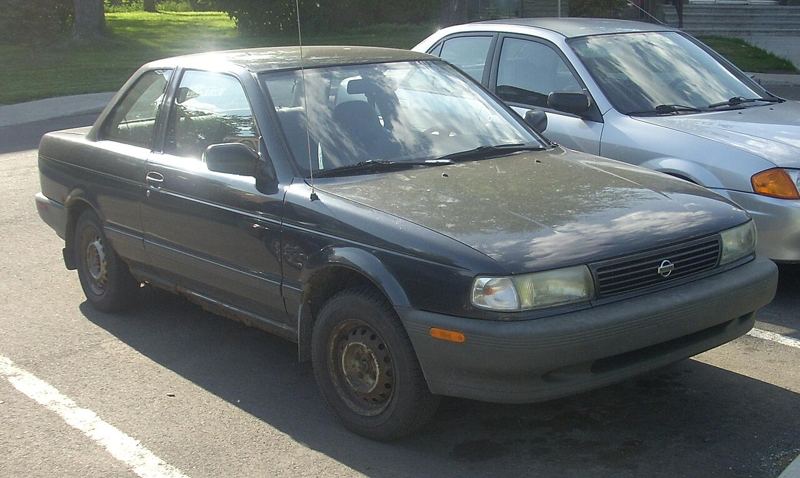
Photo: Bull-Doser · Public domain What changed. The third generation brought a new body in sedan and two-door coupe form. Its big news was the SE-R, a sporty version the press compared to a BMW. It was sold from 1991 to 1994.
The innovation. The SE-R used the 2.0-liter twin-cam SR20DE engine, with 140 hp and a 7,500 rpm redline, plus a limited-slip differential and four-wheel disc brakes. Car and Driver called it a 'dream of a brand-new $12,000 BMW come true.'
If you buy one usedRecall 95V103 for the front seat-belt buttons covers up to the 1991 model, and 91V022 for shoulder-belt fraying includes 1991. Original SE-Rs now sell as classics: Cars & Bids records a 1992 SE-R auction ending November 18, 2024 with an $18,705 winning bid and 87,500 displayed miles. This is a single winning bid, distinct from any fee-inclusive total or market-wide valuation. - Gen. 41995–1999 · B14
Rounder and built in the USA
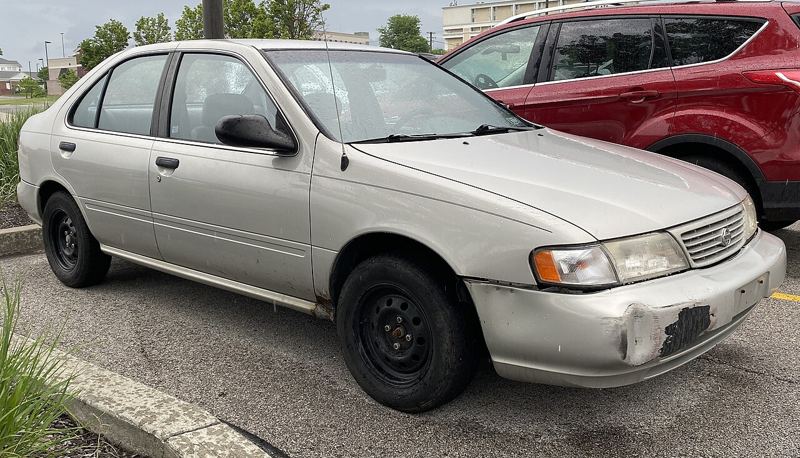
Photo: Cutlass · CC0 What changed. Introduced after the start of MY1995, the U.S.-built redesign had rounder four-door styling. The two-door derivative became the 200SX. The base engine was a 115-hp 1.6-liter; Consumer Guide dates the 140-hp 2.0-liter SE’s introduction to calendar 1998 but explicitly says it carried a 1999 model-year badge.
The innovation. It offered dual frontal airbags and anti-intrusion beams in the doors. The beams addressed side intrusion; this does not describe the frontal airbags as side-impact airbags.
If you buy one usedCheck these NHTSA recalls: air left in the ABS actuator (1995, 95V028), front coil springs with poor corrosion resistance in road-salt areas (1995–1996, 00V063), water entering the wiper linkage joint (1995–1998, 98V093) and tail lamps that did not meet the standard (1996–1997, 98V008). Consumer Guide also reports hard cold starts at high altitude on 1997–1999 cars. - Gen. 52000–2006 · B15
The first designed only for North America
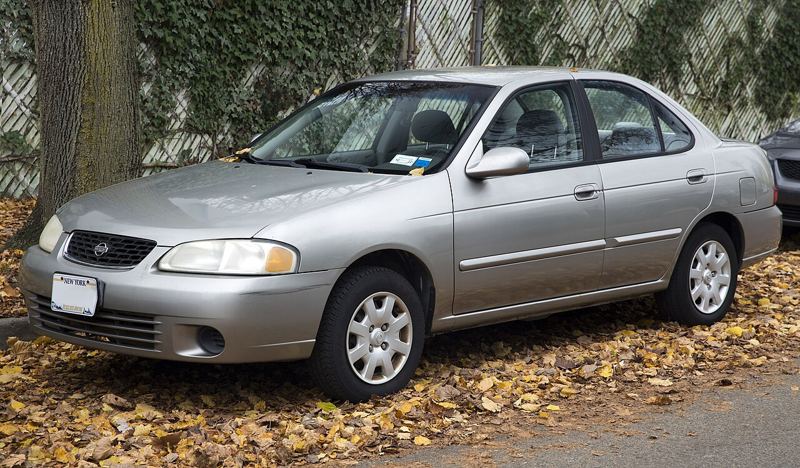
Photo: Mr.choppers · CC BY-SA 3.0 What changed. It was the first Sentra designed exclusively for North America and Nissan's first North American car on its new global platform. It grew 6.5 inches longer and moved production to Aguascalientes, Mexico. The 1.8-liter rose to 126 hp and the SE's 2.0-liter to 145 hp.
The innovation. The Sentra CA, sold only in California, was according to Nissan the first gasoline vehicle to meet California's SULEV (super ultra low emission vehicle) standard with zero evaporative emissions. Even its radiator had a coating that turned ozone into oxygen.
If you buy one usedMost important: 2002–2006 Sentras have recalls for the Takata passenger air bag inflator, which can explode and throw metal fragments (15V287, 20V008 and 20V747). Confirm with a Nissan dealer that the inflator was replaced. With the 2.5-liter engine, also check the crankshaft position sensor (2002, 2005 and 2006, 07V527) and piston-ring oil consumption (2006, 06V223). Certain previously inspected or interim-repaired Takata vehicles require further repair. Nissan advises not driving the specified vehicles with open, unrepaired campaigns until the free final repair is completed; ask about towing or mobile repair. - Gen. 62007–2012 · B16
Bigger inside, with a CVT
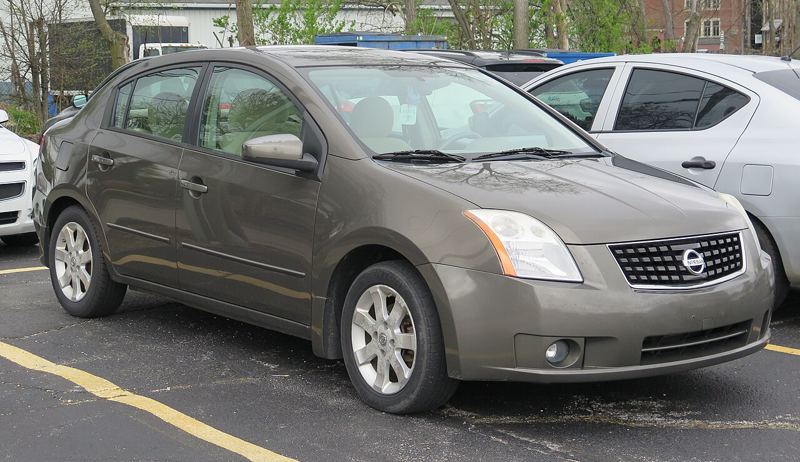
Photo: Cutlass · CC0 What changed. The sixth generation went on sale in October 2006 on Nissan's new C platform. It grew 4 inches taller and 3.2 inches wider, with 9.2 more cubic feet for passengers. The engine became a 140 hp aluminum-block 2.0-liter.
The innovation. The optional Xtronic continuously variable transmission (CVT), with an estimated 29 mpg city and 36 mpg highway. It also debuted a patent-pending trunk divider that creates hidden storage.
If you buy one usedNHTSA lists a recall for 169,202 2007–2008 Sentras with a Bosch brake master cylinder that could leak fluid (08V311), plus a similar one for 2008 (09V431). The 2010–2011 cars have two recalls for the positive battery cable (10V555 and 11V579). Ask for the CVT's service records. - Gen. 72013–2019 · B17
Lighter and slipperier
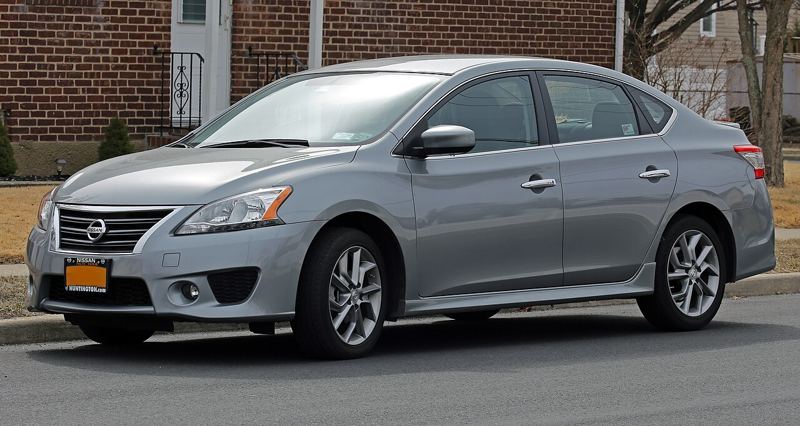
Photo: Mr.choppers · CC BY-SA 3.0 What changed. Nissan redesigned it from the ground up, with a weight reduction of up to 150 pounds, 2.3 inches more overall length and a drag coefficient reduced from 0.34 to 0.29. A new 130-hp 1.8-liter and new-generation CVT were offered, with a manual also available on S. Nissan announced additional Canton production in June 2012; the retained original July 2013 release confirms it was then producing Sentras, while the precise first-production date remains unresolved.
The innovation. At launch Nissan claimed this was the only sedan in its compact class with standard LED-accented headlamps; the accents were not full LED main lamps. FE+ versions were rated at up to 40 mpg highway. Easy-Fill Tire Alert sounded the horn when a tire reached the recommended pressure.
If you buy one usedUnder a 2019 class-action settlement, Nissan extended the CVT warranty on 2013–2017 Sentras by 24 months or 24,000 miles. NHTSA also lists a recall for the passenger seat-belt bracket, which could affect air bag shut-off with a child seat installed (2013–2016, 16V242), and one for the brake-light switch (2016–2019, 21V135). Nissan’s actual extension activated May 11, 2020, is subject to VIN/opt-out and other warranty terms, and is not a safety recall. The 16V242 notice warns against installing a child restraint on the front seat. - Gen. 82020–2025 · B18
Lower, wider and safer
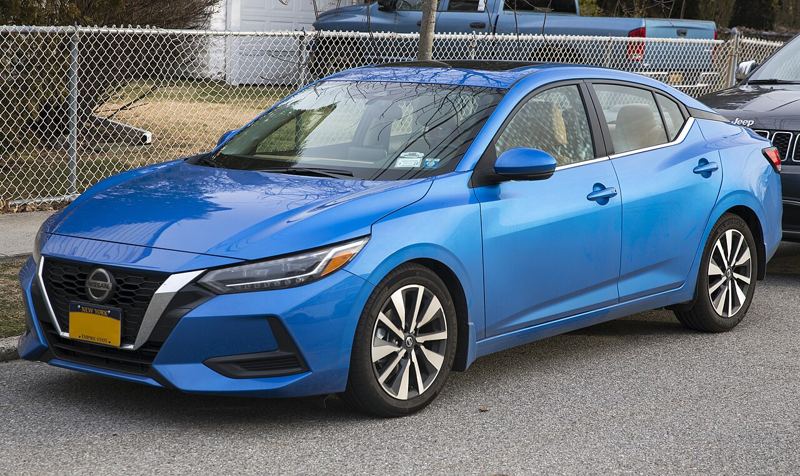
Photo: Mr.choppers · CC BY-SA 3.0 What changed. The eighth generation was revealed at the 2019 Los Angeles Auto Show for MY2020, with announced U.S. availability in late January 2020. It was about two inches lower and two wider than its predecessor. Its new 149-hp 2.0-liter engine was rated 20% higher than the outgoing 1.8-liter, a comparison with the preceding late-generation specification rather than the 2013 launch rating.
The innovation. A multi-link independent rear suspension and the standard Safety Shield 360 suite of six driver aids, including automatic emergency braking with pedestrian detection.
If you buy one usedCheck NHTSA for recalls on tie rods that could bend on 2020–2022 cars (21V461 and 23V581), the rearview camera harness on 2020–2021 (23V628) and a front left driveshaft not fully seated in the CVT on 2024 and 2025 (24V304 and 26V410). The 2025 cars also have a recall for the driver's seat frame attachment (25V153). The 23V581 new remedy is required even after 21V461 work; contact the dealer for transport assistance if steering is off-center or vibrating. - Gen. 92026–present
Twin screens and more tech
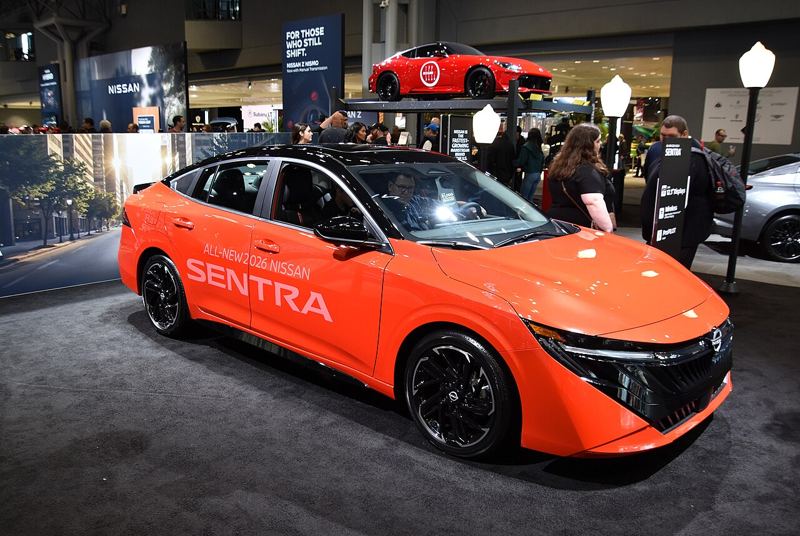
Photo: Charles from Port Chester, New York · CC0 What changed. Nissan revealed the MY2026 Sentra in September 2025. The unibody was 6% more rigid and ten airbags were standard. SR continued as the sporty grade, while the premium SL was reintroduced. A 149-hp 2.0-liter four-cylinder remained, with a retuned Xtronic CVT.
The innovation. Nissan’s MY2026 material described available dual 12.3-inch displays as class-exclusive and its touch-sensitive climate panel as a segment first, within its defined mainstream-compact comparison. It also offered Blind Spot Intervention to help avoid a collision during a lane change.
If you buy one usedIt is too new for a long-term record. NHTSA already lists a recall for some 2026 cars for insufficient welds on the front seat frames (26V145). If you buy one used, confirm with a Nissan dealer that it was done.
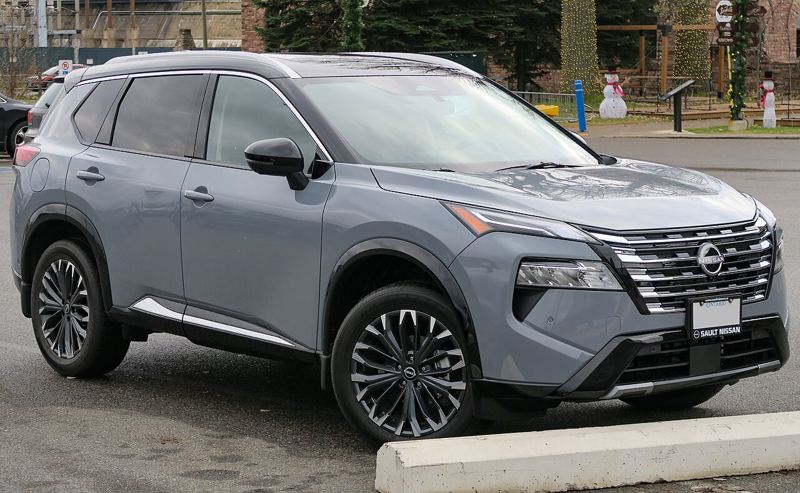 Nissan Rogue2007–present
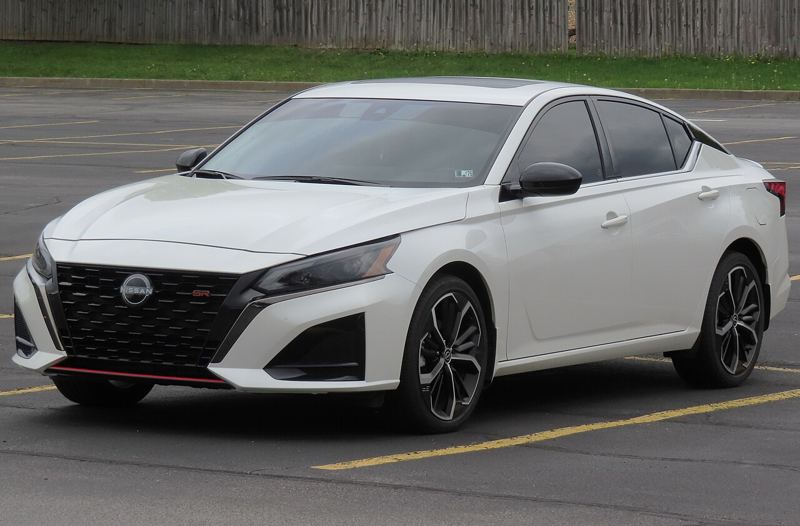 Nissan Altima1993–present
 Nissan Pathfinder1986–present
 Nissan Kicks2018–present
 Ford F-Series (F-150)1948–present
 Toyota RAV41994–present (US from 1996)
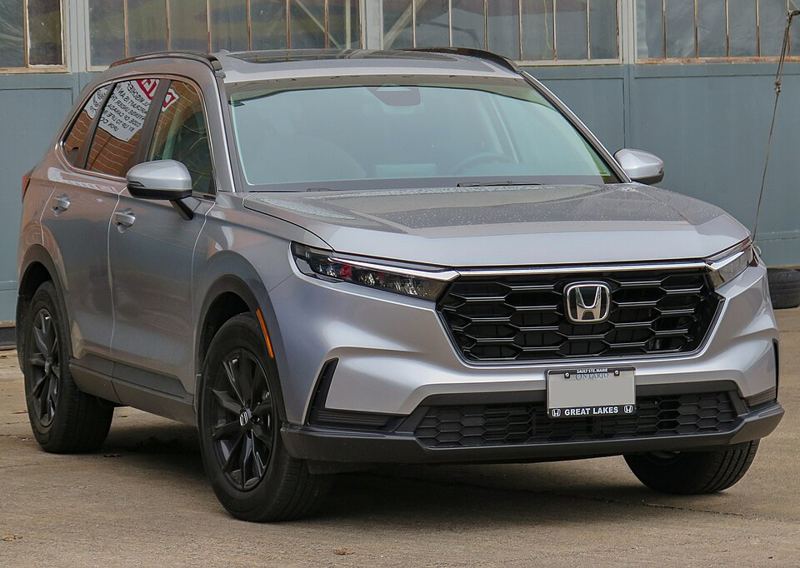 Honda CR-V1995–present
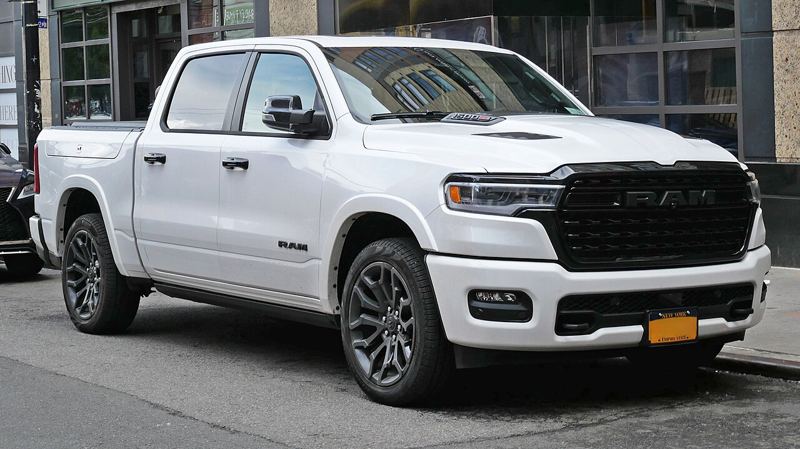 Ram 15001981–present
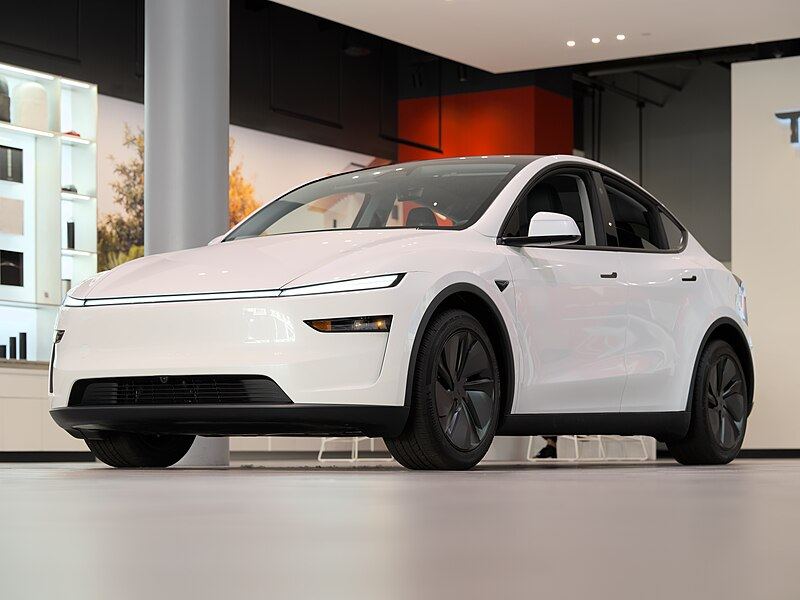 Tesla Model Y2020–present


