
Porsche Cayenne
Midsize luxury SUV · 2003–present. 22,432 units sold in the US in 2024
How it began
Porsche AG created it together with Volkswagen, which used the same base for the Touareg. Porsche led platform development in Hemmingen and Volkswagen contributed its mass-production know-how. Ferry Porsche saw it coming in 1989, when he said an off-roader with Porsche quality and a Porsche badge would sell; CEO Wendelin Wiedeking drove the project and the decision to build it in Germany. Harm Lagaay led the design of the first generation, Michael Mauer the later ones from 2004, and Oliver Laqua worked on the project from the start, rising to overall vehicle project manager.
The original plan was to build it alongside the Touareg at a new Volkswagen plant in Bratislava, Slovakia. Wiedeking’s studies found that German production would help sales, especially in North America, despite higher costs, leading Porsche to open Leipzig. Initially, painted bodies came from Bratislava and engines from Zuffenhausen, with final assembly in Leipzig. The third generation moved the main complete production operation to Bratislava in 2017; local assembly also exists in Malaysia. In Bratislava, Cayenne Electric shares a flexible line with gasoline and hybrid models.
The project was announced in June 1998. The Leipzig plant opened on August 20, 2002, the same day the first Cayenne was built, and the world premiere came at the Paris Motor Show, which opened on September 28, 2002. In the United States it arrived as a 2003 model, with base prices of $55,900 for the Cayenne S and $88,900 for the Cayenne Turbo. The Cayenne Electric premiered online on November 19, 2025, and was available to order in the U.S. by December that year, with dealer arrivals forecast for late summer 2026.
According to Porsche, the name comes from the spicy cayenne pepper, a bold choice for an intrepid traveler with a fiery nature. During development the project was known internally as Colorado.
In the early 1990s Porsche went through a crisis, and the 1996 Boxster helped pull it through. To grow, the brand wanted a third model line: a sporty multi-purpose vehicle that would bring its way of driving to a new segment. Porsche forecast about 25,000 sales a year; the first generation ended up averaging close to 35,000. The Cayenne moved Porsche into the SUV world and became a worldwide success.
Generation by generation
- Gen. 12003–2006 · 9PA (E1)
First generation: the third Porsche
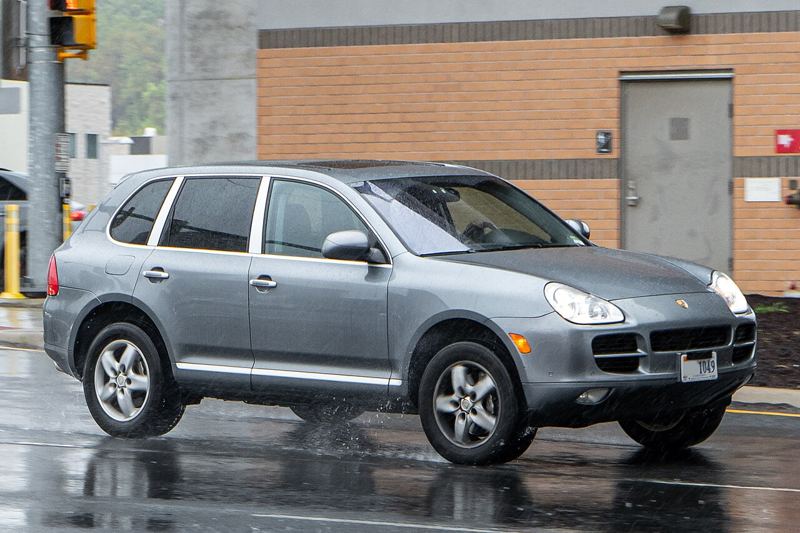
Photo: OWS Photography · CC BY 4.0 What changed. Everything was new: it was Porsche's third model line, after the sports cars. It arrived with a 4.5-liter V8 in two versions: the 340 hp Cayenne S and the 450 hp twin-turbo Cayenne Turbo, with a Tiptronic S automatic and Porsche Traction Management all-wheel drive, which sends power 62 percent to the rear and 38 to the front, plus a low-range gearbox for off-road use. A base V6 Cayenne joined later, and in 2006 the Cayenne Turbo S reached 520 hp in the United States.
The innovation. It was the first Porsche with Porsche Active Suspension Management (PASM), the adaptive damping system. Its air suspension could raise ground clearance from 21.7 to 27.3 centimeters (about 8.5 to 10.7 inches) for off-pavement driving.
If you buy one usedNHTSA lists for these years recall 17V576 (2003–2006 Cayenne S and Turbo and 2004–2006 Cayenne: the fuel pump flange could crack and leak fuel) and 19V446 (2003–2006 Cayenne S and Turbo and 2004–2010 Cayenne: the bushing linking the gear lever to the gearbox could detach and leave the vehicle out of Park with no warning; until it is repaired, use the parking brake). Also 04V593 (2003–2005: seat-belt retractors for child seats), 04V071 (2004: transfer case), 04V231 (2004: rear seat-belt latch) and 22V656 (missing caps on the headlight adjusters). An original illustrated RennsportKC repair account describes heat-stressed plastic pipes under the intake manifold on early V8s and their aluminum replacements; Porsche’s 2013 bulletin 1304 explains how to identify an installed aluminum kit. Check your VIN at nhtsa.gov. - Gen. 22008–2010 · 9PA (E1, actualización 2007)
First generation, second phase: direct injection
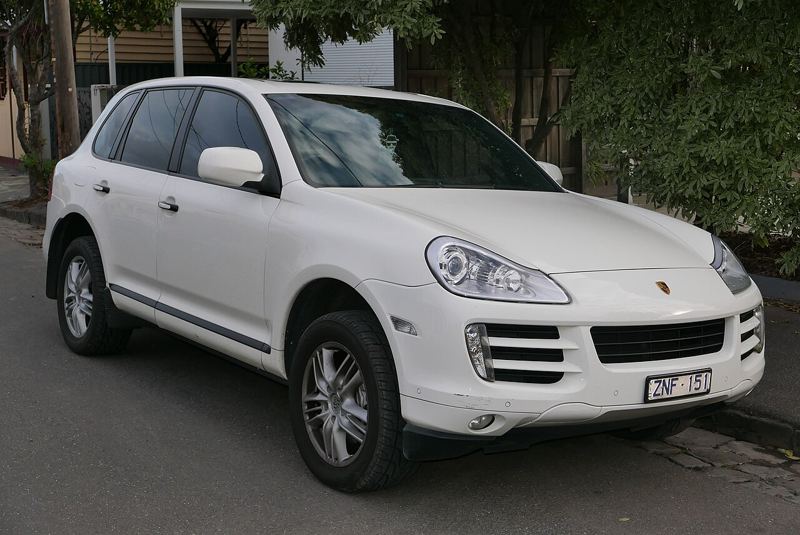
Photo: OSX · Public domain What changed. It debuted at the Detroit auto show in January 2007 and reached North American dealers in March 2007 as a 2008 model, which is why there is no 2007 Cayenne in the U.S. All three models moved to direct fuel injection, with more power, more torque and better fuel economy. Launch prices: $43,400 for the Cayenne, from $57,900 for the S and $93,700 for the Turbo. The Cayenne GTS joined, with a 4.8-liter, 405 hp V8. In all, the first generation sold 276,652 units over eight model years.
The innovation. Direct fuel injection across the range and the optional Porsche Dynamic Chassis Control (PDCC) active roll system, to improve handling, stability and comfort. In 2007 Porsche also showed a Cayenne S Hybrid prototype that could reach 120 km/h (75 mph) on electric power alone.
If you buy one usedNHTSA lists recall 08V076 (5,573 2008 Cayenne V6: a fuel line could chafe against the rear engine compartment cover and develop a leak), 19V446 (Cayenne through 2010: gear lever bushing; the vehicle could be left out of Park with no warning) and 22V656 (headlight adjuster caps). The original RennsportKC account also describes a rear-engine coolant crossover pipe on 2008-and-later V8s whose glued fittings can separate and leak. Confirm the actual engine and repair history. Check your VIN at nhtsa.gov.For an affected vehicle awaiting 19V446 repair, use the parking brake as the campaign instructs. - Gen. 32011–2018 · 92A (E2)
Second generation: lighter, and the first Porsche hybrid
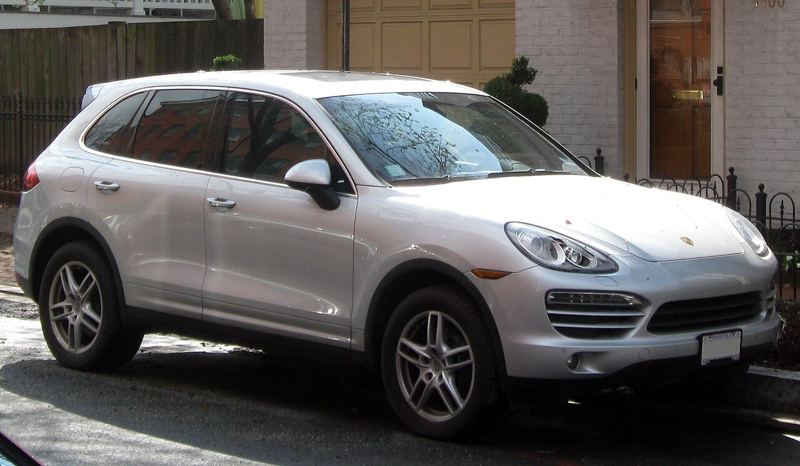
Photo: IFCAR · Public domain What changed. Development began in 2005 and Cayenne S and Turbo reached U.S. dealers in June 2010 as 2011 models; the base Cayenne and S Hybrid were scheduled for fall. It dropped the low-range gearbox, and the body lost 111 kilograms (the aluminum tailgate weighed half as much); the drivetrain alone saved 33 kilograms. Inside, a lower driving position, a Panamera-inspired console and a 911 steering wheel. Engines: a 3.6-liter, 300 hp V6, a 4.8-liter V8 with 400 hp in the S, with European NEDC fuel consumption 23 percent lower than before, and 500 hp in the Turbo. U.S. prices including destination: from $47,675 for the Cayenne and $105,775 for the Turbo. It was built in Leipzig, and 535,903 were delivered between 2010 and 2017.
The innovation. Cayenne S Hybrid was Porsche’s first modern series-production hybrid: a supercharged 3.0-liter V6 plus a 34-kW electric motor, 380 PS combined and electric-only driving up to 60 km/h. The 2014 Cayenne S E-Hybrid was the Cayenne range’s first plug-in and a pioneer among premium SUVs, with 416 PS in the European specification and more than 30 km of electric range. Panamera S E-Hybrid had already been introduced in 2013. The second generation also introduced the combination of an eight-speed Tiptronic and controlled all-wheel drive.
If you buy one usedNHTSA lists recall 16V169 (2011–2016 Cayenne built April 28, 2010, to January 11, 2016: the brake pedal pivot pin could be missing a circlip and the pedal could dislodge), 12V065 (2011–2012 Cayenne: the headlamps could come loose and detach from the fender), 12V329 (2012 Cayenne Turbo: the turbocharger turbine wheel could fracture due to a casting defect) and 13V506 (some 2013–2014 Cayenne: the fuel gauge and range display could read higher than actual). Also 22V656 (headlight adjuster caps). Check your VIN at nhtsa.gov. - Gen. 42019–2023 · PO536 / 9YA (E3)
Third generation: aluminum, rear-axle steering and a Coupe
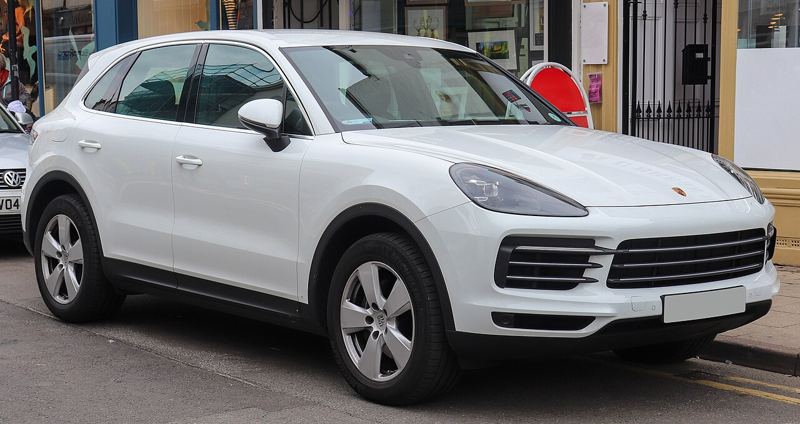
Photo: Vauxford · CC BY-SA 4.0 What changed. It was unveiled on August 29, 2017, in Stuttgart-Zuffenhausen, and all production moved to Bratislava. Up to 65 kilograms lighter than before, with an all-aluminum exterior, an eight-speed Tiptronic S, standard LED headlights and LTE connectivity with a Wi-Fi hotspot. At launch: the Cayenne with a 3.0-liter, 340 PS turbo V6, and the Cayenne S with a 2.9-liter, 440 PS twin-turbo V6. In 2019 came the Cayenne Coupe, with a sloping roof inspired by the 911, and the Turbo S E-Hybrid, with 680 PS combined.
The innovation. Rear-axle steering, a first for the Cayenne, together with three-chamber air suspension. In 2021 the 640 PS Cayenne Turbo GT set an SUV lap record on the Nürburgring Nordschleife: 7 minutes 38.925 seconds.
If you buy one usedNHTSA lists recall 21V493 (2021 Cayenne: the bolted joint between the steering column and steering box could fail), 21V271 (2021 Cayenne and Cayenne Coupe: the rear trailing-arm lock nut could break from stress corrosion) with its follow-up 22V040 (2021–2022: check rear alignment after that repair), 20V271 (2020 Cayenne: insufficient weld on a transmission oil pipe), 18V751 (2019: the passenger-side rear seat-belt buckle could break) and 21V318 (some 2020–2021 Coupe and GTS: missing passenger seat-back heating element, affecting the occupant sensor). Also 25V896 (2019–2025: the rearview camera might not display; fixed with software). Check your VIN at nhtsa.gov.The 21V318 range combines selected 2020–2021 Coupe versions and 2021 GTS/GTS Coupe; eligibility is not identical for every trim. - Gen. 52024–present · PO536 / 9YA (E3, actualización 2023)
Third generation, second phase: the big update
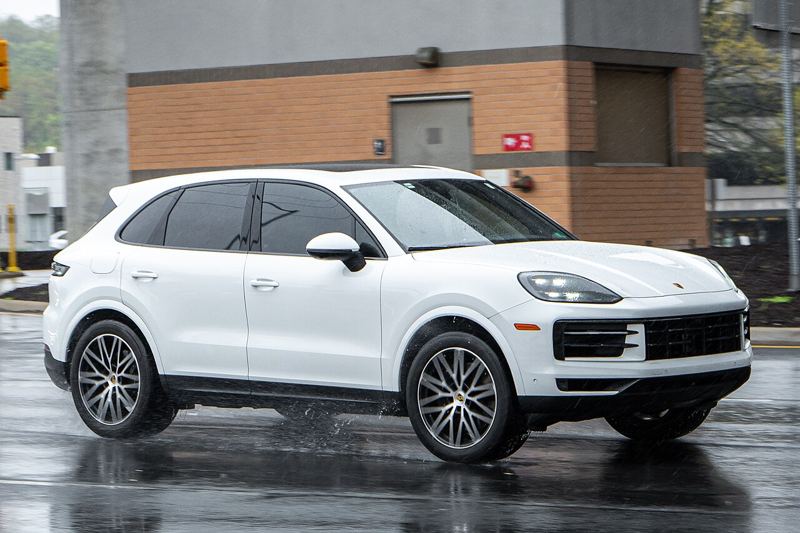
Photo: OWS Photography · CC BY 4.0 What changed. It was unveiled on April 18, 2023, at the Shanghai auto show, and Porsche called it one of the most extensive product upgrades in its history. A new front end, hood and headlights, standard Matrix LED lights and three-dimensional taillights. The Cayenne S went back to a 4.0-liter twin-turbo V8 (474 PS), the base Cayenne rose to 353 PS and the E-Hybrid battery grew from 17.9 to 25.9 kWh, for up to 90 km (56 miles) of WLTP electric range. Inside, the Porsche Driver Experience from the Taycan, with a 12.6-inch digital cluster, a 12.3-inch central screen and an optional 10.9-inch passenger display.
The innovation. The passenger display, with a special film that keeps the driver from seeing it, and new two-valve dampers that separate compression and rebound damping for handling that is sharper and more comfortable at the same time.
If you buy one usedNHTSA lists recall 24V533 (some 2024 Cayenne: the driver-side front upper control arm may have been installed with cracks and could break, causing loss of steering control), 25V634 (2024–2026 Cayenne: the high-pressure fuel pump fasteners might not be tight and could cause a fuel leak), 23V527 (2024: the rear hazard lights might not come on right after the vehicle is switched off; software) and 25V896 (rearview camera; software). For E-Hybrids, 23V841: the 220/240-volt portable charging cable could overheat some home outlets; Porsche supplies a new cable. Check your VIN at nhtsa.gov.The 23V527 light fault occurs when activated within 10 seconds after gateway shutdown. Until an affected 23V841 cable is replaced, the campaign advises not using the 220/240 V cable: use the 110 V home cable or public stations and confirm the remedy by VIN. - Gen. 62026–present
Cayenne Electric: the most powerful production Porsche
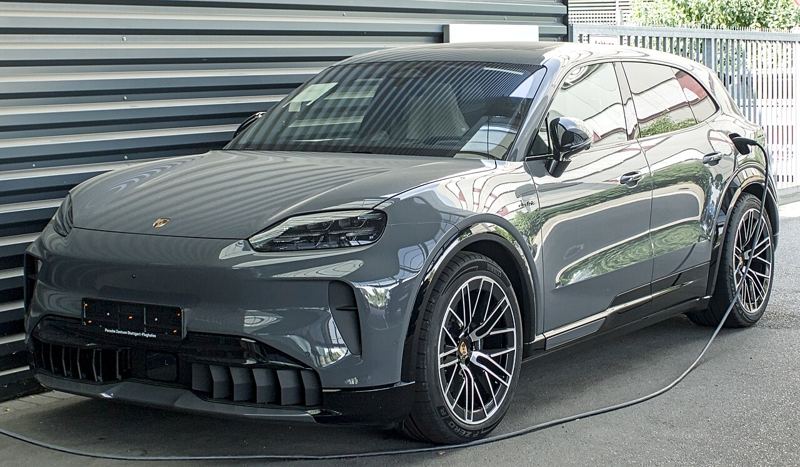
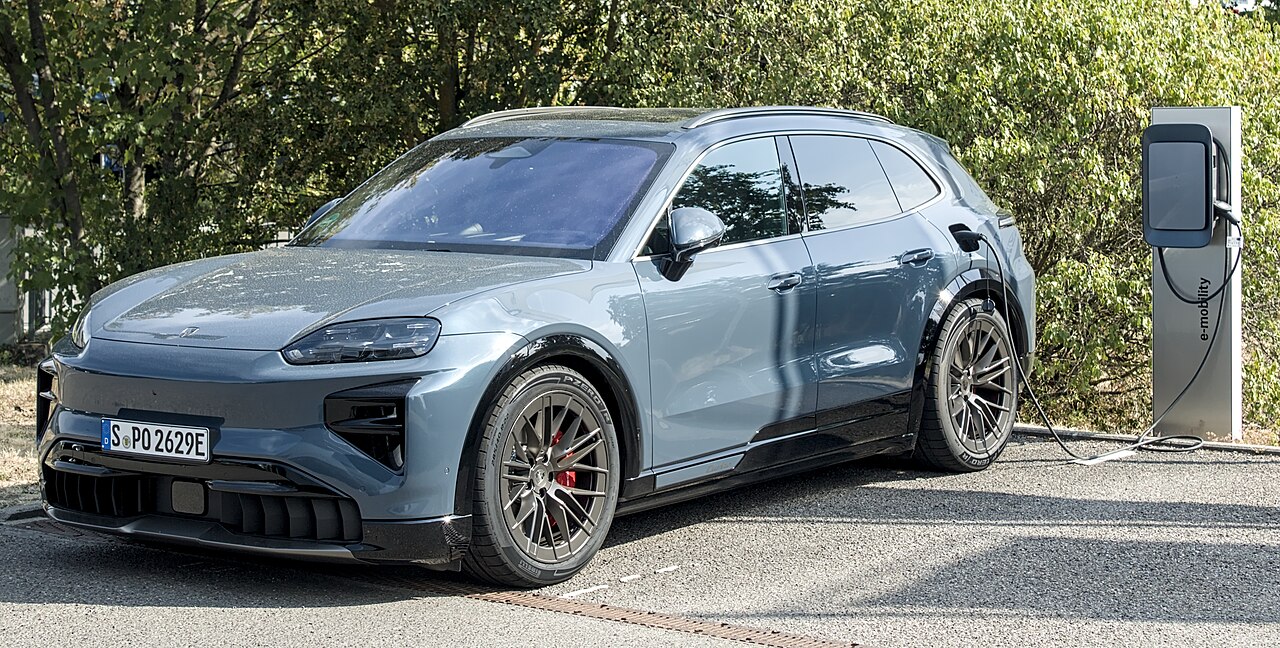
Photo: Alexander Migl · CC BY-SA 4.0 What changed. Unveiled on November 19, 2025, it is sold alongside the gasoline and hybrid Cayennes. A 113 kWh gross-capacity battery with double-sided cooling, an 800-volt architecture and DC fast charging up to 390 kW (400 kW under ideal conditions), for 10 to 80 percent in under 16 minutes. The Cayenne Turbo Electric delivers up to 1,139 hp with Launch Control and runs 0–100 km/h in 2.5 seconds. A 119-inch wheelbase, about 13 centimeters longer than the gasoline model, and a 7,716-pound towing capacity. It is built in Bratislava with battery modules from Horná Streda, Slovakia.
The innovation. Optional inductive charging, a Porsche first: up to 11 kW just by parking over a floor pad, with nothing to plug in. Plus the curved OLED Flow Display and direct oil cooling of the rear electric motor on the Turbo, an idea borrowed from racing.
If you buy one usedExact NHTSA queries on November 3, 2026 for the names Cayenne Electric and Cayenne Turbo Electric, model years 2026 and 2027, returned zero campaigns. These are dated model-name results, not VIN clearance or a guarantee against future campaigns. Ask for battery state of health, confirm the high-voltage warranty and check the VIN before buying. Porsche announced that the inductive ground pad would be sold separately.
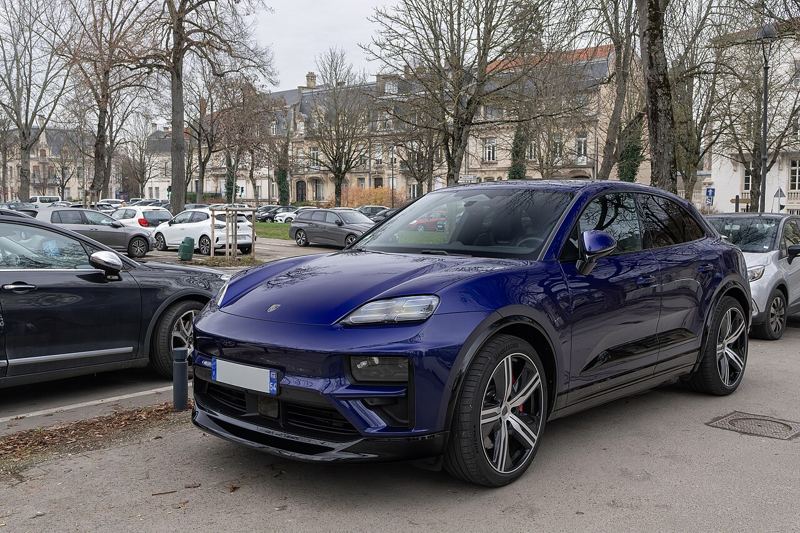 Porsche Macan2014–present
 Porsche 9111964–present
 Porsche Taycan2020–present
 Porsche Panamera2010–present
 Ford F-Series (F-150)1948–present
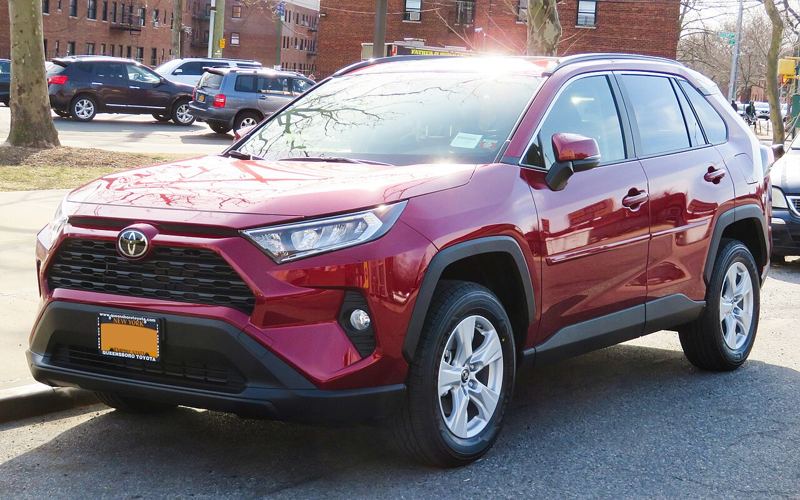 Toyota RAV41994–present (US from 1996)
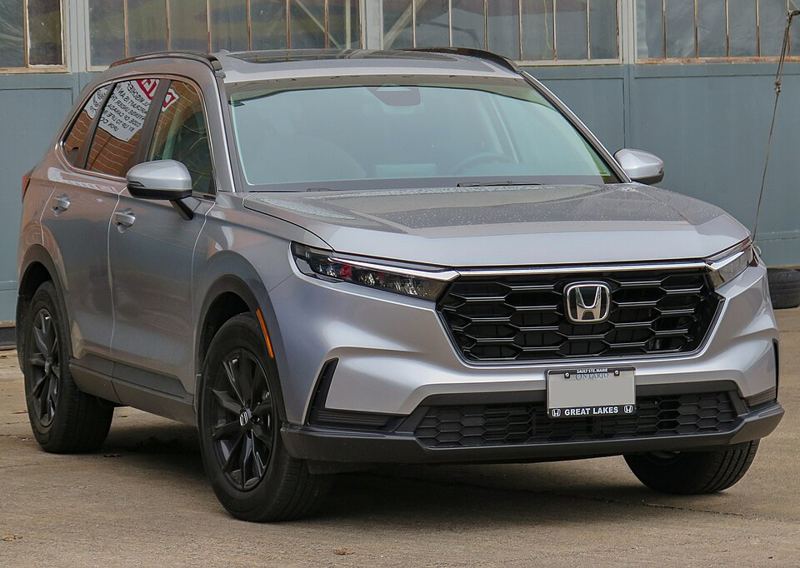 Honda CR-V1995–present
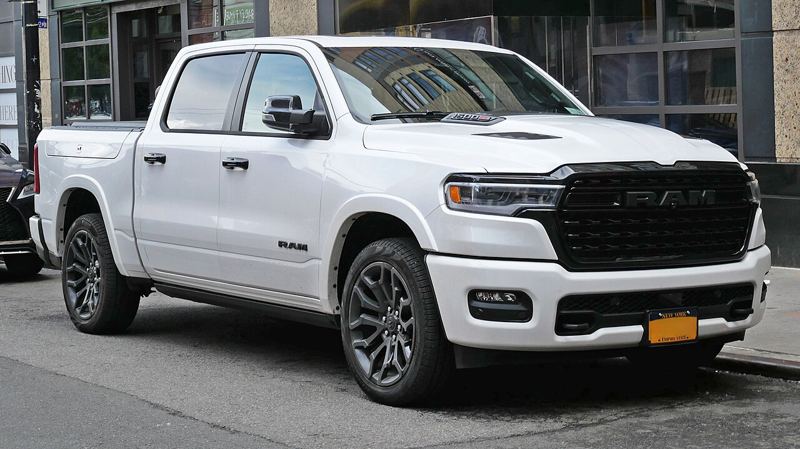 Ram 15001981–present
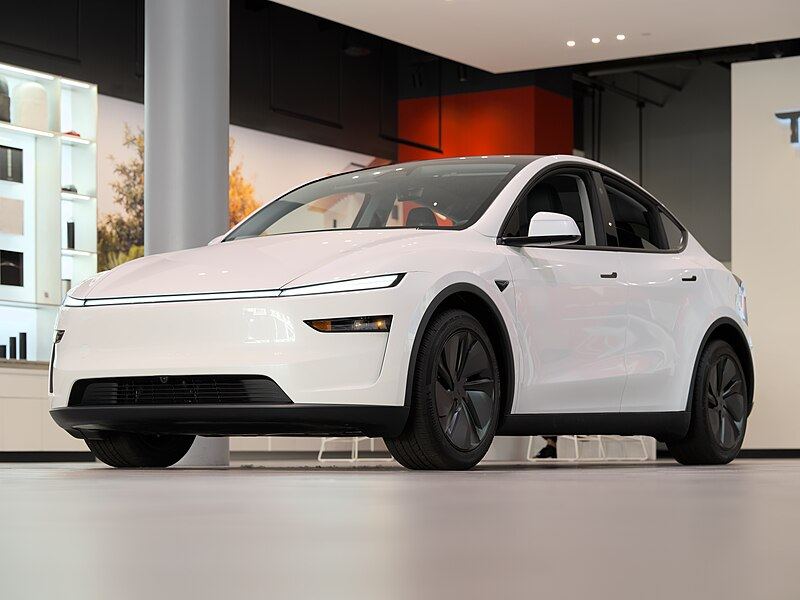 Tesla Model Y2020–present


