
Honda Accord
Midsize sedan · 1976–present. 162,723 units sold in the US in 2024
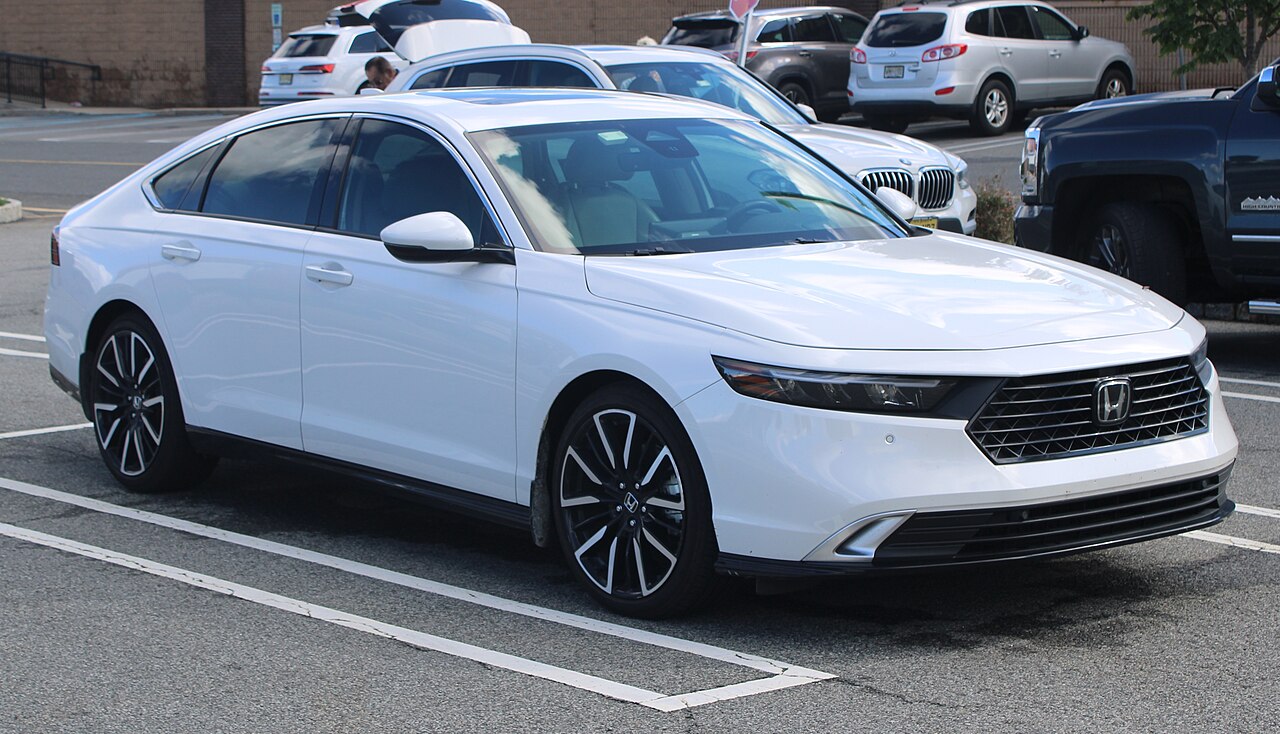
How it began
Honda Motor Co. developed it in Japan under project code 671. The chief research engineer and development manager was Hiroshi Kizawa, who had been stationed in the U.S. helping transfer CVCC technology to Ford. Keiichi Mitobe led suspension design. During a visit to Wako R&D Center, Soichiro Honda said the steering felt heavy, prompting the team to study power steering. Sales, Production Engineering and Development worked together under the S•E•D system.
It was designed in Japan and built at the Sayama plant of Honda's Saitama Factory. On November 1, 1982, the Marysville, Ohio plant began building the Accord: according to Honda, it was the first passenger car built in America by a Japanese automaker. Today the U.S. Accord is assembled at the Marysville Auto Plant, which has built more than 13 million of them.
Honda Global dates the Japan launch to May 1976, as a three-door hatchback; American Honda gives June 7, 1976 as its U.S. introduction. It cost $3,995 with the 5-speed manual. The four-door sedan reached the U.S. as a 1979 model.
Accord means harmony and agreement. Honda explains that the name reflects its goal of achieving harmony among people, society and the automobile through technology.
In the mid-1970s, new emissions laws and the 1973 oil crisis pushed buyers toward lower-emission, thriftier family cars. Honda was seen as a small automaker with few models, and in 1974 it had canceled a six-cylinder luxury sedan (project 653). Instead it ordered a car one class above the Civic, for Civic owners who wanted to move up. The target was comfortable highway cruising at 130 km/h with only 70 dB of noise.
Generation by generation
- Gen. 11976–1981
The hatchback that made Honda a full-line automaker
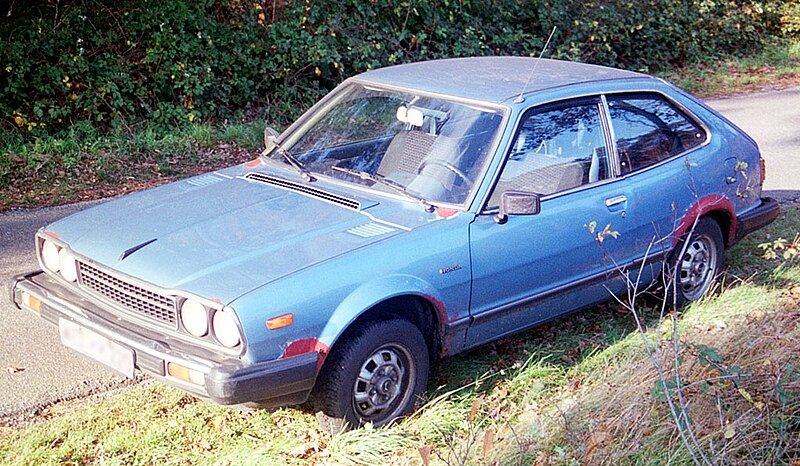
Photo: Hank Nasemann · CC BY-SA 3.0 What changed. It was Honda's first car one class above the Civic, and it reused many Civic parts and facilities to save investment. It arrived as a three-door hatchback with a 68 hp, 1.6-liter CVCC engine; the sedan joined in 1979 along with a 1.8-liter engine. Honda Global puts U.S. sales at 18,643 units in 1976 and 75,995 in 1977.
The innovation. Speed-sensitive power steering, the first in its class: light for parking, firm on the highway. Honda reports about 87% uptake for the specific E-SV and E-SM models identified in its research footnote. It also had an aluminum cylinder head, front-wheel drive and a maintenance reminder.
If you buy one usedToday it is a collector car. NHTSA lists campaign 81V136 for 1976 to 1979 models: prolonged contact with road salt could seriously rust the suspension arms, front crossbeam and spring supports. Check the underside carefully for rust. - Gen. 21982–1985
The first one made in Ohio
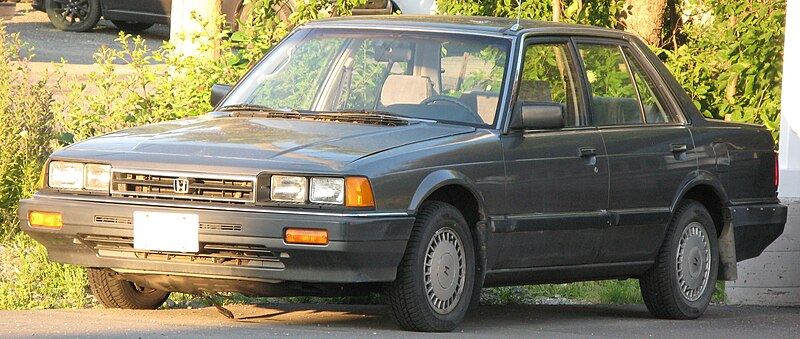
Photo: SsmIntrigue · CC BY-SA 4.0 What changed. It debuted in fall 1981 as a 1982 model, with a longer wheelbase and a bigger, more upscale body. From November 1982 it was built in Marysville, Ohio. In 1983 a 4-speed automatic arrived (29/40 mpg) and the Accord made Car and Driver's first 10Best list; in 1984 the engine grew to 1,830 cc and 86 hp.
The innovation. In 1985 the SE-i introduced electronic fuel injection, with 101 hp. In Japan, this generation offered the Honda Electro Gyrocator as an option, the world's first car navigation system.
If you buy one usedNHTSA lists campaign 92V028 for 1982 to 1985 models: if the plastic coating on the fuel filler or breather pipes is damaged, salt water can corrode them until fuel leaks. Ask for proof the repair was done and check for rust. - Gen. 31986–1989
Pop-up headlights and race-car suspension
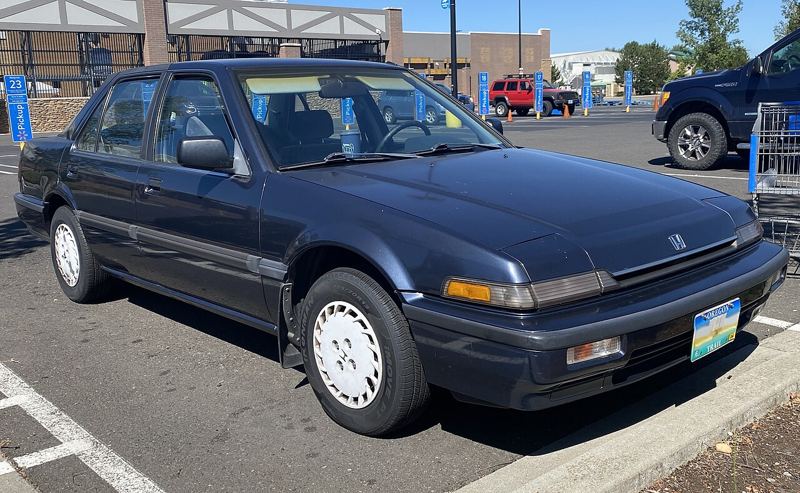
Photo: Cutlass · CC0 What changed. It became lower and sportier, with retractable headlights, 5.9 inches more wheelbase and a 2.0-liter engine (98 hp carbureted or 110 hp fuel-injected). In 1988 the Accord Coupe arrived, the first product designed by Honda R&D Americas and built only in Marysville. In 1989 the Accord became America's best-selling car for the first time.
The innovation. Four-wheel double-wishbone suspension inspired by race cars: according to Honda, a world first for a front-wheel-drive car.
If you buy one usedNHTSA lists campaign 92V028 (fuel pipes that can corrode from salt) for 1986 and 1987, and 95V103 for 1986 to 1991: the red front seat belt release buttons can break and jam the buckle. Check that both were done. - Gen. 41990–1993
Moving up to midsize
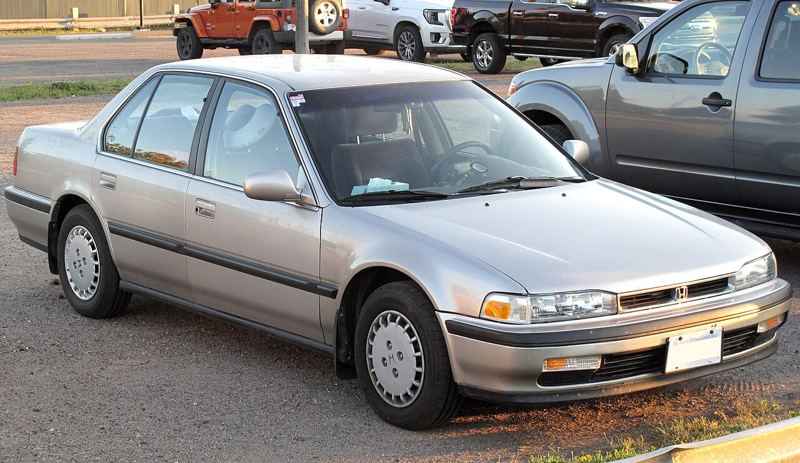
Photo: Elise240SX · CC BY-SA 4.0 What changed. At 107.1 inches of wheelbase and 184.8 inches long, it moved into the midsize sedan class. It introduced a 2.2-liter, 16-valve engine with up to 130 hp. In 1991 the first Accord Wagon arrived, designed by Honda R&D Americas. In 1990 the Accord hit its U.S. sales peak: 417,179 units, according to Honda Global.
The innovation. Honda Global describes the Japanese fourth-generation engines as tilted 10 degrees rearward for a straighter intake and better weight balance, with double-wishbone wheel travel increased by 25 mm at the front and 40 mm at the rear. From 1990, right-hand-drive coupes were also built in the U.S. for Japan.
If you buy one usedNHTSA lists campaign 95V103 for 1990 and 1991 (front seat belt release buttons that can break) and 93V056 for 1990 to 1993: the rear outboard seat belts could lock up at angles the standard does not allow. Confirm both repairs. - Gen. 51994–1997
VTEC arrives, and the first V6
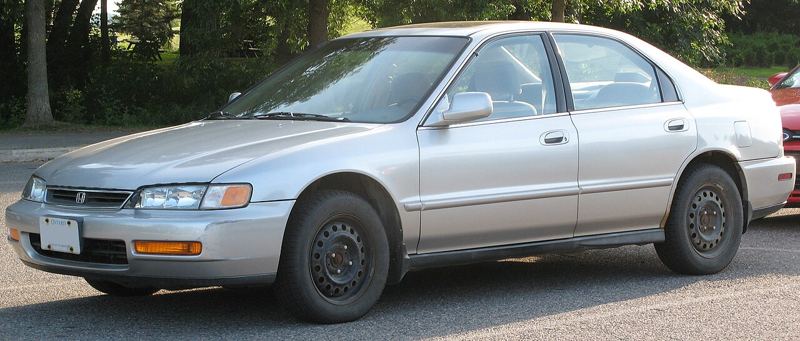
Photo: SsmIntrigue · CC BY-SA 4.0 What changed. All new, roomier inside and designed to meet U.S. federal safety standards. It came as a coupe, sedan and wagon, and in 1994 it won MotorTrend Import Car of the Year. In 1995 the first V6 Accord arrived: 2.7 liters, 170 hp.
The innovation. The 2.2 VTEC engine: at low rpm it nearly closes one of the two intake valves to create a swirl that burns the mixture better; at high rpm it opens both. In U.S. form it made 145 hp.
If you buy one usedNHTSA lists campaign 98V231 for 1995 to 1997 (except DX and V6): a misrouted air-conditioning harness could chafe and short-circuit or start a fire. Also 96V217 (1995, an airbag control unit that could deploy the bags without a crash) and, for 1997, 99V069 (front ball joints that wear early) and 02V120 (ignition switch contacts). - Gen. 61998–2002
An American-styled coupe and a near-zero-emission engine
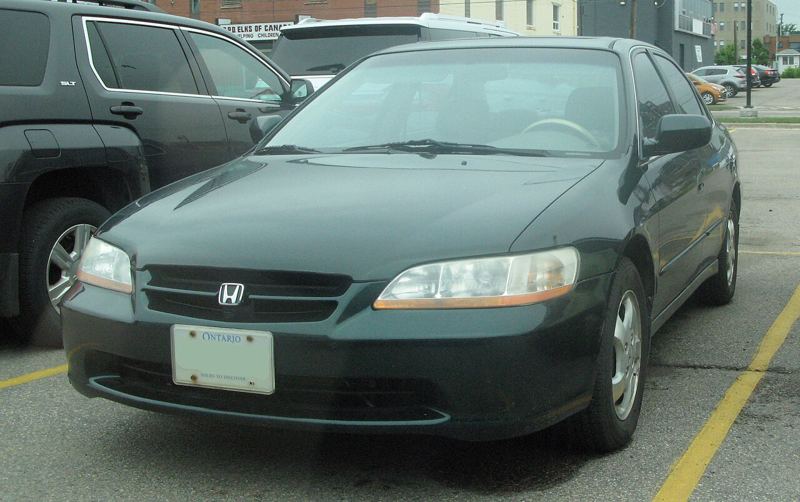
Photo: SsmIntrigue · CC BY-SA 4.0 What changed. New body, chassis and engines: a 2.3-liter four-cylinder with 135 hp without VTEC or up to 150 hp with VTEC and a 200 hp 3.0 V6. The coupe was styled in the U.S. and engineered by Honda R&D Americas, with its own wheelbase; the sedan was styled in Japan. Dual front airbags were standard. In 2001 it was America's best-selling car.
The innovation. In 2000, the four-cylinder automatic Accord EX sold in California became the first gasoline vehicle to earn SULEV (super ultra-low emission vehicle) status.
If you buy one usedMost important: 2001 and 2002 Accords are among the models with Takata Alpha driver airbag inflators. In February 2023 Honda issued a do-not-drive warning, and the Tennessee Attorney General, citing NHTSA, put the failure rate at 50%. 2001 to 2007 models are also in inflator campaigns 15V320 and 19V499. Others: ignition interlock 05V025 (1999 to 2002), ball joints 99V069 (1998) and V6 timing-belt tensioner 02V226 (2002). Do not drive one without the repair done. - Gen. 72003–2007
Six speeds and the world's first V6 hybrid
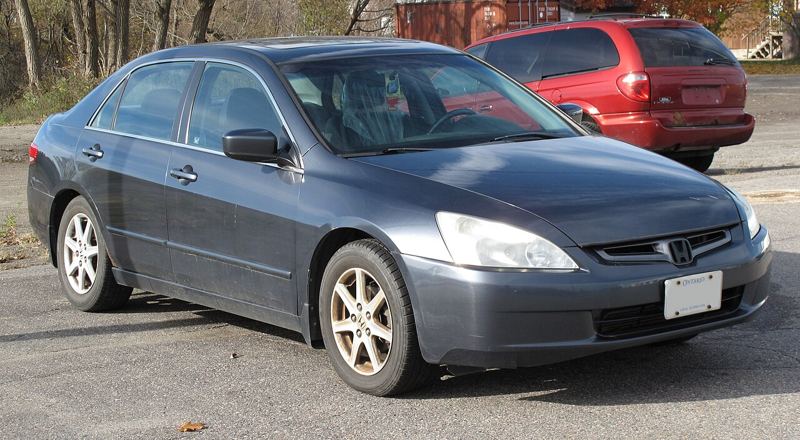
Photo: Elise240SX · CC BY-SA 4.0 What changed. An all-new design with a 160 hp 2.4 i-VTEC engine and a 240 hp 3.0 V6, a first 5-speed automatic and, on the coupe, a first 6-speed manual. By 2005, side and curtain airbags were standard on every version. In 2004 a silver EX sedan became the 10-millionth Honda built in Ohio. Nearly 1.9 million were sold over the generation.
The innovation. The 2005 Accord Hybrid, introduced in December 2004, was the world's first V6 hybrid: 255 hp, with Variable Cylinder Management (it shuts off three cylinders when cruising) and Honda's IMA system.
If you buy one usedCheck the Takata inflators first: driver (15V320, 19V499) and passenger (18V268) for 2003 to 2007. Also: a V6 power steering hose that can leak fluid onto the catalytic converter (12V222, 2003 to 2007), automatic transmission gears (04V176, 2003 and 2004), the windshield wiper motor (08V169, 2003) and a transmission bearing (11V395, 2005 to 2007). - Gen. 82008–2012
Bigger, safer, with standard stability control
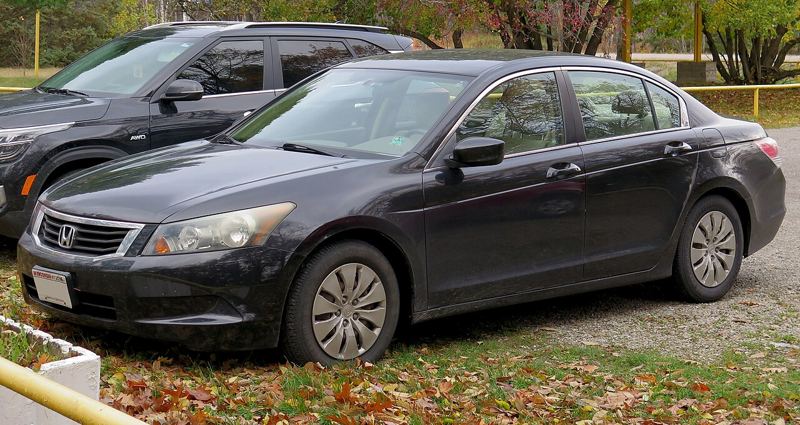
Photo: Elise240SX · CC BY-SA 4.0 What changed. Compared with the 1976 original, it grew 16.5 inches in wheelbase, 8.9 in width and 31.3 in length. It offered a 177 to 190 hp 2.4 i-VTEC and a 268 hp 3.5 V6 (271 hp from 2009). In 2010 it was America's best-selling passenger car to retail buyers.
The innovation. Honda's ACE body structure and Vehicle Stability Assist (VSA) standard on every trim. PZEV configurations were offered in CARB-standard regions; the specified four-cylinder and V6 coupe manual-transmission versions were excluded.
If you buy one usedCheck the passenger Takata inflators (18V268, 19V502) for 2008 to 2012. Also: an airbag control unit that can corrode and fail (16V056, 2008 to 2010), a transmission bearing that can break (11V395, 2008 to 2010) and V6 front damper bolts (10V640, 2010 and 2011). - Gen. 92013–2017
Direct injection, a CVT and two electric motors
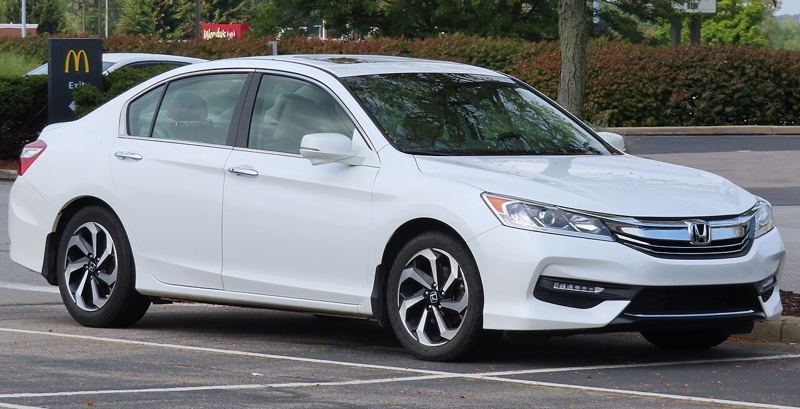
Photo: MercurySable99 · CC BY-SA 4.0 What changed. It introduced Earth Dreams engines: the 2.4 was Honda's first direct-injected engine in North America and came with the Accord's first CVT. In 2014 the two-motor hybrid and the first Accord Plug-in Hybrid (10 to 15 electric miles) arrived. In 2016 Honda Sensing became available across the range and standard on Touring; Apple CarPlay and Android Auto were offered on EX and higher trims.
The innovation. A front subframe that joins steel and aluminum with friction stir welding (FSW): according to Honda, the first time in the world this technique was used on structural car parts.
If you buy one usedNHTSA lists: a battery sensor that can let in water and short-circuit (17V418, 2013 to 2016); driveshafts that can break on four-cylinder CVT cars sold or registered in road-salt states (20V769, 2013 to 2015); the V6 fuel pump (19V060, 2015 to 2017) and the fuel pump (23V858, 2013 to 2017). - Gen. 102018–2022
Turbos and hybrid only, and Car of the Year
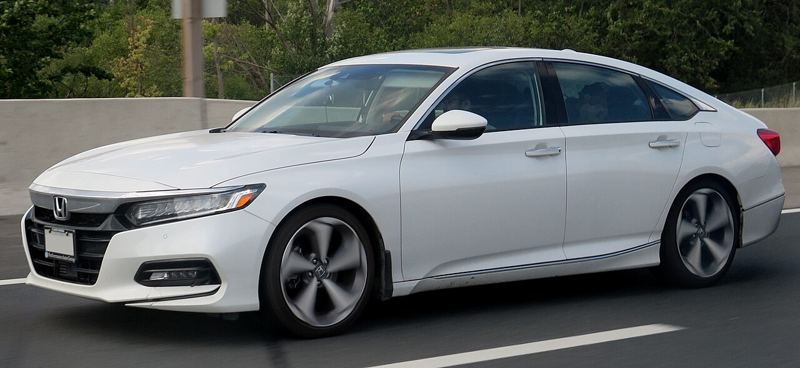
Photo: Elise240SX · CC BY-SA 4.0 What changed. A lighter, stiffer chassis and, for the first time, turbo engines: 1.5 and 2.0 liters, no V6. The third-generation hybrid in the 2018 U.S. model was EPA-rated at 47 mpg combined. It won 2018 North American Car of the Year. In 2021 it added wireless Apple CarPlay and Android Auto.
The innovation. The Accord's first turbocharged engines, plus adaptive dampers on the Touring. Honda Global reports that the Japanese tenth generation lowered the center of gravity by about 15 mm and used high-tensile steel for 49% of the body frame.
If you buy one usedNHTSA lists: the low-pressure fuel pump (20V314, 2018 and 2019; 23V858, 2018 to 2022); body control module software that can affect the wipers, defroster, backup camera and lights (20V771, 2018 to 2020); and the front seat belts (23V158, 2018 and 2019). - Gen. 112023–present
Google built-in and a higher-torque hybrid
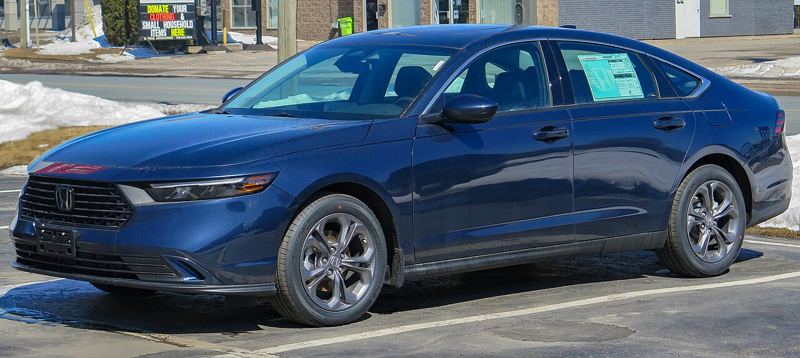
Photo: Elise240SX · CC BY-SA 4.0 What changed. A new design, a 12.3-inch screen and the first Accord with Google built-in. The fourth-generation hybrid makes 247 lb-ft of torque, 15 lb-ft more torque than the previous two-motor system. In 2025 hybrids passed 50% of sales, and a 2026 refresh brought a 9-inch screen on LX and SE, with wireless charging and wireless CarPlay and Android Auto standard across the lineup; hybrid trims retained their 12.3-inch screens.
The innovation. Google built-in (maps, assistant and apps on the car's screen) and expanded over-the-air software updates. In Japan, this generation was the first model to launch Honda Sensing 360, with five radars watching around the car.
If you buy one usedNHTSA lists for 2023 and 2024: seat belt pretensioners missing a rivet (23V782), a high-pressure fuel pump that can crack (24V763) and a driver's seat frame not properly tightened (24V859). In November 2025 Honda recalled about 256,000 2023 to 2025 Accord Hybrids to reprogram a module that could reset and cut power.
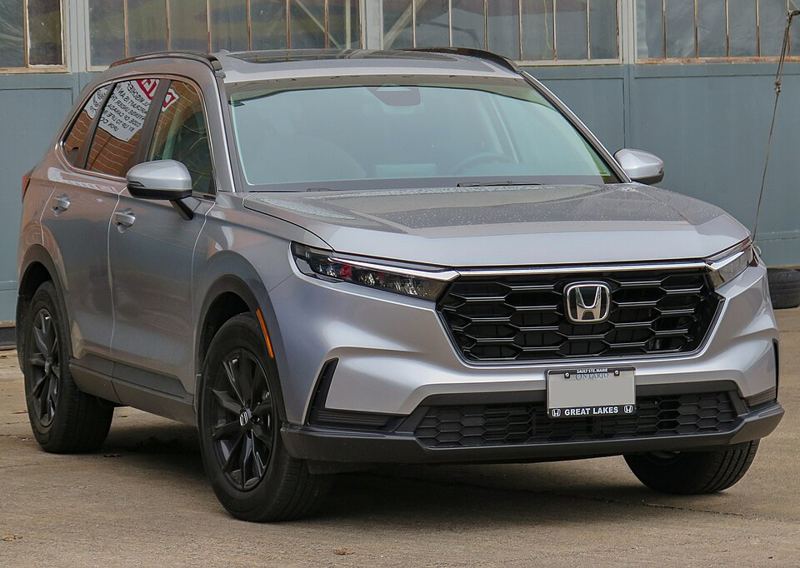 Honda CR-V1995–present
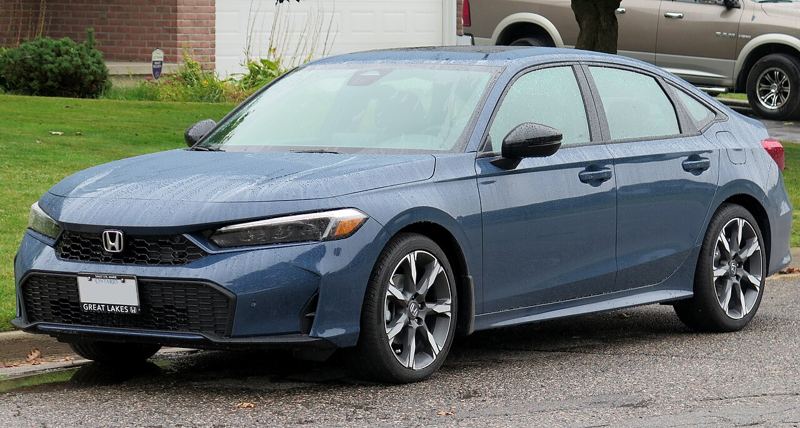 Honda Civic1972–present
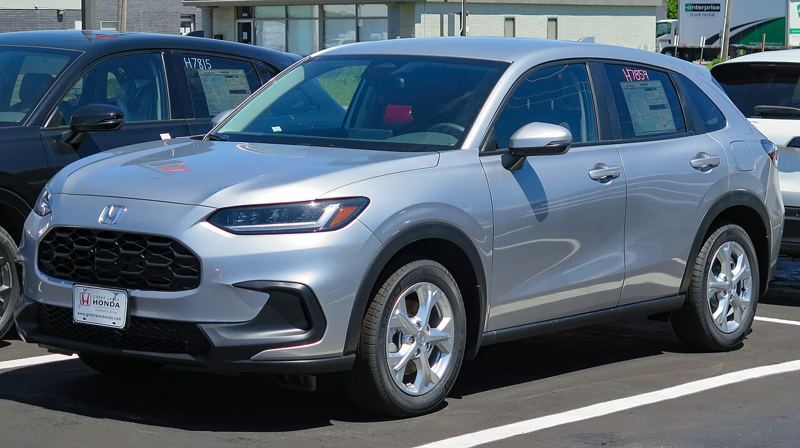 Honda HR-V2016–present
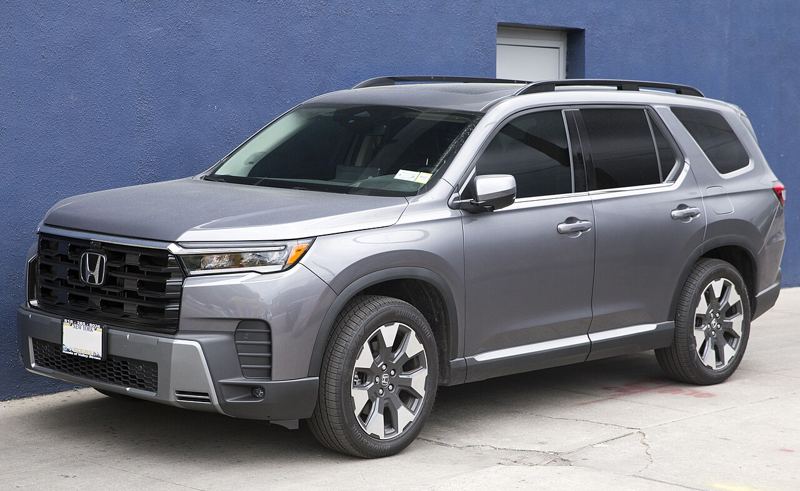 Honda Pilot2003–present
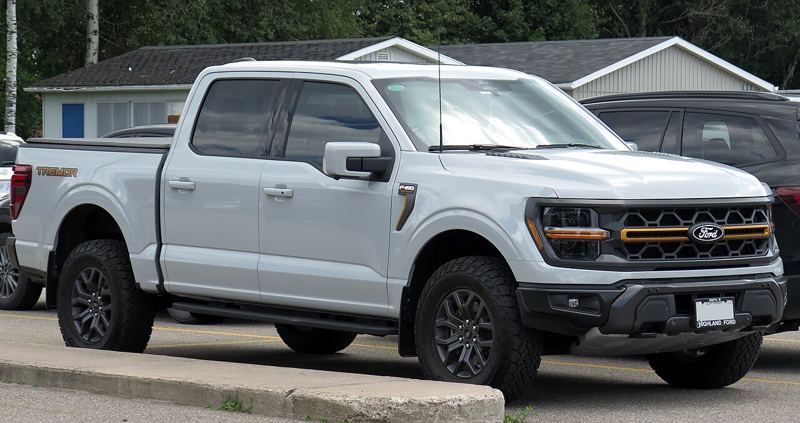 Ford F-Series (F-150)1948–present
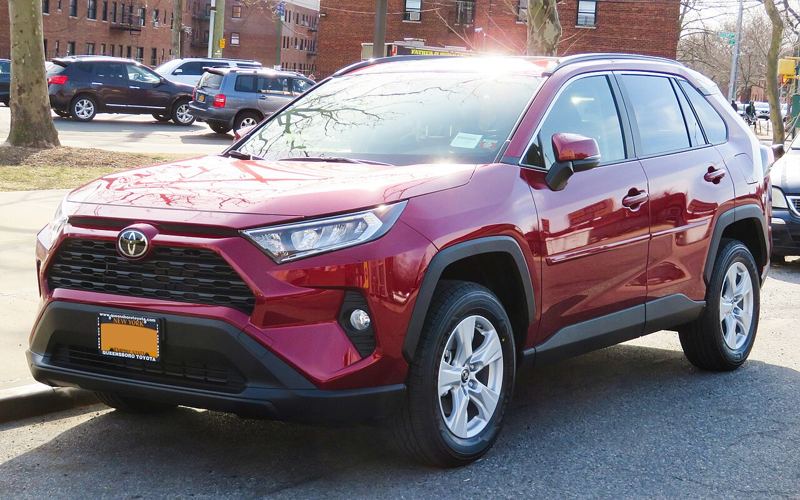 Toyota RAV41994–present (US from 1996)
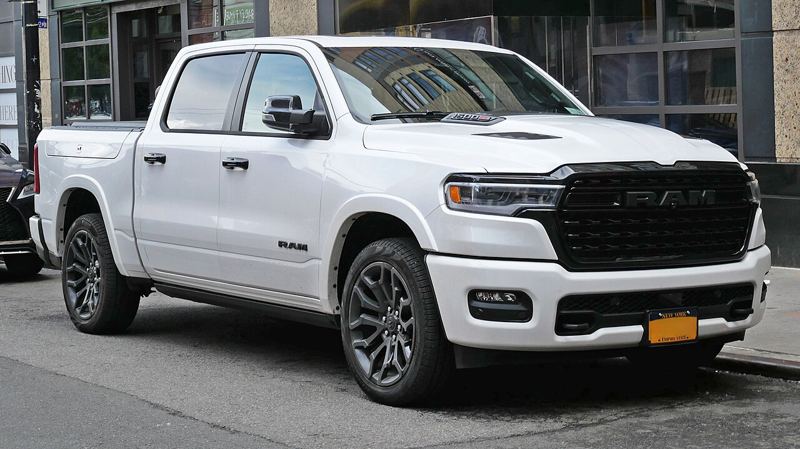 Ram 15001981–present
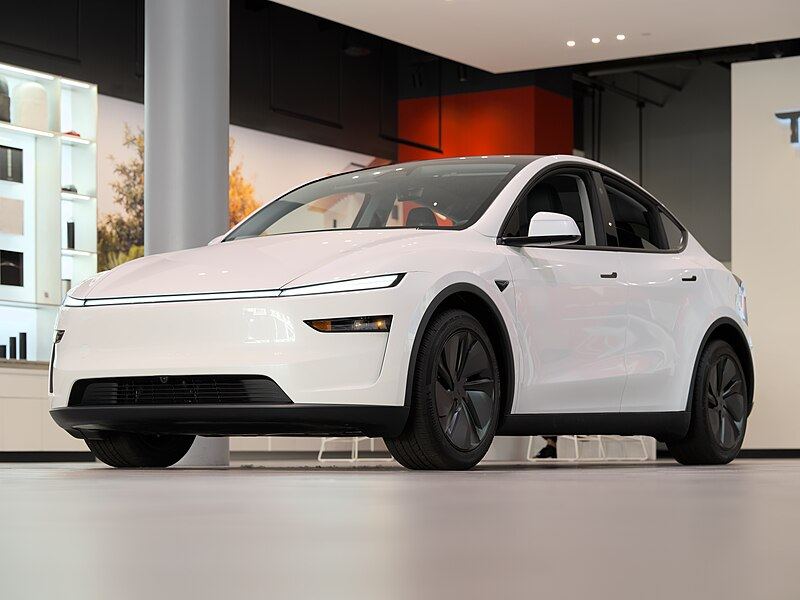 Tesla Model Y2020–present
 Chevrolet Silverado1999–present


