
Honda Pilot
Three-row midsize SUV · 2003–present. 141,245 units sold in the US in 2024
How it began
Honda R&D Americas designed and developed the Pilot. A Honda-issued April 2008 production release identifies Frank Paluch as the lead project engineer for the first generation. The original Detroit introduction in January 2002 quoted American Honda executive vice president Dick Colliver; the production-model announcement in New York that March quoted executive vice president Tom Elliott. The reviewed documents do not identify an individual exterior designer.
The original Pilot was designed and developed in Raymond, Ohio and Torrance, California, and assembled at Alliston, Ontario alongside the Acura MDX and Odyssey. Alabama production began on April 27, 2004. Lincoln became the sole global production source on April 15, 2008. The current Pilot is designed in California, developed in Ohio and built exclusively in Lincoln, Alabama.
The preproduction Pilot debuted in Detroit on January 6, 2002; the production-ready model followed in New York on March 27. U.S. sales began June 3, 2002 as a 2003 model. Honda’s final May pricing announcement listed $26,900 for LX and up to $32,520 for EX with leather and navigation, superseding the March preview’s projected $26,000–$32,000 range.
No official explanation of the name was identified in the launch releases reviewed. Pilot is the ordinary English word for a person who guides or steers. Its connection with the launch theme, Ultimate Family Adventure, is an editorial interpretation.
Honda wanted an eight-seat family SUV combining traditional SUV versatility with the quality and refinement associated with its cars. Honda describes the Pilot as the first mainstream three-row SUV on a car-like unibody platform. Executive Tom Elliott said it should set a new SUV standard, as the Odyssey had in minivans.
Generation by generation
- Gen. 12003–2008
The family SUV built like a car
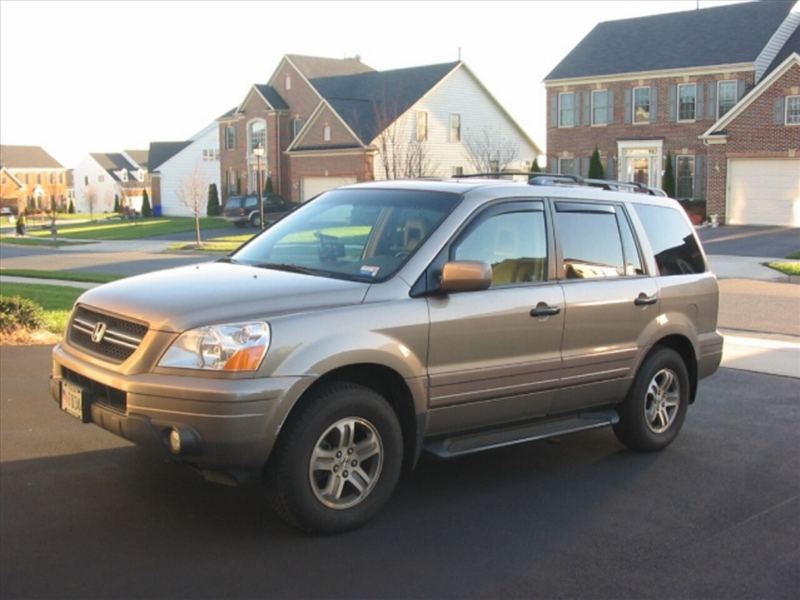
Photo: SIGSauerP365XL · CC BY-SA 4.0 What changed. It was Honda's first three-row SUV, seating up to eight, with a 240 hp 3.5-liter V6, a five-speed automatic and up to 90.3 cubic feet of cargo space. In 2005 it rose to 255 hp, and in 2006 it got a restyled exterior, standard stability control and cylinder deactivation on 2WD versions.
The innovation. A reinforced unibody with front and rear subframes and four-wheel independent suspension, combined with VTM-4 four-wheel drive, which sends torque between the axles as needed.
If you buy one usedThis whole generation (2003–2008) is covered by Takata airbag recalls for the driver (15V320, 19V499) and passenger (16V344, 18V268): check with your VIN at NHTSA that they were done. The 2003–2004 models have recall 12V573 (the ignition interlock lever could let the key come out when not in Park) and 2003–2005 models recall 12V136 (headlight switch). The 2003 is also covered by 04V176 (automatic transmission second gear). - Gen. 22009–2015
Bigger, boxier and built in Alabama
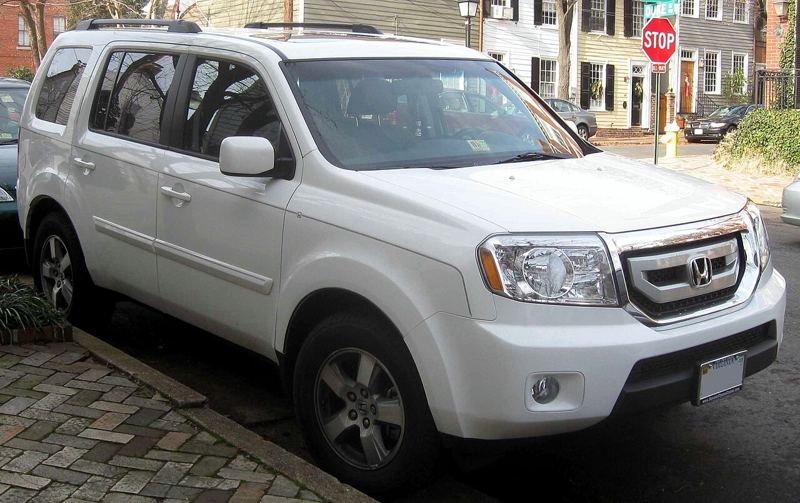
Photo: IFCAR · Public domain What changed. A complete redesign with more interior space, more high-strength steel and a 250 hp V6. Production moved entirely to Lincoln, Alabama, and the Touring trim arrived. In 2012 it was refreshed inside and out, and in 2013 the rearview camera and an 8-inch intelligent Multi-Information Display (i-MID) became standard.
The innovation. Honda's ACE (Advanced Compatibility Engineering) body structure, designed to spread the energy of a frontal crash and better protect the occupants of both vehicles.
If you buy one usedThe 2009–2011 models have recall 11V468 (front seatbelt stitching) and 2009–2013 models recall 13V016 (driver airbag module rivets). The 2009–2012 models have Takata passenger inflator recalls (16V346, 17V030, 18V042) and 2014–2015 models recall 18V661. The 2012 also has recall 12V063 (fuel tank valve). - Gen. 32016–2022
Lighter, sleeker and more high-tech
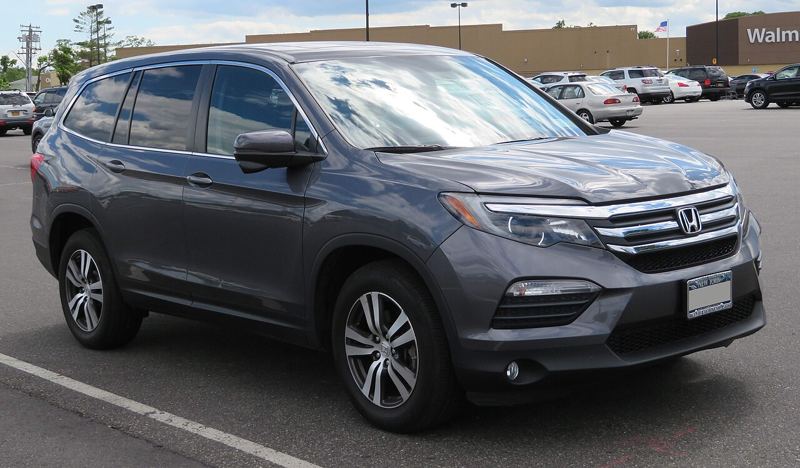
Photo: Kevauto · CC BY-SA 4.0 What changed. It traded the boxy look for a smoother shape and lost almost 300 pounds compared with the previous model. It introduced a 280 hp direct-injected V6, 6- and 9-speed automatics, i-VTM4 all-wheel drive and available Honda Sensing. The model year 2019 refresh made Honda Sensing standard and earned a 2018 IIHS TOP SAFETY PICK+ with specific headlights. Sport and TrailSport joined for model year 2022.
The innovation. The 2016 Pilot introduced the Honda brand’s first 9-speed automatic and Road Departure Mitigation system in the U.S. lineup. Road Departure Mitigation assists when the vehicle begins leaving the road.
If you buy one usedCheck recall 23V751 (engine connecting rod bearing, 2016 and 2018–2019) and 19V298 (timing belt teeth, 2018–2019). The 2016 models have fuel tank leak recalls (16V417, 17V219); 2016–2019 models recall 21V932 (hood latch striker) and 2019–2020 models recall 19V784 (front frame welds). If the car lived in a northern or northeastern state with salted roads, check 26V365 (rear subframe corrosion, 2016–2022). - Gen. 42023–present
The biggest, strongest, most adventurous Pilot
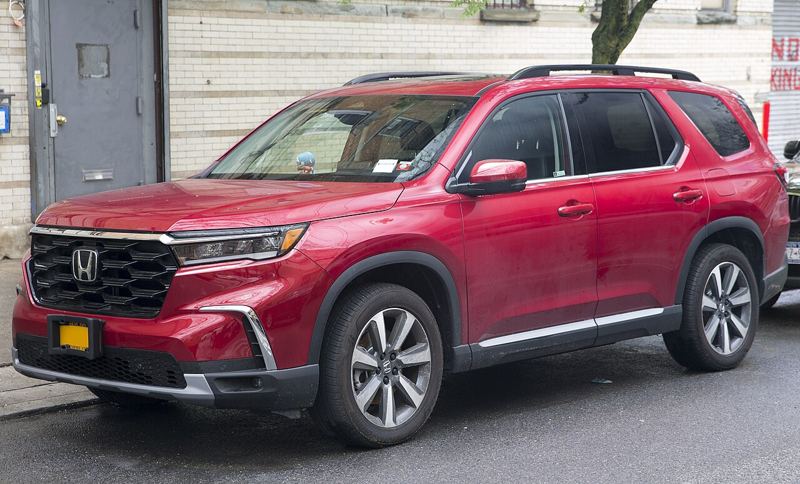
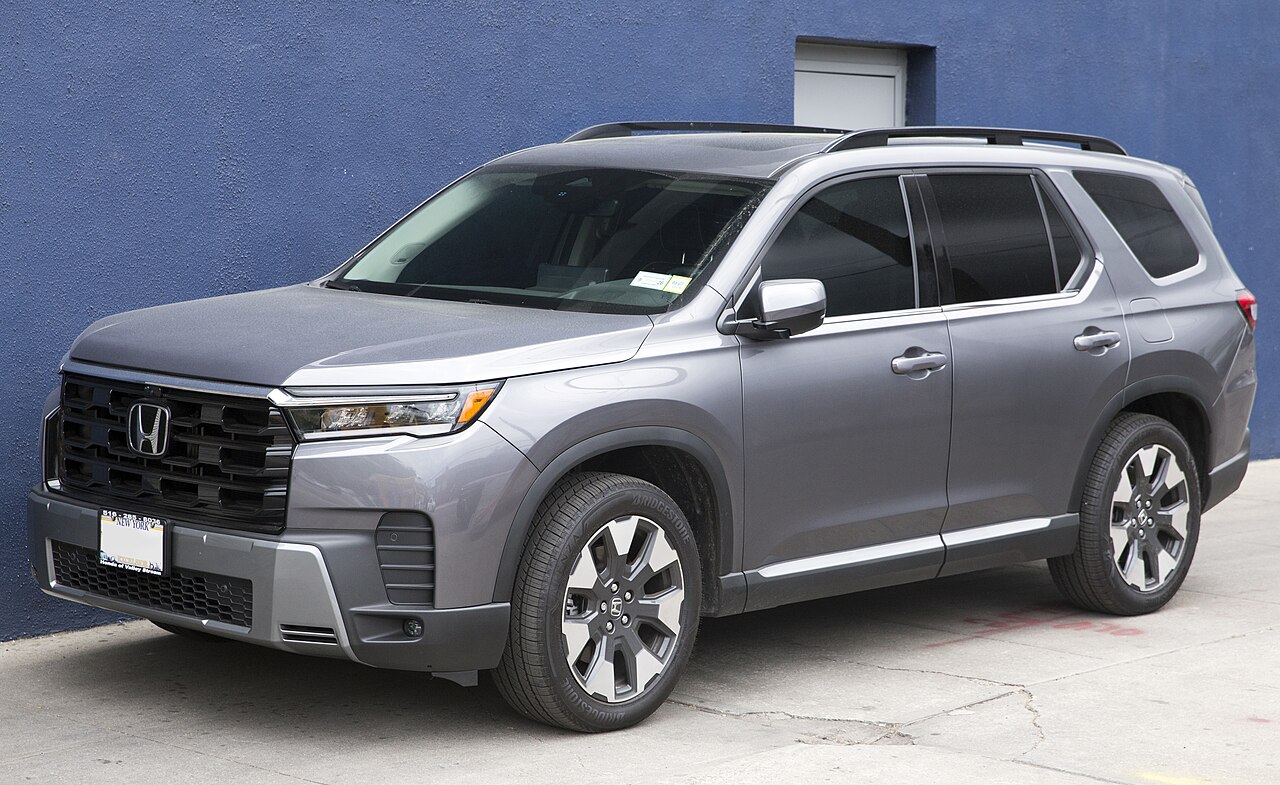
Photo: Mr.choppers · CC BY-SA 3.0 What changed. It grew, took on a tougher look and introduced a 3.5-liter DOHC V6 with 285 hp and 262 lb-ft, Honda's most powerful V6, paired with a 10-speed automatic. The new platform is 60% stiffer laterally in front and 30% in back. The TrailSport, with a one-inch lift, steel skid plates and all-terrain tires, is Honda's most off-road-capable SUV, according to Honda.
The innovation. A removable second-row middle seat (Touring and Elite) that stows under the cargo floor: the Pilot goes from a three-across bench to two seats with a walkway to the third row. Honda says it is a first in its class.
If you buy one usedThe 2023–2024 models have recall 23V735 (possible loose ball bearing in the steering gearbox). The 2023–2025 models have 24V900 (fuel filler pipe), 25V031 (fuel-injection software that could stall the engine) and 25V391 (brake pedal pivot pin). Some 2023–2024 models are also covered by 24V859 (driver seat frame). Ask for proof of each repair.
 Honda CR-V1995–present
 Honda Civic1972–present
 Honda Accord1976–present
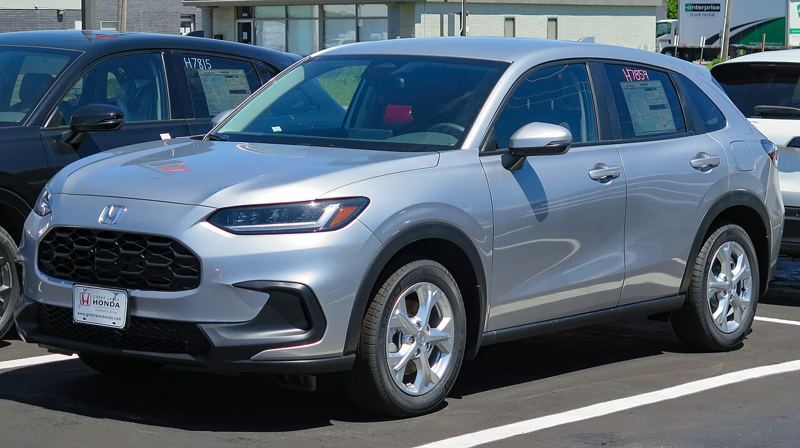 Honda HR-V2016–present
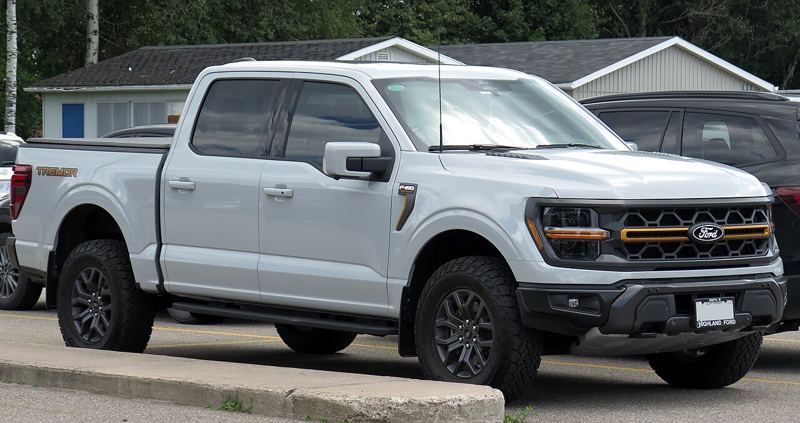 Ford F-Series (F-150)1948–present
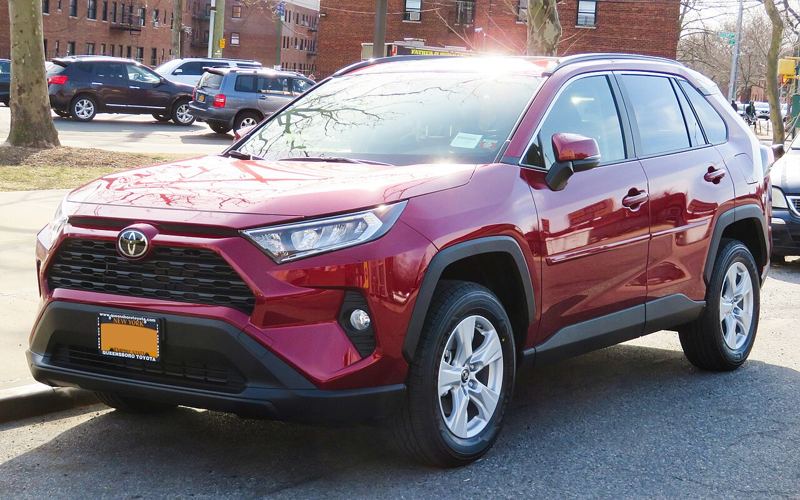 Toyota RAV41994–present (US from 1996)
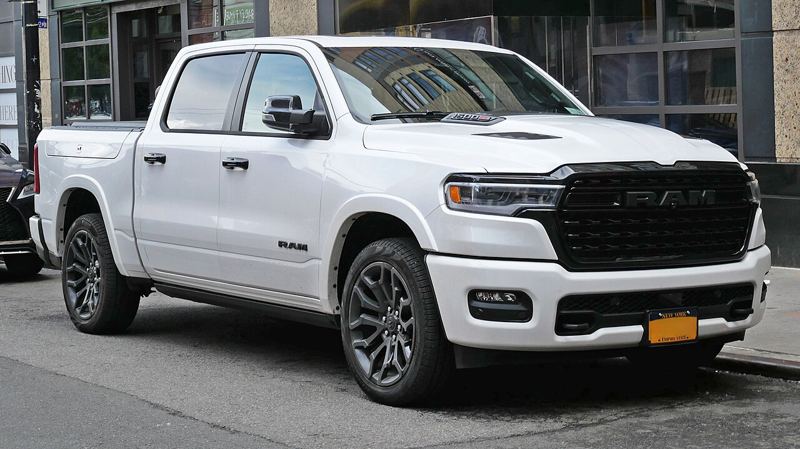 Ram 15001981–present
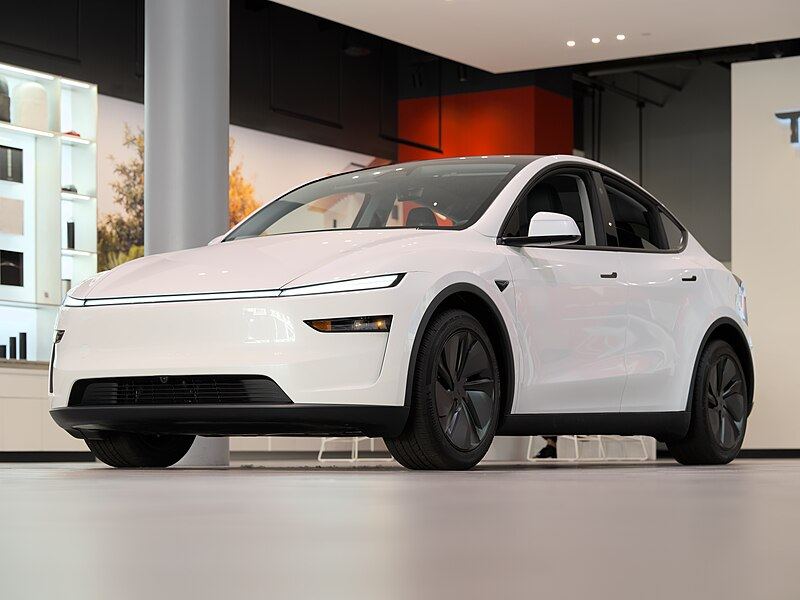 Tesla Model Y2020–present
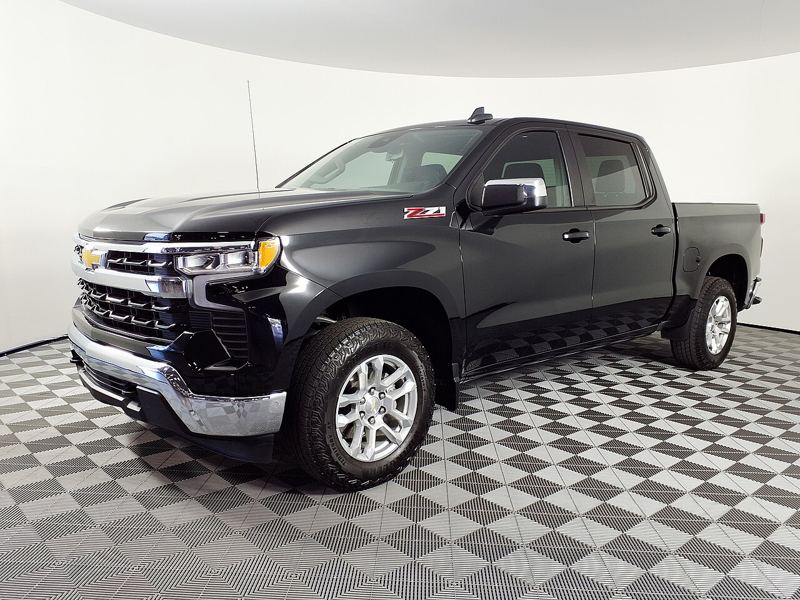 Chevrolet Silverado1999–present


