Honda Civic
Compact car · 1972–present. No. 9 in US sales, 2024 (242,005 units)
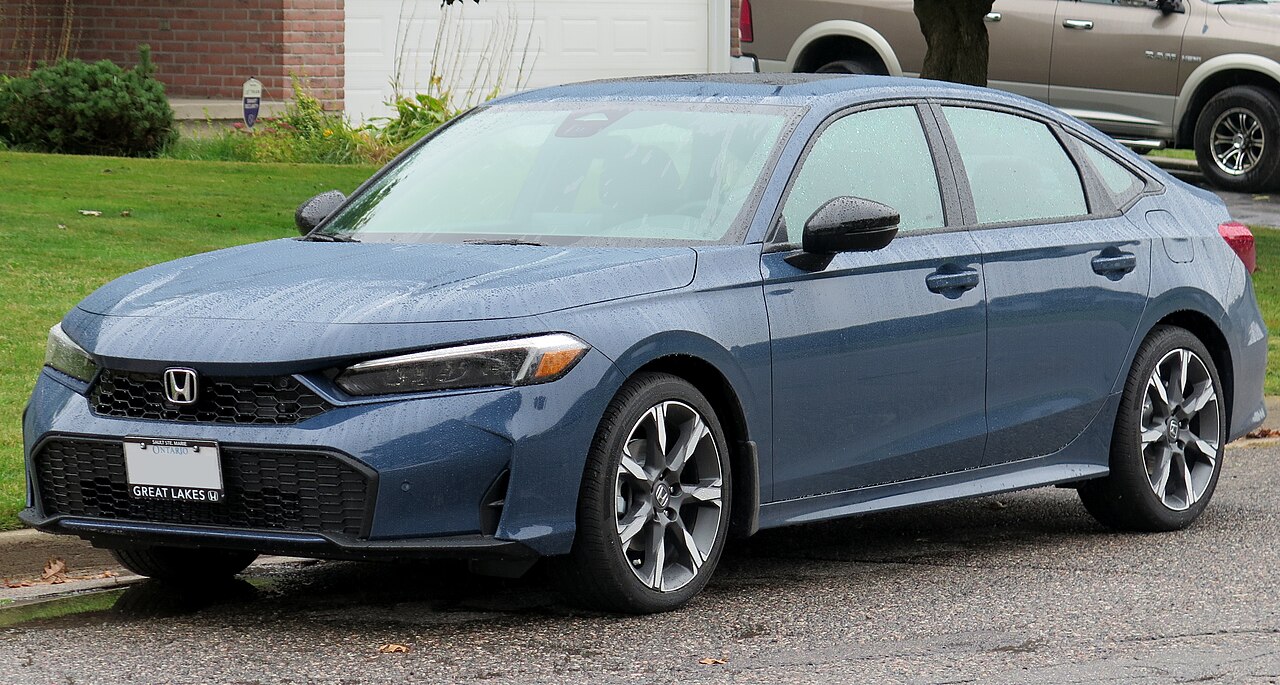
How it began
Honda Motor Co. developed the Civic while Soichiro Honda was still president. Honda’s history names Tadashi Kume as the initial large project leader, followed by Hiroshi Kizawa in the design phase, and Shinya Iwakura as exterior designer. Its account describes a project critical to Honda’s future in cars. The separate CVCC emissions team began in 1965 under Shizuo Yagi; Tasuku Date advocated prechamber research, Kazuo Nakagawa was chief engineer of the Engineering Design Block, and Takeo Fukui led EPA certification work.
Designed in Japan, the Civic entered production at Suzuka in June 1972 and reached North America in 1973. Marysville, Ohio began Civic production in July 1986; Honda’s plant history records its Civic production period as 1986–90. For the current U.S. lineup, sedans are assembled in Alliston, Ontario, and hatchbacks in Greensburg, Indiana. The hybrid’s engine comes from Anna, Ohio, and its two-motor power unit from the Honda Ohio Transmission Plant.
It went on sale in Japan on July 12, 1972. It arrived in the United States in March 1973, just months before that October's oil embargo. The CVCC-engined version was exported to the U.S. starting with the 1975 model year.
"Civic" means belonging to citizens and the city. Honda describes the project as a "basic car for people around the world," made for urban life. Note: it does not come from the CVCC engine acronym, even though they sound alike.
In the early 1970s Honda was a motorcycle and minicar maker that needed one small car that could work for the whole world. At the same time, the U.S. Clean Air Act of 1970 (the so-called Muskie Act) required 1975 cars to emit one-tenth the carbon monoxide and hydrocarbons of the day, which the big automakers called nearly impossible. Honda bet on a light, frugal front-wheel-drive hatchback with an engine that could meet that rule without a catalytic converter. When the 1973 oil embargo sent gasoline prices soaring, the Civic was in exactly the right place at the right time.
Generation by generation
- Gen. 11973–1979
The hatchback that arrived with the oil crisis
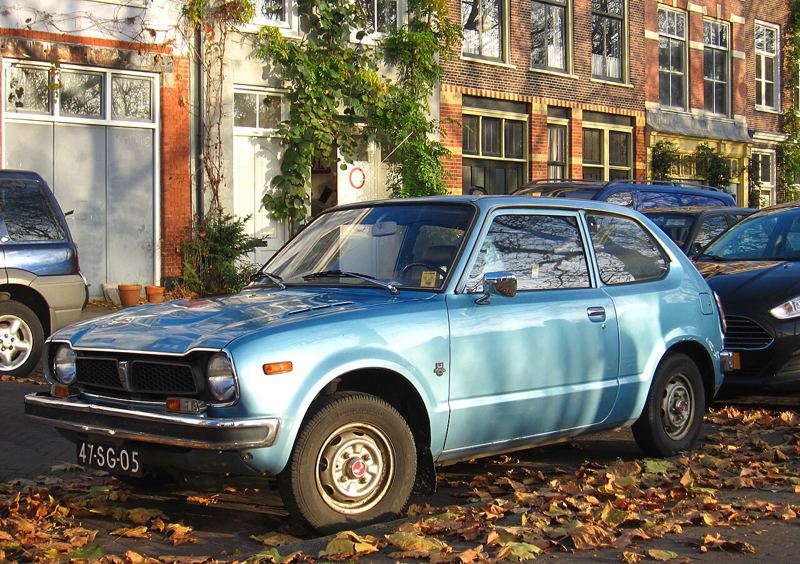
Photo: Rutger van der Maar · CC BY 2.0 What changed. A clean-sheet two-box car with front-wheel drive and fully independent suspension. Honda contrasts it with the rear-drive small sedans common in Japan at the time. The original engine displaced 1,169 cc, marketed nominally as 1.2 liters. Detailed first-U.S.-model output, weight and real-world mpg figures remain pending an original brochure or period road test.
The innovation. The CVCC engine (Compound Vortex Controlled Combustion), whose prechamber ignites a lean mixture: in December 1972 it became the first engine to pass EPA tests for the 1975 standards without a catalytic converter, and the 1975 Civic CVCC held the EPA's top fuel-economy rating for four straight years. Toyota, Ford, Chrysler and Isuzu licensed the technology.
If you buy one usedNHTSA lists a 1981 campaign (81V136000) for serious rusting of suspension arms, front crossbeam and spring supports after prolonged road-salt exposure, so inspect the underbody of any 1970s Civic. The CVCC is carbureted, and automatics use the two-speed Hondamatic, so look for service history and parts availability. - Gen. 21980–1983
Bigger, more grown-up, same recipe
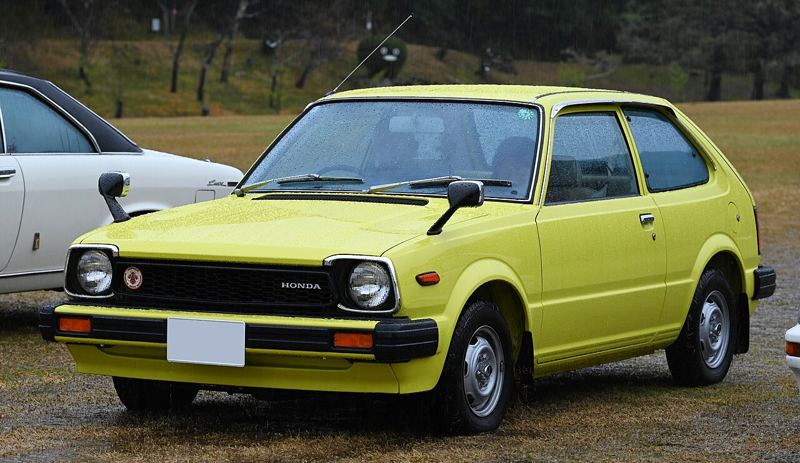
Photo: TTTNIS · CC0 What changed. The second U.S. generation began with model year 1980, with sharper lines, increased dimensions and a wheelbase two inches longer. The hatchback was followed by sedan and wagon for 1981. Honda’s U.S. retrospective lists 1.3- and 1.5-liter engines and an available two-speed automatic. Automatic Civics already existed in the first generation.
The innovation. A dedicated FE (Fuel Economy) model and a sporty S version: the Civic began offering distinct personalities within one family.
If you buy one usedCheck current NHTSA campaigns by VIN before buying a 1983 Civic. On cars this old, what matters is rust in the floors, wheel arches and underbody, and the condition of the CVCC carburetor. - Gen. 31984–1987
The CRX is born and the Civic becomes American-made
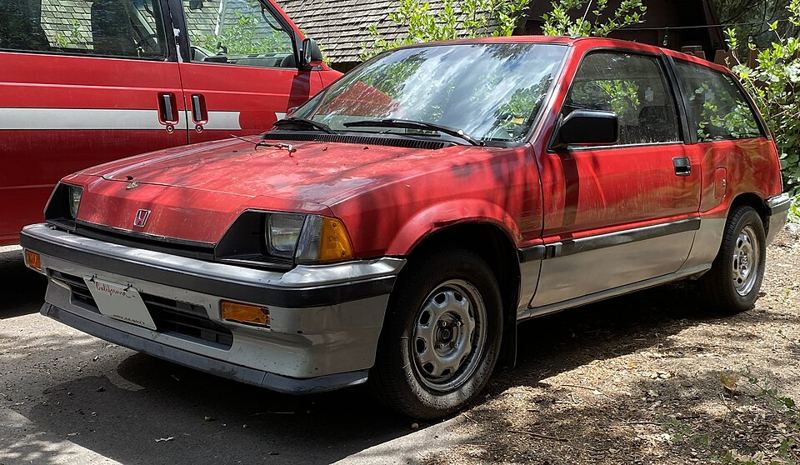
Photo: Cutlass · CC0 What changed. Launched in Japan in September 1983 with angular styling. The U.S. lineup included hatchback, sedan and wagon with 1.3- and 1.5-liter engines. The original two-seat CRX began with model year 1984, CRX Si followed for 1985 and Civic Si for 1986. North American Civic production began at Marysville, Ohio in July 1986.
The innovation. Four-wheel drive on the wagon (1984), which evolved from a push-button system into automatic Real Time 4WD; a six-speed manual was also offered.
If you buy one usedFor the 1987 Civic, NHTSA lists campaign 95V103001 (front seat-belt buckle release buttons that can break) and 88V180000 (windshield-wiper contact unit that can loosen in heat). Make sure both buckles latch properly before buying. - Gen. 41988–1991
Race-car suspension for a compact
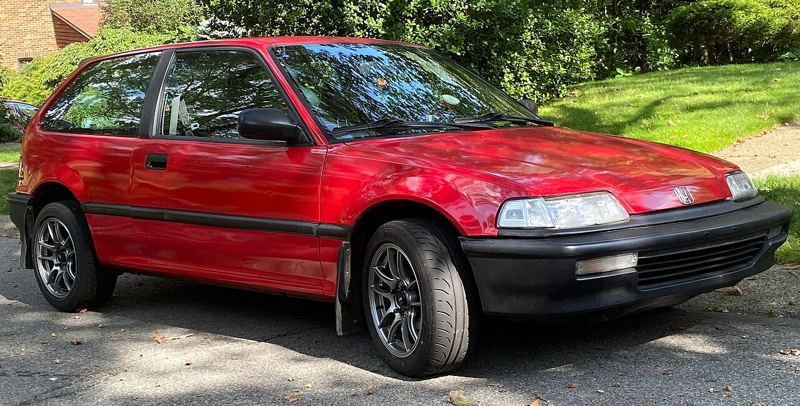
Photo: Cutlass · CC0 What changed. Launched in September 1987 with softer shapes and a very low hood. A new family of 1.5-liter 16-valve engines with fuel injection. Hatchback, sedan, wagon and CRX bodies. Car and Driver named it to its 10Best list in 1988 and 1989, and in 1989 production started at the East Liberty, Ohio plant.
The innovation. Standard double-wishbone suspension at all four corners, something previously associated with sports cars rather than economy compacts.
If you buy one usedFor the 1991 Civic, NHTSA lists campaign 95V103001 for front seat-belt buckle buttons that can break; the other listed campaigns concern aftermarket headlamps. Check for engine and suspension modifications and ask for the work history. - Gen. 51992–1995
Aero styling, VTEC and 55 mpg
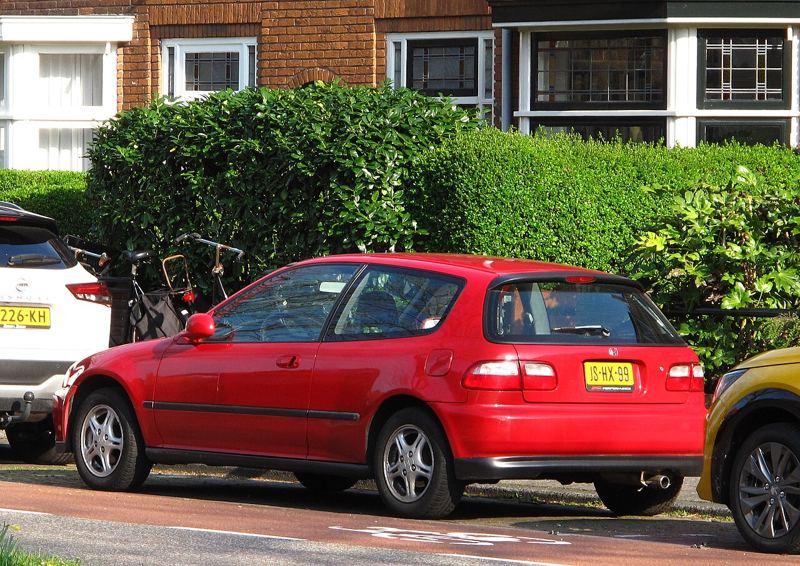
Photo: Rutger van der Maar · CC BY 2.0 What changed. Japan’s September 1991 redesign introduced an aerodynamic silhouette. The U.S. lineup included hatchback and sedan, then the first Civic coupe for model year 1993. Alongside the 1.5-liter range, the Si used a 1.6-liter SOHC VTEC engine making 125 hp. Dual front airbags became standard across Civic grades for 1994; ABS was available on selected configurations.
The innovation. VTEC debuted in the U.S. Civic Si, while the lean-burn Civic VX used VTEC-E and carried a period 55-mpg rating. That historical EPA figure is not a current combined rating. The Civic HX with CVT belonged to the following generation, beginning with U.S. model year 1996.
If you buy one usedFor the 1995 Civic, NHTSA lists only aftermarket headlamp campaigns from other companies, none from Honda. Check for modifications, look for the original engine, and review timing-belt service and the sunroof seals. - Gen. 61996–2000
Quiet evolution and the first Type R
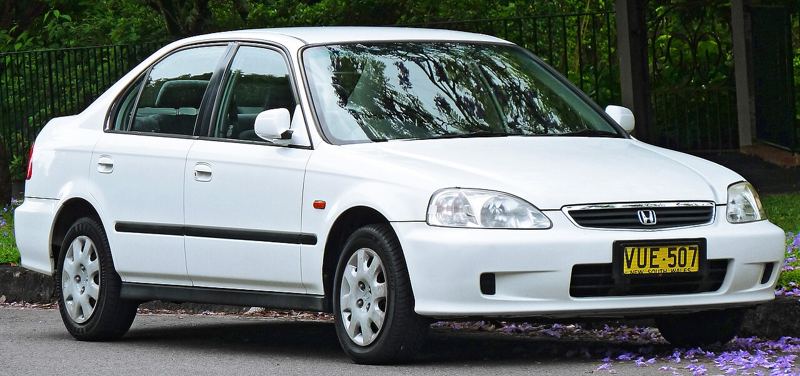
Photo: OSX · Public domain What changed. Launched in September 1995, larger, with a 103-inch wheelbase in the U.S. Hatchback, sedan and coupe with a 1.6-liter engine; the HX with VTEC-E reached 45 mpg. The Civic Type R was born in Japan in 1997 and the natural-gas Civic GX joined in 1998, the same year Honda's second Canadian plant opened.
The innovation. The U.S. model-year 1996 Civic HX introduced a CVT; Japan’s new generation introduced Honda Multimatic in calendar 1995. The natural-gas Civic GX followed in 1998, before Civic Hybrid. Honda’s global production history dates the GX lineup addition to June 1998, without separately establishing that month as its U.S. retail start.
If you buy one usedNHTSA lists campaigns 20V026000 and 20V027000 (2020) for NADI driver-airbag inflators that may rupture or underinflate on 1996–2000 Civic coupes and 1998–2000 sedans; 02V120000 (2002) for a degrading ignition switch; and 07V512000 for the natural-gas Civic GX tank. Check by VIN that they were completed. - Gen. 72001–2005
More room, five stars and the first hybrid
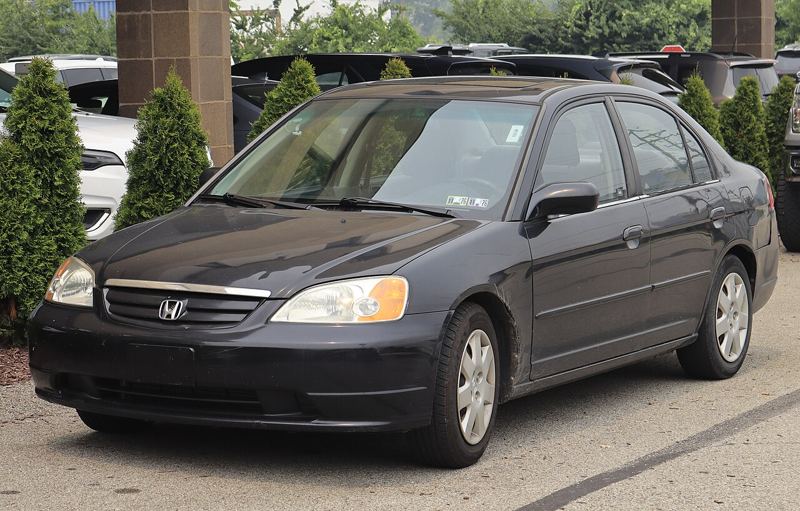
Photo: Cutlass · CC0 What changed. The U.S. generation began with sedan and coupe for model year 2001; the Si hatchback returned for 2002. MacPherson struts replaced double wishbones at the front as Honda pursued more interior room. Honda’s historical timeline identifies the 2001 Civic Coupe as the first compact with five-star NHTSA ratings for both frontal and side impacts, separate from today’s overall-rating system.
The innovation. Civic Hybrid debuted in Japan in December 2001, then reached the U.S. in March 2002 as a 2003 model. Its original EPA ratings were 46 city/51 highway mpg with a five-speed manual and 48/47 with CVT. In 2003 Civic Hybrid became the first hybrid to qualify as AT-PZEV; the first AT-PZEV car had been the 2001 natural-gas Civic GX.
If you buy one usedThis generation sits at the heart of the Takata case. NHTSA lists, among others, campaigns 14V700000, 15V320000 and 15V370000 (driver and passenger airbag inflators that may rupture, Civic 2001–2005, GX 2001–2004 and Hybrid 2003–2005), expanded in 2019 by 19V499000 and 19V501000, plus 18V268000 for passenger airbags installed incorrectly during repairs. Before buying, run the VIN at nhtsa.gov/recalls and ask for proof of replacement. - Gen. 82006–2011
The spaceship windshield
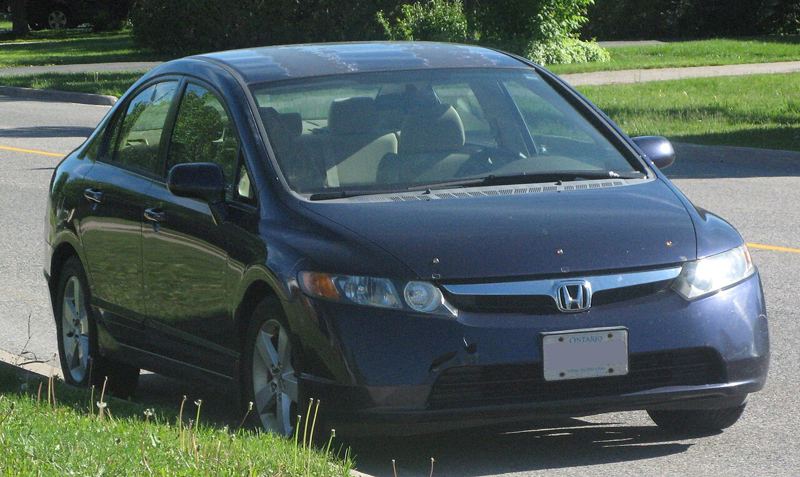
Photo: SsmIntrigue · CC BY-SA 4.0 What changed. The redesign launched in Japan in September 2005, with a steep windshield, one-motion cabin and two-tier dashboard. The U.S. received sedan and coupe, with 1.8-liter engines in regular gasoline models and separate Si and Hybrid powertrains; Europe received different hatchbacks. The first Civic Si sedan arrived for model year 2007. Civic won MotorTrend and North American Car of the Year for 2006, and Indiana Civic production began in 2008.
The innovation. The two-tier cockpit placed the digital speedometer on the upper level near the driver’s line of sight. Honda’s original ergonomic study explains the aim of reducing eye movement between priority gauges and the road.
If you buy one usedTwo documented issues. One: NHTSA lists Takata passenger-inflator campaigns 16V346000, 17V545000, 19V378000 and 19V502000 for 2006–2011 Civic, Civic Hybrid and GX. Two: Honda documented coolant seepage and possible overheating in some 2006–2008 and early 2009 Civic engine blocks. Its January 2011 owner letter offered eight years of coverage with no mileage limit; the December 2014 revision of bulletin 10-048 specified ten years from original purchase, with no mileage limit and VIN eligibility conditions; ask for records of that repair or check the block for coolant seepage. - Gen. 92012–2015
The quick correction
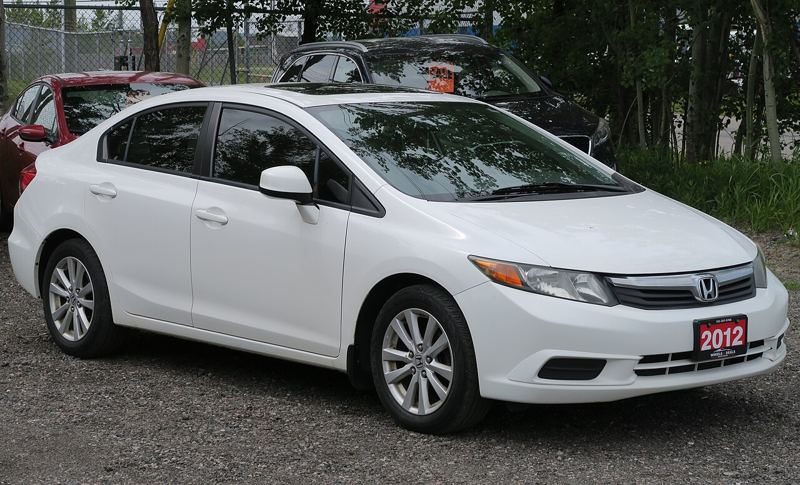
Photo: Elise240SX · CC BY-SA 4.0 What changed. The sedan and coupe used a revised previous platform and cab-forward design. The range included a regular 1.8-liter, a 2.4-liter Si retaining its standard limited-slip differential, a 1.5-liter third-generation Hybrid and an efficient Civic HF. Criticism of the 2012 model was followed by extensive changes for 2013; Consumer Reports described the revision as hurried.
The innovation. Eco Assist used blue and green indicators beside the speedometer to coach economical driving. Aerodynamic, weight and powertrain changes also pursued efficiency; the feedback display does not guarantee a fixed saving for every driver or configuration.
If you buy one usedFor 2012, NHTSA lists campaigns 11V288000 (misaligned fuel-line O-ring), 12V256000 (driver-side driveshaft that may separate) and 12V548000 (wrong steering column on a few production days); for 2014–2015, 15V574000 for CVT software settings that can damage the pulley shaft. - Gen. 102016–2021
First turbo and the return of the hatchback
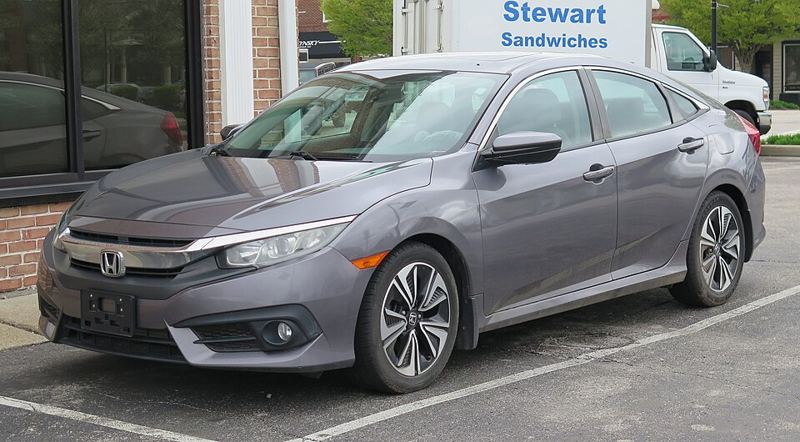
Photo: Cutlass · CC0 What changed. The all-new Civic architecture involved global teams, with Sedan development led in North America. Compared with its predecessor, the Sedan was 2.9 inches longer and 1.9 inches wider, while its unibody was 68 pounds lighter. Initial U.S. engines were a 158-hp 2.0-liter and 174-hp 1.5-liter direct-injected turbo. The hatchback and first U.S. Type R arrived for 2017. On the initial Sedan, Honda Sensing was available on LX, EX, EX-T and EX-L and standard on Touring. U.S. Civic sales peaked at 377,286 in 2017.
The innovation. The direct-injected 1.5-liter turbo was the first turbocharged engine Honda ever offered in a Honda-brand car in America.
If you buy one usedNHTSA lists 16V074000 (2016 2.0-liter pistons built without or with a misinstalled wrist-pin circlip), 16V725000 (electric parking brake that may not engage right after shutting off, 2016), 18V663000 (power-steering torque-sensor magnet on 2017–2018 cars that can come loose) and the fuel-pump campaigns 20V314000, 21V215000 and 23V858000. Also, on April 5, 2019 Honda announced extended coverage on certain 1.5-turbo components to six years with no mileage limit on 2016–2018 Civics because of fuel diluting the engine oil; check the oil level and smell. - Gen. 112022–present
Maturity, awards and the 200-hp hybrid
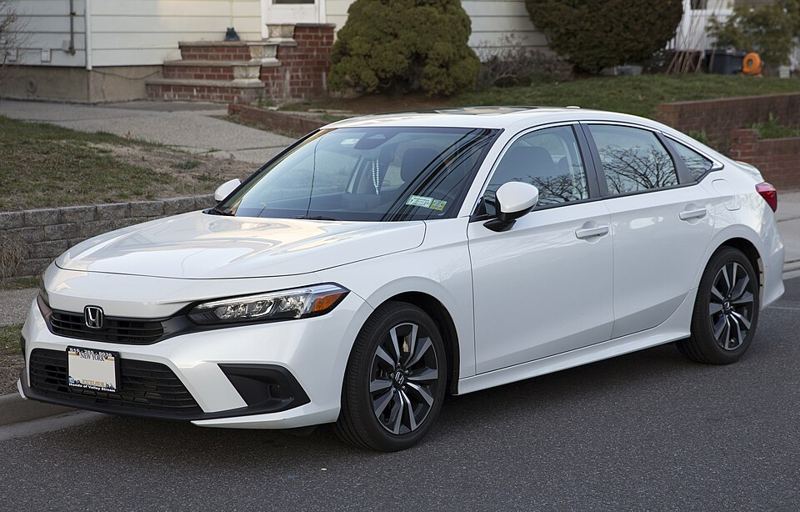
Photo: Mr.choppers · CC BY-SA 3.0 What changed. A calmer design brought a honeycomb dashboard mesh in sedan and hatchback form; the coupe was discontinued. The Civic won 2022 North American Car of the Year, and the refreshed Civic Hybrid repeated for 2025. The hybrid has 200 hp of combined system output and 232 lb-ft of traction-motor torque, with an EPA city rating of 50 mpg. Those horsepower and torque figures describe different measures of the hybrid system.
The innovation. The two-motor hybrid system with a 2.0-liter Atkinson-cycle engine, which by 2026 accounted for more than 30 percent of U.S. Civic sales, according to Honda.
If you buy one usedNHTSA lists 24V744000 (October 2024): the steering gearbox on 2022–2025 Civics may have excessive internal friction and make the wheel feel sticky; the fix replaces the worm-gear spring and regreases it. Also 23V704000 (incorrectly assembled replacement steering racks, 2022–2024), 24V859000 (loose driver's-seat fasteners, 2023–2024) and 24V064000 (passenger-seat weight sensor, 2022). These are recent recalls, so confirm by VIN that they were done.
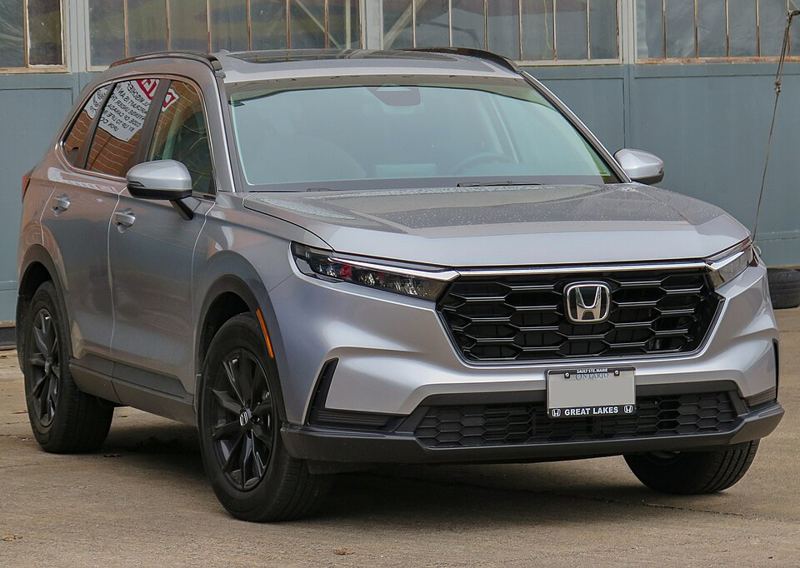 Honda CR-V1995–present
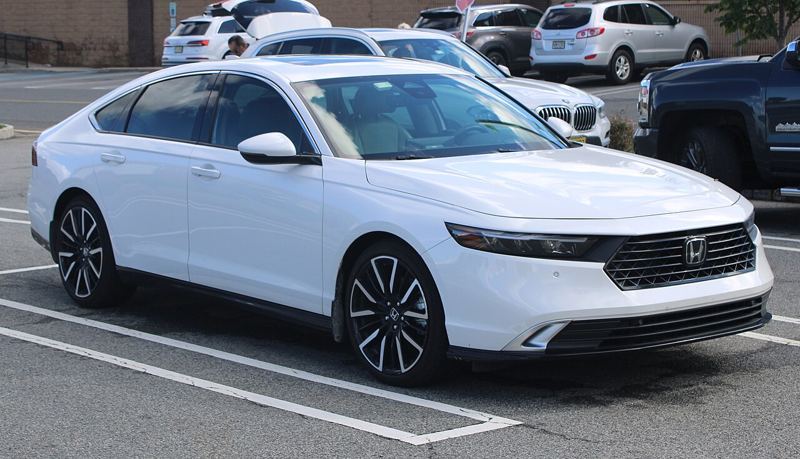 Honda Accord1976–present
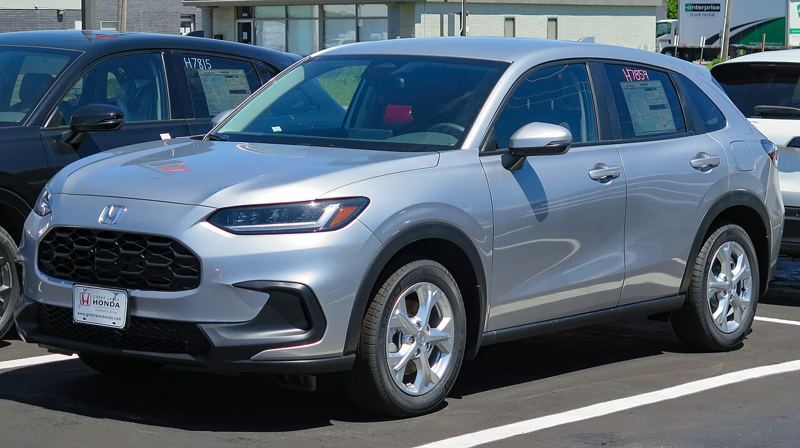 Honda HR-V2016–present
 Honda Pilot2003–present
 Ford F-Series (F-150)1948–present
 Toyota RAV41994–present (US from 1996)
 Ram 15001981–present
 Tesla Model Y2020–present
 Chevrolet Silverado1999–present


