Toyota Camry
Midsize sedan · 1982–present. 309,876 units sold in the US in 2024
How it began
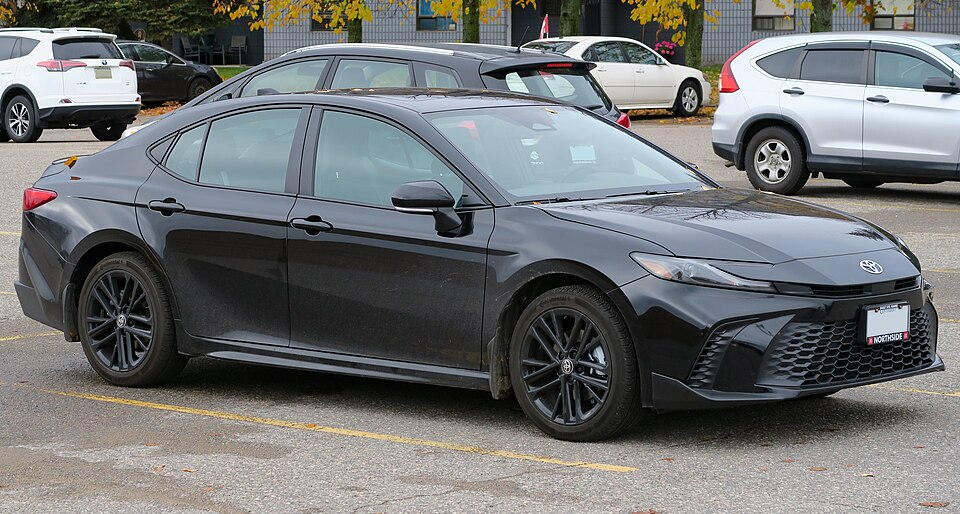
Toyota began developing the front-wheel-drive Camry and its Vista twin in Japan in August 1977. Later documented Camry chief engineers include Kosaku Yamada for the 1997 model and Masato Katsumata for 2018. The current generation was styled at Toyota’s CALTY studios in Newport Beach, California, and Ann Arbor, Michigan.
The original Japanese program first entered production at Tsutsumi. U.S. Camry production began in Georgetown, Kentucky, in May 1988. In its May 8, 2024 announcement, Toyota called Kentucky its longest-running U.S. vehicle manufacturing facility and reported more than 11 million Camrys assembled there. The current U.S. generation was styled at CALTY in California and Michigan and is assembled in Georgetown.
The Camry name appeared in January 1980 on the Celica Camry, a rear-wheel-drive sedan actually based on the Carina despite its Celica name. The separate front-wheel-drive Camry launched in Japan in March 1982; exports to the United States began in January 1983 for the 1983 model year.
According to Toyota, Camry comes from the Japanese word kanmuri (or kamuri), meaning crown. It belongs to a royal family of Toyota names: the Crown uses the English word, the Corolla is the ring of petals on a flower, and the Corona is the ring of light around the sun.
In the late 1970s, after the oil crisis, Toyota needed a front-wheel-drive family sedan to compete with General Motors' front-drive compacts and to replace the Corona in the United States. The goal was a car that was compact outside with midsize room inside. Mounting the engine sideways shrank the engine bay and freed space for passengers. Toyota planned it as its next-generation export product, and it worked: it sold more than 50,000 units in the U.S. in its first year.
Generation by generation
- Gen. 11983–1986
Toyota's first transverse-engine car
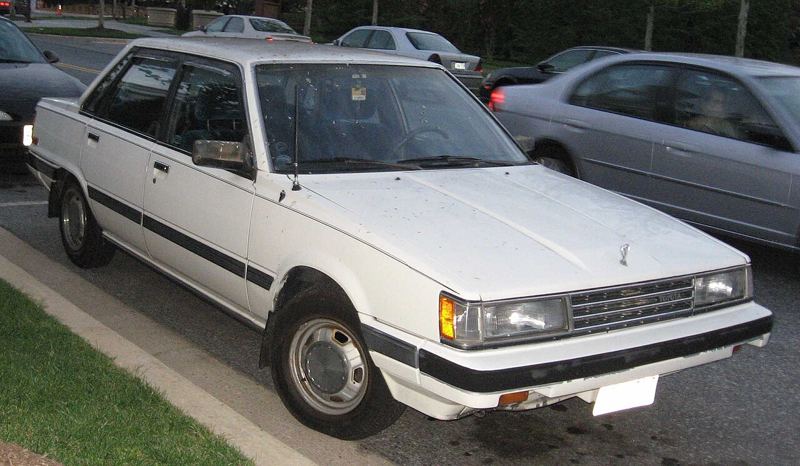
Photo: IFCAR · Public domain What changed. The front-wheel-drive Camry replaced the rear-wheel-drive Corona in the U.S., offering a sedan and five-door liftback with Toyota’s first transverse-engine front-drive layout. Engines varied by market: the original Japanese development account describes a 1.8-liter engine, the U.S. car used a 2.0-liter four, and the UK briefly offered a 1.8-liter turbodiesel. AP’s retrospective, citing WardsAuto, reports a $9,698 U.S. starting price and 53,501 first-year sales.
The innovation. The 1,832 cc, 100 hp 1S-LU engine sat sideways, with the transaxle in line with the engine and a single-rail system instead of three shafts per gear range. Toyota says that experience became the foundation for its whole family of front-wheel-drive cars.
If you buy one usedAssess the actual condition, maintenance and intended use of a vehicle this old. NHTSA records show two recalls for the 1984 model: the voltage regulator could overcharge the battery (campaign 83V133) and the cruise control computer could malfunction after continuous use followed by cold (90V040). Ask for proof they were done, and check for rust and parts availability. - Gen. 21987–1991
The V6, the wagon and Kentucky arrive
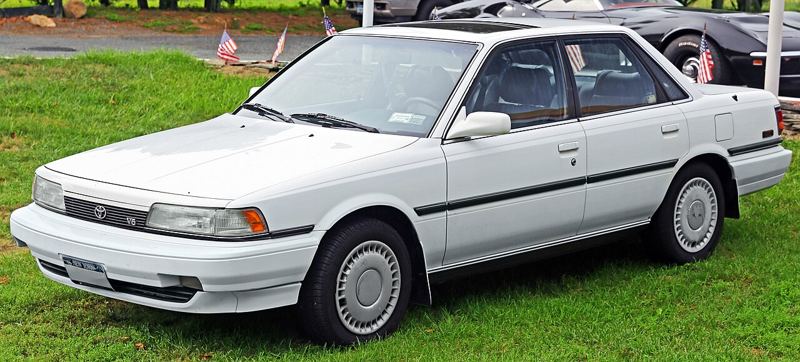
Photo: Mr.choppers · CC BY-SA 3.0 What changed. Longer and wider on the same wheelbase, more aerodynamic (Cd 0.35) and with a quieter, softer ride. It added the first Camry wagon and, in 1988, a 2.5-liter V6. It was the only generation offered with All-Trac all-wheel drive. In May 1988 the first U.S.-built Camry rolled out of the new plant in Georgetown, Kentucky.
The innovation. The 2.5-liter, 24-valve, quad-cam 2VZ-FE V6: Toyota billed it as the first transverse quad-cam 24-valve V6 fitted to a production car.
If you buy one usedNHTSA lists for the 1989 model a recall for the front seat-belt retractor, which could lock when released a certain way (89V175), and one for the power door lock computer, which when it failed kept doors from locking or unlocking even by hand (92V135). These are 30-plus-year-old cars: what matters is the maintenance history and the condition of the body. - Gen. 31992–1996
The wide-body Camry with a Lexus soul
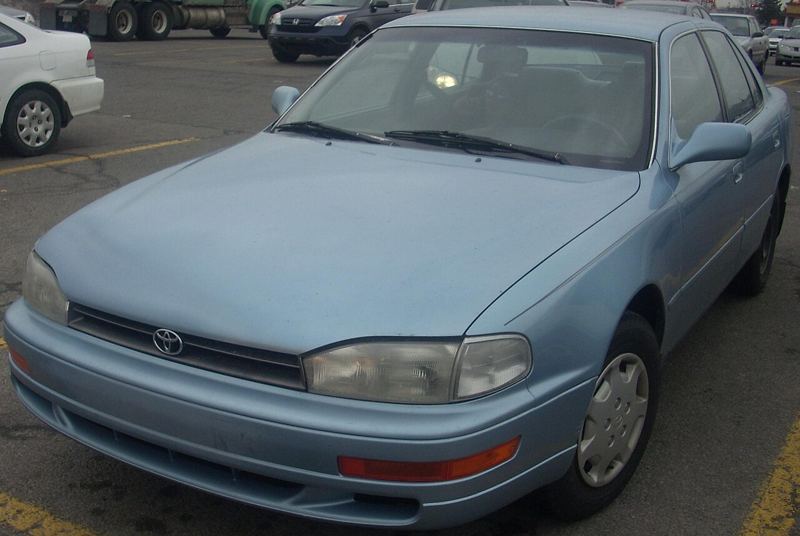
Photo: Bull-Doser · Public domain What changed. All new with no carry-over parts, larger in every direction except height, with a rounded wedge shape (Cd 0.31). It grew about six inches in length and moved up a class in quietness and fit and finish. It came as a sedan, a wagon with an optional third row and, briefly, a coupe. All-wheel drive was dropped and the SE trim debuted.
The innovation. At introduction, the 2.2-liter 5S-FE four was joined by the 3.0-liter, 185 hp 3VZ-FE V6. Toyota’s history describes major climate and audio controls moved 100 mm closer to the driver. Kentucky was the sole worldwide production site for the seven-seat Camry wagon, including right-hand-drive exports to the UK and Japan, where it was sold as the Scepter Wagon. Later engine revisions are part of this generation too.
If you buy one usedNHTSA lists for the Japan-built 1994 model a recall for the steering wheel nut, which could be under-tightened and let the wheel come loose (98V155). Have a dealer confirm it was done. Age and mileage rule here: look for records of timing belt replacement, which both engines use. - Gen. 41997–2001
The year it became America's best-selling car
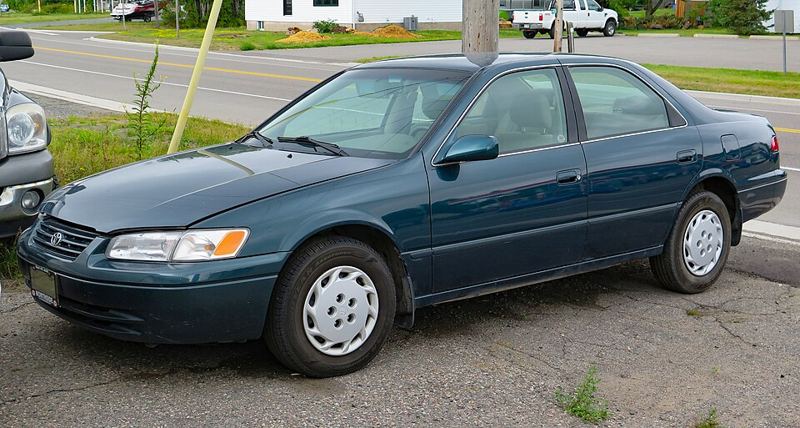
Photo: Elise240SX · CC BY-SA 4.0 What changed. A wheelbase about two inches longer brought more room, while a cost-reduction program let Toyota cut launch prices by an average of $899, according to the contemporary chief-engineer interview. ABS was standard except on the four-cylinder CE, where it was optional; dual front airbags had already become standard in 1994. The U.S. wagon was discontinued, and the coupe returned as the Camry Solara for MY1999. In 1997 Camry became America’s best-selling passenger car, with 397,156 sales reported by AP/WardsAuto.
The innovation. The revised 3.0-liter 1MZ-FE V6 accompanied the updated 2.2-liter 5S-FE four. Toyota’s U.S. 1997 product source rates the V6 at 194 hp; its UK history quotes 188 bhp for that market and describes air-assisted fuel injection. The all-aluminum V6 family had already appeared in the previous generation.
If you buy one usedTwo documented items. First, in 2002 Toyota announced a Special Policy Adjustment for oil gelling (sludge) in four- and six-cylinder engines from 1997 to 2001, including Camry and Solara; Toyota blamed infrequent oil changes and short trips, so ask for oil-change records and look under the oil cap. Second, NHTSA lists recall 01V012 for V6 cars with cruise control built in Kentucky: the accelerator cable housing could deform and the cable wear through. Toyota replaced that initial SPA in April 2002 with a broader historical customer-support program lasting eight years from first sale/lease, without a mileage limit. These were support-program terms, not a safety recall or proof of current coverage. - Gen. 52002–2006
Taller, wider and owner of the top spot
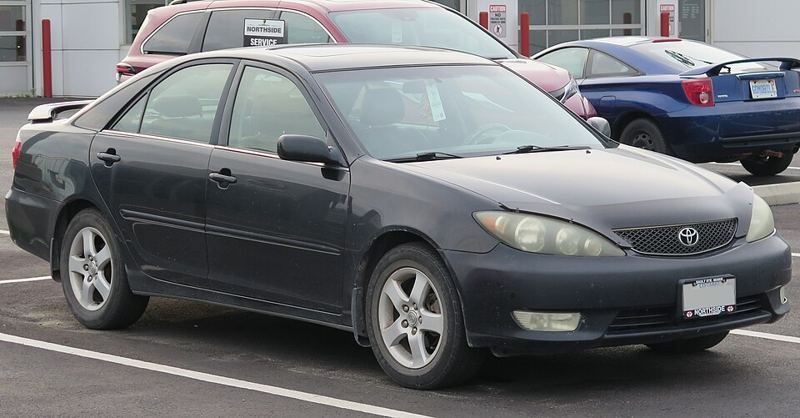
Photo: Elise240SX · CC BY-SA 4.0 What changed. Taller, wider and longer, at 189.2 inches, with a published U.S. luggage capacity of 16.7 cubic feet and a 0.28 drag coefficient. The new 2.4-liter VVT-i four produced 157 hp, up 21, while the 3.0-liter V6 made 192 hp. A 3.3-liter V6 arrived in the SE for MY2004. Camry regained the U.S. passenger-car sales lead from Accord in 2002; the 2025 annual market review records its 24th consecutive year on top.
The innovation. The 2.4-liter 2AZ-FE engine with VVT-i variable valve timing, the first Camry four-cylinder with that technology, carrying the EPA's Ultra Low Emission Vehicle (ULEV) rating.
If you buy one usedFor the 2004 model, check curtain-airbag assembly campaign 04V346, which concerns airbags that could deploy late. Crankshaft-pulley campaign 11V539 includes certain 2004–2005 Camrys with 1MZ-FE or 3MZ-FE engines and specified supplier parts: the outer ring can misalign and detach the power-steering pump belt. The dealer checks the pulley and replaces it where required. Confirm eligibility and completed work by VIN. - Gen. 62007–2011
The first Camry Hybrid and the sales record
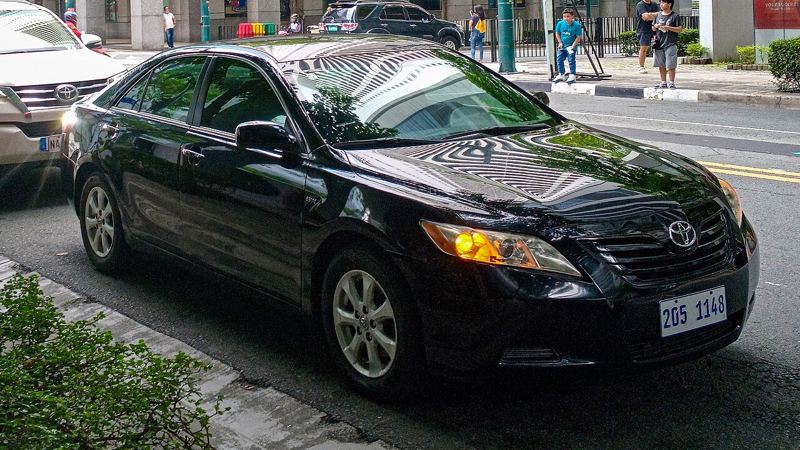
Photo: Ethan Llamas · CC BY-SA 4.0 What changed. Unveiled in Detroit in January 2006 with a redesigned body, chassis and interior. Launch engines included a 158 hp four, a 268 hp 3.5-liter V6 with six-speed automatic and the first Camry Hybrid, rated at 192 system hp. Toyota’s original announcement quoted 43 mpg city and 37 highway for the hybrid. Camry won Motor Trend’s 2007 Car of the Year award and entered NASCAR’s Cup and second-tier series in 2007. AP/WardsAuto reports 473,108 U.S. sales that year, its peak among completed years.
The innovation. Hybrid Synergy Drive in a Camry: a 2.4-liter, 147 hp 2AZ-FXE engine plus a 105 kW electric motor with a nickel-metal hydride battery. In October 2006 Kentucky became Toyota's first North American plant to build a hybrid.
If you buy one usedCheck these selected campaigns by VIN. NHTSA lists the floor-mat pedal-entrapment recall (09V388, 2007–2010 Camry) and the sticking or slow-returning pedal recall (10V017), plus the power window master switch that could overheat (12V491) and the brake light switch (12V091). Separately, Toyota opened Warranty Enhancement Program ZE7 for excessive oil consumption in the 2AZ engine of 2007–2009 Camry and 2007–2011 Camry Hybrid; secondary coverage ran 10 years or 150,000 miles. Ask for the dealer oil-consumption test or check the level often. The 3.5-liter V6 is not part of that program. ZE7 is a historical warranty program with age, mileage, testing and other eligibility conditions; ask Toyota about the actual vehicle’s status. - Gen. 72012–2017
Lighter, more efficient and connected
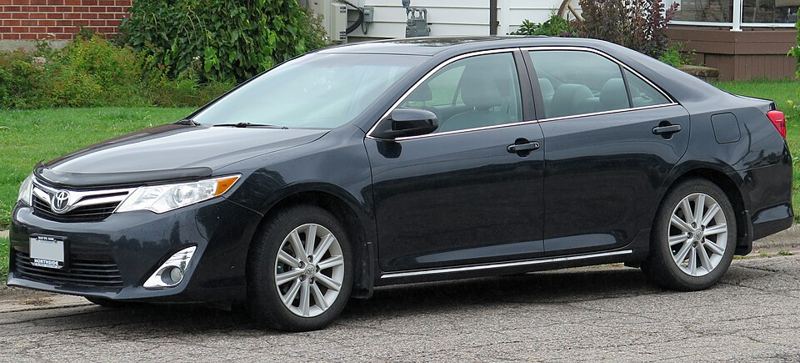
Photo: Elise240SX · CC BY-SA 4.0 What changed. Introduced in August 2011 with nearly the same exterior footprint but more interior room and a lighter body thanks to more high-strength steel. The 2.5-liter four rose to 178 hp and 28 mpg combined, the 3.5-liter V6 kept 268 hp and the hybrid moved to 200 hp and 41 mpg combined, more than 30 percent better in the city. The manual gearbox disappeared and ten airbags became standard.
The innovation. Toyota described Camry as one of the first models to offer Entune. The system integrated smartphone apps including Bing, OpenTable and Pandora with in-car navigation, entertainment and information services. Conversational voice recognition and text-message read-back were part of the launch description.
If you buy one usedTwo selected NHTSA campaigns are: on 2012–2013 Camry and Camry Hybrid, water from a clogged air-conditioning drain hose could drip onto the airbag control module and cause a short circuit (13V442); on 2013–2014 cars, the windshield wiper switch could short (13V505). Both have a free dealer remedy; check by VIN. - Gen. 82018–2024
The TNGA platform and the Camry that set out to thrill
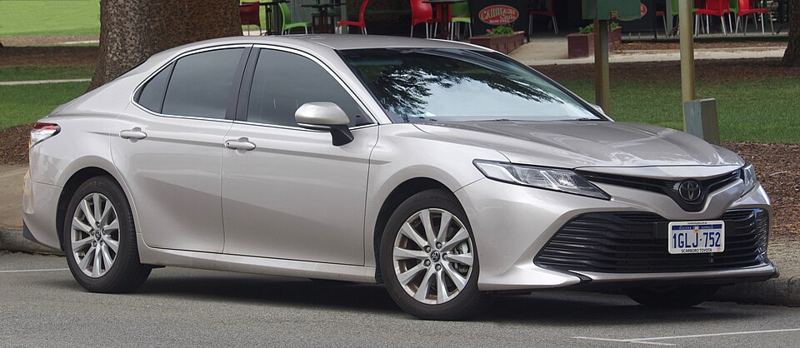
Photo: EurovisionNim · CC BY-SA 4.0 What changed. Unveiled in Detroit in January 2017 on the new Toyota New Global Architecture (GA-K platform), with a hood 1.6 inches lower, a roof one inch lower, a wheelbase two inches longer and a lower center of gravity. It introduced the 2.5-liter Dynamic Force engine with 40 percent thermal efficiency and an eight-speed automatic, a 3.5-liter V6 with D-4S injection and a next-generation hybrid. The Toyota Safety Sense P package was standard.
The innovation. Standard Toyota Safety Sense P included pre-collision braking with pedestrian detection, Full-Speed Range Dynamic Radar Cruise Control, Lane Departure Alert with Steering Assist and Automatic High Beams. The steering assistance helped the driver correct unintended lane departures.
If you buy one usedThe big one is the Denso low-pressure fuel pump recall on 2018–2019 Camry (NHTSA 20V012, more than 1.8 million Toyota and Lexus vehicles): the impeller could deform and the engine stall while driving; the remedy is a new pump at no cost. NHTSA also lists improperly welded rear head-restraint brackets on 2023–2024 Camry and Camry Hybrid (24V128). Check both by VIN at nhtsa.gov. - Gen. 92025–present
Hybrid only, built in Kentucky
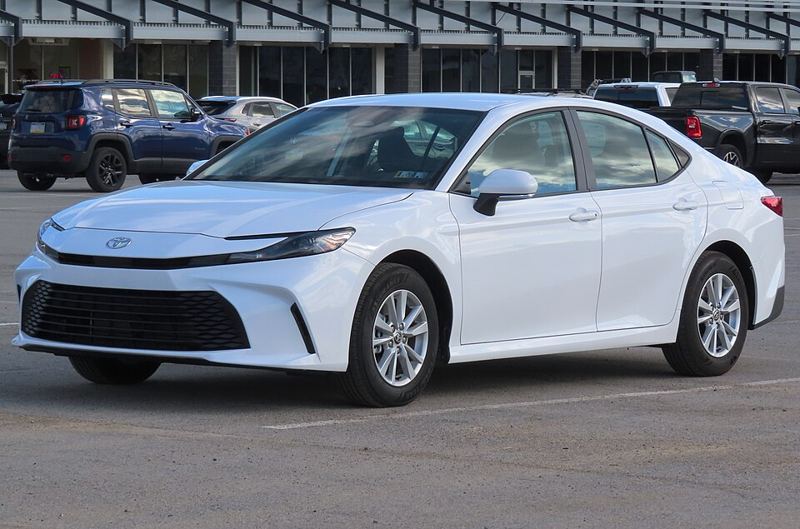
Photo: MercurySable99 · CC BY-SA 4.0 What changed. Revealed in Los Angeles on November 14, 2023 and in production in Georgetown since May 8, 2024. For the first time every Camry is a hybrid: a 2.5-liter engine with the fifth-generation Toyota Hybrid System, 225 net combined hp with front-wheel drive and 232 hp with Electronic On-Demand all-wheel drive, available on every grade. Hammerhead front end, screens up to 12.3 inches and Toyota Safety Sense 3.0 standard.
The innovation. Electronic On-Demand AWD uses a dedicated rear electric motor-generator to add rear-wheel traction when needed. The complete AWD hybrid system produces 232 net combined hp, 30 more than the previous 202 hp mechanical-AWD Camry; the comparison concerns total powertrain output.
If you buy one usedIIHS lists the 2025–2026 Camry as TOP SAFETY PICK+. Toyota’s hybrid-battery warranty is ten years or 150,000 miles, whichever comes first, subject to its terms and the vehicle’s history. Check the VIN even if a search under Camry returns zero: these hybrids have campaigns listed under Camry Hybrid. The exact November 3, 2026 queries returned six campaigns for MY2025 and three for MY2026. For eligible MY2025 vehicles, check GST accessory load labels (24V548), rear-center belt webbing (25V059) and instrument-panel software (25V595). Certain MY2025–2026 vehicles have PVM camera software campaign 25V744, inverter terminal-bolt campaign 25V869 requiring inverter replacement, and cluster display software campaign 26V511. Equipment and VIN determine eligibility; confirm repair instructions and completed work with Toyota.
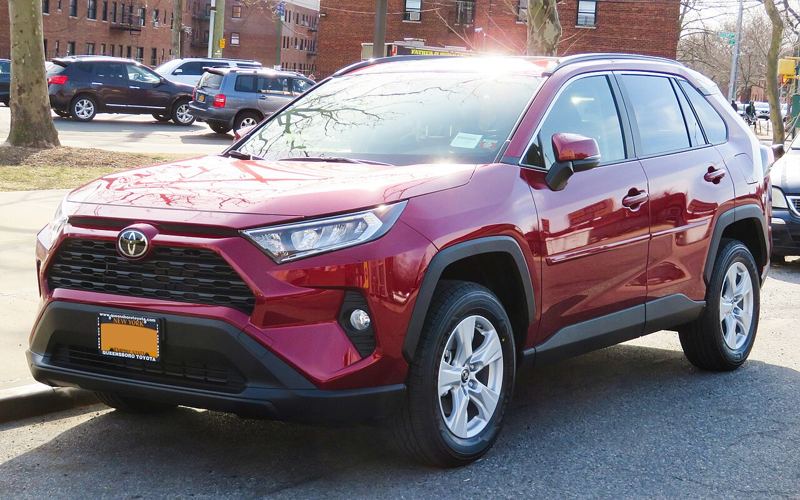 Toyota RAV41994–present (US from 1996)
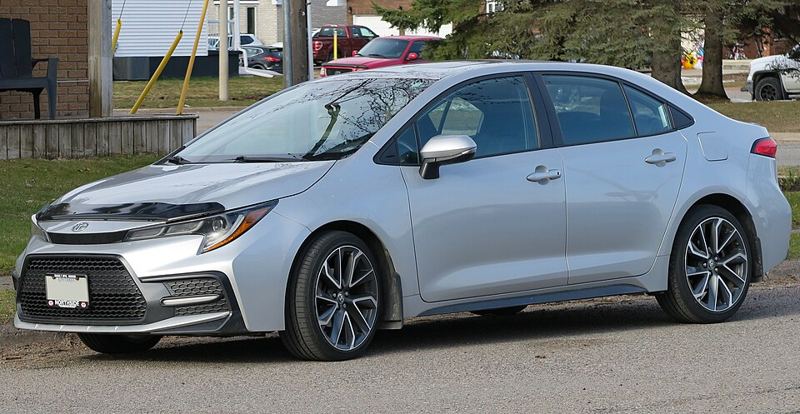 Toyota Corolla1966–present
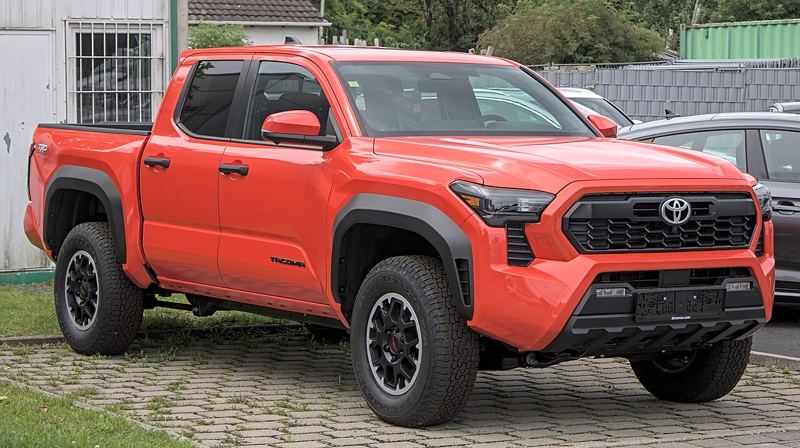 Toyota Tacoma1995–present
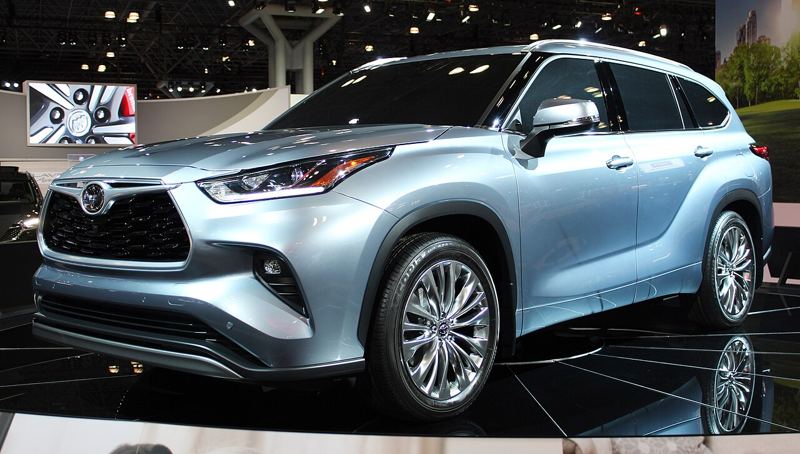 Toyota Highlander2001–present
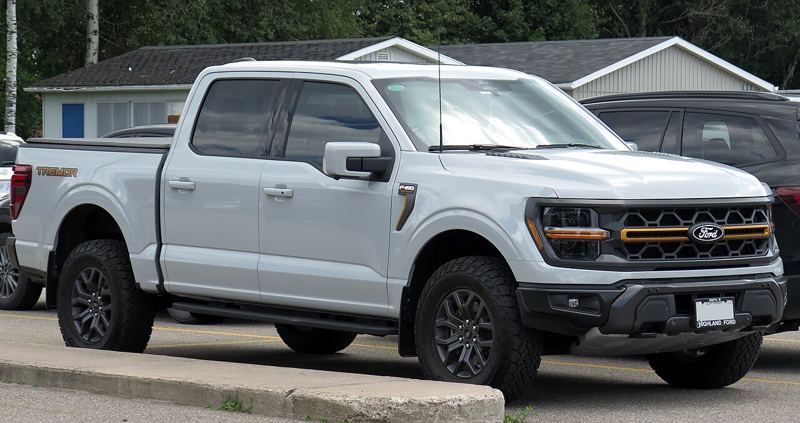 Ford F-Series (F-150)1948–present
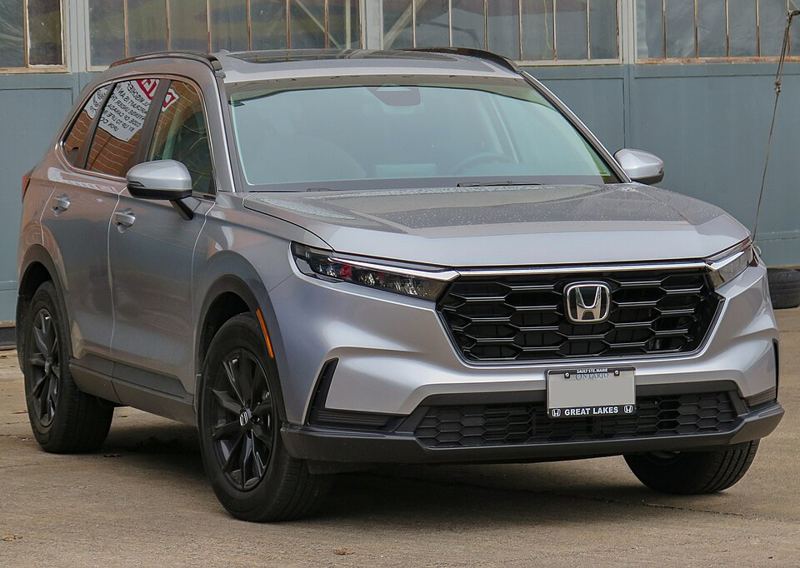 Honda CR-V1995–present
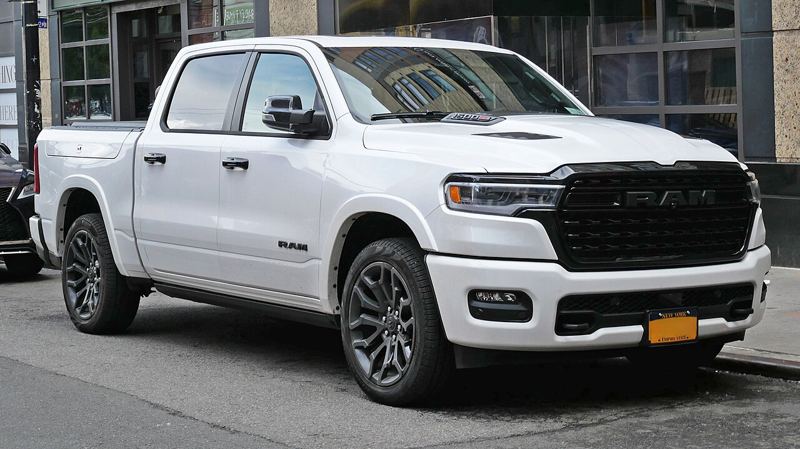 Ram 15001981–present
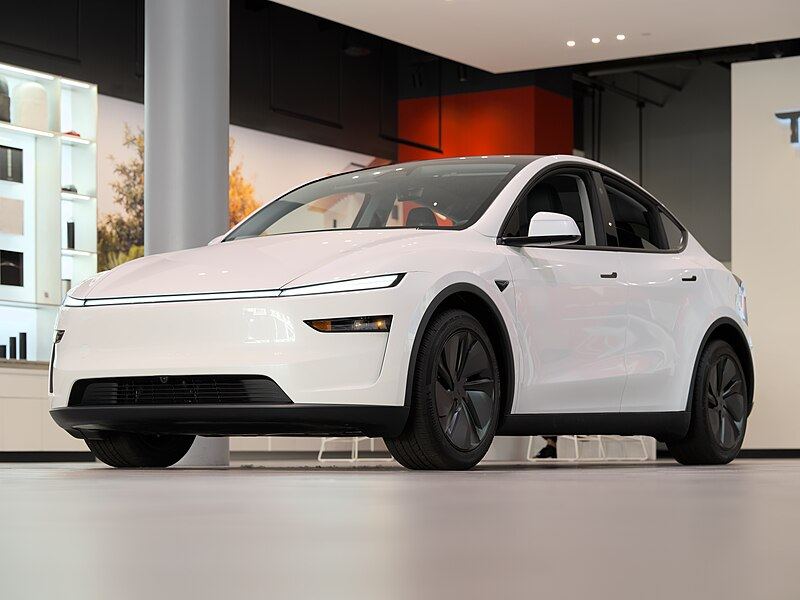 Tesla Model Y2020–present
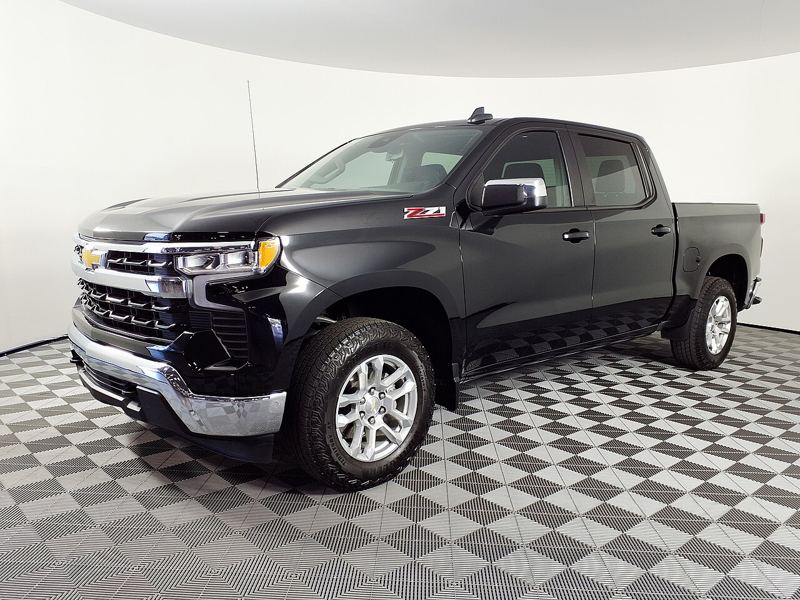 Chevrolet Silverado1999–present


