
Toyota Highlander
Midsize three-row SUV · 2001–present. 89,658 units sold in the US in 2024
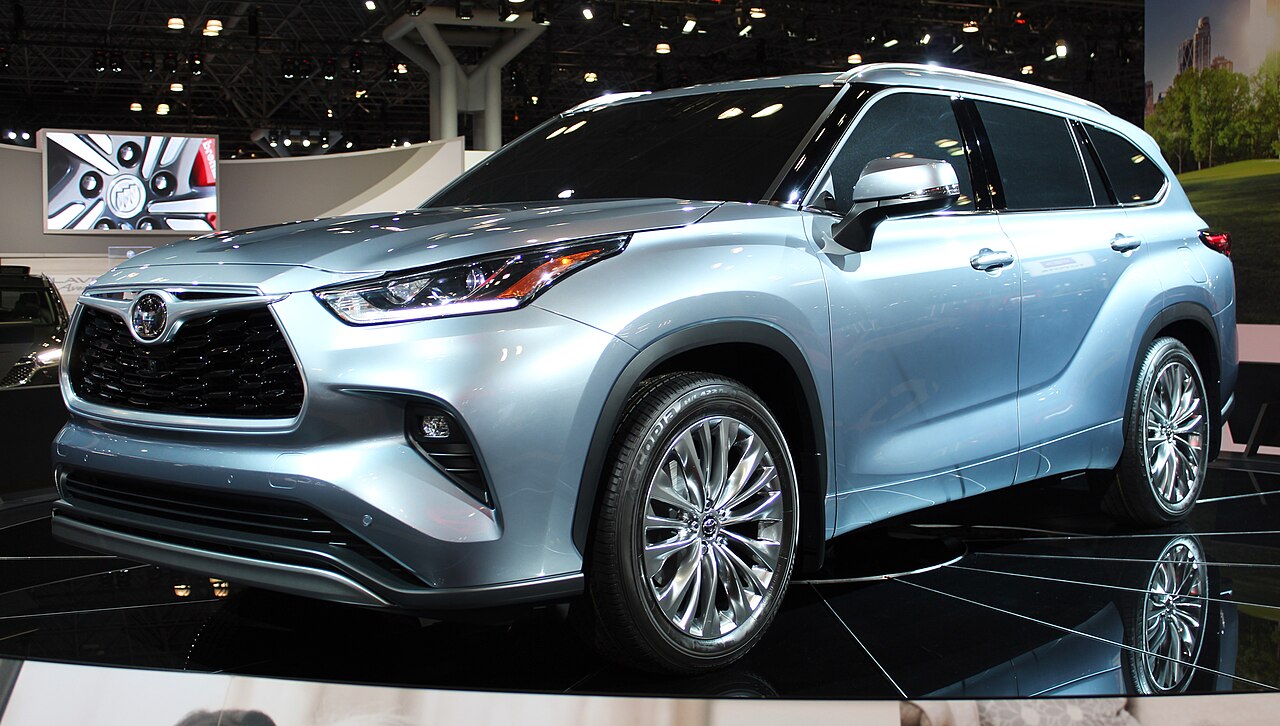
How it began
Toyota developed Highlander on a modified Camry platform. U.S. executive Don Esmond described its target buyers at the 2000 introduction. Calty Design Research in Newport Beach, California, styled the second generation; Yoshikazu Saeki was chief engineer of the fourth. Toyota credits Yoshinori Futonagane as chief engineer and Masayuki Yamada as chief designer of the announced fifth-generation electric model.
The first generation was built by Toyota Motor Kyushu in Japan, whose Miyata plant began Kluger and Highlander production in November 2000. Highlander production at Princeton, Indiana, began on October 8, 2009 after a $450 million investment. Toyota’s current Indiana roster includes Highlander, Highlander Hybrid and Grand Highlander. The announced electric successor is planned for Georgetown, Kentucky.
It was unveiled at the New York International Auto Show in April 2000 and reached U.S. dealers in 2001 as a 2001 model. By July 2001 it was already selling 8,025 units in a single month.
The vehicle has been sold as Kluger in Japan and Australia. Toyota’s original Japanese name record derives Kluger from the German adjective klug, meaning wise or smart. Australian publication GoAuto reported in April 2000 that Land Rover had wanted Highlander for the vehicle ultimately called Discovery, while Toyota had already registered Highlander in many places. Discovery itself debuted in 1989.
In the late 1990s, more and more buyers were moving from cars to SUVs, but they did not want a truck's rough ride. Toyota created the Highlander mainly for the United States: the image and versatility of an SUV with the ride and handling of a car. Instead of the 4Runner's truck frame, it used a unibody structure derived from the Camry. Toyota says this marked the start of the midsize SUV shift from truck platforms to car platforms.
Generation by generation
- Gen. 12001–2007
The SUV with a Camry at heart
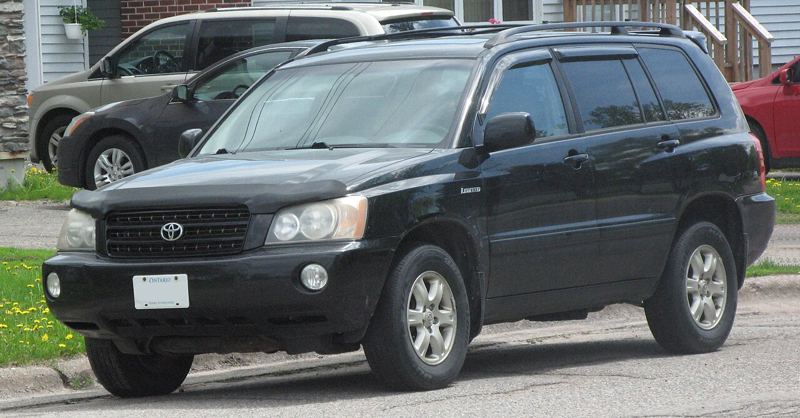
Photo: SsmIntrigue · CC BY-SA 4.0 What changed. It was a new model with no predecessor: a midsize unibody SUV on a modified Camry platform, with more ground clearance and suspension travel. It came with a four-cylinder engine or a 220 hp V6, and with front-wheel drive or full-time four-wheel drive. By 2005 Toyota was selling more than 130,000 a year, almost double its launch target.
The innovation. The Highlander Hybrid, on sale from June 2005 as a 2006 model, was according to Toyota the industry's first seven-passenger hybrid SUV. It paired a V6 with electric motors for 268 hp, returned 30 mpg combined in 4x2 form, and brought electric 4WD-i four-wheel drive, with an electric motor at the rear, to its segment.
If you buy one usedAsk for proof that applicable recalls were completed: 01V228 for the 2001 brake-fluid reservoir cap; 02V208 for 2001–2002 fuel-vapor breather-hose clamps; 04V181 for 2001–2004 rear-door child locks; and 10V499 for specified 2004–2006 master-cylinder seals. Carpet-cover campaigns are 06V253 for certain 2004–2005 Highlanders and 2006 Hybrids, and 11V112 for specified 2004–2006 vehicles, including the 2006 Hybrid. They address covers that can interfere with the accelerator; check current eligibility even after earlier carpet repairs. Pulley campaign 11V539 covers specified 2004–2005 Highlanders and 2006 Hybrids with the listed V6 engines and supplier pulleys. The 2001 Highlander was included in Toyota’s historical oil-gelling policy, later replaced in April 2002 by an eight-year program from first sale or lease. These historical terms do not establish present warranty eligibility. - Gen. 22008–2013
Bigger, and made in Indiana
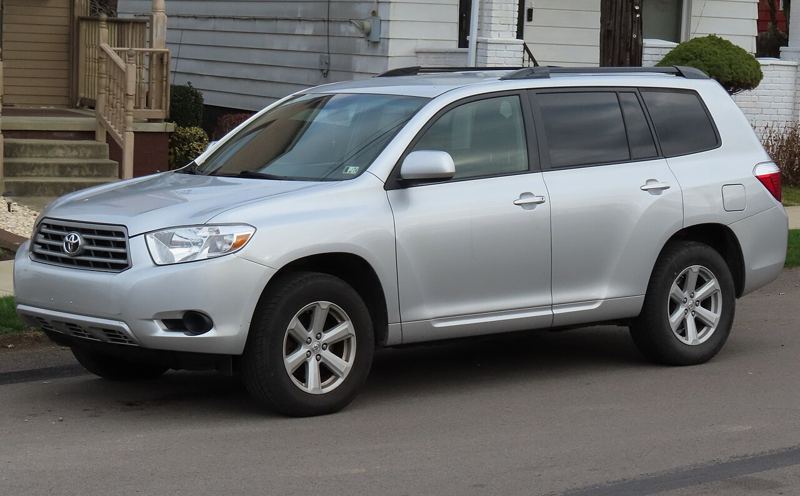
Photo: MercurySable99 · CC BY-SA 4.0 What changed. It debuted at the Chicago Auto Show on February 7, 2007. It grew nearly 4 inches in length, 3 in width and 3 in wheelbase, with more room in the second and third rows. The new 3.5-liter V6 made 270 hp, 55 more than the previous 3.3. From October 2009 it was built in Princeton, Indiana, and that year Toyota marked more than 1 million Highlanders sold in the U.S.
The innovation. The Center Stow seat: the middle seat of the second row tucks into a compartment under the front console. In seconds you go from a three-person bench to two captain's chairs with a walkway to the third row.
If you buy one usedCheck these NHTSA recalls: a third-row seat belt that did not meet federal standard 208 (08V181, 90,189 units, 2008); curtain airbags that could deploy without a crash due to roll-sensor failures (11V245, 2008); an accelerator that could be trapped by an unsecured floor mat (10V023, 2008–2010); a sticking accelerator pedal (10V017, 2010); a steering-wheel spiral cable that could disable the driver's airbag (14V168, 2008–2010); the power window master switch (12V491 and 15V689); and a left second-row seat that might not lock (14V148, 2013). The 90,189 vehicles include Highlander and Hybrid combined; individual eligibility depends on equipment and VIN. Inspect and complete all applicable free remedies. - Gen. 32014–2019
Room for up to eight
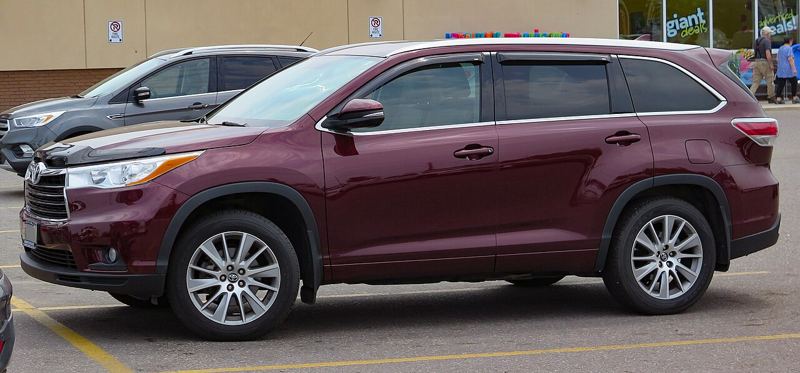
Photo: Elise240SX · CC BY-SA 4.0 What changed. It debuted at the New York Auto Show on March 27, 2013 and arrived in early 2014. It grew about 3 inches in length, with a lower roof and seating for seven or eight. It offered a 2.7-liter four-cylinder, a 3.5-liter V6 with a six-speed automatic, and a V6 hybrid. For 2017 it got a new 295 hp V6 with an eight-speed automatic, and the Hybrid rose to 306 hp.
The innovation. From the 2017 model year, Toyota Safety Sense P came standard on every trim: automatic emergency braking with pedestrian detection, lane departure alert, automatic high beams and radar cruise control. Toyota had committed to make automatic braking standard on nearly all its models by the end of 2017, four years ahead of the NHTSA and IIHS model-year 2022 target.
If you buy one usedCheck these NHTSA recalls: a poorly anchored third-row middle seat belt (14V051, 2014 built November 20, 2013 to January 18, 2014); airbag computer software (14V272, 2014); a possible fuel delivery pipe leak (14V576, 2014); the electric power steering computer (15V144, 2015); a disconnected brake fluid level sensor (16V775, 2016); the brake booster vacuum pump (18V211, 2018); and a fuel pump that could stall the engine (20V012 and 20V682, 2017–2019). Toyota identifies Princeton, Indiana as the U.S. model’s assembly location.20V012 covers certain 2018–2019 vehicles and 20V682 expands the pump campaign to certain 2017–2019 vehicles; check current VIN eligibility and completed work. - Gen. 42020–2026
TNGA-K platform and turbo power
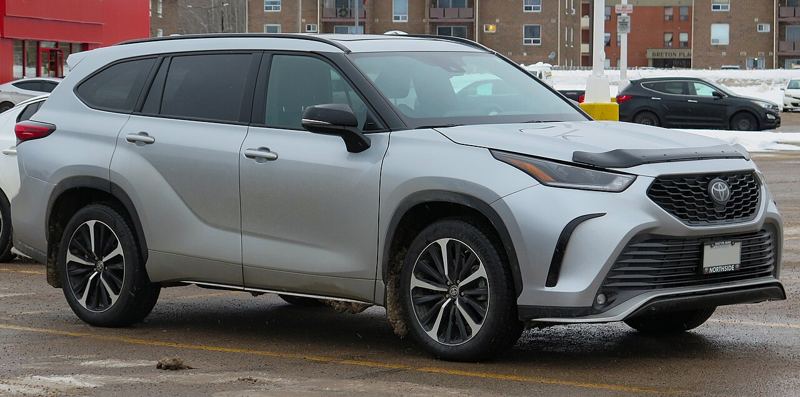
Photo: Elise240SX · CC BY-SA 4.0 What changed. It debuted at the New York Auto Show in April 2019 on the new TNGA-K platform, with extensive high-strength steel, and was 2.36 inches longer, all of it in the cargo area. Its chief engineer, Yoshikazu Saeki, called it a kind of jumbo RAV4. It started with a 295 hp V6; from 2023 a 2.4-liter turbo four with 265 hp and 309 lb-ft, 17% more torque, replaced it. For 2026, all-wheel drive is standard.
The innovation. The new hybrid paired a 2.5-liter Atkinson-cycle four-cylinder with two motor-generators in the front hybrid transaxle; AWD added an independent rear motor. Toyota’s April 2019 introduction initially quoted 240 system hp and an estimated 34 mpg combined, versus 28 for the prior generation. Later U.S. production specifications use 243 net combined hp. The battery fits under the second-row seats without taking cargo or passenger space.
If you buy one usedCheck these NHTSA recalls: V6 engine computer programming that affected fuel delivery (20V162, 2020); incorrect seat covers that could block the side airbag (20V633, 2020); a front lower bumper cover that could come loose (23V720, 2020–2023); the occupant classification sensor (23V865, 2020–2021); a steering-wheel spiral cable that could disable the driver's airbag (23V480 and its re-repair 25V040, 2023); the third-row center seat belt anchor (25V872, 2024–2025); and second-row seat backs that might not lock (26V128, 2021–2025).25V040 can require another repair even after 23V480. The published remedies inspect or replace the affected parts as specified; verify current eligibility and completed work by VIN. - Gen. 52028–
The Highlander goes electric
What changed. Toyota unveiled the battery-electric fifth-generation Highlander on February 10, 2026; the retained announcement identifies it as MY2028. Announced battery options are 77.0 and 95.8 kWh, with 221 system hp for FWD or 338 for AWD. The 95.8-kWh XLE AWD and Limited AWD have up to 315 miles of manufacturer-estimated range. It retains three rows and up to seven seats. Those larger-battery AWD grades are forecast to begin sales in early 2027; the 77.0-kWh XLE FWD is forecast for mid-2027.
The innovation. Toyota describes the planned Highlander as its first three-row BEV for the U.S. and its first BEV assembled in America, at Georgetown, Kentucky. Battery assembly is assigned to Liberty, North Carolina, and a supplier partner. Toyota also announces its first U.S. Toyota-model vehicle-to-load capability, allowing external devices to draw battery power with separately purchased bidirectional accessories.
If you buy one usedToyota’s current announcement identifies the upcoming all-electric Highlander as a 2028 model, with 95.8-kWh AWD sales expected in early 2027 and 77.0-kWh FWD in mid 2027. It says MSRP will be announced closer to sale. Retail ownership and long-term reliability have not been established by this review. Recheck Toyota and NHTSA for the actual model year and VIN when buying.
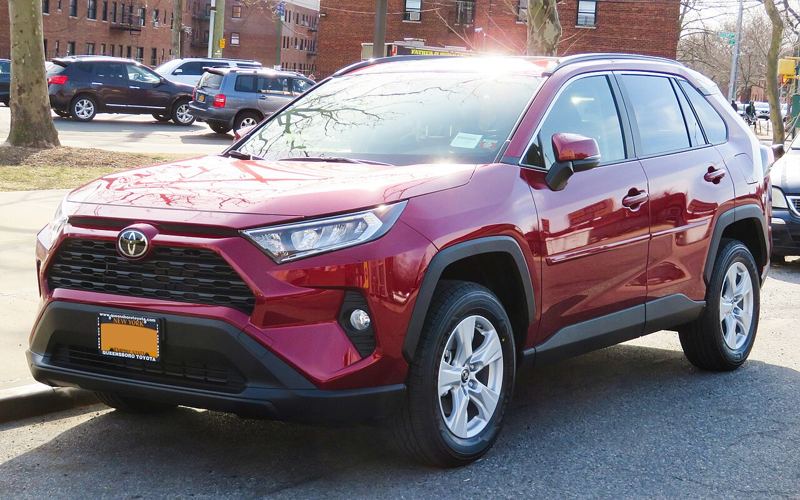 Toyota RAV41994–present (US from 1996)
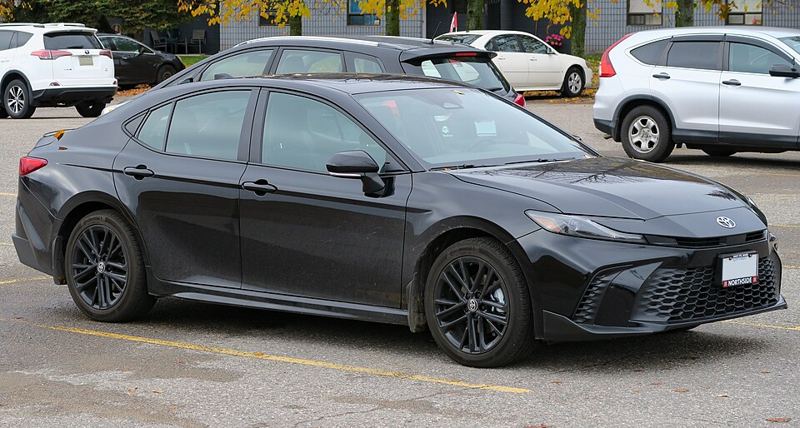 Toyota Camry1982–present
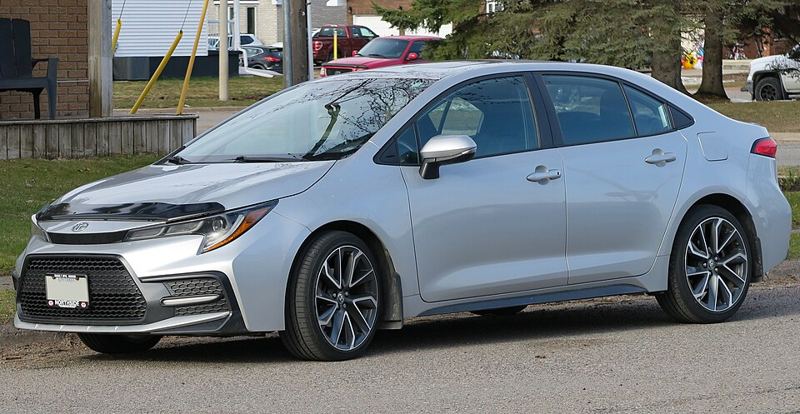 Toyota Corolla1966–present
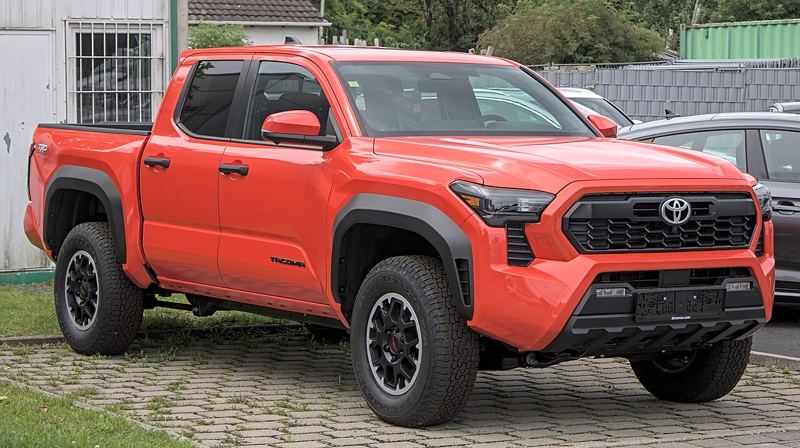 Toyota Tacoma1995–present
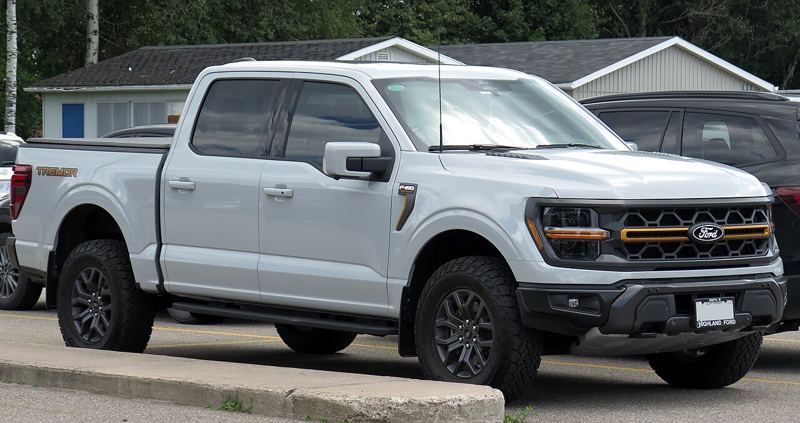 Ford F-Series (F-150)1948–present
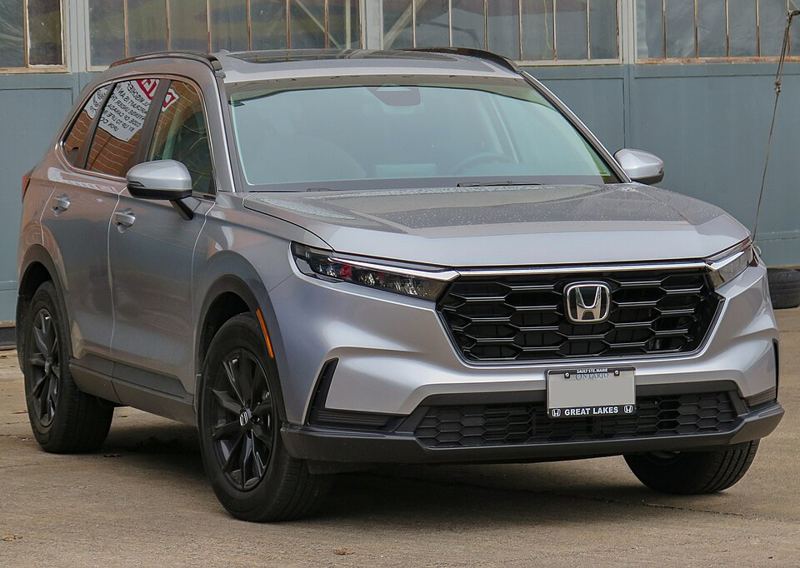 Honda CR-V1995–present
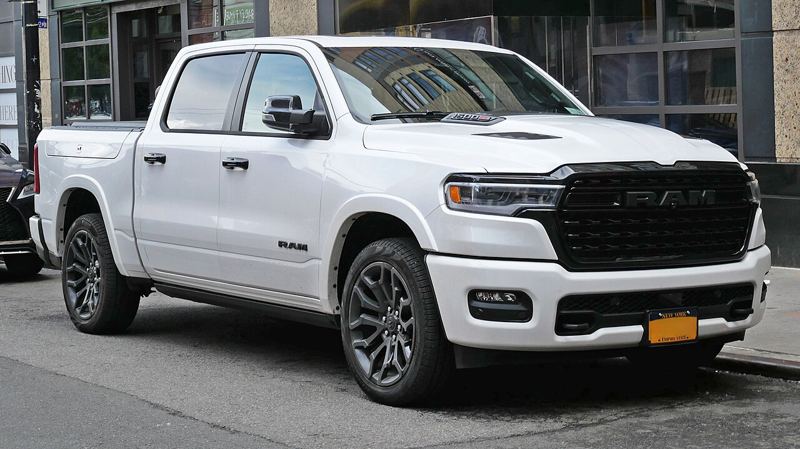 Ram 15001981–present
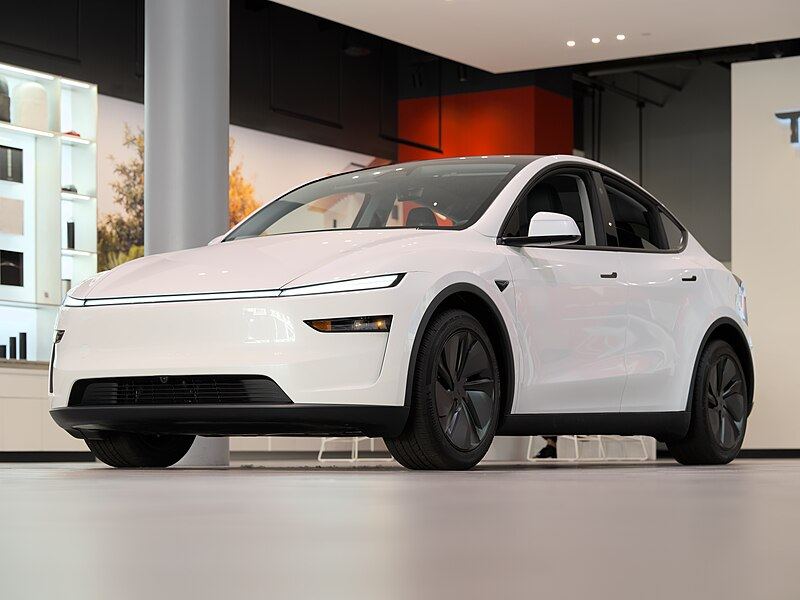 Tesla Model Y2020–present
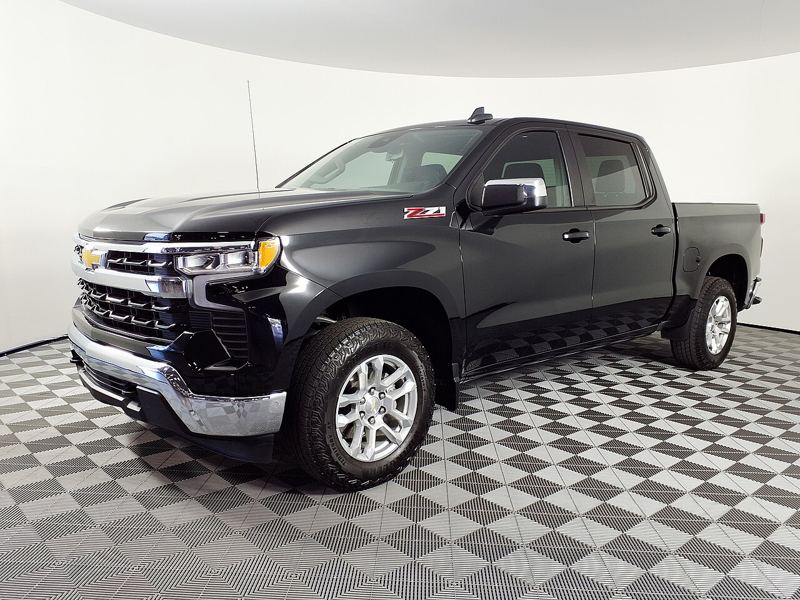 Chevrolet Silverado1999–present


