
Hyundai Kona
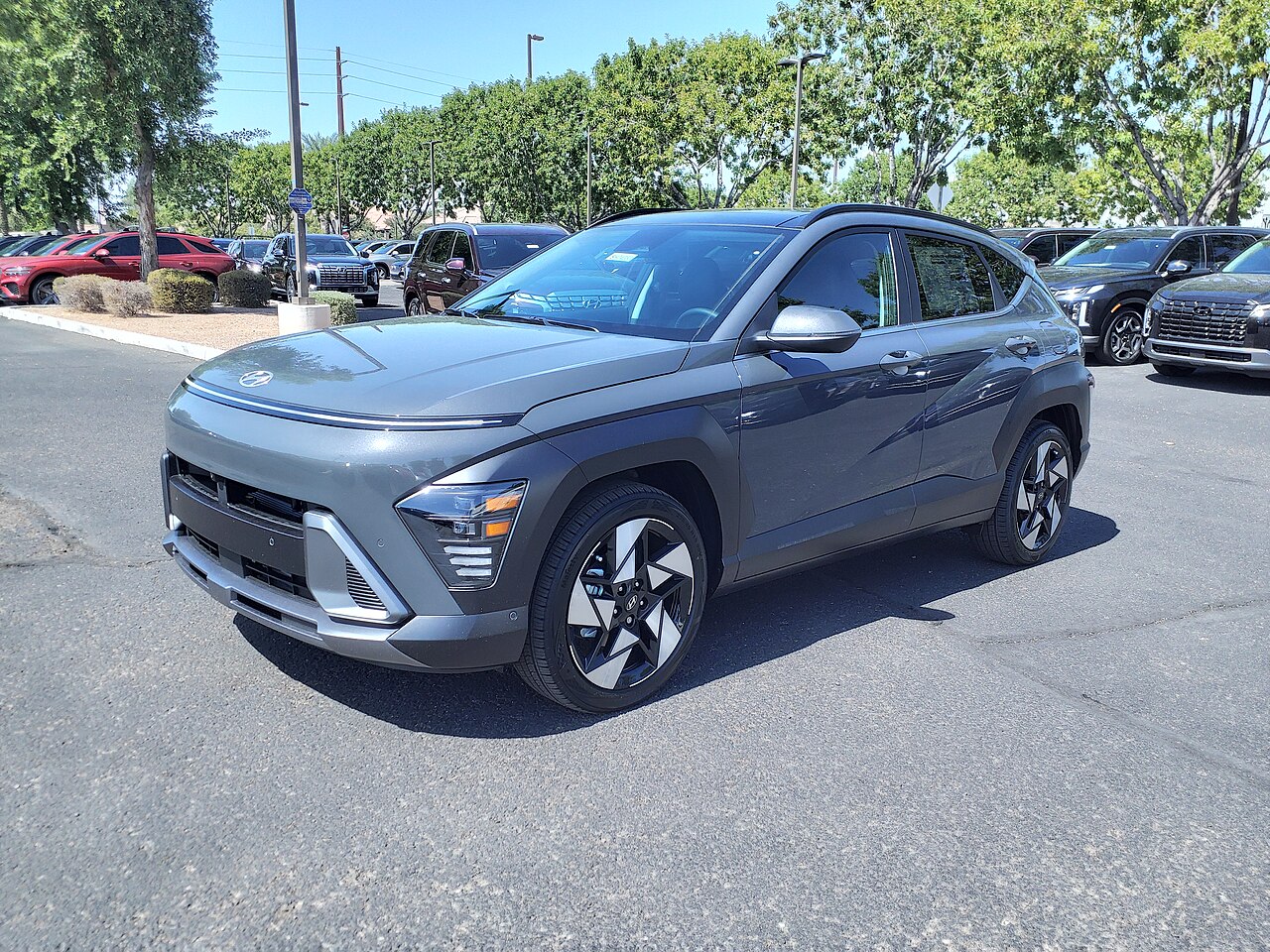
Subcompact SUV · 2018–present. 82,172 units sold in the US in 2024
How it began
Hyundai Motor Company developed the Kona through an international design and engineering program. Euisun Chung presented the original as vice chairman. Hyundai Automotive South Africa’s original launch release credits Daniel Kim at the Irvine design center for exterior design and Kevin Kang for the interior; these specific roles should not be confused with sole authorship. An individual original chief engineer was not identified in the records reviewed. For the second generation, Hyundai names SangYup Lee as head of Hyundai Design Center.
Development included Korea and California; reporters drove the first car at Hyundai’s Namyang R&D facility. Hyundai’s contemporary production statement records initial Ulsan assembly on June 19, 2017 and planned U.S. export production later that year. A manufacturer factory release also confirms Ulsan Electric production and Nošovice, Czech Republic, production for Europe from March 2020. Exact plant allocation for all current U.S. 2027 gasoline and 2025 Electric vehicles remains a separate verification gap.
The world premiere took place at Hyundai Motorstudio Goyang on June 13, 2017, followed by Korean sales on June 27. Its North American premiere was November 29 at the 2017 Los Angeles Auto Show. Hyundai’s January 2018 pricing release scheduled U.S. availability for March 2018 as a 2018 model. Kona Electric launched globally in March 2018; Hyundai announced the first U.S. customer delivery as a 2019 model on February 15, 2019.
Kona is a coastal region on the Big Island of Hawaii, popular with adventure-seeking travelers. It follows Hyundai's habit of naming its SUVs after places, like Tucson and Santa Fe.
Hyundai introduced Kona as demand shifted from sedans toward smaller SUVs. At launch the company cited IHS Automotive data showing nearly tenfold subcompact-SUV segment growth from 2010–2016, while contemporary reporting described efforts to recover U.S. and Chinese sales. It joined the globally marketed Tucson and Santa Fe families; that three-family framing excludes emerging-market models such as Creta. Contemporary coverage compared Kona with HR-V, C-HR and Juke. Gasoline and future Electric versions were already discussed at the original launch.
Generation by generation
- Gen. 12018–2023 · OS
The little one with armor
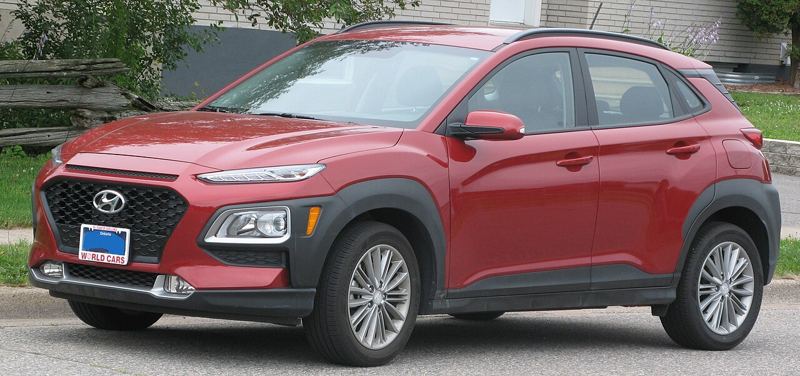
Photo: Elise240SX · CC BY-SA 4.0 What changed. The initial U.S. gasoline lineup used a new compact-SUV platform, a 147-hp 2.0-liter with six-speed automatic or a 175-hp 1.6-liter turbo with seven-speed dual-clutch transmission. AWD was optional on each of those initial gasoline trims. The 2019 Electric added a 201-hp motor and 258-mile EPA-estimated range. Hyundai’s February 2021 release detailed a model-year 2022 refresh with revised styling and new N Line; the full Kona N joined as a 2022 model with 276 hp and eight-speed wet dual-clutch transmission. Electric and Kona N were FWD derivatives, so the initial AWD statement does not cover them.
The innovation. Composite lamps separated slim upper LED daytime lights from the main headlights below. Contrasting black armor visually connected the front and rear. In the initial gasoline lineup, FWD used a rear torsion beam and AWD used an independent dual-arm multilink rear suspension.
If you buy one usedAsk about these NHTSA recalls: 21V301 (2019–2021 Kona with the 2.0-liter engine: piston rings could damage the engine; inspect, replace the engine if needed and install noise-sensing software); 20V630 and 21V127 (2019–2020 Kona Electric: fire risk from a battery short circuit; inspect and replace the battery if needed); 20V748 (2019–2021 Kona Electric, brake software); 22V941 (2021 Kona Electric, coolant leak in the power control unit); 23V526 (2023 Kona, Idle Stop & Go oil pump). Kona N models have campaigns 22V746 (transmission) and 24V528 (fuel pump). For the 2018 Kona, IIHS rated the headlights good on Limited and Ultimate trims built after May 2018. - Gen. 22024–present · SX2
Designed electric-first
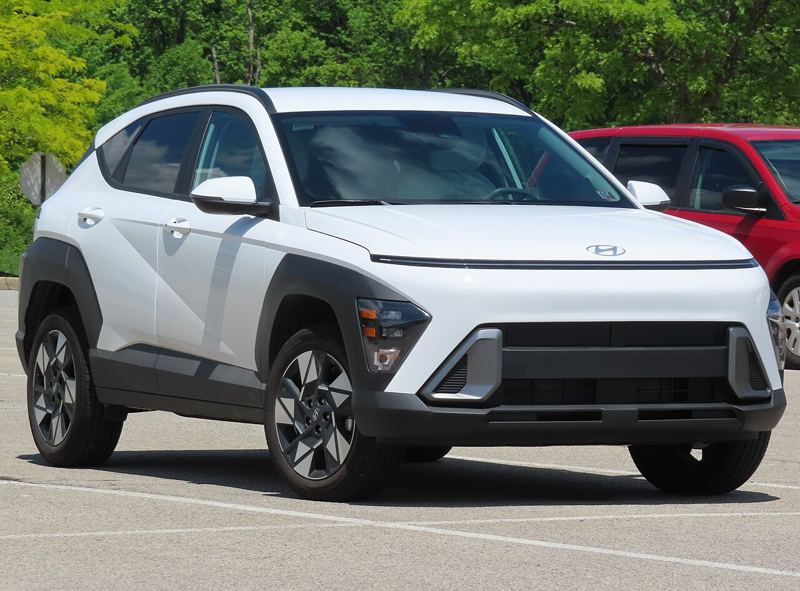
Photo: MercurySable99 · CC BY-SA 4.0 What changed. It grew a lot: the electric version is 150 mm (5.9 in) longer, 25 mm wider and has a 60 mm (2.4 in) longer wheelbase than before, with more cabin and cargo room. All versions share one common architecture. In the U.S. there is a 147 hp 2.0-liter or a 190 hp 1.6-liter turbo, and the Kona Electric with 133 or 201 hp and up to 261 miles of EPA-estimated range. Dual 12.3-inch screens are standard on the electric model.
The innovation. Hyundai designed it backwards from the usual way: the electric version came first, and the gasoline, hybrid and N Line versions were adapted from it. The Kona Electric was the first Hyundai with a pixelated Seamless Horizon lamp, a light strip that runs across the whole front.
If you buy one usedAsk about these NHTSA recalls: 23V650 (2024 Kona, rear seat belts), 23V901 (2024 Kona: 12-volt battery cables could chafe and short in a crash, with fire risk; IIHS saw an engine bay fire in a test of a 1.6 turbo N Line), 24V308 (2024 Kona, EGR valve that can cause loss of power) and 26V452 (2024–2025 Kona Electric and 2024–2026 Kona: the rear center seat belt buckle may fail; do not use that seat until it is fixed). 2026 Konas have campaigns 26V047 (instrument panel software) and 26V069 (steering knuckles that can crack). IIHS named it a 2025 Top Safety Pick+.
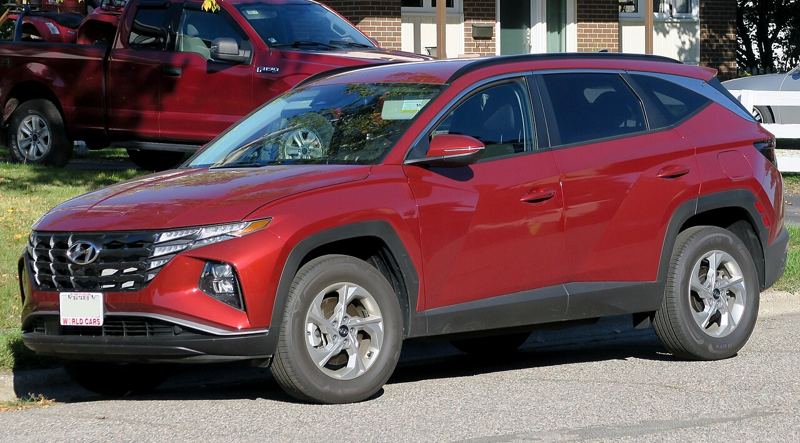 Hyundai Tucson2004–present
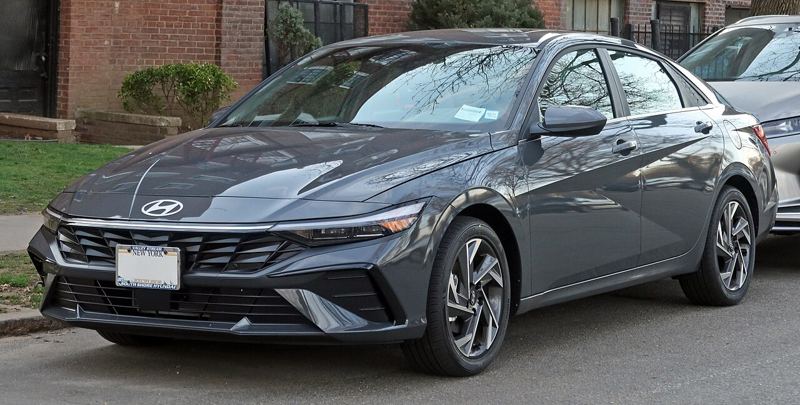 Hyundai Elantra1990–present
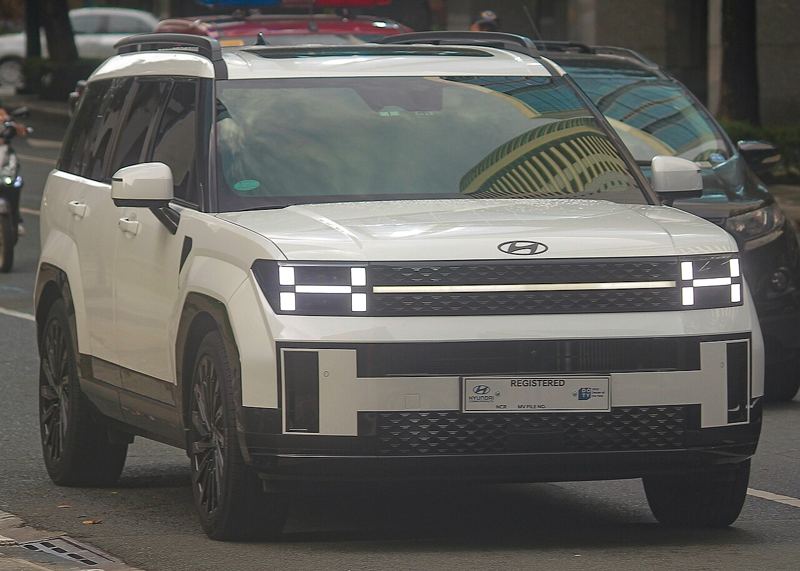 Hyundai Santa Fe2001–present
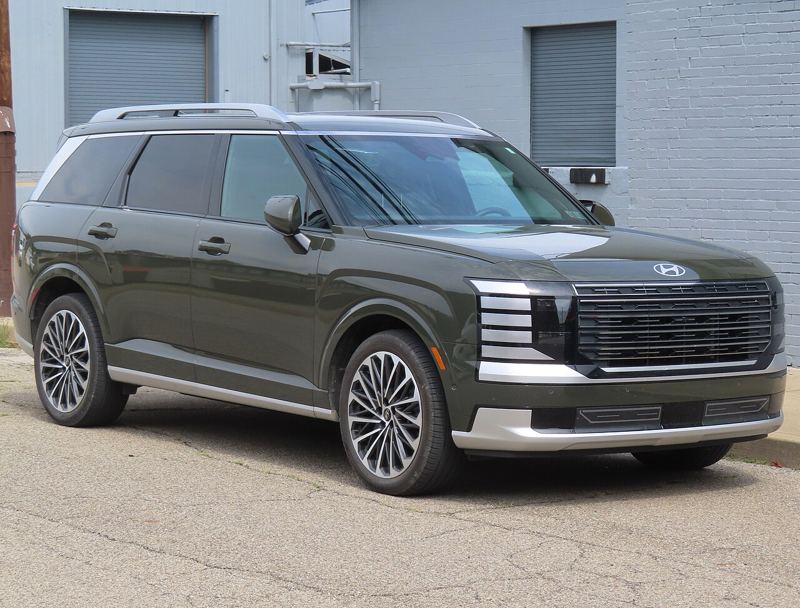 Hyundai Palisade2020–present
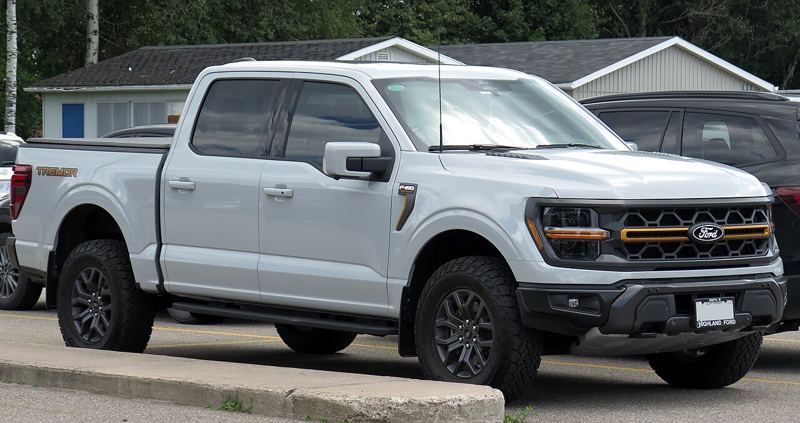 Ford F-Series (F-150)1948–present
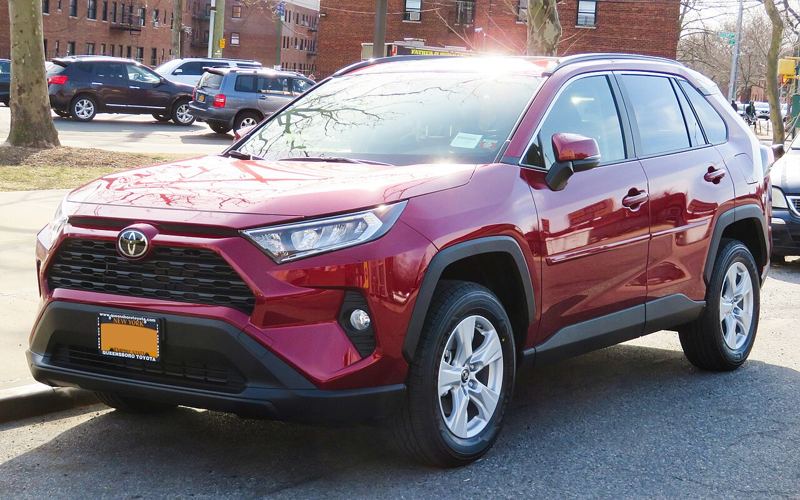 Toyota RAV41994–present (US from 1996)
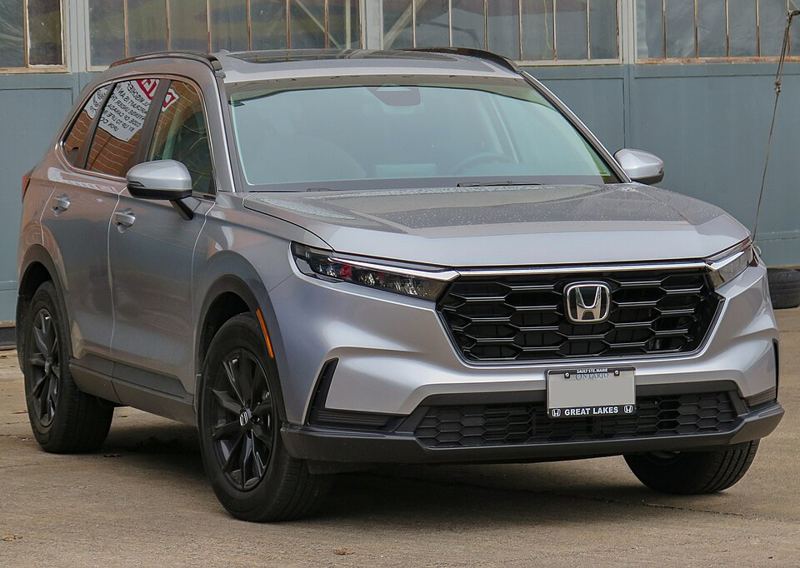 Honda CR-V1995–present
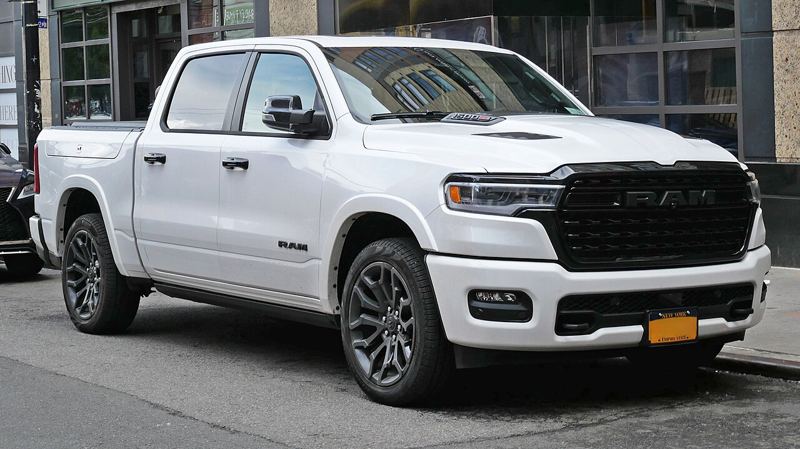 Ram 15001981–present
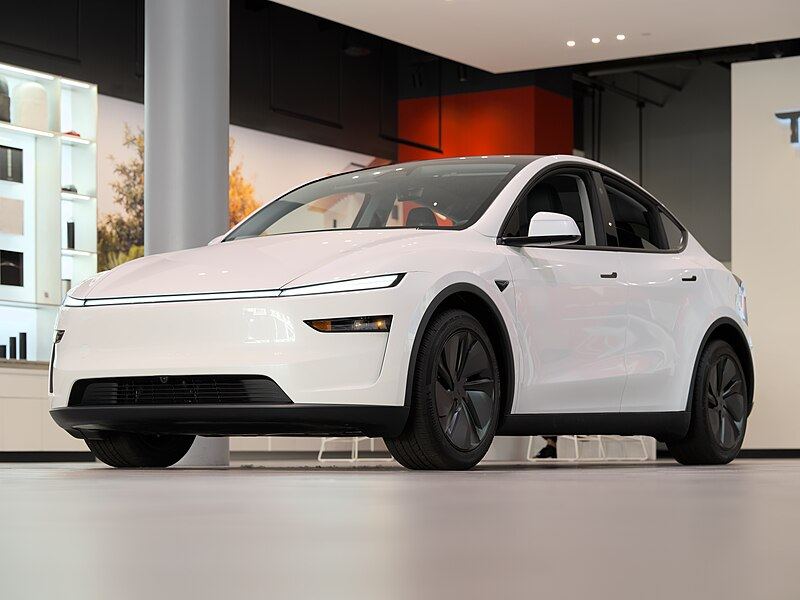 Tesla Model Y2020–present


