Hyundai Santa Fe
Midsize SUV · 2001–present. 119,010 units sold in the US in 2024
How it began
Hyundai Motor Company created Santa Fe as its first internally developed SUV and its first U.S. SUV offering. In Car and Driver’s original October 2000 test, Hyundai U.S. president and CEO Finbarr O’Neill identified the California design studio and a directive to design for North American tastes; the later Henry Payne column quoted that account. Individual original designers and a whole-vehicle chief engineer were not identified in the records reviewed. The second generation was the first production vehicle designed at Hyundai’s Irvine center. The fifth-generation presentation names SangYup Lee as head of Hyundai Global Design Center.
The first Santa Fe was imported for U.S. buyers; the original American road test said Hyundai was still considering a U.S. factory. Hyundai’s original 2004–2005 sustainability report identifies first-generation Santa Fe production at Ulsan No. 2; this period record does not establish an exclusive factory or the exact first launch-year plant. HMMA’s own history records Santa Fe assembly in Montgomery from 2006–2010. Production then moved to Kia’s West Point, Georgia, operation. HMMA’s original factory announcement records Santa Fe Sport production actually returning on June 22, 2016. Its current assembly overview identifies Santa Fe and Santa Fe Hybrid among the models made in Montgomery. The exact initial launch-year Korean factory and precise allocations for every earlier long-wheelbase derivative remain separate evidence gaps.
Hyundai introduced Santa Fe globally in 2000 and showed it to European audiences at that year’s Geneva Motor Show. It entered the U.S. as a 2001 model; American road testing was already published by October 1, 2000 in Car and Driver. Later early-2001 tests were additional reviews. The exact first U.S. retail-sale day remains unestablished.
It is named after Santa Fe, the capital of New Mexico, founded in 1610 and one of the oldest cities in the United States, known for its art and cultural heritage. Hyundai explains that each of its SUVs is named after an international travel destination, just like its younger sibling, the Tucson.
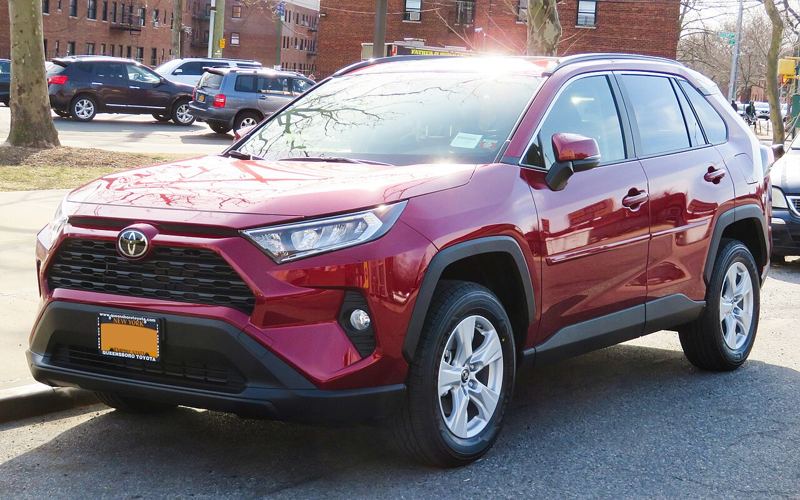
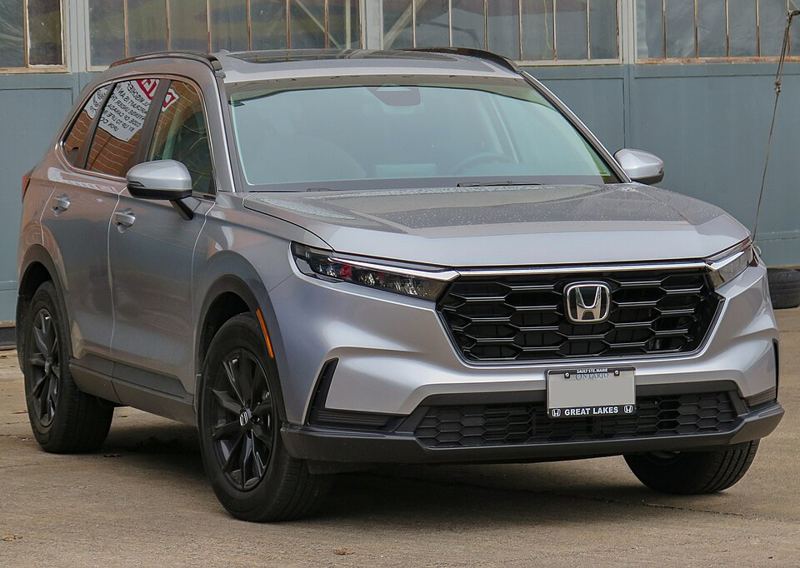
Before the Santa Fe, Hyundai was known for economical sedans and wagons, and it had no SUV to compete with the Toyota RAV4 or the Honda CR-V. Instead of a truck frame, it built the Santa Fe on the Sonata sedan's platform, with a unitized body, so it would drive like a car. In size it sat closer to midsize SUVs than to the trendy small 'cute-utes', at an entry-level price: the V6 tested by The Auto Channel stickered at $20,079, when comparable rivals cost roughly $23,000 to $25,000.
Generation by generation
- Gen. 12001–2006 · SM
Hyundai's first SUV
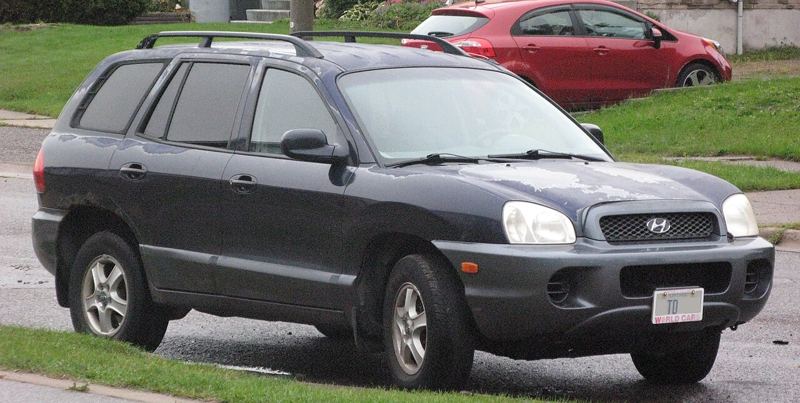
Photo: SsmIntrigue · CC BY-SA 4.0 What changed. The first U.S. Santa Fe had no direct predecessor in Hyundai’s local SUV lineup. Early reviews published 149 hp for the 2.4-liter four and 181 hp for the 2.7-liter V6; these are initial period ratings, with later horsepower corrections and year-specific ratings requiring distinction. FWD was offered, with full-time 4WD available on the V6. It was wider than the contemporary Honda CR-V with nearly the same wheelbase. Hyundai’s original 2004 kit identifies a 3.5-liter V6 introduced late in model year 2003, with a five-speed automatic and electronically controlled 4WD. That 2004 kit advertised the 3.5 at 200 hp.
The innovation. It used the Sonata sedan's platform with a unitized body, independent MacPherson strut front suspension and a double-wishbone rear. That car-based SUV recipe gave it a comfortable ride on pavement and put it head to head with Japanese crossovers.
If you buy one usedIf the car lived in a state that salts its roads, check for rust: campaign 09V123 inspected the rear trailing arms of 2001–2003 models for internal corrosion, and 14V435 the front coil springs of 2001–2006 models, which could break and puncture a tire. The 2.7-liter V6 had campaign 03V030 for crankshaft position sensors that could stall the engine. Ask for proof the work was done. - Gen. 22007–2012 · CM
A third row, built in Alabama
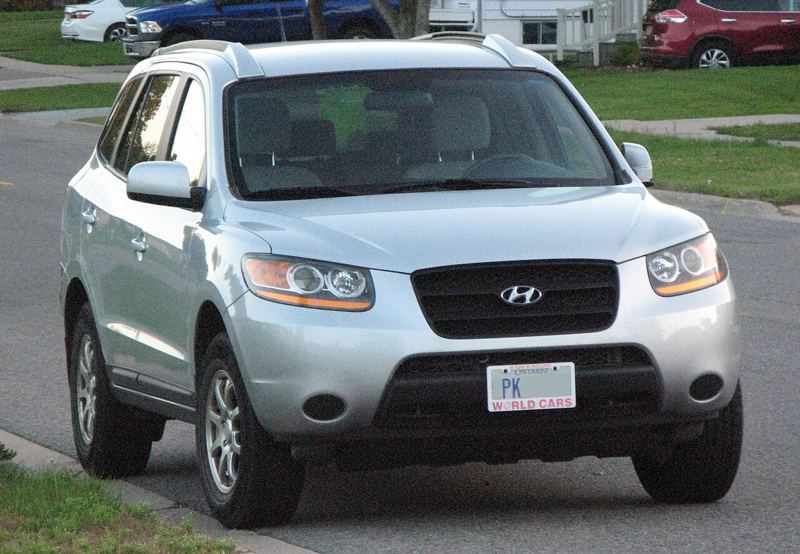
Photo: SsmIntrigue · CC BY-SA 4.0 What changed. It debuted in Detroit on January 8, 2006 as the first production model designed at Hyundai’s Irvine center. Optional third-row seating gave Santa Fe seven seats for the first time. The launch release estimated over 180 hp for the 2.7 V6 and over 230 hp for the 3.3 V6; these were preliminary launch figures. The 2010 update replaced them with a 175-hp 2.4-liter four and 276-hp 3.5-liter V6 with six-speed transmissions. Montgomery production ran from 2006–2010 before the Georgia transfer; some early second-generation units were also made in Ulsan.
The innovation. It made electronic stability control standard on every trim, along with six airbags including side curtains for all three rows, four-channel ABS and a tire pressure monitor.
If you buy one usedCheck these NHTSA campaigns: 11V472 (driver airbag clock spring, 2007–2008), 12V354 (recalibration of the front-passenger occupant sensor, 2007–2009), 13V113 (brake light switch, 2007–2011) and 11V261 (intermediate shaft on some 2010 2.4-liter front-drive models). 2012 models were included in campaign 20V746 for connecting rod bearing wear that could damage the engine. - Gen. 32013–2018 · DM / NC
Two sizes: Santa Fe Sport and Santa Fe
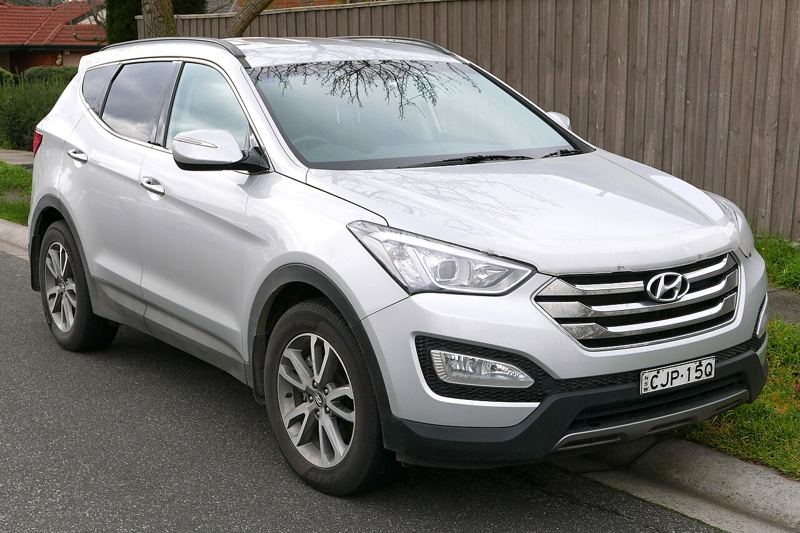
Photo: OSX · Public domain What changed. It was presented at the New York auto show in April 2012 in two sizes: the five-seat Santa Fe Sport (190 hp 2.4-liter or up to 264 hp 2.0 turbo) and the long seven-seat Santa Fe with a 290 hp 3.3-liter V6. It introduced the Storm Edge design language. The Sport started at $24,450 plus destination.
The innovation. It shed a lot of weight: the front-drive Santa Fe Sport 2.4 was 266 lb lighter than the 2012 four-cylinder Santa Fe, and the 2.0T was 300 lb lighter than the previous V6, using direct-injection engines.
If you buy one usedThe 2013–2014 Santa Fe Sport was included in campaign 17V226 for machining errors that could wear the bearings and seize the engine (plus 18V934 to recheck earlier repairs). 2013–2015 Sports were included in 20V520, later superseded by 21V303 for the repair, and 2016–2018 Santa Fe, 2017–2018 Sport and 2019 XL models have 22V056: the ABS module could cause a fire, and owners were told to park outside until repaired. Also check 17V358 (hood latch, 2013–2017) and 17V578 (3.3 V6 crankshaft, 2017). - Gen. 42019–2023 · TM
Technology that looks after the family
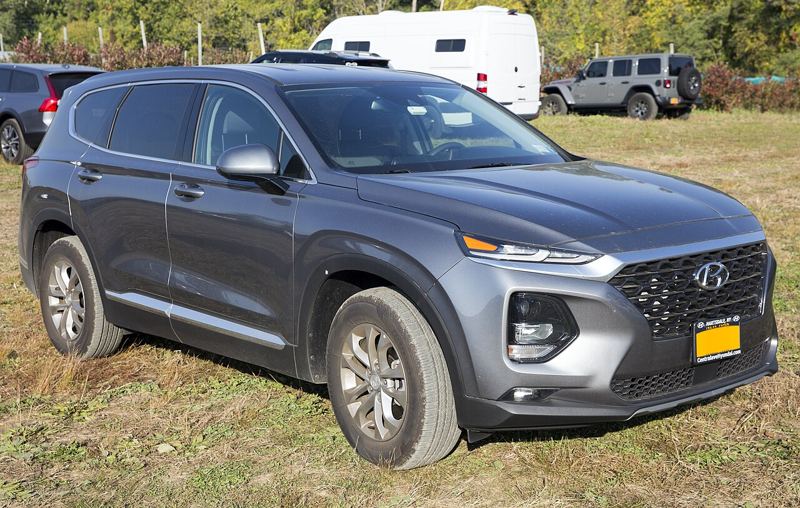
Photo: Mr.choppers · CC BY-SA 3.0 What changed. The U.S. premiere was March 28, 2018 in New York. The five-seat Santa Fe Sport became Santa Fe, while the old three-row body continued as Santa Fe XL for model year 2019. The new model introduced an in-house eight-speed automatic. The 2021 refresh added a 191-hp 2.5-liter and 277-hp 2.5 turbo, plus Hyundai’s first U.S. SUV hybrid offering; earlier Kona Hybrids existed in other markets. A plug-in hybrid subsequently joined the U.S. lineup as a 2022 model, with actual U.S. dealer stock documented in a January 2022 manufacturer notice.
The innovation. The U.S. Santa Fe program introduced Hyundai’s ultrasonic Rear Occupant Alert. On equipped vehicles it can detect rear-seat movement after locking, sound the horn and send a smartphone notification through eligible Blue Link connected services. Safe Exit Assist uses approaching-traffic information to keep rear child-safety locks engaged temporarily; this is a specific assistance feature, with equipment and operating conditions.
If you buy one usedCheck campaign 23V181 (tow hitch harness that could cause a fire, 2019–2023, including hybrids and plug-in hybrids; owners were told to park outside until repaired). 2021–2022 2.5 turbo models have campaigns 21V524 and 21V308 for fuel leaks at the high-pressure fuel pipe, and 2022 models 22V197 for the turbo oil supply pipe. 2019 models had 18V715 (curtain airbag bolts) and 2020–2021 models 21V00M (windshield bonding). - Gen. 52024–present · MX5
The box built for adventure
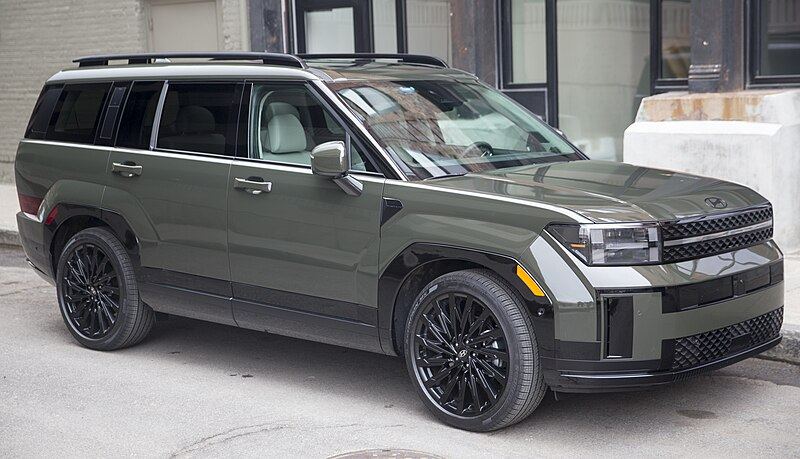
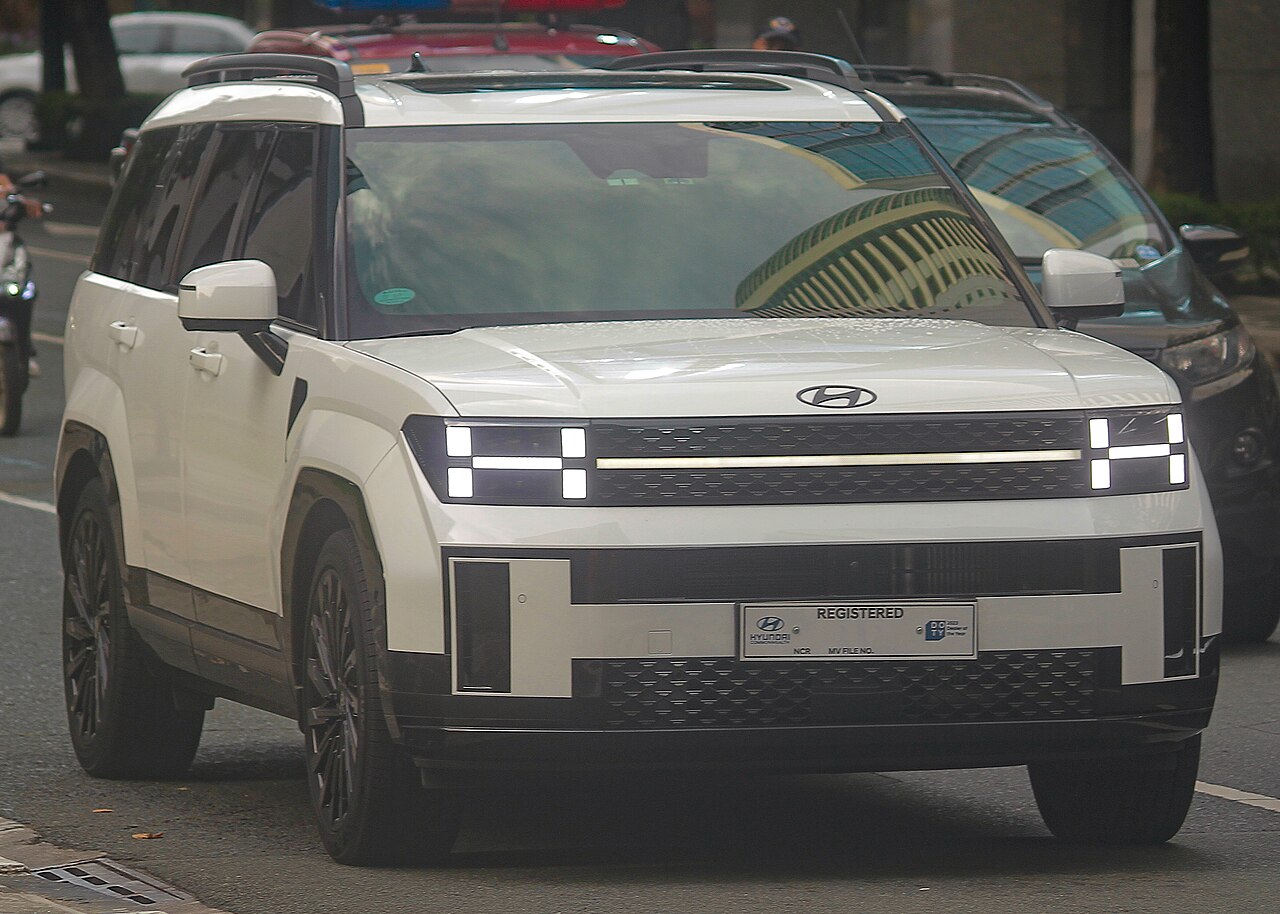
Photo: Mr.choppers · CC BY-SA 3.0 What changed. Hyundai revealed the fifth-generation design on July 18, 2023: boxy proportions, H-shaped lights and longer wheelbase. The 2024 U.S. program made third-row seating standard. Its original 277-hp 2.5 turbo used an eight-speed dual-clutch transmission, while the 231-hp combined 1.6 turbo hybrid used a six-speed automatic. Hyundai’s January 24, 2024 release announced $33,950 base MSRP before $1,395 freight and said gasoline models were arriving at dealers. HMMA builds the U.S. model in Montgomery. For MY2026, Hyundai’s spokesperson confirmed a switch to a torque-converter transmission; current MY2027 specifications list eight-speed automatic. The DCT description belongs to the original launch program.
The innovation. Its design came from studying data on outdoor lifestyles: the enlarged tailgate turns the cargo area into a kind of terrace for car camping, garden runs or carrying the pet. The XRT version was the first Hyundai with standard all-terrain tires and raises towing capacity to 4,500 lb.
If you buy one usedFor 2024 models check campaign 24V529 (transmission software that could let the car roll away in PARK; Hyundai advised using the parking brake until the update) and 24V561 (floor harness that could affect the airbags). 2025–2026 models have 25V549 (improperly tightened connecting rod bolts; the remedy is a new engine), and 2024–2026 models 26V218 (front seat belt anchors). Look up your VIN at NHTSA.
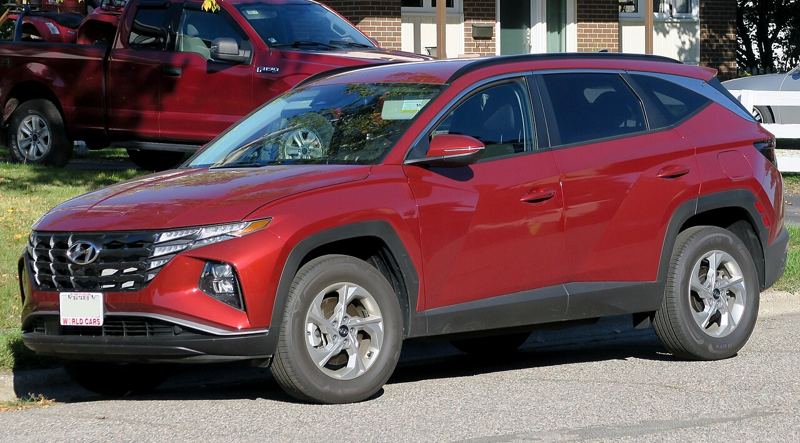 Hyundai Tucson2004–present
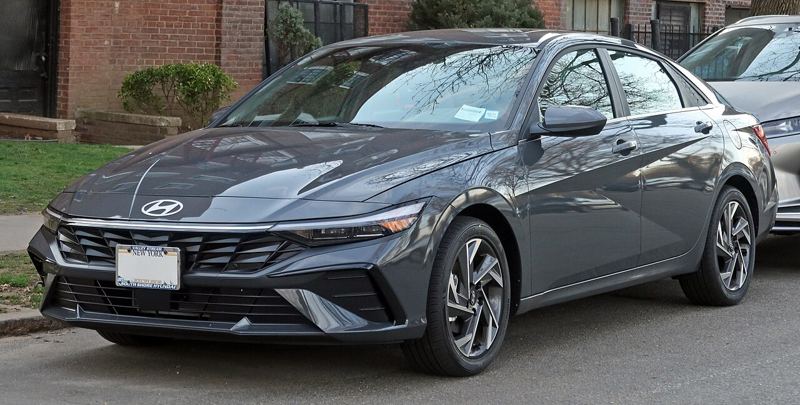 Hyundai Elantra1990–present
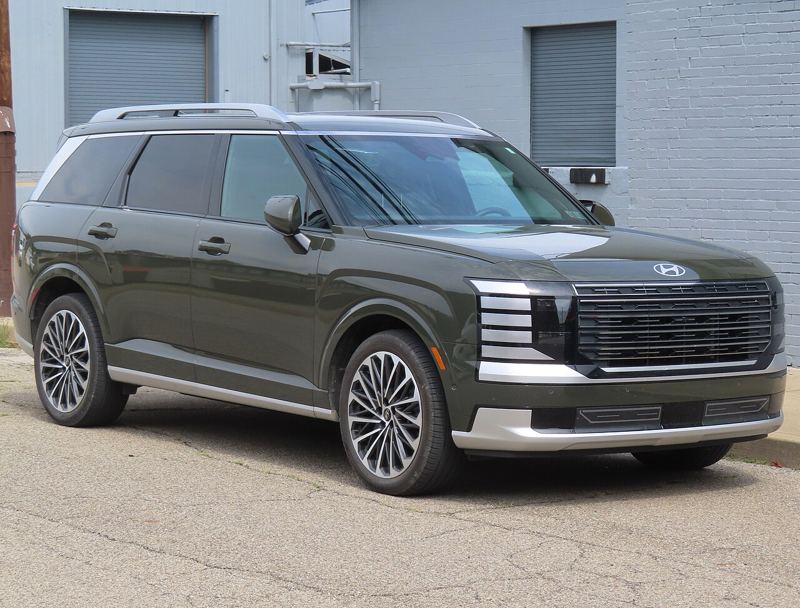 Hyundai Palisade2020–present
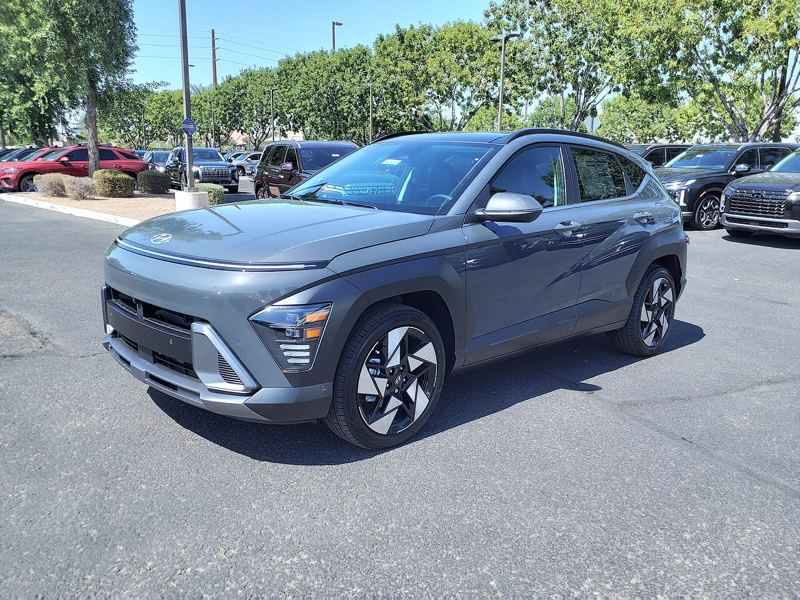 Hyundai Kona2018–present
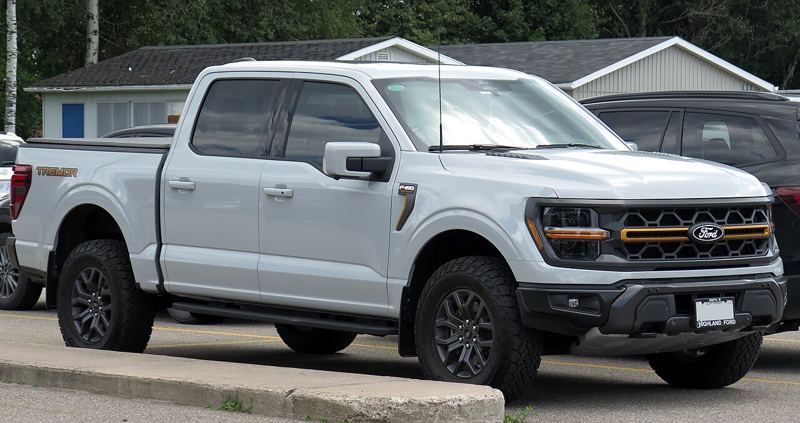 Ford F-Series (F-150)1948–present
 Toyota RAV41994–present (US from 1996)
 Honda CR-V1995–present
 Ram 15001981–present
 Tesla Model Y2020–present


