
Hyundai Tucson
Compact SUV · 2004–present. 206,126 units sold in the US in 2024
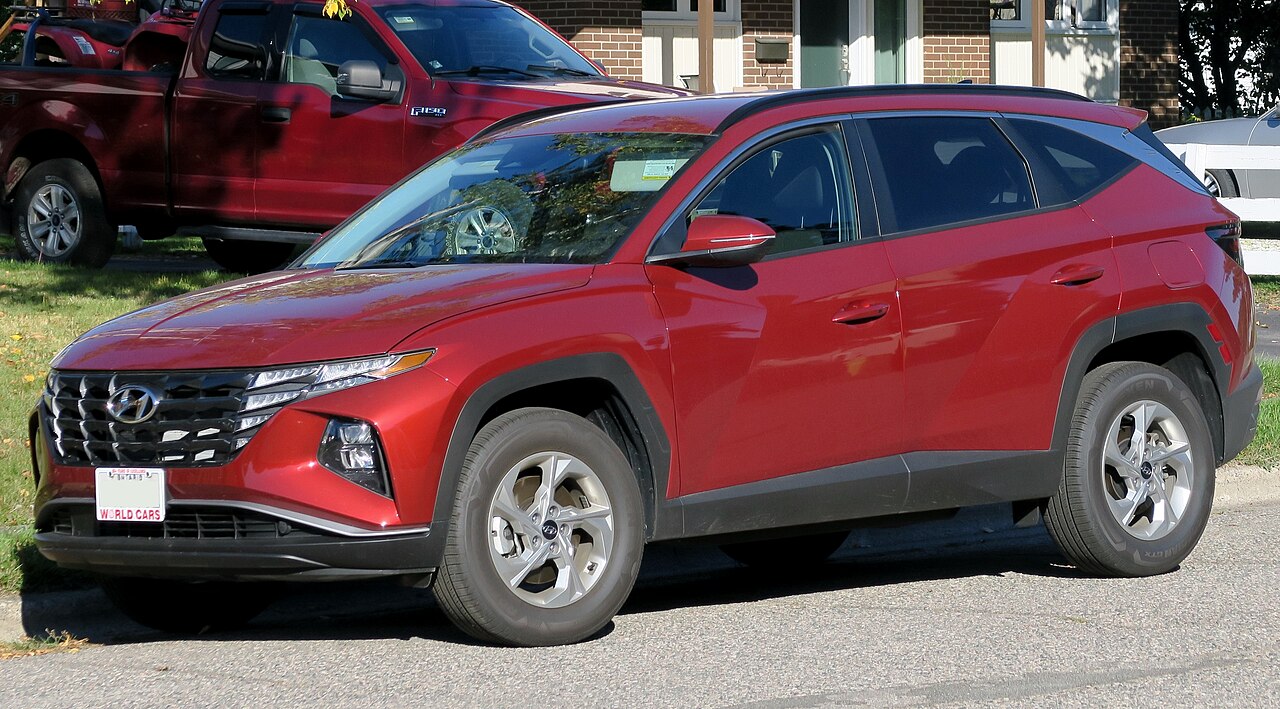
How it began
Hyundai Motor Company of South Korea developed Tucson as its first small-SUV entry. The original 2004 U.S. and Korean releases identify the company and design concept but do not name an individual first-generation designer or chief engineer. Robert F. Cosmai introduced it in Chicago as president and CEO of Hyundai Motor America. The second generation was Hyundai’s first crossover designed and engineered in Europe, at its Frankfurt design and technical centers. The fourth-generation presentation names SangYup Lee as head of Hyundai Global Design Center; the fifth-generation New York unveiling includes José Muñoz as Hyundai Motor Company president and CEO.
Hyundai’s original 2004–2005 sustainability report identifies first-generation Tucson production at Ulsan’s No. 2 and No. 5 plants in South Korea. The original second-generation release records U.S.-bound mass production beginning at Ulsan in October 2009. On February 22, 2021, HMMA celebrated the first U.S.-assembled Tucson in Montgomery, Alabama, its fourth simultaneous model. Hyundai’s MY2022 announcement assigned gasoline models to Alabama and Ulsan; the current MY2026 U.S. FAQ specifically establishes Montgomery assembly. The October 28, 2026 announcement describes nearly $450 million in future Montgomery investment, including next-generation Tucson hybrid production. Exact first-generation design geography and current allocations beyond those explicitly identified remain separate gaps.
Tucson debuted at the Chicago Auto Show on February 4, 2004. Hyundai’s original Korean release records a March 23 presentation and retail sales from March 24, 2004. The U.S. version was a 2005 model. The original February announcement planned late-summer U.S. sales; Hyundai’s later retrospective dates U.S. market introduction to October 2004. The precise first dealer-arrival day is not established.
It is named after Tucson, Arizona. It was Hyundai's second SUV named for a city in the American Southwest, after the Santa Fe. Hyundai Europe explains that all of its SUVs are named after holiday destinations; the city's own name comes from the Tohono O'odham name for Sentinel Mountain.
In the early 2000s Hyundai had only one SUV, the Santa Fe, and the compact segment was, in the brand's own words, the one with all the action: that is where the Honda CR-V, Toyota RAV4 and Mitsubishi Outlander sold. The Tucson was created to fight on that ground with a low price, a unibody on a front-wheel-drive platform shared with the Elantra and Kia Sportage, and a 10-year or 100,000-mile powertrain warranty. Its strong card was standard safety: six airbags, including curtains for both rows, something no cheaper SUV offered at the time.
Generation by generation
- Gen. 12005–2009 · JM
Hyundai's first small SUV
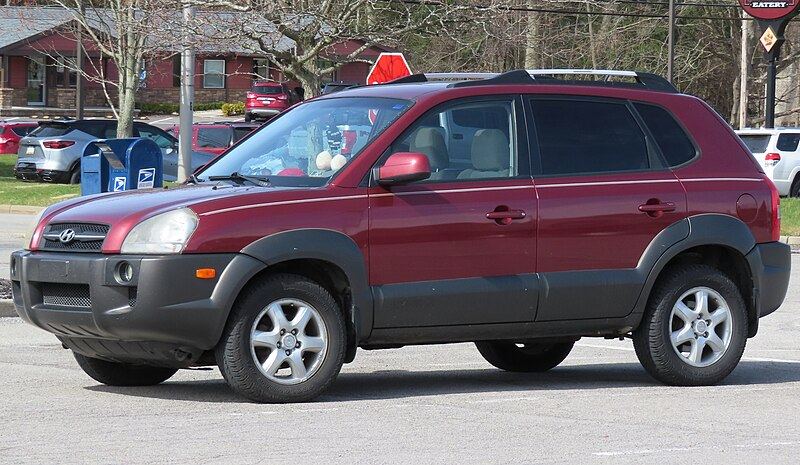
Photo: MercurySable99 · CC BY-SA 4.0 What changed. It replaced nothing: it was the Santa Fe's little sister, about seven inches shorter (170.3 inches) but with a 103.5-inch wheelbase. A unibody on the Elantra's chassis, a 2.0-liter four-cylinder with 140 hp or a 2.7-liter V6 with 173 hp, front- or all-wheel drive. Pricing started at $18,094 with the 2.0 and a manual gearbox.
The innovation. Six standard airbags, with side curtains for both rows, in what MotorWeek called the cheapest SUV with that protection as standard. The Borg-Warner all-wheel drive sent up to 99 percent of the power to the front axle and could be locked 50/50 with a dashboard button.
If you buy one usedNHTSA lists for 2005–2007 Tucsons the stop lamp switch recall (09V122, part of a 532,633-vehicle Hyundai campaign), repeated for 2006–2011 cars in 2013 (13V113): when it fails, the brake lights do not come on or stay on. Also listed for the 2005 model are the ESP stability-control yaw sensor that could recalibrate inaccurately (05V119 and 05V177), the parking brake ratchet (05V315) and the driver airbag inflator for small unbelted adults (06V445 and 07V197). These cars are approximately two decades old: ask for maintenance records and check by VIN that the recalls were done. - Gen. 22010–2015 · LM
Designed in Frankfurt, with Fluidic Sculpture
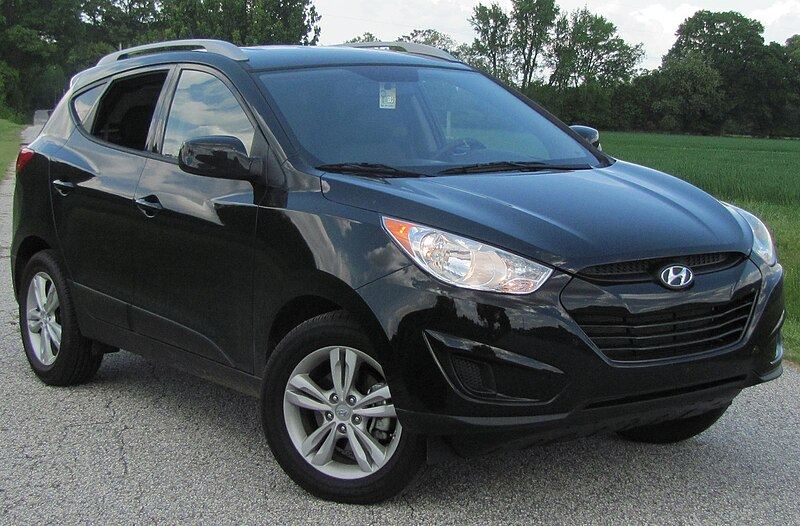
Photo: IFCAR · Public domain What changed. The U.S. presentation was in Los Angeles in December 2009. It was Hyundai’s first crossover designed and engineered in Europe and used Fluidic Sculpture styling. Length grew 3.3 inches, width one inch and cargo capacity 13%, while the manufacturer compared its weight as 61 lb lower. The 2.4-liter Theta II replaced the V6 offering, with 176 hp, 26% above the outgoing four-cylinder; six-speed manual and automatic transmissions were offered, with up to an estimated 31 highway mpg for FWD automatic. Standard ESC continued from the original MY2005 Tucson. Base MSRP was $18,995 before freight. In Europe it was called ix35.
The innovation. The hydrogen Tucson Fuel Cell reached the Southern California port on May 20, 2014 as a mass-produced U.S.-market shipment. Hyundai’s first retail customer received the keys at Tustin Hyundai on June 10. The approved-lessee program cost $499 per month with unlimited free hydrogen refueling and valet maintenance in its limited Southern California service area.
If you buy one usedThe main item is the ABS brake module. NHTSA lists recall 23V651 for 2010–2013 Tucsons and the 2015 Tucson Fuel Cell: the module can leak brake fluid internally, short out and cause an engine compartment fire, parked or driving; the remedy is a new fuse and, until it is done, owners are advised to park outside and away from structures. For 2014–2015 cars the matching recall is 22V056. Also: engine oil pan leak on 2011–2013 (19V063), a steering-wheel airbag that could come loose on 2011–2014 (14V245) and a transmission cooler hose on some 2011s (16V057). Check all of them by VIN. - Gen. 32016–2021 · TL
Turbo, dual clutch and automatic braking
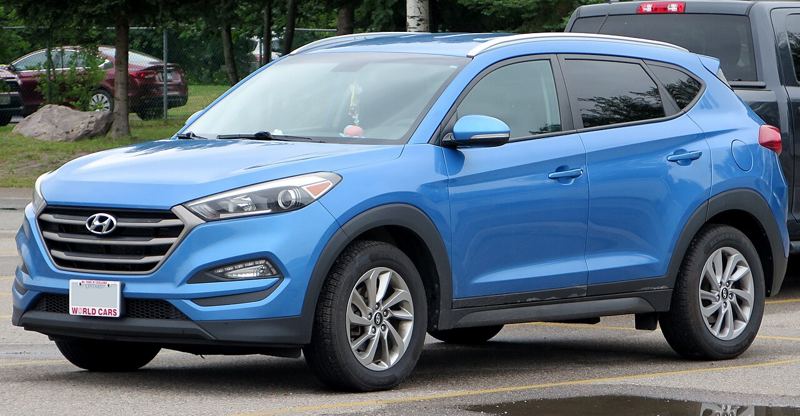
Photo: Elise240SX · CC BY-SA 4.0 What changed. Unveiled at the New York Auto Show on April 1, 2015 and on sale from July 2015. The wheelbase grew 1.2 inches, the width more than an inch, and cargo room rose five cubic feet to 31. Advanced high-strength steel went from 18 to more than 50 percent of the structure. The base engine was a 2.0-liter direct-injected Nu with 164 hp and, for the first time, a 1.6-liter turbo with 175 hp and 195 lb-ft of torque from 1,500 rpm. Blind spot detection and rear cross-traffic alert debuted.
The innovation. The seven-speed EcoShift dual-clutch transmission paired with the turbo, and automatic emergency braking with pedestrian detection, which Hyundai offered to target the IIHS Top Safety Pick+ award.
If you buy one usedThe ABS module again: NHTSA lists recall 20V543, opened September 4, 2020 for 2019–2021 Tucsons and expanded December 30, 2020 to 2016–2018 cars. The ABS hydraulic electronic control unit can corrode internally, short out and cause a fire under the hood; the remedy is a new fuse and, on 2019–2021 cars, a stability-control software update. Until then, park outside. Also: 2016 cars with the dual-clutch gearbox could fail to move after repeated pressing and releasing of the accelerator in high heat, fixed with software (16V628), and some 2017s could wear their connecting rod bearings early, with inspection and engine replacement if damage is found (21V727). Ask for proof they were done. - Gen. 42022–2026 · NX4
Parametric design, hybrid and built in Alabama
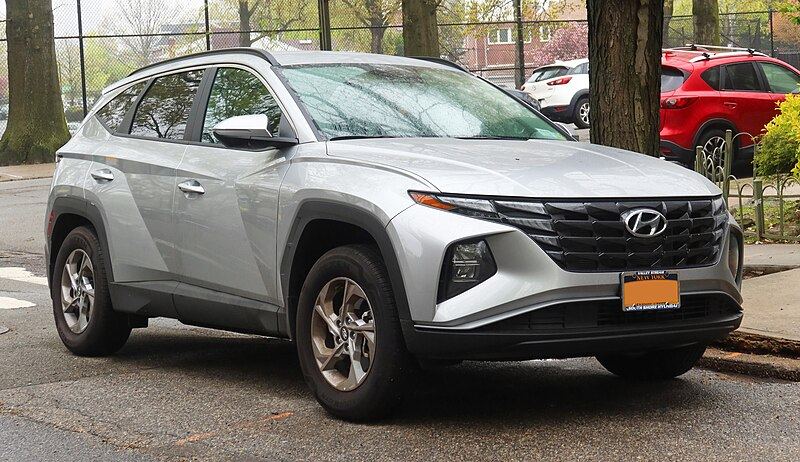
Photo: Kevauto · CC BY-SA 4.0 What changed. The online world premiere was September 15, 2020 from Seoul, followed by the U.S. reveal in West Hollywood on November 9. The U.S. long body grew 6.1 inches to 182.3 inches, its wheelbase 3.4 inches to 108.5, and cargo capacity 7.7 cubic feet to 38.7. The initial 2.5-liter Smartstream offered 187 hp and eight-speed automatic; Tucson’s first hybrid used a 1.6 turbo with an estimated 226 combined hp, and the PHEV used a 13.8-kWh battery. The MY2025 refresh, revealed March 27, 2024 in New York, offered a curved display with 12.3-inch infotainment and available 12.3-inch cluster, plus a column selector on premium shift-by-wire models. Electrified models gained Baby Mode for smoother initial acceleration. XRT, originally introduced for MY2022, received revised equipment. Refreshed hybrid/PHEV outputs were 231/268 system hp. Initial MY2022 gasoline/HEV MSRP ranged from $24,950 to $37,350 before freight; that table did not price the PHEV.
The innovation. Parametric Dynamics developed Hyundai’s Sensuous Sportiness identity. Half-mirror daytime running lights blend into the grille until illuminated; half-hidden triangular rear-light shapes echo the effect. The launch program offered dual 10.25-inch display technology and touch controls without hard buttons for the touchscreen interface. Digital Key supported compatible Android phones on equipped vehicles. Display sizes and controls later changed with the refresh.
If you buy one usedIIHS gave it the 2025 Top Safety Pick+. NHTSA lists several recalls, nearly all with a free remedy: central control unit software that could knock out headlights or taillights on 2022s (21V938, all repaired at U.S. Hyundai dealers); roof moldings that could detach on 2022s (23V038); the Idle Stop & Go oil pump controller on 2023–2024 cars (23V526); the electric power steering circuit board that could short and remove assist on 2024s (24V412); console wiring that let the shifter leave Park without the brake on 2025s (24V877); improperly tightened connecting rod bolts on some 2025–2026 cars, with engine replacement (25V549); the Mobis tow hitch harness that let water in on 2022–2024 cars (25V893); and in 2026 two software campaigns for emergency braking (26V316) and the instrument cluster (26V400). Pull the VIN report at nhtsa.gov before buying. - Gen. 52026 (global)
Art of Steel, unveiled in New York
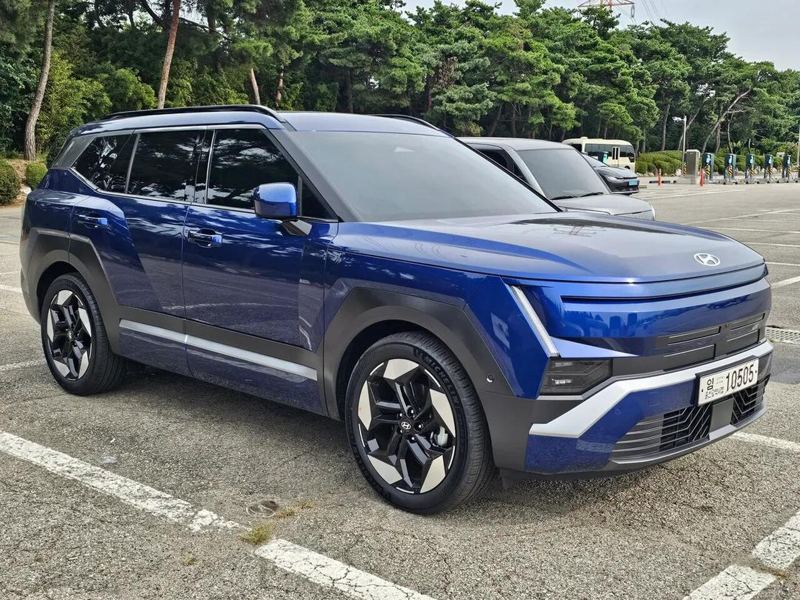
Photo: Avante2025 · CC BY 4.0 What changed. The fifth generation premiered on October 1, 2026 against the Manhattan skyline; Tucson’s original 2004 world debut had already taken place in Chicago. Hyundai describes the new Art of Steel design as its boldest SUV. The long body measures 4,700 mm (+60), 1,905 mm wide (+40, a manufacturer class-comparison claim), and 2,785 mm in wheelbase (+30). Its table reports 41.7 cubic feet of cargo and 83-degree door openings. U.S. launch specifications list 184 hp for the 1.6 turbo and 233 combined hp for the hybrid. The hybrid targets 42 mpg for North American 2WD with 17-inch wheels and 0–60 mph in 8.5 seconds. A selected-market PHEV is advertised at 292 PS and an estimated 81 km, about 50 miles, of electric range. These are announced specifications and targets, not final EPA certification. Korea was scheduled for late 2026, with North America and Europe following in calendar 2027; exact U.S. model-year and retail timing remain to be confirmed.
The innovation. The Pleos Connect system on Android Automotive with the Gleo AI assistant and over-the-air updates, and Hyundai's first Smart Terrain Assist on the North American XRT PRO, with Target Speed Control between 2 and 25 km/h off the pavement.
If you buy one usedHyundai announced that the redesigned Tucson would reach North America in 2027. When it arrives, pull the VIN report and make sure the software is current. On October 28, 2026 Hyundai announced that the Montgomery, Alabama plant will build it, hybrid versions included.
 Hyundai Elantra1990–present
 Hyundai Santa Fe2001–present
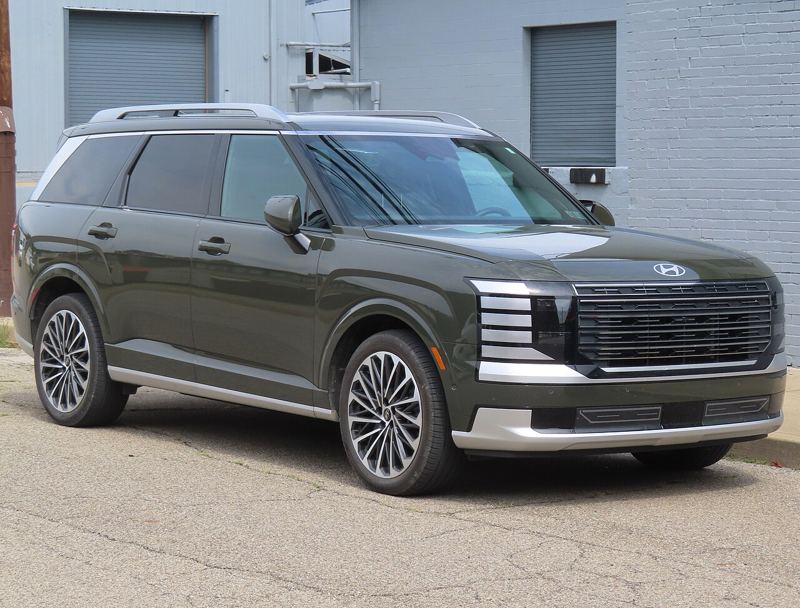 Hyundai Palisade2020–present
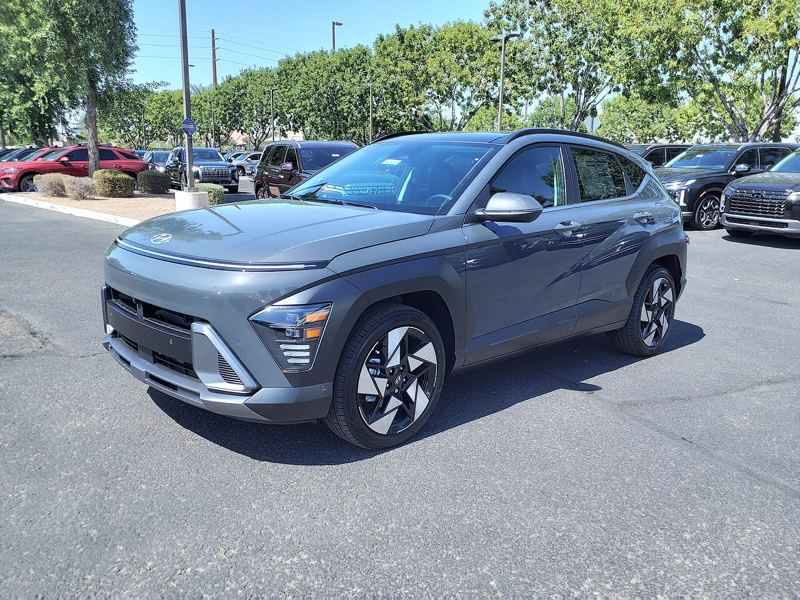 Hyundai Kona2018–present
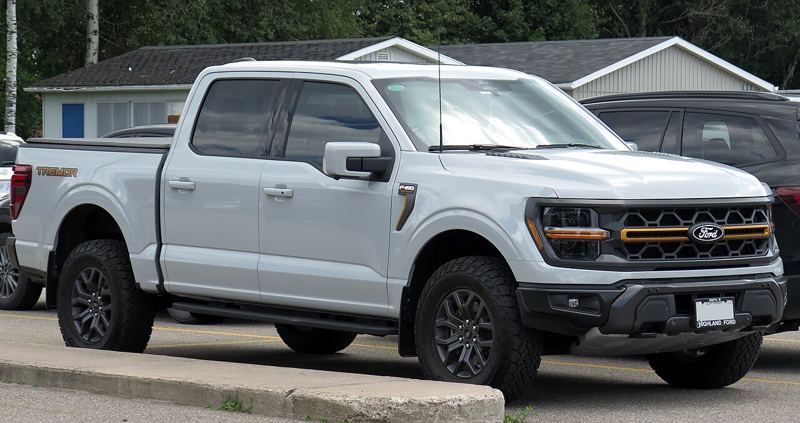 Ford F-Series (F-150)1948–present
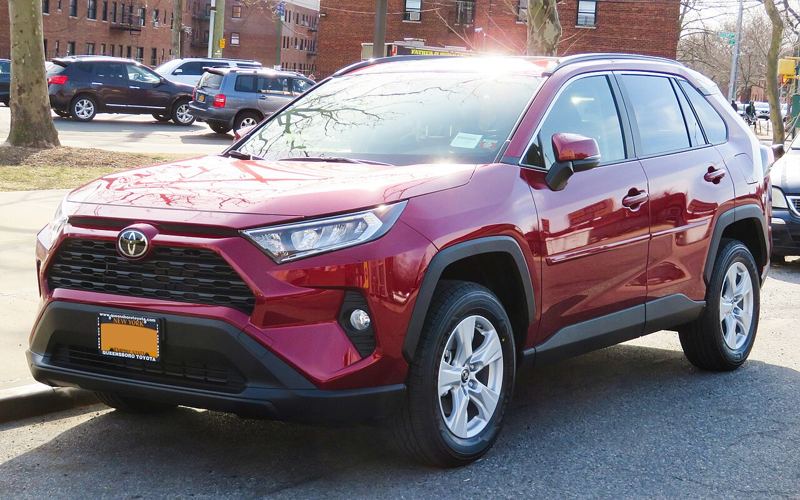 Toyota RAV41994–present (US from 1996)
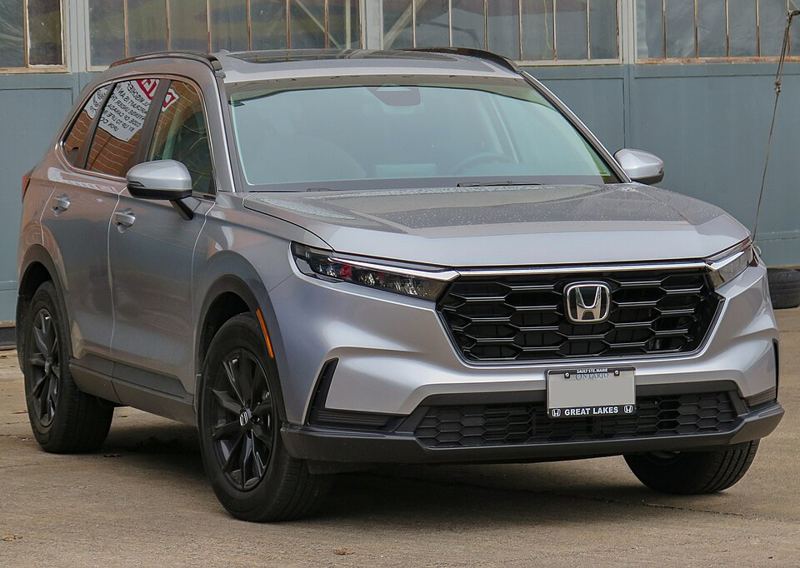 Honda CR-V1995–present
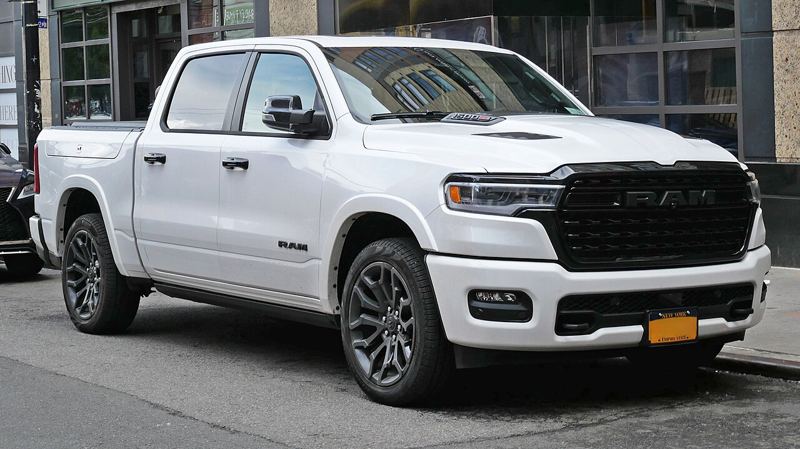 Ram 15001981–present
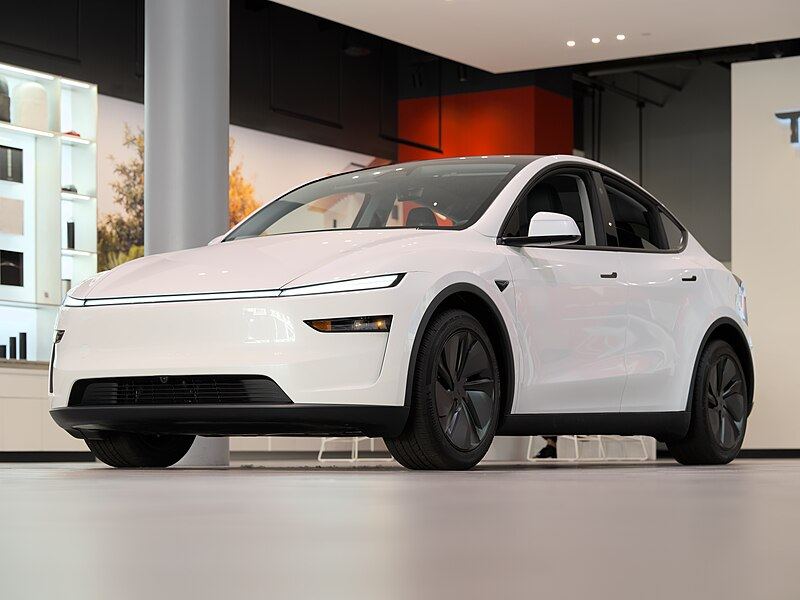 Tesla Model Y2020–present


