
Hyundai Palisade
Midsize three-row SUV · 2020–present. 110,055 units sold in the US in 2024
How it began
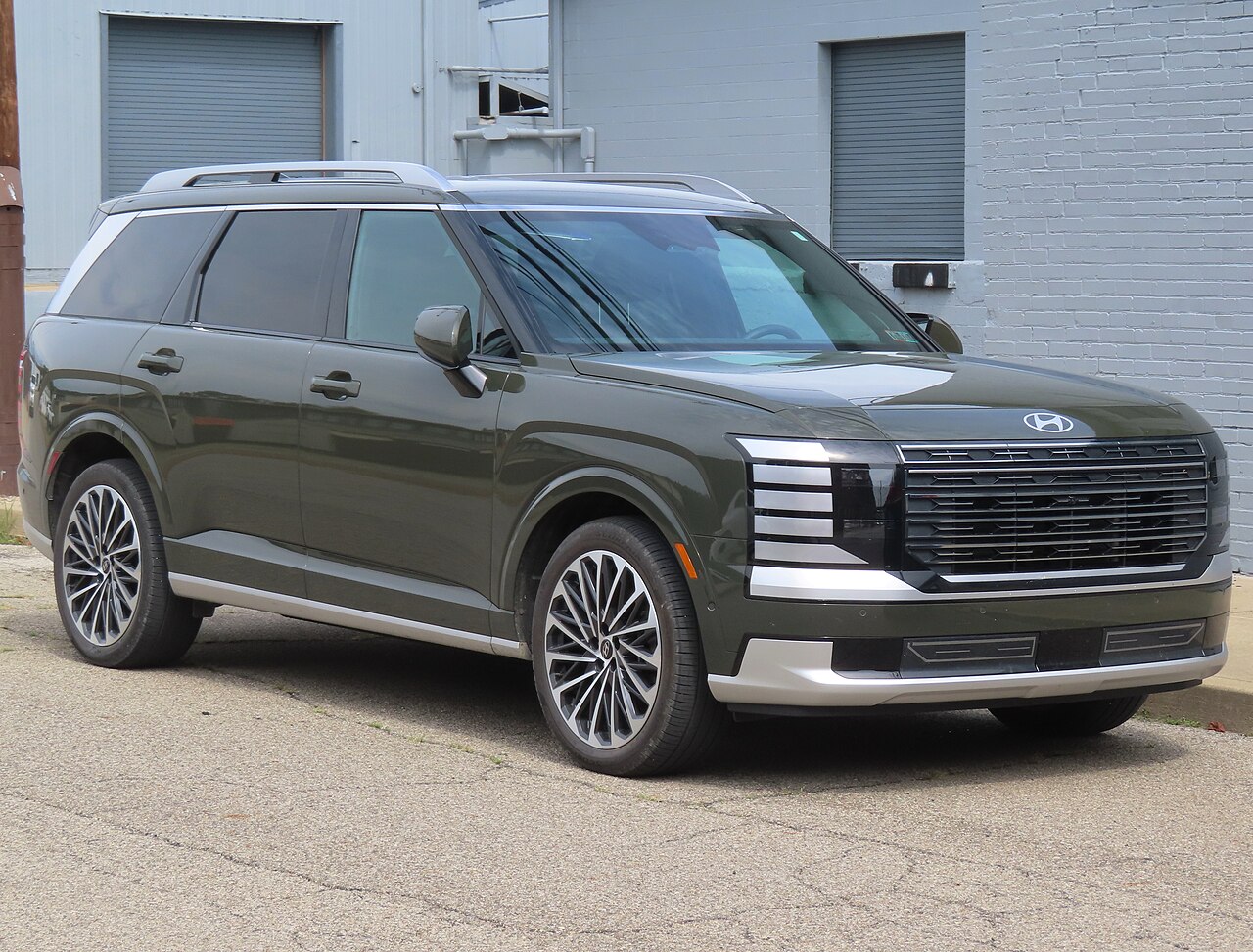
Hyundai Motor Company created Palisade. SangYup Lee, then head of Hyundai Design Center, described leading its design with global teams. Mike O’Brien presented its U.S. product strategy as vice president of product, corporate and digital planning; John Juriga discussed its engineering as Hyundai/Kia North America powertrain systems director. Olabisi Boyle presented the second-generation U.S. program as senior vice president of product planning and mobility strategy. An individual whole-vehicle chief engineer was not identified in the original records reviewed; named subsystem engineers and executive presenters have different roles.
Hyundai’s original U.S. release identifies Ulsan, South Korea, production. Contemporary May 2019 company/union reporting says Plant 4 was then the sole Palisade plant. An early press preview took place at the Hyundai-Kia technical center in Superior Township, Michigan, on November 8, 2018. Hyundai’s January 2025 Korean release describes historical flexible production across Ulsan plants 2, 4 and 5, and its current 2027 U.S. FAQ still names Ulsan. A Korea Herald report dated October 26, 2026 describes a plan for 74,000 Palisade Hybrid units of production to move to the U.S.; it does not document completed relocation or name the destination plant, and the original agreement remains pending.
Hyundai announced the name on November 8, 2018 and held the public global premiere in Los Angeles on November 28. The Korean launch and start of sales were December 11, 2018. Contemporary reporting records U.S. shipments beginning in May 2019, while Hyundai scheduled dealer availability for summer 2019 as a 2020 model. Shipping, dealer availability and model year are different milestones.
Hyundai says Palisade references coastal cliffs and may evoke Pacific Palisades, the Southern California neighborhood. Mike O’Brien also described high cliffs and the strength of a fortress. It follows Hyundai’s broader geographic naming tradition; a universal claim that this was its first SUV named for something other than a warm North American city would overlook the earlier Kona, explicitly named for a Hawaiian coastal region.
Hyundai needed a true three-row SUV for families who were trading sedans for large SUVs. Its predecessor, the Santa Fe XL, was too narrow for three people across the third row and hard to climb into. The Palisade is 3.6 inches (91 mm) wider, and Hyundai decided that its U.S. flagship would no longer be a large sedan like the Azera, but this SUV.
Generation by generation
- Gen. 12020–2025 · LX2
The family's new flagship
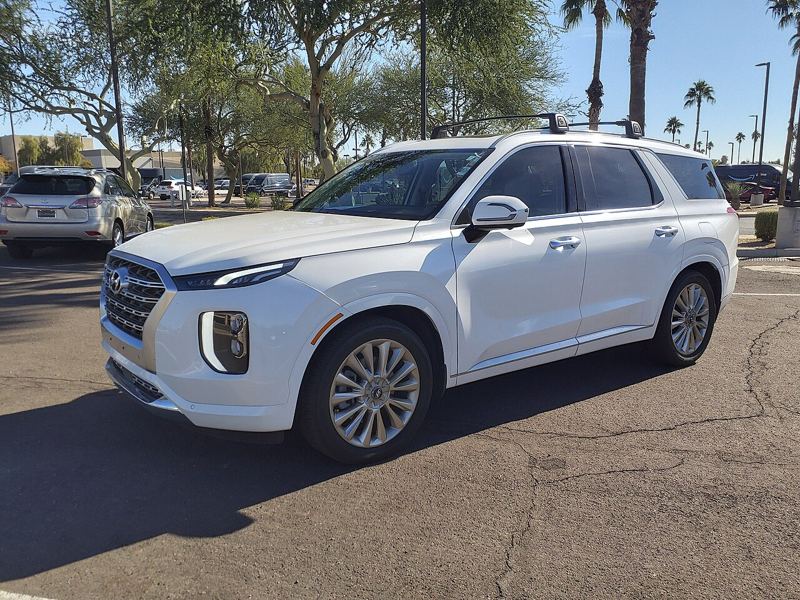
Photo: HJUdall · CC0 What changed. It replaced Santa Fe XL in the U.S. with a new SUV platform shared with Kia Telluride. Hyundai’s launch comparison described larger principal exterior dimensions than Santa Fe XL and the contemporary Toyota Highlander. U.S. power came from a 291-hp, 262-lb-ft 3.8-liter Atkinson V6 with an eight-speed automatic, FWD or HTRAC AWD and seating for up to eight. The 2023 refresh premiered on April 13, 2022, adding a revised grille, 12.3-inch navigation screen, available heated third-row seats and the XRT trim. Equipment varied by trim.
The innovation. A roof-mounted vent diffuser for rear passengers that Hyundai billed as an industry first, and Blind View Monitor, which Hyundai announced as exclusive in its class in 2018.
If you buy one usedCheck these NHTSA recalls by VIN: 25V607 (2020–2025, seat belt buckles that may not latch) and 26V034 (2020–2025, third-row curtain air bags). 22V633 (2020–2022, tow hitch harness that can cause a fire; NHTSA advised parking outside until repaired). Wipers: 22V627 (2020–2021) and 23V180 (2021–2023). Brakes: 21V840 (2021, contaminated fluid) and 23V415 (2023, brake booster). On 2024 models check 24V106 (valve springs that may break; the remedy is an engine replacement), and on 2025 models 25V291 (electric oil pump with a fire risk). - Gen. 22026–present · LX3
Bigger, hybrid and more adventurous
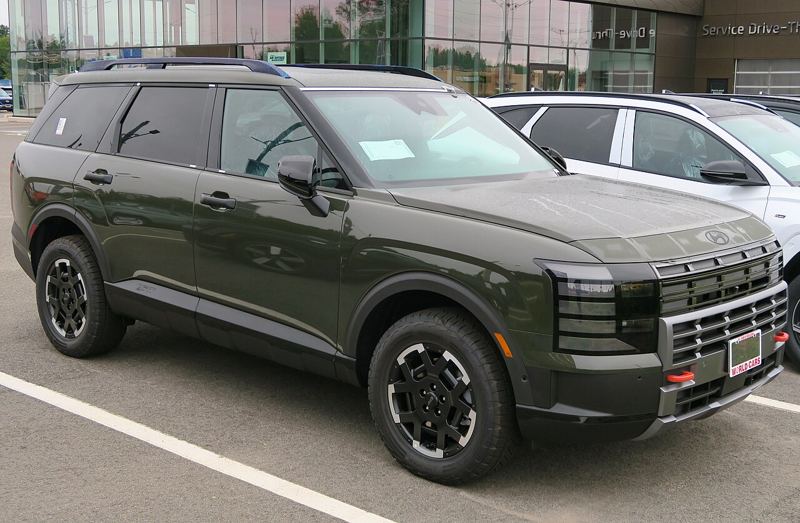
Photo: Elise240SX · CC BY-SA 4.0 What changed. Hyundai held the Korean launch event on January 14, 2025 and began customer deliveries January 15; the hybrid began mass production that April. The U.S. program premiered in New York on April 16, 2025 as a 2026 model. Length grew 2.5 inches and wheelbase 2.7 inches with a boxier silhouette. U.S. offerings introduced a 287-hp 3.5-liter V6 and a 329-hp combined 2.5-liter turbo hybrid with two motors integrated into its six-speed automatic. XRT PRO adds an electronic rear limited-slip differential and 8.4-inch ground clearance. Korean powertrain specifications and PS units should be kept separate from U.S. hp ratings.
The innovation. Palisade Hybrid was the first production application of Hyundai Motor Group’s next-generation hybrid system. Stay Mode can run infotainment and climate control while parked with the engine off, subject to battery and operating limits. The U.S. launch release billed the built-in two-camera dashcam and integrated factory tow hitch as Hyundai firsts in that program. Camera availability depends on trim; the integrated hitch is specified for XRT PRO, Limited and Calligraphy. The dashcam priority should not be read as a worldwide first, since earlier Korean Hyundai models already had built-in cameras.
If you buy one usedCheck by VIN for recalls 26V160 (2026 Limited and Calligraphy, second- and third-row power seats that may fail to detect a person and keep moving), 26V169 (2026 Limited and Calligraphy, third-row seat belt buckle wiring) and 26V047 (instrument display software). At IIHS, the 2026 TOP SAFETY PICK+ award applies only to vehicles built after November 2025; earlier ones scored lower in the updated moderate overlap front test.
 Hyundai Tucson2004–present
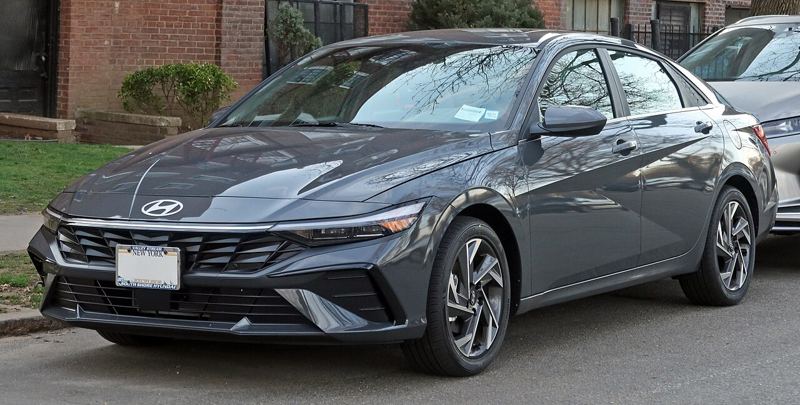 Hyundai Elantra1990–present
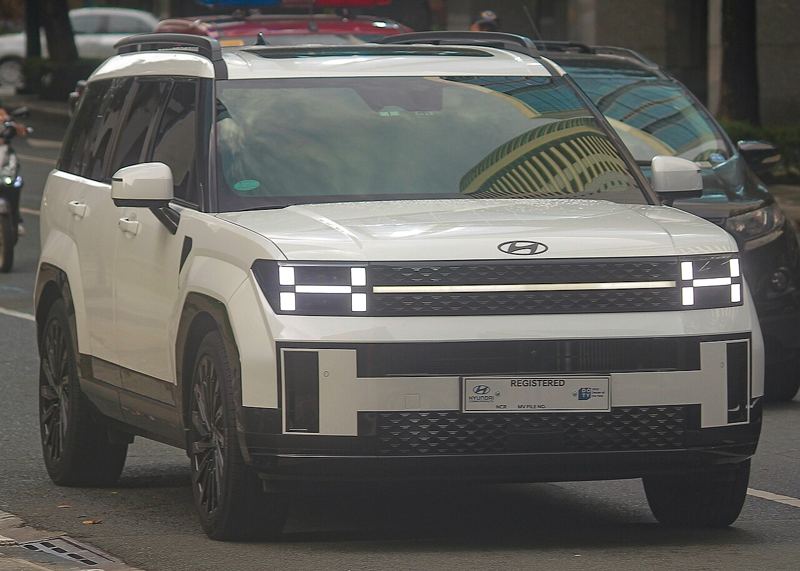 Hyundai Santa Fe2001–present
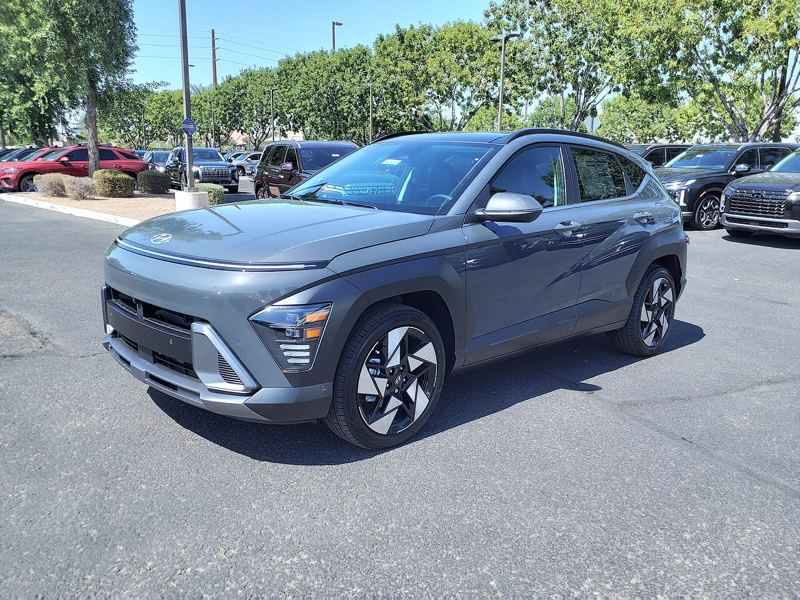 Hyundai Kona2018–present
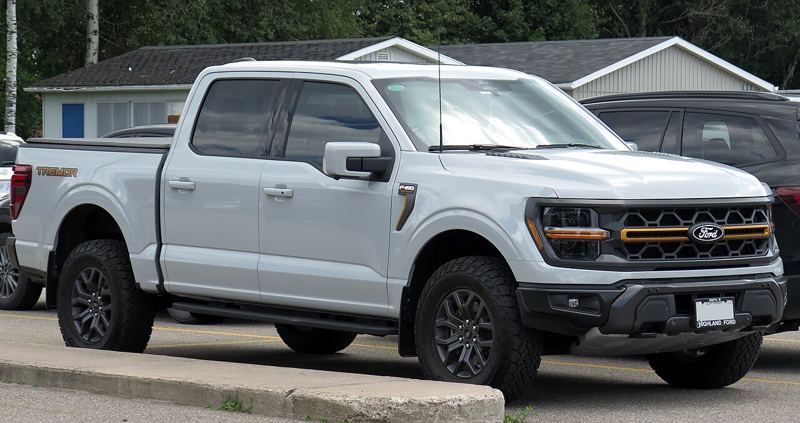 Ford F-Series (F-150)1948–present
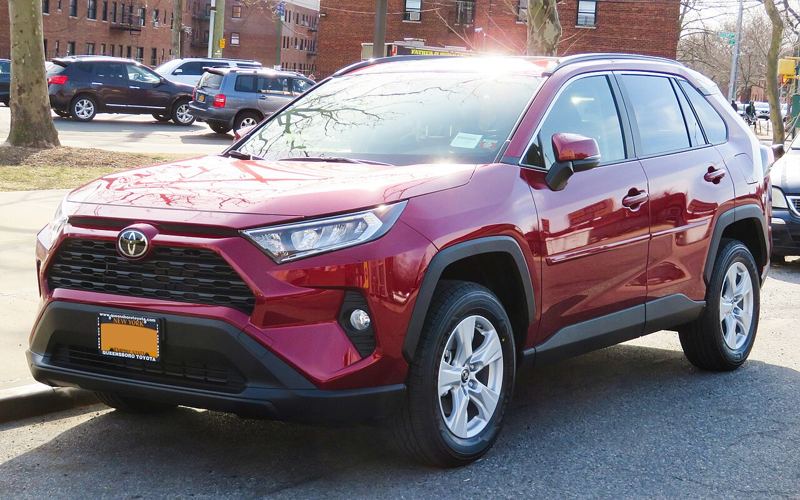 Toyota RAV41994–present (US from 1996)
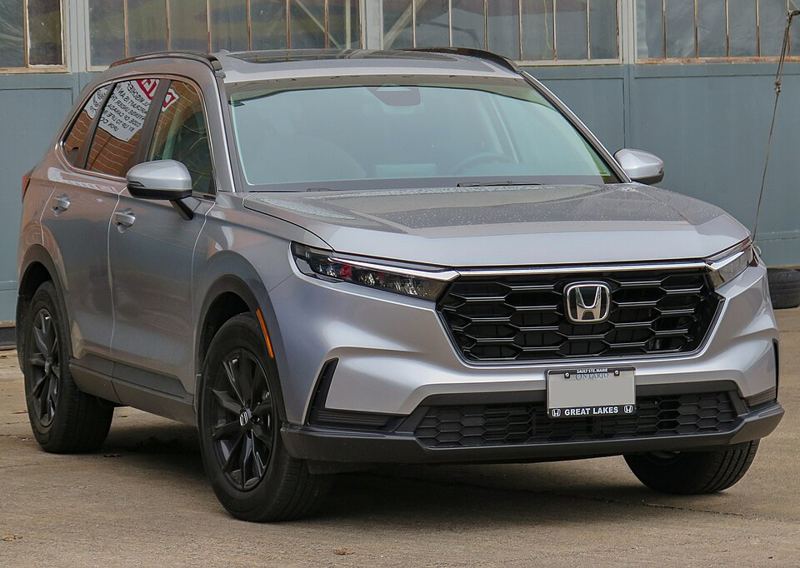 Honda CR-V1995–present
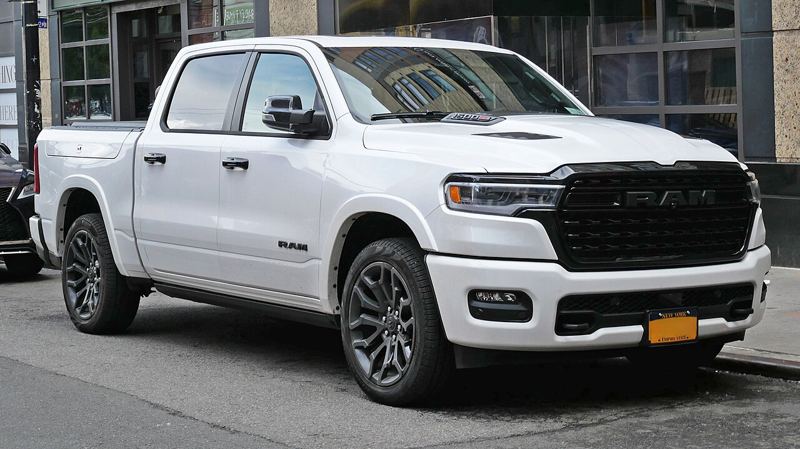 Ram 15001981–present
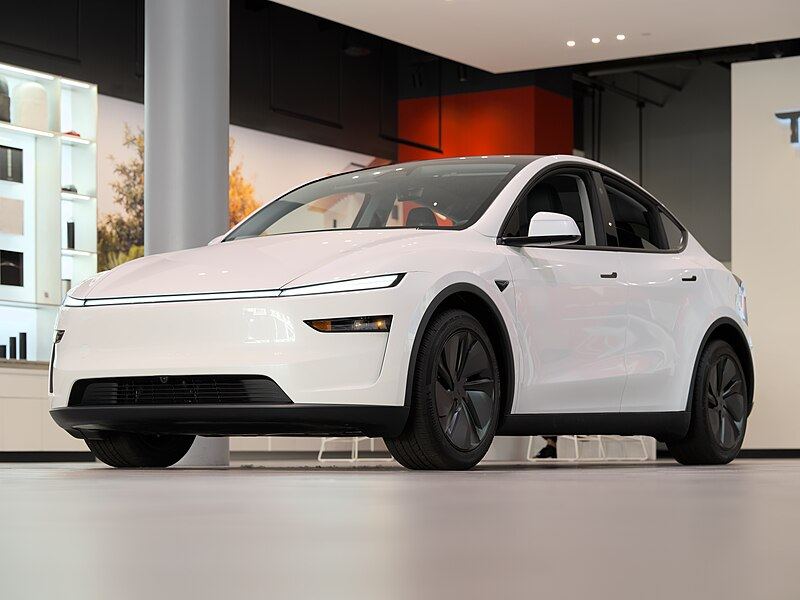 Tesla Model Y2020–present


